


Microneedling for Asian Skin
Microneedling is one of the most popular skin rejuvenation treatments at Dr. Michele Green’s private dermatology office in NYC. It addresses a variety of skin concerns, including acne scars, fine lines, wrinkles, stretch marks, enlarged pores, and hyperpigmentation. As a non-invasive procedure, microneedling involves minimal downtime, few potential side effects, and is safe and effective for all skin types and tones, including those of Asian descent. To achieve optimal cosmetic results, it is always recommended to be performed by a board-certified dermatologist, such as Dr. Michele Green, in New York City. At her boutique dermatology practice on Manhattan’s Upper East Side, Dr. Green offers traditional microneedling, radiofrequency microneedling, microneedling with depigmentation serum, and microneedling with Platelet-Rich Plasma (PRP). The results of microneedling leave your skin radiant and glowing.
During a microneedling procedure, Dr. Green guides a handheld device across the skin’s surface in the treatment area. The microneedling device has tiny needles that create thousands of micro-punctures, triggering the skin’s natural healing process and encouraging new collagen growth. Collagen, an essential protein that provides structure to the skin, naturally declines with age, resulting in various signs of aging. By stimulating collagen production, microneedling helps create a smoother, brighter, and healthier-looking complexion. The procedure can be customized to target specific skin concerns and can be enhanced with depigmentation serum, radiofrequency energy, and platelet-rich plasma. A skincare expert like Dr. Michele Green in New York City can recommend the perfect microneedling treatment plan tailored to your individual concerns and aesthetic goals.
Dr. Michele Green, an internationally renowned, board-certified dermatologist on the Upper East Side of NYC, has over twenty-five years of experience providing top non-invasive cosmetic treatments to some of the world’s most discerning clients. These treatments include traditional techniques, as well as platelet-rich plasma and radiofrequency microneedling. In skin rejuvenation, Dr. Green adopts a holistic approach, following a less-is-more philosophy and tailoring each patient‘s treatment plan to their individual needs. She is consistently recognized as one of New York City’s leading dermatologists by New York Magazine, Super Doctors, and Castle Connolly for her dedication and expertise. During your consultation, Dr. Green will work with you to develop a skin rejuvenation plan that helps you look and feel your best.
What is microneedling?
Microneedling, also known as collagen induction therapy, is a minimally invasive treatment where a healthcare provider uses a microneedling device equipped with tiny, sterile needles to create micro-punctures in the skin’s surface. The microchannels created by skin needling enhance the absorption of serums, increasing the effectiveness of the procedure. This treatment activates the body’s natural wound-healing process, stimulating the production of new collagen. Collagen is a vital protein in the skin that helps maintain its firmness, smoothness, and youthful appearance. As we age, collagen levels naturally decrease, leading to visible signs of aging skin. Conditions such as acne scars, stretch marks, sun damage, and other signs of aging occur due to collagen loss or damage and can be effectively treated with microneedling.
What does microneedling do?
By creating micro-punctures in the skin’s surface, it stimulates the body’s natural wound-healing process, resulting in the production of new collagen. By boosting collagen levels, microneedling can help address a range of skin concerns. It provides many benefits for skin rejuvenation, including:
- Improve skin texture and reduce the appearance of fine lines and wrinkles.
- Minimize unwanted pigmentation, hyperpigmentation, melasma, dark spots, and sun damage to create a more even skin tone.
- Enhance overall brightness and increase skin radiance.
- Diminish the appearance of acne scars and post-inflammatory hyperpigmentation.
- Tighten skin and improve elasticity for a more youthful look.
- Improve the appearance of stretch marks on the body.
- Minimize the size and visibility of large pores.
How does microneedling work?
During a microneedling session, Dr. Green moves a device with tiny needles across the skin surface of the treatment area. These needles create thousands of micro-punctures, which can be adjusted to different depths for more precise and controlled treatment of various parts of the face and body. The procedure stimulates the skin’s natural healing process, promoting the production of new elastin and collagen. Collagen and elastin are proteins that help keep the skin firm, smooth, and youthful. Over time, the body loses these proteins at a faster rate than it can replace them. Microneedling yields smoother, firmer skin, a more even skin tone, and enhanced radiance. During the treatment, specialized serums may be applied to target specific concerns. Most patients require several microneedling sessions, typically spaced approximately four weeks apart, to achieve optimal results.
Do asians get microneedling?
Yes, microneedling is a very popular cosmetic treatment because it effectively improves skin texture, reduces the appearance of acne scars, fine lines, and wrinkles, and is minimally invasive compared to surgical options. Asian skin benefits from microneedling, as it is a safe and effective treatment for issues such as acne scars, texture, and hyperpigmentation—especially for darker skin tones, where lasers can increase the risk of pigmentary changes. However, it is crucial to choose a skilled professional because technique matters to prevent complications like post-inflammatory hyperpigmentation. Microneedling is a good option for Asian skin, which often has high melanin levels. Unlike some laser treatments that can damage the outer skin layer and cause pigmentation issues, microneedling creates tiny, controlled micro-injuries that leave the outer skin intact, thereby reducing the risk of hyperpigmentation. It also works well on various skin concerns in Asian skin types, including acne scars, uneven skin tone, and fine lines.
Is there microneedling for Asian skin types?
Microneedling is a safe and effective treatment suitable for all skin types. There are different types of microneedling, including options such as microneedling with PRP, microneedling with depigmentation serum, and microneedling with radiofrequency, also known as Vivace. Microneedling with PRP involves drawing a blood sample from the patient, spinning it in a centrifuge to separate platelet-rich plasma from red blood cells, and then drawing the plasma into sterile syringes for application. Rich in growth factors, platelet-rich plasma promotes healing and enhances skin rejuvenation during microneedling treatments. Vivace RF microneedling, an FDA-cleared, minimally invasive procedure, aims to reduce facial wrinkles, fine lines, pore size, acne scars, stretch marks, hyperpigmentation, mild loose skin, and uneven skin tone or texture. It combines microneedling with radiofrequency technology to stimulate collagen production in both the epidermal and dermal layers, thereby maximizing benefits.

Types of microneedling for Asian skin
Microneedling with depigmentation serum
The micro-punctures created in the skin during microneedling help improve the absorption of specialized topical serums and skincare products. Patients looking to treat unwanted pigmentation and even out their skin tone can benefit from combining their microneedling treatment with a topical depigmenting serum, whether addressing melasma, sun damage, post-inflammatory hyperpigmentation, or other pigmentation issues. A microneedling session with depigmenting serum provides a safe and effective way to achieve a more uniform complexion. The depigmenting serum used at Dr. Michele Green’s private dermatology practice contains a unique blend of strong yet gentle skin-brightening agents that target melanocyte activity. The result is a visible lightening of hyperpigmentation, leading to a more balanced skin tone. After their microneedling with depigmenting serum, patients often notice their skin tone is more even, their face appears more radiant, and they enjoy a lasting healthy glow. It is essential to limit sun exposure after treatment, and using adequate sun protection, including daily sunscreen, is crucial for preventing hyperpigmentation from recurring. When you undergo microneedling with Dr. Green, you will receive all necessary post-treatment instructions to maintain optimal cosmetic results and a long-lasting, even skin tone.
PRP microneedling
PRP stands for platelet-rich plasma, a serum rich in epidermal growth factors that enhances the skin rejuvenation results of microneedling treatment. PRP is derived from a sample of the patient’s blood, which is centrifuged in a special machine to separate the plasma from the red blood cells. Once the PRP is extracted, it is applied topically during microneedling. Dr. Green glides the microneedling device across the skin’s surface to create micro-punctures, then applies the PRP to the treatment area. PRP further promotes regeneration at the cellular level, rejuvenating your skin. After the microneedling procedure, you will be advised not to cleanse the treated skin for 24 hours to maximize the effects of the PRP and allow for full absorption. Since PRP is derived from the patient’s blood, it is completely safe for all skin types and tones, and PRP microneedling generally involves no downtime. Dr. Green has also found PRP injections to be incredibly effective in treating female and male-patterned hair loss as well as various types of alopecia.
Radiofrequency or RF microneedling
Radiofrequency (RF) microneedling is a minimally invasive treatment that combines microneedling with radiofrequency energy to boost collagen production. The microneedling stimulates the creation of new collagen in the epidermis. At the same time, the radiofrequency energy delivers heat to the dermis, encouraging deeper collagen growth in the skin, which helps smooth and tighten the skin. Like traditional microneedling, radiofrequency microneedling is a safe and effective skin rejuvenation option suitable for all skin types and tones, with minimal downtime and few potential side effects. Vivace features a robotic motor that delivers highly precise, controlled pulses along with gold-tipped, insulated microneedles. These features make the radiofrequency microneedling procedure painless for patients while maximizing collagen stimulation. Vivace is an excellent option for treating fine lines, large pores, hyperpigmentation, acne scars, stretch marks, uneven skin tone, and improving skin elasticity. Most patients require several Vivace RF microneedling sessions, spaced 4-6 weeks apart, to achieve optimal results. Treatments like Vivace aim to reverse sun damage and other signs of aging, while promoting collagen production in various skin layers to achieve a more youthful appearance.
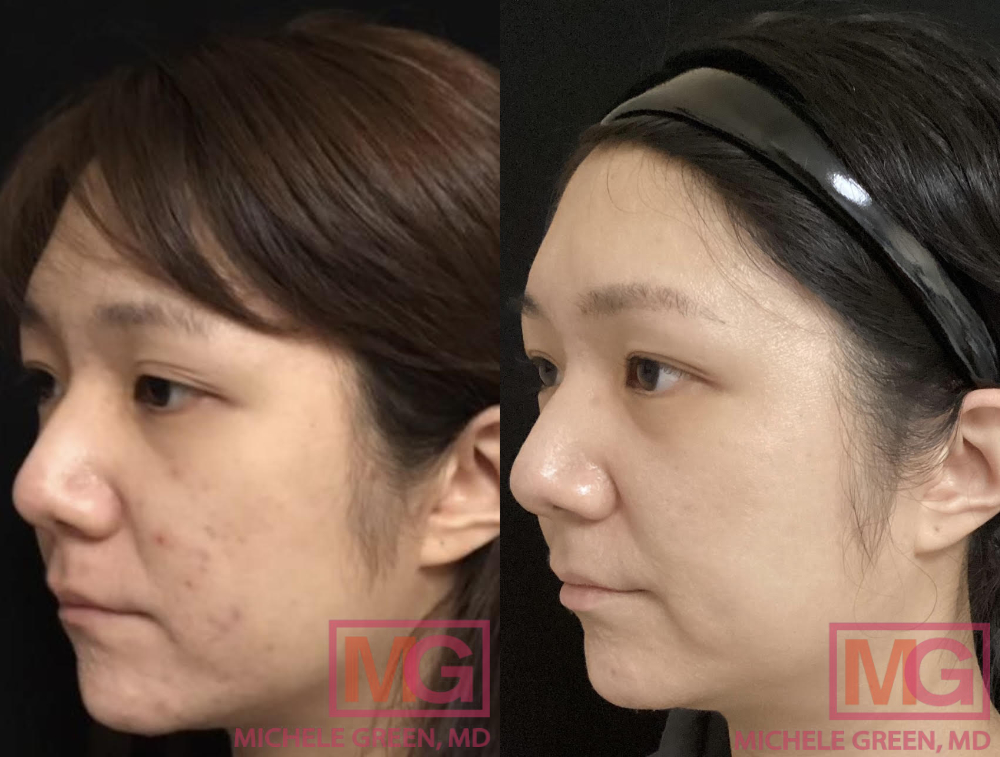
Is microneedling effective on Asian skin for acne scar treatment?
Microneedling can reduce superficial acne scars and post-inflammatory hyperpigmentation; however, it is less effective for atrophic acne scars. These scars are depressions caused by a loss of collagen. While microneedling stimulates natural collagen production, it is more challenging to treat atrophic scars with this method alone because of reduced skin volume and tethering that pulls the skin downward (J Cosmet Dermatol. 2014;13:180–7. doi: 10.1111/jocd.12095). Other options for treating atrophic scars include fillers, such as hyaluronic acid fillers like Juvéderm and Restylane, or collagen-boosting fillers like Sculptra. Additionally, Dr. Green may use a subcision technique to break the tethers and reduce the appearance of post-acne scars. To determine the best treatment for your acne scars, it’s recommended to consult a board-certified dermatologist.
Is microneedling suitable for Asian skin tone?
Yes, microneedling is considered safe and effective for Asian skin, offering benefits for issues like acne scars, hyperpigmentation, and skin rejuvenation. However, it’s crucial to consult a provider experienced with ethnic skin types, spanning from light to dark skin tones, to reduce risks such as post-inflammatory hyperpigmentation. Microneedling is often preferred over traditional laser treatments for darker skin because it presents a safer profile, lowering the risk of adverse side effects like dyspigmentation and scarring. It is a gentler alternative compared to more aggressive resurfacing procedures like laser therapy or chemical peels, which carry a higher risk of complications such as dyspigmentation and scarring in darker skin tones. Additionally, it stimulates collagen production as the tiny needles create microchannels in the skin, prompting the body’s natural wound-healing process and boosting collagen and elastin production. To determine if microneedling is a safe and effective option for you, it’s best to consult with a board-certified dermatologist, such as Dr. Michele Green in New York City.
What type of skin is microneedling not recommended?
Microneedling is not suitable for individuals with certain health conditions, such as autoimmune diseases, keloid scars, bleeding disorders, active infections (including cold sores), or those who are pregnant or breastfeeding. Additionally, people with active acne, rashes, or significant sun exposure should avoid microneedling. Individuals with darker skin tones require special care to prevent issues like hyperpigmentation. Conditions such as scleroderma, eczema, or psoriasis may be worsened by microneedling. Those with active bacterial, viral, or fungal infections, including cold sores or active acne, are also disqualified, as these can intensify symptoms and spread bacteria. Although microneedling is generally a safe and gentle procedure, consulting a dermatologist is recommended to determine if it is suitable for your specific skin type.
The microneedling treatment process:
The first step is to visit Dr. Green at her private dermatology office on Manhattan’s Upper East Side. During your consultation, Dr. Green will gather a detailed medical history, perform a physical exam of your skin condition, and review any previous cosmetic treatments you may have received. Based on her assessment and your specific skin concerns and aesthetic goals, she will decide the best treatment modality for you.
On the day of your microneedling treatment, apply a topical anesthetic to the entire treatment area one hour prior to your appointment. Upon arrival at Dr. Green’s office, the numbing cream will be removed, and the skin will be sterilized. During the microneedling procedure, Dr. Green will glide the FDA-approved microneedling device across the skin’s surface. This device has tiny needles that create micro-punctures, triggering the body’s natural healing process and stimulating collagen production. If specialized topical serums, such as depigmentation serum or platelet-rich plasma, are used, they will be applied after the micro-punctures with the device. These small punctures help the serums absorb more effectively, enhancing their effectiveness.
After treatment, Dr. Green will advise you to avoid cleansing your skin for 24 hours to allow the topical treatments used during the procedure to be fully absorbed, promoting better healing and skin rejuvenation. It is normal for your skin to feel dry or tight after a microneedling session. To increase the skin’s hydration, Dr. Green recommends using ultra-nourishing skincare, such as her MGSKINLABs’ Hydra Repair, at home. This specially formulated serum contains a high concentration of hyaluronic acid, providing essential moisture during the recovery process. Dr. Green will also recommend specific moisturizers and topical serums to use during the healing process, including a gentle cleanser and a broad-spectrum sunscreen with an SPF of 30 or higher. Sunscreen with SPF 50 is crucial because microneedling increases skin sensitivity to sunlight. When you undergo treatment with Dr. Green, you will receive all necessary aftercare instructions to help you achieve and maintain optimal results.
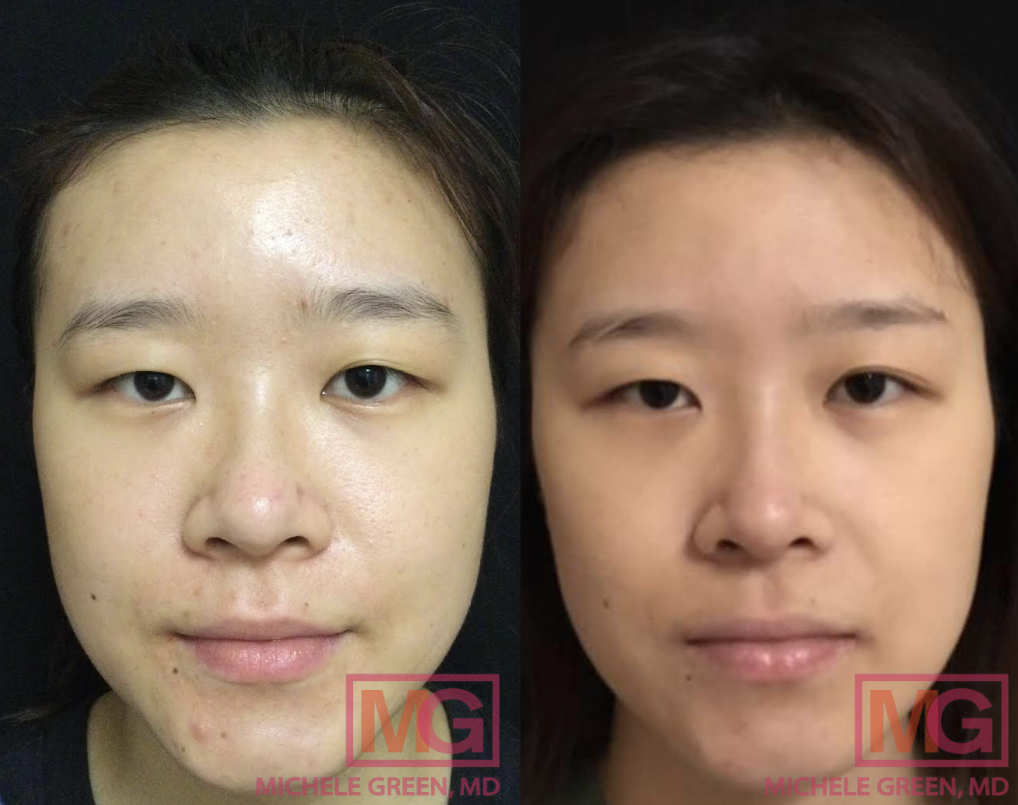
Do Asian skin have more collagen?
Asian skin typically has a thicker dermis, resulting in higher levels of collagen and melanin. This natural boost in collagen helps keep the skin firm and elastic. However, while collagen improves firmness and elasticity, it can also make Asian skin appear thicker and tougher, similar to conditions like scleroderma, where an immune response causes excessive collagen production, resulting in hardened and tight skin.
Is microneedling better for Asian skin than other treatment options?
Microneedling is a safe and effective option for Asian skin, targeting issues like acne scars, hyperpigmentation, and overall skin texture improvement without the increased risk of complications that laser therapy can pose to darker skin tones. While many treatments are available for individuals with melanin-rich skin types, microneedling remains a highly effective option for those with this skin type. Another safe and effective option for melanin-rich skin is the Clear + Brilliant laser. Solta Medical, the maker of the Fraxel® laser, developed this non-ablative, non-invasive laser. It’s often called the “mini-Fraxel” because it provides results similar to those of the Fraxel laser without the downtime typically associated with traditional laser resurfacing. Patients appreciate Clear + Brilliant for its safety across all skin types and tones, its proven effectiveness, and the ease of scheduling. To find the best treatment for your needs, it’s best to consult a board-certified dermatologist for guidance in reaching your skincare goals. Other treatments, such as chemical peels, are also beneficial for skin maintenance and addressing hyperpigmentation, texture, and signs of aging. Chemical peels exfoliate the skin by removing dead, pigmented cells, revealing healthier, brighter skin. There are many types of chemical peels, including those using alpha-hydroxy acids, glycolic acids, trichloroacetic acids, as well as Cosmelan peels, Vi Peels, mesopeels, and dermamelan peels. It’s advisable to consult a board-certified dermatologist to determine which treatment or combination of treatments would be most suitable for you.
What’s better than microneedling for Asian skin rejuvenation?
Microneedling is a safe and effective treatment suitable for all skin types, including Asian skin. While no treatment is necessarily better than microneedling, the best option depends on the specific skin concerns being addressed. Other options for Asian skin include fractional lasers, such as Clear + Brilliant, and chemical peels, which can improve pigmentation, texture, and deeper scars, while also supporting anti-aging efforts. The eMatrix RF treatment is also effective for treating acne scars on darker skin tones by stimulating collagen without causing epidermal damage that could lead to hyperpigmentation.
VBeam laser
The Vbeam laser is the gold-standard pulsed dye laser for treating facial rosacea, vascular lesions, and broken blood vessels. It is designed to target dilated blood vessels and other visible redness beneath the skin’s surface, restoring clarity. Manufactured by Syneron Candela, the Vbeam laser is the best pulsed dye laser worldwide for eliminating redness. It is used to treat rosacea, broken blood vessels, vascular lesions (including angiomas, cherry hemangiomas, port wine stains, and birthmarks), active acne, acne scars, spider veins, and red stretch marks, among other skin conditions related to redness.
Clear + Brilliant
Clear + Brilliant® is a non-ablative, non-invasive laser developed by Solta Medical. This FDA-approved treatment has been proven safe and effective for skin rejuvenation. Clear + Brilliant uses fractionated laser technology to create millions of tiny treatment zones, stimulating new collagen growth and replacing damaged skin. Since only part of the skin is treated during each session, the surrounding skin remains unaffected, resulting in minimal downtime. An additional benefit of Clear + Brilliant is its ability to improve skin permeability. After treatment, it is recommended to use vitamin C as an antioxidant to help protect the skin, reduce redness, and brighten the complexion. This laser is also very popular due to its versatility in treating all skin types and tones without the risk of post-inflammatory hyperpigmentation, even on darker skin tones.

Chemical Peels
A chemical peel is a cosmetic procedure that uses an acid-based solution applied to the skin’s surface to remove damaged skin cells and boost skin cell turnover, revealing smooth, clear, and evenly textured skin. There are many types of chemical peels, varying in concentration and active ingredients, each serving different skincare purposes. Depending on the specific peel used, the treatment can help treat active acne, diminish the appearance of hyperpigmentation such as dark spots, age spots, and melasma, and enhance skin tone and texture. Due to their high effectiveness and versatility, chemical peels are among the top five most popular cosmetic procedures in the United States.
eMatrix
eMatrix™ is a unique treatment that outperforms existing technologies in skin rejuvenation. Unlike other fractional skin resurfacing laser systems, which use laser light for ablation, the eMatrix utilizes bipolar radiofrequency energy to heat tissue beneath the skin surface while preserving the top layer intact. By bypassing the epidermis and targeting the deeper dermis layers, eMatrix treatment reduces the risk of side effects often seen with more aggressive treatments, such as ablative lasers, including hyperpigmentation, skin discoloration, and scarring. Each pulse of the eMatrix laser sends radiofrequency energy through the electrode matrix, causing skin injury and activating fibroblasts to signal a wound-healing response and produce new collagen. Collagen is a natural protein in the skin that gives it a firm foundation and structural support. With eMatrix Sublative Rejuvenation, increased collagen production yields smoother, brighter, tighter, more attractive, and younger-looking skin, with long-lasting results.
Which facial treatment is best for Asian skin?
No facial treatment is inherently the best for all Asian skin types. Although there are various skin types within the Asian skin spectrum, including dry, oily, and combination skin, the ideal facial depends on your specific skin concerns and goals. For overall skin maintenance, regularly scheduled HydraFacials are recommended. The HydraFacial uses a three-step process to rejuvenate the skin. The first step focuses on cleansing by using alpha-hydroxy acids to gently remove dirt, dead skin cells, and excess oil. A light chemical peel, composed of salicylic acid and glycolic acid, is applied to unclog pores and refine the skin’s texture. The second step uses the system’s patented vortex technology to exfoliate, providing a thorough cleanse. The final step replenishes the skin with moisture and hydration. The HydraFacial can also be customized with LED light therapy and potent booster serums to target various skin concerns. This facial is a versatile addition to your skincare routine, featuring different boosters specifically designed to address individual skin needs.
What is the best treatment for Asian skin pigmentation?
Patients looking to treat unwanted pigmentation and improve uneven skin tone can benefit from combining their microneedling sessions with a topical depigmenting serum, whether addressing melasma, sun damage, post-inflammatory hyperpigmentation, or other pigmentation concerns. Microneedling , paired with a depigmenting serum, provides a safe and effective way to achieve a more even complexion. The depigmenting serum used at Dr. Michele Green’s private dermatology practice contains a unique blend of gentle yet potent skin-brightening ingredients that target melanocyte activity and lighten hyperpigmentation. After microneedling with the depigmenting serum, patients often notice an even skin tone, a radiant look, and a healthy glow that endures. Limiting sun exposure and applying proper sun protection, including daily sunscreen, is essential to prevent the reappearance of hyperpigmentation. When undergoing microneedling treatment with Dr. Green, patients will receive all necessary aftercare instructions to maintain optimal results and consistent skin tone over time.
How do I get started with Microneedling treatment today?
Microneedling is a form of collagen induction therapy that can minimize fine lines, large pores, acne scars, hyperpigmentation, skin elasticity issues, stretch marks, and other skin concerns. This non-invasive cosmetic treatment is safe and effective for all skin tones and types. Its benefits are amplified when combined with platelet-rich plasma, a depigmentation solution, or radiofrequency energy. The best skin rejuvenation results are achieved when microneedling is performed by an experienced, board-certified dermatologist, such as Dr. Green. She offers traditional microneedling, PRP microneedling, microneedling with a depigmentation serum, and Vivace radiofrequency microneedling at her boutique dermatology practice in NYC. She will work with you to create a personalized microneedling plan tailored to your specific needs and goals.
Dr. Michele Green is an internationally renowned, board-certified dermatologist with over 25 years of experience providing top non-invasive cosmetic treatments to some of the world’s most discerning clients, including various microneedling procedures. When it comes to skin rejuvenation, Dr. Green takes a holistic approach and a less-is-more philosophy, customizing each patient’s treatment plan to address their unique skin concerns and achieve optimal results. She is consistently recognized as one of NYC’s leading dermatologists by New York Magazine, Super Doctors, and Castle Connolly for her dedication and expertise. To schedule a consultation with Dr. Green at her private dermatology practice in Manhattan’s Upper East Side and learn more about microneedling and other non-invasive skin rejuvenation options, call 212-535-3088 or contact us online today.
Related Topics
Summarize This Content: AI


