


Vivace Microneedling
Vivace RF microneedling is a popular non-invasive skin-rejuvenation treatment that improves skin texture, tone, and firmness with minimal downtime. As collagen production slows with age, the skin can look less smooth, less firm, and more uneven, often prompting people to seek a treatment that delivers natural improvement. Vivace appeals to patients who prefer subtle enhancement that develops over time without the risk and downtime of surgical procedures. The treatment fits easily into busy lifestyles because recovery is minimal and results continue to improve in the months following each session. Its ability to strengthen the skin while maintaining a natural look has made Vivace a frequently requested treatment at Dr. Michele Green’s private dermatology practice.
Vivace RF microneedling combines microneedling with radiofrequency energy to stimulate collagen and elastin production at multiple skin layers. Ultrafine, gold-tipped needles create controlled microchannels that activate the skin’s natural healing response. At the same time, radiofrequency energy is delivered beneath the surface to gently heat the dermis and support new collagen formation in the deeper layers. This dual action addresses surface-level concerns, such as texture and pore size, while also supporting firmer, smoother skin over time. The treatment is carefully tailored to skin type and concerns to ensure consistent results. A board-certified dermatologist like Dr. Michele Green uses this technology to tailor each Vivace treatment for optimal skin rejuvenation.
Dr. Michele Green is an internationally renowned, board-certified cosmetic dermatologist with over 25 years of experience reversing signs of aging for some of the world’s most discerning individuals, using the best skin rejuvenation treatments, including Vivace RF microneedling. Dr. Green takes a holistic, less-is-more approach, customizing each patient’s treatment plan to address specific skin concerns and achieve optimal results. She is consistently recognized by Castle Connolly, New York Magazine, and Super Doctors as one of New York’s top dermatologists, based on her expertise and patient testimonials. When you consult with Dr. Green, she will collaborate with you to create a personalized treatment plan tailored to your specific needs and goals, helping you achieve a clear, smooth, beautiful complexion.
What is Vivace RF microneedling?
Vivace RF microneedling is an FDA-cleared, minimally invasive treatment that reduces the appearance of facial wrinkles, fine lines, enlarged pores, acne scars, stretch marks, hyperpigmentation, mild skin laxity, and uneven skin tone or texture. The treatment synergistically combines microneedling and radiofrequency technology to stimulate collagen production in the epidermal and dermal layers of the skin, maximizing results. Patients experience virtually no downtime or adverse side effects after treatment, allowing them to integrate appointments into their busy schedules seamlessly. Most patients require an initial series of Vivace treatments, each spaced four weeks apart, to achieve optimal results. Dr. Green recommends regular maintenance appointments to sustain and enhance treatment results. Vivace RF microneedling is a popular skin rejuvenation option due to its minimally invasive nature, proven safety across all skin tones and types, and consistently impressive results.
What does Vivace microneedling do?
There is very little downtime with the Vivace radiofrequency microneedling procedure, which is one reason it is so popular among patients with busy schedules. Most individuals can return to normal daily activities shortly after their appointment without extended recovery. The skin may appear mildly flushed or feel warm immediately after treatment, but these effects typically fade within the same day or by the next morning. Unlike more aggressive resurfacing procedures, Vivace does not require days of social downtime or visible peeling. Any temporary skin sensitivity resolves as the skin naturally recovers and begins producing new collagen beneath the surface. This minimal interruption allows patients to schedule Vivace treatments without significant impact on work or social commitments while still achieving gradual, meaningful skin improvement over time.
What does Vivace treat?
Vivace RF microneedling is an excellent treatment option for reducing signs of aging on the skin, including:
- Fine lines
- Wrinkles
- Mild skin laxity
- Skin discoloration from sun damage or old acne lesions
- Acne scars
- Uneven skin texture
- Enlarged pores
- Stretch marks
Who is a good candidate for Vivace RF microneedling?
A good candidate for Vivace microneedling is someone seeking to improve overall skin quality with minimal downtime and a non-invasive approach to rejuvenation. Vivace is well-suited for individuals addressing early to moderate signs of aging, including fine lines, uneven skin texture, enlarged pores, mild skin laxity, acne scars, and discoloration from sun damage or past breakouts. It is also appropriate for patients who prefer a gradual, natural-looking improvement that increases collagen production. Vivace can be safely performed on all skin tones and types, making it an appealing choice for patients who may not be candidates for more aggressive resurfacing treatments. Ideal candidates are generally in good overall health and committed to following post-treatment care instructions to support proper healing and results. During a consultation, a board-certified dermatologist will evaluate the skin’s condition, review medical history, and discuss aesthetic goals to determine whether Vivace aligns with the patient’s needs and to design a customized treatment plan that delivers balanced, lasting skin rejuvenation.
Who should not do Vivace microneedling?
Vivace microneedling is safe for many skin types and tones, but it is not appropriate for everyone. Individuals with active skin infections, open wounds, or inflamed skin conditions in the treatment area should postpone treatment until the skin has fully healed, as treating damaged skin can increase the risk of irritation or delayed recovery. Patients with a history of poor wound healing or a tendency to form keloid scars may not be good candidates, since microneedling can stimulate abnormal scar formation. Those with active acne breakouts, uncontrolled rosacea, eczema, or psoriasis in the treatment area are typically advised to avoid Vivace during flare-ups. Vivace microneedling is also not recommended for patients who are pregnant or breastfeeding, as the safety of radiofrequency energy during this time has not been established. Individuals with certain medical conditions, such as bleeding disorders, or those taking blood-thinning medications, may face an increased risk of bruising or prolonged healing and should be carefully evaluated before treatment. A consultation with a board-certified dermatologist is essential to review medical history, skin concerns, and overall health to determine whether Vivace microneedling is a safe and appropriate option.
What is the process of getting Vivace microneedling?
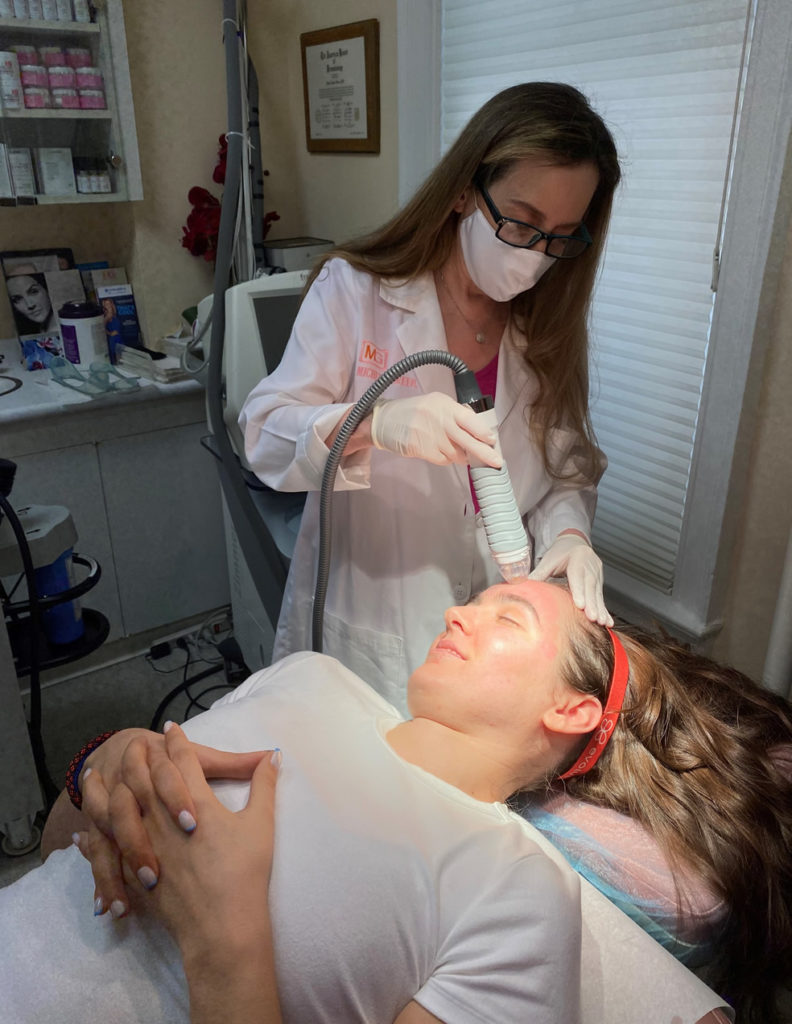
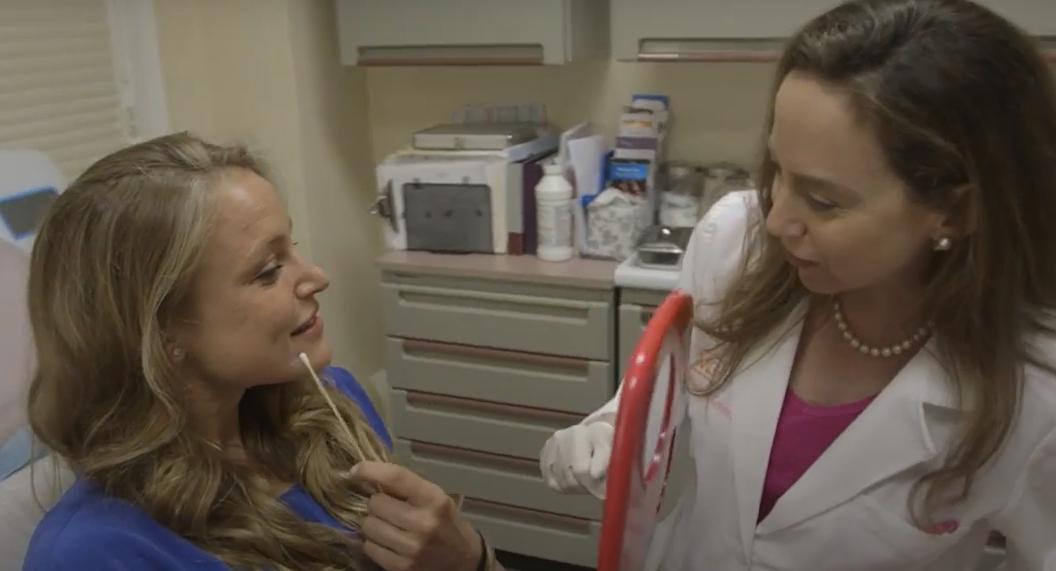
First, schedule a consultation with Dr. Green to discuss your skin concerns and cosmetic goals. Dr. Green will collect a comprehensive medical history, perform a physical assessment of your skin, and review any previous cosmetic procedures to determine whether you are a suitable candidate for Vivace RF microneedling. This assessment will help create a personalized skin rejuvenation treatment plan tailored to your needs. Medical photography of the treatment area will be taken for your private medical record and stored for future access to track treatment progress.
On your Vivace RF Microneedling treatment day, a topical numbing cream will be applied to the entire treatment area one hour before the procedure to minimize discomfort and make the process virtually pain-free. Upon arrival at Dr. Green’s private dermatology office, the numbing cream will be removed, and the skin will be sterilized. The Vivace treatment will then be performed, using tiny, gold-tipped needles and radiofrequency energy to promote new collagen production. Treating the face takes approximately 45 minutes. If larger areas of the body are treated, the procedure may take up to 1.5 hours. As part of the Vivace experience, a specialized peptide serum and cooling mask will be applied to the skin after the procedure to enhance the aesthetic results. Afterward, Dr. Green will provide the pertinent aftercare information needed to achieve optimal results, including any recommended treatment serums and skincare products tailored to your customized treatment plan.
What is the aftercare for Vivace?
Aftercare after Vivace microneedling is essential for proper healing and optimal results. Immediately after treatment, the skin may appear mildly red or feel warm. Patients should keep their skin clean and well hydrated to support the natural healing process. Makeup, sunscreen, and other skincare products should be avoided for the first 24 hours to prevent irritation and reduce the risk of infection. Patients should also avoid strenuous exercise, hot showers, saunas, and any activity that raises body temperature for at least 48 hours, as excess heat can contribute to swelling and sensitivity. Gentle cleansers and moisturizers may be resumed the day after treatment. At the same time, exfoliating products, retinol, hydroxy acids, and other active ingredients should be avoided for about one week until the skin has fully healed. Sun protection is essential, as the skin is more sensitive to ultraviolet exposure during the healing phase. With proper aftercare, the skin heals smoothly and continues to improve as new collagen forms over the weeks and months following Vivace microneedling.
What are the potential side effects of Vivace RF microneedling treatment?
Vivace microneedling is considered a safe and well-tolerated skin rejuvenation treatment, but it can cause temporary side effects as the skin responds to controlled micro-injuries and radiofrequency energy. Patients may experience redness in the treated area immediately after the procedure, similar to a mild sunburn, which typically subsides within the first day. Swelling, tenderness, or warmth may occur and can last for a few days as part of the normal healing process. Some patients notice tiny pinpoint bleeding during or shortly after treatment, from the micro-channels created during the procedure. Very rarely, mild bruising may develop in certain areas, particularly where the skin is thin, and it usually fades within several days. Those prone to bruising are advised to take Arnika, an herbal supplement, a few days before and after treatment. A small number of patients may experience temporary dry or flaky skin as the outer layer exfoliates and renews itself. Infection is uncommon when proper sterile techniques and aftercare are followed. All of these reactions tend to resolve on their own with appropriate post-treatment care, and a board-certified dermatologist will provide detailed instructions to minimize discomfort and support a smooth recovery.
Is there any downtime from the Vivace RF microneedling?
There is very little downtime with the Vivace radiofrequency microneedling procedure, which is one reason it is so popular among patients with busy schedules. Most individuals can return to normal daily activities shortly after their appointment without extended recovery. The skin may appear mildly flushed or feel warm immediately after treatment, but these effects typically fade within the same day or by the next morning. Unlike more aggressive resurfacing procedures, Vivace does not require long downtime or visible peeling. Any temporary skin sensitivity resolves as the skin naturally recovers and begins producing new collagen beneath the surface. This benefit allows patients to schedule Vivace treatments without significantly disrupting work or social commitments while still achieving gradual skin improvement over time.
Does Vivace microneedling work?
Many patients ask, “Does Vivace really work?” The answer is yes! Vivace is a safe, highly effective, minimally invasive treatment FDA-cleared for skin tightening and rejuvenation. Its intelligent design allows patients to enjoy the benefits of microneedling and RF energy in a single treatment, and our patients are typically thrilled with their results. Additionally, when Vivace is combined with restorative serums and a targeted skincare regimen, patients can achieve long-lasting, natural-looking results. Vivace RF microneedling is safe for all skin types and tones, including darker skin tones. In just a few treatment sessions, Vivace can create smooth, radiant, younger-looking skin. When you consult with board-certified dermatologist Dr. Michele Green about skin rejuvenation treatments, she will develop a customized treatment plan to ensure that the cosmetic procedures address your specific skin concerns and deliver optimal results.
Is Vivace safe?
Vivace is considered a safe cosmetic treatment when performed by a qualified medical professional on appropriately selected patients. The FDA has cleared the Vivace technology, which is widely used in dermatology to improve skin quality through controlled collagen stimulation. The treatment delivers precise microneedling and radiofrequency energy, allowing the skin to heal and regenerate with minimal injury. Vivace is performed in a medical setting using sterile technique, which helps reduce the risk of complications. Most patients tolerate the procedure well and experience only mild, temporary skin reactions that resolve on their own. With a thorough consultation and medical evaluation beforehand, Vivace offers a reliable safety profile for patients seeking non-invasive skin rejuvenation.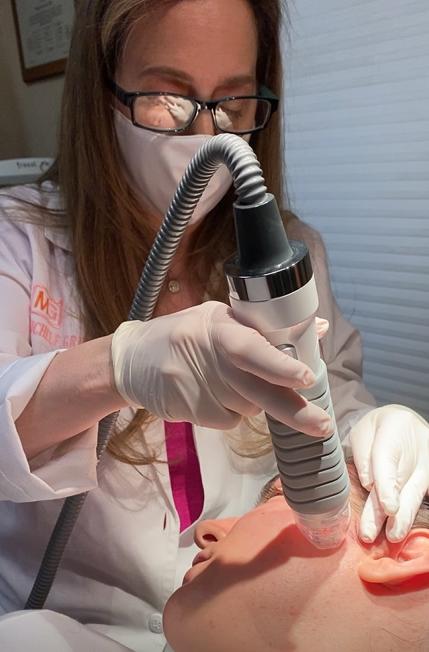
Is Vivace better than Microneedling?
Traditional microneedling, also known as collagen induction therapy, uses a handheld device with tiny, sterile needles to gently puncture the skin’s surface. This process creates hundreds of microchannels in the skin’s upper layers, promoting natural wound healing and collagen production in the epidermis. The difference between traditional microneedling and Vivace is that Vivace also incorporates radiofrequency energy to enhance collagen production in the dermis. Because Vivace stimulates collagen production in both the outer and inner layers of the skin, many patients prefer it over traditional microneedling. However, the best way to determine which skin rejuvenation treatment is suitable for you is to meet with Dr. Green, who can create a personalized treatment plan tailored to your needs and goals.
Can Vivace microneedling be used on other areas other than the face?
Yes, Vivace microneedling can be used on areas beyond the face, making it a flexible option for patients seeking to improve skin quality across multiple body regions. In addition to facial rejuvenation, Vivace is commonly performed on the neck and chest, where skin thins and loses firmness over time and often shows visible signs of sun exposure. The treatment can also be used on the décolletage to improve uneven texture and support smoother-looking skin. Beyond the face and chest, Vivace may be used on areas affected by stretch marks or scarring, such as the abdomen, thighs, upper arms, and knees. Each area is treated with customized settings based on skin thickness and sensitivity to ensure proper collagen stimulation and patient comfort.
Combining the Vivace experience with other non-invasive cosmetic treatments
In addition to fine lines, uneven skin texture, and pigmentation, many patients also experience volume loss and skin laxity as part of the natural aging process. Dr. Green offers a range of non-invasive cosmetic treatments that can be combined with Vivace RF microneedling to achieve comprehensive facial rejuvenation. The treatment that best complements your Vivace procedure will depend on your specific skin concerns and aesthetic goals. During your consultation with Dr. Michele Green in her private New York City office, she will assess your skin and facial anatomy to create a personalized treatment plan that yields clear, radiant, and youthful-looking skin.
Thermage FLX is an excellent complement to Vivace RF microneedling, as it improves mild to moderate skin laxity. Thermage is considered the gold standard for non-invasive skin tightening, delivering remarkable results in a single session. Like Vivace, Thermage uses radiofrequency energy to stimulate collagen production deep within the dermis, resulting in a tightening and smoothing effect on the skin. Results typically become visible within 4 to 6 months and can last for 1 year or more, depending on the individual patient. There is no downtime with Thermage, allowing patients to schedule sessions and resume their daily activities afterward. In addition to the face, Thermage can be used to tighten skin on the neck, décolletage, chest, abdomen, upper arms, thighs, and buttocks.
Botox injections are among the most popular cosmetic treatments worldwide, owing to their ability to minimize the appearance of dynamic facial wrinkles. Dynamic wrinkles develop from repeated muscle contractions during facial expressions. Common dynamic wrinkles include forehead lines from raising the eyebrows, glabellar lines (between the eyebrows) caused by brow furrowing, and crow’s feet (lines around the eyes) resulting from smiling or squinting. When injected, Botox causes temporary, controlled muscle paralysis in the treatment area. By effectively “freezing” the muscle, Botox can smooth fine lines and wrinkles caused by muscle contractions. Botox takes about 2 weeks to take effect and lasts about 4 months. Patients typically undergo regular treatment sessions to maintain and enhance the results of their treatment.
Dermal fillers are excellent cosmetic injectables that complement the Vivace RF microneedling treatment. As collagen levels decline, many patients also experience a loss of skin volume. Dermal fillers can replenish facial volume, enhance contours, smooth deeper wrinkles, and reduce the appearance of acne scars, contributing to overall facial rejuvenation. Each dermal filler is designed to address volume loss in specific facial areas, including the cheeks, midface, chin, lips, lip lines, and under-eye regions. Juvederm, Restylane, and Belotero are hyaluronic acid fillers, a naturally occurring substance in the body that supports skin hydration and suppleness. These fillers provide immediate volume restoration and can last 6 to 12 months, depending on the specific filler used. Sculptra is a unique filler made of poly-L-lactic acid, which creates structural support within the skin and stimulates new collagen production. After an initial series of injections, results with Sculptra can last up to two years.
Chemical peels can also be combined with Vivace RF microneedling to enhance skin clarity and tone. They work by gently exfoliating the skin’s outer layers to improve uneven pigmentation, sun damage, rough texture, and dullness. When performed as part of a customized treatment plan, chemical peels complement Vivace by addressing surface discoloration while Vivace stimulates collagen deeper in the skin. This pairing enables more balanced skin rejuvenation, targeting both texture and tone concerns. Chemical peels come in varying strengths and formulations, allowing treatment to be tailored to the patient’s skin type, sensitivity, and goals. With proper spacing and professional guidance, this combination can lead to brighter, smoother, and more even-looking skin.
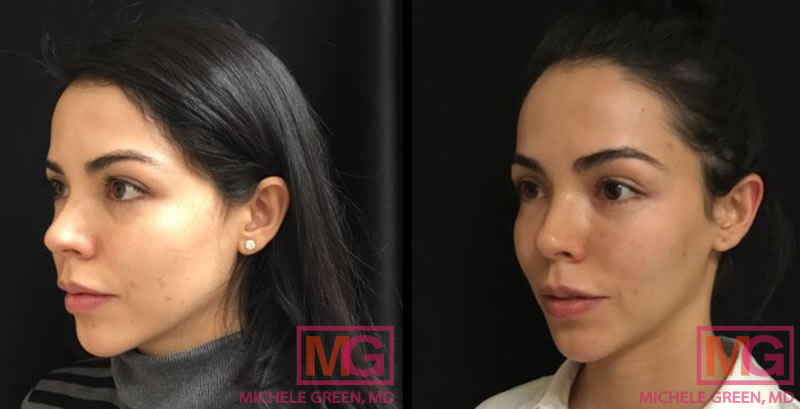
Before and after photo of patient – PRP w/Microneedling, VBeam, Aqua Gold (6 months)
Vivace Microneedling FAQs:
Who makes Vivace microneedling?
Vivace is owned and manufactured by Aesthetics Biomedical, a company that develops and distributes aesthetic devices and products.
What is Vivace microneedling?
Vivace microneedling is a cosmetic skin treatment designed to improve the skin’s overall look and feel by encouraging natural skin renewal. The procedure is often chosen by patients seeking a smoother texture, a more even tone, and healthier-looking skin without aggressive resurfacing or extended recovery time. Vivace microneedling works by activating the skin’s own repair processes, resulting in clearer, smoother-looking skin as collagen production increases. Patients often notice that their skin appears more resilient in the weeks following treatment, as collagen production continues to increase. This approach makes Vivace microneedling especially appealing for individuals seeking subtle, natural-looking improvement that enhances skin quality while maintaining a soft, refreshed appearance.
Can Vivace microneedling help prevent signs of aging?
Vivace microneedling can help prevent early signs of aging by supporting ongoing collagen and elastin production before significant damage occurs. As collagen naturally declines with age, subtle changes in skin texture, firmness, and tone can appear even before deep wrinkles form. By regularly stimulating collagen, Vivace helps maintain skin resilience and smoothness over time. Many patients choose Vivace as a proactive treatment to preserve skin quality and slow visible signs of aging. When incorporated into a long-term skincare and maintenance plan, Vivace can help the skin age more gracefully by reinforcing its natural regenerative processes.
How long does it take to see results from Vivace?
Some patients report seeing initial results immediately after the procedure, while others notice visible results within 3 to 7 days. Improvements in skin texture, tone, and signs of aging, as well as sun damage, skin laxity, and acne scars, can be observed for several months after an initial series of treatment sessions. This occurs because Vivace RF microneedling continuously stimulates collagen and elastin production for up to six months after treatment.
How long does Vivace microneedling last?
As new collagen and elastin are produced, patients can expect improvements in skin quality for up to six months after their last treatment session. Many patients find that optimal results can be sustained with biannual “touch-up” treatments, creating glowing skin for years. Dr. Michele Green will also create a customized skincare regimen tailored to your specific skin concerns and goals, enhancing and maximizing the benefits of the Vivace microneedling treatment. Although some individuals report long-lasting results that persist for multiple years, this depends on the number of treatment sessions completed, your skincare routine, sun exposure, sun protection, and age.
How many Vivace treatments do I need?
The exact number of treatments an individual needs depends on their specific requirements and objectives. For optimal results, Dr. Green recommends at least three Vivace treatments, though some may need additional sessions based on the severity of their skin concerns. Each session should be spaced 4 to 6 weeks apart to allow ample time for the skin to heal and continuously produce new elastin and collagen between treatments. After the initial series, patients typically undergo biannual maintenance sessions to sustain and enhance the results of their treatment. When you consult with Dr. Green, she will assess your skin to determine how many Vivace treatments are necessary to help you achieve healthy, radiant, youthful-looking skin.
How often should Vivace microneedling be done for maintenance?
Vivace microneedling is typically repeated for maintenance based on how the skin responds to treatment, the patient’s age, and long-term skincare goals. After completing an initial series of treatments to stimulate collagen production and improve overall skin quality, many patients maintain their results with follow-up sessions scheduled about twice a year. This schedule aligns with the natural pace of collagen production, which gradually slows again even after successful treatment. Maintenance sessions help reinforce the collagen that has already formed, supporting ongoing improvements in skin firmness, texture, and tone. However, the ideal maintenance schedule varies from person to person, depending on factors such as skin condition, age, lifestyle, and how the skin responds to collagen stimulation over time. Patients using Vivace as a preventative treatment may follow a more conservative schedule, while those with more advanced concerns or ongoing sun exposure may benefit from slightly more frequent sessions.
How much is Vivace microneedling?
The total cost of a Vivace RF microneedling treatment depends on several factors, including the geographic location of the office where you receive treatment, the number of sessions required to achieve your ideal results, and the experience level of the provider performing your microneedling treatment. Treatment from a nurse or in a setting such as a medical spa is often less expensive; however, receiving treatment from an expert board-certified dermatologist like Dr. Michele Green ensures that the procedure is safe and minimizes the risk of unwanted side effects. Dr. Green has over two and a half decades of experience providing some of the world’s most discerning individuals with the best skin rejuvenation treatments, including Vivace RF microneedling. When you consult with Dr. Green at her private dermatology office in Manhattan’s Upper East Side, you will have the opportunity to discuss your goals in depth, and she will tailor a Vivace microneedling treatment plan best suited to your needs.
Is Vivace microneedling safe?
Vivace microneedling is safe for a wide range of skin types and tones thanks to its controlled depth settings and insulated needle design. The gold-tipped needles are engineered to deliver energy beneath the skin’s surface while protecting the outer layers, helping minimize irritation and unwanted side effects. This makes Vivace microneedling a suitable option for patients who may not be candidates for more aggressive resurfacing treatments. Because the treatment does not rely on heat applied to the skin, it reduces the risk of burns or inflammation. With proper aftercare and sun protection, the skin heals efficiently while new collagen forms gradually over time. A personalized assessment by a board-certified dermatologist ensures that Vivace microneedling is performed safely and tailored to the patient’s skin condition and aesthetic goals.
Is Vivace microneedling painful?
No, the Vivace treatment does not cause pain. Thanks to Vivace’s precision robotic motor, this minimally invasive treatment is virtually pain-free. A topical numbing cream containing lidocaine will be applied to the skin one hour before treatment to ensure maximum comfort during the procedure. When you arrive for your Vivace microneedling session, the numbing cream will be removed, and the skin will be prepared before treatment begins.
What is the difference between Vivace and microneedling?
The primary difference between Vivace and traditional microneedling is how each treatment stimulates collagen production in the skin. Traditional microneedling creates controlled micro-injuries at the skin’s surface, activating the natural healing response and promoting collagen formation in the epidermis. Vivace, on the other hand, combines microneedling with radiofrequency energy delivered into the deeper dermal layers of the skin. This added radiofrequency component allows Vivace to address not only surface texture concerns but also deeper structural changes associated with aging, such as reduced firmness and mild skin laxity. By targeting collagen production across multiple skin depths in a single session, Vivace delivers longer-lasting improvements in skin tone, texture, and tightness with minimal downtime.
Is Vivace the same as microneedling?
Vivace is not the same as traditional microneedling, even though microneedling is part of the Vivace treatment. Standard microneedling relies solely on mechanical stimulation from fine needles to encourage skin renewal and collagen production at the surface. Vivace uses radiofrequency energy to deliver controlled heat beneath the skin, further stimulating collagen and elastin formation. This added radiofrequency allows Vivace to improve concerns that traditional microneedling alone may not fully address, such as early skin laxity and deeper textural irregularities. While both treatments support collagen renewal and overall skin rejuvenation, Vivace enhances the skin’s regenerative response at both superficial and deeper levels, leading to more comprehensive and sustained results over time.
What is the difference between Morpheus8 and Vivace?
Vivace and Morpheus8 are both fractionated radiofrequency microneedling treatments that minimize fine lines, facial wrinkles, and acne scars while improving mild skin laxity and uneven texture and tone. Although they use the same radiofrequency technology to enhance the skin, there are slight differences between the two treatments. The main distinctions between Vivace and Morpheus8 lie in pulse duration and depth settings. Vivace’s pulse duration can be set within a specific range from 100 to 800 milliseconds, whereas Morpheus8’s pulse duration is left to the provider’s discretion, which may introduce risks of error, pain, burning, or scarring. Vivace offers a wider range of depth settings for more precise adjustments based on different skin types and concerns, whereas Morpheus8 has only three. Vivace is often regarded as a more precise skin rejuvenation treatment, whereas Morpheus8 is better suited for targeting deeper layers of skin tissue.
Additionally, if used improperly, Morpheus8 can cause unintended fat loss in the treated areas. The best way to determine which treatment is suitable for you is to consult a board-certified dermatologist, such as Dr. Green. During your initial consultation, Dr. Green will assess your skin type and aesthetic desires to create your individualized treatment plan.
Is Vivace microneedling worth it?
Vivace microneedling is considered worth it for individuals seeking noticeable skin improvement without surgery or downtime. The treatment combines microneedling with radiofrequency energy to stimulate collagen and elastin production at the skin’s surface and in deeper layers. Vivace can improve fine lines, acne scars, uneven skin texture, enlarged pores, mild skin laxity, and pigmentation related to sun damage or past breakouts. After an initial series of treatments, the skin continues to strengthen for several months, allowing results to improve over time. Patients often appreciate that Vivace addresses their skin concerns while fitting easily into a busy lifestyle, with minimal recovery time and the ability to return to their daily routine immediately after treatment. For those seeking a non-invasive option that enhances overall skin quality and supports long-term collagen production, Vivace microneedling offers an effective approach to skin rejuvenation.
How does the skin look immediately after treatment?
Immediately after Vivace microneedling, the skin typically appears mildly pink or flushed, similar to a light sunburn. Some patients notice a slight warmth or tightness in the treated area, which is a normal response as the skin begins its natural healing process. The skin may look swollen at first, especially in areas where treatment intensity was higher, but this usually subsides within several hours. There is no significant peeling, and the pinpoint marks from the microneedles are subtle and temporary. Most patients find that their skin returns to normal the same day, with redness continuing to fade by the next morning, allowing them to resume daily activities without visible signs of the procedure.
Is Vivace safe for sensitive skin?
Vivace microneedling is generally safe for patients with sensitive skin when the treatment is properly customized and performed by a board-certified dermatologist. The radiofrequency microneedling device provides precise control of treatment depth and intensity, helping minimize irritation and reduce the risk of triggering sensitivity reactions. The insulated, gold-tipped needles deliver energy beneath the skin while protecting the surface, which can be especially beneficial for individuals prone to redness or reactivity. Patients with sensitive skin often tolerate Vivace well because the treatment does not cause aggressive resurfacing or prolonged skin heating. A thorough consultation is essential to review skin history, current sensitivities, and any underlying conditions, so the treatment plan can be adjusted to ensure comfort and safety.
How do I get started with the Vivace experience today?
Vivace RF microneedling is an advanced, minimally invasive skin rejuvenation treatment that improves overall skin quality by stimulating the production of natural collagen and elastin. The treatment combines microneedling with radiofrequency energy to target the skin’s surface and deeper layers, leading to smoother texture, improved tone, refined pores, and a firmer appearance over time. Vivace effectively addresses common concerns, including fine lines, acne scars, uneven texture, mild skin laxity, and discoloration from sun damage or past breakouts. With minimal downtime and a comfortable experience, Vivace can be incorporated into a comprehensive skincare and rejuvenation plan or combined with other non-invasive cosmetic treatments. A board-certified dermatologist, such as Dr. Michele Green in New York City, will evaluate your skin and aesthetic goals to create a customized treatment plan that supports natural-looking, long-term skin rejuvenation.
Dr. Michele Green is an internationally renowned, board-certified dermatologist with over two and a half decades of experience providing some of the world’s most discerning individuals with the best non-invasive cosmetic procedures, including Vivace RF Microneedling, Botox, chemical peels, and more. She is consistently recognized by Castle Connolly, New York Magazine, The New York Times, and Super Doctors as one of New York City’s top dermatologists for her dedication to her patients and expertise. Dr. Green takes a holistic approach and embraces a less-is-more philosophy in skin rejuvenation treatments, customizing each patient’s plan to address their skin concerns and personal aesthetic goals. To schedule a consultation with Dr. Green and get started with Vivace RF Microneedling today, contact our NYC-based office or call 212-535-3088.


