


Botox for Men
Now, more than ever, men are turning to minimally invasive, non-surgical procedures to address signs of aging, such as fine lines and wrinkles. Botox and other neuromodulator injections, like Dysport and Xeomin, have continued to grow in popularity since receiving FDA approval in the fall of 2002. The percentage of patients choosing Botox injections has increased by over 400 percent since it first launched more than twenty years ago. Although many believe only women pursue cosmetic procedures, a significant number of men also undergo treatments, with over 700,000 men in the United States receiving some form of cosmetic injectables, including male Botox, in 2023 alone. Men want to enjoy the same benefits from facial treatments as women, including Botox, skin tightening, facial rejuvenation, skincare, and overall wellness. Thanks to consistently stunning, natural-looking results, Botox injections remain the most common cosmetic procedure male patients ask Dr. Michele Green about in her private Upper East Side dermatology office.
Dr. Michele Green has been a pioneer in cosmetic procedures, being among the first dermatologists to incorporate them into her practice. An expert injector, Dr. Green has been quoted by GQ, Forbes, and other men’s magazines regarding the rise of Botox and cosmetic treatments for male patients. Most men prefer to avoid plastic surgery and the downtime it involves. Competition in the workplace and the influence of social media are two factors that have contributed to the rise in Botox among men. With the advent of non-invasive procedures and cosmetic injectables, access to a more youthful appearance has become significantly easier for both men and women.
What is “Brotox”?
Men can address visible signs of aging by undergoing minimally invasive aesthetic treatments. The use of procedures such as Botox for anti-aging and treating glabella and crow’s feet lines among men has increased over the years. The media have dubbed this trend ‘Brotox.’ More men are seeking non-invasive cosmetic treatments to improve their appearance. Botox is a brand name for Botulinum Toxin Type A, a neurotoxin produced by the bacterium Clostridium botulinum. It is injected into specific muscles, where it prevents the release of the neurotransmitter acetylcholine. Acetylcholine is essential for muscle contraction, and blocking its release with Botox temporarily relaxes the targeted muscles. This is especially effective for treating dynamic wrinkles, which form from repeated muscle movements such as frowning or squinting.
How does Botox work for men?
Botox has become the top injectable treatment in cosmetic dermatology and is increasingly popular among men for its effectiveness in treating a variety of aesthetic and medical issues. It is mainly used to smooth fine lines and wrinkles, treat temporomandibular joint dysfunction (TMJ), slim the jawline, and reduce excessive sweating (hyperhidrosis).
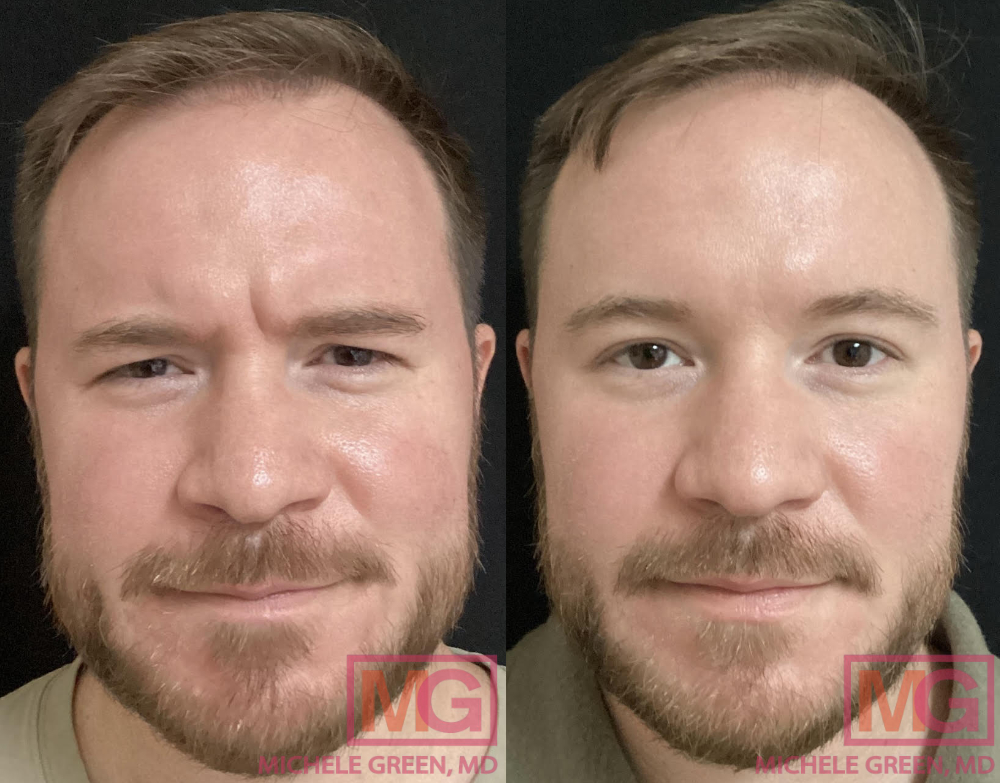
Common treatment areas include the forehead, glabella (the area between the eyebrows), and crow’s feet (the fine lines at the outer corners of the eyes). By relaxing these facial muscles, Botox reduces the frequency and intensity of movements, thereby diminishing the appearance of wrinkles and deeper creases over time.
In addition to its cosmetic uses, Botox effectively treats conditions like TMJ by reducing muscle tension and pain, as well as hyperhidrosis, which relieves excessive sweating in areas such as the underarms, hands, and feet. With increasing acceptance of cosmetic treatments among men, Botox provides a versatile option for enhancing appearance and boosting quality of life.
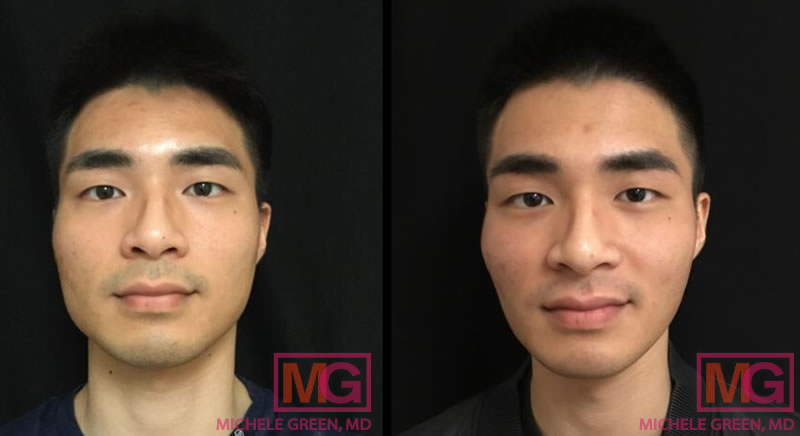
Botox in Masseter area – 3 months
What areas do men get Botox injections in?
- Forehead lines to reduce fine lines and deep creases
- Glabella between the eyes for frown lines
- Around the eyes to treat and prevent crow’s feet
- The neck bands are used to reduce the platysmal bands and wrinkles
- Masseter muscle
- The DAO muscles for a downturned mouth
- Dimpled chin
- Lip Flip to increase the cosmetic appearance of the upper lip
- Hyperhidrosis of the armpits
Why should men get Botox?
Botox (or Botulinum Toxin Type A) is a popular cosmetic treatment that helps men reduce facial lines and wrinkles, creating a more youthful look. It involves no downtime and is often chosen by men to smooth out forehead lines, frown lines, crow’s feet, and other facial wrinkles. The procedure can take as little as 10 minutes and often fits into a lunch break. Many men want to look young and healthy, so they include Botox in their grooming routines. Some dermatologists have found that they perform Botox on about the same number of men and women. As Forbes writer Joseph DeAcetis noted in “The Importance of Men’s Grooming,” for business, men care about how their appearance influences others’ opinions of them at work. Men who present themselves well tend to perform better professionally. Results typically last about 4 months, and many patients return 3 to 4 times a year for maintenance. With minimal downtime and natural-looking results, Botox has become a popular choice for men wanting to refresh their appearance and boost confidence.
Side effects of Botox injections for men
Like any other cosmetic procedure, there are some potential side effects from Botox injections. However, the risk of side effects decreases when a qualified expert, such as a board-certified dermatologist like Dr. Michele Green, performs the treatment.
Possible side effects of Botox include:
- Bruising, swelling, or tenderness at the injection site
- Flu-like symptoms
- Headache
- Drooping eyelids
- Dryness in the eye or excessive tearing
- Drooling or crooked smile
More serious potential side effects include:
- Muscle weakness
- Vision problems
- Difficulty speaking or swallowing
- Trouble breathing
- Loss of bladder control
Allergic reaction side effects that require immediate medical help include:
- Itching
- Rash
- Red itchy welts
- Wheezing or Asthma symptoms
- Dizziness
Before receiving Botox, Dr. Green will review your complete medical history, including past surgeries, medications, allergies, and previous cosmetic procedures. Common side effects of Botox may include redness, bruising at the injection site, or headaches. Individuals with neuromuscular conditions such as myasthenia, ALS, or Lambert-Eaton Syndrome may face a higher risk of side effects. It’s advised to avoid blood thinners, oral vitamins, or supplements for one week before Botox injections, as they can increase the chance of bruising. After your Botox treatment, avoid intense exercise for 24 hours and saunas and steam rooms for 2 days, as these can worsen swelling.
What is Preventative Botox?
Preventative Botox refers to the idea that early injections can help prevent forehead wrinkles, or frown lines, from developing. Dynamic wrinkles form over time as repeated muscle movements create creases in the skin. When we are young, the skin folds during facial expressions but smooths out again when the face is relaxed. However, by the time patients reach their mid-to-late 30s, these lines caused by facial expressions no longer disappear at rest, becoming permanent, static lines. Botox is a neurotoxin and injectable treatment that reduces dynamic fine lines by blocking nerve signals to specific facial muscles. Preventative Botox injections smooth skin by reducing muscle contractions associated with facial expressions. Dr. Green takes a minimalistic approach to Botox, aiming for a natural, more youthful appearance. The effects of Botox usually last up to four months, and most patients require regular treatments to achieve optimal results.
Is Botox popular among men?
Botox has become increasingly popular among men looking to improve their appearance and achieve a more youthful, refreshed look. This trend is linked to greater societal acceptance of cosmetic treatments for men and the desire to stay competitive in both personal and professional areas. More men are exploring aesthetic options, and Botox is a popular choice because of its quick procedure and minimal downtime. The treatment usually takes just a few minutes, making it convenient for those with busy schedules. Plus, the subtle effects of Botox help men maintain a natural look while reducing the appearance of fine lines and wrinkles, adding to its growing appeal among men.
Is Botox safe for men?
Absolutely! Botox is a safe and effective treatment option for men when given by a qualified, experienced, and board-certified dermatologist. The FDA has approved Botox specifically to treat different kinds of wrinkles, including those on the forehead, the glabella (the area between the eyebrows), and crow’s feet (the fine lines at the outer corners of the eyes). Botox works by relaxing the muscles beneath the skin that cause these fine lines and wrinkles. As a result, it can produce a smoother, more youthful look. FDA approval reflects thorough testing, ensuring that Botox is both safe to use and effective at reducing the appearance of wrinkles caused by repeated muscle movement.
What are the best areas for Botox in men?
When men consider Botox treatment, the most common areas targeted are the forehead, the glabella (the area between the eyebrows), and the crow’s feet (the fine lines around the outer corners of the eyes). These areas often show the earliest signs of aging and can be effectively treated with Botox to create a more youthful, relaxed look. In addition to these common spots, Botox can be used to address other specific concerns. It effectively alleviates TMJ (temporomandibular joint dysfunction) symptoms, reducing jaw tension and related headaches. Ultimately, the best areas to treat with Botox will differ based on each person’s unique facial structure and aesthetic goals. Therefore, it is highly recommended to consult with a board-certified dermatologist, such as Dr. Michele Green, who has over 25 years of experience in cosmetic dermatology. Her expertise can help create a personalized treatment plan that addresses specific concerns and delivers natural-looking results.
Is Botox painful for men?
Botox is not generally painful. The entire process usually takes about 10 minutes, making it a quick option for those seeking cosmetic enhancement. Dr. Green suggests that patients avoid bending over for at least 4 hours after receiving Botox injections in the forehead. This helps reduce the risk of the Botox migrating to unintended areas, which could cause unwanted effects. Additionally, to support healing and achieve the best results, Dr. Green recommends avoiding vigorous activities, such as exercise, for 24 hours after the injection. Patients should also avoid smoking and alcohol for at least 3 days post-treatment, as these can hinder healing and decrease Botox effectiveness. Because this treatment is quick and involves minimal downtime, patients can usually return to their regular activities soon after.
Can men use Botox for foreheadlines, crow’s feet, and frown lines?
Fine lines and wrinkles are often the first signs of aging, and FDA-approved Botox (Botulinum toxin type A) is one of the oldest and most widely used cosmetic treatments for smoothing dynamic wrinkles. It has become a popular choice for men looking to reduce fine lines on the forehead, glabella, and around the eyes, without the downtime associated with invasive procedures performed by a plastic surgeon. By softening these expressive lines, Botox can help restore a more youthful appearance and boost self-confidence. Today, male patients make up over ten percent of all Botox users, and that number continues to grow.
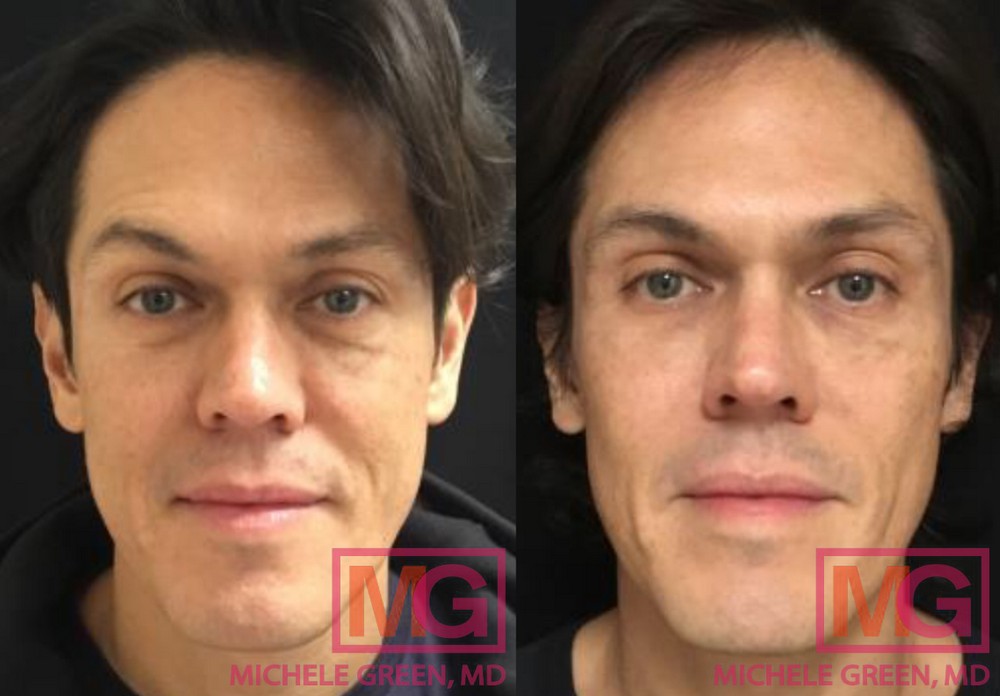
Choosing the right dermatologist for Botox treatment
While Botox injections are generally safe, it is crucial to consult a board-certified dermatologist like Dr. Green to ensure your treatment is both safe and effective. Botox is a neurotoxin approved by the FDA as a prescription medication. It should only be administered by licensed medical professionals with the proper knowledge, training, and expertise. Untrained or inexperienced injectors, such as those at a medical spa, can increase the risk of serious side effects, including temporary nerve damage and vision problems. Dr. Michele Green, a board-certified dermatologist with over twenty-five years of experience, has been performing Botox injections at her private dermatology practice in New York City for many years. She was among the first NYC dermatologists to incorporate Botox into her patient treatments. When you see Dr. Green for your Botox, you can trust that you’ll achieve the best possible cosmetic results with minimal risk of adverse effects.
How long does male Botox last?
Botox is a temporary treatment that reduces the appearance of fine lines and wrinkles. Patients can expect their results to last between three and four months before the effects fade. The body gradually metabolizes Botox, and depending on your metabolism, you might experience longer-lasting results. Often, patients who have been receiving Botox for a long time notice extended results due to muscle atrophy from disuse. Once the effects wear off, patients can schedule a maintenance appointment to maintain the results. Generally, these appointments are recommended every three to four months for continued benefits.
Botox Injections versus Dermal Fillers
Botox and dermal fillers are both cosmetic injectables, but they serve different functions. Botox is a neuromodulator made from botulinum toxin type A that prevents muscles from contracting, reducing dynamic wrinkles. Conversely, dermal fillers add volume to improve facial contours, smooth out fine lines, and fill deeper creases. Fillers can be made of hyaluronic acid (HA), poly-L-lactic acid, or calcium hydroxyapatite. Many, including the Juvederm and Restylane families, contain HA. Dermal fillers are often used alongside Botox, typically on the lower and mid-face, while Botox is mainly used on the upper face. Fillers are best for lines and creases visible at rest, like smile lines (also called laugh lines), the chin, cheeks, or tear troughs. Although different, Dr. Green often combines both to treat fine lines and wrinkles during the same visit for comprehensive facial rejuvenation.
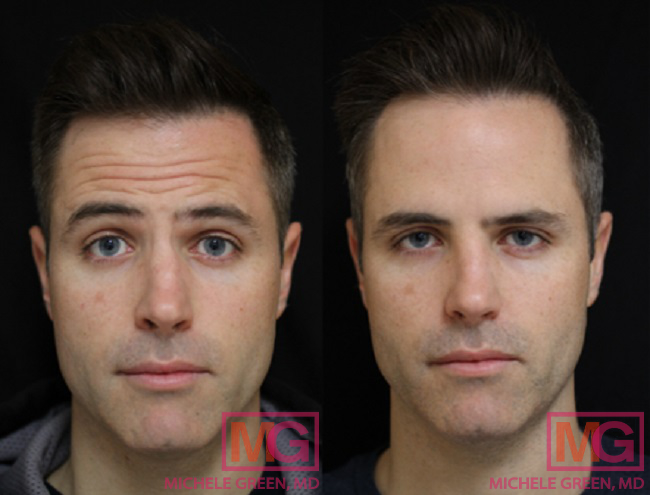
25-34 year old man treated with Botox
How often should men get Botox?
Men should get Botox approximately every 3-4 months. As the effects fade, you might notice increased muscle movement in the treated areas, along with more visible fine lines and wrinkles. These signs can suggest it’s time to consider another Botox session. Additionally, factors like lifestyle, skin type, and muscle mass can affect how long Botox lasts for different individuals. Therefore, consulting a board-certified dermatologist, such as Dr. Michele Green, is advisable, as they can offer personalized guidance and help determine the ideal maintenance schedule.
Who is a good candidate for Botox treatments?
A good candidate for Botox treatment is someone over 21 years old who is healthy and wants to reduce dynamic wrinkles and lines. Patients should not get Botox if they are allergic to any of its ingredients or have a history of allergic reactions to other botulinum toxin products. Pregnant or breastfeeding women should avoid Botox since its safety has not been established for them. Dr. Green might postpone treatment if you have an active infection, rash, or breakout until your skin clears up. If you have a history of severe reactions like anaphylaxis, neurological issues, or bleeding disorders, discuss these with Dr. Green before moving forward. During your consultation, Dr. Green will review your medical history and current medications to determine if you are a good candidate for Botox.
What can men expect from their first Botox treatment?
Botox injections or any cosmetic injection might seem intimidating for first-time patients. However, Dr. Michele Green makes the process simple at her private dermatology office in New York City. When you arrive for your consultation, medical photography will be taken to determine the best cosmetic treatment for you and to monitor the results. Dr. Green will gather a comprehensive medical history, review any previous cosmetic procedures you’ve had, and assess your unique facial anatomy. During your consultation, you’ll have the chance to discuss your specific concerns and desired aesthetic outcomes. The cost of Botox will be discussed and will depend on the areas being treated. Your Botox injections may be performed on the day of your initial consultation or scheduled for a later date, at your preference.
Botox works by blocking nerve signals to the injected muscle, preventing muscle contraction and ultimately relaxing fine lines and wrinkles. Botox injections usually do not require numbness, but if you are particularly sensitive to pain, a topical numbing cream can be applied to the treatment area about 1 hour before the procedure. Dr. Green uses a tiny needle to inject Botox into the treatment area. Botox can treat fine lines and wrinkles and help prevent deep creases from forming. Immediately after the injections, an ice pack is applied to reduce swelling and bruising. If bruising occurs, patients can take Arnica herbal supplements to aid recovery. Patients will also be advised to avoid bending over for four hours, refrain from strenuous exercise for 24 hours, and avoid taking blood thinners for the next few days.
Additionally, they should avoid drinking and smoking for three days. Botox takes time to settle, and it usually takes up to two weeks for the full results to be visible. Finally, Dr. Green often has patients return in two weeks to evaluate the results and decide if additional Botox is needed.
How to get Natural-looking Botox for men?
Achieving natural-looking Botox results for men requires a thoughtful, personalized approach starting with a consultation with a board-certified dermatologist like Dr. Michele Green. During your first visit, Dr. Green will review your medical history, discuss your aesthetic goals, and address any concerns about the procedure. Her philosophy revolves around the “less is more” approach, focusing on subtlety and maintaining your natural look. This method ensures the results enhance your features without making you look drastically different. The initial Botox injections will be carefully placed in areas that produce the most natural results, avoiding that “frozen” look some fear. Afterward, Dr. Green will schedule a follow-up in two weeks. This wait is essential because it gives the Botox time to settle and show your final results. During this follow-up, you’ll have an honest conversation with Dr. Green about how you feel about the effects. If needed, and with your agreement, she can give additional injections based on your feedback and preferences. By emphasizing communication and personalized care, Dr. Green makes sure your Botox experience aligns with your expectations and results in a subtle, natural appearance.
Choosing the right dermatologist for Botox treatment
While Botox injections are generally safe, it is essential to consult a board-certified dermatologist like Dr. Green to ensure your treatment is both safe and effective. Botox is a neurotoxin approved by the FDA as a prescription medication. It should only be administered by licensed medical professionals with the proper knowledge, training, and expertise. Untrained or inexperienced injectors, such as those at a medical spa, can increase the risk of serious side effects, including temporary nerve damage and vision problems. Dr. Michele Green, a board-certified dermatologist with over twenty-five years of experience, has been performing Botox injections at her private dermatology practice in New York City for many years. She was among the first NYC dermatologists to incorporate Botox into her patient treatments. When you see Dr. Green for your Botox, you can trust that you’ll achieve the best possible cosmetic results with minimal risk of adverse effects.
How long does Botox last for men?
Botox is a temporary treatment that minimizes the appearance of fine lines and wrinkles. Patients can expect their results to last between three and four months, after which the effects diminish. The body gradually metabolizes Botox, and depending on your metabolism, you might see results that last longer. Often, patients who have been receiving Botox for a long time notice extended results due to muscle atrophy from disuse. Once the effects wear off, patients can schedule a maintenance appointment to preserve the results. Generally, these appointments are recommended every 3 to 4 months to sustain the benefits of Botox.
Botox Injections vs. Dermal Fillers
Botox and dermal fillers are both cosmetic injectables, but they serve different purposes. Botox is a neuromodulator made from botulinum toxin type A that inhibits muscle contraction, reducing dynamic wrinkles. In contrast, dermal fillers add volume to enhance facial contours, smooth out fine lines, and fill deeper creases. Fillers can be composed of hyaluronic acid (HA), poly-L-lactic acid, or calcium hydroxyapatite. Many, including the Juvederm and Restylane lines, contain HA. Dermal fillers are often used alongside Botox, usually in the lower and mid-face, while Botox is primarily used on the upper face. Fillers are ideal for lines and creases visible at rest, such as smile lines (also called laugh lines), the chin, cheeks, or tear troughs. Although different, Dr. Green frequently combines both treatments during the same visit to achieve comprehensive facial rejuvenation.
Can men combine Botox with fillers?
Absolutely! The combination of Botox and dermal fillers is a popular cosmetic treatment at Dr. Green’s private dermatology practice. Botox mainly targets fine lines and wrinkles by temporarily relaxing the muscles in the upper face. This makes it especially effective for areas like the forehead, crow’s feet around the eyes, and the glabella, which is the space between the eyebrows. In contrast, dermal fillers are used to restore volume and improve facial contours, usually injected into the mid- to lower face. They can effectively address issues such as nasolabial folds, the area around the mouth (oral commissure), and the lips, creating a fuller and more youthful look. It’s important for anyone considering these treatments to first schedule a thorough consultation with Dr. Green. During this visit, you can discuss your aesthetic goals, explore the best options for your specific concerns, and receive a personalized treatment plan that maximizes the benefits of combining Botox with fillers. This tailored approach ensures optimal results while prioritizing safety and satisfaction
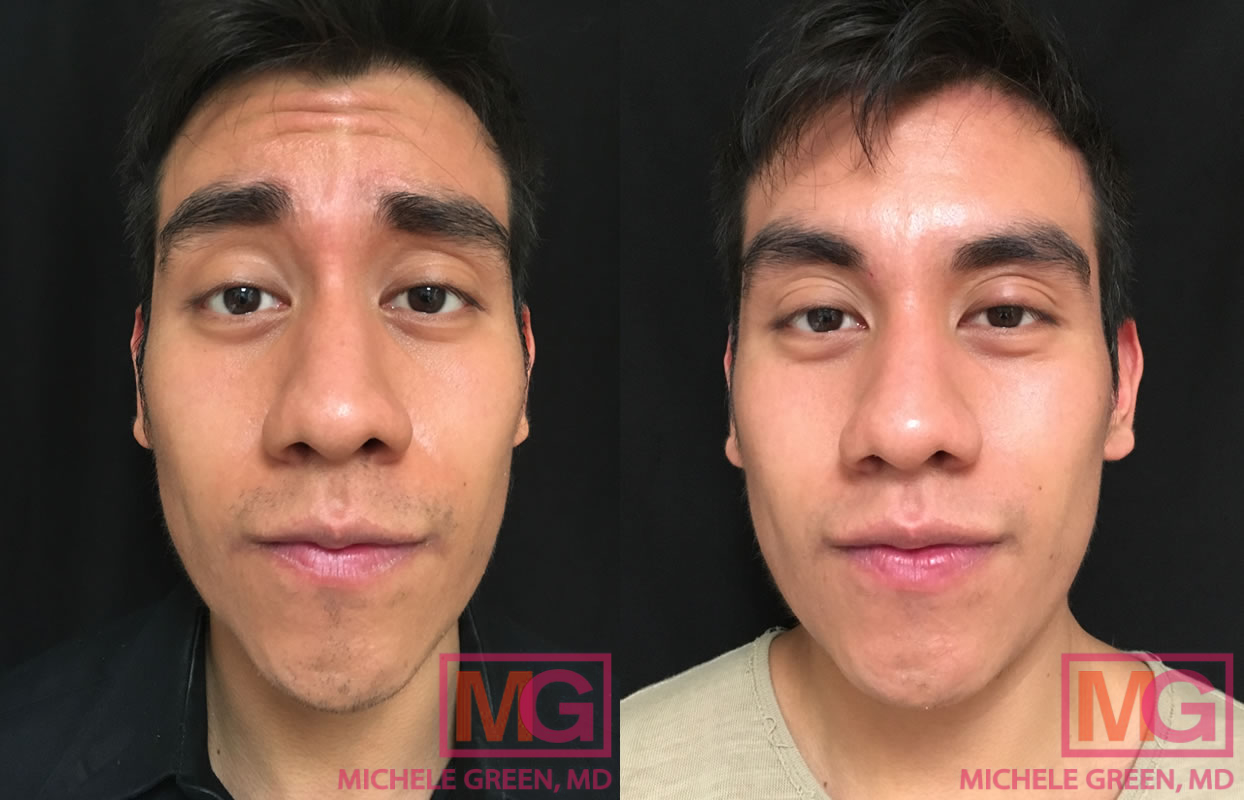
25 year old male treated with Botox in Glabella
Frequently Asked Questions (FAQs) about Botox for men:
Can men get Botox?
Yes! Men can get Botox, and many choose it for cosmetic reasons. Botox has been FDA-approved for use in people aged 18 to 85. It effectively improves skin issues that affect self-esteem, such as visible signs of aging on the face and body, and it also treats medical conditions like excessive sweating, migraines, muscle spasms, and jaw clenching. Although Botox is often seen as a cosmetic treatment for women, over half a million men receive botulinum toxin injections each year for various conditions. If you’re looking for an anti-aging solution to reduce fine lines and wrinkles, Botox might be the right choice for you. The first step is to schedule a consultation with Dr. Green to discuss your aesthetic goals and find the best treatment plan.
At what age should a man get Botox?
When patients ask about the ideal age for getting Botox, the answer is that it varies, as Botox can serve different purposes at different stages of aging. Botox is FDA-approved for individuals aged 18 and older. Collagen production starts to decline in your late 20s or early 30s, so getting Botox around that time can help prevent wrinkles. Freezing the muscles in the treated area stops wrinkles from developing. If you’re considering Botox for the first time, you may have already noticed that dynamic wrinkles on your forehead and around your eyes are becoming more noticeable. Botox helps smooth out these wrinkles, giving a more youthful appearance. Regardless of your age, you can consult with Dr. Green to discuss how Botox might benefit you.
How many units of Botox does a man need?
The amount of Botox a man needs depends on several factors, including muscle mass, muscle strength, the areas being treated, and the desired cosmetic results. Typically, men require higher doses of Botox than women for facial procedures. Since men tend to have stronger facial muscles and a faster metabolism, they often need a larger dose of Botox to achieve the same level of muscle relaxation. For horizontal forehead lines, a man generally needs 20-30 units of Botox, while vertical glabellar lines usually require 30-40 units. The lines around the eyes may need 20-30 units to relax the muscles effectively. When you consult with Dr. Michele Green for your Botox treatments, she will review your medical history and examine your facial anatomy to determine the appropriate number of units for each treatment area.
Why is men’s Botox more expensive?
Men might discover that their Botox costs more than those of women. This price gap could stem from men needing larger doses because they generally have stronger facial muscles and may require extra Botox to relax the muscles that cause dynamic wrinkles and fine lines. Additionally, men tend to process the product faster than women. When consulting with Dr. Michele Green for Botox, she will evaluate your facial structure and skin to determine the right dose for your desired look. For the best results, most male patients should get Botox every three to four months to sustain the effects of their previous treatments. Regular Botox treatments help preserve a natural, youthful look and boost self-confidence. treatments help preserve a natural, youthful look and boost
Does Botox make you look younger?
Botox helps diminish the look of fine lines and wrinkles. As we age, the production of collagen and elastin—the proteins that keep skin smooth and firm—declines, leading to dynamic wrinkles. Wrinkles, fine lines, and creases can make us appear older and are often most noticeable between the brows, at the corners of the eyes, and on the forehead. Botox relaxes the muscles in these areas, helping to smooth out dynamic wrinkles. By reducing fine lines and wrinkles, Botox creates a more youthful appearance. Some patients may combine Botox with dermal fillers to address static wrinkles. Static wrinkles are deeper creases visible at rest, while dynamic wrinkles, which Botox can soften, appear during facial movements. Dermal fillers can be injected into static wrinkles to help achieve a more even look and can be used alongside Botox.
Should a man get Botox?
For a long time, there was a widespread stigma that men should avoid seeking cosmetic treatments. However, mainly due to social media and the spread of information, Botox for men is now less stigmatized. While cosmetic Botox is not necessary for anyone, its benefits make it a worthwhile procedure for both men and women. Botox is a safe and effective treatment that reduces the appearance of fine lines and wrinkles, helping to create a more youthful look. It can also be used for medical reasons, such as reducing excessive sweating, treating muscle spasms, and alleviating chronic migraines. Although Botox is FDA-approved for certain medical conditions, Dr. Green only offers Botox for cosmetic purposes, TMJ, and hyperhidrosis.
How much is Botox for men?
The cost of Botox for men depends on location, the number of areas treated, muscle strength, and the number of units required to achieve the desired look. Since men often need more Botox than women, their overall costs are usually higher. At Dr. Green’s private dermatology clinic in New York City, each treatment is customized based on a person’s facial features and aesthetic goals. During your consultation, Dr. Green will determine the appropriate dosage and provide a comprehensive estimate. Most male patients come back every three to four months for maintenance injections to keep their results looking natural and refreshed.
Why do men get Botox?
Men can receive Botox for various medical or cosmetic reasons. The most common medical uses for Botox are migraines and hyperhidrosis. A neurologist treats migraines by injecting Botox into specific facial, scalp, and shoulder muscles. Patients with armpit hyperhidrosis can get Botox injections to lessen sweating in that area. When male patients are interested in Botox for cosmetic reasons, it is often used to treat dynamic wrinkles on the forehead and glabella. Wrinkles form in these areas from repeated facial expressions. Botox acts as a neuromodulator, relaxing the muscles and preventing facial expressions, which, over time, soften the lines.
Do men need Botox at a younger age?
Botox can be effectively administered as early as 18 years old, depending on individual goals and circumstances. It’s important to understand that Botox is not only a cosmetic treatment but also has therapeutic uses. For instance, it is commonly used to treat conditions like temporomandibular joint disorder (TMJ), which can cause severe headaches and discomfort, affecting a person’s daily life. In such cases, Botox can be injected into the masseter muscles to ease pain by relaxing them. From a cosmetic perspective, younger people may opt to use Botox preventatively to avoid deep wrinkles and fine lines. Starting treatment early can help reduce muscle contractions that cause these visible signs of aging, helping maintain a smoother appearance over time. There isn’t a “best age” to start Botox treatments, as the decision depends on personal needs, lifestyle, and the advice of a qualified healthcare professional. It’s essential to consult a board-certified dermatologist, such as Dr. Michele Green, who can evaluate your skin condition and provide personalized guidance, ensuring that any treatments align with your aesthetic goals and medical history.
When should men start getting Botox treatments?
The FDA has approved Botox for use in individuals aged 18 to 65. An increasing number of young adults are seeking cosmetic treatments with Botox injections, and it is becoming common to start with preventative Botox as early as the mid-20s or late 20s. Some patients prefer to wait until their 30s and 40s when they notice more visible dynamic wrinkles. Botox injections can reduce and prevent these lines by “freezing” the facial muscles that form them.
If you’re unsure whether getting Botox or preventative Botox is the right choice for you, there are a few signs that can help you decide. One sign that it might be time to consider Botox is the appearance of visible fine lines and wrinkles on your face. It’s normal for fine lines and wrinkles to form when making natural facial expressions, but when these lines become ingrained into the skin, it may be time to think about Botox. As always, it is best to consult a board-certified dermatologist to determine whether this treatment is right for you.
Does Botox make men look feminine?
Botox does not inherently make men look more feminine. Instead, it serves as a cosmetic treatment that temporarily relaxes the facial muscles responsible for fine lines and wrinkles. This process smooths out existing creases and prevents new ones from forming, helping restore a more youthful, rejuvenated appearance. For men, Botox can enhance features without altering their inherent masculinity, contributing to a more refined masculine appearance. Many male patients seek Botox to reduce signs of aging, such as crow’s feet, forehead lines, and frown lines, making them appear more vibrant and approachable. The goal of Botox, regardless of gender, is to achieve a refreshed look while preserving natural facial characteristics and enhancing masculine features, helping men feel confident and comfortable in their own skin.
How do I get started with Botox today?
Nowadays, more men and women are interested in non-invasive facial rejuvenation, and the most popular option is Botox injections. Whether you’re looking to smooth out dynamic fine lines and wrinkles or prevent them from forming, Botox is an excellent choice. Botox injections are quick and involve little to no downtime, allowing many patients to return to their daily routines almost immediately. For the best results, it’s recommended to have your Botox administered by an experienced injector, such as board-certified dermatologist Dr. Michele Green. Dr. Green is consistently recognized by Castle Connolly, New York Magazine, and Super Doctors as one of NYC’s top physicians.
Dr. Green has over 25 years of experience treating the most discerning men and women in New York City, including many male clients, and is recognized worldwide for her holistic approach to facial revitalization and her “less is more” philosophy regarding cosmetic injectables. As an Allergan platinum injector and one of the first physicians in New York to incorporate cosmetic Botox into her treatments, you can trust that when Dr. Green performs your Botox injections, the results will be beautiful and naturally rejuvenated. To learn more about Botox and non-invasive cosmetic treatments that can help you look and feel your best, call 212-535-3088 or contact us online to schedule an appointment today.


