


Non Surgical Face Lift
A non-surgical facelift is one of the most popular cosmetic treatments for anyone looking to refresh their appearance without surgery. For years, a facelift was associated with certain assumptions—it was expensive, invasive, and primarily for older people with significant skin issues. However, with non-surgical options, people of all ages can achieve impressive anti-aging and skin-tightening results through minimally invasive procedures that require no recovery time. Patients in their 30s and older use these treatments to improve their skin’s appearance and feel, boost elastin and collagen production, reduce fine lines and wrinkles, address and prevent skin sagging, and restore volume loss caused by aging—while maintaining a natural, long-lasting, youthful look without incisions or downtime. Dr. Michele Green in NYC is a specialist in non-surgical cosmetic treatments and employs a range of procedures to achieve optimal results.
A non-surgical facelift isn’t a single procedure but a carefully selected mix of treatments tailored to each person’s needs. By combining techniques such as neuromodulators, dermal fillers, fat-reduction methods, and skin-tightening technologies, this approach addresses multiple signs of aging at once. Treatments like Botox relax the facial muscles responsible for dynamic wrinkles, while dermal fillers restore volume and shape the midface, cheeks, and jawline. Advanced technologies like Thermage FLX stimulate collagen production deep within the skin using radiofrequency energy. Meanwhile, fat-reduction treatments can sculpt areas like the chin and jawline for a more defined profile. When used together strategically, these treatments create a comprehensive, full-face rejuvenation. Dr. Green will evaluate your concerns and goals to help choose the best combination of non-invasive treatments for a smooth, radiant, and youthful appearance that lasts.
Dr. Michele Green is a highly experienced cosmetic dermatologist with over 25 years of experience offering non-invasive treatments for men and women worldwide, including Botox, dermal fillers, and Thermage for a non-surgical facelift. She is often recognized by Castle Connolly, New York Magazine, Super Doctors, and The New York Times as one of NYC’s top doctors for her commitment to patient care and her expertise. Dr. Green adopts a holistic approach to cosmetic dermatology, tailoring each treatment plan to suit the patient’s facial structure, skin concerns, and aesthetic goals. She uses the latest techniques and non-surgical facelift procedures to help you look and feel your best.
What is a non-surgical facelift?
A non-surgical facelift refers to a unique combination of non-invasive cosmetic treatments used to rejuvenate the entire face and create a more youthful look with minimal downtime. In the past, surgical procedures such as a facelift or other plastic surgeries were commonly performed to combat signs of aging and enhance appearance. These surgeries involved long recovery times, incisions, a higher risk of scarring, and a greater chance of permanent unwanted results. Today, technological advances have led to non-invasive treatments that address multiple aging signs, such as skin laxity, fine lines and wrinkles, age-related volume loss, and excess fat, restoring the entire face. Non-surgical facelifts typically include procedures like Thermage FLX, Botox, dermal fillers, Kybella, and CoolSculpting, offering a more youthful appearance with minimal downtime and side effects. Additionally, these treatments are not permanent, allowing patients to adjust their treatment at each session to meet their evolving skin concerns and aesthetic goals.
Non-invasive cosmetic procedures have gained popularity because they provide patients with quick, painless solutions for full-face rejuvenation that result in a natural-looking, long-lasting, more youthful appearance. During your consultation with Dr. Green at her private NYC dermatology office, she will help determine the best combination of cosmetic treatments to target the signs of aging you want to address and your personal facial rejuvenation goals.
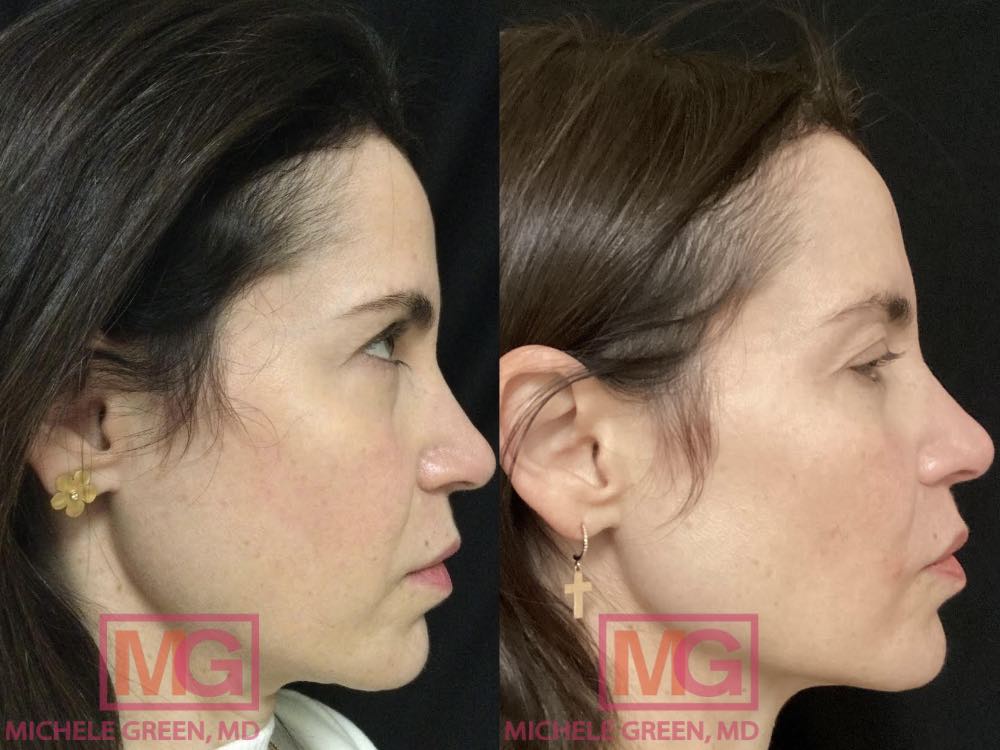
How does a non-surgical facelift compare to a surgical facelift?
The main difference between non-surgical and surgical facelifts is in their methods, results, and recovery times. A non-surgical facelift uses techniques like injectables (such as fillers and Botox), laser treatments, and radiofrequency stimulation to gently lift, tighten, and refresh the skin. These procedures aim to add facial volume, smooth fine lines, and improve overall skin texture with little to no downtime. Patients often value the convenience of non-surgical options, as they can usually resume their daily routines shortly after treatment. This makes non-surgical facelifts an appealing option for those who want subtle improvements and a renewed appearance without the risks or commitment of surgery.
In contrast, a surgical facelift, or rhytidectomy, employs more invasive techniques that involve incisions along the hairline and possibly around the ears. This procedure allows for thorough tightening and repositioning of the underlying facial structures, which can significantly reduce sagging and produce more dramatic, long-lasting results. However, recovery from a surgical facelift usually takes several weeks. Patients may experience swelling, bruising, and discomfort during healing, which can affect daily activities. Additionally, the surgical method carries inherent risks, such as infection and scarring. Ultimately, choosing between a non-surgical and a surgical facelift depends on factors such as the individual’s skin condition, desired results, and willingness to undergo a recovery period. Non-surgical facelifts may be particularly suitable for those with mild skin laxity or early signs of aging who want to achieve a more youthful look without the commitment of surgery.
How does a non-surgical facelift work?
Non-surgical facelift procedures operate through several scientifically supported mechanisms. Many treatments stimulate collagen production, a crucial structural protein that maintains skin firmness and elasticity, leading to a tightening, firming, and revitalizing effect. As we age, collagen production naturally decreases, resulting in facial skin laxity, wrinkles, fine lines, and volume loss. By encouraging new collagen growth, treatments like Thermage FLX help restore the skin’s structural integrity. Injectable treatments serve different purposes: dermal fillers replenish lost volume and improve facial contours, while neuromodulators temporarily relax muscles that cause dynamic wrinkles. Kybella and CoolSculpting utilize two types of lipolysis—injectable lipolysis and cryolipolysis—to permanently remove unwanted fat in the treatment area. All these procedures work together to provide a non-surgical facelift without surgery, downtime, or discomfort.
What are the benefits of a non-surgical facelift?
The benefits of a non-surgical facelift are extensive, providing many advantages that can markedly enhance one’s overall appearance while offering a rejuvenated, youthful look without invasive procedures. A key benefit is the boost in self-confidence that people often experience after these treatments; feeling good in one’s skin can change both appearance and overall demeanor. Non-surgical facelift options include advanced treatments such as Thermage, which uses radiofrequency technology to stimulate collagen production, resulting in tighter, smoother skin with no downtime. Microneedling is another effective technique that employs tiny needles to create micro-injuries in the skin. This activates the body’s natural healing process, increasing collagen and elastin production, thereby improving skin texture and elasticity over time. Additionally, dermal fillers like Sculptra play an important role in non-surgical facelifts. Sculptra gradually stimulates the skin’s natural collagen over several months, providing a natural-looking boost of facial volume and contours. This is particularly beneficial for those seeking to restore lost volume in areas such as the cheeks, temples, and nasolabial folds. Moreover, these non-invasive treatments generally carry fewer risks and side effects compared to surgery, and many can be completed during a short office visit, fitting easily into busy schedules. The immediate aesthetic improvements, combined with the long-term benefits of ongoing collagen stimulation, promote healthier, more resilient skin. Overall, a non-surgical facelift offers a practical and effective choice for individuals looking to enhance their beauty and maintain a youthful appearance, while experiencing natural improvements that continue to benefit their skin over time.
What is the difference between a non-surgical facelift and a thread lift?
Yes, a thread lift is a non-surgical procedure that involves placing temporary, dissolvable sutures in the skin to improve laxity and provide a subtle “lift.” Thread lifts can last from twelve to eighteen months before they dissolve. Many patients experience continued pain, swelling, and bruising in the treated area afterward, and the facial rejuvenation results are often disappointing and short-lived. Dr. Green recommends alternative non-surgical treatments that consistently deliver impressive results without discomfort or downtime.
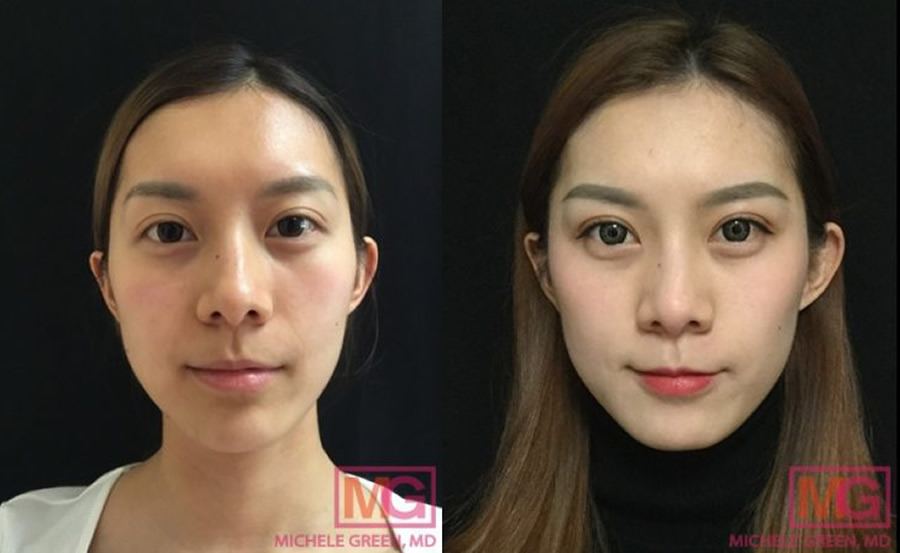
Botox injections for dynamic wrinkles
Botox, along with Dysport, Xeomin, Jeuveau, and Daxxify, is a neuromodulator and one of the most popular cosmetic treatments worldwide because it can reduce dynamic wrinkles. Dynamic wrinkles develop from repeated facial expressions such as smiling, frowning, and raising the eyebrows. Botox contains Botulinum Toxin Type A, which blocks nerve signals to the facial muscles that cause wrinkles, preventing the skin from creasing and helping to reduce the appearance of deeper lines and wrinkles. Currently, Botox is FDA-approved for treating forehead lines, frown lines (the 11 lines between the eyebrows), and crow’s feet (lines around the eyes). It is also frequently used off-label for platysmal or neck bands to create a “Nefertiti lift,” which reduces vertical neck lines. Botox typically lasts three to four months and can be used regularly to maintain a smoother appearance and minimize fine lines and wrinkles.
Dermal fillers to correct age-related volume loss
Dermal fillers, also called soft tissue fillers, are frequently used in facial rejuvenation plans because they can immediately restore facial volume, reduce fine lines and wrinkles, and improve facial contours with no downtime. They are an excellent choice for cheek, lip, chin, and jawline enhancement, as well as for correcting marionette lines, smile lines, nasolabial folds, and fine lines around the mouth. This makes them a versatile and essential non-surgical option, effective for patients seeking facial rejuvenation and addressing various signs of aging. Popular dermal fillers like Juvederm and Restylane are made of hyaluronic acid, a natural humectant that attracts moisture, providing quick and lasting volume and hydration. These fillers give immediate results and may last 9 to 12 months, depending on the specific product. Sculptra, another widely used dermal filler, contains poly-L-lactic acid, a bio-stimulant that promotes collagen growth for a gradual, natural-looking enhancement and smoothing of fine lines. After a series of initial injections, Sculptra’s effects can last up to two years. Dr. Green, an experienced injector with an art background, often combines different dermal fillers for comprehensive pan-facial rejuvenation.
Thermage for non-invasive skin tightening.
Thermage is considered the gold standard for non-invasive skin tightening treatments. It uses radiofrequency heat to stimulate new collagen production and remodel existing collagen in the dermis. Collagen is a protein in the skin that provides a firm foundation and naturally decreases over time as part of the aging process. By promoting new collagen growth, Thermage firms and tightens the skin, reducing the appearance of loose, sagging skin and jowls. The Thermage FLX is the newest model of skin-tightening devices, offering faster, more effective cosmetic results. Thermage can treat the face and neck for a non-surgical facelift, as well as other areas prone to skin laxity caused by aging, such as the upper arms, abdomen, thighs, chest, and neck. There is no downtime or side effects with Thermage treatments. After just one session, results can last up to 18 months. Patients often schedule yearly treatments to maintain a youthful appearance.
Kybella injections for permanent fat reduction
Kybella is the first and only FDA-approved cosmetic injectable treatment for eliminating excess fat in the submental area, reducing the appearance of a double chin, and contouring the neck and jawline. Kybella injections have become increasingly popular because they can achieve fat reduction with minimal downtime and discomfort, without the need for incisions or general anesthesia. Kybella contains deoxycholic acid, a naturally occurring enzyme that breaks down fat cells. With simple, minimally invasive injections, Kybella can permanently dissolve fat cells in the treated area. The results are permanent as long as the patient does not gain additional weight after the procedure. Mild swelling or bruising may occur after treatment and typically resolves on its own within a week or two. Most patients need 3-4 treatment sessions, spaced 4-6 weeks apart, to reach the desired results and destroy the targeted fat cells.
CoolSculpting to reduce unwanted fat
CoolSculpting is an effective non-invasive alternative to liposuction for patients struggling with stubborn fat pockets that don’t respond to regular exercise and a healthy diet. CoolSculpting uses cryolipolysis to freeze fat cells in specific areas. Once frozen, the body’s natural metabolism breaks down and eliminates these fat cells. CoolSculpting can help create a more defined jawline by reducing unwanted fat beneath the chin. It can also target excess fat on the abdomen, arms, flanks, buttocks, and both inner and outer thighs. Typically, CoolSculpting decreases fat cells in a single treatment area by 25 percent and can provide permanent fat reduction, provided no excess weight is gained afterward. Multiple sessions may be needed depending on the size of the area and how the body responds to treatment. Since there is no downtime involved, patients can schedule their treatments conveniently.
What is the best non-surgical facelift?
No single treatment is automatically the “best” option for a non-surgical facelift, and often a combination of cosmetic procedures is necessary. The ideal treatment depends on the specific areas of the face that need rejuvenation, such as facial hollows, skin laxity, jowls, or sun damage. Patients with skin laxity may benefit from Thermage, while those experiencing age-related volume loss might achieve better results with dermal fillers. Many patients are concerned about various signs of aging, and a combined approach is usually most effective for addressing these issues and achieving a natural, youthful appearance. When you consult with Dr. Michele Green in NYC about a non-surgical or liquid facelift, you’ll have the opportunity to learn which particular non-invasive procedure or combination of procedures best suits your needs for treating visible signs of aging and achieving long-lasting, natural-looking results.
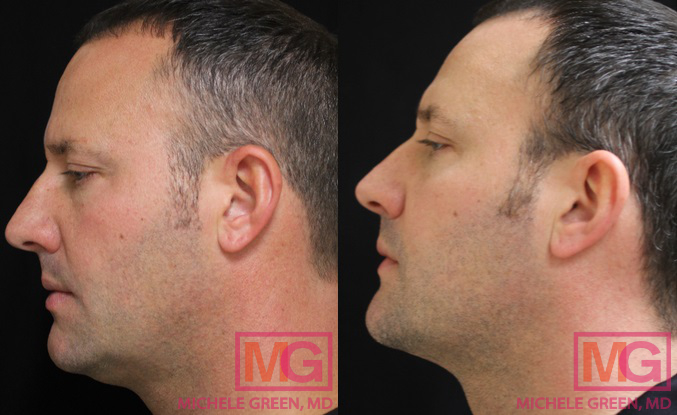
What is the recovery time for a non-surgical facelift?
The recovery time for non-surgical facelifts is much shorter than for traditional surgical procedures. For example, treatments like Thermage FLX, which uses radiofrequency to tighten and lift the skin, usually have no downtime. Patients can resume their normal activities right after the procedure, making it convenient for those with busy schedules. Microneedling, another popular non-surgical facelift method, might cause temporary redness and minor swelling, similar to a mild sunburn. This redness typically goes away within 24 hours, allowing individuals to quickly resume their routines. While dermal fillers can give instant results, minor side effects such as swelling or bruising at the injection sites may occur. These effects can differ from person to person, but usually resolve within a few days. Overall, non-surgical facelift options are very attractive for people seeking effective facial rejuvenation without the long recovery times of surgery. Most patients can easily incorporate these procedures into their daily lives, making them a popular choice for improving appearance with minimal disruption.
How long does a non-surgical facelift last?
Results from non-surgical facelift treatments vary depending on the specific procedure used. Typically, neurotoxins like Botox last between 3 and 4 months. Hyaluronic acid dermal fillers can last from 9-12 months, depending on each person’s metabolism, while Sculptra can last over two years after an initial series of injections. Thermage results can last about 1.5 years after a single treatment session. Kybella and CoolSculpting provide permanent results, as long as there is no weight gain afterward, whether for the double chin, neck, or body. Patients generally schedule maintenance treatments every 6 months to a year, depending on their chosen procedures. When you discuss your non-surgical facelift with Dr. Green, she will recommend a treatment schedule to help ensure your results last.
Does a non-surgical facelift work?
Yes! Non-surgical facelifts are a popular choice for both men and women seeking to reduce visible signs of aging and achieve smoother, firmer, brighter skin. These procedures often boost collagen production to improve mild skin laxity, counteract age-related volume loss, and lessen fine lines and wrinkles. Some techniques temporarily relax muscles to reduce dynamic wrinkles, while others use lipolysis technology to target unwanted fat. These non-invasive treatments are painless, involve little to no downtime or side effects, and provide long-lasting results, allowing patients to enjoy a safe, non-surgical facelift.
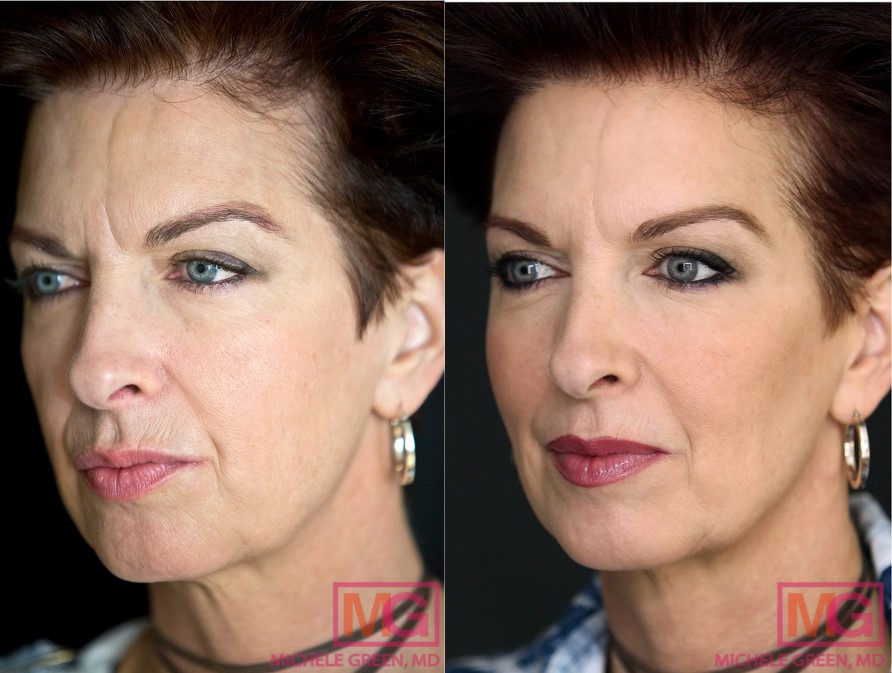
Is a non-surgical facelift safe?
Yes! Non-surgical facelifts are very safe. Unlike a surgical facelift, a non-invasive procedure requires no anesthesia or incisions and still delivers consistently impressive results. These treatments involve little to no downtime or side effects. Additionally, Botox, dermal fillers, Thermage, Kybella, and CoolSculpting are all FDA-approved, which indicates their safety and effectiveness have been thoroughly tested in clinical trials. The best way to ensure your non-surgical facelift is safe is to consult a board-certified dermatologist, such as Dr. Michele Green. With over twenty-five years of experience performing non-surgical facelifts, Dr. Green has the skill and knowledge to achieve natural, youthful results safely.
Are there side effects of a non-surgical facelift?
Non-surgical facelifts are increasing in popularity because they are minimally invasive and have shorter recovery times than traditional surgery. While generally considered safe and well-tolerated by most people, it’s important to recognize that, like any cosmetic treatment, they can carry some risks of side effects. Common minor side effects reported include temporary redness, swelling, and bruising at the treatment sites, especially for injectable treatments like dermal fillers and Kybella. These effects usually fade within hours or days as the body heals. Rarely, more serious reactions can occur, such as allergic responses or skin infections, particularly if proper aftercare instructions are not followed. Thermage FLX, fortunately, does not require downtime and allows patients to return to their daily activities. Ultimately, although risks associated with these treatments are minimal, choosing a board-certified dermatologist with extensive experience in non-surgical facelift procedures is essential to reduce the risk of adverse effects while enhancing the overall effectiveness of the treatment.
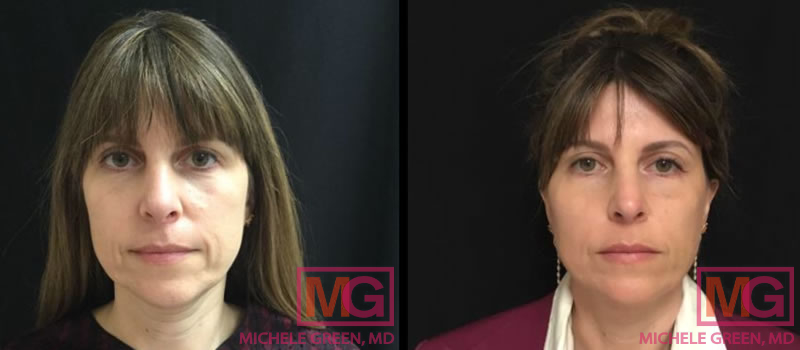
Thermage before and after photo
Can you combine other cosmetic treatments with a non-surgical facelift?
Absolutely! In addition to fine lines, skin laxity, volume loss, and unwanted fat, many patients also experience other skin concerns such as uneven texture, facial redness, hyperpigmentation, acne, scars, and stretch marks. Dr. Green offers a variety of non-invasive cosmetic treatments to address these issues, which can easily be combined with a non-surgical facelift for facial rejuvenation. When you meet with Dr. Green, she will evaluate your skin concerns and recommend the best treatments to help you achieve clear, radiant skin health. Some cosmetic treatments that can be combined with a non-surgical facelift include:
- The VBeam laser is a non-invasive, pulsed-dye laser that uses a 595nm wavelength to target and remove red pigmentation in the skin. It effectively treats facial redness, rosacea, broken capillaries, red acne scars, red or purple stretch marks, and post-inflammatory hyperpigmentation. The VBeam laser is safe and suitable for patients of all skin types and tones, including darker skin. There is no downtime with this treatment, although multiple sessions are usually needed to achieve optimal cosmetic results.
- Fraxel Dual laser is a popular skin resurfacing treatment that creates controlled, tiny injuries to the skin to trigger the natural healing process and produce new collagen with minimal downtime. The Fraxel Dual laser has two distinct settings or laser beams, making it a dual-purpose treatment. The 1927 nm wavelength is a Thulium laser that can remove pigmentation, skin discoloration, age spots, and sun damage from the skin’s surface layers. This wavelength targets chromophores, or colored elements within skin cells, to generate a controlled thermal reaction that destroys pigmented spots. The 1550 nm wavelength, part of the Erbium component, is used to improve skin texture, fine lines, wrinkles, and acne scars. The Erbium technology delivers energy deeper into the skin, stimulating new collagen production. Fraxel works best for Fitzpatrick skin types I-III, providing safe and effective results. The treatment involves minimal downtime, with patients usually experiencing mild redness for about 48 hours. Typically, a series of 3 to 5 treatments spaced one month apart yields the best results.
- The Clear + Brilliant laser is often called a “mini-Fraxel” because it can treat sun spots, discoloration, fine lines, wrinkles, mild acne scars, and uneven skin texture and tone. It uses fractionated laser technology to create millions of tiny treatment zones, stimulating new collagen growth and replacing damaged skin. Since only part of the skin is treated during each session, the surrounding skin remains unaffected, resulting in no downtime after treatment. Patients typically need four to six sessions for optimal results.
- The eMatrix laser is an advanced skin resurfacing treatment that uses bipolar radiofrequency energy to heat the deeper layers of the skin while protecting the outer layers. This cosmetic procedure stimulates the body’s natural healing process, promoting the formation of new collagen in the dermis. Increased collagen leads to smoother, brighter, tighter skin and a more youthful look that lasts. Because the energy penetrates deep into the skin, patients can achieve impressive facial rejuvenation with minimal downtime. eMatrix can treat various signs of aging, such as wrinkles, sun damage, skin laxity, acne scars, stretch marks, skin discoloration, and enlarged pores. Most patients require a short series of treatments to achieve their desired results.
- A chemical peel is a skin resurfacing treatment that can improve skin tone and texture. During a chemical peel, Dr. Green applies a chemical solution to the skin’s surface to gently and effectively remove discolored, dead skin from the outer layers of the epidermis. This chemical exfoliation encourages skin cell renewal, clears pores, and enhances uneven skin texture and tone, revealing a vibrant, healthy glow. Dr. Green can customize each chemical peel to suit her patients’ specific needs and goals. Depending on the strength and type of peel used, it can improve skin texture, reduce the appearance of acne scars or breakouts, and diminish sun damage, fine lines, wrinkles, and melasma. However, chemical peels are not suitable for all skin types or tones, and it’s important to consult with an expert, such as board-certified dermatologist Dr. Michele Green, to ensure the type of chemical peel is safe and effective for you.
- Microneedling, also called collagen induction therapy, is a minimally invasive treatment that uses a device with tiny, sterile needles to create micro-punctures in the skin’s surface. This stimulates the body’s natural wound-healing process, leading to the production of new collagen. Microneedling effectively addresses fine lines, wrinkles, mild skin laxity, acne scars, and uneven skin texture and tone. The microchannels also improve the absorption of topical products. Dr. Green can add a proprietary depigmentation serum rich in active skin-lightening ingredients to target hyperpigmentation. Additionally, Dr. Green can include platelet-rich plasma (PRP), a serum derived from the patient’s blood rich in epidermal growth factors, to support tissue regeneration and healing, thereby enhancing the procedure’s results.
- Vivace RF microneedling is FDA-approved to enhance skin texture, tone, and elasticity for patients of all skin tones and types. This non-surgical treatment combines microneedling with radiofrequency (RF) energy, targeting the epidermal and dermal layers to boost collagen production. Vivace microneedling is an excellent non-invasive choice for skin tightening and improving overall skin texture, including reducing the appearance of acne scars, wrinkles, fine lines, and enlarged pores. For optimal results, Dr. Green recommends patients undergo three Vivace sessions spaced four weeks apart.
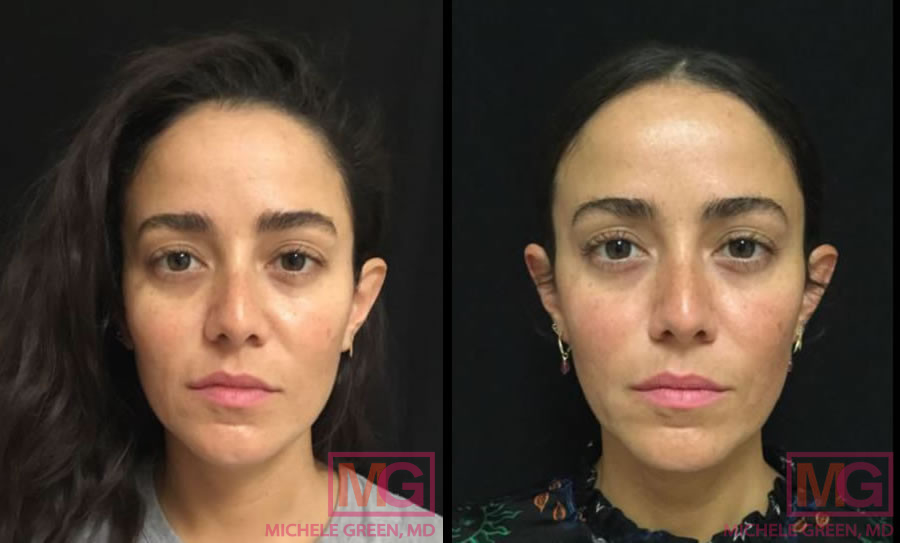
Juvederm Voluma 3 weeks before and after
Which clinics offer the best non-surgical facelift?
When considering options for a non-surgical facelift, it’s crucial to choose a qualified, experienced dermatologist to minimize the risk of complications and side effects. Non-surgical facelift techniques include methods like dermal fillers, Botox, laser skin resurfacing, and radiofrequency therapy, each requiring a high level of skill to ensure safety and effectiveness. A board-certified dermatologist like Dr. Michele Green not only has proper training but also a deep understanding of facial anatomy, enabling her to customize treatments to your individual facial features and aesthetic goals. This personalized approach is essential for achieving natural-looking results that improve your appearance without surgery. For those seeking top-quality care, it’s highly recommended to work with a board-certified dermatologist with extensive experience, such as Dr. Michele Green. With her broad expertise and dedication to patient satisfaction, Dr. Green is known for providing high-quality, personalized care tailored to each person’s needs. You can trust that your treatments will prioritize safety and deliver excellent results, resulting in a more youthful, refreshed look.
Non-surgical facelift Frequently Asked Questions (FAQs)
What treatments are included in a non-surgical facelift?
At Dr. Michele Green’s private dermatology practice in New York City, patients can choose from a variety of non-surgical facelift treatments, each carefully designed to target specific skin concerns and enhance overall facial appearance. One main treatment offered is Thermage RF, a non-invasive procedure that uses radiofrequency technology to stimulate collagen production and tighten the skin. This treatment is especially effective at reducing sagging and improving skin texture, making it an excellent option for those seeking a younger, more lifted look without surgery. Another popular option is microneedling, which uses tiny needles to create micro-injuries in the skin. This process prompts the body’s natural healing response, boosting collagen and elastin production. Microneedling can significantly improve the appearance of fine lines, acne scars, and overall skin tone, resulting in a smoother, firmer complexion. Additionally, various dermal fillers are available to restore volume, define facial contours, and diminish the appearance of wrinkles. Fillers like hyaluronic acid can be injected into targeted areas such as the cheeks, lips, and nasolabial folds, providing immediate results with minimal downtime. While each of these procedures can be performed alone, they are often combined to achieve optimal results. This multi-layered approach allows for a personalized treatment plan that addresses each patient’s unique skin concerns and aesthetic goals. Before undergoing any treatment, it is essential to schedule a consultation with Dr. Green. During this comprehensive assessment, she will evaluate your skin’s condition and discuss your goals and expectations in detail. This customized approach ensures your treatment plan is tailored to your individual needs, ultimately maximizing your satisfaction with the results.
Thermage vs Ultherapy
Ultherapy and Thermage are both non-surgical treatments that offer skin-tightening benefits and can be part of a non-surgical facelift plan. The main difference between them is the type of energy they use. Ultherapy employs ultrasound energy to stimulate collagen production and improve skin laxity in the dermal layers. However, Ultherapy can sometimes cause unintended fat loss in the treatment area if the ultrasound penetrates too deeply. In contrast, Thermage uses radiofrequency energy and is not linked to unintended fat loss, making it the preferred non-invasive option for skin tightening at Dr. Green’s NYC office. Additionally, Ultherapy is not FDA-approved for treating other parts of the body, whereas Thermage can be used on the abdomen, upper arms, thighs, chest, and neck.
Can a non-surgical facelift reduce wrinkles and sagging?
Absolutely! A non-surgical facelift combines advanced cosmetic treatments to target various signs of aging, making it a highly effective option for reducing the appearance of wrinkles and sagging. One major benefit of non-surgical treatments is their flexibility. Practitioners can customize treatment plans by combining multiple procedures to address each person’s unique needs and concerns. For example, strategically placed dermal fillers can restore lost volume and fullness to areas like the cheeks, lips, and nasolabial folds.
Meanwhile, treatments like Thermage use radiofrequency technology to stimulate collagen production and tighten the skin, effectively improving its firmness and elasticity. Additionally, microneedling can enhance skin texture and tone by promoting natural healing. At the same time, Botox can target dynamic wrinkles caused by muscle movement, creating a smoother, more youthful look. Combining these treatments can thoroughly address skin laxity, reduce fine lines and wrinkles, and rejuvenate the facial contour. Each non-surgical facelift plan is carefully tailored to the individual’s unique skin condition, age, and aesthetic goals. Therefore, it is vital to consult with a board-certified dermatologist, such as Dr. Michele Green, who can assess your skin and recommend the best approach to achieve your desired results. This personalized treatment plan ensures optimal outcomes, helping each patient enjoy a refreshed, revitalized appearance without surgery.
How much does a non-surgical facelift cost?
The total cost of a non-surgical facelift varies based on factors such as the provider’s experience, the office’s location, and the types and number of non-invasive procedures included in your treatment plan to achieve your desired facial rejuvenation results. While visiting a MedSpa might be more affordable, a board-certified dermatologist like Dr. Green has the expertise to perform your non-surgical facelift safely and effectively, ensuring consistently impressive results. During your consultation with Dr. Michele Green in New York City, she will recommend the best combination of non-invasive procedures to address your signs of aging and reach your ideal cosmetic outcome. The costs of these treatments will be discussed at that time. When working with Dr. Green, she will present you with non-surgical options that match your needs and budget.
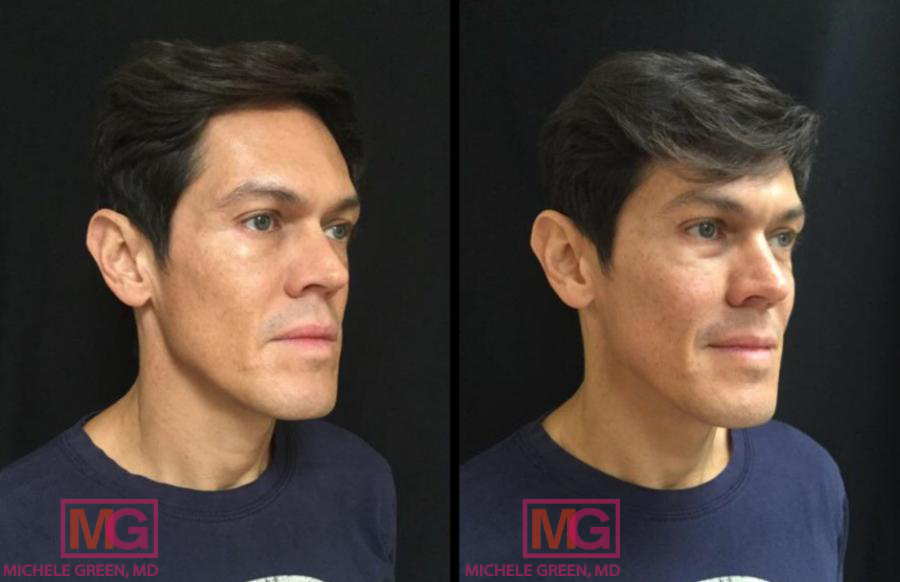
Restylane male aged 40-49 before and after
How do I get a non-surgical facelift today?
Fine lines, wrinkles, skin laxity, and crepey skin are natural signs of aging, but for many people, their appearance can lead to self-consciousness. For those looking to rejuvenate their skin and achieve a more youthful look without surgery, non-surgical facelift options might be ideal. When performed by a board-certified cosmetic dermatologist like Dr. Michele Green in New York City, these procedures can offer long-lasting results, making them a good alternative to cosmetic surgery with a quicker recovery and less discomfort. If you’re interested in non-invasive treatments that involve no incisions, reduce skin laxity, tighten loose skin, diminish fine lines and deeper wrinkles, and remove unwanted fat, a non-surgical facelift could be the most effective treatment option for you.
With over twenty-five years of experience offering top non-invasive treatments to some of the most discerning men and women worldwide, Dr. Green’s dedication to her patients and expertise are reflected in her consistent recognition as one of New York’s leading dermatologists by Castle Connolly, New York Magazine, and Super Doctors. When you meet with Dr. Green at her boutique dermatology practice in Manhattan’s Upper East Side, you will have the opportunity to discuss your specific skincare and aesthetic goals in detail. Together, you will determine the non-invasive treatment options best suited to your desires, needs, and budget. To begin your non-surgical facelift and achieve a natural-looking, more youthful appearance that lasts, schedule a consultation with Dr. Green today by contacting us online or calling the NYC office at 212-535-3088.


