


Fraxel Laser For Acne Scars
Many of us struggle with acne throughout our lives, which, if not adequately treated, can leave us with permanent acne scars. Acne scars can be even harder to treat than the acne lesions themselves and can leave one feeling self-conscious and frustrated. The most common type of acne scar is an atrophic scar, or depression, that forms due to insufficient collagen production during the healing process. Luckily, advancements in cosmetic dermatology have led to the development of the Fraxel laser, a gold-standard laser treatment for acne scars. Dr. Michele Green has over 25 years of experience treating acne scars and often uses the Fraxel laser as part of her treatment plan to achieve clear, radiant skin.
The Fraxel laser is a non-ablative, non-invasive laser resurfacing treatment that is FDA-approved to revitalize damaged skin, even skin tone and skin texture, and reduce the appearance of acne scars on the face, neck, chest, back, arms, and legs. By using fractional laser technology to stimulate collagen production deep within the skin’s layers, this innovative laser treatment can minimize acne scarring, fine lines, hyperpigmentation, discoloration, and other skin conditions with minimal downtime. Since the Fraxel laser treats only a fraction of the treatment area at a time, the surrounding tissue remains unharmed, resulting in faster recovery times and fewer side effects than more aggressive ablative laser options. After a series of Fraxel treatments, you can expect even-textured, rejuvenated skin with long-lasting results. If you are tired of your acne scars and ready to treat them with the Fraxel laser, Dr. Michele Green is here to help.
What is Fraxel Laser Treatment?
The Fraxel laser is the first FDA-approved fractionated laser for facial and skin rejuvenation. Fraxel laser treatment uses unique fractional technology to create thousands of microscopic micro-injuries with precision deep within the dermis, triggering the body’s natural healing process and stimulating new collagen production without harming the surrounding tissue. The Fraxel laser treats only a fraction of the targeted area per session, leaving the surrounding skin cells intact and enabling rapid recovery. After a series of treatment sessions spaced approximately one month apart, the Fraxel laser can produce smooth, even, rejuvenated skin with results that last for years. There are three types of Fraxel lasers: the Fraxel Dual, the Fraxel Repair, and the Fraxel Restore. As a board-certified dermatologist in NYC, Dr. Green employs the Fraxel Dual laser in her private Upper East Side dermatology office for acne scar treatment.
What is the Fraxel Dual Laser?
The Fraxel Dual laser is essentially two lasers in one: the Erbium laser, which operates at 1550 nm, and the Thulium laser, which operates at 1927 nm. With two different wavelengths of fractional laser energy in a single device, the Fraxel Dual laser can address a variety of skin conditions, either by using each wavelength independently or combining both in a single treatment session. The 1550 nm setting is best suited for acne scars, deep lines, wrinkles, and uneven skin texture, while the 1927 nm setting excels at treating pigmentation and performing superficial skin resurfacing. The Fraxel Dual is also equipped with a Zimmer device that emits bursts of cool air during the procedure to maximize patient comfort throughout the laser treatment.
Fraxel Laser 1550 for Acne Scars
One of the two laser beams in the Fraxel Dual laser, at 1550nm, uses Erbium technology to reach deep into the dermal layers of the skin to stimulate new collagen production. This boost in collagen production, in turn, tightens and smooths the skin’s surface, improving the appearance of acne scars, surgical scars, fine lines, wrinkles, and stretch marks. Typically, acne scars require three to five Fraxel laser treatments, spaced approximately one month apart. Patients experience minimal downtime, with some mild redness after treatment that generally resolves within 48 hours.
Fraxel Laser 1927 Wavelength
The second beam in the Fraxel Dual laser is the 1927nm Thulium wavelength. This wavelength is the gold standard for pigmentation removal and sun-damage treatment, delivering targeted heat energy to chromophores (colored elements within skin cells) to eliminate pigmented spots, brown spots, age spots, and sunspots. Depending on the degree of pigmentation and sun damage, it typically takes two to three sessions, spaced one month apart, to clear facial discoloration. Mild redness is common for up to 48 hours following treatment, after which the skin’s surface may experience three to seven days of slight peeling, similar to rough sandpaper, before revealing a fresh, healthy new layer of skin.
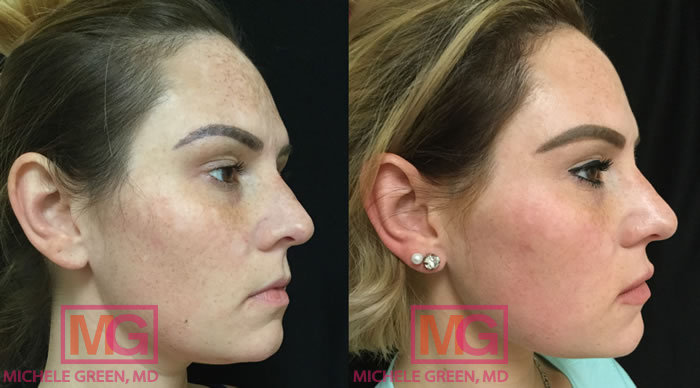
Fraxel combined with Juvederm
Which conditions does the Fraxel Laser Treat?
The Fraxel Laser can treat a variety of skin conditions and can be used on multiple areas of the body, including the face, neck, décolletage, hands, back, arms, and legs. The 1550nm Erbium laser can remove various types of acne scars, including ice pick and boxcar acne scars, surgical scars, keloid scars, and injury-related scars. It is also highly effective at creating a more youthful appearance by reducing fine lines and wrinkles, shrinking enlarged pore size, improving skin tone and skin texture, and reducing the appearance of stretch marks. Meanwhile, the 1927nm Thulium laser can reduce pigment-related issues, such as sun damage, age spots, brown spots, freckles, hyperpigmentation, and skin discoloration. It is important to note, however, that treating melasma with the Fraxel laser is not advised, as this can worsen the existing hyperpigmentation and make it more difficult to remove. Laser treatments such as eMatrix, microneedling, Mesopeels, and Cosmelan peels for acne scars are all safe and effective for darker skin tones. Dr. Green customizes a combination plan for each patient based on their scar type, skin tone, and treatment goals to deliver the safest, most effective results possible.
When treating acne scars, Dr. Green uses the Erbium laser to improve their appearance on the face and reduce fine lines and skin texture irregularities. If you are also dealing with sun-damaged skin, dark spots, actinic keratosis, or discoloration, Dr. Green can create a hybrid laser treatment combining Erbium and Thulium wavelengths for comprehensive results. As a board-certified dermatologist in NYC, Dr. Green expertly customizes laser settings and beam combinations to best address patients’ individual skin concerns and aesthetic goals.
Is Fraxel ablative?
There are two overarching types of laser treatments: ablative lasers, which vaporize the outer layer of skin to promote skin cell turnover, and non-ablative lasers, which cause controlled damage to the inner layer of skin while leaving the outer layer undamaged. Fraxel lasers can be either ablative or non-ablative, depending on the type used. The Fraxel Repair is an ablative CO2 laser used for dramatic skin resurfacing, eliminating the entire epidermal layer to promote new collagen production and cell renewal. While ablative lasers can produce more dramatic results, they require up to two weeks of recovery time and carry an increased risk of side effects such as scarring or hyperpigmentation. In contrast, the Fraxel Dual Laser used by Dr. Green is a non-ablative laser that does not harm the outer layer of skin. Since the Fraxel Dual treats only a fraction of the treatment area at a time while leaving the surrounding tissue unaffected, it allows for faster recovery times and minimal downtime, making it an excellent treatment option for a wide range of patients.
Does Fraxel Remove Acne Scars?
Yes! The Fraxel laser treatment is one of the most effective treatment options available for reducing the appearance of acne scars. The Fraxel Dual laser’s 1550 nm Erbium setting penetrates deeply into the dermal layer of the skin to stimulate new collagen production, gradually resurfacing the skin and minimizing the visibility of acne scarring. Over a series of laser treatments, patients can achieve a significantly reduced appearance of acne scars and enjoy clearer skin with a smoother, brighter, more even-textured complexion. Acne scarring affects a remarkably large portion of the population, with over 80% of people experiencing acne breakouts between the ages of 11 and 30, and approximately one in five develops some form of acne scar as a result. The Fraxel laser is FDA-approved for this purpose. It has a well-established safety and efficacy profile when performed by an experienced, board-certified dermatologist in NYC, such as Dr. Michele Green.
Is Fraxel Good for Acne Scarring?
Fraxel is widely regarded as the gold-standard laser treatment for acne scarring and is often referred to as a ‘magic eraser’ for its ability to target multiple skin conditions simultaneously. Its 1550 nm Erbium laser is ideal for treating acne scars and textural irregularities, such as fine lines, wrinkles, and enlarged pores. Laser skin resurfacing with Fraxel is considered one of the most effective approaches to acne scar treatment in cosmetic dermatology today, and individual results are consistently positive when performed by a skilled provider. It is important to note, however, that Fraxel laser treatments are only safe for patients with skin types I, II, and III. Those with darker skin types may be at greater risk for hyperpigmentation and discoloration following treatment, and Dr. Green can recommend safe and effective alternative acne scar treatments for these patients, including the eMatrix laser, Vivace laser, and other radiofrequency and microneedling devices.
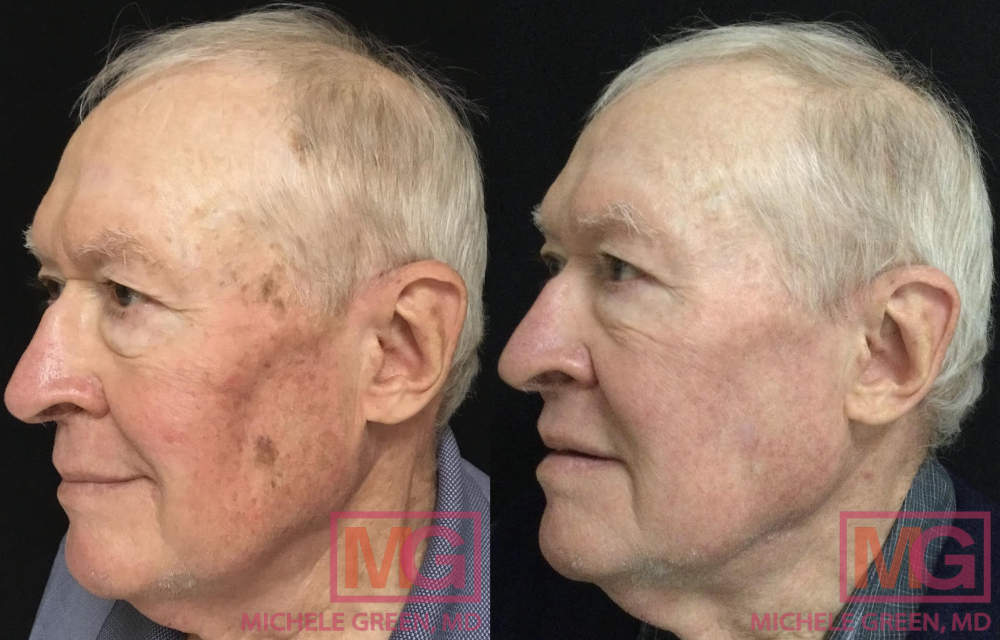
Does Fraxel Work on Deep Acne Scars?
Yes, the Fraxel laser is highly effective for treating deep acne scars, including ice pick and boxcar scars, because it penetrates deeply into the dermis. The 1550 nm Erbium fractional laser delivers concentrated energy to the deeper layers of the skin, creating controlled micro-injuries that stimulate robust collagen production and elastin remodeling in the treated area. This process gradually resurfaces the skin from within, improving the depth and appearance of even severe acne scars over time. Patients with deeper or more severe acne scarring may require more sessions than those with milder scarring, as individual results vary depending on the depth and distribution of the scars. Dr. Green will thoroughly evaluate the types of acne scars present during your consultation to determine the most appropriate treatment plan for your specific skin concerns.
What does the procedure entail for the Fraxel laser?
To prepare for Fraxel laser treatment, discontinue any retinoid use for 1 week before your appointment. Your skin should not be tan or contain self-tanner, as it may interfere with your treatment results or cause a burn in the treated area. Before your Fraxel laser treatment, Dr. Green will prescribe a topical numbing cream to be applied to the treated area. If you have a history of cold sores, Dr. Green will prescribe Valtrex to be started a day before your procedure to minimize the risk of a herpetic outbreak.
When you visit Dr. Green for your Fraxel procedure, the designated treated area will be cleaned, and photographs may be taken for your record. Protective goggles will be placed, and Dr. Green will deliver the designated laser energy in passes to your skin. You will feel bursts of heat during your treatment and may experience slight stinging; however, the Zimmer device will simultaneously emit bursts of cool air to maximize comfort. Most appointments last around 15 minutes, but this varies depending on the size of the treatment area and the depth of the acne scars being treated.
What is the aftercare for the Fraxel laser?
After your Fraxel laser treatment, you can resume regular activity shortly afterward. It is important to avoid retinoids, exfoliants, and other skincare products that may aggravate healing skin, including alpha- and beta-hydroxy acids, hydroquinone, and benzoyl peroxide, until the treatment area has fully healed. Patients treated exclusively for acne scars under the 1550nm setting may experience mild swelling or redness resembling a sunburn for up to 48 hours post-treatment. If treated with both the 1550 nm and 1927 nm wavelengths, sensitive skin and slight peeling may persist for 5 to 7 days. It is essential to keep the skin well-moisturized and to practice proper sun protection by avoiding direct sun exposure and using a broad-spectrum sunscreen with an SPF of 50 or higher, as the laser sensitizes the skin to the sun. If you wear makeup, you must still apply sunscreen underneath, even if your makeup contains SPF.
How Long is Fraxel Recovery Time for Acne Scars?
The recovery time following a Fraxel laser treatment is one of the procedure’s most appealing features: it is notably shorter than that following ablative lasers such as the CO2 laser. Patients treated with the 1550 nm Erbium setting for acne scars typically experience mild redness and swelling resembling a sunburn for approximately 48 hours after the procedure. Those treated with both wavelengths may experience skin sensitivity and peeling for 5 to 7 days. In most cases, patients can return to work and regular activities within a day or two, making Fraxel one of the most accessible skin resurfacing treatments for busy patients. The minimal downtime associated with the Fraxel Dual laser, combined with its effectiveness in treating acne scars, makes it an especially popular choice among Dr. Green’s patients in New York City.
What are the potential side effects of Fraxel laser?
There are very few side effects associated with Fraxel laser treatment. Most patients experience mild redness or swelling following treatment, which resolves on its own within 48 hours. Patients treated with the 1927nm Thulium laser may experience peeling skin, similar to rough sandpaper, for an additional 3 to 5 days. Using a daily moisturizer and sunscreen regimen can help prevent further discomfort during recovery. MGSKINLABs, Dr. Green’s highly coveted skincare line, offers a Recovery Cream specifically designed to help prevent skin damage following treatment. Patients with a history of acne breakouts may be prescribed an oral antibiotic to be taken after treatment. Patients with a history of herpes simplex (cold sores) will be pre-treated with Valtrex to avoid a potential outbreak.
In rare cases, side effects of Fraxel laser include scarring, hyperpigmentation, and infection. It is essential to have your Fraxel laser treatment performed by an expert, such as board-certified dermatologist Dr. Michele Green, to avoid potential adverse side effects. Dr. Green does not recommend Fraxel laser skin resurfacing for those with melasma, as it can worsen pigmentation. Additionally, the Fraxel laser is only safe for skin types I, II, and III; those with darker skin types should avoid it due to an increased risk of hyperpigmentation and discoloration. Dr. Green can recommend safe, effective alternative acne scar treatment options for patients with darker skin tones, including eMatrix, Vivace, and other radiofrequency lasers.
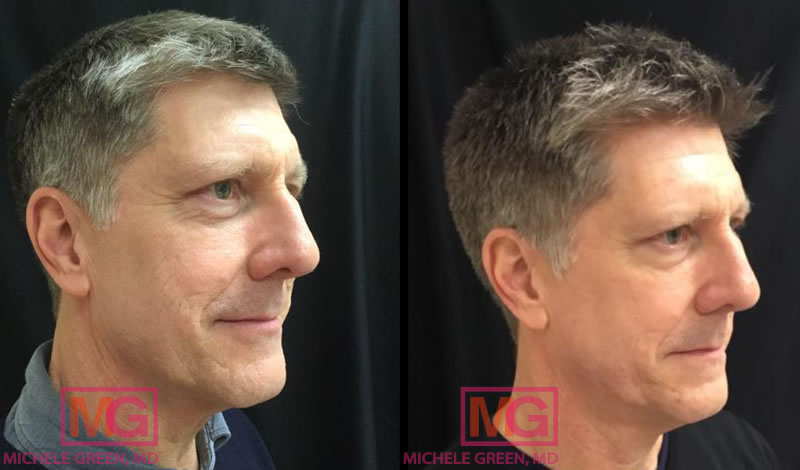
How Many Fraxel Sessions Do I Need for Acne Scars?
Predicting the exact number of Fraxel laser treatment sessions needed to achieve optimal results can be challenging, as individual results vary and each patient presents with a unique severity of acne scarring. Those with mild to moderate acne scars typically require fewer sessions than patients with severe acne scarring. In general, patients being treated with Fraxel for acne scars will need three to five sessions, spaced approximately four weeks apart, to achieve their ideal cosmetic outcome. The types of acne scars present, their depth, and the patient’s overall skin type will all influence the total number of treatments recommended. When you consult with Dr. Green at her private dermatology office on the Upper East Side of Manhattan, she will work closely with you to design a personalized acne scar treatment protocol that meets your specific needs and goals.
How painful is Fraxel for acne?
In preparation for the procedure, Dr. Green will prescribe a topical numbing cream to be applied to the treatment area approximately one hour before your session. Additionally, the Fraxel Dual laser is equipped with the Zimmer cooling device, which emits bursts of cool air throughout the treatment to maximize patient comfort. Most patients describe the sensation during treatment as mild stinging or warmth, which is very manageable. The combination of the numbing cream and the Zimmer cooling system makes the Fraxel laser one of the most comfortable acne scar treatments available.
How Much Does Fraxel Cost for Acne Scars?
The cost of Fraxel treatment for acne scars varies depending on several factors, including the size of the treatment area, the severity of the condition, and the number of sessions required. The overall price may also vary depending on whether a board-certified dermatologist, a clinic technician, or a medspa performs the procedure. While medspas may appear to offer more cost-effective options, it is strongly advisable to undergo Fraxel laser treatments with an experienced, board-certified dermatologist, such as Dr. Green, to ensure the safety and effectiveness of your acne scar treatment. Patients are encouraged to contact Dr. Green’s office to schedule a consultation and determine the exact cost of their Fraxel treatment plan.
Can I get Fraxel while I still have acne?
It is best to have your acne under control before beginning Fraxel laser treatment. Any type of laser treatment can exacerbate active acne lesions, potentially worsening the skin condition and leading to additional acne scars. Patients should address and resolve acne breakouts before undergoing acne scar treatment to prevent new scars from forming after treatment has concluded. For active acne, Dr. Green can prescribe topical or oral medications, depending on the type and severity of your acne. Additionally, in-office treatments, including HydraFacials, V-Beam laser, photodynamic therapy, chemical peels, and acne surgery, can be performed to help reduce acne on the skin’s surface. If you would like to get your acne under control before proceeding with Fraxel laser treatments, consult with Dr. Michele Green, who will thoroughly assess your skin and medical history and create a treatment protocol best suited to your skin concerns.
Is Fraxel Safe for Dark Skin Acne Scars?
The Fraxel Dual laser is considered safe and effective for patients with Fitzpatrick skin types I, II, and III. However, patients with darker skin types (IV, V, and VI) are at elevated risk of hyperpigmentation and discoloration after Fraxel laser treatment, and the procedure is generally not recommended for these skin types. For patients with darker skin tones seeking acne scar treatments, Dr. Green offers a range of effective, safe alternatives in her NYC dermatology office, including the eMatrix sublative rejuvenation laser, Vivace radiofrequency microneedling, and other innovative laser technologies specifically designed to be safe across all skin types. These treatment options can produce excellent cosmetic results for acne scarring, fine lines, skin texture irregularities, and discoloration without the risk of worsening pigmentation. Dr. Green carefully considers each patient’s skin type and concerns when designing a personalized acne scar treatment plan.
Fraxel vs CO2 Laser for Acne Scars
Fraxel and CO2 (Carbon Dioxide) are two commonly used laser skin resurfacing treatments for addressing acne scars, fine lines, wrinkles, age spots, and sunspots. The Fraxel laser is a non-ablative fractional laser that delivers fractionated laser energy into the dermis to stimulate collagen production without harming the outer layer of skin, allowing for rapid healing and minimal downtime. A standard CO2 laser, on the other hand, is an ablative laser that vaporizes the superficial layers of the skin, causing thermal injury in the deeper dermis to stimulate collagen production and achieve tighter, smoother skin.
While the CO2 laser can produce more immediate and dramatic results, it also comes with significantly longer recovery times, up to 6 weeks, and an increased risk of adverse effects, including scarring and hypopigmentation, particularly in patients with darker skin types. A series of Fraxel laser treatments can produce cosmetic results comparable to those achieved with the CO2 laser, but without the extended downtime or elevated risk of complications. Dr. Green generally recommends the Fraxel laser over the CO2 laser due to its superior safety profile and proven efficacy in treating acne scars.
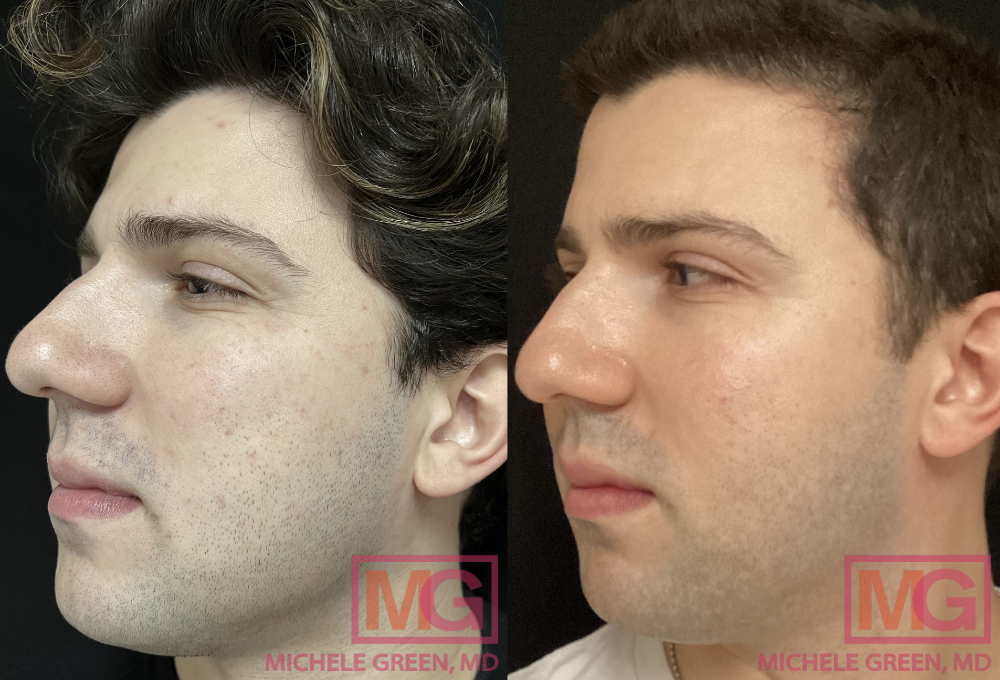
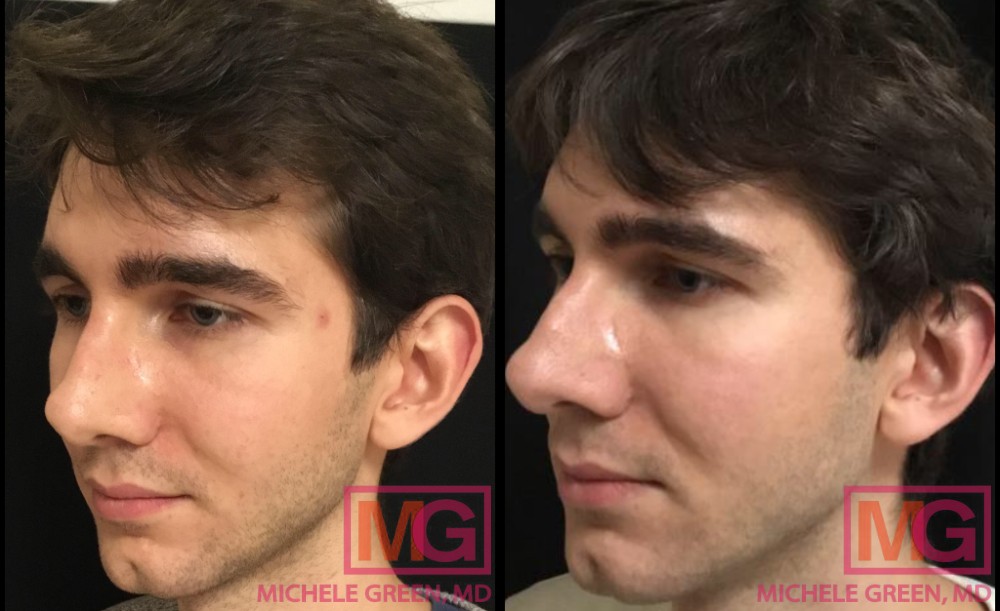
Before and after 2 Voluma, 1 Restylane, and 1 Fraxel for acne scars
Fraxel vs Microneedling for Acne Scars — Which is Better?
Both Fraxel and microneedling are effective treatment options for acne scars, as they stimulate new collagen production and improve skin texture. Microneedling, also known as collagen induction therapy, uses tiny surgical-grade needles to create superficial micro-injuries in the skin, activating the body’s natural healing response and gradually smoothing acne scars. Unlike microneedling, the Fraxel laser delivers fractional laser energy deep within the dermis, generating controlled thermal injury that triggers robust collagen production and elastin remodeling at depths beyond those reached by microneedling. As a result, the Fraxel laser is generally better suited for treating deeper acne scars and more significant textural irregularities. At the same time, microneedling can be an excellent complementary option for maintaining results over time. Dr. Green frequently recommends that patients undergo microneedling after a series of Fraxel laser treatments to help maintain and prolong the results achieved with the laser.
Fraxel vs. Pixel laser for acne scars
Similar to the Fraxel laser, the Pixel laser is a non-ablative, fractionated laser used to treat fine lines, wrinkles, uneven skin texture, hyperpigmentation, enlarged pores, surgical scars, and acne scars. The main differences between the two are the wavelength, intensity, and depth of penetration. While the Fraxel Dual laser features two wavelengths – 1927 and 1550 nm – the Pixel laser operates at a single wavelength, 2940 nm. While the Pixel laser is an effective option, Dr. Green prefers the Fraxel laser as the two wavelengths allow more cosmetic skin conditions to be addressed.
Is Fraxel permanent for acne scars?
The Fraxel laser effectively reduces the appearance of acne scars and provides long-lasting results. For most patients, the full effects of the treatment may not be visible until after three to five treatment sessions. Afterward, most patients require maintenance or touch-up appointments every couple of years to maintain the treatment results. Results are better maintained when patients practice good skincare after the procedure by consistently wearing SPF 30 or higher sunscreen and by preventing and treating future acne breakouts early. If new acne scars form from acne lesions or breakouts, the Fraxel laser treatment can be repeated annually to maintain clear, smooth, youthful-looking skin.
Can Fraxel laser treatment be combined with other facial rejuvenation procedures?
Yes! Fraxel is a laser skin-resurfacing treatment that can be combined with other non-invasive facial rejuvenation treatments to achieve optimal cosmetic results. Dr. Green frequently combines Fraxel with the V-Beam laser, dermal filler injections such as Sculptra, Juvederm, or Restylane, or skin-tightening treatments such as Thermage FLX for optimal facial rejuvenation. The V-Beam laser uses targeted light energy to target and eliminate red pigmentation in the skin, including redness associated with acne scarring. Dermal fillers can replenish lost facial volume and address the depressions in the skin caused by collagen breakdown and acne scarring. Thermage FLX, the gold standard for non-invasive skin tightening, uses radiofrequency energy to stimulate collagen production, resulting in tighter, firmer skin. When you work with Dr. Michele Green, a board-certified dermatologist in NYC, you can design a customized treatment plan that targets all of your aesthetic goals, from reducing acne scarring to restoring a healthy, youthful glow.
Can Fraxel make acne scars worse?
When the Fraxel laser is performed by a board-certified dermatologist, such as Dr. Green, with the expertise and experience to recommend safe, effective, and appropriate lasers, Fraxel will not worsen the appearance of your acne scars. Fraxel is an FDA-approved cosmetic procedure for rejuvenating the complexion and eliminating acne scars. It has an excellent safety record when performed by a qualified and knowledgeable medical professional. Your laser skin resurfacing treatment must be performed by an experienced provider who can confirm that you are an appropriate candidate for the procedure and that it will deliver the cosmetic results you seek. Dr. Green is an internationally renowned cosmetic dermatologist with over 2.5 decades of experience. When you work with Dr. Michele Green in NYC for your acne scar treatments, you can expect a gradual, visible improvement with each subsequent session until you achieve a smooth, clear complexion that lasts.
Can Fraxel prevent breakouts?
The Fraxel fractionated laser is a highly versatile skin resurfacing treatment that can address acne scars, hyperpigmentation, uneven skin tone and texture, stretch marks, surgical scars, enlarged pores, and sun-damaged skin. However, it is not specifically designed to prevent future acne breakouts. For patients looking to actively control acne, Dr. Green offers a range of treatment and prevention options at her Upper East Side, NYC, dermatology office, including chemical peels, targeted skincare products, and laser treatments such as VBeam and photodynamic therapy. During your initial consultation, Dr. Green will recommend the treatment plan best suited to eliminate acne breakouts while avoiding excessive skin irritation.
Frequently Asked Questions (FAQs) About Fraxel Laser for Acne Scars
Is Fraxel laser worth it for acne scars?
Yes! The Fraxel laser is absolutely worth it for people with acne scars. It is a proven, FDA-approved, and highly effective treatment for atrophic acne scars, including boxcar and icepick scars. It produces significant improvements in skin texture, tone, and overall skin rejuvenation. The Fraxel laser works by emitting fractional laser energy in concentrated beams, creating targeted micro-injuries in columns of skin while leaving the surrounding tissue intact. When this fractional laser energy penetrates the dermal layer, it triggers the body’s natural healing response. It stimulates the production of new collagen and elastin, resulting in firmer, smoother, and more evenly textured skin. The procedure is safe, relatively simple, and typically takes only 15 to 30 minutes to perform, depending on the size and scope of the treatment area. Most patients experience minimal discomfort because Dr. Green begins each session by applying a topical numbing cream, and the Fraxel Dual laser is equipped with a dynamic cooling device.
What is the best laser for acne breakouts?
While the Fraxel laser is not ideal for treating active acne breakouts, several other excellent non-invasive laser options are available. The VBeam laser and photodynamic therapy can reduce the number of active acne lesions in a treatment area by up to 90%, with long-lasting results. The Acleara laser can reduce sebum production, eliminate acne-causing bacteria, and clear clogged pores, helping reduce acne over time. If you are currently dealing with active acne breakouts and are interested in exploring laser treatment options, consult Dr. Green at her NYC dermatology office to find the most appropriate and effective solution for your specific skin concerns.
Why am I breaking out after Fraxel?
Some patients may experience acne breakouts, including pimples or whiteheads, in the days following Fraxel treatment. This is not uncommon and can be related to the skin’s healing process or the use of thick, occlusive skincare products during recovery. Dr. Green recommends treating any breakout promptly to prevent new acne scars from forming on the skin’s surface. Patients with active acne breakouts at the time of treatment should wait until the breakout has fully resolved before undergoing Fraxel. If you experience a breakout after your Fraxel laser treatment, an oral or topical antibiotic may be prescribed to help clear the skin if needed. Dr. Green has many effective solutions for active acne and can advise you on the safest and most appropriate treatment approach.
How long after Fraxel can I use Retinol?
For the week following your Fraxel laser skin resurfacing treatment, avoid exfoliating ingredients such as Retinol, vitamin C, hydroquinone, benzoyl peroxide, and salicylic acid, as they can irritate the healing skin and slow recovery. After treatment with Fraxel, the focus of your skincare routine should be on gentle cleansing, thorough moisturizing with a non-comedogenic moisturizer, and consistent application of a broad-spectrum sunscreen. Once the skin has fully healed, generally after one week, you can gradually reintroduce your regular skincare products, including Retinol, under the guidance of Dr. Green.
Can I get Fraxel laser treatment for acne?
Fraxel is not designed to treat active acne breakouts, and patients should not undergo Fraxel treatments if they are currently experiencing acne breakouts. Additionally, patients with active infection or open lesions should be treated with Fraxel only after their condition has resolved to avoid exacerbating the infection. Dr. Green will first treat your inflammatory condition before performing Fraxel treatment sessions.
Is one session of Fraxel enough for acne scars?
No, one Fraxel session is not enough to treat acne scars. Because the Fraxel laser treats only a fraction of the skin at a time, multiple sessions are needed to treat the entire targeted area. For optimal results, Dr. Green recommends three to five treatment sessions spaced one month apart. The number of sessions required will depend on the type and severity of your acne scars as well as your specific aesthetic goals.
How do I get started with Dr. Michele Green today for Fraxel Laser Treatment for Acne Scars?
Acne scars can be a persistent and painful reminder of past breakouts, and they are often more challenging to resolve than the initial acne itself. Fortunately, non-invasive laser treatments like the Fraxel laser have made comprehensive skin rejuvenation more accessible than ever, offering patients a safe, effective, and minimally disruptive path to clearer, smoother, more youthful-looking skin. The Fraxel laser penetrates deep into the skin’s layers to stimulate collagen production, resurface damaged skin from within, and reduce the appearance of acne scars, fine lines, hyperpigmentation, and uneven skin texture. After a series of three to five Fraxel laser treatments, patients can look forward to long-lasting, transformative results that restore their confidence and reveal the smooth, radiant complexion they have been seeking. Dr. Michele Green is a leading expert in cosmetic dermatology and acne scar treatment, and she has helped thousands of patients worldwide achieve exceptional outcomes with the Fraxel laser and other advanced skin treatments.
Dr. Green is an internationally renowned board-certified cosmetic dermatologist practicing in New York City, consistently recognized by Castle Connolly, New York Magazine, and Super Doctors as one of the best dermatologists in the country. She is dedicated to providing each patient with a personalized, holistic approach to care, taking into account their skin type, the severity of their acne scarring, and their unique aesthetic goals to design the most effective and appropriate treatment plan. Whether your concerns include acne scars, sun damage, discoloration, fine lines, or other skin conditions, Dr. Green combines the latest laser technologies with her decades of dermatology expertise to deliver natural, beautiful, and long-lasting results. If you are ready to take the next step toward clearer, smoother skin and want to explore the Fraxel laser as an acne scar treatment, please call Dr. Michele Green’s New York office at 212-535-3088 or contact us online to schedule an appointment.


