


Laser Stretch Mark Removal
Stretch marks, medically known as striae distensae, are a common skin condition that affects individuals of all ages and body types. They develop during periods of rapid bodily changes, such as growth spurts, weight gain, or bodybuilding. These visible lines occur when the dermis, the layer of the skin containing collagen and elastin fibers, undergoes sudden stretching, causing underlying tissue damage. While often considered a cosmetic concern, stretch marks can significantly affect an individual’s self-confidence and body image. Board-certified dermatologist Dr. Michele Green understands the emotional and physical challenges posed by stretch marks and offers cutting-edge treatment solutions in her NYC dermatology practice.
Stretch marks typically develop during significant body transformations, such as puberty, pregnancy, weight loss, or rapid muscle development, and appear on areas like the upper arms, lower back, and abdomen. These marks result from reduced skin elasticity when collagen and elastin production cannot keep pace with sudden physical changes. While some individuals may find stretch marks distressing, modern dermatological advances offer numerous non-invasive treatment options to minimize their appearance. Laser treatments such as Fraxel, eMatrix, VBeam, and Thermage FLX offer innovative approaches to improving skin texture and tone and reducing the visibility of stretch marks. Dr. Michele Green specializes in personalized treatment plans that address each patient’s unique skin characteristics and aesthetic goals.
Dr. Michele Green is an internationally renowned, board-certified dermatologist practicing on Manhattan’s prestigious Upper East Side. With more than 25 years in cosmetic dermatology, she has consistently been recognized by Castle Connolly, Super Doctors, and New York Magazine as one of NYC’s top dermatologists. Her holistic approach combines cutting-edge technology with a personalized touch, ensuring patients receive comprehensive care tailored to their specific skin concerns. Dr. Green’s expertise spans a range of non-invasive treatments, including laser therapy, hair removal, and advanced skin rejuvenation techniques, making her a leading authority in aesthetic dermatology.
What is laser stretch mark removal?
Laser stretch mark removal is a non-invasive, in-office cosmetic procedure that uses advanced laser and energy-based technologies to significantly reduce the appearance of stretch marks and improve the skin’s overall texture and tone. Stretch marks, also known as striae, form when the skin is rapidly stretched due to factors such as pregnancy, weight fluctuations, growth spurts, or hormonal changes, causing the collagen and elastin fibers beneath the surface to tear and leave behind visible streaks or indentations. While no treatment can completely erase stretch marks, laser therapy has emerged as one of the most effective options for dramatically improving their appearance, with results that go far beyond what topical creams and at-home remedies can achieve. Dr. Green takes a highly personalized approach to laser stretch mark removal, carefully selecting the most appropriate technology and treatment plan based on each patient’s skin type, skin tone, and the specific characteristics of their stretch marks.
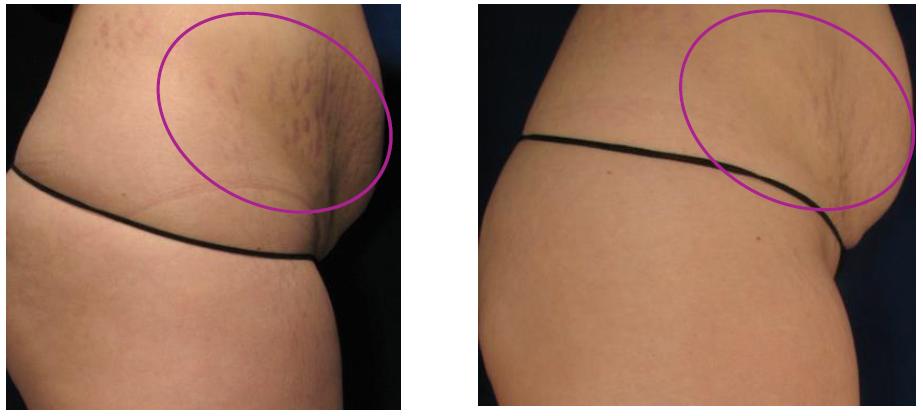
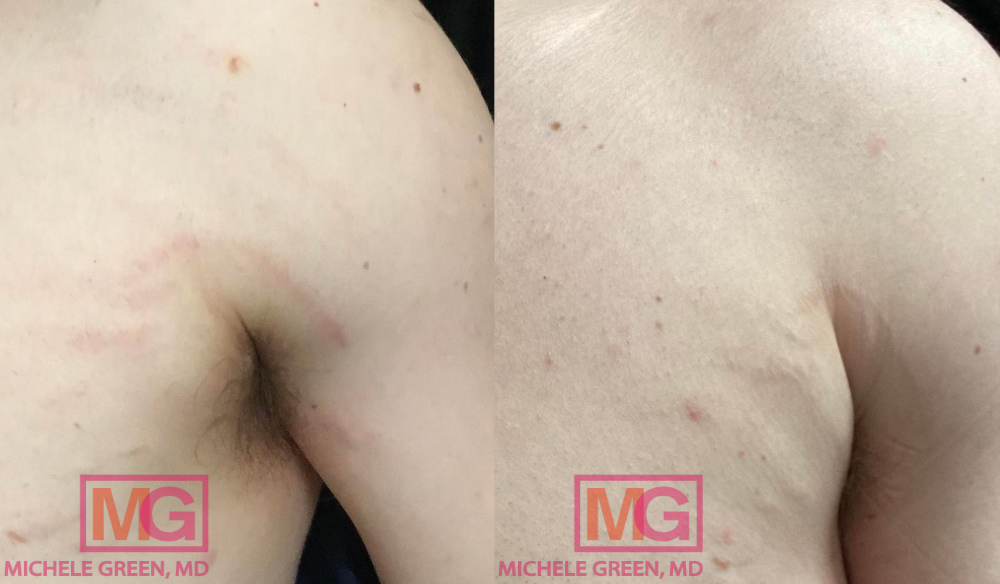
Stretch Mark Removal: Syneron Candela (photo after two treatments)
How does laser stretch mark removal work?
Laser and energy-based treatments deliver controlled energy — whether in the form of light, heat, or radiofrequency — to the deeper layers of the skin, where stretch marks originate. This targeted energy induces micro-injuries or thermal stimulation in the affected tissue, activating the body’s natural healing response and triggering the production of new collagen and elastin fibers. Depending on the modality used, treatments may also address the pigmentation and vascular changes associated with stretch marks, helping to even out skin tone while improving texture and firmness. Over a series of treatments, the skin gradually remodels itself from within, filling in damaged areas and producing smoother skin. The specific technology selected — whether laser-based, radiofrequency-based, or a combination of both — will depend on the age and type of stretch marks being treated, as well as the patient’s individual skin characteristics.
Can laser stretch mark removal treat old and new stretch marks?
Yes, laser stretch mark removal can treat both old and new stretch marks, though the approach and results may vary depending on the stage of the stretch mark. New stretch marks, known as striae rubrae, are typically red or purple and retain an active vascular component, making them more responsive to treatment because the skin is still in an active healing phase and collagen remodeling is more easily stimulated. Older, more mature stretch marks, known as striae albae, have faded to a white or silver color and represent a more established form of scarring, making them somewhat more challenging to treat — though significant improvement in texture and appearance is still very achievable. Dr. Green will evaluate the age, color, depth, and location of your stretch marks to determine which laser technology or combination of treatments will deliver the most effective results for your unique skin.
Who is a good candidate for laser stretch mark removal?
An ideal candidate for laser stretch mark removal is in good overall health and has realistic expectations about treatment outcomes. Good candidates typically have a stable body weight, stretch marks that are no longer actively expanding, healthy skin without active infections or skin conditions, and a willingness to follow pre- and post-treatment care instructions. Patients with darker skin tones may require more specialized treatment approaches to avoid potential skin color changes after treatment. Dr. Green carefully evaluates each patient’s unique skin characteristics to determine the most appropriate treatment plan, ensuring safe and effective stretch mark reduction.
How do I prepare for laser stretch mark removal?
Preparation for laser stretch mark removal may include:
- Avoid sun exposure and tanning for 2-4 weeks before treatment.
- Discontinue use of certain irritating skincare products such as retinoids, glycolic acid, or salicylic acid for 1 week.
- Inform your dermatologist about any medications.
- Maintain a stable body weight.
During the initial consultation, Dr. Green will provide comprehensive pre-treatment instructions tailored to individual patient needs, ensuring optimal treatment outcomes and minimizing potential risks.
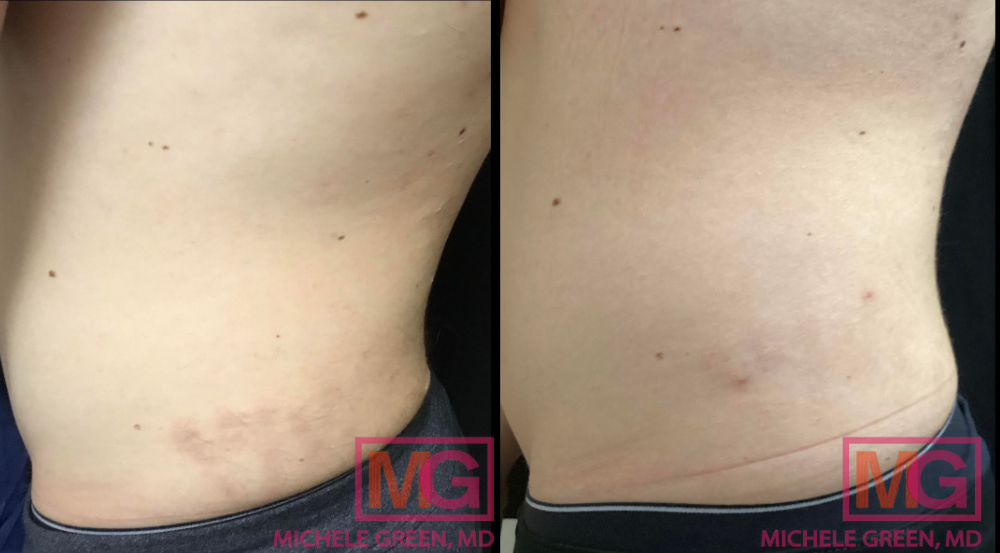
VBeam for stretch mark removal – 5 months
Which types of lasers are used for stretch mark removal?
Fraxel Dual is one of the most well-established fractional laser treatments for stretch marks, using its 1550 nm wavelength to target uneven skin texture caused by disrupted collagen and elastin fibers that give stretch marks their characteristic indented, irregular appearance. This setting delivers thousands of microscopic laser columns deep into the dermis, triggering the body’s natural wound-healing response and stimulating new collagen production that gradually smooths and resurfaces the skin from within. Over time, the treated area develops a more even, refined texture as the remodeling process fills in the damaged areas left by stretch marks. Downtime is minimal — patients typically experience redness and mild swelling for about 2 days before returning to their normal routine. Most patients require 3 to 5 sessions spaced 4 weeks apart for best results, with continued improvement in skin texture unfolding over several months after the final treatment.
VBeam is a pulsed dye laser that targets hemoglobin in blood vessels, making it particularly effective for early-stage, red or pink stretch marks (striae rubrae) that still have an active vascular component. By selectively destroying the tiny blood vessels that give new stretch marks their reddish color, VBeam reduces inflammation and stimulates collagen production in the surrounding tissue, helping to flatten and fade the marks before they progress to the more difficult-to-treat white or silver stage. It is less effective on mature, white stretch marks that lack a vascular component. A series of 4-6 treatments spaced 4 weeks apart is typically recommended, and results are best when treatment begins early in the stretch mark’s development.
eMatrix uses sublative radiofrequency technology to create controlled micro-injuries in the skin while bypassing the outermost epidermal layer, allowing it to treat stretch marks with less surface disruption than traditional ablative lasers. The laser energy penetrates the dermis, stimulating robust collagen and elastin remodeling and improving the texture, depth, and color of both new and mature stretch marks. Because it targets deeper layers without aggressively wounding the surface, it is considered safer for all skin tones, including darker Fitzpatrick skin types that are at higher risk of post-inflammatory hyperpigmentation with more aggressive lasers. Downtime is mild to moderate — the skin typically appears red and feels like a mild sunburn for 2 days, and small micro-crust dots may form and shed within a week. Most protocols call for 3 to 6 sessions spaced 4 weeks apart, with progressive improvement in skin quality continuing for several months after completing the series.
Thermage FLX uses radiofrequency (RF) energy to heat the deeper layers of the skin — specifically the dermis and underlying fibrous tissue — stimulating existing collagen to contract and triggering new collagen synthesis over time. For stretch marks, this remodeling effect helps improve skin laxity, texture, and thickness in the affected areas, which is particularly valuable since stretch marks represent zones where collagen and elastin fibers have been disrupted and thinned. While Thermage is not traditionally a first-line treatment exclusively for stretch marks (it excels more at skin tightening broadly), it can complement other treatments by improving the overall quality and firmness of the skin. One of its biggest advantages is that it has virtually no downtime — the skin may appear slightly red for a few hours, but patients can return to normal activities immediately. Notably, Thermage FLX typically requires only one treatment session, with results gradually appearing over 3–6 months as new collagen is produced; some patients opt for a repeat session after 12 months.
Does laser stretch mark removal hurt?
Most patients describe laser stretch mark removal as minimally uncomfortable, with sensations ranging from a light snapping to mild warmth. To ensure patient comfort, topical numbing creams are typically applied before the procedure, significantly reducing any potential discomfort. The advanced laser technologies used by Dr. Green incorporate cooling mechanisms that further minimize sensation during treatment. Most patients report that any momentary discomfort is well worth the potential improvement in skin texture and appearance.
Are there any side effects of laser stretch mark removal?
The side effects of laser stretch mark removal will depend on the laser used. Common side effects of laser stretch mark removal are typically mild and temporary, including redness, swelling, and skin sensitivity. These side effects typically resolve on their own within 48 hours of treatment. Rare but more serious side effects may include skin burns, scarring, and changes in pigmentation. Patients with darker skin tones may be at higher risk of side effects, underscoring the importance of choosing a board-certified dermatologist experienced in laser treatments. Dr. Green’s expertise minimizes potential complications by carefully selecting appropriate laser technologies and treatment parameters.
What is the recovery time after laser stretch mark removal?
Recovery time for laser stretch mark removal is minimal, with most patients experiencing only mild side effects lasting 1-3 days. Immediately after treatment, patients may notice slight redness, mild swelling, or a sensation similar to a light sunburn in the treated areas. Downtime is typically minimal, allowing most individuals to return to normal activities immediately. Dr. Green recommends specific post-treatment care, including:
Avoid direct sun exposure and apply broad-spectrum SPF 50 daily.
Apply moisturizing lotions.
Keep the treated area clean and hydrated.
Patients are advised to follow a gentle skincare routine and protect the treated skin to optimize healing and maximize treatment results.
How many sessions are needed for laser stretch mark removal?
The number of laser treatment sessions varies depending on the specific laser technology used, the age and color of stretch marks, skin type and tone, and the size of the treatment area. Fraxel, VBeam, and eMatrix treatment typically require 3 to 6 treatment sessions, spaced approximately 4 weeks apart. Early stretch marks typically respond more quickly, while mature stretch marks may require more extensive treatment. Dr. Green develops a personalized treatment plan that optimizes the number of sessions for each patient’s unique skin concerns.
How effective is laser stretch mark removal?
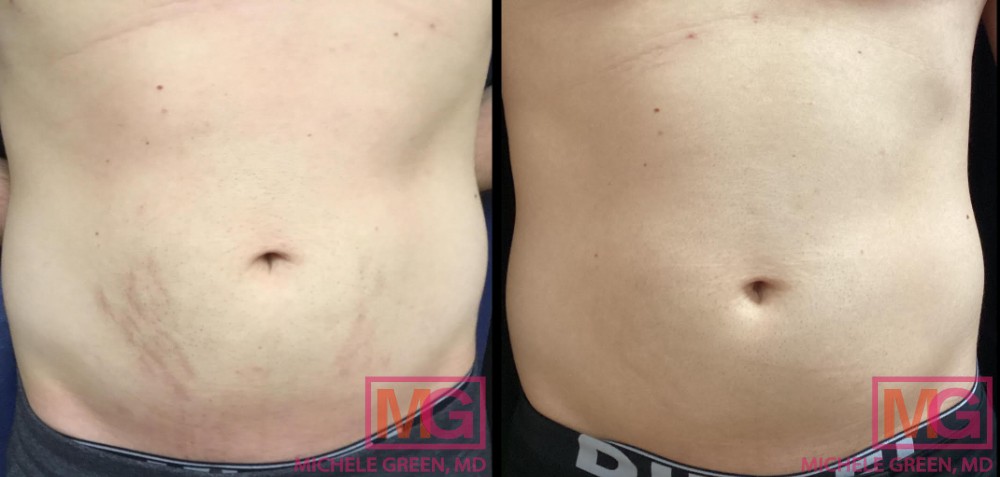
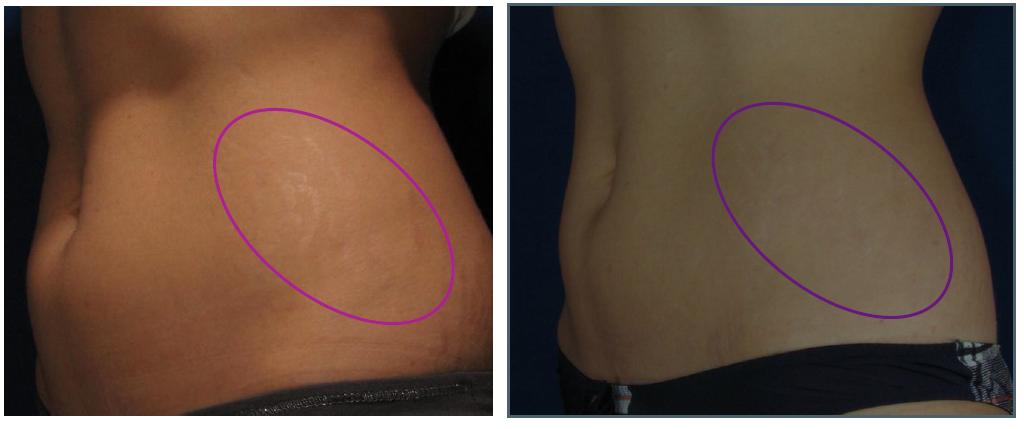
The effectiveness of laser stretch mark removal varies depending on multiple factors, including age, color, and depth of stretch marks. Early stretch marks, typically red or pink, respond more favorably to treatment compared to mature, white stretch marks. Most patients observe significant improvement in skin texture and appearance after a series of treatments. Clinical studies suggest that laser therapies can reduce the visibility of stretch marks by 50-75%, with many patients reporting increased skin smoothness and reduced discoloration. Combining multiple treatment options, such as laser therapy with microneedling or chemical peels, can enhance overall results and provide more comprehensive skin rejuvenation.
Is laser stretch mark removal safe?
Laser stretch mark removal is considered a safe and effective treatment when performed by a board-certified dermatologist like Dr. Michele Green. The non-invasive nature of laser therapy minimizes risks associated with surgical interventions, with most patients experiencing minimal side effects. Careful selection of laser technology based on skin types and stretch mark characteristics helps ensure optimal safety. Potential minor side effects may include temporary redness, slight swelling, or mild discomfort in the treated areas, which typically resolve within a few days. Dr. Green’s expertise in evaluating individual skin tones and selecting appropriate laser settings further reduces the risk of complications such as hyperpigmentation or skin texture changes.
What is the cost of laser stretch mark removal?
Pricing for laser stretch mark removal varies based on several factors, including the size of the treatment area, the number of sessions required, the specific laser technology used, and the complexity of the stretch marks being treated. While it may seem cost-effective to seek treatment at a medspa, it is important to see a board-certified dermatologist like Dr. Green to ensure that the correct laser and settings are being selected for your unique skin type and concerns — both for your safety and to achieve the best possible results. As with most cosmetic procedures, most insurance plans do not cover laser stretch mark removal, though many dermatology practices offer financing options to help make treatment more accessible.
Are the results of laser stretch mark removal permanent?
While laser treatments cannot eliminate stretch marks, they can significantly improve their appearance, and results are long-lasting — though not entirely permanent, as skin continues to age and change over time. Maintaining results depends on a consistent skincare routine, diligent sun protection, a healthy lifestyle, and, if needed, periodic maintenance treatments. Factors such as weight fluctuations, hormonal changes, and aging can all affect the longevity of treatment outcomes. Dr. Green recommends scheduled touch-up treatments to help maintain optimal skin appearance and stay ahead of new stretch mark formation.
Can laser stretch mark removal be combined with other treatments?
Yes, laser stretch mark removal can absolutely be combined with other treatments to enhance and accelerate overall results. Mesopeels can also be incorporated into a comprehensive treatment plan to target any hyperpigmentation or discoloration associated with stretch marks, helping to even out skin tone and further refine the skin’s surface. Microdermabrasion is another valuable addition to a stretch mark treatment plan, as it gently exfoliates the outermost layer of the skin to improve surface texture, boost circulation, and enhance the absorption of topical treatments applied afterward. Between in-office treatments, Dr. Green often recommends incorporating a retinol or a prescription retinoid, such as tretinoin, into your skincare routine, as these vitamin A derivatives stimulate collagen production and accelerate cell turnover, creating new skin that is smooth and elastic. Using topical serums or creams containing vitamin E or C is excellent, as these powerful antioxidants help improve skin elasticity, reduce the appearance of scarring, and keep the affected skin moisturized and supple over time. Dr. Green will assess your skin and design a personalized, multi-modality stretch mark treatment plan tailored to your specific concerns to ensure the safest and most effective outcome.
How to get started with laser stretch mark removal today
Laser stretch mark removal is a cutting-edge, non-invasive approach to improving the appearance of stretch marks by stimulating the skin’s natural collagen and elastin production, resulting in smoother, more even, and better-textured skin over time. Advanced laser and energy-based technologies — such as Fraxel, which resurfaces and remodels the deeper layers of the skin; VBeam, which targets the vascular component of newer, red stretch marks; eMatrix, which uses sublative radiofrequency to improve texture and tone across all skin types; and Thermage FLX, which tightens and firms the surrounding skin — can be used individually or in combination to address both the visual and textural concerns associated with stretch marks. Each of these modalities works distinctly, allowing for a highly customized treatment approach tailored to the age, color, depth, and location of a patient’s stretch marks, as well as their unique skin type and goals. Dr. Michele Green’s extensive expertise in laser and energy-based treatments ensures that every patient receives a personalized, comprehensive treatment plan designed to deliver the safest and most effective results possible.
Dr. Michele Green remains at the forefront of cosmetic dermatology, offering patients innovative solutions such as laser resurfacing, hyaluronic acid fillers, and chemical peels for skin rejuvenation. Her internationally recognized New York City practice offers state-of-the-art treatments that combine medical expertise with a holistic approach to patient care. Consistently recognized by leading medical publications and peer organizations, Dr. Green has helped countless patients achieve their aesthetic goals through advanced, personalized treatment strategies. For answers to FAQs about how laser stretch mark removal can transform your skin, please call Dr. Michele Green’s NYC office at 212-535-3088 or contacting us online to schedule your consultation.


