


How to Choose the Right Sunscreen for Your Skin
Applying sunscreen is the most essential part of every patient’s daily skincare routine, as it protects against skin cancer and the early signs of skin aging, such as the development of fine lines, wrinkles, and dark spots. According to the American Academy of Dermatology and the Skin Cancer Foundation, one in every five Americans will develop skin cancer in their lifetime, with melanoma being the deadliest form of cancer in the country. Wearing sunscreen with the proper SPF daily and reapplying every two hours while outside significantly reduces your risk of sun damage and skin cancer. But with a wide range of over-the-counter (OTC) sunscreen options available, many patients wonder how to choose the right sunscreen for their skin tone and type. To determine the best sunscreen for your skin type, the best first step is to consult with an experienced board-certified dermatologist, such as Dr. Michele Green.
Dr. Green is an expert in helping patients develop the most effective skincare routine for their skin type, including recommending the best sunscreen. For all patients, Dr. Green recommends a sunscreen with broad-spectrum protection, meaning it protects against both UVA rays, which can cause premature skin aging, and UVB rays, which are responsible for sunburn. It is also best to choose a sunscreen with a sun protection factor (SPF) of 30 or higher to block UVB rays. Sunscreens labeled as “water-resistant” or “sweat-resistant” are also effective in enhancing protection from sun exposure. However, patients should still reapply water-resistant sunscreen immediately after swimming or sweating. While sunscreen is highly effective in reducing the risk of skin cancer and sun damage, it cannot fully protect you on its own. In addition to applying sunscreen, Dr. Green recommends that patients wear sun-protective clothing, such as lightweight, long-sleeved shirts and wide-brimmed hats, and seek shade whenever possible.
Internationally renowned, board-certified dermatologist Dr. Michele Green has been expertly treating patients in her Upper East Side, New York City office for more than 25 years. A master of various cosmetic and medical skincare treatments, Dr. Green is highly adept at creating personalized, effective skincare plans tailored to each patient. With her proprietary line of skincare products, MGSKINLABs, Dr. Green can provide patients with personalized recommendations for the highest-quality creams, lotions, and serums. Well-known for high patient satisfaction, Dr. Green has been voted one of the best healthcare providers in New York City by such publications as Castle Connolly, Super Doctors, and New York Magazine.
Why is it important to use sunscreen? Broad-spectrum sunscreen for skin protection
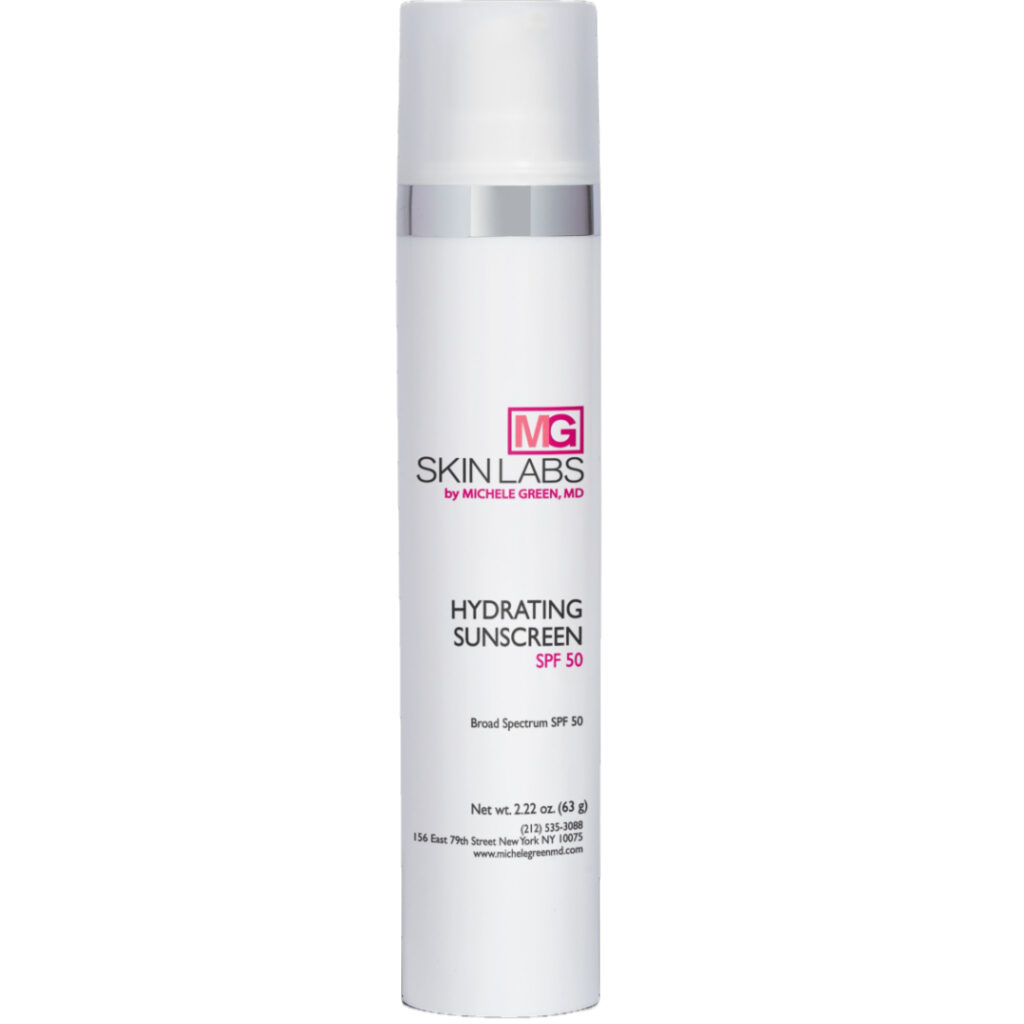
Sunscreen is essential for protecting the skin against the sun’s harmful UV rays, which can cause permanent sun damage, signs of premature skin aging, and increase the risk of skin cancer. One form of skin cancer that is caused by sun damage over time is melanoma, which is the deadliest form of cancer in the United States. In fact, according to the American Academy of Dermatology, one in five Americans will develop skin cancer over their lifetime. Protecting exposed skin from the sun’s rays is essential starting from a young age to prevent the negative effects of sun damage later in life. While a sunburn or tanning in your youth may seem like no big deal, every sunburn and tanning session causes lasting damage to your skin, speeding up the aging process and increasing your risk of skin cancer. To prevent sun damage, Dr. Green recommends using a broad-spectrum, water-resistant sunscreen with an SPF of 30 or higher. The Hydrating SPF 50 from Dr. Green’s proprietary skincare line, MGSKINLABs, is a broad-spectrum, mineral-based sunscreen that contains zinc oxide to protect the skin from UV damage as well as hyaluronic acid and lactic acid to hydrate and soften the skin.
What are the different types of sunscreen? Mineral sunscreen vs. Chemical sunscreen
The two primary types of sunscreens available are mineral sunscreens, also referred to as physical sunscreens, and chemical sunscreens. Physical sunscreens contain minerals as the active ingredients, specifically zinc oxide and titanium dioxide, which work to reflect the sun’s UV rays to protect the skin. Chemical sunscreen, on the other hand, contains chemical active ingredients, such as octinoxate, avobenzone, or oxybenzone, to absorb the UV rays, converting them into heat energy. Hybrid sunscreens are also available, which contain ultraviolet ray-absorbing chemicals and UV ray-reflecting minerals. Both forms of sunscreen are effective sun protection, and which one works best for each individual depends on their preference and skin type.
How to tell if sunscreen is chemical or mineral (and which is better for me)
Chemical sunscreen and mineral sunscreen are both effective types of sunscreen for protection against sun damage. The primary difference between the two is the active ingredients and their mode of action. Mineral sunscreens contain minerals, such as zinc oxide and titanium dioxide, which both absorb the sun’s UV rays and reflect them. Mineral sunscreens tend to sit on the skin’s surface and may leave a white cast, rather than absorbing fully into the skin. Chemical sunscreens contain active ingredients such as oxybenzone and octinoxate, which absorb UV radiation and convert it into heat. Chemical sunscreens will typically absorb fully into the skin without leaving a white residue. Neither option is inherently better than the other. However, patients with sensitive skin may find that physical sunscreen is better suited for them, as it carries a lower risk of flare-ups from the active ingredients.
How to know what sunscreen to use: Choosing the right sunscreen
The right sunscreen is the one that you will use daily, and while the specific sunscreen for you will depend largely on your skin type and preferences on consistency, Dr. Green has a couple of general rules for sunscreen that all patients can follow:
- Always choose a sunscreen with broad-spectrum protection. Broad-spectrum sunscreen means it protects against both UVA and UVB rays, as exposure to both increases your risk of skin cancer.
- Always choose a sunscreen with SPF 30 or higher. SPF, or sun protection factor, refers to how much of the sun’s UV rays are blocked by the sunscreen. An SPF of 30 provides 97% coverage, which dermatologists agree is sufficient when reapplied every 2 hours.
- Sunscreens labeled as water-resistant will help to increase protection if you are swimming or sweating. That said, Dr. Green always advises patients to reapply immediately after swimming or intense physical activity.
Applying sunscreen correctly is also essential for ensuring complete protection against the sun. Dr. Green recommends that patients use one ounce of sunscreen, equivalent to a shot glass’s worth, to cover their entire body. When applying sunscreen to the face, Dr. Green recommends using a dollop the size of a nickel. Reapplying sunscreen every two hours that you are outside is also essential in protecting your skin from sun damage.
How to choose the best sunscreen for your skin
Sunscreen is necessary for all patients, regardless of age, gender, or skin tone. Even if your skin is not apt to burn, you can still develop skin cancer from sun damage. The best sunscreen is the one you will wear every day and reapply regularly. Both physical and chemical sunscreens can effectively protect the skin against sun damage; for the most comprehensive protection, it is recommended to wear both. Effective sunscreen is available in various forms, including lotions, creams, sticks, and gels. The essential elements to look for on the sunscreen label when choosing a sunscreen option are broad-spectrum protection, an SPF of 30 or higher, and water resistance.
What SPF is recommended when selecting sunscreen?
SPF refers to the sun protection factor, which determines the extent to which the sunscreen protects you from the sun’s UV rays. SPF 6 to 10 is considered low protection, SPF 15 to 25 is considered medium protection, and SPF 30 to SPF 50 is considered high protection. Higher SPF sunscreens are also available, but the difference in protection between SPF 50 and SPF 100 is quite small, as no sunscreen can block 100% of the sun’s rays. Dr. Green, in accordance with the American Academy of Dermatology, recommends that patients use sunscreen with SPF 30 or higher on a daily basis. Sunscreen with an SPF of 30 protects against 97% of the sun’s UV rays. While sunscreens with higher SPF may offer slightly more protection, it is essential to note that they do not extend the duration of time the skin is protected from the sun. As such, it is still essential to reapply every two hours, even with sunscreen that has SPF 50 or higher.
How to choose sunscreen according to skin type
Skin types are defined by the look and feel of the skin, mostly as it relates to the production of sebum (oil) on the skin’s surface, or how the skin reacts to chemicals in products and the air. According to the American Academy of Dermatology (AAD), five primary skin types are recognized in patients: oily skin, dry skin, combination skin, normal skin, and sensitive skin. While all patients should look for broad-spectrum, water-resistant sunscreens with an SPF of 30 or higher, different brands and types of sunscreen can be more effective for different skin types. For more specific information on choosing sunscreen for each skin type, continue reading below.
How to choose the right SPF for your skin type
Regardless of skin type, patients should seek out sunscreen with SPF 30 or higher for adequate skin protection. The SPF, or sun protection factor, refers to how well the sunscreen protects your skin against the sun’s UVB rays, and can be found on the label of all sunscreens available over-the-counter. Dr. Green advises patients to apply at least an ounce of sunscreen to all exposed skin. Many patients do not apply enough sunscreen, which reduces the product’s effectiveness, even if the SPF is higher.
How to choose sunscreen for oily skin
Oily skin is caused by the overproduction of sebum (natural oil) on the skin’s surface, creating a shiny or greasy appearance. Several factors, including hormonal fluctuations, stress, and genetic predisposition, can trigger overproduction of sebum. Patients with oily skin may feel nervous to apply greasy sunscreen to their already oily skin. However, sun exposure on oily skin types can actually further increase oil production if the sun starts to dry out the skin. To prevent sun damage while maintaining a good balance of sebum production for naturally oily skin, Dr. Green recommends seeking out mineral sunscreens that are noncomedogenic, meaning they do not clog the pores with heavy sunscreen ingredients.
How to choose sunscreen for acne-prone skin
Oily skin is naturally more acne-prone, as excess sebum on the skin’s surface can clog the pores, leading to blackheads, whiteheads, and other forms of acne. Wearing sunscreen is still essential for acne-prone skin. Dr. Green recommends sunscreens that are lightweight, oil-free, fragrance-free, and noncomedogenic. Patients with acne-prone skin should avoid sunscreens with heavy moisturizers, coconut oil, and isopropyl myristate, as these ingredients can further clog the pores.
How to choose sunscreen for sensitive skin
Sensitive skin is characterized by its high reactivity to irritants and chemicals in skincare products and the environment. While sensitive skin is considered its own skin type, it is unrelated to sebum production levels, meaning that patients may have sensitive skin and another accompanying skin type. Dr. Green recommends that patients with sensitive skin use mineral sunscreens, as they are less likely to contain chemicals that irritate the skin. Patients with sensitive skin should also seek out fragrance-free sunscreens that have been allergy tested.
How to choose sunscreen for dry skin
Dry skin is characterized by the under-production of sebum, which leaves the skin cracked, flaky, and dull. The natural oil found on the skin’s surface helps to lubricate the skin and protect it against moisture loss. Dryness can also leave the skin looking red and feeling itchy or irritated. Patients with dry skin can look for a more hydrating sunscreen with ingredients such as niacinamide, hyaluronic acid, and ceramides. Dr. Green typically recommends using creams or applying a facial moisturizer with a broad-spectrum sunscreen that has an SPF of 30 or higher. MGSKINLABs broad-spectrum Hydrating SPF 50 is ideal for dry skin, incorporating hyaluronic acid to attract moisture to the skin.
How to choose sunscreen for combination skin
Patients with a combination skin type experience both oily and dry skin on their face. Typically, the oily skin appears in the “T-Zone,” which includes the chin, nose, and forehead, while the dry skin can appear on the cheeks. For patients with combination skin, Dr. Green recommends a lightweight, fragrance-free, noncomedogenic sunscreen that will not clog the pores. Specific dry areas may benefit from a moisturizing sunscreen containing active ingredients like hyaluronic acid or niacinamide.
How do I choose the right sunscreen for my face?
Patients often wonder, “How to choose sunscreen for the face?” The right sunscreen for the face depends largely on each patient’s skin type. Determining your skin type is crucial for selecting the right skincare products to maintain healthy and balanced skin. If you are unsure of your skin type, you can schedule a consultation with expert, board-certified dermatologist Dr. Michele Green, who can help you determine the best products for your specific skin needs. When applying sunscreen to your face, Dr. Green recommends using at least one teaspoon of sunscreen (about the size of a nickel) and rubbing it in fully. For use around the eyes, a sunscreen stick can be very effective.
How to choose a safe sunscreen
The ingredients in sunscreen are regulated by the United States Food and Drug Administration (FDA), and it is that government agency’s responsibility to ensure that all sunscreens that are sold in the US are safe for patients both in the short and long term. For all cosmetic products, FDA approval indicates that the product has been demonstrated to be both safe for use and effective in its intended purpose. Sunscreens sold over-the-counter in the United States have ingredients that are safe and effective with no scientific evidence of long-term harm to human health.
What ingredients to avoid in sunscreen (oxybenzone, fragrance, etc)
Sunscreen products available in the United States have been approved by the US Food and Drug Administration, demonstrating that the ingredients in these products are safe and effective. Patients with sensitive skin should avoid ingredients like oxybenzone and sunscreens with fragrance, as these can irritate the skin. Sunscreen ingredients that are not frequently used in the United States due to safety concerns include meradimate, sulisobenzone, padimate O, and cinoxate.
How to choose reef-safe sunscreen
Certain ingredients can harm coral reefs and other underwater ecosystems. As such, it is essential to choose a reef-safe sunscreen before swimming near a coral reef. It is our collective responsibility to protect these natural wonders and the ecosystems that sustain them. The top ingredients that can harm coral reefs include oxybenzone and octinoxate. Instead, patients should look for biodegradable, mineral-based sunscreens with the active ingredients titanium dioxide and zinc oxide.
How to choose water-resistant sunscreen
Water-resistant sunscreens are effective for prolonging the protective qualities of sunscreen when you are swimming or sweating. However, water-resistant sunscreens are not fully waterproof, and patients should reapply them immediately after swimming or engaging in intense physical activity. Water-resistant sunscreens typically last for 40 to 80 minutes while swimming, so patients should reapply within this timeframe.
How to choose sunscreen for kids
Sometimes, the easiest sunscreen to use for kids is spray sunscreen. However, parents should be aware of the proper way to apply spray sunscreen for complete protection. When using spray sunscreen, apply it to the skin until it glistens and then rub it over the exposed skin completely. Use a different sunscreen on the face, such as a cream or lotion, for complete coverage and to prevent the sunscreen from coming into contact with the eyes, nose, or mouth. For infants under the age of 6 months, parents should avoid applying sunscreen. Instead, parents can protect babies from the sun with light clothing that covers the skin, a wide-brimmed hat, and shade, such as an umbrella or stroller cover. If those options are not available, applying a small amount of sunscreen to the baby is okay, as long as parents wash it off once they are back indoors.
How to choose tinted sunscreen
Sunscreen tinted with iron oxide can offer patients an added layer of protection against dark spots and sun damage. Iron oxide is a sunscreen ingredient that helps to protect the skin from visible light, which can contribute to the formation of dark spots on the skin’s surface. The use of tinted sunscreen also helps patients avoid the white residue, or “cast,” that can accompany the use of mineral sunscreen.
How to test if your sunscreen works
It is common for patients to find an old bottle of sunscreen in the back of their cabinet and wonder if it is still effective. In that case, Dr. Green has tips for determining if it will still be effective. First of all, patients should wear sunscreen all year round, meaning that most bottles of sunscreen should last for only a season. If you do find an old bottle, adhere to the expiration date. If that date has passed, the sunscreen will no longer provide complete protection. All sunscreens approved by the FDA are required to last at full strength for three years. If you buy a new bottle and notice it does not have an expiration date, write the date you bought it to help you keep track. When your sunscreen begins to change color or consistency, it is a good indication that it may not work as effectively. If you are unsure, it is always best to buy a new bottle for complete protection.

How to choose the correct sunscreen: getting started with greater sun protection today
Sunscreen is essential every day to protect the skin against the harmful ultraviolet (UV) rays of the sun. Spending unprotected time in the sun or on tanning beds may not seem like a big deal in youth. However, any sun damage that occurs can contribute to premature signs of aging, such as fine lines, wrinkles, and age spots, and increase your risk of developing skin cancer. The best way to prevent sun damage is always to wear sunscreen. In general, Dr. Green recommends a broad-spectrum, water-resistant sunscreen with an SPF of 30 or higher. To find out the best type of sunscreen for your skin type, schedule a consultation with expert dermatologist Dr. Michele Green today.
Dr. Michele Green is an internationally renowned board-certified dermatologist with over two and a half decades of experience providing her patients with the best non-invasive treatment options. Dr. Green takes a holistic approach, embracing a less-is-more philosophy, and creates customized skincare routines and treatment plans that cater to the unique concerns and aesthetic goals of her patients. She is consistently identified as one of New York’s best dermatologists by Castle Connolly, New York Magazine, and Super Doctors for her dedication to her patients and expertise. Please call us at 212-535-3088 or email our New York City-based office today to schedule a consultation with Dr. Michele Green and find the skincare plan that is right for you.


