


Natural Looking Botox Injections for Anti-Aging
Botox injections are among the most popular non-surgical cosmetic treatments for reducing fine lines and wrinkles and restoring a smoother, more youthful appearance. As the skin ages, collagen levels decline, and skin elasticity decreases, allowing repeated facial expressions to leave lasting creases, particularly on the forehead, between the eyebrows, and around the eyes. Many patients choose Botox to soften these expression lines while preserving their natural features and facial movement. Botox is especially appealing to individuals seeking visible improvement without surgery or downtime. For patients seeking subtle rejuvenation, Botox has become a trusted option at Dr. Michele Green’s private dermatology practice on Manhattan’s Upper East Side.
Botox works by temporarily relaxing the specific facial muscles responsible for dynamic wrinkles. When injected into targeted areas, it reduces muscle contractions that repeatedly fold the skin, allowing it to appear smoother. Results develop gradually over the first one to two weeks after treatment and typically last several months before maintenance is needed. When performed with precision and careful dosing, Botox can soften lines while preserving natural expression and facial balance. A board-certified dermatologist, such as Dr. Michele Green, customizes each treatment to the individual so that results appear subtle, smooth, and consistent with the patient’s features.
Dr. Michele Green is an internationally recognized, board-certified cosmetic dermatologist with more than 2.5 decades of experience delivering non-invasive facial rejuvenation treatments, including Botox injections. She is known for her personalized approach, carefully tailoring each treatment plan to the patient’s skin concerns, facial anatomy, and aesthetic goals. Frequently named one of New York City’s top dermatologists by Castle Connolly, New York Magazine, and Super Doctors, she is respected for her expertise and dedication to natural-looking results. When you consult with Dr. Green at her private Upper East Side office, she will design a treatment plan that helps restore smoothness, balance, and radiance while keeping your appearance natural and expressive.
What is Botox?
Botox is an injectable treatment made from a purified form of botulinum toxin type A, used to temporarily relax specific muscles to reduce the appearance of dynamic wrinkles. These wrinkles develop from repeated facial expressions, such as frowning, squinting, or raising the eyebrows, which cause the skin to fold in the same areas over time. When Botox is injected into targeted muscles, it blocks the nerve signals that trigger contraction, allowing the muscle to relax and the overlying skin to appear smoother. The treatment is most commonly used on the upper face to address forehead lines, frown lines between the eyebrows, and crow’s feet around the eyes. However, it can also be used for certain medical conditions and other cosmetic concerns. Results develop gradually over the first one to two weeks after treatment and typically last several months before muscle activity returns. When administered with careful placement and dosing, Botox can soften lines while preserving natural facial movement and expression.
Is Botox a natural substance?
Botox is a prescription medication that contains a measured amount of botulinum toxin type A, along with stabilizing components that keep it effective and sterile until injection. Although Botox is derived from bacteria, the final product is manufactured in a controlled pharmaceutical environment to ensure its safety for medical and cosmetic use. This is important because substances used in cosmetic medicine must meet strict manufacturing and safety standards before they are approved for patient use. The FDA has approved Botox for multiple uses, including the treatment of dynamic facial wrinkles, and it has been used worldwide for decades. It is a carefully developed prescription treatment that has been thoroughly tested for safety and effectiveness in both medical and cosmetic settings.
Is there a natural form of Botox?
Botox is a highly effective cosmetic treatment for reducing the appearance of dynamic facial wrinkles. It is FDA-approved to address a wide range of medical and cosmetic concerns, including glabellar lines, crow’s feet, frown lines, involuntary muscle twitching, upper lip spasticity, chronic migraines, and excessive sweating. The treatment is safe and effective for treating wrinkles, but some patients are wary of injectable treatments and are seeking a natural alternative to Botox. There are many alternatives to Botox available, including:
- Chemical peels
- Microneedling
- Topical skincare products
- Acupuncture
- Face patches (or Frownies)
- Vitamin supplements
However, it is essential to note that Botox alternatives vary in their effectiveness at reducing the appearance of wrinkles. It is best to discuss your cosmetic goals with Dr. Green, who can give you realistic expectations of how natural alternatives will work.
Is acupuncture a form of natural Botox?
Acupuncture is a treatment that has been used for thousands of years. It improves blood flow and circulation and helps clear toxins in the lymphatic system by inserting tiny needles into the face and body. Recently, some acupuncturists have begun experimenting with acupuncture as an anti-aging treatment. Very few studies have examined this, but preliminary research suggests that acupuncture can improve skin hydration and elasticity. Acupuncture is an all-natural treatment, but it will not have the same effects as Botox and is not a well-researched method for reducing the appearance of wrinkles. If you want to try acupuncture as an alternative to Botox, seek a practitioner familiar with how acupuncture can be performed on the face as an anti-aging treatment.
Microneedling as a natural-looking anti-aging treatment
Microneedling is a cosmetic treatment available at Dr. Green’s dermatology office that is used for skin tightening, improving skin tone and texture, reducing the appearance of acne scars, large pores, stretch marks, and hyperpigmentation, and eliminating fine lines. The treatment works by applying a device with tiny, surgical-grade needles that pierce the skin at the treatment site, triggering the body’s natural healing response. When this response is activated, collagen production increases, improving skin tone and texture while supporting more resilient, firm skin over time. Over time, increased collagen production contributes to firmer, more resilient skin. Results can be further enhanced with platelet-rich plasma (PRP) injections, created from the patient’s own blood. Topical serums containing hyaluronic acid may also be used afterward to support hydration and improve the skin’s appearance during the healing process. The PRP solution is applied to the skin after microneedling to boost collagen production and improve results. Because microneedling relies on the body’s natural collagen production, the full effects of the treatment become visible within four to six weeks.
Chemical peels for natural-looking anti-aging treatment
Chemical peel treatments are another highly effective alternative to Botox for reducing the appearance of fine lines and wrinkles, tightening the skin, and improving skin tone and texture. They can also help fade dark spots caused by sun damage or previous inflammation. Many types of chemical peels serve various functions, from mild peels for fine lines, acne, and uneven skin tone to medium-depth peels for deeper wrinkles, acne scars, and hyperpigmentation to deep peels for deep wrinkles, scars, and pre-cancerous growths. With so many options, it is best to consult an expert, such as Dr. Green, who can recommend a peel suitable for your skin type and help you achieve your aesthetic goals. This is especially important for patients with sensitive skin, since selecting the appropriate peel strength helps avoid irritation while still delivering improvement. Chemical peels work by applying an acidic solution that, depending on the depth of the peel, penetrates skin cells to slough off the top and middle layers of skin. The exfoliation promotes skin cell turnover, revealing newer, brighter, smoother skin for a naturally more youthful appearance.
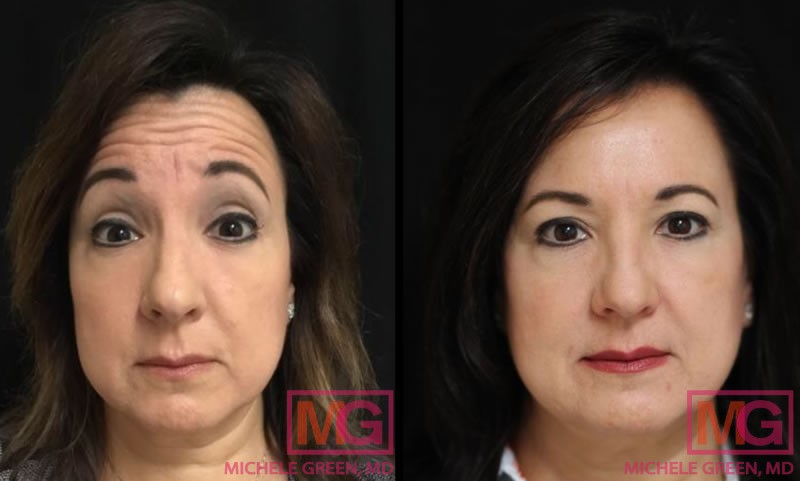
What is the best form of anti-aging skincare?
Over time, collagen production slows, increasing skin laxity and emphasizing the development of fine lines and wrinkles. There are many skincare products and supplements available that can slow the aging process. Still, with so many options, it can be challenging to determine which products are effective. That is why the best first step in creating your anti-aging skincare routine is to consult with an expert dermatologist, such as Dr. Green, who can recommend products that are sure to be effective. With her proprietary MGSKINLABs, Dr. Green offers the highest-quality skincare products available online and at her office.
One of the most critical steps in anti-aging treatment is to moisturize and hydrate the skin with a topical face cream, such as the Absolute Recovery Anti-Wrinkle Cream. Made with rose extract, ginkgo biloba, and essential fatty acids, this cream tightens the skin, replenishes hydration, and repairs the skin barrier to restore a more youthful appearance. Serums formulated with powerful antioxidants, such as MGSKINLAB’s AM/PM Serum Defense Duo, address creases, skin texture, and skin tone by tightening the skin. With Dr. Green’s three-step anti-aging system, patients can improve skin texture and prevent wrinkles by using Vitamin C serum to increase collagen production, Essential Antioxidant Infusion with retinol, vitamins A, vitamin C, and vitamin E to exfoliate and protect the skin, and a hydrating sunscreen to protect the skin from harmful UVA and UVB rays during the day. Formulas that include peptides can also help support the skin’s repair processes and improve overall smoothness. To read more about these products and see Dr. Green’s anti-aging treatments, visit the MGSKINLABs website.
Is there a natural Botox?
When patients ask about a natural Botox, they usually mean a subtle, natural look. Botox is a purified form of botulinum toxin type A, FDA-approved to temporarily relax the facial muscles responsible for dynamic wrinkles, including frown lines, forehead lines, and crow’s feet. The key to natural-looking results is how and where it is injected. A conservative dosing strategy tailored to each patient’s facial anatomy preserves expression while softening lines at rest and in motion. When a professional injector administers Botox, it does not freeze the face. Instead, it gently reduces the intensity of muscle contractions, making wrinkles appear smoother. Dr. Michele Green is known for her less-is-more philosophy, carefully customizing the placement and number of units to create balance and harmony without altering a patient’s natural features. With proper technique and personalized treatment planning, Botox can provide a refreshed, youthful appearance that looks completely natural.
Is Botox natural or synthetic?
Botox is derived from the bacterium Clostridium botulinum and is a highly purified, carefully manufactured pharmaceutical product. In its raw state, the bacterium produces toxins that can cause serious illness. Still, for medical use, the active ingredient, botulinum toxin type A, is isolated and refined under strict laboratory conditions. The result is an injectable treatment that has been extensively studied and approved by the FDA for both cosmetic and medical indications. In cosmetic dermatology, Botox is used to temporarily relax targeted facial muscles that create dynamic wrinkles, such as frown lines, forehead lines, and crow’s feet. Although Botox occurs naturally, the final injectable solution is produced through advanced pharmaceutical processes to ensure safety, purity, and consistency.
What is the most natural Botox?
Botox is a specific brand of botulinum toxin type A injections created by Allergan. Still, many people use the name as a blanket term for injectable neuromodulator treatments to smooth dynamic wrinkles. Formulated with the neurotoxin botulinum toxin type A, Botox prevents facial muscles from contracting, causing them to relax and wrinkles to disappear. Patients seeking neuromodulator treatments can choose Botox, Dysport, Xeomin, or DAXI. Each type of injectable neuromodulator treatment is formulated similarly, yields comparable results, and no one treatment is inherently more “natural” than another. If you are looking for a non-injectable treatment, the most effective treatments available at Dr. Green’s office include chemical peels, microneedling, and laser treatments.
Which looks more natural: Botox, Dysport, or Xeomin?
Botox, Dysport, and Xeomin are neuromodulators derived from botulinum toxin type A and approved for various medical and cosmetic purposes, including the reduction of dynamic wrinkles. Dysport, developed by Galderma, is FDA-approved to treat moderate to severe glabellar lines, the lines that form between the eyebrows when you furrow your brow. Compared with Botox, Dysport is more diluted, so a larger volume is needed to achieve the same results. However, because of its smaller molecule size, Dysport’s effects can be seen more quickly than Botox’s – in 3-5 days as opposed to 7-14 days. Although Dysport contains less protein than Botox, it is not inherently more “natural,” and the treatment results are similar.
Xeomin, produced by Merz Pharmaceuticals, is approved to treat frown lines, similar to Botox and Dysport. The key difference between Xeomin and Botox is that Xeomin is produced without preservative proteins, making it a purer, more concentrated form of botulinum toxin. Without preservative proteins, Xeomin acts faster than Botox, providing patients with results within five days of treatment. Additionally, Xeomin does not need to be refrigerated like Botox, making it more accessible to many healthcare providers. There is also a risk with repeat Botox injections that the body will build up a tolerance to the preservative proteins, causing the Botox injections to become less and less effective over time. The same is not true for Xeomin, which can be used as an alternative to Botox should this occur.
Does Botox hurt?
Botox injections are generally well-tolerated and cause only minimal discomfort. The needle is extremely fine, and most patients describe the sensation as a quick pinch or slight pressure that lasts only a moment. The entire procedure is typically completed within minutes, and many people return to their normal activities immediately afterward. Most side effects are mild and temporary, such as slight redness or swelling at the injection sites. For patients sensitive to injections, a topical numbing cream or ice may be applied beforehand to increase comfort. Because the treatment does not require anesthesia or recovery time, it is often considered one of the easiest cosmetic procedures to fit into a busy schedule.
Will Botox help frown lines?
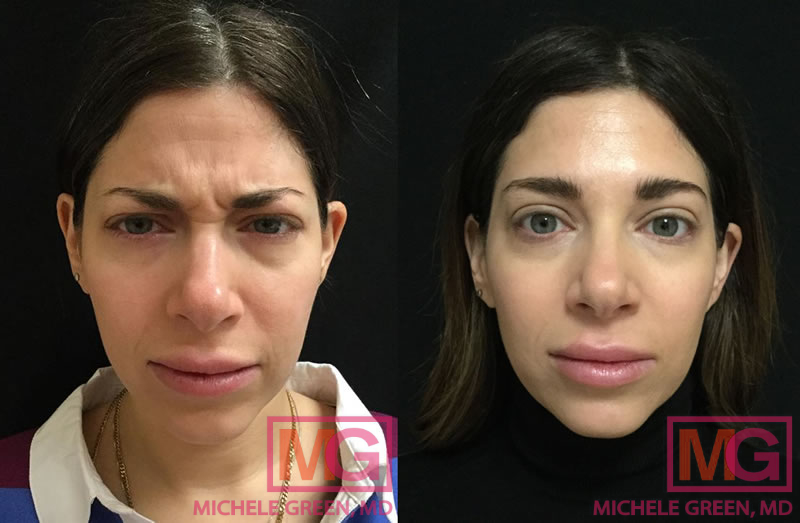
Yes, Botox is FDA-approved to treat frown lines, also known as glabellar lines, the vertical creases that form between the eyebrows from repeated muscle movement. These lines develop over time as the corrugator and procerus muscles contract when you squint, concentrate, or furrow your brow. As collagen levels decline with age, the skin cannot rebound as well, and these expression lines can remain visible even when the face is at rest. Botox works by temporarily relaxing the specific muscles responsible for this movement, reducing their ability to contract as forcefully. As muscle activity softens, the skin appears smoother, and the depth of the frown lines decreases. Results typically begin to appear within several days and continue to improve over the first one to two weeks after treatment, with effects lasting approximately three to four months for most patients. When administered with careful dosing and precise placement, Botox can significantly improve the appearance of frown lines while still allowing natural facial expression.
Does Botox for crow’s feet look natural?
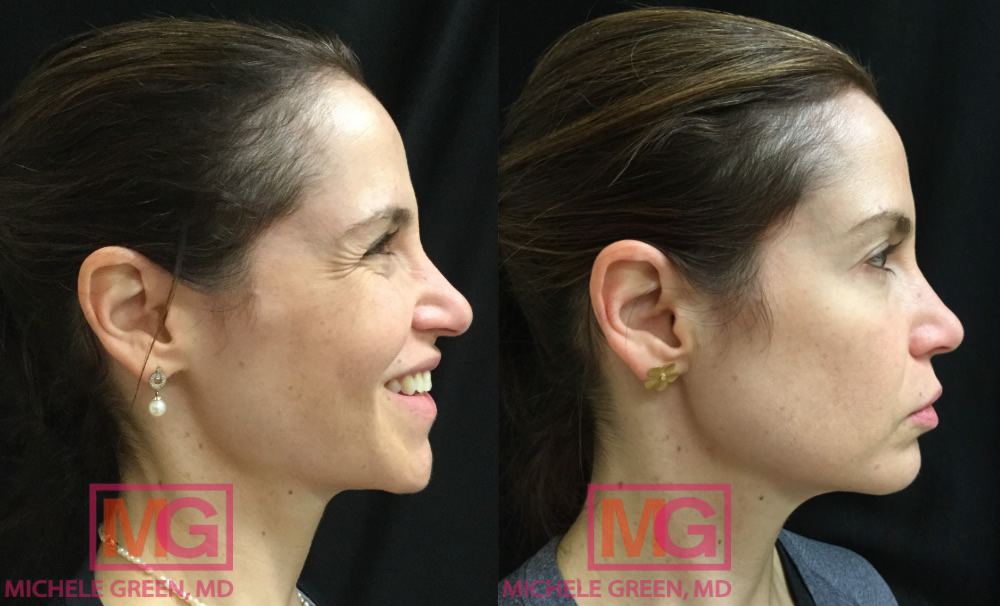
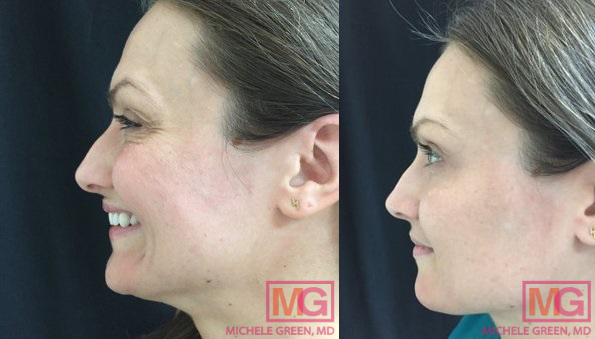
Crow’s feet are dynamic wrinkles that form at the outer corners of the eyes, extending outward like a fan when you smile or squint, and are among the first visible signs of aging. With overuse of the muscles around the eyes and naturally delicate skin in that area, crow’s feet are often the first dynamic wrinkle to appear. Botox injectable treatment is FDA-approved to treat crow’s feet around the eyes, smoothing the skin for an anti-aging effect. Finding a careful injector, such as Dr. Green, who knows how much Botox to inject to create a natural look, is essential. Typically, Dr. Green will use ten units of Botox – 5 units per side – with results lasting up to four months before a maintenance appointment is required.
How long does Botox last?
For most patients, Botox effects last about three to four months, though the exact duration varies by treatment area, muscle strength, metabolism, and injection frequency. Results typically appear within several days and continue to improve over the first one to two weeks as the targeted muscles gradually relax. Over time, muscle activity slowly returns, and expression lines may reappear, which is why maintenance treatments are often scheduled a few times per year to preserve smoothness. With consistent treatments, some patients notice their muscles contract less forcefully over time, which can help results last slightly longer or allow for smaller maintenance doses in the future.
Who is a good candidate for Botox?
A good candidate for Botox is someone who wants to reduce dynamic wrinkles caused by repeated facial expressions, such as frown lines between the eyebrows, horizontal forehead lines, and crow’s feet around the eyes. Many patients seek Botox when expression lines linger even at rest or when makeup settles into creases that were not previously visible. Botox can also be appropriate for younger patients who want to soften early lines before they deepen, as well as for individuals interested in maintaining a smoother appearance over time. Candidates should be in generally good health and have realistic expectations about what Botox can achieve, understanding that the treatment improves muscle-related wrinkles rather than skin texture or pigmentation. During a consultation, facial movement, skin quality, and aesthetic goals are evaluated to determine whether Botox is the most effective approach or whether other treatments may be recommended to complement the results.
Who should not get Botox treatment?
Botox is not appropriate for everyone, and some individuals should avoid treatment or postpone it until it is medically safe. Patients with a known allergy to botulinum toxin or any component of the injectable solution should not receive Botox. Individuals who are pregnant or breastfeeding are typically advised to delay treatment because safety has not been established in these situations. Botox may also be unsuitable for people with certain neuromuscular conditions that affect muscle strength or nerve signaling, as the medication could worsen existing symptoms. Active infection, inflammation, or skin irritation at the injection site should be resolved before treatment is considered. A thorough medical history and consultation help determine whether Botox is appropriate, ensuring that treatment is performed safely and only when the patient is a suitable candidate.
Is Botox natural?
Botox begins with a naturally occurring substance, but the treatment patients receive in a dermatology office is a processed compound. The active ingredient is derived from bacteria, yet it undergoes extensive purification and quality control before becoming an FDA-approved injectable medication. Many patients ask this question out of concern for safety, and it is important to understand that Botox has been rigorously evaluated in clinical trials for cosmetic use. The medication works by temporarily blocking the nerve signals that tell specific facial muscles to contract, softening the appearance of expression lines while maintaining a natural look. In the hands of a skilled dermatologist, Botox is a well-researched medical treatment that can be performed safely and effectively.
What is natural Botox for the face?
Natural facial Botox involves treating specific areas with carefully controlled doses of Botox to soften lines while preserving harmony among facial features. The face comprises multiple interacting muscle groups, particularly in the upper third, where the forehead, glabellar region, and outer eye area work together during expression. A customized facial Botox treatment considers how relaxing one muscle may affect another. For example, treating only the horizontal forehead lines without also addressing the muscles between the eyebrows can create an imbalanced look, because the muscles that pull the brows downward appear more active, while the forehead muscles look relaxed. By evaluating facial proportions, muscle movement, and skin quality, an experienced dermatologist can design a Botox treatment plan to improve facial smoothness and symmetry. The result is skin that looks rested and youthful, with expressions that remain natural.
Where to inject Botox for a natural look
Botox is an FDA-approved treatment for dynamic facial wrinkles, meaning it has been extensively studied and shown to be safe and effective at reducing the appearance of fine lines and creases. Specifically, Botox has been FDA-approved to treat wrinkles on the forehead, between the eyebrows, and around the corners of the eyes (crow’s feet). Depending on your aesthetic goals and needs, Dr. Green will inject small amounts of Botox into the areas of the face where dynamic wrinkles have begun to set in. Strategic placement can also support subtle facial contouring by relaxing muscles that pull features downward over time. The injections are placed directly into the muscle to block neurotransmitters, relax the muscle, and prevent contraction, thereby smoothing away wrinkles.
What is a natural alternative to Botox?
There are many ways to naturally slow the aging process, and lifestyle changes can help prevent the formation of deep wrinkles. These habits support overall skin wellness and help maintain a healthier, more resilient complexion over time. The most effective natural prevention methods include:
- Always wear sun protection when outside during the day, including SPF 30 or higher sunscreen, sun-protectant clothing, and a wide-brimmed hat.
- Stay hydrated and maintain a healthy diet.
- Keep a regular skincare routine that includes a gentle cleanser, eye cream, moisturizer, and sunscreen.
- Do not smoke or vape.
- Try daily facial massages to increase circulation and blood flow.
- Stay well-rested by getting enough sleep every night.
Simple lifestyle changes can help slow the onset of fine lines and wrinkles and keep the skin healthy and glowing. However, once wrinkles have formed, the most effective alternatives to Botox are available at Dr. Green’s office and include chemical peels, dermal fillers, and microneedling with PRP.
How to make natural Botox at home
It is not possible to make natural Botox at home because Botox works by relaxing specific facial muscles that cause dynamic wrinkles. That effect cannot be recreated with household ingredients or do-it-yourself treatments. Many social media trends suggest using egg whites, banana peels, facial taping, or homemade masks as substitutes for Botox, claiming they can tighten the skin or smooth wrinkles. These DIY approaches often include face masks designed to tighten the skin temporarily, but they do not affect the muscle movement that creates expression lines. While some of these remedies may temporarily make the skin feel firmer or more hydrated, they do not target the muscle movement that creates expression lines, such as frown lines or crow’s feet. At best, these at-home methods may offer short-term cosmetic improvement in skin texture, but they will not reduce muscle contraction or prevent dynamic wrinkles from forming. For individuals who prefer a more natural approach, focusing on daily sun protection, medical-grade skincare with ingredients like vitamin C and retinol, and professional treatments that stimulate collagen can help improve overall skin quality. However, there is no safe or effective way to replicate Botox’s muscle-relaxing effects at home.
How to make Botox look natural
Making Botox look natural depends on careful treatment planning, conservative dosing, and a clear understanding of how facial muscles work together during expression. Dynamic wrinkles form from repeated muscle contractions over time, and Botox is used to soften these wrinkles without eliminating them. Using smaller amounts of Botox in carefully selected areas allows lines to appear smoother while preserving normal facial movement. Proper assessment of muscle strength, brow position, and overall facial proportions helps prevent an over-treated appearance. Timing also plays a role, since regular maintenance helps prevent deep creasing as the effects of Botox wear off after a few months, as the body metabolizes it. Open communication about aesthetic goals ensures that the treatment delivers optimal results.
What is natural Botox?
Natural Botox is a treatment that smooths dynamic wrinkles while allowing the face to move naturally and express emotion without looking stiff or overtreated. Botox is an FDA-approved form of botulinum toxin type A that works by temporarily relaxing the specific facial muscles responsible for expression lines, such as frown lines between the eyebrows, horizontal forehead lines, and crow’s feet around the eyes. Results depend heavily on the amount of product used and its placement. With smaller doses, muscle activity is softened without completely halting movement, helping reduce the appearance of wrinkles while maintaining natural expression. The Botox procedure requires experience, precision, and an individualized treatment plan that considers facial balance and each patient’s aesthetic goals.
What should you avoid after Botox?
After Botox treatment, certain activities should be avoided for the rest of the day to help ensure the medication settles properly in the targeted muscles. Patients are usually advised to remain upright for several hours and avoid lying flat immediately after injections. Strenuous exercise, excessive heat exposure (such as saunas or hot yoga), and vigorous rubbing or massaging of the treated areas should also be postponed until the following day. Alcohol consumption is often limited for the first day as well, since it can increase the likelihood of bruising. Following these simple precautions helps support optimal results and reduces the chance of the product spreading beyond the intended treatment area.
Can Botox look natural?
When patients ask, “Does Botox look natural?” the answer is yes! Some patients may feel nervous about Botox injections after seeing pictures of celebrities who look unnaturally frozen. In reality, Botox can be subtle and natural-looking. Dr. Green typically uses a less-is-more approach to Botox injections. She injects a smaller amount of Botox at the treatment site, enough to smooth wrinkles while preserving full expressive capabilities. If you are concerned about an unnatural appearance, communicate your aesthetic goals to Dr. Green; she will start with fewer injections and increase the dosage as desired.
How to do natural Botox
Getting natural-looking Botox starts with choosing a qualified, experienced medical professional who performs injectable treatments regularly and understands the complexity of facial muscle interactions. A knowledgeable provider assesses the muscles responsible for those lines and determines how one area may influence another. Precision in depth, angle, and dosage is essential, as even small variations can affect how the brows sit or how the eyes appear at rest. Experienced injectors also recognize that more product does not guarantee better results, and that certain areas should be left untreated to maintain balance. Ongoing evaluation at follow-up appointments allows for refinement and adjustment based on how the muscles respond. When Botox is administered with this level of skill and judgment, the results appear smooth, proportionate, and completely natural.
Where to get Botox to look natural?
To achieve natural-looking results with Botox, it is important to choose a provider who understands facial anatomy, balance, and subtle dosing to preserve expression and movement while softening lines. Board-certified dermatologists and cosmetic specialists who regularly perform injectable treatments are often best equipped to customize placement and dosage based on each patient’s muscle strength, facial structure, and aesthetic goals, helping avoid an overtreated or frozen appearance. During a consultation, the injector should assess how your face moves at rest and in expression, then create a plan focused on natural results. In New York City, many patients seek Botox treatment with Dr. Michele Green, known for her individualized, less-is-more approach that prioritizes natural-looking rejuvenation and harmony across the face.
How do I get started with natural Botox today?
Botox remains one of the most effective treatments for softening dynamic wrinkles and restoring a smoother, more youthful appearance when performed with precision and attention to facial balance. By gently relaxing the muscles responsible for expression lines, Botox can improve the appearance of frown lines, forehead creases, and crow’s feet while still allowing natural movement. When treatment is thoughtfully planned and tailored to the individual, the skin looks refreshed, rested, and more even without appearing stiff or overdone. Botox can also be combined with complementary treatments such as laser therapy, microneedling, chemical peels, and medical-grade skincare to enhance skin quality further and maintain long-term results. Working with a qualified cosmetic dermatologist, like Dr. Green, ensures that treatment is customized to your unique facial anatomy, skin concerns, and aesthetic goals, resulting in a final result that looks balanced and natural.
Dr. Michele Green is an internationally recognized, board-certified cosmetic dermatologist with more than 2.5 decades of experience helping patients achieve subtle, natural-looking rejuvenation through non-invasive treatments, including Botox injections. She takes a personalized, conservative approach to cosmetic dermatology, tailoring each treatment plan to the individual’s skin condition, facial structure, and desired outcome. Known for her meticulous technique and dedication to patient care, Dr. Green has consistently been voted one of New York City’s top dermatologists by Castle Connolly, Super Doctors, and New York Magazine. During your consultation at her private Upper East Side office, she will evaluate your concerns and develop a customized plan to restore smoothness, balance, and radiance to your skin. To schedule a consultation with Dr. Green, please call the NYC office at (212) 535-3088 or contact us online today.


