


Radiofrequency Microneedling
As we age, collagen and elastin production declines, leading to visible signs of aging, including fine lines, wrinkles, mild skin laxity, acne scars, sunspots, hyperpigmentation, and uneven skin texture and tone. Many cosmetic procedures aim to boost new collagen and elastin production; however, these treatments typically stimulate collagen and elastin only in the skin’s outer or inner layers. Radiofrequency (RF) microneedling offers an innovative approach to cosmetic dermatology by combining microneedling with radiofrequency energy to stimulate collagen and elastin production, thereby promoting facial rejuvenation.
Radiofrequency (RF) microneedling is a non-surgical procedure that rejuvenates the face and helps achieve a more youthful look. Its microneedling component uses tiny, surgical-grade needles to stimulate the body’s natural healing response and boost collagen production in the epidermis. At the same time, RF energy is delivered deep into the skin to encourage collagen growth in the dermis. RF microneedling is a safe, pain-free treatment suitable for all skin types and tones, including darker skin tones. With RF microneedling, Dr. Green helps you look and feel like your best self again.
What is radiofrequency microneedling?
Radiofrequency (RF) microneedling is a minimally invasive treatment designed to reduce the appearance of facial wrinkles and fine lines, pore size, acne scars, stretch marks, hyperpigmentation, mild skin laxity, and uneven skin tone or texture. Unlike traditional microneedling, RF microneedling combines microneedling with radiofrequency energy to boost collagen production in the skin’s outer and inner layers, maximizing its benefits. Patients often experience little to no downtime or side effects afterward, making it easy to fit treatments into busy schedules. Most patients need an initial series of RF microneedling sessions, spaced four weeks apart, to achieve optimal results. Dr. Green recommends regular maintenance appointments to sustain and enhance these results. RF microneedling remains a popular skin-renewal option because it is minimally invasive, safe for all skin tones and types, and consistently delivers impressive results.
How does RF microneedling work?
RF microneedling stimulates the production of new collagen and elastin in both the epidermis and dermis. The technique uses tiny needles to create micro-injuries on the skin’s surface, triggering the body’s natural wound-healing process and promoting the growth of collagen and elastin. At the same time, radiofrequency energy is delivered to the dermis, heating the deeper layers of the skin to stimulate collagen and elastin production further. As we age, collagen and elastin levels naturally decline, resulting in visible signs of aging, including fine lines, wrinkles, skin laxity, acne scars, and enlarged pores. The combined effects of microneedling and RF energy maximize collagen and elastin synthesis in both the epidermal and dermal layers of skin, promoting enhanced skin rejuvenation and a more youthful appearance.
Many patients wonder whether RF microneedling is better than traditional microneedling. Traditional microneedling alone creates controlled micro-injuries in the skin to stimulate collagen and elastin production, but its effects are largely limited to the epidermis. RF microneedling enhances this procedure by delivering radiofrequency (RF) energy through the microneedles into the dermis, triggering deeper collagen remodeling and more dramatic improvements in skin texture, fine lines, wrinkles, and skin laxity. Because RF microneedling reaches both the outer and inner skin layers, most patients achieve better skin tightening and a more noticeable reduction in acne scars and hyperpigmentation than with traditional microneedling alone. Dr. Green also offers PRP microneedling, which combines microneedling with platelet-rich plasma (PRP) derived from the patient’s own blood to further accelerate healing and enhance collagen production. Dr. Green frequently recommends RF microneedling or PRP microneedling over traditional microneedling for patients seeking more significant, longer-lasting results.
What does RF microneedling do for the face?
Radiofrequency microneedling is an effective treatment for skin rejuvenation, helping reduce signs of aging and sun damage on the face, including:
- Fine lines
- Wrinkles
- Mild skin laxity
- Skin discoloration from sun damage or old acne lesions
- Acne scars
- Uneven skin texture
- Enlarged pores
- Stretch marks
The Vivace RF microneedling treatment
Dr. Green offers Vivace radiofrequency microneedling at her cosmetic dermatology office on New York City’s Upper East Side. Vivace uses a robotic motor to deliver precise, controlled pulses through gold-tipped, insulated microneedles. This approach makes the treatment painless for patients while boosting collagen production in both the epidermal and dermal layers of the skin. Vivace is an excellent choice for addressing fine lines, large pores, hyperpigmentation, acne scars, stretch marks, and uneven skin tone, as well as improving skin elasticity. Typically, patients undergo at least three Vivace RF microneedling sessions, spaced 4-6 weeks apart, to achieve optimal results.
At the start of your Vivace RF microneedling session, you’ll meet Dr. Green at her private dermatology office on Manhattan’s Upper East Side. During your consultation, she will take a detailed medical history, perform a physical skin assessment, and discuss any previous cosmetic treatments you have undergone. Based on her assessment of your skin concerns and aesthetic goals, Dr. Green will determine the most suitable treatment options using Vivace RF microneedling. She may also take medical photographs at this time to monitor your progress.
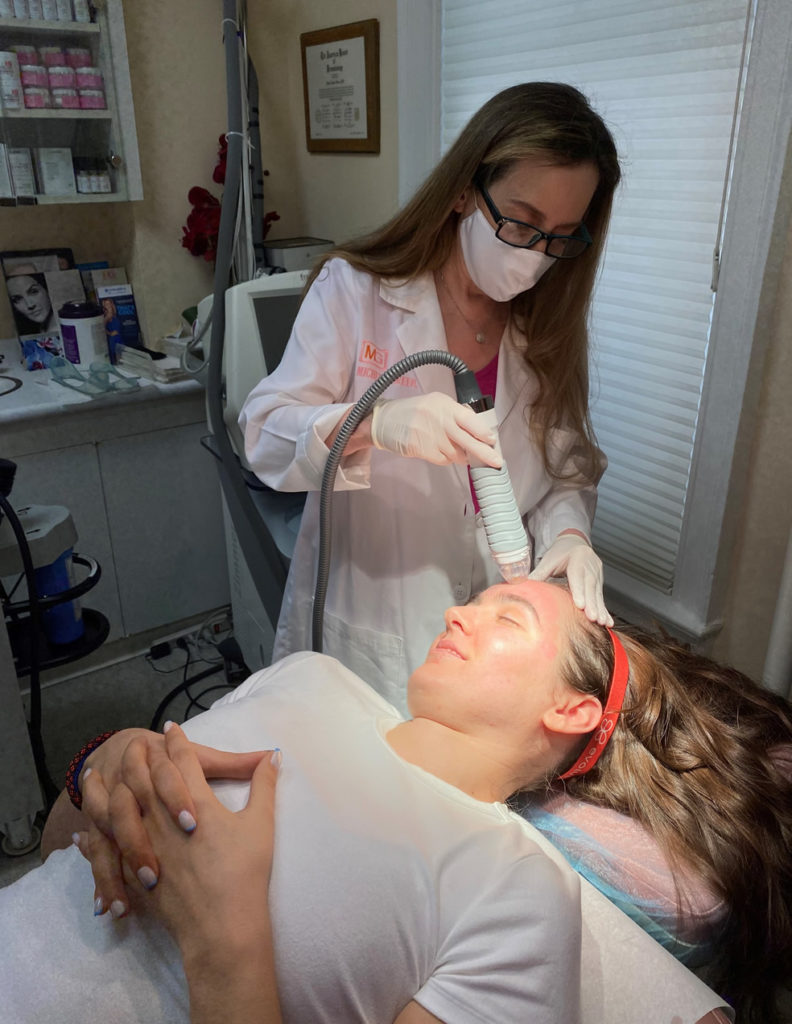
On the day of your Vivace RF microneedling treatment, a topical numbing cream will be applied to the entire treatment area one hour before the procedure to minimize discomfort and make the experience nearly painless. When you arrive at Dr. Green’s private dermatology office, the numbing cream will be removed, and the skin will be sterilized. The Vivace handpiece will then glide over the skin, delivering tiny, gold-tipped needles and radiofrequency energy to stimulate collagen growth. After the procedure, a specialized peptide serum and a cooling mask will be applied to enhance results. Dr. Green will also provide important aftercare instructions, including recommended treatment serums and skincare products tailored to your plan.
What treatments can be combined with RF microneedling to achieve pan-facial rejuvenation?
Patients often combine RF microneedling with other cosmetic procedures in their personalized treatment plans to address multiple skin concerns and achieve a comprehensive facial transformation. Some individuals may want to improve dynamic wrinkles and volume loss caused by aging, while others might focus on skin laxity. When working with the expert board-certified dermatologist Dr. Green in NYC, she will develop a customized treatment plan that targets your specific skin concerns and aesthetic goals.
Botox injections are among the most popular cosmetic treatments worldwide because they can help reduce the appearance of dynamic wrinkles on the face. Dynamic wrinkles form when muscles contract during facial expressions, such as raising the eyebrows, furrowing the brow, or squinting. Common dynamic wrinkles include forehead lines, glabellar lines, and crow’s feet. When Botox is injected, it temporarily paralyzes the muscles in the treated area. By “freezing” the muscles, Botox can help smooth out fine lines and wrinkles caused by muscle activity. Botox typically takes two weeks to take effect and lasts about four months. To maintain and improve results, patients usually have regular follow-up treatments.
Dermal fillers are another excellent cosmetic procedure to pair with RF microneedling. These injectables help restore volume loss and enhance specific facial features. They can be used on various parts of the face, including the cheeks, nasolabial folds, lips, oral commissures, jawline, tear troughs (the hollows under the eyes), and chin. Fillers such as Juvederm, Restylane, and Belotero contain hyaluronic acid, a natural substance in the body that attracts water and smooths the skin. Sculptra, a liquid dermal filler, uses poly-L-lactic acid to stimulate collagen production and restore volume in the treated area. Hyaluronic acid fillers typically last six to twelve months after a single treatment, while Sculptra can last up to two years after multiple treatments.
Thermage is an excellent complement to RF microneedling for mild-to-moderate skin laxity. Considered the gold standard for non-invasive skin tightening, Thermage delivers impressive results in a single session. It uses radiofrequency energy to stimulate collagen production deep in the dermis, resulting in tighter, smoother skin. The newest Thermage device, Thermage FLX, features AccuREP technology, which provides more precise heating, greater patient comfort, and enhanced skin tightening. Results are typically visible within four to six months and can last up to two years, depending on the patient. Thermage involves no downtime, allowing patients to schedule treatments and quickly resume their daily routines. Beyond the face, Thermage can tighten skin on the neck, décolletage, chest, abdomen, upper arms, thighs, and buttocks.
FAQs about RF Microneedling Treatment
Does RF microneedling help acne scars?
Yes, RF microneedling is among the most effective non-surgical treatments for acne scars and post-inflammatory hyperpigmentation from past breakouts. The controlled micro-wounds created during treatment break up fibrous scar tissue and stimulate new collagen to fill atrophic scarring, gradually smoothing the skin’s texture. When combined with RF energy that stimulates collagen deeper in the dermis, RF microneedling can visibly soften the appearance of acne scars, sun damage, and pigment irregularities over a series of sessions. Because the radiofrequency energy bypasses the skin’s surface and targets the deeper dermal layers, patients often see improvements in tone and texture that go beyond what microneedling alone can achieve, with minimal disruption to the outer skin barrier. Most patients require a series of three to six treatments spaced several weeks apart, with gradual improvement that continues for months afterward as new collagen remodels the treated areas. Downtime is typically limited to a few days of mild redness and swelling, making it an appealing option for patients who want meaningful results without the extended recovery associated with more aggressive resurfacing procedures. Dr. Green often pairs RF microneedling with chemical peels or platelet-rich plasma (PRP) for patients with more pronounced acne scarring, layering treatments to address both surface pigmentation and deeper textural irregularities for a more comprehensive improvement.
Does RF microneedling tighten skin?
Yes, RF microneedling is an effective skin-tightening treatment for patients with mild to moderate skin laxity. As radiofrequency energy heats the deeper layers of the dermis, it stimulates the production of new collagen and elastin, which firm and tighten the skin over time. This dual action of controlled micro-injury and heat energy also improves skin texture and elasticity, making the treatment especially popular among patients noticing early signs of sagging along the jawline, cheeks, or neck. While RF microneedling can’t replicate the dramatic lift of a surgical facelift, it offers a safe, low-downtime option for patients seeking gradual, natural-looking skin tightening on the face, neck, and other treatment areas. For patients seeking more comprehensive tightening, Dr. Green may recommend combining RF microneedling with Thermage. This non-invasive radiofrequency treatment heats the skin’s surface layer to stimulate collagen production further. Pairing these two treatments allows Dr. Green to address skin laxity at multiple depths: RF microneedling targets the deeper dermis, while Thermage targets the more superficial layers, resulting in a more complete and longer-lasting tightening effect. Results typically continue to improve for several months after treatment as collagen production builds, and many patients choose a series of sessions to maximize and maintain their outcome.
RF microneedling vs. laser resurfacing — Which is better?
RF microneedling and laser skin resurfacing both improve skin texture, fine lines, and pigmentation, but they work differently. Laser skin resurfacing uses light energy to remove or heat the outer skin layers, which can involve more downtime and carries a higher risk of post-inflammatory hyperpigmentation in patients with darker skin tones. RF microneedling, by contrast, uses fine needles to bypass the epidermis and deliver radiofrequency energy directly into the dermis, making it a safer option for all skin tones with minimal downtime. Patients with sun damage, sunspots, or uneven pigmentation may benefit from combining both treatments under Dr. Green’s guidance for comprehensive skin resurfacing results.
Is RF microneedling better than a facelift?
No, RF microneedling and a facelift are not comparable. RF microneedling is a non-surgical option used to reduce the appearance of facial wrinkles, fine lines, mild skin laxity, acne scars, and pigmentation caused by sun damage or previous acne. A facelift is a surgical procedure that removes excess skin and fat, tightens facial muscles, and repositions the skin to achieve a more youthful look. While RF microneedling has virtually no downtime, a facelift typically involves a longer recovery period, incisions, and a higher risk of side effects due to general anesthesia.
The best non-invasive facelift option is Thermage. Thermage uses radiofrequency energy to stimulate collagen and elastin production and remodel existing collagen fibers, resulting in tighter, firmer skin. The new Thermage FLX features the AccuREP algorithmic technology for more precise energy delivery and improved skin heating. Its wider tip also enables faster treatments, improving patient comfort. After a single session, patients can see skin-tightening effects that last up to 2 years. Because visible results take four to six months, patients usually undergo annual treatments to maintain their improvements.
Individuals with significant skin sagging or laxity may benefit from a facelift, the only procedure that can remove excess skin to tighten and lift the face. After the skin has healed, patients can undergo RF microneedling to improve skin texture and tone, achieving comprehensive facial rejuvenation. When you consult with Dr. Green at her private NYC cosmetic dermatology office, she will evaluate your medical history, facial anatomy, and skin concerns to determine which cosmetic procedures are best suited to help you reach your aesthetic goals. If you are a candidate for a facelift, Dr. Green will refer you to a trusted plastic surgeon for a consultation.
Does radiofrequency microneedling work?
Yes! RF microneedling is an excellent choice for individuals seeking to reduce the appearance of acne scars, fine lines, hyperpigmentation, sun damage, large pores, and stretch marks. Its innovative design allows patients to benefit from both microneedling and RF energy in a single treatment, boosting collagen production in the dermis. By stimulating collagen, RF microneedling can deliver a natural-looking, radiant glow with minimal downtime and no significant side effects. After a series of treatments, the skin continues to produce new collagen and elastin for up to six months, helping patients achieve smooth, glowing skin with long-lasting results.
Does RF microneedling hurt?
RF microneedling treatment is virtually painless. For added comfort, a lidocaine-based topical anesthetic can be applied to the skin one hour before treatment to minimize discomfort during the procedure. The Vivace RF microneedling device also uses a precision robotic motor to control microneedling depth, making the procedure virtually pain-free, with only mild redness or pinpoint bleeding immediately afterward.
How do you prepare for an RF microneedling treatment?
Before your RF microneedling treatment, Dr. Green recommends discontinuing retinoids and other exfoliating skincare products, including those with salicylic acid, for several days beforehand to reduce the risk of irritation. Patients should also avoid excessive sun exposure and self-tanning products in the week leading up to treatment, and arrive at the office with clean, makeup-free skin so a topical anesthetic can be applied evenly to the treatment area before the procedure begins. It’s also advisable to avoid blood-thinning medications and supplements, such as aspirin, ibuprofen, and fish oil, in the days before treatment to minimize the risk of bruising, unless otherwise directed by a physician. Staying well-hydrated in the days leading up to your appointment can also support the skin’s healing response once treatment begins. Patients are typically instructed to apply a prescribed numbing cream to the treatment area 30 to 45 minutes before their appointment, allowing the skin to be fully anesthetized so the procedure can be performed comfortably with minimal to no discomfort.
How many RF sessions do you need?
Most patients require an initial series of three to six RF microneedling sessions, spaced four to six weeks apart, to achieve their desired improvement. The exact number of sessions depends on the patient’s specific skin concerns, such as softening acne scars, improving skin texture, or addressing stretch marks, as well as their skin quality and aesthetic goals. Patients with more significant skin laxity or deeper acne scarring may benefit from sessions at the higher end of that range. At the same time, those seeking subtle texture improvement or preventative collagen support may see excellent results with fewer treatments. Dr. Green typically recommends periodic maintenance treatments after the initial series to help sustain long-term results, as collagen production naturally slows over time.
Are there any side effects to RF microneedling?
RF microneedling has almost no recovery time and minimal side effects. Patients may notice mild redness in the treatment area, which typically resolves on its own shortly after the procedure. Less commonly, patients may also experience pinpoint bleeding or swelling, which usually subsides within 24 to 48 hours. Some patients also report mild warmth, tightness, or tenderness in the treated area for a day or two after the procedure, similar to a mild sunburn. Small, pinpoint scabs may form as the skin heals, typically resolving within a few days. Patients are advised not to pick at them to avoid scarring or irritation. In rare cases, patients may experience temporary bruising, particularly in areas with thinner skin, or a brief flare-up of existing acne as the skin purges during healing. Most side effects are mild and short-lived, and any downtime can typically be concealed with mineral makeup the following day if needed.
Is there any downtime associated with RF microneedling?
The appeal of RF microneedling is its minimal downtime, making it easy to fit into busy schedules. For 48 hours, patients should avoid strenuous exercise and activities that raise body temperature, such as hot tubs or saunas, to prevent swelling or infection. They should also practice proper sun protection after treatment, including avoiding excessive sun exposure, applying broad-spectrum sunscreen, and wearing a wide-brimmed hat to maintain results. Additionally, patients should refrain from exfoliating or using harsh skin products, such as retinol and hydroxy acids, for one week to reduce irritation and support wound healing. Gentle, hydrating skincare is recommended during the initial healing period to soothe the skin and support recovery. Patients should avoid applying makeup for at least 24 hours after treatment to minimize the risk of irritation or infection. Most patients can return to their normal skincare routine and daily activities within a few days, once any residual redness or sensitivity has subsided.
How long do RF microneedling results last on the face?
The duration of RF microneedling results varies based on several factors, including the number of treatment sessions, your skincare routine, sun exposure, sun protection, and age. Most patients see improvements in skin quality for up to six months after their last treatment, as collagen and elastin production continues to build gradually in the months following the procedure. Many find that biannual “touch-up” treatments help maintain optimal results, keeping skin glowing for years. Incorporating MGSKINLABs products into a daily skincare routine can also help extend results by supporting collagen production and protecting the skin from environmental damage between sessions. Dr. Michele Green will also develop a personalized skincare plan tailored to your specific skin concerns and goals to maximize the benefits of RF microneedling.
When do you see results?
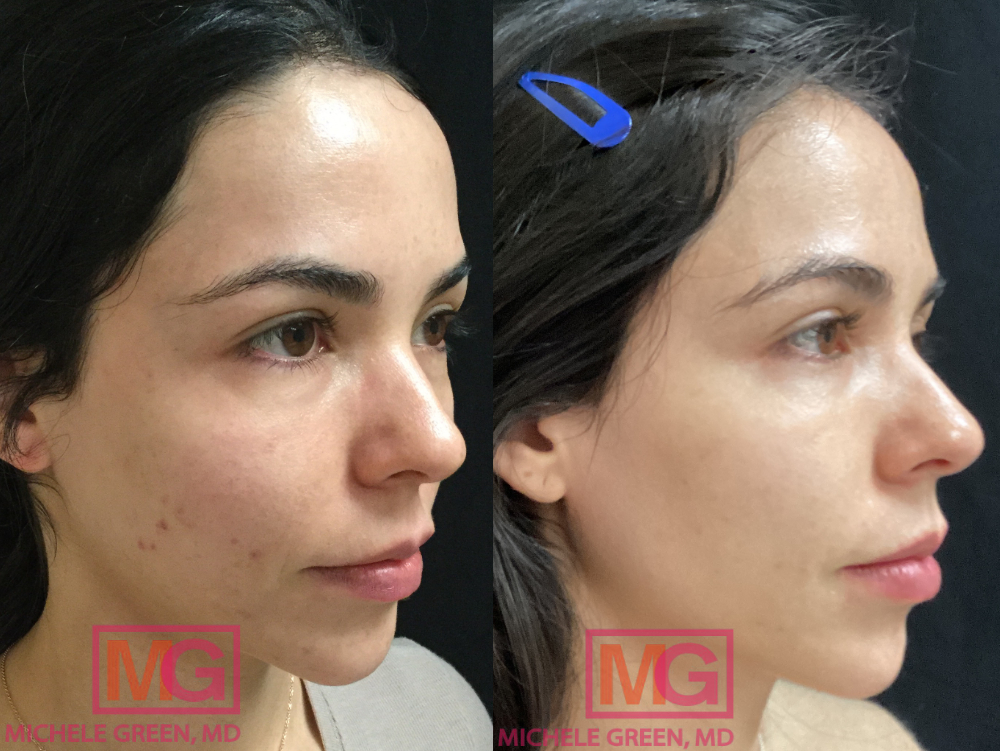
Many patients notice an initial improvement in skin texture and radiance within a few days of RF microneedling, as swelling subsides and the skin begins to heal. However, because RF microneedling stimulates new collagen and elastin production, the most significant results, including smoother texture, reduced fine lines, and improved skin tightening, typically become visible within four to six weeks and continue to improve for up to six months after treatment. This gradual timeline reflects the body’s natural collagen remodeling process, which continues to build and strengthen the skin’s underlying structure long after the initial healing period. Patients undergoing a series of treatments often notice progressively better results with each session, as cumulative collagen production leads to more dramatic improvements over time.
How much does RF microneedling cost?
The cost of radiofrequency (RF) microneedling varies based on the number of sessions, the treatment area, and each patient’s skin concerns. Because RF microneedling is a customized cosmetic procedure, Dr. Green determines pricing during an in-person consultation after evaluating your skin type, tone, and aesthetic goals. Contact Dr. Green’s Upper East Side office directly for current pricing and to schedule a personalized consultation.
What are the popular RF microneedling devices (Morpheus8, Vivace, Genius)?
Several RF microneedling devices are available in cosmetic dermatology, including Vivace, Morpheus8, Genius, and SecretRF, each combining fine needles with radiofrequency (RF) energy to stimulate collagen in the dermis. These devices differ in needle configuration, depth control, and pulse duration, which can affect patient comfort, precision, and outcomes. Genius RF microneedling uses real-time impedance feedback to adjust energy delivery; Morpheus8 relies on provider discretion for depth settings; and SecretRF offers customizable needle depths similar to those of Vivace. Choosing among these devices often comes down to a provider’s clinical experience and comfort with a particular technology, as well as how each system balances precision with patient tolerability.
Dr. Green prefers Vivace RF microneedling in her Upper East Side practice because its robotic motor and gold-tipped, insulated needles enable precise, virtually painless treatment with minimal risk of pinpoint bleeding or bruising, while consistently delivering excellent results for patients of all skin tones. The device’s automated depth control also ensures more consistent energy delivery with each pass, which Dr. Green finds particularly valuable for customizing treatment across different facial areas and varying skin thicknesses.
Is RF microneedling safe for darker skin tones?
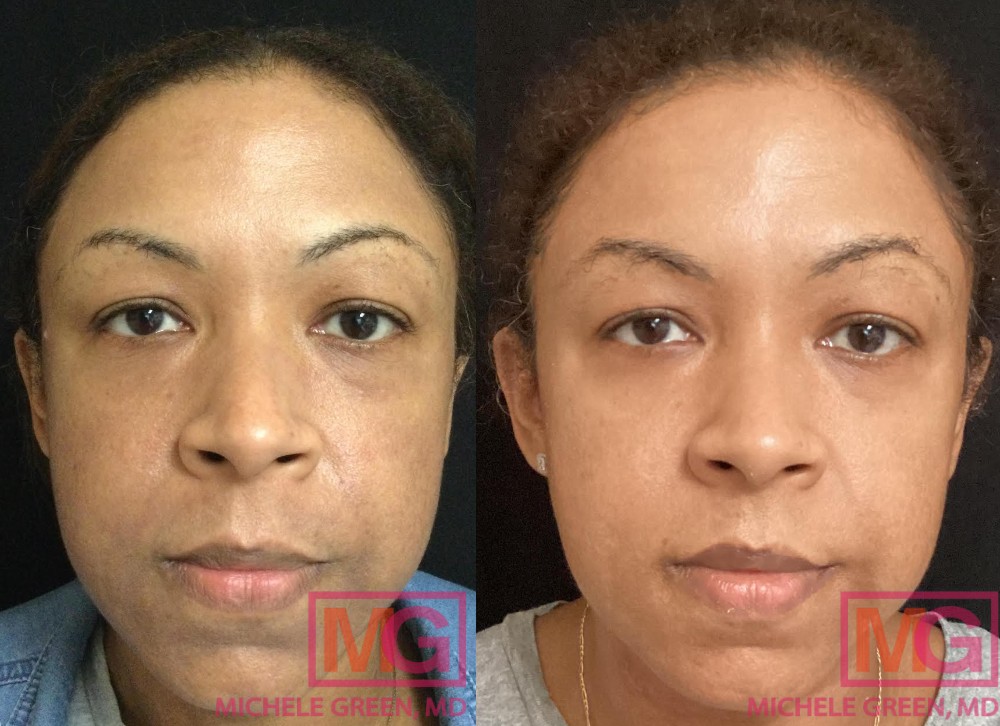
Yes, RF microneedling is considered one of the safest cosmetic procedures for patients with darker skin tones because, unlike many laser-based treatments, it does not target pigment. Since the radiofrequency energy heats the dermis directly rather than the skin’s melanin, RF microneedling carries a low risk of post-inflammatory hyperpigmentation, making it a preferred option for patients concerned about pigmentation changes after treatment. This makes it especially appealing to patients who may have experienced disappointing or uneven results with laser resurfacing in the past, as RF microneedling works effectively regardless of skin melanin content.
Is RF microneedling good for eczema and acne?
It is generally not advisable to undergo RF microneedling during active eczema or acne. Eczema is an inflammatory skin condition marked by dry, itchy, and scaly skin. The microinjuries created during the procedure can worsen eczema symptoms, increasing irritation and triggering a more severe inflammatory response. Additionally, microinjuries to already-dry patches can compromise the skin barrier, increasing the risk of subsequent infection. RF microneedling is also not recommended for patients with active acne breakouts, as the procedure can spread bacteria across the face, potentially leading to infection and worsening breakouts. Dr. Green recommends treating the underlying eczema or acne first for optimal results.
What skincare products should be paired with RF microneedling treatment?
After an RF microneedling treatment, using targeted skincare products is crucial to maintaining and enhancing results. Dr. Green’s proprietary skincare line, MGSKINLABS, offers a range of products designed to address concerns such as fine lines, wrinkles, uneven skin texture and tone, and hyperpigmentation. When you consult with Dr. Green for your RF microneedling procedure, she will develop a personalized skincare plan to help you look and feel your best.
Sunscreen is an essential part of any skincare routine, especially after RF microneedling treatments. UV radiation damages collagen and elastin fibers, accelerating skin aging. Sun exposure can also cause sunspots and hyperpigmentation to recur, even after RF microneedling. The Hydrating SPF 50 from MGSKINLABS is an excellent physical sunscreen that contains zinc oxide to block harmful UV rays, as well as hyaluronic acid and lactic acid to hydrate and soften the skin.
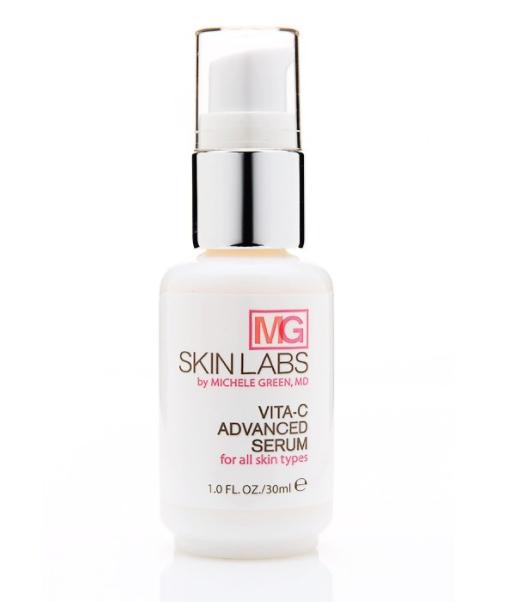
Patients undergoing RF microneedling for hyperpigmentation can benefit from skin-lightening ingredients such as vitamin C, kojic acid, lactic acid, and tranexamic acid. The Vita-C Serum from MGSKINLABS contains a high concentration of vitamin C to brighten the skin, accelerate skin cell turnover, and protect the skin from oxidative stress and free radical damage. The Skin Brightening Cream from MGSKINLABS contains kojic acid, lactic acid, and fruit extracts to lighten and eliminate pigmentation.
Retinol is a wonderful skincare ingredient that encourages cell turnover and collagen production, helping reduce signs of aging, including fine lines, wrinkles, pigmentation, and uneven skin texture and tone. The MGSKINLABS Essential Antioxidant Infusion is a powerful retinol serum specially formulated to boost collagen and revitalize the skin. Retinol should be avoided for one week after RF microneedling to allow the skin to recover. Because retinol increases skin photosensitivity, it’s important to avoid excessive sun exposure, use retinol only at night, and apply daily sunscreen to shield your skin.
Is RF microneedling worth it?
For most patients, RF microneedling is well worth it. It is a minimally invasive cosmetic procedure that is safe and effective for patients of all skin types and tones, including those with darker skin. It requires minimal downtime and has few side effects, making it easy to incorporate into busy routines. After a short series of treatments, patients can expect clearer, tighter, more radiant skin. When you consult with board-certified dermatologist Dr. Michele Green about skin rejuvenation, she will create a customized treatment plan to address your specific skin concerns and ensure optimal, worthwhile results.
Who is a good candidate for RF microneedling?
A suitable candidate is over 21, in good overall health, and seeking to boost collagen in the skin while addressing specific skin concerns. RF microneedling is safe for all skin types and tones, including darker skin tones, making it accessible to most people interested in skin rejuvenation. Ideal candidates also include those looking to improve fine lines, acne scars, enlarged pores, or mild to moderate skin laxity without the downtime associated with more invasive procedures. However, those with a history of keloid scarring, skin diseases such as eczema or psoriasis, blood disorders, active acne, or frequent cold sore outbreaks may not be ideal candidates for RF microneedling. Additionally, pregnant or breastfeeding women are generally not suitable for RF microneedling, as its safety has not been fully confirmed. To determine if you’re a suitable candidate, it’s best to consult a board-certified dermatologist, such as Dr. Michele Green, who will assess your candidacy and create a personalized skin rejuvenation plan tailored to your needs, skin type, tone, and aesthetic goals.
Who should not get RF microneedling?
RF microneedling isn’t recommended for patients with active acne breakouts, uncontrolled psoriasis or eczema, a history of keloid scarring, or bleeding disorders, because the micro-injuries created during treatment can worsen these conditions or delay healing. Patients with a history of skin cancer in the treatment area, those who are pregnant or breastfeeding, and individuals with a pacemaker or other electronic implants should also avoid RF microneedling until cleared by their physician. Patients who are currently taking blood-thinning medications or who have recently used isotretinoin (Accutane) should also postpone treatment, as both can increase the risk of complications during and after the procedure. Dr. Green conducts a thorough consultation before every treatment to confirm that each patient is an appropriate candidate. This includes reviewing medical history and current medications to ensure RF microneedling is a safe option before proceeding.
Schedule Your RF Microneedling Consultation with Dr. Michele Green Today
Radiofrequency microneedling is one of the most innovative facial rejuvenation treatments, combining the collagen-stimulating benefits of microneedling with the deeper dermal renewal of radiofrequency energy. RF microneedling can target a wide range of concerns, including fine lines, wrinkles, hyperpigmentation, skin laxity, large pores, and acne scars, while remaining safe for all skin tones and requiring minimal downtime. Dr. Green uses the Vivace RF microneedling device because it consistently delivers a natural, radiant appearance for her patients. She will work with you to build a personalized treatment plan tailored to your skin rejuvenation goals.
Dr. Michele Green is a highly regarded, board-certified dermatologist in NYC with over 25 years of experience delivering top non-invasive cosmetic procedures, including Vivace RF microneedling, Thermage, Botox, dermal fillers, and chemical peels. She takes a holistic, less-is-more approach to cosmetic dermatology, tailoring each patient’s treatment plan to their specific skin concerns and goals. She is consistently recognized as one of New York’s top dermatologists by Castle Connolly, New York Magazine, The New York Times, and Super Doctors. To schedule a consultation with Dr. Green at her private dermatology practice on Manhattan’s Upper East Side and learn more about radiofrequency microneedling, call 212-535-3088 or contact us online today.


