


What Areas of the Face Can You Use Botox?
As we age, the production of the structural proteins collagen and elastin begins to decrease, leading to increased skin laxity and emphasizing the appearance of fine lines and creases. With decreased collagen production, dynamic wrinkles —those formed when you make facial expressions like smiling, frowning, or raising your eyebrows —become etched into the skin. To address dynamic wrinkles, many patients turn to Botox treatment, which involves injecting botulinum toxin type A into facial muscles to “freeze” them, resulting in a smoother skin texture and a more youthful appearance. Dynamic wrinkles can occur in many areas of the face, making patients wonder where Botox treatment can be safely and effectively used. The best first step for achieving smooth, youthful-looking skin is to schedule a consultation with expert board-certified dermatologist Dr. Michele Green.
Botox is an injectable neuromodulator that relaxes muscles at the injection site for a wide range of cosmetic uses and medical conditions. Containing the active ingredient botulinum toxin type A, Botox is currently FDA-approved cosmetically to treat signs of aging, such as horizontal forehead wrinkles, “11 lines,” also known as glabellar lines or frown lines, between the eyebrows, and crow’s feet, which are the tiny creases that extend out in a fan at the corners of the eyes. Medically, Botox injections are FDA-approved to treat conditions such as chronic migraines, hyperhidrosis (excessive sweating), cervical dystonia (muscle spasms), blepharospasm (eyelid twitching), overactive bladder, jaw tension from teeth grinding, and upper lip spasticity. Whether you are looking to eliminate the appearance of fine lines and wrinkles on your face, slim your jawline, or address overactive muscles, Botox treatment may be the most effective option for you.
Experienced, board-certified dermatologist Dr. Michele Green has been expertly treating patients in her Upper East Side, New York City dermatology office for more than 25 years. An expert in a wide range of cosmetic procedures, including Botox injections, dermal fillers, laser therapies, and body contouring treatments, Dr. Green is highly adept at creating unique, effective skincare plans for each patient. Dr. Green is an expert injector, providing patients with natural-looking rejuvenated skin using her less-is-more approach. In addition to Botox injections, Dr. Green offers other neurotoxin therapies, such as Xeomin and Dysport, as well as dermal fillers like Juvederm and Restylane, and more. Well-known for high patient satisfaction, Dr. Green has been voted one of the best healthcare providers in New York City by such publications as Castle Connolly, Super Doctors, and New York Magazine.
What is Botox treatment?
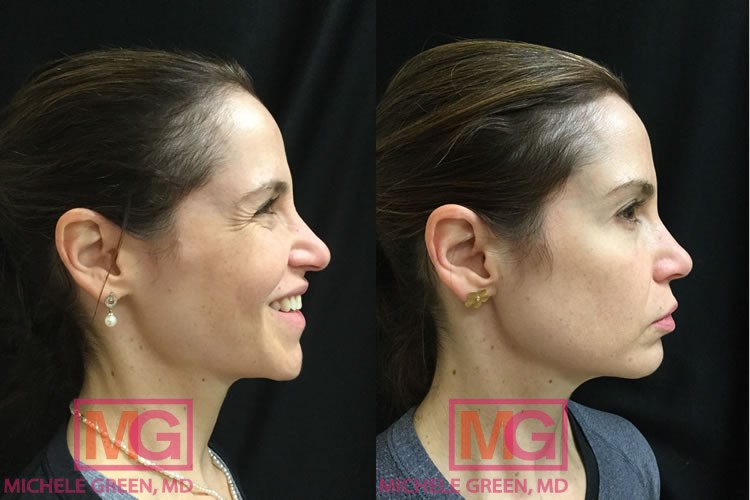
Botox is an injectable treatment that is used to smooth out fine lines and wrinkles and combat the natural aging process. Botox injections are comprised of the active ingredient botulinum toxin type A, which is a neurotoxin that blocks the signals from the muscles to the brain. This process freezes the muscle, preventing it from contracting, which helps smooth out dynamic wrinkles.
Botox treatment has been FDA-approved since 1989 to treat a variety of medical conditions, including cervical dystonia, characterized by muscle spasms in the neck; blepharospasm, characterized by uncontrollable eye twitching; and hyperhidrosis, characterized by excessive sweating. Botox was first approved in 2002 for cosmetic purposes and has been specifically approved to treat crow’s feet, which are the lines that appear on the sides of the eyes when you squint or smile, glabellar lines – also known as frown lines, – which are the vertical lines that appear between the eyebrows when furrowing the brow or frowning, and forehead lines, which are horizontal lines that appear on the forehead. Botox is an extremely popular cosmetic procedure that works wonders for combating wrinkles without the need for plastic surgery or downtime.
How does Botox work?
Botox injections contain the active ingredient botulinum toxin type A, which blocks the neurotransmitters on the muscles responsible for dynamic wrinkles. Dynamic wrinkles are the creases that form due to repeated contraction of facial muscles, such as the marionette lines around the corners of the mouth that form when you smile, crow’s feet, which are creases that form at the corners of your eyes from squinting or smiling, horizontal forehead lines that form when you raise your eyebrows, or vertical lines that form when you furrow your brow. In youth, the creases formed by dynamic wrinkles will only be visible when facial expressions are made, and the wrinkles will smooth out when the face is at rest. As we age, collagen production decreases, and repeated use of facial muscles causes dynamic wrinkles to etch into the skin. Botox can be injected into the muscles responsible for dynamic wrinkles to treat mild to moderate fine lines and prevent them from forming, without the need for plastic surgery or any downtime.
What is the procedure for Botox injections at a dermatology office?
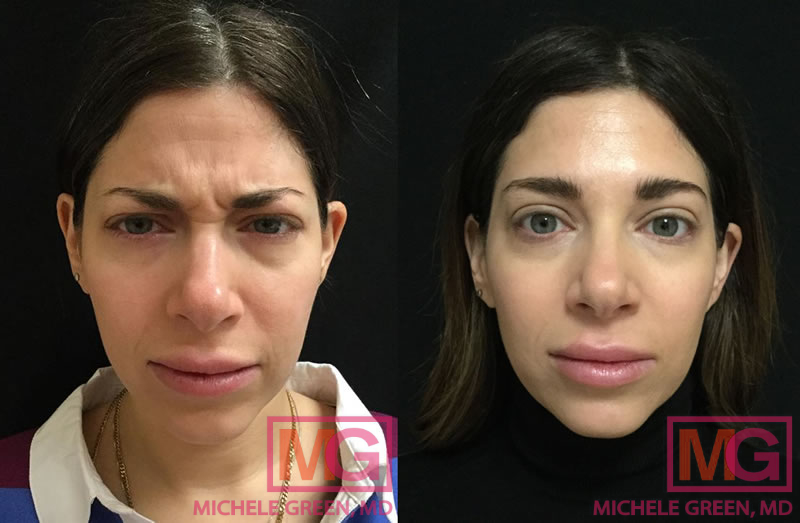
Botox for crow’s feet is a simple, painless process that can be completed in Dr. Green’s office in as little as 10 minutes. The first step in getting the best Botox treatment is scheduling an initial consultation with Dr. Green at her private dermatology office in Manhattan’s Upper East Side neighborhood. During your consultation, Dr. Green will collect a thorough medical history, assess the treatment area, discuss your aesthetic goals, and determine the best cosmetic treatment or series of treatments for you. Your Botox injections may be performed on the day of your initial consultation or scheduled for a later date, depending on time allowance and your personal preference. Botox injections are well-tolerated, and most patients do not require any special preparation with numbing cream. For highly sensitive patients, a topical anesthetic will be prescribed to your selected pharmacy, which should be applied to the entire treatment area one hour before your injections. When you arrive at the office for treatment, the numbing cream will be removed, and the skin will be sterilized.
To prepare for your Botox treatment, we recommend that you come with a freshly cleaned face and avoid taking any blood-thinning medications for two weeks leading up to the treatment to reduce the risk of bruising at the injection sites. Dr. Green will mark the injection sites and perform the procedure using a thin needle. An icepack will be applied to the treatment area immediately after the procedure to reduce any potential swelling. After treatment, you are welcome to clean your face and wear makeup as you usually would that day. It is important to remain upright for four hours after your Botox injections and avoid strenuous exercise for 24 hours to reduce the risk of side effects. The full effects of Botox treatment should be apparent within two weeks, leaving you with a rejuvenated, relaxed appearance.
Where can Botox be placed on the face?
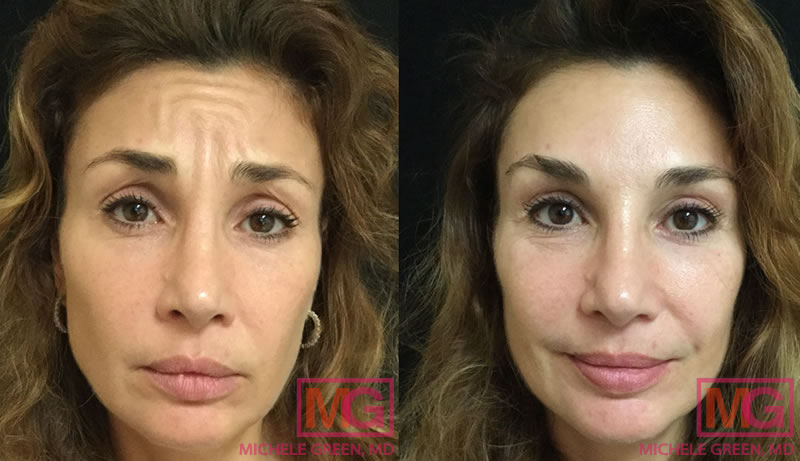
Patients often wonder, “What parts of the face can Botox be used on?” Botox is FDA-approved for injection into the forehead lines, crow’s feet, and glabella lines between the eyes. Additionally, small doses of Botox can be injected into the lower face as an off-label use of Botox treatment, specifically to reduce the appearance of marionette lines that extend from the corners of the mouth down the chin, smile lines around the mouth, bunny lines around the bridge of the nose, and smoker’s lines surrounding the lips. Small doses of Botox can also be used on the body to lift the neck and decolletage, reduce sweating under the arms, and alleviate jaw tension caused by teeth grinding in the masseter muscles.
What areas of the face can be treated with Botox?
Botox can be injected in many areas of the face and body to provide patients with their desired results and create more youthful-looking skin, including:
- Forehead lines
- Crow’s Feet
- Glabellar lines (Frown lines)
- Marionette lines
- Smile lines
- Bunny lines
- Vertical lip lines
- Neck
- Decolletage
- Armpits
Dr. Green is an expert at providing patients with anti-aging results that enhance their full range of expressive capabilities.
Botox for Crow’s Feet
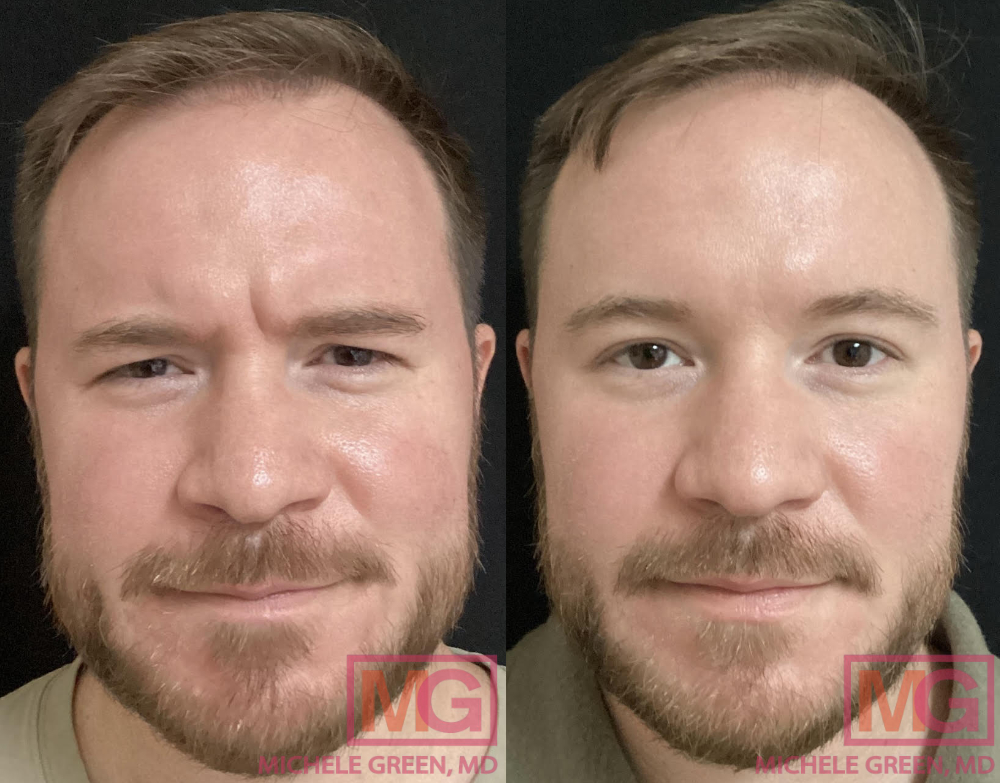
The most noticeable dynamic wrinkles around the eyes are the crow’s feet, which are creases that appear at the corner of the eyes, extending outward in a fan shape, when you smile or squint. The development of crow’s feet can be one of the earliest signs of the natural aging process. Luckily, crow’s feet can be easily treated with Botox, erasing signs of fine lines and wrinkles at the corner of the eye for up to six months. When Botox is injected into the facial muscles at the corners of the eye, the active ingredient, botulinum toxin type A, causes the muscles to freeze and relax, preventing muscle contractions in the area. As a result, crow’s feet disappear for a smoother, more youthful appearance.
Finding a skilled injector, like Dr. Green, who knows how much Botox to use for a natural look, is essential. Typically, Dr. Green will use ten units of Botox – 5 units per side – with results lasting up to four months before a maintenance appointment is required.
Botox for Frown Lines
Frown lines, also known as “glabellar lines” or “11s,” are the vertical lines that appear between the eyebrows when you frown or furrow your brow. Botox injections are FDA-approved specifically to address frown lines, eliminating the appearance of the creases between the eyebrows. Typically, Dr. Green will use between 10 and 25 units of Botox to reduce the appearance of frown lines, though the exact number of units will depend on the depth of the wrinkles and each patient’s aesthetic goals.
Botox for Bunny Lines
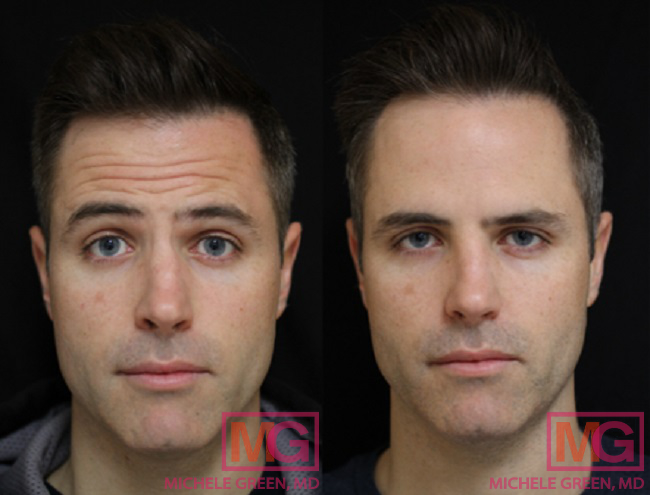
Bunny lines are small vertical and diagonal creases that appear on either side of the nose or just below the bridge when you scrunch up your nose. Most often, the facial expressions that cause bunny lines, including squinting or laughing, though they may not occur for everyone. Some patients may find themselves unhappy with the appearance of bunny lines or want to prevent their formation. These patients can turn to low-dose injections of Botox to erase and prevent these fine lines. Once the Botox is injected into the bunny lines, it can take 2-3 days for the treatment to take effect, and up to two weeks before patients will see the full results. Dr. Green recommends that patients return every two to three months for a touch-up to maintain the treatment results.
Botox for Forehead Lines
Forehead lines, which are sometimes referred to as “surprise lines,” are the horizontal lines that appear on the forehead when you raise your eyebrows. In youth, these creases will fade when the face is at rest, but over time, they can become etched into the skin, leaving permanent wrinkles on the forehead. Some patients may seek out “preventative Botox,” which is when you get Botox before the dynamic wrinkles form fully. Preventative Botox freezes the muscles, preventing them from contracting in the first place and reducing the risk that wrinkles will form. When treating forehead lines, Dr. Green typically uses between 10 and 30 units of Botox.
Can Botox be used for preventing chin dimpling and sculpting the jawline?
When most patients think of Botox treatment, they think of erasing fine lines and wrinkles that can appear on the forehead, at the creases of the eyes, and between the eyebrows. While these anti-aging treatments are highly effective, another lesser-known function of Botox is masseter muscle reduction. This reduction helps with medical conditions such as bruxism and TMJ and can provide patients with a slimmer jawline for a more contoured face shape. When injected into the facial muscles, Botox helps to shrink the masseter muscles, which leads to a slimmer, more contoured appearance to the face. With masseter Botox, the cheekbones will stand out more, and the jawline will become less square-shaped, providing patients with their ideal facial contour without the need for any downtime.
For a long time, the only way to contour the lower face was to make an appointment with a facial plastic surgeon and undergo a surgical fat removal procedure. While plastic surgery may be an effective slimming treatment in the short term, the risk of serious adverse events is quite high, the recovery time is significant, and the removal of facial fat can have repercussions down the line. That is why expert, board-certified dermatologist Dr. Michele Green recommends Masseter Botox for face and jaw slimming, enabling you to achieve the ideal face shape without requiring downtime.
Botox can also be used to address chin dimples, which appear due to overactivity of the mentalis muscles in the chin. As we age, the muscles in the chin contract more often than they should, creating the appearance of a dent or dimple in the chin. When Botox is injected into the mentalis muscle, it stops the overactive contractions, reducing the appearance of the dimple there.
What areas of the face are best for Botox? What are the best treatment areas for Botox?
Botox is best used to treat dynamic wrinkles that appear from repeated muscle use over time. It is a good treatment option for any area on the face where repetitive muscle movement causes fine lines and wrinkles, including forehead lines, frown lines, crow’s feet, bunny lines, marionette lines, smoker’s lines, and chin dimples. Botox can also be effectively used to slim the face when injected into the overactive muscles along the jawline. For patients with an overly gummy smile, Botox can help relax the upper lip to show less gum.
Where should you not inject Botox on your face?
Patients often wonder, “Where can you not get Botox on your face?” One area in which patients need to be especially careful is the delicate under-eye area, where a misplaced injection can cause serious damage. As such, it is always best to seek out an expert injector, such as Dr. Michele Green, to reduce the risk of serious side effects. Additionally, depending on the specific concern under the eyes, other treatment options may be more effective to help you achieve your aesthetic goals. Often, the appearance of wrinkles or hollows under the eye is caused by a loss of facial volume, which occurs due to the natural aging process. If this is the case, Dr. Green may recommend a hyaluronic acid filler, such as Juvederm or Restylane. Other patients may benefit from skin tightening through laser treatment or skin resurfacing with a Fraxel laser or chemical peel to boost collagen production for tighter, firmer skin. When you have your initial consultation with Dr. Green, she will determine the treatment or series of treatments that best meet your needs.
What is the rule of 3 in Botox?
The rule of three in Botox is an easy way to refer to the approximate timing of the healing process, reminding patients what to expect three hours, three days, and three months after the procedure. In the three hours following the Botox injections, patients should avoid activities that can stimulate blood flow or displace the injection, including rubbing the treatment area, consuming alcohol, engaging in strenuous physical activity, exposing themselves to heat and sun, or lying on their faces. Three days after the Botox treatment, patients can expect to begin seeing the results of the injections, though the full results will typically not become visible for a full week. After three months, patients will see the results of the treatment fade, and can return to Dr. Green’s office for a touch-up. While the rule of three is useful for setting expectations, it is not a precise measure, so the time at which patients see the full results of the treatment and the length of time before those results fade will vary from patient to patient.
Where does Botox go when it wears off before?
Botox is a temporary procedure that can be used to reduce the appearance of signs of aging on the face and body, including forehead lines, glabellar lines, crow’s feet, bunny lines, marionette lines, chin dimples, and a gummy smile. Most patients will experience the full results of the procedure for three to four months before the effects fade and the Botox loses its potency over time. This gradual wearing off of the Botox treatment occurs because the body naturally metabolizes the Botox protein complex, breaking down the injected solution into amino acids that are then removed or absorbed by the body. The exact time it takes for the treatment to wear off depends on several factors, including each patient’s metabolism and activity level.
What happens when you stop using Botox on your face?
Botox is a safe and effective treatment option for addressing signs of aging that naturally fade over time, meaning the results are temporary. Botox injections work to reduce the appearance of dynamic wrinkles by blocking the neurotransmitters at the injection site, causing the muscles there to freeze and relax. As the body begins to metabolize the Botox injection, muscle use gradually returns. This means that if you stop using Botox, the function of the muscles in the treatment area will return, causing the dynamic wrinkles to reappear. For lasting results, patients should get a touch-up every three to four months.
What is the best facial instead of Botox?
Botox is a highly effective cosmetic procedure for inhibiting muscle movement and eliminating the appearance of dynamic wrinkles on the face. It is FDA-approved to address a wide range of medical and cosmetic concerns, including glabellar lines, crow’s feet, frown lines, involuntary muscle twitching, upper lip spasticity, chronic migraines, and excessive sweating. The treatment is safe and effective for treating wrinkles, but some patients are wary of injectable treatments and are looking for a natural alternative to Botox treatment. There are many alternatives to Botox treatment that are available, including:
- Chemical peels
- Microneedling
- Topical skincare products
- Acupuncture
- Face patches (or Frownies)
- Vitamin supplements
However, it is essential to note that Botox alternatives vary in their effectiveness in reducing the appearance of wrinkles. It is best to discuss your cosmetic goals with Dr. Green, who can give you realistic expectations of how alternative treatment plans will work.
What are the safest areas for Botox?
Botox is a quick and painless procedure that requires no downtime, meaning you can resume your normal activities immediately after treatment. It is FDA-approved for use on forehead lines, crow’s feet, and glabellar lines, meaning that the injections have been clinically tested and demonstrated to be both safe and effective for use in those areas. In the days before arriving for treatment, Dr. Green recommends refraining from taking blood thinners, as these can increase your risk of mild side effects such as bleeding or bruising at the injection site. When you arrive at Dr. Green’s Upper East Side dermatology office for treatment, she will start by applying a topical numbing cream and marking the injection sites. The procedure itself is very quick and can even be done over a lunch break. Following the treatment, you can immediately resume your regularly scheduled activities. You may experience mild side effects, such as slight swelling, bruising, or redness at the injection site, which will resolve within seven days. Effects of the treatment can be seen within several days of the procedure, and the results typically last for between three and six months. Patients can return to Dr. Green’s office to receive injections every four to six months to maintain results.
How to get started with Botox treatment today
Patients concerned about fine lines can turn to Botox injections, which help to relax dynamic wrinkles on the forehead and around the eyes. Dynamic wrinkles on the face, such as forehead lines and crow’s feet around the eyes, form due to repeated contraction of the muscles there. Botox contains the active ingredient onabotulinum toxin type A, a neuromodulator that helps relax the muscles at the injection site, erasing dynamic wrinkles there. With Dr. Green’s less-is-more approach, Botox injections can provide a naturally smooth look to the face.
Dr. Michele Green is an internationally renowned board-certified dermatologist with over two and a half decades of experience providing her patients with the best non-invasive treatment options. Dr. Green takes a holistic approach and embraces a less-is-more philosophy, creating customized skincare routines and treatment plans that cater to the unique concerns and aesthetic goals of her patients. She is consistently identified as one of New York’s best dermatologists by Castle Connolly, New York Magazine, and Super Doctors for her dedication to her patients and expertise. Please call us at 212-535-3088 or email our New York City-based office today to schedule a consultation with Dr. Michele Green and find out if Botox is right for you.


