


Post-Inflammatory Hyperpigmentation
Post-inflammatory hyperpigmentation (PIH) is a form of hyperpigmentation that occurs after skin inflammation. The most common causes of PIH include inflammatory acne breakouts, inflammatory skin conditions such as eczema or psoriasis, burns, infections, dermatitis, and improper laser therapy; however, any skin injury or trauma can also cause PIH. PIH is defined as dark, pigmented marks in the area of initial inflammation. Although PIH is benign and typically not permanent, it can take months or even years to fade. Fortunately, Dr. Michele Green in NYC offers a wide variety of treatments, including non-invasive cosmetic procedures and targeted topical therapies, to fade PIH and achieve a more even-toned complexion.
The best treatments for post-inflammatory hyperpigmentation (PIH) are often gentle and non-invasive. Cosmelan peels are an excellent option for PIH, as they work to correct and regulate melanin production. Mesopeels are safe, gentle chemical peels that gradually inhibit melanin production and fade dark marks. Microneedling with a specialized depigmentation peel can increase collagen production and cell turnover while delivering active skin-lightening ingredients to reduce hyperpigmentation. The VBeam laser is excellent for reducing inflammation and fading red or pink PIH marks. Treatments are often combined with targeted skincare products such as vitamin C, tranexamic acid, retinoids, or hydroquinone to enhance results and help fade hyperpigmentation between sessions. When treating PIH, it is essential to use non-aggressive options to prevent further inflammation or irritation, which can worsen hyperpigmentation. Consulting with an expert in facial hyperpigmentation, such as Dr. Michele Green in New York, is crucial for determining the best treatment options for your skin type, tone, and PIH to eliminate your hyperpigmentation for good.
Dr. Michele Green specializes in treating hyperpigmentation, including post-inflammatory hyperpigmentation, sunspots, and melasma, at her private practice on NYC’s Upper East Side. With over 25 years of experience, this board-certified dermatologist expertly removes sunspots and facial hyperpigmentation and stays up to date on safe, effective treatment options for patients of all skin colors and types. Recognized consistently by Castle Connolly, New York Magazine, Super Doctors, and The New York Times as one of NYC’s top dermatologists, Dr. Green is known for her dedication and expertise. She adopts a holistic approach and favors a less-is-more philosophy for facial rejuvenation, helping patients achieve and maintain even, radiant skin through personalized treatments and quality skincare products.
What is post-inflammatory hyperpigmentation?
Post-inflammatory hyperpigmentation (PIH) is a form of hyperpigmentation that develops after skin trauma or inflammation. When skin cells respond to damage, they can overproduce melanin, leading to hyperpigmentation. PIH resolves on its own, though it can take months or years. Fortunately, many non-invasive cosmetic procedures, including chemical peels and microneedling, can quickly fade PIH and create a more even skin tone. When you consult with Dr. Green, she will assess your post-inflammatory hyperpigmentation, skin type, and skin tone to create an individualized treatment plan and help you achieve clear, radiant skin.
What causes post-inflammatory hyperpigmentation?
Any skin injury or inflammation can lead to post-inflammatory hyperpigmentation (PIH). Common causes of PIH include inflammatory acne vulgaris, eczema, psoriasis, burns, infection, lichen planus, allergic reactions, dermatitis, and improper laser treatment. Anyone with skin inflammation can develop PIH. However, it is more common in patients with darker skin tones (Fitzpatrick skin types III-VI), whose melanocytes are naturally larger and more reactive to inflammation. When skin inflammation occurs, melanocytes are stimulated to increase melanin production, which is then transferred to keratinocytes in the epidermis. Most cases are epidermal PIH, in which the discoloration occurs in the top layer of the skin. Some cases involve dermal PIH, in which pigment leaks into the dermis or deeper layers of the skin, making it more resistant to treatment. A dermatologist may use a Wood’s lamp to assess the depth of pigmentation and determine whether the hypermelanosis is epidermal or dermal.
Who gets post-inflammatory hyperpigmentation?
Post-inflammatory hyperpigmentation (PIH) is a common skin condition characterized by darkened patches that develop after skin injury or trauma. This condition can occur following various types of skin damage, including cuts, acne lesions, burns, or scrapes. When the skin is injured, it typically responds with inflammation. During the healing process, melanin production can become excessive, leading to the darker pigmentation associated with PIH. Individuals with darker skin tones are particularly susceptible to developing PIH. This increased risk is primarily due to a higher melanin concentration in their skin, which makes it more responsive to inflammation. Additionally, hormonal changes, certain medications, and prolonged sun exposure can worsen the development of post-inflammatory hyperpigmentation. If you are dealing with PIH, it is advisable to consult with a board-certified dermatologist, such as Dr. Michele Green in NYC, who may recommend topical treatments or cosmetic chemical peels to help diminish these marks.
What does post-inflammatory hyperpigmentation look like?
Post-inflammatory hyperpigmentation can appear as flat patches or discolored spots on the skin at sites of inflammation or injury. Depending on skin type and the depth of pigmentation, it may appear pink, red, bluish-gray, brown, or black.
Is post-inflammatory hyperpigmentation dangerous?
No. Post-inflammatory hyperpigmentation (PIH) is a pigmentary disorder characterized by dark spots and patches that develop after skin inflammation. This discoloration is benign and not cancerous. Skin cancer can appear as dark spots on the skin that resemble PIH to the untrained eye. It is important to have dark spots evaluated by a board-certified dermatologist, such as Dr. Green, to determine whether the lesion is PIH, melasma, a sunspot, or skin cancer. If Dr. Green suspects it may be cancerous, she will send a small biopsy for testing.
Is post-inflammatory hyperpigmentation permanent?
One of the most common questions patients ask is, “Will post-inflammatory hyperpigmentation go away?” Post-inflammatory hyperpigmentation is not permanent and begins to fade once the injury or inflammation that caused the skin damage has resolved. However, it can take months or even years for PIH to fade, especially in cases of dermal PIH. Additionally, sun exposure on areas with PIH can stimulate new melanin production and worsen discoloration. To protect against PIH, it is best to wear a daily broad-spectrum sunscreen with an SPF of at least 50, along with a wide-brimmed hat, sunglasses, and sun-protective clothing. Though PIH will fade over time, many patients prefer non-invasive treatment options to accelerate the process and achieve clear, radiant skin that lasts.
How to get rid of post-inflammatory hyperpigmentation
The first step in treating post-inflammatory hyperpigmentation is to schedule a consultation with Dr. Green at her private NYC cosmetic dermatology office. There, she will assess your medical and cosmetic history, evaluate your hyperpigmentation, and create an individualized treatment plan tailored to your skin type, tone, and goals. Many cosmetic procedures are available for the treatment of post-inflammatory hyperpigmentation, and it is essential to choose treatments best suited to your skin and hyperpigmentation. Because PIH is caused by inflammation, using the wrong cosmetic treatment can worsen it and lead to further discoloration. Dr. Green is a board-certified dermatologist with over 25 years of experience treating PIH in patients of all skin types and tones, and she has helped countless patients achieve clear, radiant skin that lasts.
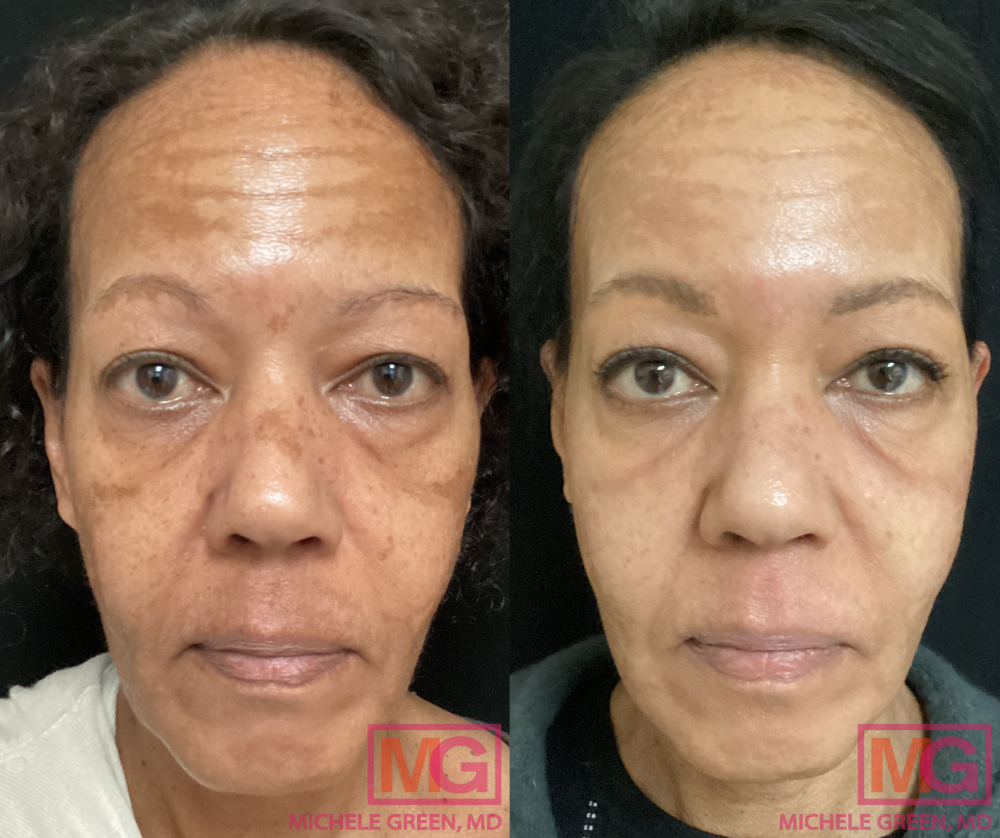
How to fade post-inflammatory hyperpigmentation with in-office procedures
Cosmelan peels
The Cosmelan peel by Mesoestetic is a professional-grade peel designed to treat moderate to severe hyperpigmentation, including post-inflammatory hyperpigmentation and melasma. The Cosmelan peel works by inhibiting melanin production and blocking its transfer to keratinocytes, preventing pigment from migrating to the skin’s surface. The peel begins with applying the Cosmelan 1 mask to the skin, which is worn for a duration determined by Dr. Green based on skin type, tone, and the severity of hyperpigmentation. Patients are then instructed to wash the mask off at home with a gentle cleanser and follow a strict regimen of specially formulated skincare products to enhance the peel’s results. The skincare products include a Cosmelan 2 depigmentation cream, a Melan Recovery moisturizer, and a Melan130+ Pigment Control sunscreen. Dr. Green brings patients back to the office 4 weeks later, at which point a second application of the Cosmelan 1 mask is performed. Patients then use the selected skincare products for several weeks or months to maintain treatment results.
Mesopeels
Mesopeels are specially formulated chemical peels from Mesoestetic designed to target dark spots and various forms of hyperpigmentation. They contain active skin-lightening ingredients, such as tranexamic acid, azelaic acid, and phytic acid, that inhibit tyrosinase and reduce the appearance of skin discoloration. Mesopeels can be used to treat post-inflammatory hyperpigmentation on the face, neck, chest, abdomen, back, armpits, groin, and under-eye regions. Mesopeels can be used by patients of all skin types, including those with darker skin types. No recovery time is required after treatment. A series of 4 to 6 sessions is best for achieving optimal results.
Chemical peels
A chemical peel is a cosmetic procedure in which a chemical exfoliant is applied to the skin to stimulate collagen production and accelerate skin cell turnover, sloughing off dead, pigmented skin cells and bringing healthy, bright cells to the skin’s surface. Chemical peels can be classified as superficial (light), medium, or deep, depending on the type and strength of the peel. Dr. Green often uses trichloroacetic acid (TCA) to treat hyperpigmentation because it is ideal for improving skin tone and texture. Multiple treatments, spaced three to four weeks apart, are typically recommended to achieve the best results. Patients with skin of color are not suitable candidates for TCA peels because they are at higher risk of post-peel hyper- and hypopigmentation.

Microneedling with depigmentation serum
Microneedling, or collagen induction therapy, is a non-invasive procedure that uses tiny, surgical-grade needles to stimulate the skin’s wound-healing response and promote new collagen production. It is excellent for reducing the appearance of fine lines, wrinkles, acne scars, enlarged pores, and uneven skin texture and tone. The micro-channels created by the procedure improve the absorption of topically applied products, and patients with post-inflammatory hyperpigmentation can benefit from incorporating a depigmentation serum to enhance treatment results. The depigmentation serum contains a unique blend of gentle yet effective skin-lightening agents that inhibit melanocyte activity and brighten the skin. A series of three or more microneedling sessions is often recommended for the best results.
VBeam laser
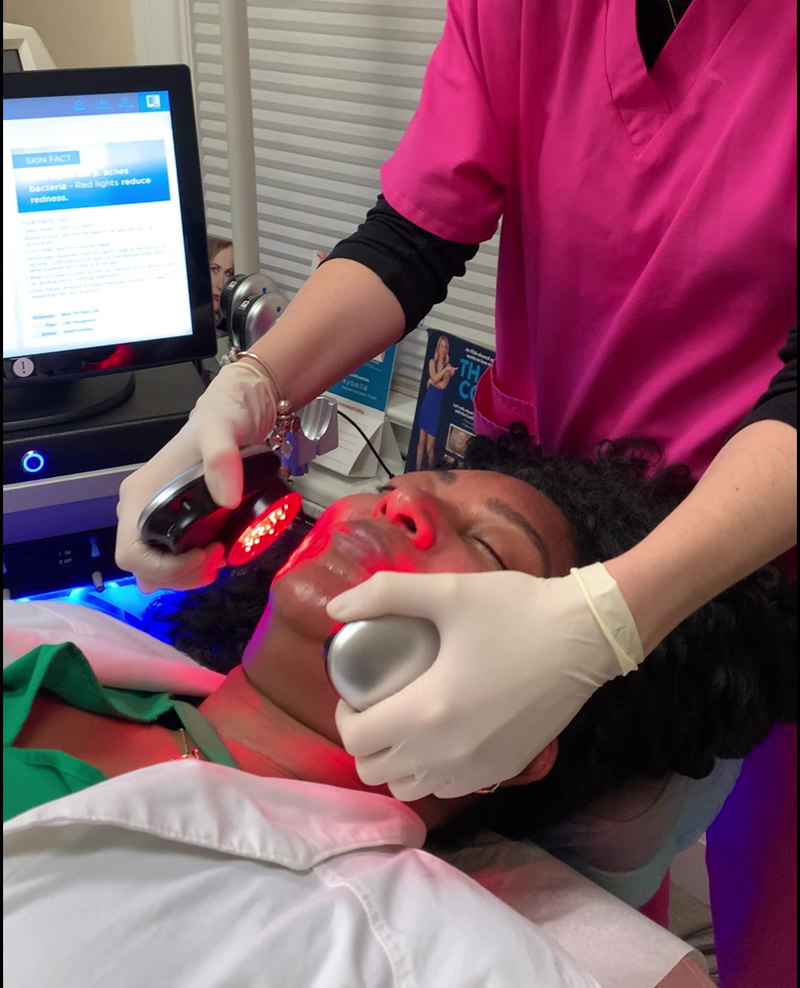
The VBeam laser is a pulsed dye laser used to reduce the appearance of red skin pigmentation, including facial redness, broken blood vessels, red acne marks, red stretch marks, and red or pink post-inflammatory hyperpigmentation. The VBeam laser delivers light at 595nm to remove red pigmentation while leaving the surrounding skin unaffected. VBeam is also equipped with a built-in cooling system that delivers a brief cryogen spray before each laser pulse, helping protect the skin and improve comfort during treatment. No downtime or side effects are associated with treatment, and patients can resume their daily activities immediately after treatment. Most patients require a short series of three to six initial VBeam treatment sessions to achieve their ideal cosmetic results, with each session spaced approximately 4 weeks apart.
HydraFacials
A HydraFacial consists of three steps that cleanse, exfoliate, and nourish the skin, resulting in a clearer, brighter complexion. Its unique vortex technology enables active ingredients to penetrate pores deeply for optimal results. The first step thoroughly cleanses the pores. The second gently exfoliates, removing dead skin cells, excess oil, dirt, and impurities. The final step delivers essential vitamins, nutrients, and peptides to hydrate and rejuvenate the skin. The treatment can be customized with boosters targeting specific concerns such as melasma, hyperpigmentation, acne, dullness, and aging. For example, the Murad Vita-C booster contains vitamin C, tranexamic acid, glycolic acid, and RepleniCell to brighten and hydrate. The Britenol booster, with vitamin C and alpha-arbutin, helps reduce hyperpigmentation and protect the skin from oxidative damage. HydraFacials are especially effective at reducing acne breakouts and preventing post-inflammatory hyperpigmentation marks.
Microdermabrasion
Microdermabrasion is a minimally invasive procedure that gently abrades the skin’s surface, increasing cell turnover and stimulating collagen production. Crystal or particle microdermabrasion sprays tiny crystals, typically aluminum oxide or sodium bicarbonate, while diamond microdermabrasion uses a specialized diamond tip to exfoliate the skin. Microdermabrasion has no downtime, and patients typically experience mild redness or swelling that resolves shortly after treatment. Multiple sessions, spaced three to four weeks apart, are needed to achieve desired results.
Intense Pulsed Light therapy
IPL therapy, also called photo rejuvenation or flashlamp therapy, emits multiple wavelengths of light with each pulse, producing a “flash” that scatters into the skin’s dermal layer. The targeted melanocytes are then destroyed, reducing post-inflammatory hyperpigmentation. In addition to treating PIH, IPL can improve broken blood vessels, rosacea, sun damage, sun spots, and the appearance of fine lines and wrinkles. Typically, patients need three to six treatments spaced one month apart for optimal results.
Treating post-inflammatory hyperpigmentation with topical skincare
Topical skincare products are an essential part of treating post-inflammatory hyperpigmentation, as they help gradually fade dark spots and enhance treatment results. Various over-the-counter and prescription products are available to lighten hyperpigmentation, and it is essential to choose products best suited to your skin type, tone, and concerns. Dr. Green’s specially formulated skincare line, MGSKINLABS, offers a wide range of products designed to address a variety of skin concerns, including PIH, fine lines, wrinkles, acne scars, and rosacea. When you consult with Dr. Green, she will assess your PIH and devise a skincare protocol that will help you achieve a clear, radiant complexion that lasts.
The most important step in any skincare routine for post-inflammatory hyperpigmentation (PIH) is sunscreen. Ultraviolet (UV) rays stimulate melanin production, which can worsen PIH and trigger new hyperpigmentation spots. Excessive sun exposure can also undo results after treatment. It is crucial to wear a broad-spectrum sunscreen with an SPF of 50 or higher daily when treating PIH. Sunscreen should be reapplied every 90 minutes or after water-based activities. For maximum protection, patients should layer both a physical and a chemical sunscreen. Physical sunscreens create a protective barrier on the skin to prevent UV rays from penetrating. In contrast, chemical sunscreens absorb UV rays, convert them into heat, and release that heat from the body. MGSKINLABS’ Hydrating SPF 50 contains zinc oxide to protect against harmful UV rays, along with hyaluronic acid and lactic acid to hydrate and soften the skin.
Vitamin C is a powerful antioxidant for patients with hyperpigmentation, including post-inflammatory hyperpigmentation. Vitamin C helps accelerate skin cell turnover, brighten the skin, and protect it from oxidative stress and free radical damage. The Vita-C Serum from MGSKINLABS contains a high-potency vitamin C to rejuvenate the skin and lighten.
Hydroquinone is a skin-lightening agent that reduces excess melanin production and melanocyte activity. It is available only by prescription from a board-certified dermatologist, such as Dr. Green. Hydroquinone increases skin sensitivity, so proper sun protection is essential when using it. It should be used only under a board-certified dermatologist’s supervision and not for long-term use, as it can cause skin irritation and worsen hyperpigmentation. With frequent, improper use, hydroquinone may also result in exogenous ochronosis, a rare but often permanent blue-black hyperpigmentation (Davis & Callender, 2010, J Clin Aesthet Dermatol).
Retinol and retinoids are vitamin A derivatives that exfoliate the skin, increase cell turnover, and stimulate collagen production. These products can address a wide range of skin concerns, including hyperpigmentation, fine lines, wrinkles, acne scars, and uneven skin texture and tone. Retinols are available over the counter, while retinoids require a prescription from a board-certified dermatologist. The Essential Antioxidant Infusion from MGSKINLABS is an excellent retinol that contains vitamins A, C, and E, along with other essential nutrients, to reduce pigmentation and renew the skin. Common retinoids include tretinoin and Retin-A. Some retinoids are also blended with other active ingredients, such as steroids, for optimal effectiveness. Treatments like Kligman Formula or Tri-Luma combine tretinoin with corticosteroids and hydroquinone to reduce post-inflammatory hyperpigmentation. Retinol and retinoids should be used only at night and with proper sun protection, as they increase skin photosensitivity.
Cyspera is a cream containing cysteamine, an antioxidant that inhibits melanin production. Some studies suggest that cysteamine-containing products can help reduce post-inflammatory hyperpigmentation in cases of nonresponse to traditional combination creams containing retinoids, corticosteroids, and hydroquinone (Mathe et al., 2021, J Cosmet Dermatol).
Other key skin-lightening agents include tranexamic acid, azelaic acid, kojic acid, glycolic acid, salicylic acid, and niacinamide. Tranexamic acid and azelaic acid both inhibit tyrosinase, the enzyme that aids in melanin production. Kojic acid is a naturally derived ingredient that reduces melanin production. Glycolic acid and salicylic acid are hydroxy acids that promote faster skin cell renewal, exfoliating discolored, dead skin cells, and encouraging the generation of healthy new skin cells that blend more evenly with the surrounding skin tone. Niacinamide reduces cutaneous pigmentation by inhibiting melanin transfer to keratinocytes. The Skin Brightening Cream from MGSKINLABS features a unique blend of kojic acid, glycolic acid, lactic acid, and fruit extracts to rejuvenate pigmented skin.
How long does it take for post-inflammatory hyperpigmentation to fade?
Thankfully, post-inflammatory hyperpigmentation is not permanent and will fade over time. However, it can take weeks, months, or even years for PIH to fade on its own. Over-the-counter topical treatments can help speed the process by protecting the skin from harmful UV rays and inhibiting melanin production. The fastest way to fade PIH is with non-invasive cosmetic procedures performed by a board-certified dermatologist, such as Dr. Michele Green. Dr. Green uses a variety of gentle yet effective treatments, including Mesopeels, Cosmelan peels, chemical peels, microneedling, VBeam laser, and HydraFacials, to minimize PIH and achieve clear, radiant skin. If you are struggling with PIH, consult with Dr. Green today to determine which treatment is best for your skin type, tone, and hyperpigmentation.
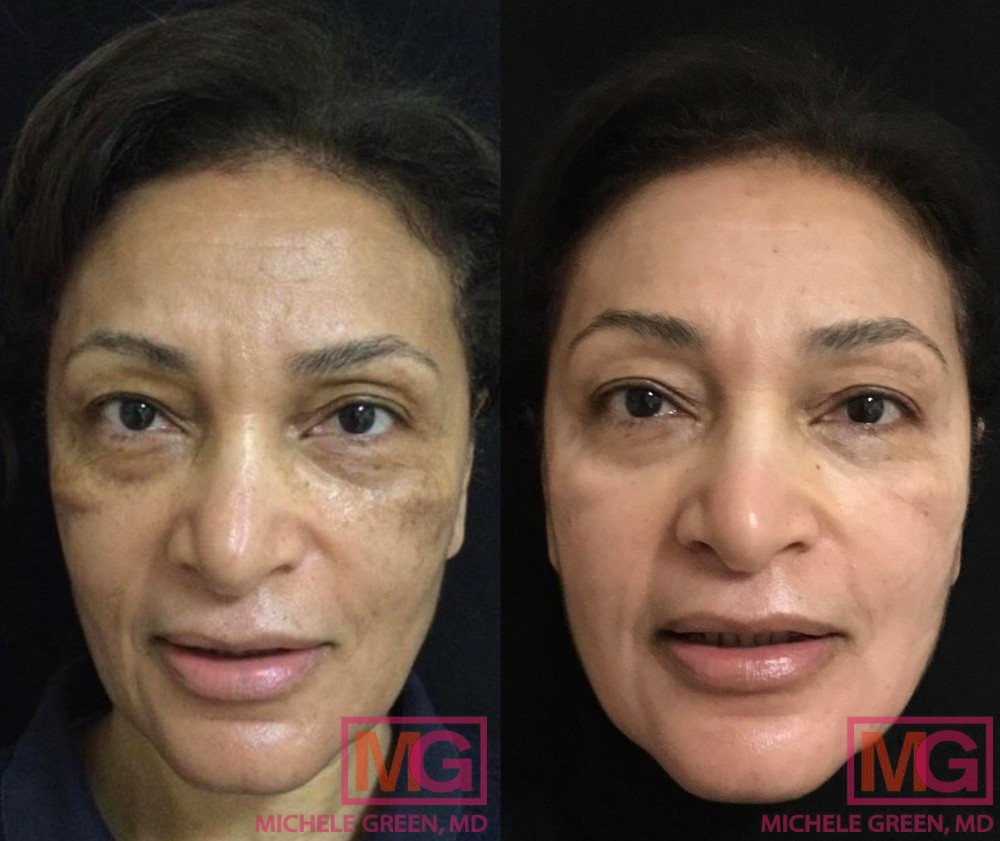
Frequently Asked Questions (FAQs) about Post-Inflammatory Hyperpigmentation
How to prevent post-inflammatory hyperpigmentation
Post-inflammatory hyperpigmentation (PIH) is a form of hyperpigmentation that occurs after skin trauma or inflammation. The best way to prevent PIH is to prevent skin inflammation or injury. Many patients develop PIH from inflammatory acne breakouts. Addressing breakouts with a board-certified dermatologist as soon as they occur is essential to prevent PIH. Patients should also avoid picking, squeezing, or popping acne lesions, as these actions increase inflammation and cause dark marks. PIH can also result from improper laser therapy, such as using inappropriate lasers or settings for a specific skin color, type, or condition. When undergoing any type of laser treatment, it is essential to consult with an experienced board-certified dermatologist, such as Dr. Michele Green, to ensure the laser is safe and effective for your skin tone.
How long does post-inflammatory hyperpigmentation last?
Post-inflammatory hyperpigmentation can last for a long time, though several factors can influence its duration. Typically, PIH lasts on the skin for 6 to 12 months before fading. Improper sun protection can prolong PIH by stimulating melanin production in the area. Increased inflammation in the area, including more inflammatory acne breakouts, worsening of inflammatory skin conditions like eczema or psoriasis, or continuous improper laser treatment, can worsen PIH or even embed the pigmentation further into the skin. Patients can speed recovery from PIH by wearing proper sun protection, using topical products containing active skin-lightening ingredients, and undergoing non-invasive cosmetic treatments.
How to heal post-inflammatory hyperpigmentation
After an initial skin injury or inflammatory condition, it is best to use gentle skincare products to promote healing and reduce inflammation. Daily sunscreen is essential for proper healing and to protect the skin from further melanin production. Patients should use a mild cleanser and a rich moisturizer to avoid irritation and protect the skin’s natural moisture barrier. Depending on the skin condition, a dermatologist may recommend a short course of corticosteroids to decrease inflammation and reduce further PIH. Once the skin has healed, cosmetic treatments or prescription active ingredients such as hydroquinone or retinoids may be recommended to fade PIH marks.
What gets rid of post-inflammatory hyperpigmentation fast
Unfortunately, there is no quick way to get rid of post-inflammatory hyperpigmentation (PIH). Combining in-office treatments, such as chemical peels, microneedling, VBeam laser, and HydraFacials, helps gradually fade dark marks. These non-invasive treatments typically require a series of sessions to achieve the best results; however, they help remove PIH much faster than topical treatments alone or no treatment at all. The best way to get rid of PIH quickly is to consult a board-certified dermatologist, such as Dr. Green, as soon as PIH develops.
Can lasers treat post-inflammatory hyperpigmentation?
Some forms of hyperpigmentation, such as sunspots and freckles, respond well to laser treatment. However, post-inflammatory hyperpigmentation (PIH) should not be treated with these lasers, as the heat can drive pigment deeper into the skin, worsening its appearance and making it harder to remove later. The only laser safe to use on PIH is the VBeam laser, which reduces inflammation and targets the red or pink pigmentation in PIH marks. Patients must seek treatment for their PIH from a board-certified cosmetic dermatologist with the expertise and experience to recommend the most appropriate treatments. Dr. Michele Green in NYC is an internationally renowned dermatologist with over 25 years of experience providing patients from around the world with the best non-invasive solutions for their hyperpigmentation.
Does tretinoin help with post-inflammatory hyperpigmentation?
Yes! Tretinoin is an excellent way to reduce dark marks and post-inflammatory hyperpigmentation. Tretinoin is a retinoid that exfoliates the skin, sloughing off dead, pigmented skin cells and bringing healthy, bright cells to the skin’s surface. It also accelerates skin cell turnover and promotes collagen production, improving the appearance of fine lines, wrinkles, acne scars, and uneven skin texture. Tretinoin is available only by prescription from a board-certified dermatologist and comes in varying strengths. When using tretinoin, it is important to apply it only at night and to practice proper sun protection, as sun exposure can worsen hyperpigmentation.
Does salicylic acid help with post-inflammatory hyperpigmentation?
Salicylic acid is a beta-hydroxy acid that exfoliates the skin and promotes skin cell turnover. It can benefit PIH by shedding pigmented cells and revealing cells with a more even tone. Salicylic acid is especially beneficial for acne-prone patients, as it can cleanse pores and help prevent breakouts. It is available in various over-the-counter cleansers, toners, serums, and creams, as well as chemical peels. The Pore Minimizing Cleanser and Retexturizing Pads from MGSKINLABS both contain salicylic acid and glycolic acid to cleanse the skin and promote skin cell renewal. The HydraFacial treatment also uses salicylic acid to exfoliate the skin and remove buildup from clogged pores.
What helps with post-inflammatory hyperpigmentation the best?
The best treatments for post-inflammatory hyperpigmentation (PIH) include gentle, non-invasive cosmetic treatments such as chemical peels, microneedling, VBeam laser, and HydraFacials. One of the most effective treatments for resolving PIH is Cosmelan. Cosmelan is a professional-grade chemical peel designed to treat hyperpigmentation, especially deeper forms of hyperpigmentation. For more sensitive areas, such as the axillae and groin, gentle Mesopeels combined with targeted skincare are very effective. Patients may also be better suited for microneedling with a specialized depigmentation serum to treat PIH while improving the appearance of fine lines, wrinkles, enlarged pores, and uneven skin texture. The VBeam laser is excellent for reducing inflammation and red or pink pigmentation associated with PIH. HydraFacials can help refresh the skin and deliver active ingredients to reduce post-inflammatory hyperpigmentation. Often, a combination of these treatments is best for targeting and eliminating PIH for good. When you consult with Dr. Green, she will create a customized treatment plan and skincare regimen designed to help you get rid of your PIH and achieve clear, radiant skin that lasts.
How to treat post-inflammatory hyperpigmentation today
Post-inflammatory hyperpigmentation (PIH) is a skin condition resulting from injury or trauma. During the skin’s natural healing process, skin cells overstimulate melanin production, leading to hyperpigmented areas. Although this type of hyperpigmentation can fade without treatment, it may take a long time to resolve. Many patients choose to seek treatment to achieve clear, even skin more quickly. The best treatment for PIH is often a combination of non-invasive cosmetic treatments and targeted topical skincare products that gradually fade hyperpigmented marks. When you consult with Dr. Green in NYC, she will create a personalized treatment plan to reduce your post-inflammatory hyperpigmentation and achieve a clear, bright complexion that lasts.
Dr. Michele Green is a board-certified dermatologist in New York City with over 25 years of experience treating facial and body hyperpigmentation in patients of all skin tones and types. She is consistently ranked among NYC’s top dermatologists by Castle Connolly, Super Doctors, New York Magazine, and The New York Times for her expertise and dedication to her patients. Dr. Green takes a holistic approach to cosmetic dermatology, customizing each patient’s treatment plan to their specific skin concerns and needs. By combining non-invasive cosmetic treatments with specially formulated skincare products from her MGSKINLABs line, she helps patients worldwide eliminate hyperpigmentation and achieve clear skin. To learn more about how to deal with post-inflammatory hyperpigmentation, contact us online or call our New York City-based office at 212-535-3088 today.


