


Sculptra Neck
Learn more about Sculptra for Décolletage and Neck Rejuvenation
Patients often seek Sculptra for the neck and décolletage when they notice fine lines, crepey texture, or a loss of firmness that makes the neck look older than the face. The skin in this area is thinner and more prone to sun damage, which can accelerate collagen breakdown and lead to visible wrinkling and laxity over time. Many patients want to restore a smoother, more youthful appearance without surgery or lengthy downtime, making non-invasive options especially appealing. As one of today’s most sought-after aesthetic treatments, collagen-stimulating injectables can improve skin quality while maintaining natural movement. Treatments that gradually strengthen the skin and improve its structure can help the neck look firmer while preserving natural movement and contour. At her private dermatology office on Manhattan’s Upper East Side, Dr. Michele Green offers Sculptra injections as part of a personalized approach to neck rejuvenation.
Sculptra is an injectable treatment made of poly-L-lactic acid that works by stimulating the body’s natural collagen production deep within the skin. Rather than creating immediate volume, Sculptra gradually improves the skin’s firmness, smoothness, and elasticity over time. This progressive approach delivers subtle, natural-looking rejuvenation that can last for years once collagen rebuilding occurs. Sculptra helps soften lines, improve crepey texture, and restore a more youthful appearance to the neck and chest. Dr. Green carefully tailors each Sculptra treatment plan to the patient’s anatomy, degree of laxity, and aesthetic goals to ensure balanced, long-lasting results.
Dr. Green is an internationally renowned expert in cosmetic dermatology, treating patients in her private dermatology office on Manhattan’s Upper East Side for more than 25 years. She is consistently recognized by Castle Connolly, New York Magazine, and Super Doctors as one of New York’s best dermatologists for her expertise in non-invasive cosmetic treatments, including dermal fillers such as Sculptra, Radiesse, Juvederm, and Restylane, as well as other injectables like Botox and Dysport. Dr. Green also specializes in laser treatments, microneedling, and chemical peels, among other procedures, and works with her patients individually to create a customized rejuvenation plan. If you are concerned about sagging skin, volume loss, wrinkles, sun damage, or photo-aging on your neck, Dr. Green is here to help.
What is Sculptra?
Sculptra is an injectable dermal filler that restores lost volume in the treatment area, providing a rejuvenated, non-surgical neck, face, or butt lift. Sculptra is composed of synthetic poly-L-lactic acid (PLLA), which stimulates the production of new collagen to combat volume loss in several body regions. Because Sculptra triggers the body’s own collagen production, the results are long-lasting and provide patients with a naturally youthful look.
Sculptra was initially FDA-approved in 2004 to treat lipoatrophy in HIV patients, a condition characterized by the loss of facial fat cells, sunken cheekbones, and a hollow midface. In 2009, the FDA approved Sculptra for cosmetic use in non-immunocompromised patients to address volume loss associated with the body’s natural aging process. Facial and neck volume loss can also exacerbate signs of aging, such as fine lines and wrinkles that become etched into the skin. As such, Sculptra can help reduce these tell-tale signs of aging with long-lasting results. Weight loss can also lead to sagging skin, which can be treated with this unique dermal filler. Sculptra can treat volume loss in many body areas, including the elimination of common facial creases such as marionette lines and nasolabial folds, without requiring a facial plastic surgeon. Sculptra can also be used on the neck to contour the jawline, décolletage, chest, and arms, as well as to reduce the appearance of cellulite and for a non-surgical butt lift.
Can Sculptra be used on the neck?
When patients ask, “Can Sculptra be injected into the neck?” the answer is yes! Sculptra is an ideal filler for addressing age- or weight-loss-related volume loss, as well as deep wrinkles and fine lines on the neck. The injectable filler can reverse the crepey appearance associated with the natural aging of the neck. Collagen loss can lead to increased skin laxity and a hollow appearance in the neck and décolletage. Sculptra is a safe, effective, and long-lasting solution for neck rejuvenation, restoring lost volume for a smooth, youthful look.
What does Sculptra do to your neck?
Sculptra injections work in many ways when injected into the neck for a liquid neck lift, including:
- Filling in lost volume due to decreased collagen production
- Reducing the appearance of horizontal neck creases and deep wrinkles
- Decreasing skin laxity
- Boosting collagen production
- Contouring the jawline
- Chin enhancement
The first step toward a more youthful appearance with Sculptra injections is to schedule an appointment with Dr. Michele Green, an expert, board-certified dermatologist.
How does Sculptra work?
Sculptra works by stimulating the body’s natural collagen production, gradually rebuilding the skin’s internal structure over time. The injectable is made of poly-L-lactic acid, a biocompatible substance that has been safely used in dermatology for many years. Once injected into the deeper layers of the skin, the product triggers a regenerative response that encourages fibroblasts to produce new collagen. As this collagen forms, the skin becomes thicker, stronger, and more resilient, improving firmness, smoothness, and overall skin quality. Unlike traditional fillers that create immediate volume, Sculptra delivers gradual, progressive improvement that develops over several months and can last for years.
Sculptra Injections versus Plastic Surgery
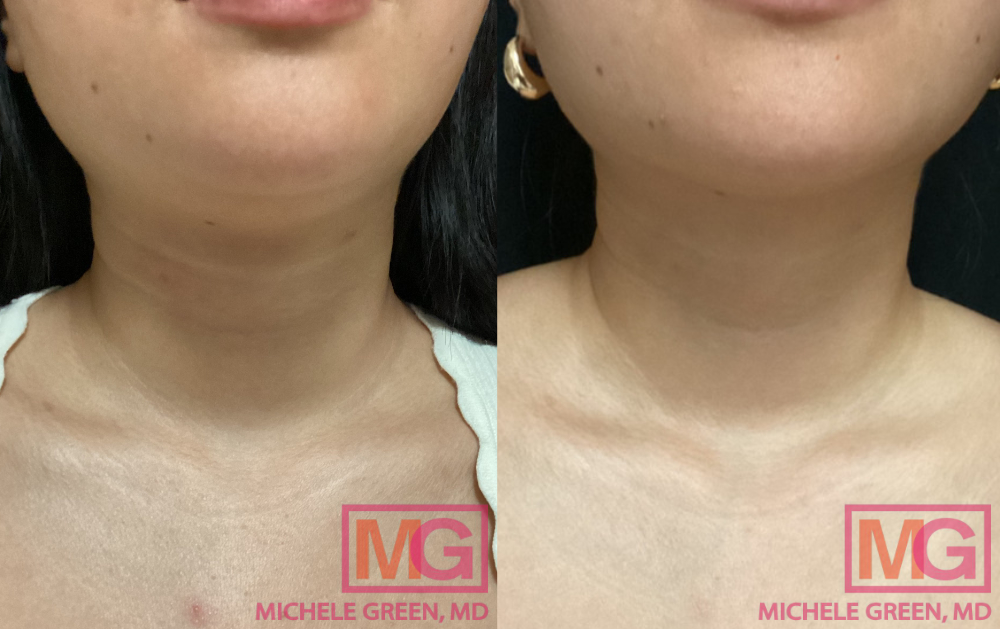
When most patients hear the term “neck lift,” they think of a surgical procedure performed by a plastic surgeon. A surgical neck lift can reduce skin laxity, decrease the appearance of wrinkles, and reduce the concentration of fat below the chin and along the neck. However, the procedure involves an incision typically made behind the ears and may include liposuction to reduce and redistribute fat cells. The skin is then stretched back over the treatment area, with excess skin removed. While plastic surgery, such as a surgical neck lift, can create dramatic results, the risk of serious adverse events is high, and recovery time is prolonged. For patients not ready to undergo a surgical facelift or neck lift, Sculptra offers a non-surgical alternative that gradually improves the appearance of the neck. Sculptra injections can also tighten the skin, restore lost volume, enhance the jawline, and reduce the appearance of neck and chin wrinkles, all without the risk of severe side effects or the need for recovery time.
Dermal Fillers Versus Sculptra Injections
Sculptra is unique among dermal fillers because of its formulation, which gives it distinctive properties. Many common dermal fillers, such as Restylane, Juvederm, and Juvederm Voluma, are composed of hyaluronic acid. Hyaluronic acid is a naturally occurring substance in the body that helps promote collagen production and hydrates the skin, providing a healthy, youthful appearance. However, hyaluronic acid fillers typically last only a short time before the treatment needs to be repeated. Sculptra, conversely, comprises poly-L-lactic acid, which stimulates the body’s natural production of collagen to restore your natural skin structure and volume. Due to its collagen-stimulating properties, Sculptra can last longer than traditional hyaluronic acid fillers. Because Sculptra can be injected into the deep dermis, it can provide the scaffolding necessary for natural-looking results and longevity.
Hyaluronic acid dermal fillers can be dissolved with hyaluronidase if the results are not to the patient’s liking. Poly-L-lactic acid, however, cannot be dissolved in the same way. For this reason, an experienced board-certified cosmetic dermatologist must perform Sculptra injections, which require particular precision. It is best to seek treatment from a highly skilled, board-certified dermatologist like Dr. Green. If you are looking for instantaneous results, a hyaluronic acid filler such as Juvederm may be the best option, as its effects are visible within several days. In contrast, Sculptra takes several weeks to take full effect.
During your initial consultation with Dr. Green, you will discuss your cosmetic goals and the areas you want addressed. Together, you will determine which dermal filler will work best for your situation. Dr. Green uses a variety of dermal fillers to suit each patient’s needs best. Therefore, no single family of fillers is inherently “better” than another. Instead, Dr. Green helps you decide which filler is best for long-lasting, natural-looking results.
Who is a good candidate for Sculptra neck treatment?
A good candidate for Sculptra neck treatment is someone who is noticing gradual changes in the neck, such as fine lines, crepey texture, or mild loss of firmness, and who prefers subtle improvements without the side effects, risks, and downtime of surgical procedures. Patients seeking to improve overall skin quality often benefit most from Sculptra, as it stimulates collagen over time. Sculptra is particularly well-suited for individuals with early to moderate signs of aging. Candidates should also be willing to complete a series of treatments and allow time for results to appear, since Sculptra is designed to create long-term improvement in the skin’s structure rather than provide instant correction.
Who should not get Sculptra?
Sculptra is not recommended for individuals who are pregnant or breastfeeding, as cosmetic injectables are generally avoided during this time for safety. Patients with active skin infections, inflammation, or open wounds in the treatment area should postpone treatment until the skin has fully healed. Those with certain autoimmune conditions, a history of abnormal scar formation, or known allergies to any component of the product may not be appropriate candidates. In addition, patients seeking immediate visible volume or dramatic tightening may not be ideal candidates, since Sculptra works gradually and requires multiple treatment sessions. A thorough medical history and consultation are always necessary to determine whether Sculptra is appropriate and to ensure the safest possible treatment plan.
What are the side effects of Sculptra treatment?
Sculptra injectable treatment is safe and effective, with a low risk of adverse events. The side effects associated with Sculptra injections are mild and expected after any injectable treatment, including bruising, swelling, redness, and irritation at the injection site. These side effects should resolve without medical intervention within one to two weeks of treatment. Patients can reduce the risk of bruising or swelling by icing the treatment area and elevating the site while sleeping. Another potential side effect is the development of bumps or nodules under the skin. While harmless, these bumps can create an uneven skin texture. Dr. Green recommends massaging the treatment area for 5 minutes, 5 times a day, for 5 days post-treatment to spread the filler and reduce the likelihood of nodules forming under the skin.
Is Sculptra safe for the neck?
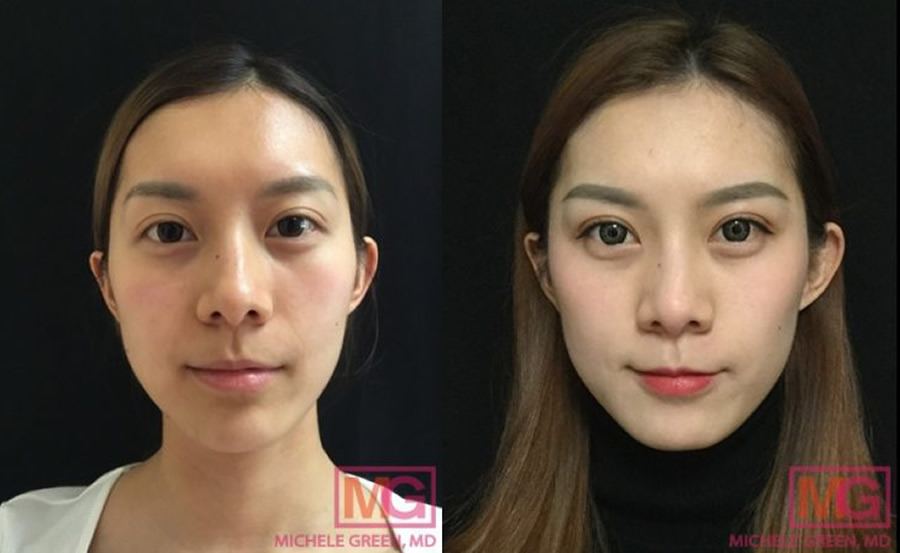
Yes, Sculptra can be a safe treatment for the neck when performed by an experienced injector who understands the area’s anatomy and uses proper technique. Sculptra has a long safety record in cosmetic dermatology and is made of poly-L-lactic acid, a biocompatible material used in medical procedures for many years. When injected correctly, it gradually stimulates collagen production, producing subtle, natural-looking improvements in skin quality over time. The most common side effects are temporary swelling, bruising, tenderness, or small lumps at the injection sites, all of which typically resolve as the product settles and the skin heals. Careful placement, appropriate dilution, and proper aftercare, including massage, help minimize the risk of nodules and ensure smooth results. With careful treatment planning and attention to technique, Sculptra is considered a reliable and well-tolerated option for improving signs of aging in the neck.
What is the procedure for getting Sculptra neck treatments?
You will begin your treatment with an in-person consultation with Dr. Green, during which you will discuss your aesthetic needs and goals in detail. We no longer offer virtual consultations. After examining the treatment area and reviewing your skincare routine, Dr. Green will determine the treatment or series of treatments that best meet your goals. During this visit, Dr. Green will also map the targeted areas of the neck to ensure precise placement and balanced rejuvenation. When preparing for your Sculptra appointment, Dr. Green recommends avoiding anti-inflammatory medications, vitamins, and other blood thinners the week before your treatment to prevent bruising or swelling at the injection sites. Dr. Green also recommends refraining from alcohol for one day before the treatment to reduce the likelihood of bruising.
To minimize discomfort, your pharmacy may prescribe a topical numbing cream to be applied to the entire treatment area 1 hour before the injections. Most patients experience minimal to no pain during the procedure. Dr. Green also dilutes the Sculptra solution with lidocaine before injections to further limit discomfort. Sculptra is injected deep into the dermis with a thin needle to stimulate the body’s natural collagen production. The treatment works over time, and the body can produce new collagen for up to six months after injections. Dr. Green recommends 3-4 treatment sessions, spaced four to six weeks apart, for optimal results.
Sculptra Aftercare
Sculptra Aesthetic is a non-invasive, non-surgical treatment that restores volume loss. The procedure has no downtime, so patients can return to their regularly scheduled activities immediately after treatment. Immediately after the Sculptra injections, Dr. Green may apply an ice pack to the injection site to help minimize bruising or swelling. If swelling or redness occurs after the injections, Dr. Green recommends avoiding direct sun exposure or tanning beds until the swelling subsides. For all patients, the treatment area should be massaged for 5 minutes, 5 times a day, for 5 consecutive days. This helps spread the injected material and prevents nodules or lumps from forming. After the initial 3 to 4 treatment sessions, the results of Sculptra injections are long-lasting, and most patients will need only one touch-up and maintenance session each year.
How to massage the neck after Sculptra?
After Sculptra injections in the neck, gentle massage is an important part of aftercare to help distribute the product evenly and reduce the risk of small lumps forming under the skin. Patients are typically instructed to follow the five-five-five rule, massaging the treated area for five minutes, five times a day, for five days after treatment. The massage should be firm but not painful, using clean hands to move the skin in small circular motions and smooth strokes across the injected areas so the product spreads evenly within the tissue. Applying a light moisturizer can make the massage more comfortable and prevent unnecessary friction on the skin. Consistent massage during the first several days helps ensure a smooth result and supports proper collagen stimulation as the treatment begins to work. Additional aftercare instructions should be followed based on the specific areas treated and the individual treatment plan, which will be discussed prior to treatment.
How many vials of Sculptra for the neck?
The number of vials needed for a Sculptra neck lift varies based on several factors, including the size and scope of the treatment area, the severity of wrinkles or skin laxity, and the patient’s unique aesthetic goals. Typically, Dr. Green uses one vial of Sculptra per treatment session to address signs of neck aging. During your initial consultation, Dr. Green will examine the treatment area and provide a more accurate estimate of the number of vials needed to meet your needs.
How many Sculptra sessions do you need for the neck?
The number of necessary treatment sessions depends on each patient’s specific goals and the severity of wrinkles, volume loss, and skin laxity. However, Dr. Green typically recommends 3-4 treatment sessions spaced 6 weeks apart for optimal results. After your initial consultation, Dr. Green will create a treatment schedule and plan to deliver the best results for a long-lasting solution to signs of aging in the neck.
How Much is Sculptra for the Neck?
The price varies by geographic area and the number of vials used. The total cost also depends on how many vials are needed to achieve your aesthetic goals. Many patients choose to treat multiple body areas, such as the face and neck, which can increase the price because more vials are required. The size of the treatment area will also determine how many vials are essential for optimal results. However, for areas requiring significantly more vials, such as a non-surgical butt-lift, discounts or special offers may be available, which will also affect the cost. Dr. Green’s office can provide you with an estimate of the total cost of your treatment during your initial consultation.
Is Sculptra good for a saggy neck?
Sculptra can help improve a sagging neck when laxity is mild to moderate and caused by collagen depletion, though it works differently from surgical tightening procedures. Instead of physically lifting loose skin, Sculptra strengthens skin support by encouraging new collagen formation, which can gradually improve firmness and reduce the appearance of looseness. Patients who notice early softening along the jawline or mild drooping in the neck may see significant improvement as the skin thickens and becomes more resilient over time. For more advanced laxity, Sculptra is often most effective when combined with treatments that directly tighten, such as radiofrequency-based procedures. Hence, the skin gains both structural support and increased tension. This layered approach allows the neck to look smoother and more defined while preserving natural facial proportions and expression.

Combining Anti-Aging treatments with Sculptra Aesthetic for neck rejuvenation
Sculptra injections are often the ideal solution for patients seeking to restore lost volume in the neck and décolletage. Sculptra can be easily combined with other non-invasive treatments to target multiple signs of aging and achieve total neck rejuvenation. Depending on a patient’s skin concerns, Dr. Green may recommend pairing Sculptra with other treatments to address skin laxity, stubborn deposits of excess fat cells, or poor skin texture. In such cases, Sculptra is often combined with Thermage, CoolSculpting, Botox, or Microneedling.
Thermage – The Thermage radiofrequency laser is Dr. Green’s office’s most popular skin-tightening treatment. This FDA-approved skin-tightening laser uses radiofrequency (RF) energy to gently heat the inner layers of the skin, including the dermis and subcutaneous tissue. This heating creates a controlled injury that boosts the body’s natural collagen and elastin production. The increase in collagen and elastin, two proteins that give the skin structure, leads to immediate skin tightening. Results can last up to two years after a single treatment session. For cases of exceptionally high skin laxity, Thermage can be paired with Sculptra to tighten the skin and restore volume loss. Thermage can be used on the face, neck, jowls, knees, buttocks, hands, arms, and stomach.
CoolSculpting – In some cases, a high concentration of fat cells on the neck can create a double chin or heavy jowls. CoolSculpting is a fat-freezing treatment that can “debulk” the neck and décolletage for a slimmer, more contoured look. CoolSculpting is not a weight loss treatment and is best used to remove pockets of stubborn excess fat in patients at or near their target weight.
Botox – Tension in the neck muscles can make fine lines and wrinkles appear more prominent and pull at the jawline, leading to a hollow look. Botox, the brand name for the neurotoxin onabotulinumtoxin type A, can be injected into the neck to “freeze” and relax the muscle. In doing so, Botox prevents the muscle from contracting, smoothing out neck wrinkles and improving the jawline. If the wrinkles and lines on the neck are due to neck muscle tension, Dr. Green may recommend Botox as a starting point for a non-surgical neck lift, also called the “Nefertiti Lift.”
Microneedling – Microneedling is another treatment available at Dr. Green’s office to stimulate collagen production and improve skin texture. For patients struggling with enlarged pores, acne scars, or rough skin texture, microneedling pairs well with Sculptra. Microneedling with PRP (Platelet-Rich Plasma) creates small micro-injuries on the skin’s surface using a handheld device with surgical-grade needles. These controlled injuries to the epidermis stimulate collagen production, which in turn helps improve skin texture. For example, Dr. Green may start by injecting Sculptra into the scar and then use the microneedling device to achieve smoother skin when treating acne scars.
Fraxel laser – Fraxel effectively removes sun damage, sun spots, photoaging, fine lines, and wrinkles from the face, neck, and décolletage. Fraxel creates columns of thermal energy that remodel collagen in the skin. Fraxel also works to remove deeper wrinkles and acne scars. The rejuvenating effects of Fraxel can be used on the arms, hands, and legs. Combining Sculptra injections for the neck with Fraxel laser increases skin turnover and new collagen production. The result is smoother, younger-looking skin.

Frequently Asked Questions about Sculptra Neck Treatment
Is Sculptra good for the neck?
Sculptra can be an excellent option for improving the overall quality and appearance of the neck when the main concerns are collagen loss, thinning skin, and fine lines or crepey texture. The neck often shows early signs of aging because the skin in this area is thinner and frequently exposed to sun damage, which accelerates collagen breakdown. Sculptra works by stimulating the body to produce new collagen in the deeper layers of the skin, strengthening the skin’s structure over time and improving smoothness and firmness in a subtle, natural way. Patients seeking gradual rejuvenation without surgery often benefit from Sculptra, as improvements develop progressively and enhance skin quality. When used as part of a personalized treatment plan, Sculptra can help restore a more youthful appearance to the neck while maintaining natural movement and contour.
How long until Sculptra injection results are visible?
Sculptra is a unique dermal filler that stimulates the body’s natural collagen production to restore volume loss. As a result, the effects of Sculptra are long-lasting but take time to become visible as the body produces new collagen. Dr. Green recommends scheduling three to four treatment sessions, spaced four to six weeks apart. With Sculptra’s neocollagenesis properties, collagen production can continue for up to six months following the injections. It may take four to six weeks after each session to see the full effects of Sculptra. Because collagen continues to rebuild over time, Sculptra results often improve gradually for several months after the final session. However, once the results are visible, they can last up to 2 years after injections.
Are Sculptra injections permanent?
The results of Sculptra Aesthetic are unique among dermal fillers because it stimulates the body’s collagen production, leading to natural-looking, long-lasting results. The volume restoration from Sculptra injections can last up to two years after treatment. After that time, the biodegradable PLLA molecules are completely broken down by the body, and collagen production slows. Dr. Green recommends that patients return to her office once a year for a touch-up to maintain results. While not permanent, the effects of Sculptra last much longer than many other filler treatments. Sculptra is more accessible than plastic surgery neck lifts for many patients.
Can you do Sculptra in the neck?
Yes, Sculptra can be used in the neck to improve visible signs of aging, including fine lines, crepey skin, and volume loss. Although FDA-approved for restoring facial volume, Sculptra is commonly used in cosmetic dermatology to stimulate collagen production in other areas where the skin has thinned or lost firmness over time. The neck is particularly prone to collagen depletion, sun damage, and laxity, which can lead to wrinkles and uneven texture. When injected with proper technique, Sculptra works gradually to rebuild collagen in the deeper layers of the skin, improving structure and smoothness over time and creating natural-looking rejuvenation. Treatment must be carefully customized based on skin thickness, degree of laxity, and overall neck anatomy to ensure safe placement and balanced results.
What is a Sculptra neck lift?
A Sculptra neck lift involves injecting the Sculptra dermal filler into the neck and jawline to lift the skin, restore lost volume, reduce skin laxity, and erase fine lines and wrinkles. When the poly-L-lactic acid solution is injected into the treatment area, the particles provide structural support to the tissue and boost collagen production, resulting in smoother, more youthful-looking skin. Sculptra can also be injected into the jawline to contour the lower face and enhance the chin, creating a more sculpted appearance. Unlike a surgical neck lift, a Sculptra neck lift is quick and straightforward, with no recovery time afterward.
Where to inject Sculptra in the neck?
Sculptra filler is injected into the dermal layer (inner layer) of the skin on the neck, where deep wrinkles and pronounced skin laxity are most apparent. Deep in the dermis, poly-L-lactic acid acts as a scaffold, filling lost volume to reduce the appearance of loose skin and creases. Sculptra can also be injected along the jawline to help minimize facial asymmetry, contour the jawline, and enhance the chin.
Is Sculptra good for turkey neck?
Turkey neck is the unfortunate term for loose skin on the neck, so named for its resemblance to a turkey’s wattle. Loose skin on the neck can result from high skin laxity, sudden weight loss, or a high concentration of fat cells. If turkey neck is caused by loose skin, Sculptra can help by boosting collagen production and firming the skin. In some cases, a treatment such as Thermage may yield more dramatic results. If turkey neck is caused by a buildup of fat cells in the area, a treatment such as Kybella or CoolSculpting may be more effective.
Is Sculptra good for neck lines?
Sculptra can be a very useful treatment for softening visible neck lines, especially the horizontal creases that form across the neck with age and repeated movement. These lines often develop from a combination of skin thinning, sun exposure, and the natural folding of the neck. By gradually improving the thickness and quality of the skin, Sculptra can help these lines appear less etched and less noticeable over time, giving the neck a smoother, more refined look. It is particularly helpful for patients who feel their neck looks wrinkled, even when their skin is not severely loose. In many cases, Sculptra is combined with other treatments that target surface texture or tightening, so the lines soften while the overall neck contour improves.
Is Sculptra good for crepey neck?
Yes, Sculptra can be a very effective option for improving the appearance of crepey skin on the neck. Crepey neck skin often develops as the skin’s supportive structure weakens over time, making the surface look finely wrinkled, fragile, and less smooth. Sculptra works by gradually strengthening the skin’s structure, allowing the neck to appear firmer and more resilient as skin quality improves over several months. Patients often notice that the neck looks less delicate and more even in texture, with a smoother appearance that still looks natural. For individuals with more pronounced crepiness, Sculptra is often most beneficial when incorporated into a comprehensive treatment plan that may also include skin-tightening or resurfacing procedures to address multiple aspects of aging in the neck.
Sculptra for horizontal necklines
Horizontal necklines are creases that run across the neck. While people of any age can develop horizontal necklines, these wrinkles can deepen and become more prominent with age. These lines are often worsened by repetitive downward head posture from phones and computers, a pattern commonly referred to as tech neck. Increased skin laxity and volume loss associated with the natural aging process make horizontal necklines more visible. The presence of necklines often makes many patients feel self-conscious and can negatively impact self-esteem. Fortunately, Sculptra injections can help reduce or even eliminate the appearance of horizontal necklines. When Sculptra is injected into the lines, the boost in collagen production leads to rejuvenated, smooth, youthful-looking skin free of these deeper wrinkles. When you consult with Dr. Green for your neck rejuvenation treatment, she will work with you to determine which non-invasive solutions, including Thermage or Fraxel laser, will provide you with the best cosmetic results.
Can you use Sculptra for neck skin tightening?
Sculptra injections are very effective for restoring lost volume in the neck, which can help decrease the appearance of fine lines, wrinkles, and loose skin. However, Sculptra treatment is not specifically designed to address very high skin laxity. If you have particularly loose or crepey neck skin, Dr. Green may recommend pairing Sculptra filler with a skin-tightening treatment, such as Thermage. Thermage is specifically designed to tighten the skin by delivering radiofrequency heat deep into the tissue, which causes existing collagen fibers to contract and triggers new collagen formation. This controlled heating creates a firming effect that can be more noticeable in patients with visible laxity. For this reason, Sculptra is often used to improve skin quality and support, while Thermage is chosen when the main concern is sagging skin. When combined, these treatments can address both the structure of the skin and tighten it, leading to more balanced rejuvenation of the neck.
How long does Sculptra last?
Sculptra is an injectable dermal filler that delivers long-lasting, natural-looking results. Patients typically require four treatment sessions with Sculptra injections to achieve their ideal final results. After completing the series, the cosmetic effects of Sculptra can last more than two years. Many patients choose to undergo maintenance treatment sessions annually to maintain optimal cosmetic results. Patients enjoy the non-surgical rejuvenation benefits of Sculptra injections, including minimal discomfort and downtime.
Does Sculptra work on the neck?
Yes! Not only is Sculptra an excellent treatment option for addressing midface volume loss, but it is also effective at improving the appearance of various signs of aging on the neck and décolletage. To ensure your treatment is safe, effective, and delivers ideal cosmetic results, it is essential to have your injections performed by a board-certified dermatologist, such as Dr. Michele Green in New York City. Dr. Green is an expert injector with over 25 years of experience, providing some of the most discerning patients from around the globe with non-invasive cosmetic solutions for pan-facial rejuvenation. You’ll achieve long-lasting, natural-looking results when you consult Dr. Green for your Sculptra injections for neck rejuvenation.
How long will my neck be swollen after Sculptra?
Mild swelling and bruising at or near the injection sites are the most common side effects of Sculptra treatment. These side effects typically resolve within 48 to 72 hours after treatment. Tylenol is recommended for any discomfort following the procedure. Arnika Forte is an herbal supplement that helps reduce bruising and swelling, available as an oral supplement or a topical gel. Patients may also take the oral Arnika several days before their dermal filler injections to help prevent bruising.
Can I do microneedling after Sculptra?
Yes, microneedling can be performed after Sculptra treatment, but it is important to allow sufficient time for the injections to settle before introducing another procedure. Sculptra works by gradually stimulating collagen production deep within the skin. The treated area needs time to heal so the product can distribute evenly and integrate into the tissue. Once the initial healing phase has passed, microneedling can be a beneficial complementary treatment, as it also stimulates collagen production and improves skin texture, tone, and elasticity. When spaced appropriately, combining Sculptra with microneedling can enhance overall rejuvenation by addressing both structural volume loss and surface skin quality. The timing between treatments should be determined during consultation so the skin is fully healed and the results from each procedure can develop optimally without interfering with one another.
Is Sculptra worth it for the neck?
Sculptra can be an excellent treatment for the neck in patients whose concerns stem from collagen loss, thinning skin, or early laxity rather than significant excess skin. The neck ages quickly due to sun exposure and its naturally lower collagen density, which can lead to creasing, textural changes, and a less-defined jawline over time. Sculptra works by stimulating the body’s own collagen production, gradually strengthening the skin’s internal structure and improving firmness over several months. Clinical research and aesthetic practice both support poly-L-lactic acid’s ability to deliver long-lasting improvements in skin quality and volume, with results often lasting 2 years or more. For patients seeking natural-looking rejuvenation without surgery, Sculptra can be a very good investment because it improves the skin itself rather than temporarily filling lines. However, it is most effective when treatment is tailored to the degree of laxity and the overall neck anatomy.
Is Radiesse or Sculptra better for the neck?
When deciding between Radiesse and Sculptra for the neck, the choice depends on how the neck is aging and the type of improvement needed. Radiesse is often selected when patients want to improve skin firmness and provide subtle structural support, because its thicker consistency can create immediate support in areas where the skin appears thinner or less supported. Sculptra, in contrast, is typically used when patients prefer gradual rejuvenation and long-term improvement in skin quality, as it works slowly to rebuild collagen and strengthen the skin over time without adding visible volume at the time of treatment. For patients with early laxity or a crepey texture, Sculptra is often preferred for its ability to deliver progressive, natural-looking improvement. At the same time, Radiesse may be helpful when more immediate tightening or contour support is desired. In many cases, the best approach is determined during consultation, since the condition of the skin, degree of laxity, and overall neck anatomy all influence which treatment will provide the most balanced and natural result.
Who does Sculptra neck treatments?
A qualified medical professional with expertise in cosmetic injectables and a thorough understanding of neck anatomy, such as a board-certified dermatologist or plastic surgeon, should perform Sculptra neck treatment. The neck has thinner skin and important blood vessels, so precise placement and proper dilution of Sculptra are essential to achieve smooth, natural-looking results and minimize the risk of nodules or uneven texture. Experienced cosmetic dermatologists assess laxity, skin quality, and facial balance before treatment, helping determine whether Sculptra alone or a combination approach will yield the most effective outcome. Seeking treatment from a specialist who regularly performs injectable procedures ensures that injections are customized to the patient’s anatomy and aesthetic goals, leading to safer treatment and long-lasting neck rejuvenation.
How do I get started with Sculptra injections for neck rejuvenation today?
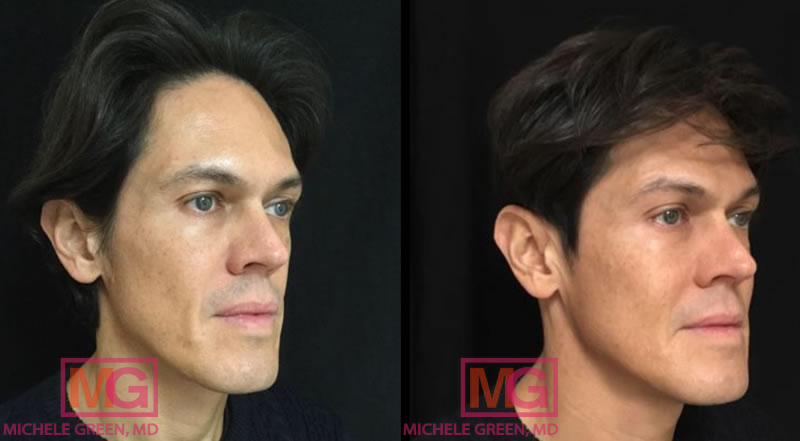
Sculptra is a collagen-stimulating injectable that gradually improves skin quality, firmness, and structure, making it an excellent option for rejuvenating the neck and décolletage. By encouraging the body to rebuild its own collagen, Sculptra helps soften lines, improve crepey texture, and restore a smoother, more youthful appearance over time without surgery or downtime. The treatment works progressively, allowing results to develop naturally while maintaining the neck’s natural contours and movement. Sculptra can also be incorporated into a comprehensive rejuvenation plan with other non-invasive treatments to address skin laxity, texture, and volume changes, delivering balanced, long-lasting results. A board-certified cosmetic dermatologist, such as Dr. Michele Green in New York City, can evaluate your concerns and design a customized treatment plan to help you achieve natural-looking neck rejuvenation.
Dr. Michele Green is an internally recognized, board-certified dermatologist with over two and a half decades of experience providing some of the world’s most discerning patients with top non-invasive cosmetic treatments, including Sculptra for neck rejuvenation. She is consistently voted one of the best dermatologists in New York by New York Magazine, Castle Connolly, and Super Doctors for her dedication to her patients and practice, her holistic approach, and her ‘less is more’ philosophy in rejuvenation treatments. Dr. Green works with her patients individually to create a customized treatment plan that addresses their skin concerns and achieves their unique cosmetic goals. At the forefront of anti-aging and skin rejuvenation, Dr. Green will help combine the best treatments for your non-surgical neck rejuvenation. To schedule a consultation with Dr. Green at her private dermatology office in Manhattan’s Upper East Side, please contact us online today or call our NYC office at (212) 535-3088.


