


Sculptra for Facial Wrinkles
Facial aging is largely driven by a gradual decline in the skin’s collagen production, leading to volume loss along the cheeks, temples, and jawline, as well as fine lines and wrinkles that can make the face look tired or hollow. Rather than stepping into a plastic surgeon’s operating room for surgical facelifts, many patients are turning to non-surgical dermal fillers to restore a naturally rested, youthful appearance. Sculptra Aesthetic has become one of the most sought-after dermal filler treatments among the discerning patients of board-certified dermatologist Dr. Michele Green.
Sculptra is a distinctive dermal filler made of poly-L-lactic acid (PLLA), placing it in a category of collagen stimulators that work differently from hyaluronic acid fillers such as Juvéderm and Restylane. Rather than simply adding volume beneath the skin, Sculptra gradually rebuilds the skin’s natural collagen production over time, softening nasolabial folds and marionette lines, redefining the jawlines and cheeks, and improving overall skin texture and elasticity for long-lasting, natural-looking results achieved under the care of Dr. Green.
What is Sculptra Dermal Filler?
Sculptra dermal filler is an FDA-approved, poly-L-lactic acid (PLLA) injectable that provides an initial volumizing effect to soften wrinkles, followed by a longer-term boost in natural collagen production, yielding gradual, long-lasting results. Sculptra is a synthetic, biocompatible, and biodegradable formulation that is gradually broken down and naturally cleared by the body over time while continuing to stimulate new collagen production. It is commonly used to improve the appearance of nasolabial folds (smile lines), marionette lines, jowls, and other areas of volume loss, and to contour the jawline and lower face. Before injection, Sculptra is mixed with lidocaine to minimize discomfort, and full results are typically visible four to six weeks after treatment, or after a series of monthly treatment sessions.
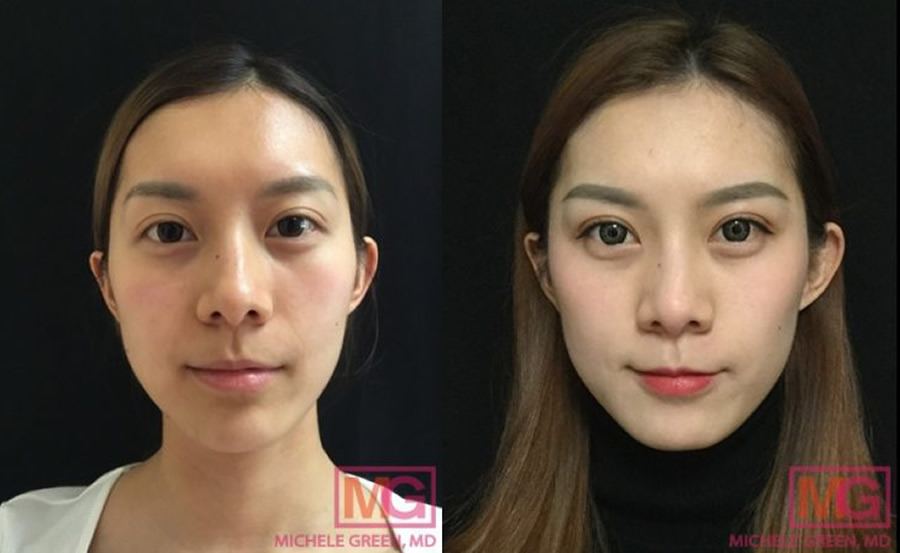
Sculptra – 3 months before and after
How Does Sculptra Improve Facial Volume?
A Sculptra treatment plan revitalizes the skin’s appearance and feel by restoring facial volume and stimulating natural collagen production as the body gradually breaks down the product. Unlike fillers that provide only an immediate volumizing effect, Sculptra continues to improve skin texture, tone, and elasticity for months after the initial facial injection, resulting in a subtle, increasingly youthful appearance over time. Many patients describe Sculptra treatment as a “liquid facelift” because it restores volume, which can reduce the appearance of wrinkles and sagging skin. It is especially popular for cheek and jawline rejuvenation because it uses the body’s own natural collagen stores to restore volume and improve skin elasticity. Sculptra can also be combined with other facial rejuvenation treatments, such as Botox to soften dynamic wrinkles, Thermage FLX for skin tightening, and Fraxel laser skin resurfacing. Dr. Green will help curate the ideal treatment plan for your skin.
Sculptra is also an excellent option for a liquid facelift because it can be used across nearly all areas of the face. A popular injection site is the midface, where Sculptra is an effective cheek filler that restores cheek fullness and helps counteract volume loss that contributes to an aged appearance. Following treatment, patients are often encouraged to support their skin with a gentle, nourishing routine, and MGSkinLabs Hydra Repair and Essential Antioxidant Infusion are well suited to maintaining hydration and skin barrier health as the collagen-building process unfolds. Daily use of MGSkinLabs Hydrating SPF 50 is also recommended to protect the skin and preserve results.
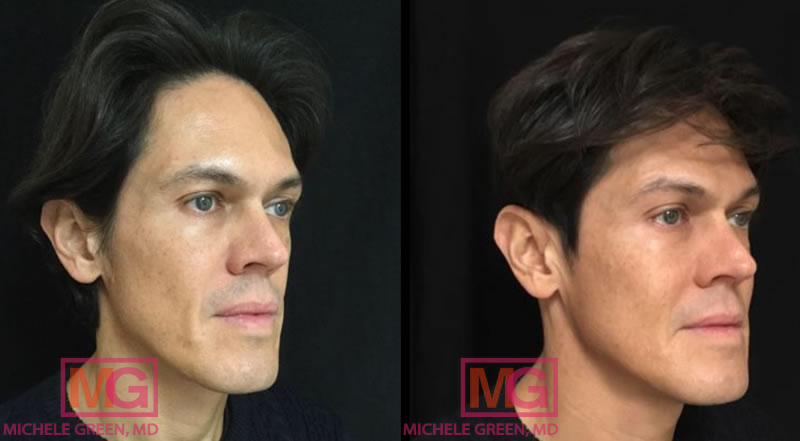
Sculptra after 2 treatments – before and after
Which Areas of the Face does Sculptra Treat?
Sculptra is a versatile treatment used across nearly all areas of the face to restore volume and stimulate collagen production. Commonly treated areas include the temples, cheeks, and midface, where Sculptra helps replenish volume lost with age. It is also frequently used to soften nasolabial folds, marionette lines, and other facial wrinkles, improve jawline contouring, and address chin wrinkles and jowls. Beyond the face, Sculptra can enhance the neck by softening the appearance of neck bands for more comprehensive rejuvenation. Sculptra is not typically used directly under the eyes or in the lips, since these delicate, superficial areas require a different type of filler formulation. During a consultation, Dr. Green will assess your unique facial anatomy and goals to determine which areas would benefit most from Sculptra treatment.
Does Sculptra Help with Facial Skin Tightening?
Sculptra is designed primarily to restore facial volume and stimulate collagen in the deep dermis, rather than directly tighten the skin’s surface. As new natural collagen builds in the lower face, jawline, and cheeks, the restored volume can create a firmer, more lifted appearance. However, true skin tightening is better achieved with a treatment like Thermage, which uses targeted energy to contract and tighten the skin itself. For this reason, Dr. Green often recommends combining Sculptra with Thermage or Vivace as part of a customized treatment plan: Sculptra to rebuild volume and youthful contours, and Thermage to address loose or lax skin texture and elasticity, together achieving a more comprehensive, natural-looking result. Because Sculptra’s volumizing effects develop gradually over several months as collagen production builds, patients enjoy a subtle transformation rather than an abrupt change. Dr. Green can help determine the right combination of treatments for your skin’s needs.
How Long Does Sculptra Last in the Face?
Sculptra stands out among dermal fillers for its exceptionally long-lasting effects. Although not permanent, patients can enjoy optimal results for up to two years once full volume and collagen production have developed. This longevity stems from Sculptra’s active ingredient, poly-L-lactic acid, which gradually rebuilds the skin’s collagen framework rather than simply adding temporary volume, as traditional fillers do. Most patients opt for annual or biannual touch-up sessions to maintain a youthful appearance, and the timing can vary based on factors such as age, skin type, lifestyle, and how quickly the body metabolizes the product. Maintaining a consistent skincare routine, staying hydrated, and protecting the skin from sun damage with a product like MGSkinLabs Hydrating SPF 50 can also help extend the longevity of results. Patients interested in a long-term liquid facelift approach often find that Sculptra’s gradual, natural-looking results and extended duration make it a worthwhile investment compared to fillers that require more frequent maintenance.
Combining Sculptra Aesthetic with Laser Treatments
Patients often combine Sculptra injections with other cosmetic procedures to achieve pan-facial rejuvenation with minimal downtime. Dr. Green frequently recommends replenishing facial volume with a series of Sculptra sessions in the deep dermis, followed by treatments targeting the skin’s more superficial layers, such as Vivace, Thermage, and eMatrix.
Vivace combines microneedling with radiofrequency technology to produce more radiant skin with an even tone and improved texture. It is especially effective for tightening skin and softening fine lines, enlarged pores, and acne scars.
The eMatrix Sublative Rejuvenation System uses bipolar radiofrequency energy to heat the deeper layers of the skin while leaving the surface intact, thereby triggering the skin’s natural healing response and stimulating new collagen production for a smoother, brighter, more youthful-looking complexion.
Thermage tightens and contours the skin in a single session with no surgery, injections, or downtime, using heat to stimulate the body’s natural collagen production for a lifting and tightening effect. Results are typically visible four to six months after treatment and can last up to two years. Thermage is often paired with Botox for a refreshed, rejuvenated appearance without plastic surgery.
Dr. Green will tailor her recommendations to your specific concerns and cosmetic goals, helping you develop a treatment plan that best complements your Sculptra results.
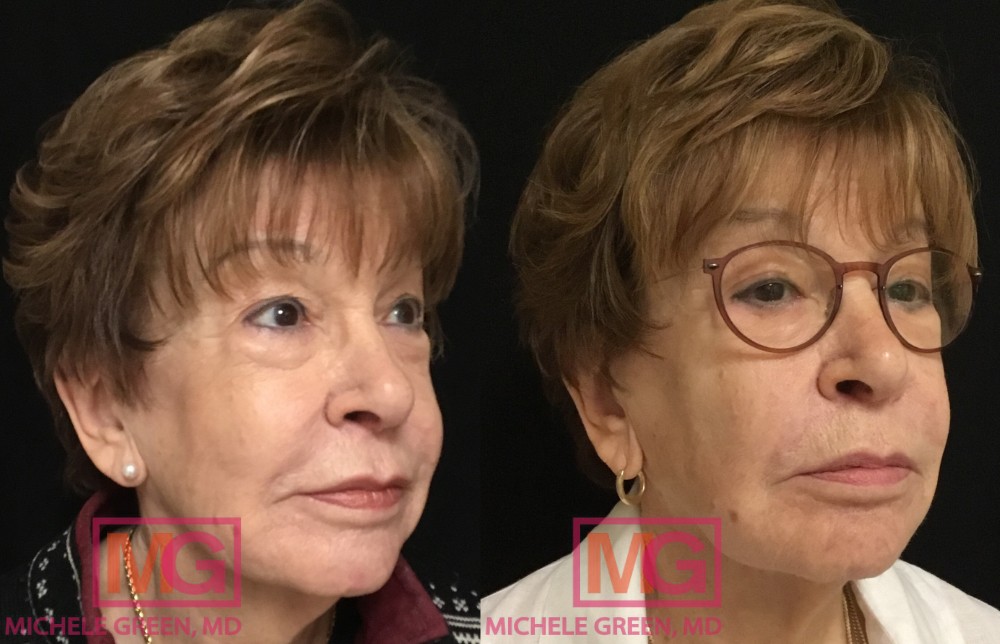
Sculptra before and after photo – 2 months
Frequently Asked Questions (FAQs) About Sculptra for the Face
What Age is Best for Sculptra Face?
There is no single ideal age for Sculptra because treatment depends on the degree of volume loss and facial aging a patient is experiencing, not a specific number. Many patients begin Sculptra treatment in their late 30s to 50s as an anti-aging measure to address early volume loss, while others in their 60s and beyond use it to restore fullness to the cheeks, temples, and lower face. Younger patients sometimes use Sculptra preventively to stimulate collagen production before more significant signs of aging appear. Dr. Green will assess your skin tone, facial anatomy, and aesthetic goals to help determine the appropriate timing and treatment plan for you.
How Does Sculptra Compare with Radiesse?
Sculptra and Radiesse are both dermal fillers that stimulate collagen production and provide structural support. Still, they differ in composition: Sculptra is made of poly-L-lactic acid, while Radiesse is composed of biocompatible calcium microspheres. Sculptra’s results typically last up to two years, compared with about one year for Radiesse. While Radiesse can produce visible results immediately, Sculptra usually requires a series of sessions to achieve its full effect. During your consultation, Dr. Green can help you determine the best dermal filler, or combination of fillers, for your goals.
Can You Use Sculptra Injectable on the Face?
Yes. Patients commonly choose Sculptra to soften facial wrinkles, nasolabial folds, and marionette lines, and to improve contouring in the temples and jawline. Sculptra can also address chin wrinkles, jowls, and the neck, making it a versatile option for patients seeking to rejuvenate multiple areas in a single treatment plan. Unlike traditional dermal fillers that add volume immediately, Sculptra works gradually by stimulating the body’s own collagen production, allowing for natural-looking results that build over several months and can last up to two years or longer. Sculptra is not used directly under the eyes or on the lips, since it is not formulated for these more superficial, delicate areas.
How Do You Prepare for a Sculptra Face Treatment?
Preparing for Sculptra begins with a consultation with Dr. Green, during which she will review your medical history, current skin condition, and treatment goals. In the days leading up to treatment, patients are generally advised to avoid blood thinners, aspirin, and alcohol, as these can increase the risk of bruising and bleeding at the injection sites. Patients should arrive with clean, makeup-free skin so the treatment area can be properly cleansed and, if needed, numbed before facial injections. Before the procedure, patients can apply a prescribed numbing cream to the treatment area for 30 minutes to an hour before their appointment to help minimize discomfort during the injections.
Do Sculptra Injections in the Face Hurt?
Most patients tolerate Sculptra injections well. The product is mixed with lidocaine before injection to minimize discomfort, and a topical numbing cream can be applied beforehand for added comfort. Some patients experience mild tenderness, redness, swelling, or bruising at the injection sites, and in rare cases, minor bleeding can occur at the needle entry point. These effects typically resolve within a few days. Choosing an experienced injector like Dr. Green in NYC also reduces the risk of complications, such as lumps or nodules beneath the skin.
How Do I Massage My Face After Sculptra Injections?
Bumps or nodules beneath the skin after Sculptra treatment typically result from an inexperienced injector, which is unlikely with Dr. Green’s artful, skillful technique in NYC. Improper dilution, injecting too superficially, or placing too much product in one area can also contribute to nodule formation, which is why choosing a qualified, experienced provider matters. To achieve the best possible results, she recommends at-home massage after treatment using the “rule of fives”: massaging the treated area 5 times a day for 5 minutes over 5 days. This routine helps evenly distribute the product for smooth, natural-looking results and prevents the collagen-stimulating particles from clumping as they settle beneath the skin. Patients who follow this massage schedule closely tend to see a smoother, more even outcome as their results develop over the following weeks and months. If any bumps or nodules do occur, they are typically minor and resolve on their own, though patients should always contact Dr. Green’s office with any concerns following treatment.
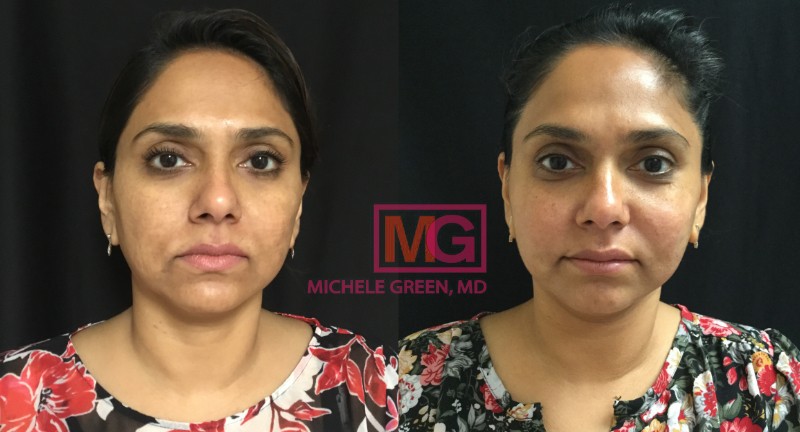
Voluma & Sculptra – 8 months
Does Sculptra Make the Face Look Puffy?
Mild swelling immediately after treatment may make the face look temporarily fuller or puffy. This swelling typically subsides within the first day, after which the treatment’s gradual results begin to appear over the following weeks. Some patients may also notice slight redness, tenderness, or small bumps at the injection sites in the first few hours after treatment. These are normal and generally resolve quickly on their own. Applying a cold compress to the treated area can help ease any temporary swelling or discomfort during the first day or two. Because Sculptra gradually stimulates the body’s own collagen production, patients should not expect dramatic results right away. Most notice a gradual improvement in facial volume and skin quality over several treatment sessions spaced weeks apart.
What Is Downtime and Recovery Like for Sculptra on the Face?
One advantage of Sculptra is that it requires little to no downtime, allowing most patients to resume normal activities immediately after their facial injection appointment. Mild redness, swelling, tenderness, or bruising at the injection sites is common for the first day or two, and applying ice can help minimize these effects. Patients should avoid strenuous exercise, alcohol, and excessive sun exposure for about 24 to 48 hours to support healing and reduce bruising risk. Patients should also avoid lying face down, applying pressure to the treated areas, and undergoing other facial treatments, such as facials or massages, for at least a few days after the appointment. Makeup can typically be reapplied the day after treatment, once any initial redness or swelling has started to subside. Patients should continue their at-home massage routine using the rule of fives throughout the first five days to support smooth, even results. While most side effects resolve quickly, Sculptra’s full results develop gradually, so patients should be patient as collagen production builds; final results emerge over the following weeks and months.
Will My Face Go Back to Normal After Sculptra?
Any temporary puffiness or swelling from the injection process itself resolves within a day or two, after which the face returns to its pre-treatment appearance before the gradual Sculptra results begin to develop. Because Sculptra works with the body to stimulate new collagen rather than simply adding volume, the results build subtly over several months rather than reverting to a prior “normal.” Instead, the skin settles into smoother, firmer, more youthful contours that periodic touch-up treatments help maintain.
How Many Vials of Sculptra Are Needed for the Face?
The number of Sculptra vials needed varies by patient, depending on age, desired results, and current skin condition. Patients with greater volume loss or deeper folds often require two vials per session, while those with milder signs of aging may need only one. Three to four sessions, spaced about a month apart, are typically needed to achieve full volume replacement and collagen production. Dr. Green will determine the right amount for your needs during your consultation.
How Much Do Sculptra Injections Cost for the Face?
The cost of Sculptra treatment varies based on the number of vials required, the treatment area, and the patient’s individual goals. Factors such as the extent of volume loss, the areas being treated, and whether Sculptra is combined with other procedures can influence the overall cost of a treatment plan. During a personalized consultation, Dr. Green will determine the optimal number of vials for each patient based on their unique needs, ensuring the treatment plan is tailored for optimal results. Many patients find that Sculptra’s long-lasting effects, often lasting up to two years, make it a cost-effective option compared to fillers that require more frequent touch-ups. During the consultation, Dr. Green will also discuss the total cost of the recommended treatment plan so patients can make an informed decision that fits their goals and budget.
How Many Sessions of Sculptra Injections Are Needed in a Series of Treatments?
Most patients require at least three Sculptra sessions, spaced about four weeks apart, to replenish facial volume and improve skin texture. Patients with more significant scarring or volume loss may need six or more sessions. The number of sessions can also depend on factors such as the patient’s age, skin quality, and the patient’s response to collagen stimulation. Between sessions, patients typically notice gradual improvements in volume and skin texture as collagen continues to build, with results becoming more visible after each treatment. During your consultation, Dr. Green will estimate how many sessions your treatment plan will require to achieve your desired results and may adjust the plan as needed based on your skin’s response over time.
When Do You See Results on the Face from Sculptra?
Unlike dermal fillers, which produce immediate results, Sculptra continues to improve the skin for up to 6 months after the initial facial injection. The first visible effects typically appear about six weeks after treatment, with peak results generally seen between three and six months later, because Sculptra works gradually as a collagen stimulator. This gradual timeline helps the results look especially natural, as the skin’s volume and texture improve subtly over time rather than changing all at once. Though results take time to develop, patients appreciate that Sculptra encourages long-lasting, natural collagen production, with effects that can last up to two years. Because the process unfolds gradually, Dr. Green often recommends patience during the initial weeks after treatment, reassuring patients that the most noticeable improvements are still to come as their bodies continue to build collagen.
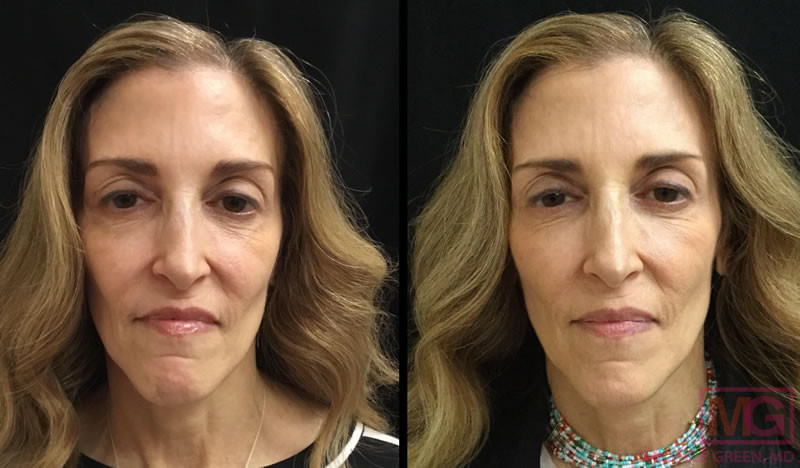
Sculptra face and chin & AlexTrivantage for dark/sun spots
Can Sculptra on Face Be Dissolved or Reversed?
No. Unlike hyaluronic acid fillers, which can be dissolved with an enzyme if needed, Sculptra cannot be reversed once injected because it stimulates the body’s natural collagen production rather than remaining in the skin as a temporary filler. This is one reason choosing an experienced injector, such as Dr. Green, matters: it minimizes the risk of overcorrection, lumps, or nodules that could otherwise be difficult to correct. Because results build gradually over several months, an experienced injector will also carefully plan the number of vials and sessions needed at each visit, allowing the treatment to be adjusted along the way rather than risking overcorrection at once. In the rare case that a lump or nodule develops, Dr. Green can often treat it in the office with techniques such as saline dilution and massage. Patients are also encouraged to follow the recommended at-home massage routine and attend all scheduled follow-up visits, as this helps ensure results develop evenly and reduces the likelihood of complications requiring correction.
Can I Sleep on My Face After Sculptra Injections?
After Sculptra facial rejuvenation injections, patients may prefer to sleep on their backs for the first night. Using an extra pillow to keep the head slightly elevated while sleeping can also help reduce swelling during the initial recovery period.
Who is a Good Candidate for Sculptra on the Face?
The best candidates for facial Sculptra are patients experiencing volume loss, thinning skin, or early-to-moderate signs of facial aging who want a gradual, natural-looking improvement rather than the immediate change produced by hyaluronic acid fillers. Sculptra is particularly well-suited for patients with hollowed cheeks, sunken temples, or a sagging jawline, jowls, and jowling who want an anti-aging solution that avoids a surgical facelift. Because Sculptra relies on the body’s own collagen-stimulating effect, ideal candidates are in good general health and have realistic expectations about the treatment timeline. During a consultation, Dr. Green will evaluate your facial anatomy and skin quality to determine whether Sculptra or a combination of dermal fillers is the right approach for you.
Schedule Your Sculptra Consultation with Dr. Michele Green in NYC Today
If you are frustrated by visible signs of facial aging, a customized approach tailored to your skin type, facial anatomy, and areas of volume loss can make all the difference. Sculptra remains one of the most effective dermal fillers for restoring lost volume and softening fine lines and wrinkles. When combined with complementary treatments such as Botox, Juvéderm, or Restylane, it can deliver natural-looking, long-lasting facial rejuvenation. Dr. Michele Green will thoroughly evaluate your skin and design a personalized Sculptra treatment plan to help you achieve the refreshed, youthful contours you are seeking.
Dr. Michele Green is an internationally renowned, board-certified dermatologist in New York City with more than two decades of experience delivering expert Sculptra treatments to some of the world’s most discerning men and women, helping them restore lost facial volume and achieve natural-looking rejuvenation without plastic surgery. Consistently named among New York City’s top dermatologists by Castle Connolly, New York Magazine, and Super Doctors, Dr. Green is known for her artful, natural approach to facial injectables and aesthetic treatments. To start your personalized Sculptra treatment plan, call Dr. Green’s office today at 212-535-3088 or contact us online.


