


Acne Scar Treatment NYC
View acne scar treatment options in NYC such as Vbeam® Laser, Fraxel® Dual laser and eMatrix
Acne scars develop when inflammation from pimples damages the underlying skin tissue. This inflammation harms the skin’s collagen and disrupts its natural healing process, affecting the skin’s ability to maintain a smooth and firm texture. Whether raised or depressed, acne scars can often be more difficult to treat than the initial breakouts, resulting in feelings of self-consciousness or low self-esteem for many individuals. No single acne scar treatment is the ideal option for everyone. A board-certified dermatologist, such as Dr. Michele Green in NYC, can devise customized acne scar treatment plans tailored to the individual needs of each patient.
The most effective acne scar treatment usually involves a combination approach specifically designed for the patient’s skin type, skin tone, and the severity and types of acne scars present. An expert like Dr. Green selects a unique mix of in-office treatment options and specially formulated skincare products to enhance the appearance of acne scars successfully. Popular non-invasive acne scar treatments include laser resurfacing, subcision with dermal fillers, microneedling, and chemical peels. Patients appreciate these treatment options because they involve straightforward procedures, require little to no downtime, and yield consistently impressive results. It is crucial to seek acne scar treatments from an experienced board-certified dermatologist, such as Dr. Green, to ensure safety, effectiveness, and optimal outcomes.
Dr. Michele Green is an internationally recognized board- certified dermatologist with over two and a half decades of experience offering elite non- invasive treatment options, including acne scar therapies. Dr. Green adopts a holistic approach to facial rejuvenation, customizing each patient’ s treatment plan to suit their needs and aesthetic goals best. She is frequently acknowledged as one of NYC’ s top dermatologists by Castle Connolly, New York Magazine, The New York Times, and Super Doctors, thanks to her dedication to her patients and her expertise. When you consult with her at her private dermatology office in NYC, Dr. Green will evaluate your acne scars and skin condition to create a personalized treatment plan that helps you achieve a clear, smooth, and beautiful complexion that endures.
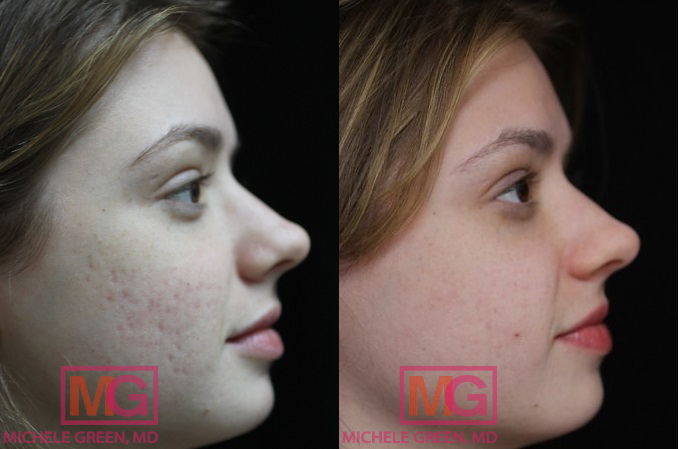
What is an acne scar?
An acne scar is evidence of permanent damage to the skin tissue caused by inflammation associated with acne blemishes. An acne scar occurs when an inflamed acne lesion becomes engorged with excess oil, sebum, dead skin cells, and bacteria. As the lesion swells, the inflammation causes trauma to the underlying skin tissue. The inflammation triggers the skin’s natural wound-healing response, which stimulates the production of collagen, a skin protein that contributes to a firm, smooth skin texture. When too little collagen is produced, a depressed scar develops. When excess collagen is made, a raised scar forms. The most common type of acne scar is a depressed scar, also known as an atrophic scar. While acne scars are permanent, their appearance can be significantly improved through various non-invasive treatments at Dr. Green’s private dermatology office in NYC.
What are the different types of acne scars?
Atrophic scars
Atrophic acne scars are the most common type of acne scar. Atrophic acne scars are depressions that develop when the skin’s natural wound-healing response produces insufficient new collagen. Inflammatory acne lesions, such as nodules and cysts, are the most likely to cause atrophic acne scars. Three different types of atrophic scars include ice-pick, rolling, and boxcar scars. Ice pick scars have a deep, narrow, v-shaped indentation and are the most difficult to treat due to their depth and shape. Rolling scars are shallow, uneven, and wave-like in appearance, seemingly “rolling” across the skin’s surface. Boxcar scars have a round or oval-shaped appearance, well-defined edges, and deep vertical sides.
Hypertrophic scars
Hypertrophic scars are thick, firm, raised scars that occur when the skin’s natural wound-healing response produces too much new collagen. Hypertrophic scars commonly develop as a healing response to a deeper wound and typically affect areas of the body such as the chest, back, shoulders, and jawline. If the raised, growth-like lumps of scar tissue are the same size as the initial wound, they are called hypertrophic scars. If the raised scars are larger than the initial wound and may continue to grow after healing, they are called keloid scars. Hypertrophic scars may eventually regress, whereas keloid scars do not.
What is post-inflammatory hyperpigmentation?
Post-Inflammatory hyperpigmentation (PIH) refers to the dark spots that may be left behind after an acne lesion, breakout, or other inflammatory skin condition such as eczema or psoriasis. Wounds from abrasions or scars from an injury can also heal with this type of discoloration. Depending on skin tone, the color of the dark spots associated with post-inflammatory hyperpigmentation may be brown, black, red, pink, or purple. During the natural healing process of the skin, there is potential that skin cells involved with healing the area are also contributing to the overproduction of melanin, leading to the development of the hyperpigmented regions of the skin. Although this hyperpigmentation may fade gradually over time, it’s more effective and efficient to have treatment with a board-certified dermatologist like Dr. Michele Green in New York.
How are acne scars classified?
Acne scars can be classified as Grade 1, 2, 3, or 4, increasing in severity of the acne scar. Grade 1 acne scars are macular, flat scars typically with red pigmentation. Grade 2 acne scars are those that can easily be camouflaged by facial hair or makeup. Grade 3 acne scars are classified as moderate scarring that is not easily covered by facial hair or makeup and can be seen at a distance. Grade 4 acne scars, the most severe type of acne scars, typically cannot be well covered by facial hair or makeup and are very evident at even a large distance.
Are acne scars reversible?
While dark spots from post-inflammatory hyperpigmentation may fade over time, atrophic and hypertrophic scars tend to be more permanent. However, various cosmetic treatment options at Dr. Michele Green’s private dermatology office in Manhattan’s Upper East Side can effectively reduce the appearance of acne scars. Dr. Green, a board-certified dermatologist with over 25 years of experience, provides personalized, non-invasive acne scar treatment plans for some of the world’s most discerning individuals. Dr. Green will gather a comprehensive medical history, review any previous cosmetic treatments, and physically assess the treatment area to determine the best combination of cosmetic procedures for achieving long-lasting, smooth, clear, and healthy-looking skin.
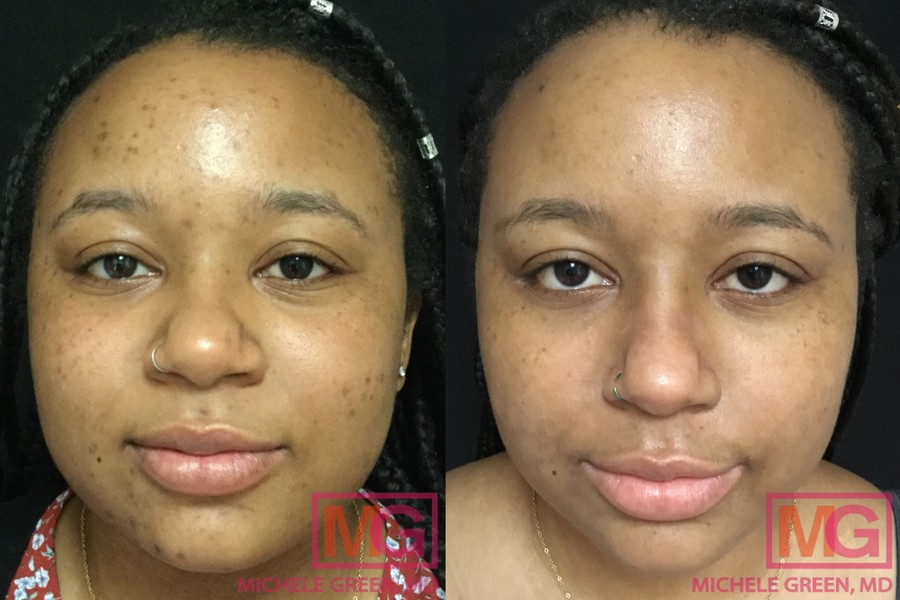
What is the best treatment for acne scars?
There are a myriad of effective treatments available for acne scarring, including dermal fillers, lasers, microneedling, and chemical peels. An experienced and knowledgeable healthcare professional, such as board-certified dermatologist Dr. Green in NYC, selects the best treatments for each individual based on their skin type, skin tone, and the severity and different types of acne scars present. Typically, a combination approach is the most effective acne scar treatment plan, as patients can have a mixture of different acne scars on the skin.
Fraxel laser for acne scar treatment
Fraxel is a laser resurfacing procedure that utilizes fractional energy to stimulate new collagen production in the dermal layers of the skin. While the Fraxel laser has two different wavelength settings, Dr. Green utilizes the 1550nm wavelength setting to improve skin texture and reduce the appearance of acne scars. As a non-ablative and fractionated laser treatment, Fraxel creates microscopic laser columns that penetrate deep into the skin, leaving the top layer of skin intact and the skin surrounding the treated area untouched. Downtime is minimal, and patients typically experience redness and mild swelling that dissipate 48 hours after treatment. After the procedure, patients must adhere to strict sun adherence, as the laser increases sensitivity to the sun. Three to five Fraxel laser treatments spaced one month apart are typically required to treat acne scars.
eMatrix laser and acne scar treatment
The eMatrix laser is a laser resurfacing treatment that relies on radiofrequency energy to stimulate new collagen production. The eMatrix laser is safe for all skin tones, making it an excellent treatment option for acne scars in Asian patients and those with darker skin tones. The heat energy from the laser penetrates the deeper layers of the dermis to leave the top layer of skin unharmed, allowing for a decreased risk of scarring or hyperpigmentation and minimal downtime. Over time, as new collagen is formed, the laser treatment will produce a smoother skin texture and a more even skin tone with long-lasting rejuvenation results. For the best cosmetic results, Dr. Green recommends approximately five eMatrix laser treatments for atrophic scars, each spaced 4 to 6 weeks apart.
V-Beam laser and acne scars
The V-Beam laser is the gold standard for treating redness from acne and acne scars, including those associated with active acne lesions and post-inflammatory hyperpigmentation. This laser treatment utilizes pulsed dye technology to deliver a specific wavelength of light energy, 595nm, that targets exclusively red pigment while leaving surrounding skin cells untouched. The V-Beam laser has the added benefit of heating the deeper layers of the skin to stimulate new collagen production, creating a smoother skin texture while enhancing clarity. For maximum comfort during the procedure, the V-Beam laser is equipped with a patented Dynamic Cooling Device to emit bursts of cool air. There is no downtime, redness, or swelling with the V-Beam laser treatment. Most patients require 5 to 6 treatment sessions to achieve optimal rejuvenation results and diminish post-inflammatory hyperpigmentation.
Clear + Brilliant laser treatment
Clear + Brilliant is a laser treatment option that can improve skin texture from acne scars as well as skin tone from sun damage or pigmentation. Touted as the “mini-Fraxel,” the Clear + Brilliant laser utilizes fractional laser energy to create thousands of microscopic injuries in the middle layers of the skin, triggering the skin’s natural healing processes, producing more significant skin cell turnover and new collagen. Clear + Brilliant laser treatment has no downtime and is recommended every 3 to 4 weeks, with an average of 5 to 6 treatments for acne scarring. There is no downtime or redness with the Clear + Brilliant laser. Sunblock and topical Vitamin C are advised for post-laser treatment to maximize the best cosmetic results.
Subcision with dermal fillers
Subcision with dermal fillers can effectively treat depressed scars, such as rolling and shallow boxcar scars, by breaking up the scar tissue and restoring lost volume to the area. During the subcision procedure, the needle is used to break up the fibrotic strands of scar tissue that tether the top layers of skin to the underlying tissue. Once the fibrotic bands of scar tissue are released, the skin is encouraged to produce new collagen in the treated area and heal with a smoother, more even skin texture. When subcision is performed with dermal fillers, the filler is then injected directly into the acne scar to replace lost volume and provide an even smoother skin surface. Dr. Green often performs subcision with Sculptra or hyaluronic acid dermal fillers to provide optimal cosmetic results with zero downtime. Dr. Green’s unique technique of subcison and injection will improve the appearance of scars even after one only treatment. Depending on the type and severity of your acne scars, Dr. Green may pair a dermal filler treatment with a laser resurfacing treatment to provide you with the best cosmetic results.
Sculptra is a unique dermal filler composed of a substance called poly-L-lactic acid, which stimulates new collagen production in the treatment area once injected. Over time, as collagen is produced, the skin texture becomes smoother, reducing the appearance of depressed acne scars. Most patients require a short series of three or more Sculptra treatment sessions to achieve optimal results. It takes 4 to 6 weeks to see the effect of each Sculptra treatment, and results last up to two years. Most patients engage in regular follow-up treatment sessions to maintain ideal results. Dermal fillers such as Juvederm and Restylane are composed of hyaluronic acid, a naturally occurring substance in the skin that contributes to hydration and a youthful appearance. These dermal fillers are commonly used to restore the lost volume associated with acne scars for a smoother-looking appearance. Results with hyaluronic acid fillers are immediate and, depending on the type of HA filler used and the patient’s metabolism, can last anywhere between six to twelve months.
Microneedling for acne scar treatment
Microneedling, a popular cosmetic procedure also known as collagen induction therapy, utilizes a handheld device containing tiny needles to create controlled micro-injuries in the skin. This treatment for acne scars stimulates the skin’s natural wound-healing process, boosting the production of new collagen and elastin, which smooths the skin and enhances the appearance of acne scars. The microchannels created by the procedure also boost the absorption of topical serums, allowing for the microneedling session to be enhanced with platelet-rich plasma (PRP) to accelerate healing or with a depigmentation serum to address post-inflammatory hyperpigmentation. PRP is rich in proteins and epidermal growth factors that improve and speed up the results observed from a microneedling treatment. Since PRP is derived from a sample of the patient’s blood, it is completely safe. Furthermore, individuals with post-inflammatory hyperpigmentation can incorporate a depigmentation solution to further enhance the microneedling procedure and improve areas of discoloration.
Vivace RF Microneedling
Vivace RF, a radiofrequency microneedling treatment, is another innovative treatment option for acne scarring. The microneedling process uses tiny, surgical-grade needles to create micro-injuries in the epidermis, stimulating the body’s wound-healing process to increase collagen production. At the same time, radiofrequency energy is delivered to the dermis and converted into heat energy, maximizing the stimulation of new collagen production. Vivace has adjustable needles that can be changed in increments of 0.1 millimeters to allow for a more precise, controlled treatment that results in smoother, firmer, healthier skin and a more radiant, youthful complexion. There is zero downtime associated with the procedure. While the exact number of treatment sessions will vary based on the type and severity of your acne scars, Dr. Green recommends at least three treatment sessions spaced one month apart for optimal results.
Chemical peels
Chemical peels are resurfacing treatments that use chemo-exfoliation to accelerate skin cell turnover and trigger new collagen production, improving overall skin tone and texture. Many different kinds of chemical peels can serve as acne scar treatments, and each type uses an acid-based ingredient for exfoliating the skin’s surface. Chemical peels range from superficial (or light), medium depth, and deep chemical peels. To treat acne scars, Dr. Green will often opt for a superficial peel or a medium-depth peel, depending on the severity of the acne scarring. Generally, the best superficial chemical peels for acne consist of glycolic acid or light trichloroacetic acid (TCA). Medium-depth peels usually come with an acid solution containing 20% trichloroacetic acid (TCA) or higher. A series of 3 to 6 chemical peels is typically recommended to treat acne scars, depending on the severity of the acne scars and hyperpigmentation.
Mesopeels are specially formulated chemical peels that are excellent for improving post-inflammatory hyperpigmentation from acne scars. They use chemo exfoliation to increase collagen production, sloughing off dead, pigmented cells to bring new, healthy, even-toned cells to the skin’s surface. Mesopeels have no downtime and are a safe and effective way to achieve an even-toned, radiant complexion. A series of three to six Mesopeels is often recommended for treating hyperpigmentation from acne scars.
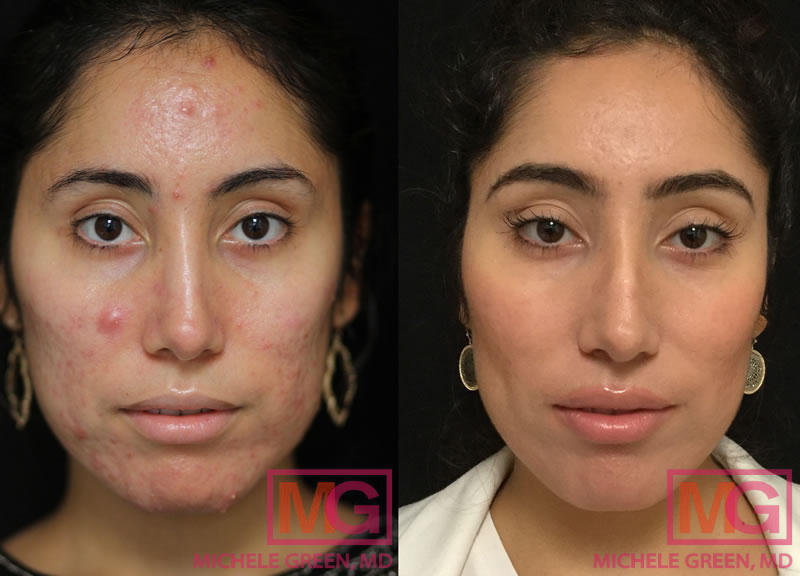
Microdermabrasion
Microdermabrasion stimulates new collagen production by exfoliating away the top layer of skin, smoothing out the skin texture. Traditional microdermabrasion is called crystal microdermabrasion. During a crystal microdermabrasion skin treatment, a specialized handpiece is used to gently spray tiny crystals (usually aluminum oxide or sodium bicarbonate) to sand away the outer layer of the skin. Diamond microdermabrasion entails directly applying a diamond-tipped handpiece to the skin’s surface to exfoliate the outer layer of the skin gently. This treatment option is painless, non-invasive, and does not involve downtime.
Dermabrasion
Dermabrasion is a skin resurfacing cosmetic procedure that removes the entire top layer of skin with a specialized, abrasive tool. Several dermal layers of skin are also treated to stimulate new collagen production. The treatment area is numbed for the procedure, and there may be the option to be under general anesthesia, depending on the scope of treatment. Several weeks of downtime are associated with this treatment option, during which the treatment area may be red, blotchy, or swollen. Dermabrasion is not recommended for individuals with a history of keloid scarring or darker skin, as it may cause unwanted side effects, including hyperpigmentation and scarring.
Kenalog Injections
Kenalog injections are used to flatten raised scars, such as keloids and hypertrophic scars. These corticosteroid injections are highly effective for shrinking active acne lesions and raised spots. There is no downtime after treatment, and patients may require multiple injections to flatten their hypertrophic scars successfully.
Punch excision
Punch excision is a method for treating acne scarring in which a punch tool (regularly used for skin cancer biopsy) removes scar tissue. This scar revision treatment is a minimally invasive surgical procedure, ideal for deeper scars such as ice-pick scars. During the process, the punch tool removes the acne scar. After removing the spot, the wound left behind is closed with fine sutures or a skin graft. When the skin heals, a flatter, less noticeable fault replaces the acne scar.
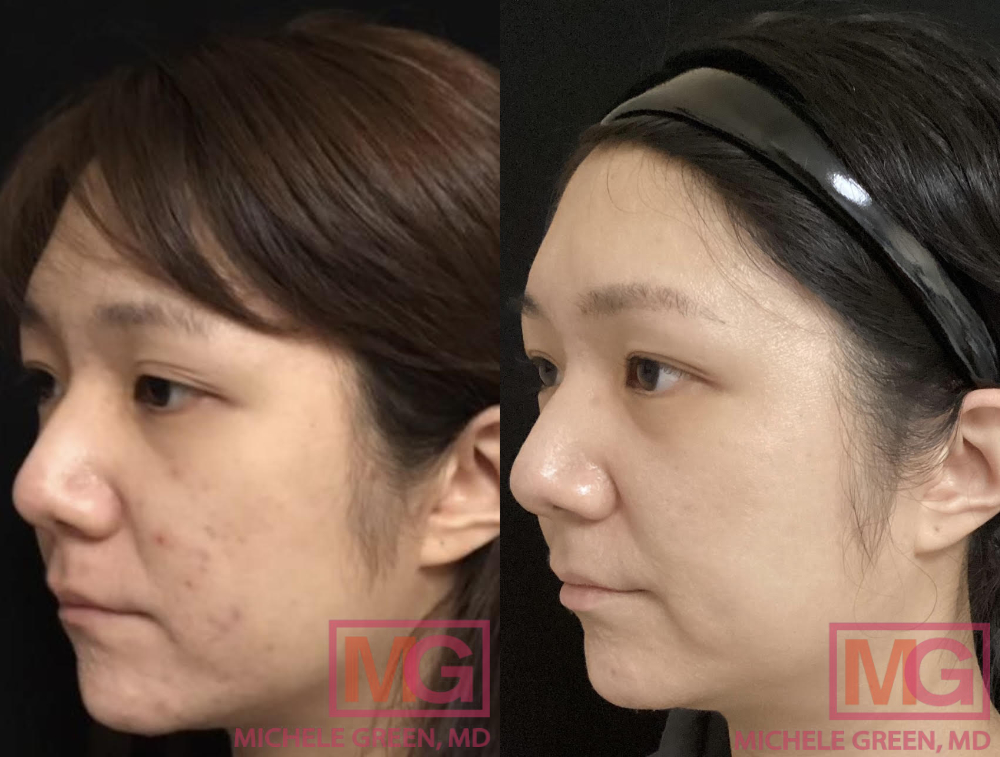
What is the best topical skincare regimen for treating acne scars?
Effective treatment for acne scars requires a combination of in-office treatments and topical skin care products to smooth and fade them. A proper skincare regimen can help gradually reduce the appearance of acne scars and enhance the results of cosmetic procedures. Dr. Green has formulated a proprietary skincare line, MGSKINLABs, equipped with highly effective ingredients to rejuvenate the skin. When you consult with Dr. Green, she will assess your skin and create a skincare regimen to leave you with clear, radiant, smooth skin.
Cleansing the skin is essential to removing impurities from the surface of the skin. The Gentle Cleanser from MGSKINLABs is an excellent lipid-free product that works to cleanse the skin without stripping it of its natural moisture. Patients with oily or acne-prone skin can benefit from using MGSKINLAB’s Pore Minimizing Cleanser, which contains glycolic and salicylic acid to gently exfoliate the skin, removing dead skin cells, excess oil, and impurities from pores.
Retinol and retinoids, derived from vitamin A, are excellent for increasing collagen production, smoothing the skin, and creating a more even texture and tone. A dermatologist can prescribe retinol as tretinoin, or it can be found over the counter in various serums or creams. The Essential Antioxidant Infusion from MGSKINLABs contains retinol as well as essential vitamins and nutrients to improve skin texture and reduce the appearance of acne scars. As retinol makes the skin sensitive to the sun, it is essential to use it at night and practice proper sun protection by using a broad-spectrum sunscreen with a minimum SPF of 50.
Products containing skin-lightening agents are great options for reducing dark marks and post-inflammatory hyperpigmentation. Vitamin C is a powerful antioxidant that increases cell turnover to slough off pigmented skin cells to reveal healthy, bright cells underneath. MGSKINLAB’s Vita-C Serum contains potent vitamin C to brighten the skin and promote skin cell renewal. The Skin Brightening Cream from MGSKINLABs contains a unique blend of kojic acid and fruit extracts to brighten skin tone and reduce post-inflammatory hyperpigmentation. Depending on the severity of the hyperpigmentation, Dr. Green may also recommend hydroquinone, a prescription-strength topical treatment that works to reduce melanin production and melanocyte activity. Hydroquinone makes the skin sensitive to the sun, so it is essential to practice proper sun protection.
Sunscreen is a vital step in any skincare regimen, especially when undergoing laser treatments and chemical peels or using photosensitizing agents like retinol or hydroquinone. Harmful UV rays can damage collagen and elastin fibers and worsen the appearance of acne scars, making it ever more important to use sunscreen. Patients should use a broad-spectrum sunscreen with a minimum SPF of 50 and reapply every 2 hours. For maximum protection, patients can layer on a physical and chemical sunscreen. Physical sunscreens create a barrier on the skin’s surface to prevent UV rays from entering the skin. Chemical sunscreens absorb UV rays, convert them to heat energy, and dissipate them from the body. The Hydrating SPF 50 from MGSKINLABs is a physical sunscreen containing zinc oxide as well as hyaluronic acid and lactic acid to soften and moisturize the skin.
Can you 100% remove acne scars?
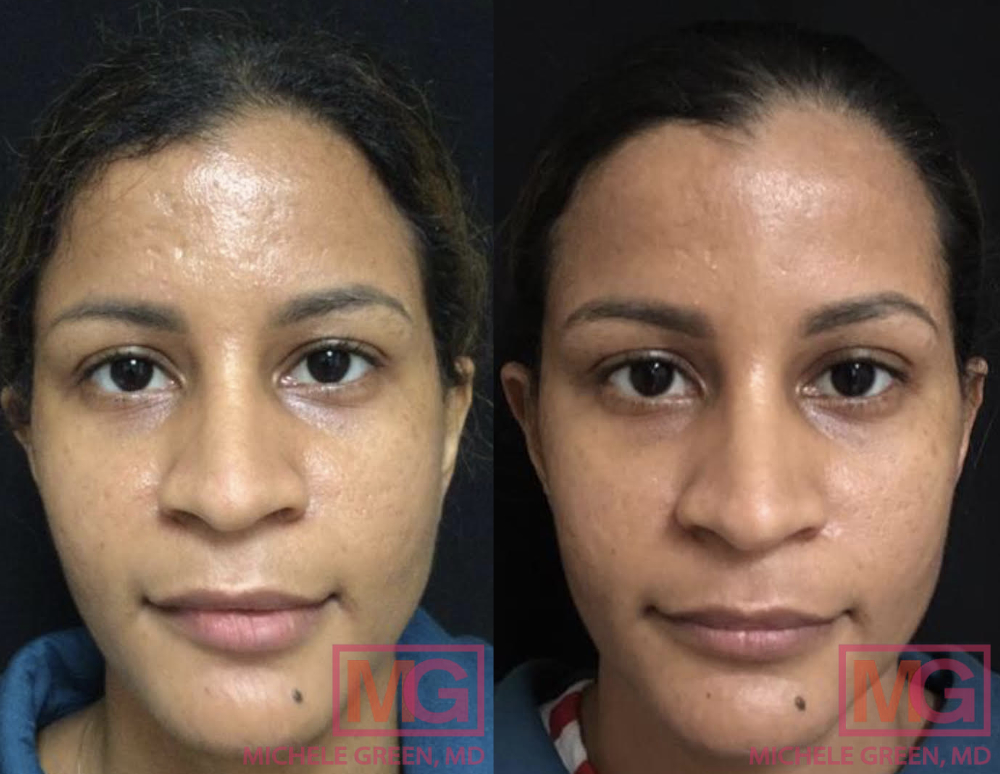
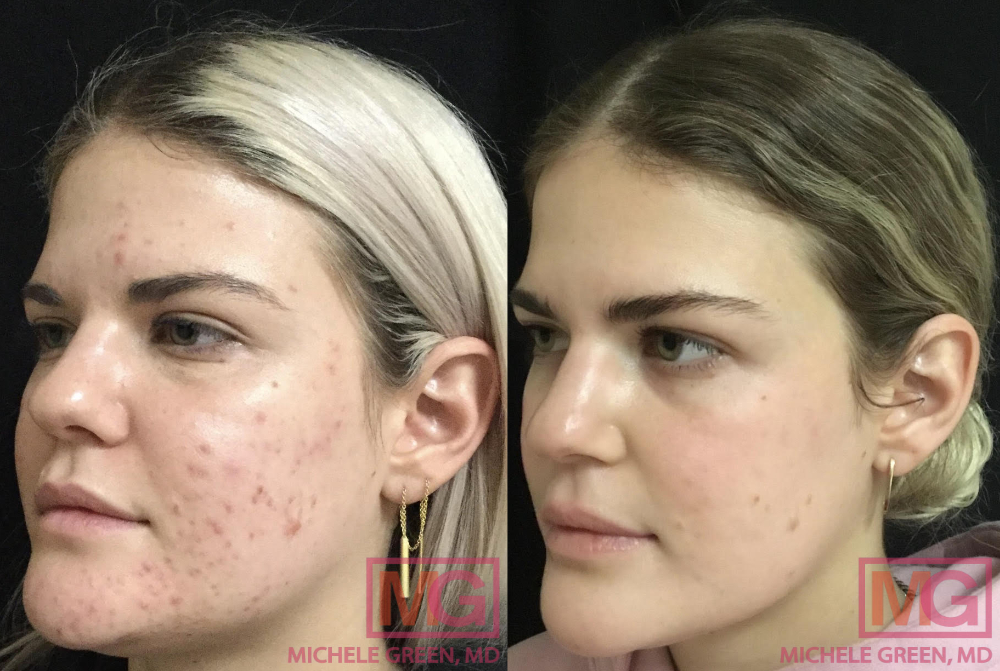
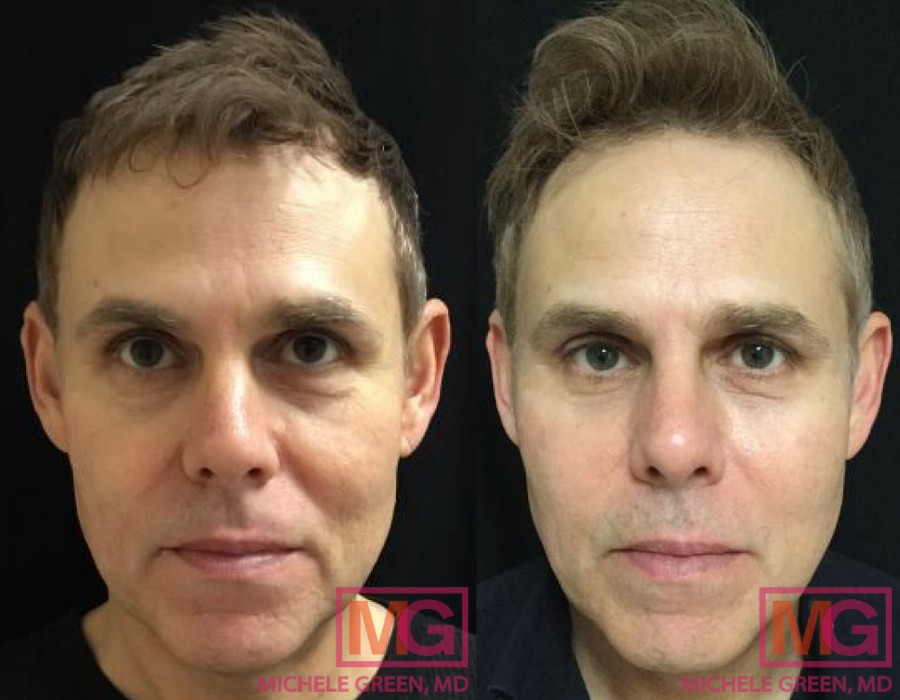
Unfortunately, no type of cosmetic treatment can 100% remove acne scars, as a scar results from permanent damage to skin tissue. However, it is possible to minimize the appearance of them so that they are no longer noticeable. Laser treatments, chemical peels, and microneedling all induce new collagen production to smooth the skin and erase the appearance of atrophic acne scars. Treatment of acne scars typically requires a series of sessions to achieve smooth, radiant skin. Dermal fillers work to restore lost volume to depressed acne scars and minimize the appearance of atrophic scars. If dermal fillers are used to treat your atrophic scars, treatment will need to be performed once or twice a year to maintain optimal results, as dermal fillers are not permanent. When you consult with Dr. Green, she will assess your type of scarring and create a customized treatment plan suited to your skin concerns and aesthetic goals.
Frequently Asked Questions about Acne Scar Treatment
Where do acne scars come from?
Acne scars form when inflammation associated with an acne lesion causes irreparable damage to the underlying skin tissue. During the natural wound-healing process, collagen production occurs. When insufficient collagen is produced, depressed acne scars form. When excess collagen is produced, raised scars form. Some individuals are more prone to acne scarring than others, as those with a family history of acne scars are more likely to develop them than those without. Picking, squeezing, or popping acne lesions and cysts can cause more trauma to the skin and increase inflammation, increasing the likelihood of acne scar formation. If inflammatory acne is not promptly treated, there is a greater chance that the acne lesions will form a spot.
Why are acne scars hard to remove?
Acne scars are very hard to remove because the inflammation associated with the acne lesion or breakout causes permanent damage to underlying tissue. Unless acne scars are treated by an experienced board-certified dermatologist, such as Dr. Green in NYC, they are unlikely to resolve independently. Luckily, many non-invasive treatment options are available to improve acne scars’ appearance. At Dr. Green’s boutique dermatology office in NYC’s Upper East Side, she offers a wide range of acne scar treatments, including chemical peels, subcision with dermal fillers, laser resurfacing, and microneedling. A dermatologist customizes the best types of acne scar treatments to suit your skin type, the types of acne scars present, your skin tone, and your overall aesthetic goals. With over 25 years of experience at the forefront of cosmetic dermatology, Dr. Green has the expertise to create a completely personalized treatment plan for safely and effectively reducing your acne scars to provide a healthy, clear complexion that lasts.
Do acne scar treatments work?
Yes! Acne scars, including atrophic and hypertrophic scars, can be reduced with a variety of non-invasive treatment options available at Dr. Michele Green’s private dermatology office in Manhattan’s Upper East Side neighborhood. Acne scars can be a challenging skin condition to treat, and it is essential to consult an expert to guarantee optimal results and avoid unwanted potential side effects. It is essential that the acne scar treatments and skin care products that are incorporated into your treatment plan are suitable for your skin tone, skin type, and the types of acne scars present. Dr. Green has over two and a half decades of experience expertly treating acne scars in patients of every skin type and tone, and she will work with you to create a completely personalized plan to help you achieve long-lasting, healthy, smooth, clear, and radiant skin.
How much does it cost to get rid of acne scars?
The cost of acne scar treatment will depend on several factors, such as the procedure performed and the provider’s geographic location. Multiple treatments are often required to achieve optimal results with non-invasive acne scar treatments. Additionally, a combination of procedures is often best for effective treatment, as patients can have multiple types of acne scars on the skin’s surface. While it may be more cost-effective to go to a MedSpa, it is best to consult with a board-certified dermatologist such as Dr. Green to avoid any unwanted or adverse side effects. Dr. Green has over two and a half decades of experience treating her patients with the world’s most innovative acne scar treatment options. When you consult with her, she will devise a unique treatment plan suited to address your specific scars and needs. Will insurance cover acne scar treatment? While insurance often covers acne breakouts or treatments, it rarely covers acne scar treatment, as it is considered cosmetic rather than medically necessary. It is best to contact your insurance provider to determine which treatments may be covered.
Which acne scar is easiest to treat?
The easiest type of acne scars to treat are rolling scars. Rolling scars are relatively shallow and soft, typically responding well to many different acne scar treatment options. Rolling scars often form due to long-term acne breakouts. Many patients have some unique combination of different kinds of acne scars, and successfully reducing the appearance of acne scars requires a combination treatment approach and a series of sessions with an experienced, board-certified dermatologist, such as Dr. Michele Green in NYC. Rolling scars are often treated with laser resurfacing, microneedling, and subcision with dermal fillers.
Which acne scar is hardest to treat?
Ice-pick acne scars are one of the hardest types of acne scars to treat due to their depth. Ice-pick scars create a V-shaped indentation that can extend deep into the skin. Typically, ice-pick acne scars require a combination approach for treatment and may involve more treatment sessions than other types of acne scarring. When you consult with Dr. Michele Green in her private NYC dermatology office, she will assess your type of acne scarring and design a customized treatment plan suited for your specific skin concerns. Some popular ice-pick acne scar treatment options include resurfacing laser treatments and chemical peels.
What is the most aggressive treatment for acne scars?
The most aggressive treatment for acne scars would be an ablative laser, such as the carbon dioxide (CO2) laser. The CO2 laser removes the entire top layer of the skin while simultaneously delivering heat energy to the dermal layer underneath. The CO2 laser stimulates new collagen production, smooths the skin, reduces the appearance of acne scarring, and improves skin tone and texture. Unlike non-ablative lasers, ablative lasers require significant downtime and can be very costly, which is why patients prefer non-ablative lasers such as the Fraxel to aggressive, ablative lasers such as the CO2 laser.
Which acne scar treatment is permanent?
Laser treatments like Fraxel and eMatrix offer some of the most long-lasting results for reducing the appearance of acne scars. These laser treatments stimulate new collagen production to improve skin cell turnover and smooth the skin for a more even skin texture. After an initial series of treatments, laser treatment results can last for a very long time, especially with a tailored skincare regimen. However, natural aging is associated with a decline in collagen and elastin levels, and reduced skin firmness and structure can result in acne scars becoming more noticeable. Patients can engage in regular maintenance or touch-up sessions to keep up with their results over the years.
Which acne scar treatment is best?
No one acne scar treatment can be considered the “best,” as each is suited to a specific acne scar type. Patients with atrophic scars can benefit from laser resurfacing treatments, microneedling, and dermal fillers to stimulate collagen production and smooth the skin’s texture. Patients with hypertrophic scars can utilize intralesional kenalog injections to shrink and flatten raised scars. For post-inflammatory hyperpigmentation, patients can use chemical peels and targeted skincare products to fade away dark spots. Because patients commonly have a multitude of different acne scars on their skin, Dr. Green often recommends a combination of treatments to reduce the appearance of acne scars effectively. When you consult with Dr. Green, she will assess your skin concerns and specific acne scars to devise the best treatment plan that will leave you with clear, radiant, smooth skin.
What heals acne scars the fastest?
In-office treatments with a board-certified dermatologist, such as Dr. Green, are the fastest way to clear acne scars. While many over-the-counter products claim to treat acne scars, they only temporarily reduce the appearance of them. Instead, treatments such as the Fraxel laser, eMatrix laser, chemical peels, microneedling, and dermal fillers all work to treat acne scars and smooth the skin’s surface. Of these treatments, hyaluronic acid dermal fillers like Juvederm and Restylane offer the fastest cosmetic results, as they are able to provide immediate volume to depressed acne scars.
Can retinol remove acne scars?
Retinol and retinoids are derived from vitamin A. Retinoids are known to reduce active pimples and can be beneficial for treating mild acne scars. These topical skincare products increase the skin cell turnover rate, encouraging the discovery of healthy, new skin cells. Retinoids also stimulate new collagen production, improving skin texture and tone. Retinoids are available over the counter and in prescription strength formulas. Retinoids can increase the photosensitivity of the skin, and it is essential to wear sunscreen with a minimum of SPF 50 daily while using retinoid products. While retinoids can significantly improve the appearance of enlarged pores, mild acne scars, and fine lines, most patients with moderate to severe acne scars require in-office treatment options to achieve a smoother complexion and even skin texture.
Does vitamin C help with acne scars?
Vitamin C can help reduce the appearance of pigmented acne scars that result from post-inflammatory hyperpigmentation. Vitamin C is a powerful antioxidant that helps to increase skin cell renewal and collagen production. Over time, the vitamin C serum will slough off the dead, pigmented skin cells to bring new, healthy cells to the skin’s surface. Dr. Green’s MGSKINLABs, INC. Vita-C serum has been carefully developed to provide patients with a high concentration of vitamin C to reduce hyperpigmentation, boost collagen production, and smooth away fine lines and wrinkles.
Can you remove acne scars naturally?
Unfortunately, there is no natural way to remove acne scars. Acne scars develop as a result of too much or too little collagen being produced during the wound-healing process after an acne lesion. While some natural remedies may be able to help reduce inflammation or redness associated with acne scars, no natural ingredient will be able to penetrate the epidermis or dermis to affect the skin on a cellular level. While there has not been much research into natural remedies, people commonly use aloe vera, rosehip oil, tea tree oil, and turmeric to fade acne scars.
Both aloe vera and rosehip oil contain anti-inflammatory properties to reduce redness and inflammation. Tea tree oil contains antimicrobial and anti-inflammatory properties to reduce swelling and calm the skin. Turmeric has skin-lightening properties to fade dark acne scars from post-inflammatory hyperpigmentation and contains anti-inflammatory properties to reduce scarring. It is important to remember that “natural” is not always safe for the skin. Natural ingredients can still irritate the skin, especially for individuals with existing skin conditions such as eczema, rosacea, or psoriasis. If you are interested in using natural remedies or ingredients to fade your acne scars, it is best to conduct a test spot to ensure no irritation occurs. If you are unsure about what products to use for acne scar treatment, consult with a board-certified dermatologist such as Dr. Green, who can create a customized skincare routine for your specific acne scars and skin concerns.
Are acne scars unattractive?
Acne scars can be a devastating reminder of a painful breakout and, for many, induce feelings of self-consciousness or low self-esteem. The presence of acne and acne scars don’t necessarily define attractiveness, but individuals with acne scars are less likely to feel confident. Various acne scar treatment options, including Microneedling, chemical peels, laser resurfacing, and subcision with dermal fillers, can be performed to reduce the appearance of acne scars and restore self-confidence. Consulting with an acne scar expert, such as board-certified dermatologist Dr. Michele Green, is the best way to develop an acne scar treatment plan that will work best for your particular needs and overall aesthetic goals.
Why are acne scars permanent?
Acne scars are permanent because the inflammation associated with the acne lesion or breakout causes irreparable damage to underlying tissue. Depressed acne scars form when insufficient collagen is formed during the wound-healing process, and many acne scar treatments work by replenishing lost collagen. Still, as we age, we continue to lose and break down collagen, causing acne scars to become more apparent, even after having acne scar treatment. Although acne scars are permanent, acne scar treatments are incredibly effective at minimizing the appearance of acne scars. Most patients engage in maintenance treatment sessions as needed to keep up with their results and maintain their smooth skin. When you consult board-certified dermatologist Dr. Michele Green in NYC, she will work with you to establish a customized acne scar treatment plan and timeline that caters to your particular needs and aesthetic goals.
Can acne scars really go away?
Acne scars can be significantly minimized. For many, the appearance of acne scars can induce feelings of self-consciousness and low self-esteem. There are many types of acne scar treatment options, and Dr. Green customizes each patient’s plan to address their specific concerns best. When you consult with Dr. Green at her private dermatology office in Manhattan’s Upper East Side, she will work with you to determine which acne scar treatments are suited to your skin tone, skin type, and the types of acne scars present. Although it can be a process to treat acne scars, most patients agree that it is worth it to achieve a smoother, brighter, healthier-looking complexion that lasts.
Where should you go for acne scar treatment?
It is best to consult a board-certified dermatologist, like Dr. Michele Green in NYC, for your acne scar treatment. With over 25 years of experience, Dr. Green is an expert in utilizing non-invasive treatment options like lasers and dermal fillers to reduce the appearance of acne scars. Dr. Green has the knowledge and expertise to develop a customized treatment plan based on each patient’s specific skin concerns and acne scars, helping them achieve a smoother complexion. If you are frustrated with the appearance of acne scars on your skin and are ready to have clear, radiant skin, Dr. Green is here to help.
How do you improve your acne scars today?
Acne scars can be tough to treat and often lead to feelings of self-consciousness or low self-esteem. Fortunately, various non-invasive options, such as laser resurfacing, microneedling, dermal fillers, and chemical peels, can help reduce the appearance of acne scars. These treatments typically involve little to no downtime or side effects, making them a safe and effective choice for addressing acne scars. Most patients present with multiple types of acne scars, necessitating a tailored combination treatment approach for effective reduction. An expert in cosmetic dermatology, Dr. Green can collaborate with you to design a personalized acne scar treatment plan that targets your specific scar types, helping you achieve a healthy, smooth, clear, and beautiful complexion that endures.
Dr. Michele Green is a globally recognized, board-certified dermatologist with over twenty-five years of experience providing discerning individuals with top non-invasive acne scar treatment options, including Fraxel, eMatrix, dermal fillers, and microneedling. She is consistently recognized as one of New York City’s top dermatologists by Castle Connolly, Super Doctors, New York Magazine, and The New York Times for her commitment to patient care and expertise. Dr. Green adopts a holistic approach and follows a less-is-more philosophy in rejuvenation, personalizing each patient’s treatment plan to best address their specific concerns and aesthetic goals. If you’re ready to embark on your customized acne scar treatment, schedule a consultation with Dr. Green by reaching out online or calling the NYC office at 212-535-3088.
Related Topics
Summarize This Content: AI


