


What is The Best Sunscreen for Melasma
Melasma is a skin condition marked by uneven brown or gray patches on the skin’s surface, primarily on the face. Although the exact cause of melasma is not fully understood, research shows that sun damage and unprotected exposure to UVA and UVB rays significantly worsen the hyperpigmentation associated with this condition. UV rays can exacerbate or trigger melasma, even after effective treatment, which is why strict sun protection and daily sunscreen use are essential. Board-certified dermatologist Dr. Michele Green in NYC is an expert in melasma and has been treating her patients for over 25 years with innovative treatments and skincare products to eliminate melasma pigmentation.
With many types of sunscreen on the market, choosing the right face sunscreen to prevent melasma flare-ups can be challenging. The most important step is to maintain a consistent sun protection regimen, including broad-spectrum sunscreen in your daily skincare routine. Every morning after applying a hydrating moisturizer, apply sunscreen—ideally a broad-spectrum SPF 50—and reapply every 2 hours when spending time outdoors. For even more comprehensive visible light protection, pair chemical sunscreens (which contain ingredients like avobenzone) with mineral sunscreens (which contain zinc oxide, titanium dioxide, or iron oxides). The best sunscreen for your melasma will often depend on your skin type and tone, as well as the severity of your melasma. To find out which sunscreen products will best meet your individual needs, schedule your initial consultation with experienced board-certified dermatologist Dr. Michele Green in NYC.
Board-certified dermatologist Dr. Michele Green has been masterfully treating patients in her Upper East Side, New York City dermatology office for more than 25 years. With her proprietary range of skincare products, MGSKINLABs, Dr. Green is an expert in providing patients with individualized melasma treatment plans tailored to their skin tone, skin type, and aesthetic goals. Whether you are concerned about sensitive skin, hyperpigmentation, dark spots, melasma, or signs of natural aging, Dr. Green offers a comprehensive array of treatment options. In addition to creating customized skincare routines, Dr. Green offers a range of in-office treatments to help manage melasma, including chemical peels, microneedling, and Cosmelan peels. Well-known for exceptional patient satisfaction and results, Dr. Green has been voted one of the best dermatologists in New York City by publications such as Castle Connolly, Super Doctors, and New York Magazine.
What is melasma?
Melasma is a common skin condition marked by uneven patches of brown or gray discoloration on the skin’s surface, often darker than the surrounding skin tone. Three main types of melasma exist: epidermal melasma, which affects the outer layer of skin; dermal melasma, which affects the middle dermal layer; and mixed melasma, which involves pigment in both the outer and middle layers. Most commonly, melasma appears on highly visible areas of the face, including the upper lip, cheeks, forehead, and bridge of the nose. Because these areas are so prominent, many patients with melasma feel self-conscious about their discoloration and seek information about the underlying causes, as well as prevention and treatment options.
What causes melasma?
While the exact cause of melasma is not yet fully understood, several major risk factors increase the likelihood of developing this skin condition. Hormonal fluctuations—particularly elevated estrogen levels during pregnancy, birth control use, or hormone replacement therapy—are largely linked to melasma development, which is why it is often called the “Mask of Pregnancy” and predominantly affects women. Exposure to UV rays (UVA and UVB) and visible light, including blue light, acts as a powerful catalyst, stimulating melanocyte activity and darkening existing patches of hyperpigmentation. Heat and inflammation can also contribute to the development of melasma. Genetic predisposition plays a significant role, with individuals who have darker skin tones (Fitzpatrick types III-VI) being more susceptible due to higher concentrations of active melanocytes in their skin. Other contributing factors include certain medications, skincare products that irritate, and thyroid disorders, all of which can trigger or worsen the condition by stimulating melanin production in localized areas of the face, particularly the cheeks, forehead, upper lip, and bridge of the nose.
Does the sun make melasma worse?
Yes, sun exposure significantly worsens melasma by stimulating the overactive melanocytes that produce pigment in affected areas. Even minimal exposure to UV rays, including UVA, UVB, and visible light, can cause existing dark spots to darken and become more noticeable within hours. Heat and infrared radiation can also contribute to melasma flare-ups, making comprehensive sun protection essential year-round, not just during summer months. Melasma patients must be vigilant about sun protection, as the condition can worsen even through windows or on cloudy days when UV radiation is still present.
What is the best type of sunscreen for melasma?
The best sunscreen for melasma is an SPF 50 or higher labeled broad-spectrum, meaning it protects against both UVA and UVB rays. While an SPF 30 may be sufficient in normal circumstances, patients with melasma must use high protection to minimize the risk of exacerbating or triggering hyperpigmentation. Patients can choose from mineral or chemical sunscreens for protection. Mineral sunscreens create a physical barrier on the skin to reflect UV rays, while chemical sunscreens convert UV rays into heat and dissipate it. Some patients with melasma prefer mineral sunscreens to chemical ones, as mineral formulations often contain fewer irritating ingredients. However, Dr. Green often recommends layering both a mineral and a chemical sunscreen for maximum protection.
Is mineral sunscreen good for melasma?
Mineral sunscreen is excellent for melasma because it offers gentle, effective protection without the potential irritation of chemical sunscreens. Zinc oxide and titanium dioxide, the active ingredients in mineral SPF products, sit on the skin’s surface and physically block harmful UV rays without being absorbed into the skin, making mineral sunscreens particularly suitable for sensitive skin and for those with existing skin conditions like melasma, as they are less likely to cause inflammation that could worsen hyperpigmentation. Board-certified dermatologist Dr. Michele Green in NYC frequently recommends mineral formulas because they are non-comedogenic, fragrance-free, and provide broad-spectrum protection suitable for daily use in any skincare routine.
The Hydrating SPF 50 from MGSKINLABS, Dr. Green’s proprietary skincare line, is an excellent sunscreen for patients with melasma. It is a mineral sunscreen that contains zinc oxide to protect the skin from UV rays without irritation. Its formulation also includes hyaluronic acid and lactic acid to hydrate and soften the skin.
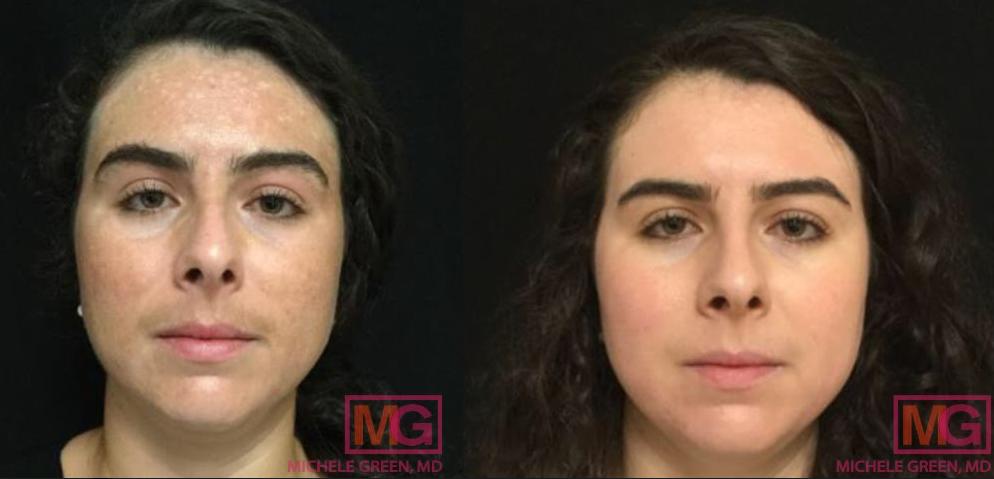
Is tinted sunscreen good for melasma?
Tinted sunscreen is exceptionally beneficial for melasma because it provides dual protection against both UV radiation and visible light while offering immediate cosmetic coverage of existing discoloration. The iron oxides in tinted mineral sunscreen formulations create a barrier against high-energy visible light and blue light, which can penetrate traditional sunscreens and stimulate melanin production in melasma-prone skin. Additionally, the tint helps even out skin tone and provides natural-looking coverage that reduces the appearance of hyperpigmentation and acne scars. Tinted mineral sunscreen represents the gold standard for melasma patients seeking comprehensive photoprotection. It is available in formulations from brands like Mesoesthetics, EltaMD, ISDIN, and Neutrogena, available on Amazon and through dermatology offices.
Does sunscreen prevent melasma?
Sunscreen is crucial for preventing melasma flare-ups and halting the progression of existing hyperpigmentation, though it cannot completely prevent the initial development of hormonally triggered melasma. Daily use of broad-spectrum SPF protection helps maintain the results of melasma treatment by preventing UV-induced stimulation of melanin production. While proper sun protection cannot guarantee prevention of melasma in hormonally susceptible individuals, it remains the most important tool for managing the condition and preventing worsening of existing pigmentation.
Do melasma spots go away?
While melasma cannot be permanently cured, it can be effectively controlled with the right combination of treatments, including chemical peels, microneedling, topical medications, and active skincare ingredients. However, pigmentation often returns if sun protection lapses or hormonal triggers persist. When you consult with Dr. Green, she will assess your skin concerns and medical history to devise a treatment plan and a comprehensive skincare routine to help you maintain clearer skin and prevent flare-ups.
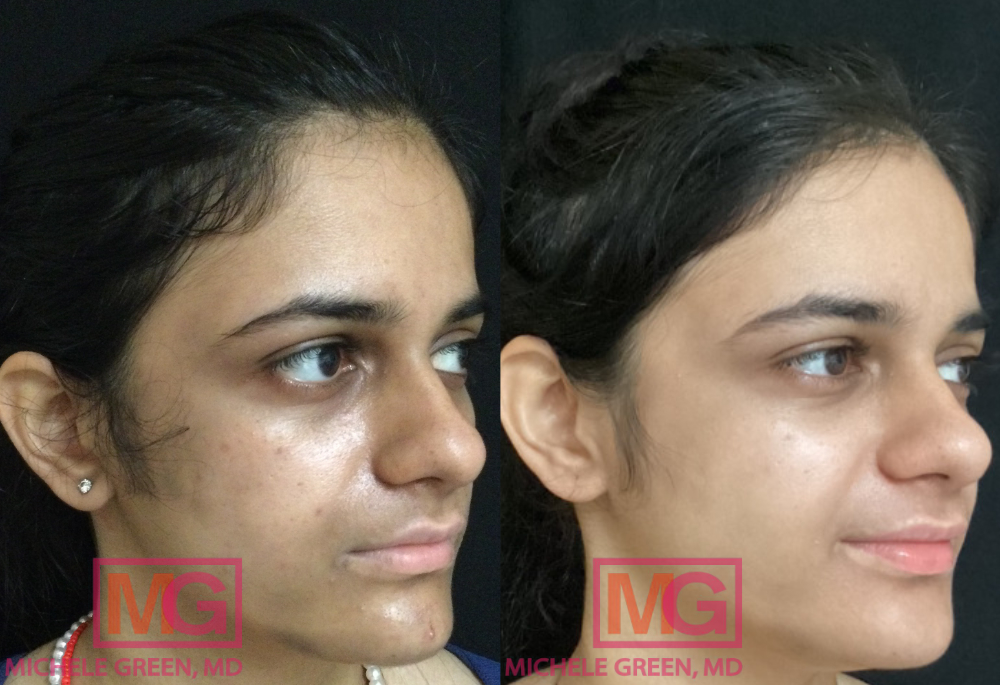
In-office treatments for melasma
Cosmelan peel for stubborn melasma and hyperpigmentation
Cosmelan is a professional depigmentation treatment developed by Mesoestetic and widely regarded as one of the most effective in-clinic options for melasma. It uses a two-phase system: a highly concentrated Cosmelan 1 mask — containing active ingredients such as kojic acid, phytic acid, and azelaic acid — is applied in-clinic and left on for several hours before being removed at home. These ingredients work synergistically to suppress the enzyme tyrosinase, which triggers excess melanin production, while also accelerating skin cell turnover to shed pigmented cells. The mask application is followed by a months-long at-home maintenance phase using complementary creams, including the Cosmelan 2 depigmentation cream, Melan Recovery moisturizer, and Melan 130 Pigment Control sunscreen. Most patients require just one in-clinic peel session, supported by the maintenance regimen for three to six months to sustain and deepen results.
Mesopeel to treat dark spots
Mesopeels are specially formulated chemical peels that exfoliate the skin’s outer layers, removing pigmented cells and interrupting the melanin synthesis pathway, helping reduce both existing discoloration and future pigment formation. Because Mesopeel treatments are generally more superficial than the full Cosmelan protocol, a course of treatments is typically recommended — usually four to six sessions spaced two to four weeks apart — to achieve optimal cumulative results.
Microneedling with depigmentation serum to reduce melasma
Microneedling combined with a depigmentation serum is an increasingly popular treatment for melasma that harnesses the skin’s wound-healing response to enhance the delivery of brightening actives. A device with fine, sterile needles creates thousands of microchannels in the skin, stimulating collagen production and dramatically increasing the absorption of topically applied serums by up to 80% compared with surface-only application. The depigmentation serum contains skin-lightening agents that inhibit melanin production at multiple points in the pigmentation pathway. Because this approach relies on cumulative collagen remodeling and progressive pigment suppression, a series of treatments is necessary for meaningful, lasting results.
Effective topical products for melasma
A consistent at-home skincare routine is one of the most powerful tools for both treating and preventing melasma. The right combination of depigmenting agents, antioxidants, retinoids, and broad-spectrum sun protection suppresses melanin production, accelerates cell turnover, and protects against UV exposure that triggers flare-ups. Dr. Green has developed her own proprietary skincare line, MGSKINLABs, featuring medical-grade products formulated to complement in-office treatments and maintain long-term results. During your consultation, Dr. Green will create a personalized skincare regimen tailored to your skin type and treatment goals, ensuring your at-home routine works in harmony with your in-office care.
- Hydroquinone inhibits tyrosinase, the enzyme that converts tyrosine into melanin, thereby slowing excess pigment production at the source. With consistent use — typically twice daily for 3 to 6 months under a dermatologist’s guidance — it can significantly fade existing dark patches and help prevent new ones from forming.
- Retinoids and retinol are vitamin A derivatives that accelerate cell turnover, helping shed pigmented skin cells more quickly and preventing melanin from embedding in deeper layers of the skin. Retinoids are available through prescription, while retinol can be found over the counter. The MGSKINLABS Essential Antioxidant Infusion is a PM retinol and vitamin-enriched formula designed to replenish and plump the skin while delivering powerful antioxidant protection.
- The Skin Brightening Cream from MGSKINLABs is formulated to address hyperpigmentation, including melasma, without the potential for irritation associated with stronger prescription agents. It works by incorporating a blend of brightening actives that inhibit melanin production and promote a more even skin tone over time.
- The MGSKINLABs Vita-C Serum is a vitamin C-based serum formulated to even out pigmentation across all skin types. Vitamin C (ascorbic acid) is a well-researched antioxidant that inhibits melanin synthesis at multiple points in the production pathway, making it particularly effective at reducing the appearance of melasma-related discoloration. It also helps protect the skin from environmental oxidative stress — including UV-induced damage — which is critical because sun exposure is the leading trigger for melasma.
- The MGSKINLABs Hydrating Sunscreen SPF 50 is a mineral-based, broad-spectrum sunscreen formulated with zinc oxide for reliable UV protection, along with hyaluronic acid and lactic acid to keep skin hydrated and soft. Because UV exposure is the primary trigger for melasma flare-ups, daily use of a well-formulated SPF 50 like this one is among the most effective steps you can take to prevent worsening pigmentation.
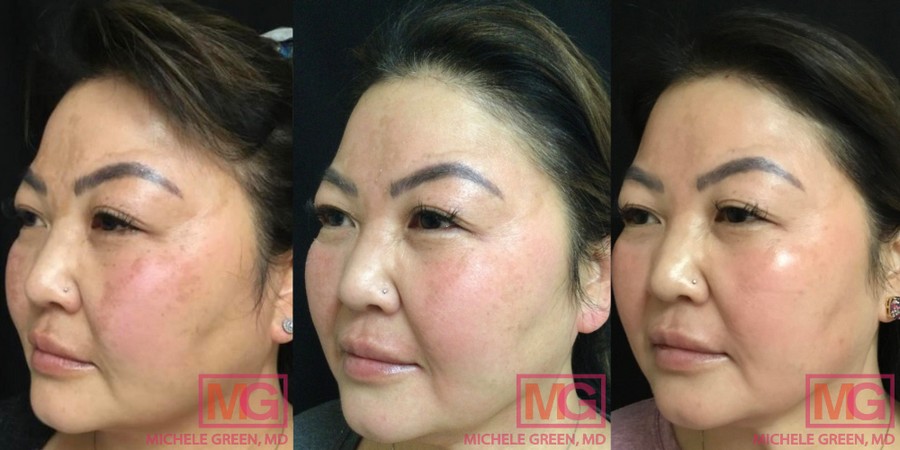
FAQs about Melasma and Sunscreen
Is melasma sun damage?
Melasma is not classified as direct sun damage but rather a hormonally-triggered skin condition that is significantly worsened by sun exposure. While sun spots and solar lentigines result from cumulative UV damage to the skin and collagen, melasma involves hormonal stimulation of melanocytes that becomes activated and exacerbated by UV rays, UVA, and UVB radiation. The condition typically develops during pregnancy, with hormonal therapy, or with birth control use. Still, sun exposure can act as a powerful trigger, causing existing patches to darken and new areas of discoloration to develop. While hormones initiate melasma, consistent sun protection is essential for preventing progression and managing the condition effectively.
Is melasma the same as sun spots?
Melasma and sun spots are related but distinct skin conditions with different underlying causes. Sun spots, also known as solar lentigines or age spots, are direct results of cumulative sun damage and UV exposure, which cause localized melanin deposits in the skin. Melasma, however, is primarily triggered by hormonal fluctuations, though it is significantly worsened by sun exposure, visible light, and blue light. While both conditions involve hyperpigmentation and dark spots, melasma typically appears as larger, more irregular patches with less defined borders, whereas sun spots are usually smaller and more clearly defined. Additionally, unlike sun spots, which can be permanently eliminated with the right treatments, melasma is a chronic condition that tends to recur — even after successful treatment. Triggers like sun exposure and hormonal changes can cause it to return, which is why consistent sun protection and ongoing skin care are so important for keeping it under control.
Does sunscreen help melasma?
Sunscreen is essential for managing melasma by preventing further darkening of existing patches and protecting the skin during active treatment. When combined with treatments such as chemical peels, microneedling, and topical antioxidants, consistent sunscreen use helps the skin heal properly and prevents new pigment formation. The best sunscreen for melasma patients provides broad-spectrum protection that shields against UV damage while allowing treatments to work effectively. Patients who consistently use appropriate sun protection—particularly tinted mineral sunscreen with zinc oxide, titanium dioxide, and iron oxides—achieve significantly better treatment outcomes and fewer relapses than those who neglect daily SPF application.
Will sunscreen prevent melasma?
While sunscreen cannot guarantee complete prevention of melasma in hormonally predisposed individuals, it significantly reduces the risk of developing the condition and prevents worsening of existing cases. Consistent use of broad-spectrum SPF 50 with visible-light protection creates a protective barrier that minimizes environmental triggers that stimulate melanin production. For those with a family history of melasma or a personal history of melasma, daily sunscreen use, combined with protective measures such as wearing hats and seeking shade, is even more critical. Prevention through sun protection is always easier and more effective than treating established melasma, making daily application of mineral sunscreen, particularly tinted formulas with iron oxides, essential for anyone at risk.
Which sunscreen is best for pigmentation and melasma?
The MGSKINLABs Hydrating Sunscreen SPF 50 is an excellent choice for those dealing with pigmentation and melasma, thanks to its carefully selected blend of ingredients. Its formulation includes niacinamide to visibly brighten areas of discoloration and uneven skin tone, as well as hyaluronic acid and lactic acid to provide gentle hydration and support the skin barrier — all in a lightweight, oil-free formula suitable for daily use. As a mineral sunscreen, it’s particularly well-suited for pigmentation-prone skin: unlike chemical sunscreens, which absorb UV rays and convert them into heat — a reaction that can keep melasma active — mineral formulas sit on the skin’s surface and reflect harmful rays, making them a safer, gentler option. Chemical sunscreens are also more likely to cause irritation or contact dermatitis, and since inflammation is a key driver of post-inflammatory hyperpigmentation (PIH), a non-irritating mineral formula significantly reduces that risk.
Does sunscreen cause melasma?
Sunscreen is an essential part of preventing and treating melasma and does not cause it. Sun exposure is a primary risk factor for the development and worsening of melasma, making strict, consistent sun protection essential to reduce melasma flare-ups. Patients should not hesitate to apply and reapply sunscreen liberally throughout the day, especially when spending significant time outdoors. In fact, melasma patients should reapply sunscreen every 2 hours and choose non-comedogenic, fragrance-free formulations to minimize the risk of irritation that could trigger post-inflammatory hyperpigmentation.
Does chemical sunscreen cause melasma?
While chemical sunscreens do not cause melasma, they can worsen it in some sensitive individuals through allergic reactions or irritation, which may trigger post-inflammatory hyperpigmentation. Certain chemical UV filters can cause contact dermatitis or photosensitivity reactions in people with reactive skin types, leading to inflammation that stimulates melanin production. Additionally, some chemical sunscreens may not provide adequate protection against visible light and blue light, which are known triggers for melasma darkening. Mineral sunscreen formulations with zinc oxide or titanium dioxide are often preferred for patients with melasma, as they provide gentler, more comprehensive protection without the risk of chemical sensitization that could exacerbate pigmentation issues, making them safer options for sensitive skin and skin of color.
Why is mineral sunscreen better for melasma?
Mineral sunscreen is superior for melasma because it provides immediate, gentle protection without the risk of chemical sensitization that could worsen inflammation and pigmentation. Zinc oxide and titanium dioxide create a physical barrier on the skin’s surface, reflecting UV rays rather than absorbing them, as chemical sunscreens do. This mechanism is particularly beneficial for sensitive skin and for those with existing skin conditions, as it reduces the risk of irritation that could trigger post-inflammatory hyperpigmentation. Mineral formulas are also photostable, meaning they don’t break down under sun exposure, providing consistent protection throughout the day without the need for chemical reactivation. Additionally, mineral SPF products are less likely to clog pores, making them ideal for patients concerned about acne or other skin conditions alongside their melasma.
Why is tinted sunscreen better for melasma?
Tinted sunscreen is especially important for melasma because it contains iron oxides that block visible light — including blue light from screens and the sun — that regular sunscreens cannot protect against and that can penetrate the skin and trigger melanin production. While standard broad-spectrum formulas guard against UVA and UVB rays, tinted SPF goes a step further by shielding skin from these additional wavelengths, making it a more complete defense against melasma flare-ups. As a bonus, the tint provides a natural, even coverage that eliminates the white cast mineral sunscreens can leave on deeper skin tones.
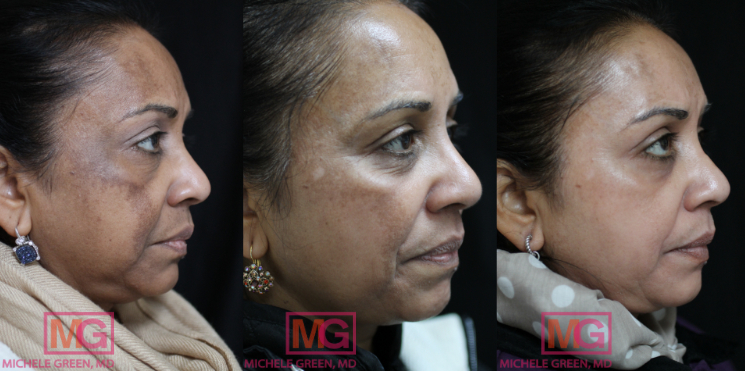
Learn More Today about What Sunscreen to Use for Melasma from Dr. Michele Green in NYC
Melasma is a challenging skin condition that requires comprehensive management combining sun protection, targeted skincare, and professional treatments. The foundation of any successful melasma treatment plan is consistent use of broad-spectrum SPF 50 sunscreen, preferably a tinted mineral sunscreen containing zinc oxide, titanium dioxide, and iron oxides for complete protection against UV rays and visible light. Pairing daily sunscreen use with hydrating moisturizers, antioxidant serums, and treatments such as Cosmelan peel, Mesopeels, and microneedling with a depigmentation serum can significantly improve dark spots, sun spots, acne scars, and other forms of hyperpigmentation. Board-certified dermatologist Dr. Michele Green in NYC can evaluate your skin type, skin tone, and melasma pattern to create a personalized treatment plan that addresses your unique concerns and aesthetic goals, helping you manage your melasma and achieve clear, radiant skin that lasts. To learn more about the best face sunscreen for melasma, whether mineral sunscreens are right for you, and your personalized treatment options, please call us at 212-535-3088 or contact us online today to schedule a consultation with Dr. Michele Green.


