


Removing Sun Spots On The Face
Sunspots — also known as age spots, liver spots, or solar lentigines — are flat, benign dark spots that develop from cumulative UV exposure and sun damage. They vary in size, shape, and discoloration depth, and most commonly appear on areas of the body that receive the greatest sun exposure, including the face, chest, hands, arms, and shoulders. While sunspots are harmless and not medically necessary to treat, they can contribute to an uneven skin tone and a prematurely aged appearance, prompting many patients to seek cosmetic treatment. Because sunspots can resemble more serious skin conditions — including skin cancer — any new or changing lesions should be evaluated promptly by a board-certified dermatologist. With a comprehensive range of in-office procedures and medical-grade skin care products, Dr. Michele Green offers some of the most advanced and effective sun spot removal options available in New York City.
Unlike freckles, which often fade on their own, sunspots will not go away without treatment. Once melanin accumulates in the skin’s top layer due to cumulative sun exposure, the resulting hyperpigmentation and discoloration are unlikely to resolve naturally. Fortunately, a wide array of treatment options — from laser treatments and chemical peels to microneedling and targeted skincare routines — can significantly reduce or fully eliminate the appearance of brown spots on the face and body. The best approach depends on your skin type, skin tone, and the extent of the hyperpigmentation, which is why a personalized treatment plan developed by an experienced dermatologist is so important. As a leading expert in pigmentation disorders and cosmetic dermatology in NYC, Dr. Michele Green takes a holistic, less-is-more approach to sun spot removal, customizing each patient’s plan to deliver optimal results.
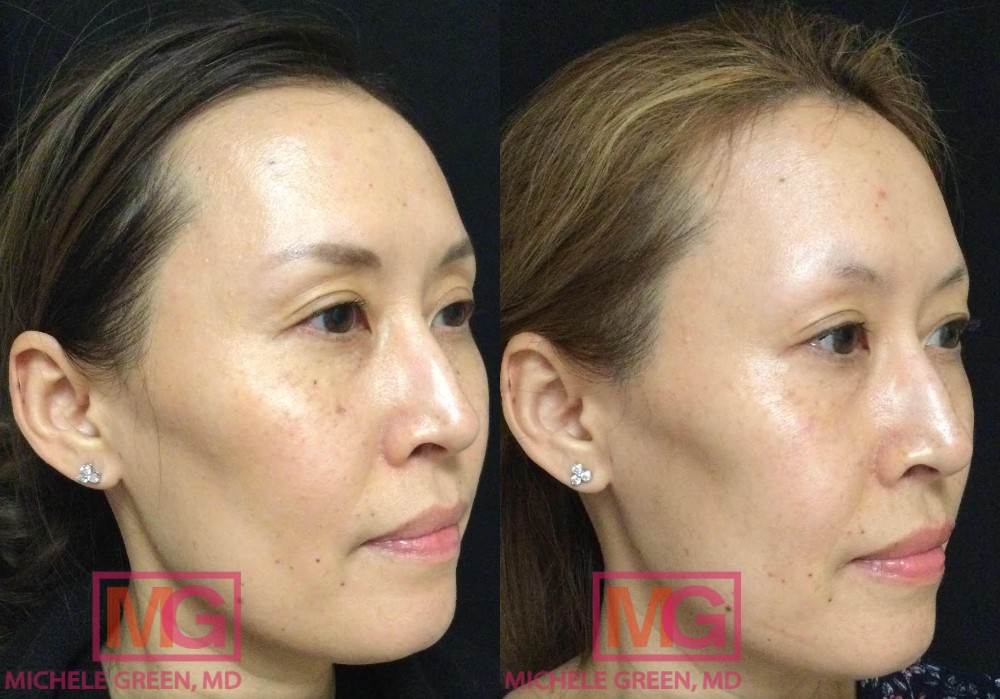
What are sunspots?
Sunspots, clinically known as solar lentigines and often referred to as age spots or liver spots, are flat, darkened patches of skin that typically range in color from light brown to black. They can vary significantly in size and are most commonly found on areas of the body that receive the most frequent and direct sun exposure, such as the face, the backs of the hands, shoulders, upper back, and forearms. Severe sunburns, especially during childhood and adolescence, significantly increase the risk of developing sunspots later in life. While these hyperpigmented spots are entirely benign and pose no medical threat to your health, they are a visible sign of photoaging, which is why many people choose to treat them for cosmetic reasons to achieve a more even, uniform complexion.
What causes sunspots on the face?
Sunspots primarily result from prolonged, cumulative exposure to ultraviolet (UV) radiation from the sun or artificial sources such as tanning beds. When UV rays penetrate the skin, they stimulate melanocytes, the skin’s pigment-producing cells, to increase melanin production as a natural defense. Over years of repeated, unprotected sun exposure, this melanin is produced in excess and clumps in localized areas rather than being distributed evenly, eventually rising to the surface and becoming permanently visible as a dark sunspot. Frequent lapses in sun protection accelerate this process and become more prevalent with age, as decades of sun damage lead to cellular-level DNA changes that cause persistent overproduction of melanin. Conditions like melasma also compound its appearance.
Are sunspots on the face dangerous?
No, sunspots are benign skin conditions and are not dangerous. They develop from excessive sun exposure and do not require medical treatment. However, sunspots can be difficult to distinguish from more serious skin conditions, including melanoma and other forms of skin cancer. For this reason, it is essential to have any new or changing dark spots evaluated by a board-certified dermatologist. Dr. Green uses the ABCDE criteria — asymmetry, border irregularity, color variation, diameter, and evolution — to assess whether a lesion warrants further testing, such as a biopsy. Annual skin cancer screenings are recommended for all patients, regardless of skin type or sun exposure history.
Will sunspots on the face go away?
Sunspots will not go away on their own. Unlike freckles, which can fade with less sun exposure, age spots and solar lentigines result from permanent changes in melanin distribution in the skin. Once they form, the discoloration persists and, without treatment, may deepen or expand with continued UV exposure. The good news is that modern dermatology offers a wide range of effective treatment options — from in-office laser therapy and chemical peels to targeted skincare routines — that can significantly reduce or fully eliminate the appearance of sunspots. Daily application of a broad-spectrum sunscreen with at least SPF 30 is critical throughout any treatment period to prevent further sun damage and protect new skin as it emerges.
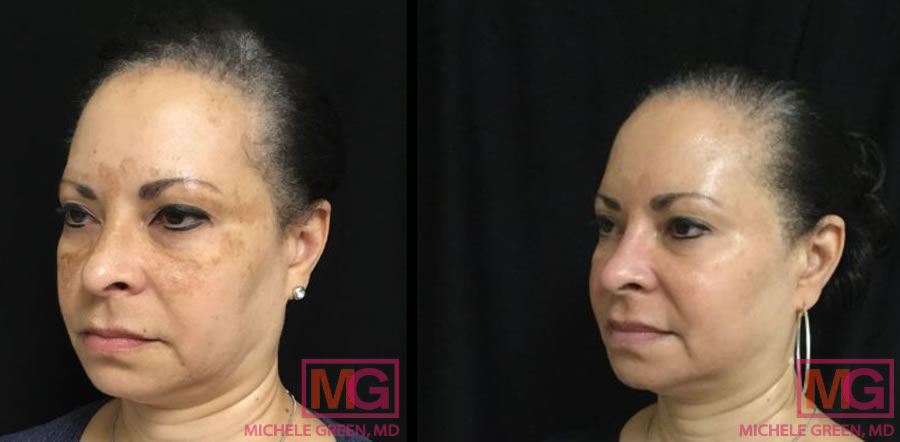
What removes sunspots on the face?
Several professional treatments effectively remove facial sunspots, including targeted laser therapies that break down pigment, chemical peels that exfoliate pigmented layers, and microneedling paired with depigmentation serums to promote renewal. Although liquid nitrogen was historically used, its high risk of scarring after treatment has led to its discontinuation for this purpose. Dr. Green uses the most non-invasive, innovative treatments available to remove sunspots with minimal downtime or side effects. Often, the most comprehensive and lasting results are achieved by combining these in-office treatments with a medical-grade skincare regimen. Dr. Green will assess your skin type, tone, and specific concerns to customize the most effective treatment plan for you.
Fraxel Laser to treat sun damage and pigmentation
Fraxel is one of Dr. Green’s most trusted laser treatments for sun spot removal and is often called the “magic eraser” for its ability to address a broad range of skin conditions, including age spots, sun damage, hyperpigmentation, fine lines, acne scars, and uneven skin texture. The Fraxel laser operates at two wavelengths — 1927 nm and 1550 nm — that penetrate different layers of the dermis to stimulate collagen production and resurface the skin. The 1927 nm wavelength is particularly effective for treating brown spots, sun damage, and discoloration, while the 1550 nm wavelength targets fine lines, acne scars, and skin texture irregularities. Together, they deliver comprehensive facial rejuvenation with minimal downtime, typically requiring only three sessions spaced four to six weeks apart for optimal results. Fraxel is safest for patients with lighter skin tones; those with darker complexions may experience hyperpigmentation or other side effects and should consider the Clear + Brilliant laser instead.
Candela AlexTrivantage Laser for individual sunspots
The Candela AlexTrivantage is one of the most popular laser treatments at Dr. Green’s NYC office for targeting and eliminating sunspots. This laser emits wavelengths of light that are selectively absorbed by melanin in dark spots; the light is converted to heat, which destroys excess pigment and prompts the growth of new skin cells that are lighter and more evenly toned. A small scab typically forms over the treated spot, while the surrounding skin remains unaffected. Within about one week, the scab heals, and hyperpigmentation is significantly reduced. Most patients require 1 to 2 treatment sessions with minimal downtime. Because this laser specifically targets melanin, it is best suited for patients with lighter skin tones. Following treatment, it is essential to limit sun exposure and apply a broad-spectrum sunscreen daily, as the skin becomes more photosensitive and susceptible to UV damage after laser therapy.
Clear + Brilliant Laser to treat sunspots
The Clear + Brilliant laser, often called the “mini-Fraxel,” is a gentle laser resurfacing treatment that is safe for all skin types and tones, making it an excellent option for patients with darker complexions who may not be candidates for Fraxel or AlexTrivantage. FDA-approved to improve skin tone, texture, and radiance, Clear + Brilliant uses fractionated technology to create micro-injuries in the skin’s top layer, triggering the body’s natural healing response and stimulating collagen production and new skin cell growth. The result is brighter, more evenly toned skin with a visibly reduced appearance of sunspots and discoloration. The treatment requires no downtime, with only mild redness as a possible side effect that typically resolves within hours. Most patients benefit from a series of four to six sessions spaced several weeks apart. Immediately after treatment, Dr. Green applies a vitamin C serum—a powerful antioxidant—to enhance brightening results and support skin cell turnover.
Intense Pulsed Light (IPL)
Intense Pulsed Light (IPL) is a non-invasive photofacial treatment that uses multiple wavelengths of light to target melanin-rich cells responsible for age spots and facial discoloration. Unlike single-wavelength lasers, IPL delivers a broad spectrum of light that penetrates the skin’s dermal layer, where it is absorbed by pigmented cells, converted to heat, and destroyed — revealing a clearer, more even skin tone. Patients typically describe the sensation as a light rubber-band snap against the skin, with no downtime after treatment. Depending on the depth and extent of hyperpigmentation, several IPL sessions may be needed to achieve the desired results. Dr. Green will photograph the treatment area at each visit to track progress and adjust the treatment plan accordingly.
TCA Peels to remove sunspots
Trichloroacetic acid (TCA) gently exfoliates the uppermost layers of the skin (the epidermis). The acid breaks the cellular bonds that hold dead, pigmented skin cells together, allowing them to peel or flake away over a few days. This controlled exfoliation stimulates cellular turnover, lifting away the excess melanin that forms the sunspot and revealing fresh, even-toned, unblemished skin underneath. Most patients require a series of treatments spaced about four weeks apart for optimal results.
Mesopeels to treat sun damage
Mesopeels are advanced clinical treatments that combine chemical exfoliation with targeted, active brightening ingredients. Peeling agents (such as lactic, phytic, or kojic acids) dissolve the outermost layer of dead skin cells that harbor sun-damage. Simultaneously, the specialized “meso” formulation allows active depigmenting ingredients to penetrate deeper into the skin, inhibiting tyrosinase, the enzyme responsible for producing melanin. This dual action physically sheds existing sunspots while actively preventing the skin from producing new pigment in the treated area. Patients typically need a series of 4 to 6 treatments, spaced 3 to 4 weeks apart, for optimal results.
Cosmelan peel
The Cosmelan peel is a highly specialized, intensive depigmentation method designed to target stubborn hyperpigmentation at its source. It works through a two-step process: an in-office mask containing a powerful blend of tyrosinase inhibitors (such as azelaic acid, kojic acid, and arbutin), followed by strict at-home maintenance creams. Cosmelan works by completely suppressing the melanin production pathway at the cellular level while simultaneously accelerating skin turnover, essentially starving the sunspot of new pigment and forcing the skin to shed existing dark marks. For patients with melasma — a form of hyperpigmentation driven by hormonal changes and sun exposure — Dr. Michele Green prefers the Cosmelan peel. Because melasma is hormonally driven and highly reactive to light, laser treatments such as Fraxel and IPL can actually worsen it, making the Cosmelan peel a safer, more targeted option.
Microneedling with a depigmentation serum
Microneedling, also known as collagen induction therapy, is a skin resurfacing treatment that uses a handheld device with tiny, sterile needles to create controlled micro-injuries in the skin, stimulating the body’s natural healing response, promoting collagen production, and the regeneration of new skin cells for a smoother, firmer, and more evenly toned complexion. Microneedling is also commonly paired with microdermabrasion or a topical depigmenting serum to enhance its brightening effects — the micro-channels created by the needles increase the skin’s absorption of active ingredients, maximizing their impact on melanin reduction and discoloration. This combination approach is safe and effective for patients of all skin types and tones, making it an especially versatile option for those who are not candidates for certain laser treatments. Most patients require 3 to 6 sessions for optimal results. As with all pigmentation treatments, diligent sun protection and avoidance of UV exposure are essential afterward to prevent hyperpigmentation from returning.
HydraFacials
A HydraFacial is a gentle, non-invasive resurfacing treatment that uses patented vortex-fusion technology to cleanse, extract, and hydrate the skin. To treat sunspots, the device uses gentle fluid suction to remove dead, pigmented surface cells while infusing the skin with customized brightening boosters, such as alpha-arbutin, vitamin C, or mild glycolic acid. While much milder than a chemical peel, this combination of physical exfoliation and serum infusion encourages cellular turnover and lightens sunspots, leaving the complexion brighter and more even over time.
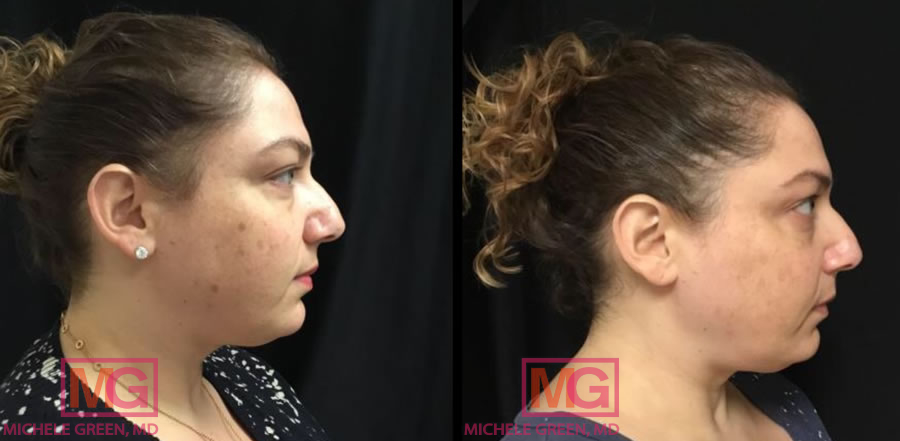
What are the best skincare products to remove sunspots?
A consistent skincare routine is vital for fading sunspots and maintaining the results of in-office treatments. Because over-the-counter products often lack sufficient active ingredients, medical-grade formulations—such as Dr. Michele Green’s MGSKINLABs line—are far more effective for stubborn pigmentation. An ideal regimen includes a gentle cleanser, a cell-renewing retinol, a brightening cream, and an antioxidant-rich Vita-C Serum. Most importantly, daily application of a broad-spectrum SPF 50 is essential to protect against UV damage and prevent new sunspots from forming.
Hydroquinone inhibits tyrosinase, the enzyme required for melanin production. By blocking this pathway, it halts pigment overproduction at the cellular level, allowing existing sunspots to fade.
Retinoids and retinols work by dramatically accelerating cellular turnover, prompting the skin to shed old, hyperpigmented cells and replace them with fresh, even-toned skin. The MGSKINLABS Essential Antioxidant Infusion pairs a potent retinol base with restorative antioxidants to effectively diminish the appearance of sunspots while nourishing the skin.
The Vita-C Serum delivers a potent dose of vitamin C to neutralize free radicals generated by UV exposure. Vitamin C acts as a natural brightener, gently inhibiting melanin synthesis to help progressively fade stubborn sunspots and illuminate the overall complexion.
The Skin Brightening Cream uses a specialized blend of active lightening agents to safely and effectively target hyperpigmentation at its source. By interrupting the skin’s pigment-producing pathways, it visibly reduces the intensity of sunspots, age spots, and uneven skin tone, resulting in a more uniform appearance.
Because UV exposure is the root cause of sunspots, protecting the skin is the most crucial step in any depigmentation regimen. This Hydrating SPF 50 provides essential broad-spectrum protection to prevent the darkening of existing spots and the formation of new hyperpigmentation, all while deeply moisturizing the skin.
How to remove sunspots on the face permanently
The most effective approach to permanently removing sunspots involves a synergistic combination of targeted in-office treatments and a consistent, medical-grade skincare regimen. In-office procedures like lasers, chemical peels, microneedling with depigmentation serums, or HydraFacials effectively break down and remove existing melanin clusters, while potent at-home skincare products with ingredients like hydroquinone, retinoids, and vitamin C work to continuously inhibit new pigment production and accelerate cell turnover. Together, these methods can permanently eradicate existing sunspots, revealing clear, even-toned skin. However, to ensure these results are lasting and to prevent the formation of new sunspots, rigorous daily sun protection—including broad-spectrum SPF 50, protective clothing, and seeking shade—is absolutely indispensable.
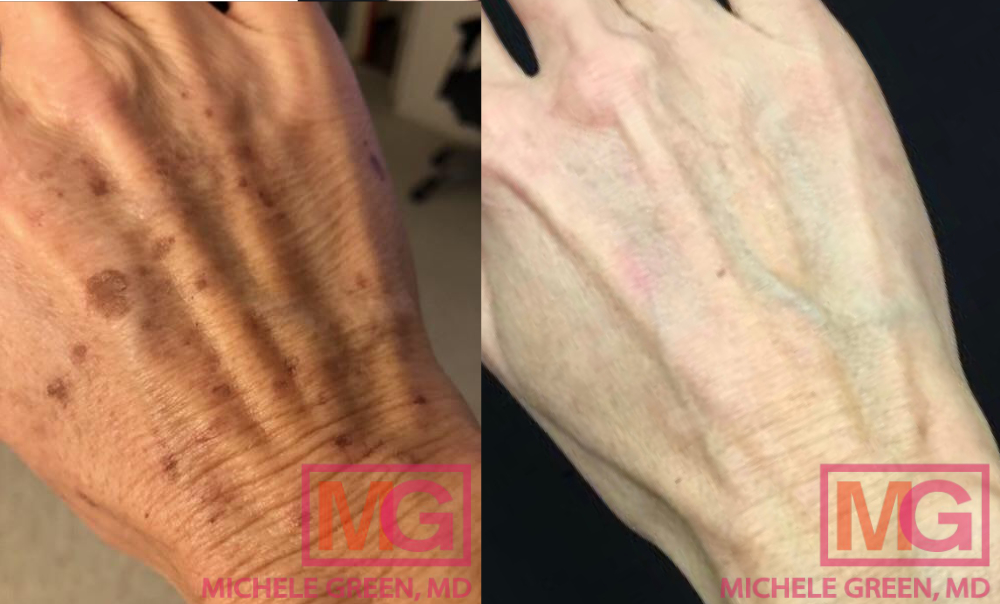
Frequently Asked Questions (FAQs) about Sunspot Removal on the Face
Can you remove sunspots on the face?
Yes — with the right treatment plan and guidance from an experienced, board-certified dermatologist, sunspots can be significantly reduced or permanently removed from the face. The most effective approach typically combines in-office procedures with a targeted skincare routine, including consistent sun protection. Not all treatments are appropriate for every skin type or tone: certain laser treatments, for example, carry a higher risk of side effects in patients with darker complexions and may require alternatives such as Clear + Brilliant or microneedling. During your consultation with Dr. Michele Green at her NYC dermatology office, she will conduct a thorough assessment of your skin conditions, medical history, and aesthetic goals to develop a personalized treatment plan that delivers safe, lasting results.
Can a dermatologist remove sunspots?
Absolutely! A board-certified dermatologist is the most qualified and effective professional for evaluating and treating sunspots. A dermatologist can accurately distinguish between benign age spots and potentially dangerous lesions, such as melanoma, and recommend the most appropriate, evidence-based treatment options for your specific skin conditions. At her boutique dermatology office on NYC’s Upper East Side, Dr. Michele Green offers a full spectrum of sun spot removal treatments — from laser therapy and chemical peels to medical-grade skincare — and will work with you to develop a personalized treatment plan for a clear, healthy, and radiant complexion.
What is the best way to remove sunspots on the face?
The best way to remove sunspots on the face is a personalized combination of in-office treatments and a medical-grade skincare routine, tailored to your skin type, skin tone, and the nature of your hyperpigmentation. For patients with lighter skin tones, laser treatments such as Fraxel or the AlexTrivantage often deliver the fastest and most dramatic results. The Clear + Brilliant laser and microneedling are excellent, safe treatments for sunspot removal in all skin types. Chemical peels — including TCA peels, Mesopeels, and the Cosmelan peel — provide effective exfoliation and pigment correction for a wide range of patients. HydraFacials are an excellent way to rejuvenate the skin while minimizing mild sunspots and hyperpigmentation. In all cases, consistent sun protection with a broad-spectrum sunscreen of at least SPF 30, along with protective clothing, is essential to preserving results and preventing recurrence. During your consultation with board-certified dermatologist Dr. Michele Green at her NYC office, she will assess your skin conditions and craft a comprehensive treatment plan designed to eliminate sunspots and restore a clear, luminous complexion.
What facial removes sunspots?
Several in-office facial treatments are highly effective at removing sunspots. A HydraFacial diminishes sunspots by combining gentle physical exfoliation with the deep infusion of specialized brightening serums. This dual-action approach removes superficial pigmented cells from the skin’s surface while delivering active ingredients that inhibit melanin production, ultimately promoting cellular renewal and a more even skin tone. Chemical peels — including glycolic acid peels, TCA peels, Mesopeels, and the Cosmelan peel — exfoliate the top layer of skin and accelerate skin cell turnover to reveal a brighter, more even complexion, making them among the most popular facial treatments for hyperpigmentation. Dr. Green will recommend the most appropriate facial treatment based on your skin type, skin tone, and the nature of your pigmentation concerns, and may combine multiple modalities for the most comprehensive results.
How to remove sunspots on the face fast
For patients seeking faster sun spot removal results, laser therapy is typically the most efficient option. Treatments such as the Candela AlexTrivantage can produce visible improvement in sunspots after just one or two sessions, as the targeted light energy destroys excess melanin and prompts rapid new skin to emerge. Combining in-office procedures with a medical-grade skincare routine — including vitamin C, retinoids, and hydroquinone — can accelerate overall results. It is important to have realistic expectations: the depth and extent of hyperpigmentation will influence how quickly results become visible, and consistent sun protection is essential throughout the process to avoid undoing progress. Dr. Green will advise you on the most efficient path to sun spot removal based on your specific skin type and treatment goals.
What removes sunspots on your face naturally?
When trying to fade sunspots naturally, many people turn to botanical ingredients and pantry staples such as aloe vera, green tea extract, licorice root, or apple cider vinegar, which contain natural antioxidants and mild acids that can gently encourage skin cell turnover and slightly brighten the complexion over time. However, it is important to understand that natural DIY home remedies are not always the best or safest approach, as they can frequently cause severe skin irritation. Raw ingredients—especially highly acidic ones like lemon juice or undiluted vinegar—lack cosmetic stabilization and have unpredictable pH levels that can easily damage your skin’s protective barrier, leading to chemical burns, redness, and inflammation that can actually trigger post-inflammatory hyperpigmentation and make your blemishes worse.
Is sunspot removal covered by insurance?
Sun spot removal is typically considered a cosmetic procedure and is not covered by health insurance. However, if a dark spot requires evaluation or a biopsy to rule out skin cancer, those diagnostic procedures may be covered, depending on your individual insurance plan. Dr. Green’s NYC office team can help clarify coverage questions and discuss payment options during your consultation.
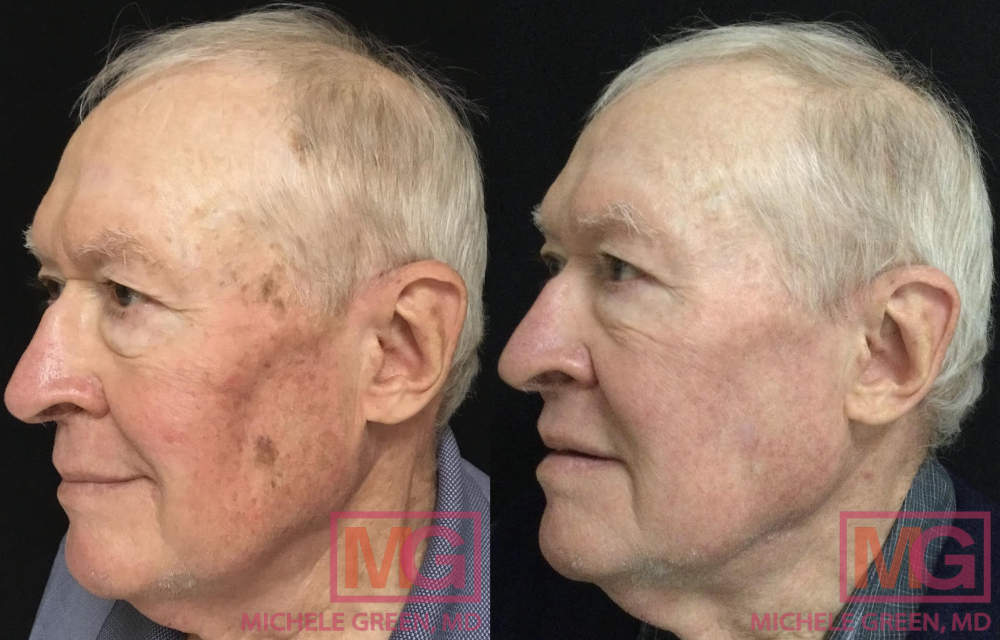
How to Get Started with Sun Spot Removal at Dr. Michele Green’s NYC Office Today
Sunspots, age spots, and other forms of hyperpigmentation can significantly affect both appearance and confidence — but with the right treatment plan, they don’t have to be permanent. From advanced laser treatments and chemical peels to targeted skincare routines and medical-grade products, the range of effective options available today means virtually every patient can achieve a clearer, more even skin tone with expert guidance. Whether your concern is mild discoloration or extensive sun damage, the key is a personalized, evidence-based approach that accounts for your skin type, skin tone, and individual goals — exactly the kind of care Dr. Michele Green has provided to her NYC patients for over 25 years.
Dr. Michele Green is an internationally renowned, board-certified dermatologist with decades of experience treating sunspots, hyperpigmentation, melasma, and a full range of skin conditions at her boutique dermatology practice on Manhattan’s Upper East Side. Recognized by Castle Connolly, New York Magazine, Super Doctors, and the New York Times as one of New York City’s top dermatologists, Dr. Green is committed to delivering the highest standard of personalized, non-invasive cosmetic care. Through her proprietary MGSKINLABs skincare line and a comprehensive suite of in-office procedures, she provides patients with everything needed to achieve and maintain optimal results. To schedule your consultation and begin your personalized sun spot treatment journey, please call Dr. Green’s NYC office at 212-535-3088 or contact us online today.


