


Fillers for Hands
Dermal fillers for the hands are a popular non-invasive option for restoring a youthful appearance to one of the body’s most visible and frequently exposed areas. Over time, the hands naturally lose volume as collagen and elastin production decline, resulting in thinner skin, fine lines, and more visible veins and tendons. Sun exposure, frequent washing, and daily use can further contribute to signs of aging, making the hands appear older than the face. Many patients seek hand fillers to replenish lost volume and smooth the skin. Hand rejuvenation with dermal fillers is especially appealing to individuals seeking noticeable improvement without surgery or downtime. This treatment is commonly performed at the private New York City dermatology practice of Dr. Michele Green.
Dermal fillers restore volume beneath the skin on the backs of the hands, where age-related fat loss and skin thinning are most apparent. Depending on the filler type, treatment can deliver immediate plumping, gradual collagen stimulation, or both, improving skin texture and firmness over time. Hyaluronic acid-based fillers attract moisture and instantly smooth the skin, while collagen-stimulating fillers encourage the body to produce collagen, the protein responsible for maintaining skin firmness and elasticity. When placed with precision, fillers soften the appearance of veins and tendons while preserving natural hand movement. A customized treatment plan created by a board-certified dermatologist, such as Dr. Green, ensures balanced, subtle results that enhance the hands without looking overfilled.
Dr. Michele Green is an internationally recognized, board-certified dermatologist with over 25 years of experience offering advanced non-surgical cosmetic treatments, including dermal fillers for hand rejuvenation and personalized skincare solutions. She is known for her conservative, less-is-more approach and for delivering natural-looking results tailored to each patient’s anatomy and aesthetic goals. Consistently honored by Castle Connolly, New York Magazine, and Super Doctors as one of New York City’s top dermatologists, Dr. Green combines technical expertise with an individualized approach to care. When you consult with Dr. Green at her private dermatology office on Manhattan’s Upper East Side, she will develop a personalized hand rejuvenation plan to restore youthful volume, improve skin quality, and help your hands look as vibrant as you feel.
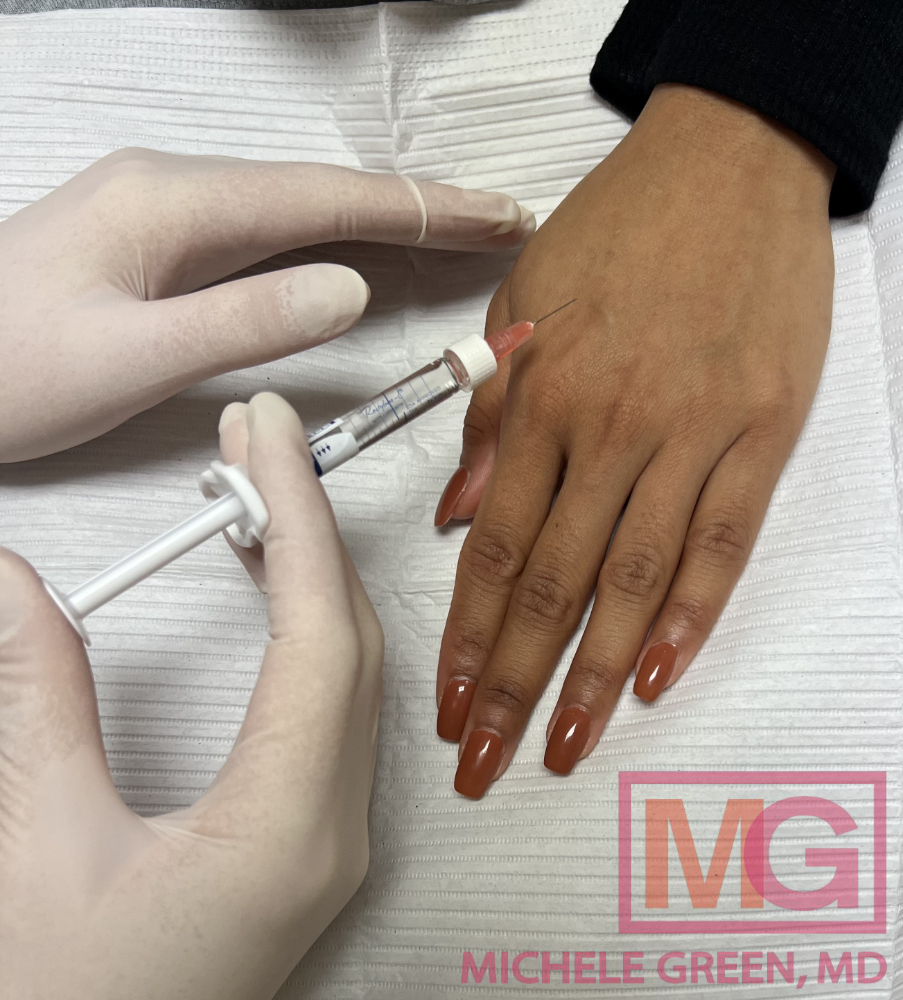
Can dermal fillers be injected in your hands?
When we think of dermal fillers, we often associate them with facial rejuvenation; however, they can also be used for hand rejuvenation. As we age, skin volume and fatty tissue decrease, and collagen and elastin production decline, resulting in visible signs of aging, including fine lines, wrinkles, and crepiness. The loss of volume also makes veins and tendons more prominent in the hands. Injecting dermal fillers into the back of the hands can restore lost volume, plumping the skin and creating a more youthful appearance. Although you may experience mild swelling or bruising at the injection sites, you can resume your daily activities immediately after the procedure. Hand fillers can provide long-lasting results for up to a year or more, depending on the specific filler used. Injectable fillers are a safe, effective, and non-invasive alternative to plastic surgery, making them a popular choice for hand rejuvenation.
Which dermal fillers can be used for hands
Dermal fillers used for hand rejuvenation are designed to restore lost volume and improve the appearance of thinning skin on the backs of the hands. Different filler formulations offer varying benefits, including immediate volume enhancement, gradual collagen stimulation, and long-term improvement in skin quality. The type of filler selected depends on factors such as the degree of volume loss, skin thickness, and the desired treatment outcome. During a consultation, a board-certified dermatologist will evaluate these factors to determine which filler or combination of fillers is most appropriate. Several dermal fillers are commonly used for hand rejuvenation, including Restylane Lyft, Juvederm, Sculptra, and Radiesse.
Restylane
Restylane-L is a hyaluronic acid-based dermal filler commonly used for hand rejuvenation to restore volume and improve the appearance of aging hands. It is frequently used to address thinning skin, fine lines, and the visibility of veins and tendons on the backs of the hands. Hyaluronic acid is a naturally occurring substance in the body that attracts moisture and provides immediate smoothing and plumping when injected beneath the skin. Restylane-L helps improve skin texture and fullness while maintaining the hands’ natural movement and flexibility. The formulation contains lidocaine, which enhances patient comfort during treatment. Results from Restylane-L injections typically last 9 to 12 months, after which additional treatment is needed to maintain results.
Radiesse
Radiesse was the first dermal filler to receive FDA approval for hand rejuvenation in 2015. This semi-permanent filler is formulated with calcium hydroxylapatite (CaHA) and patented microsphere technology to stimulate collagen production. When injected under the skin, Radiesse creates a supportive scaffolding for skin cells, initiates collagenase activity, and prompts the body to produce new collagen at the injection site, thereby providing volume enhancement. The restored volume effectively fills deep lines and wrinkles on the back of the hands, resulting in a smoother, more youthful appearance. Radiesse treatment typically requires an initial series of injections spaced one month apart to achieve optimal cosmetic results. Collagen synthesis continues after the CaHA is naturally absorbed by the body, providing long-lasting results for up to 2 years.
Juvederm
Although Juvederm is not FDA-approved for use on the hands, dermatologists commonly use it off-label for hand rejuvenation. The Juvederm family of hyaluronic acid dermal fillers restores volume and lifts the skin. Juvederm Voluma, a popular filler for cheek and midface augmentation due to its thicker formulation, is frequently used for hand rejuvenation. Juvederm injections provide an immediate plumping effect and stimulate collagen synthesis, helping to firm the skin for a youthful appearance. Juvederm products also contain lidocaine to minimize discomfort during the procedure. Most Juvederm products last 9 to 12 months, although Juvederm Voluma has been found to last longer than 12 months in some patients.
Sculptra
Sculptra is a liquid dermal filler commonly used off-label by dermatologists to treat volume loss in the hands. It is composed of poly-L-lactic acid (PLLA), which stimulates the production of new collagen in the skin. After a series of injections, patients can expect a reduction in the appearance of wrinkles and lines, along with firmer, smoother skin. Like Radiesse, collagen continues to be produced long after the body absorbs the PLLA. Immediately before injection, Sculptra is mixed with lidocaine to minimize discomfort during the procedure. Multiple Sculptra sessions, spaced one month apart, may be required for optimal results. After the final injection session, patients typically experience results lasting up to two years.
Which fillers are composed of hyaluronic acid?
Hyaluronic acid fillers, commonly called HA fillers, are injectable treatments made from hyaluronic acid, a naturally occurring substance in the skin that helps maintain hydration, volume, and elasticity. In hand rejuvenation, HA fillers are frequently used to restore lost volume and smooth fine lines while preserving natural movement and appearance. The most commonly used hyaluronic acid fillers for the hands include Restylane Lyft and select Juvederm formulations. Restylane Lyft is the only HA filler approved by the FDA specifically for hand rejuvenation. It is widely used for its thicker consistency, which provides effective volume restoration while softening the appearance of veins and tendons. Juvederm fillers, such as Juvederm Voluma, are often used off-label for the hands and are chosen for their ability to deliver smooth, even volume with immediate results. HA fillers offer the advantage of reversibility and adjustability, making them a popular option for patients seeking predictable outcomes with minimal risk. These fillers also attract and retain moisture in the skin, helping hands appear smoother, fuller, and more youthful shortly after treatment.
What is the best filler for hands?
The best fillers for hand rejuvenation restore volume while improving skin quality over time. Aging hands lose fat, collagen, and elasticity, leading to thinning skin and more visible veins and tendons. Hand fillers must provide structural support without appearing bulky or uneven. Restylane Lyft and Radiesse are the two FDA-approved dermal fillers for hand rejuvenation and are widely regarded as the gold standard. Restylane Lyft is a hyaluronic acid filler that delivers immediate volume and hydration while smoothing fine lines and wrinkles. Radiesse is a collagen-stimulating filler made with calcium hydroxylapatite that restores volume while encouraging the body to produce new collagen over time. Other fillers, such as Sculptra and certain Juvederm formulations, may also be used off-label to address volume loss in the hands. The choice of filler depends on factors such as skin thickness and the degree of volume loss.
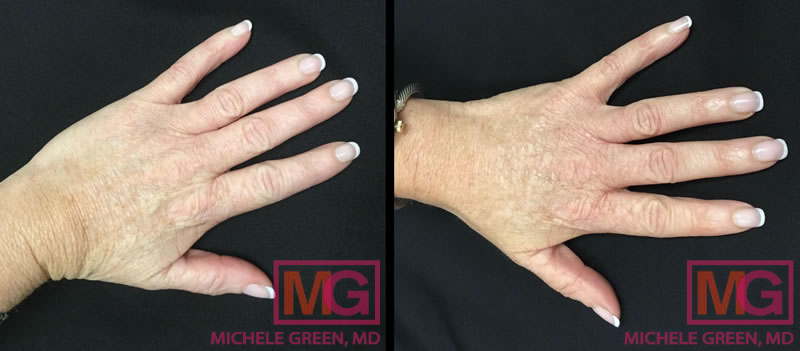
Who is a good candidate for hand filler treatment?
A good candidate for hand filler treatment is someone who has begun to notice age-related changes in the hands and wants to restore a smoother, more youthful appearance. Many patients seek treatment for thinning skin, loss of volume, increased visibility of veins and tendons, and fine lines or wrinkles on the backs of the hands. The hands often show the first signs of aging, prompting patients to seek hand rejuvenation. Hand fillers are well-suited for individuals seeking subtle, natural-looking improvement without surgery or extended recovery time. Dermal fillers enhance the hands’ existing structure without altering their shape and require maintenance treatments over time. During a personalized consultation, a board-certified dermatologist carefully assesses skin quality, volume loss, and hand anatomy to determine whether dermal fillers can effectively achieve the patient’s aesthetic goals.
Who should not get fillers in their hands?
Hand filler treatment is not appropriate for everyone, and some individuals may be advised to avoid hand fillers for safety reasons. Patients with a history of severe allergic reactions or known hypersensitivity to filler ingredients, such as hyaluronic acid, calcium-based compounds, or lidocaine, may not be suitable candidates. Individuals with bleeding disorders or blood-clotting conditions may face a higher risk of bruising or complications after injections. Active skin infections, inflammation, open wounds, or rashes on the hands should be fully healed before considering treatment, as injecting filler into compromised skin can increase the risk of infection or poor healing. Patients with certain autoimmune conditions or connective tissue disorders may also require careful evaluation, as these conditions can affect healing and treatment outcomes. Dermal filler injections are also not recommended during pregnancy. Although hyaluronic acid-based fillers have a strong safety profile in the general population, there are no clinical studies evaluating the safety of injectable cosmetic treatments in pregnant patients. A thorough medical history review and consultation with a board-certified dermatologist are essential to determine whether hand fillers can be performed safely and to ensure that the treatment plan aligns with the patient’s overall health and skin condition.
What is the process for hand filler injections?
The first step in hand rejuvenation treatment is an initial consultation with Dr. Green at her private office on the Upper East Side. During this consultation, Dr. Green will review your medical history, hand anatomy, previous cosmetic procedures, skin concerns, and aesthetic goals to create a personalized treatment plan tailored to your hand rejuvenation needs. Photographs of your hands will also be taken for your medical chart to monitor future progress. Same-day treatment is possible if you are deemed a suitable candidate for the procedure.
Before your hand filler treatment, avoid taking any blood-thinning medications for one week, including Coumadin, Warfarin, nonsteroidal anti-inflammatory drugs (NSAIDs) such as Aspirin, Motrin, and Aleve, herbal supplements (e.g., fish oil), and specific vitamins (e.g., multivitamins, vitamin E) to minimize the risk of bruising. Patients who bruise easily can begin taking Arnica Forte, an herbal supplement designed to help prevent and heal bruises, 2 to 3 days before the procedure.
On the day of your hand filler treatment, a topical lidocaine cream will be applied to your hands one hour before your appointment to numb the area and make the procedure more comfortable. Dr. Green recommends covering the numbing cream with plastic wrap to ensure proper anesthetic penetration. When you enter Dr. Green’s office, the numbing cream will be removed, and the area will be sterilized for the procedure. Dr. Green will mark the area and expertly inject the dermal filler into the backs of your hands. Ice will be applied to minimize any bruising or swelling. The injection sites will be cleaned, and you will receive aftercare instructions to help you achieve the best cosmetic results. Dr. Green will then schedule a follow-up appointment approximately two weeks later to assess the cosmetic results of the procedure and determine whether any touch-ups are necessary. Depending on the filler used, results may last six months to two years before another hand filler treatment is needed to maintain them.
What are the side effects of hand filler injections?
Hand filler injections are generally well-tolerated, and most side effects are mild and temporary. The most common reactions after treatment include swelling, redness, and tenderness at the injection sites, which typically resolve within several days to two weeks. Bruising can also occur and may be more noticeable in the hands than in other areas because of the higher concentration of blood vessels beneath the skin. Some patients may experience temporary firmness or sensitivity as the filler settles, which gradually improves as the skin adjusts. In rare cases, small lumps can develop if the filler clumps unevenly beneath the skin, though this risk is minimized with proper technique and precise placement. Hyaluronic acid fillers offer the added reassurance of reversibility if adjustments are needed. When performed by a board-certified dermatologist with extensive experience in hand anatomy, hand filler injections carry a low risk of complications and yield results that are typically smooth, natural-looking, and long-lasting.
Can hand fillers migrate?
Hand fillers are very unlikely to migrate when injected correctly and placed in the appropriate skin layer. Migration occurs when fillers move away from the original injection site, which is rare in the hands because of the firm connective tissue and limited muscle movement. When dermal fillers are injected into the backs of the hands using proper technique, the product is distributed evenly beneath the skin to restore volume and improve skin quality. Factors that reduce the risk of migration include choosing the correct filler type for the hands, using conservative amounts, and placing the filler at the proper depth. Swelling immediately after treatment can temporarily give the impression that the filler has shifted, but this typically resolves as the swelling subsides. It is also important to follow aftercare instructions and avoid pressure on the hands immediately after treatment, as excessive rubbing and massaging during the first few days can interfere with the filler’s settling and affect the final results. The most important factor in preventing filler migration is having the procedure performed by a board-certified dermatologist with extensive experience in hand anatomy and injectable treatments, ensuring precise placement and natural-looking results.
Is there any downtime or aftercare associated with hand filler treatment?
There is no significant downtime after treatment, and patients can resume daily activities immediately. Most patients experience mild swelling, redness, or bruising after hand filler treatment. Immediately after the procedure, Dr. Green will apply an ice compress to the treated area to minimize swelling or bruising. Dr. Green recommends avoiding strenuous exercise, hot tubs, steam rooms, or saunas for 48 hours to reduce the risk of swelling. To prevent bruising, Dr. Green advises discontinuing any blood thinners, such as Aspirin, Aleve, or Motrin, as well as multivitamins, fish oil, or other herbal supplements, for one week before and after the procedure. If you are prone to bruising, it is also recommended to take Arnika Forte, an oral herbal supplement, for 2 to 3 days before and after the procedure to help prevent and reduce bruising.
Are hand fillers safe?
Absolutely! Hand fillers are incredibly safe when injected properly and are associated with minimal side effects, such as mild swelling, bruising, and redness. These side effects typically resolve on their own within one to two weeks after the injections, leaving patients with rejuvenated, youthful-looking hands. Restylane Lyft and Radiesse are two FDA-approved dermal fillers for hand rejuvenation, with safety and efficacy well established. Juvederm and Sculptra are used off-label for hand rejuvenation, but they have been extensively used in the face and have a proven safety record when injected. The best way to ensure the safety of your hand rejuvenation procedure is to have it performed by an experienced, board-certified dermatologist, such as Dr. Michele Green in New York City, who has the expertise to administer hand fillers safely and effectively.
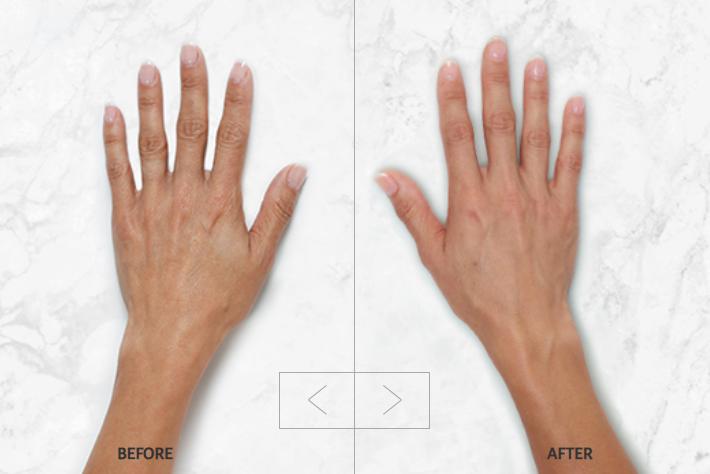
How soon would I see results from hand fillers?
Results from hand fillers are often noticeable immediately after treatment, especially with hyaluronic acid-based fillers. These fillers restore volume immediately upon injection, quickly smoothing the skin and softening the appearance of veins and tendons on the backs of the hands. Mild swelling may occur right after the procedure and typically subsides over the following days. Full results from HA fillers are seen after two weeks, once the filler has settled. For collagen-stimulating fillers, visible improvement develops more gradually as the body begins producing new collagen in response to treatment. While some early volume enhancement may be seen, optimal results continue to improve over several weeks and months as collagen production increases. The exact timing of results depends on the type of filler used and the individual healing response.
How long do hand fillers last?
The longevity of aesthetic results depends on the type and amount of filler used. Hyaluronic acid fillers typically last up to a year, with Restylane Lyft lasting 9 to 12 months and Juvederm Voluma lasting up to 12 months. Radiesse and Sculptra, both collagen biostimulator fillers, generally provide longer-lasting results than hyaluronic acid fillers, with effects that can last up to two years after a series of treatments. Additionally, a patient’s metabolism can influence how long the filler remains effective. Dr. Green recommends that her patients schedule annual treatment sessions to maintain the results of their procedures. When you consult with Dr. Green, she will help you determine the best treatment timeline tailored to your specific concerns and needs, ensuring your hands always look refreshed and revitalized.
Can I combine other treatments with dermal fillers for hand rejuvenation?
Yes! While dermal fillers can help combat age-related volume loss, other signs of aging can also appear on the hands. Common skin concerns on the hands include skin laxity, sun spots (age spots), fine lines, wrinkles, uneven texture, and hyperpigmentation. Anti-aging treatments, such as Thermage, Fraxel, Alex-Trivantage, and Mesopeels, can effectively address these signs of aging and rejuvenate the hands. The best treatment for your aging hands depends on your specific skin concerns and aesthetic goals. Dr. Green can collaborate with you in her private New York City office to determine the most effective treatment options for your aging hands. Typically, a combination approach to hand rejuvenation is most effective at tackling multiple skin concerns and achieving long-lasting, youthful-looking hands.
Collagen loss from aging can lead to loose, crepey skin on the hands. The Thermage FLX laser is a gold-standard skin-tightening treatment that creates firm, smooth skin with no downtime or side effects. The Thermage FLX delivers radiofrequency energy to gently heat the deep layers of the skin, stimulating collagen production. As new collagen forms, patients notice visible improvement in skin laxity and a reduction in the appearance of fine lines and wrinkles. Results from Thermage FLX typically appear within 4 to 6 months and can last approximately 1.5 years. There is no downtime associated with the procedure, and patients of all skin types and tones can benefit from Thermage FLX.
Botox can also be combined with dermal fillers to enhance overall hand rejuvenation, particularly for patients concerned about fine lines, skin texture, or excessive hand sweating. While Botox does not restore volume, it works by relaxing targeted muscles and reducing repetitive movements that contribute to fine lines and an aged appearance over time. On the other hand, Botox can help soften superficial wrinkles and create a smoother skin surface, complementing the volumizing effects of dermal fillers. Botox is also an effective treatment for palmar hyperhidrosis, a condition characterized by excessive sweating of the palms that can affect comfort and confidence. When combined under the expert care of Dr. Green, Botox and dermal fillers allow for a more comprehensive approach to hand rejuvenation that addresses multiple aging concerns.
Sunspots, also known as age spots, are common signs of aging that develop from prolonged sun exposure and skin damage. One popular treatment for eliminating sunspots on the hands is the Fraxel Dual laser. Fraxel is a fractional resurfacing laser that uses two wavelengths of light: 1927nm to remove sun damage and hyperpigmentation, and 1550nm to treat wrinkles and improve skin texture. During treatment, fractionated energy is delivered to the dermis to disrupt chromophores and eliminate sunspots. Dr. Green can also incorporate 1550nm wavelength treatment to enhance collagen production in the dermis and create a more even skin texture. The Fraxel laser is an excellent treatment option for patients with diffuse sunspots and pigmentation resulting from sun damage on the backs of their hands. Fraxel involves minimal downtime, typically resulting in two days of redness. Patients usually undergo a series of treatments spaced one month apart to achieve optimal cosmetic results.
Another popular laser treatment for sunspots on the hands is the Candela Alex-Trivantage laser. Unlike the Fraxel laser, the Alex-Trivantage laser is particularly effective for patients with discrete, individual sunspots on the hands because it delivers specific wavelengths of light to each spot. Downtime is minimal, with small scabs forming in the treated area that fall off on their own within five to seven days. Often, Dr. Green combines the Fraxel and Alex-Trivantage lasers, first using the Fraxel to treat sun-damaged areas across the entire hand, and then using the Alex-Trivantage to remove stubborn, discrete sunspots. Following any sunspot treatment, the most crucial step is to practice proper sun protection, avoid sun exposure, and use chemical and physical sunscreens to create a protective barrier.
Chemical peels are an excellent method for gently eliminating sunspots from the hands. They work by exfoliating the skin and promoting skin cell renewal, removing dead, pigmented cells to reveal healthy, bright cells at the skin’s surface. There are various chemical peels available on the market, each suited to specific skin types and tones. Mesopeels are specially formulated chemical peels designed to treat pigmentation, including sunspots, in patients of all skin types and tones, including those with darker skin tones. Typically, a series of chemical peels, administered every 2 to 4 weeks, is necessary to achieve optimal cosmetic results.
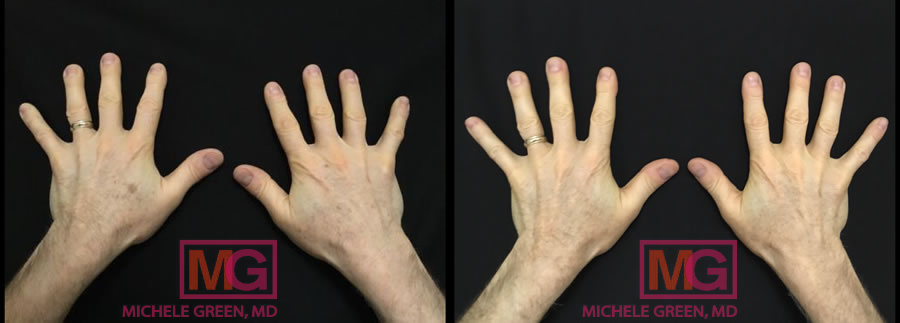
Frequently asked questions (FAQs) about dermal fillers for hand rejuvenation.
Where can fillers be used on the hands?
Dermal fillers for hand rejuvenation are placed on the backs of the hands, where signs of aging, such as volume loss, thinning skin, and visible veins and tendons, are most noticeable. Fillers are not injected into the palms or fingers, as these areas are constantly in motion and serve functions that are not suited to volumizing treatments. Instead, the filler is carefully placed beneath the skin on the dorsal surface of the hands, specifically in the spaces between the metacarpal bones, where natural fat loss occurs with age. This placement allows the filler to restore lost volume, smooth the skin’s surface, and soften the appearance of veins and tendons without affecting hand mobility or sensation. Precise injection technique is essential in this area to ensure even distribution and natural-looking results. Depending on the patient’s anatomy and treatment plan, a needle or cannula may be used to place the filler beneath the skin. Therefore, hand filler treatment should be performed by a board-certified dermatologist with extensive experience in hand anatomy and injectable treatments, such as Dr. Green.
Which filler is best for hands?
Some patients are primarily concerned with visible veins and tendons, while others focus on crepey skin texture or overall thinning. Patients seeking immediate improvement with reversible results may benefit most from hyaluronic acid-based fillers such as Restylane Lyft. Those interested in longer-lasting results and collagen stimulation may be better suited for fillers like Radiesse or Sculptra, which improve skin firmness over time. Lifestyle factors, metabolism, and preferences for maintenance treatments also influence this decision, as some fillers require more frequent touch-ups while others offer longer-lasting results. During a consultation, a board-certified dermatologist, such as Dr. Green, will evaluate hand anatomy, skin quality, and the severity of aging to determine which filler will deliver the most natural-looking outcome. A personalized approach ensures that the selected filler enhances the hands without compromising movement, comfort, or overall appearance.
How much does filler for hands cost?
The cost of hand rejuvenation fillers varies based on several factors, including the type and amount of filler used, geographic location, and the injector’s expertise. Some fillers are priced per syringe, while others are priced per vial. The amount of filler required depends on the severity of your skin concerns, your aesthetic goals, and the specific type of filler used. While medspas can be less costly than board-certified dermatologists or plastic surgeons, it is crucial to choose an injector with extensive experience to minimize the risk of unwanted side effects. Board-certified dermatologist Dr. Michele Green has been expertly injecting soft tissue fillers for over 25 years and will develop a customized hand rejuvenation plan to achieve long-lasting, youthful-looking results. During your consultation with Dr. Green, your hands will be assessed to determine the type and amount of filler needed for your customized treatment plan. At that time, her office will provide a price estimate.
How much filler is needed for hands?
Typically, two syringes of dermal fillers are needed for hand rejuvenation. The amount of filler required for your hands depends on several factors, including the severity of your skin concerns and the desired aesthetic outcome. The type of filler also influences this determination, as each has a unique composition and thickness. Dr. Green employs a “less is more” approach to dermal fillers, often starting with a conservative amount to ensure that your hand filler treatment looks natural. After your initial injection, Dr. Green will invite you back to her private office on the Upper East Side to assess whether any additional filler is needed.
Will hand fillers feel natural?
Hand fillers are designed to restore lost volume while preserving the hands’ natural look and function, so they should feel smooth and natural once they have settled. When dermal fillers are properly placed beneath the skin on the backs of the hands, they blend with surrounding tissue and move naturally with everyday hand movements. After the initial swelling resolves, most patients report that their hands feel no different than before treatment, except that they appear fuller and smoother. Hand filler treatment is intended to subtly replenish volume, making the skin look healthier and less thin. Choosing the appropriate filler type and using a conservative amount helps ensure that the hands retain their natural contours and flexibility, allowing patients to use their hands comfortably.
Do hand fillers work?
Yes! Hand fillers are an excellent non-invasive treatment for rejuvenating the hands. These fillers restore volume and collagen lost with age. When injected into the back of the hand, they lift the skin, smoothing fine lines and wrinkles. Restoring volume also reduces the prominence of tendons and veins, improving the overall appearance of the hands. Various dermal fillers, including Restylane and Sculptra, are available for hand rejuvenation. An expert injector, such as Dr. Green, will select the most suitable filler based on your hand anatomy and skin concerns. Results can last 12 to 24 months, depending on the specific filler used. There is no downtime or adverse side effects associated with hand filler treatment, making it an excellent alternative to invasive plastic surgery. If you are interested in hand rejuvenation with dermal fillers, consult board-certified dermatologist Dr. Green to determine the filler most appropriate for your cosmetic and aesthetic goals.
Do hand fillers hurt?
Hand filler injections are generally well tolerated, and most patients experience only mild discomfort during the procedure. Before treatment, a topical numbing cream is applied to the hands to reduce sensitivity and make the injections more comfortable. Many dermal fillers used for the hands also contain lidocaine, which provides additional numbing as the filler is injected. Patients typically describe the sensation as light pressure or a brief pinching feeling. After the procedure, some tenderness, swelling, or sensitivity may occur, but these effects are usually mild and temporary. The hands remain fully functional after treatment, and any post-treatment discomfort typically resolves on its own within a short period of time.
Who performed hand fillers?
Hand filler injections should be performed by a qualified medical professional with extensive training in anatomy and injectable treatments. In dermatology practices, board-certified dermatologists, such as Dr. Michele Green, are the specialists who perform hand filler procedures. Board-certified dermatologists have advanced training in skin structure, aging processes, and safe injection techniques, ensuring precise placement of dermal fillers for natural-looking results and minimizing the risk of complications. Choosing an experienced injector is especially important for the delicate anatomy of the hands, where careful assessment of volume loss and vascular structures is essential for optimal outcomes.
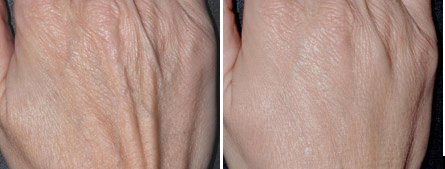
How can I get started with hand fillers today?
Dermal fillers for the hands are an effective, non-invasive solution for restoring lost volume and improving the overall appearance of aging hands. By replenishing volume beneath the skin, hand fillers help smooth fine lines, soften the appearance of prominent veins and tendons, and create a fuller, more youthful look. Treatments require little to no downtime and can be tailored to each patient’s unique concerns, whether the goal is immediate volume restoration, gradual collagen stimulation, or a combination of both. Hand fillers can also be combined with other in-office treatments, such as lasers, radiofrequency, and chemical peels, to address pigmentation, skin laxity, and texture for comprehensive hand rejuvenation. With a personalized approach, hand filler treatment can help hands look refreshed, balanced, and naturally youthful while preserving each patient’s natural beauty.
Dr. Michele Green is an internationally renowned, board-certified dermatologist with over 25 years of experience delivering world-class non-invasive cosmetic treatments, including dermal fillers for hand rejuvenation. She is known for her conservative, less-is-more approach and for natural-looking results that enhance a patient’s appearance without looking overdone. Consistently recognized by Castle Connolly, Super Doctors, and New York Magazine as one of New York City’s top dermatologists, Dr. Green customizes each treatment plan based on hand anatomy, skin quality, and individual aesthetic goals. When you consult with Dr. Green at her private Upper East Side dermatology office, she will work closely with you to create a personalized plan to restore youthful, smooth, and healthy-looking hands. To schedule a consultation, please call (212) 535-3088 or contact the office online today.


