


Dermal Fillers
Dermal fillers are soft-tissue injections used to enhance facial contours, restore lost volume, and create a more youthful appearance. Today, more patients aim to reverse signs of aging and address skin concerns such as facial volume loss, fine lines and wrinkles, under-eye hollows, and acne scars to look and feel their best again. With dermal fillers, patients can achieve a smoother, younger look without undergoing invasive surgery. These treatments rank among the most popular non-invasive cosmetic procedures worldwide for their consistently impressive facial rejuvenation results, minimal downtime, and straightforward injection technique. When a skilled injector, like Dr. Michele Green in New York City, performs your dermal filler treatment, the results appear natural, stunning, and long-lasting.
Dermal fillers are made from various compounds, technologies, and formulations, allowing each to target specific skin concerns or areas. Hyaluronic acid fillers like Juvederm, Restylane, and Belotero provide immediate volume restoration to the treated area. Poly-L-lactic acid fillers, such as Sculptra, or calcium hydroxylapatite fillers, like Radiesse, gradually stimulate collagen production to restore volume and smooth the skin. Many patients choose dermal fillers for the cheeks, lips, jawline, chin, and nasolabial folds; however, these treatments have uses beyond facial rejuvenation. Restylane fillers are often injected into the hands to smooth crepey skin, while Sculptra can be used in the hips or buttocks for body contouring. Given the variety of injectables and the skill needed for proper administration, seeking treatment from an experienced, board-certified dermatologist like Dr. Green is crucial to achieving the best results and finding the most suitable dermal filler for your needs.
Dr. Michele Green is a highly regarded, board-certified dermatologist with over 25 years of experience offering premier non-invasive cosmetic procedures to some of the world’s most discerning clients, including dermal filler treatments. When it comes to facial rejuvenation, Dr. Green adopts a holistic approach and follows a less-is-more philosophy, tailoring each patient’s treatment plan to address their specific skin concerns and aesthetic goals. She is consistently recognized by Castle Connolly, New York Magazine, Super Doctors, and The New York Times as one of NYC’s top dermatologists for her dedication and expertise. During your consultation at her private dermatology practice in New York City, she will discuss your unique aesthetic goals and craft a personalized dermal filler plan to deliver natural, stunning results.
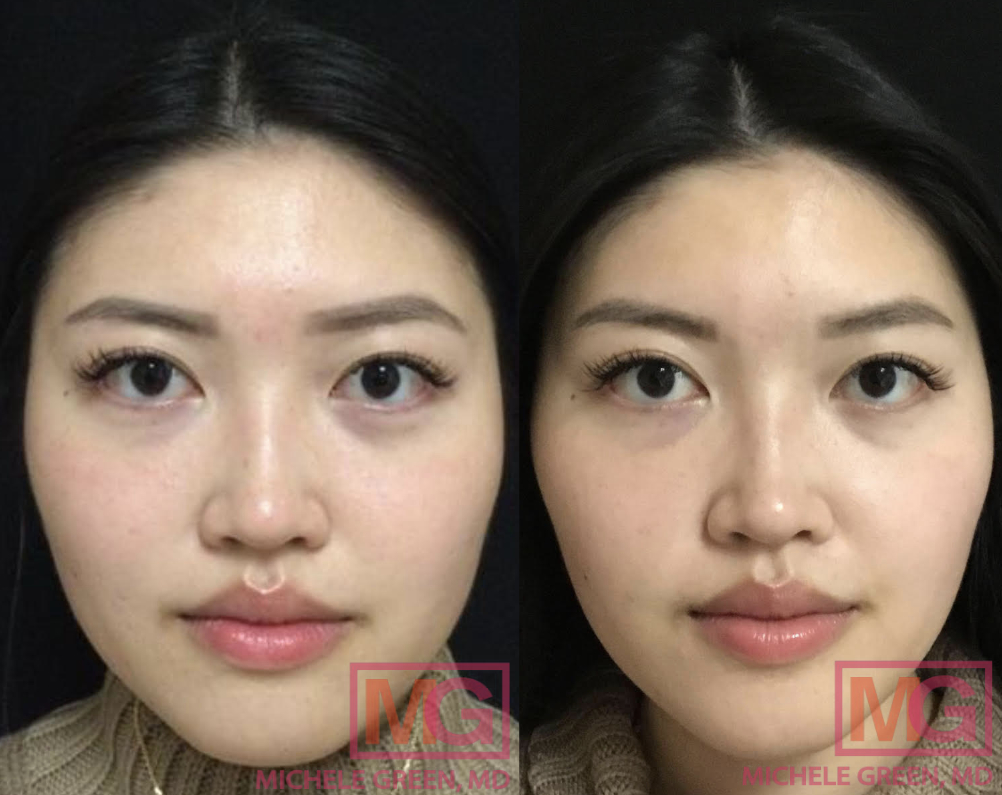
1 treatment of Botox to Masseter area
What are dermal fillers?
Dermal fillers are cosmetic injectables that help reduce fine lines and deep wrinkles, restore lost volume, and enhance specific features. Unlike invasive plastic surgery, dermal fillers offer facial rejuvenation and body contouring without long recovery times or major side effects. These fillers are made of various substances, each with unique properties and best uses. Common options include hyaluronic acid, calcium hydroxylapatite, and poly-L-lactic acid. Extensive research confirms their safety and effectiveness, and many are FDA-approved for specific areas, such as the cheeks or lips. The effects of dermal filler injections are semi-permanent, lasting from six months to five years, depending on the patient’s metabolism and the type and amount used. Most patients need regular, tailored treatment sessions to maintain optimal results. Dr. Green uses a range of FDA-approved dermal fillers for facial rejuvenation and body enhancement.
What are dermal fillers used for?
Dermal fillers are used to restore facial volume, improve facial contours, and smooth fine lines and deep wrinkles. As part of the aging process, the loss of collagen and facial fat contributes to a youthful, supple look. Dermal fillers help replace some of this lost volume, resulting in a more youthful, refreshed appearance. Common uses for dermal fillers include:
- Restoration of lost volume in the cheeks, temples, and midface
- “Smile lines” (nasolabial folds)
- Deep wrinkles and skin folds
- Marionette lines (creases running vertically from the mouth to the chin)
- Oral commissures
- Lip augmentation
- “Smoker’s lines” / Perioral lines (fine lines around the lips)
- Tear troughs (under eye hollows)
- Horizontal neck creases
- Jawline enhancement
- Chin augmentation
- Hand rejuvenation
- Rejuvenating the décolletage, upper arms, thighs, hips, and knees
- Non-surgical buttocks augmentation (BBL)
- Reducing the appearance of depressed acne scars, stretch marks, and surgical scars
- Enhancement or contouring of natural facial features
No matter your cosmetic concern, Dr. Green can tailor your dermal filler treatment to deliver optimal, natural-looking, long-lasting results.
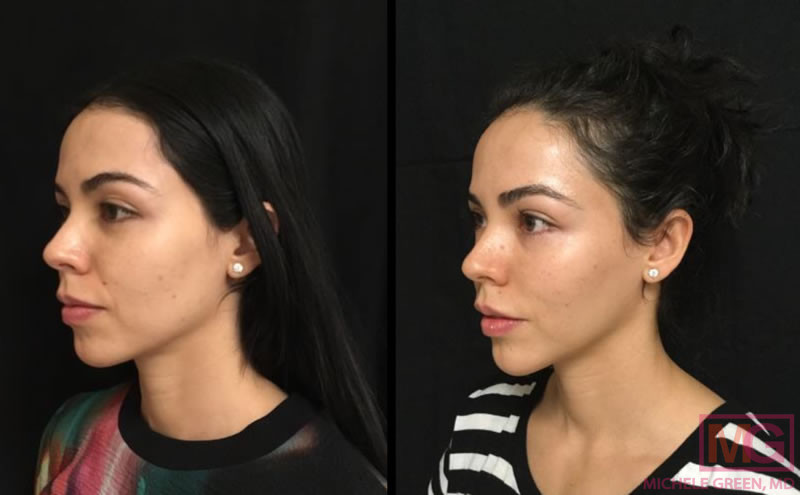
Before & After Photo: Aquagold, Dermal fillers and VBeam
What are dermal fillers made of?
Many popular dermal fillers, including Restylane, Juvederm, and Belotero, are made of hyaluronic acid. Hyaluronic acid is a naturally occurring, biodegradable substance in the skin that provides essential hydration and youthful suppleness. Hyaluronic acid fillers are gel-like substances that, when injected, bind with the water present in the skin. The result is a lifting, plumping effect and a smoother skin texture. Recent clinical studies have shown that, over time, dermal filler treatments with hyaluronic acid injections stimulate new collagen production. Collagen is a protein in the skin and connective tissues that supports facial structure, providing a firm foundation and contributing to a youthful appearance. Hyaluronic acid injectable fillers are among the most common dermal fillers for enhancing facial contours and features, replenishing volume loss, and reducing the appearance of fine lines and deep wrinkles.
Although dermal fillers like Sculptra, Radiesse, and Bellafill are not based on hyaluronic acid, they are also highly effective for restoring lost volume and achieving a more youthful look. Sculptra contains poly-L-lactic acid (PLLA), a biocompatible compound that stimulates collagenases upon injection. By promoting new collagen production, Sculptra helps tighten and smooth the skin, reducing signs of aging. Radiesse is composed of calcium hydroxyapatite, which forms a supportive scaffold that encourages new collagen growth. Another biostimulating dermal filler on the market is Bellafill, made of purified bovine collagen and polymethylmethacrylate (PMMA) microspheres. The bovine collagen provides an immediate plumping and volumizing effect when injected. Similar to Radiesse’s calcium hydroxylapatite, the PMMA microspheres in Bellafill create a matrix that supports the body’s natural collagen production. The advantage of collagen-stimulating dermal fillers like Sculptra, Radiesse, and Bellafill is that the collagenase process continues long after the filler has left the body. Consequently, many patients find these biostimulating fillers last longer than hyaluronic acid fillers after an initial series of treatments.
Dr. Green adopts a holistic approach to dermal filler treatments, tailoring each plan based on the patient’s facial structure, skin concerns, and desired cosmetic outcomes. During your consultation with Dr. Green, you will have the opportunity to discuss your specific cosmetic goals and, together, develop a suitable treatment plan and timeline to achieve optimal results.
Types of dermal fillers
Juvederm collection
The Juvederm collection of dermal fillers includes various hyaluronic acid formulations, each with a unique makeup and suited for facial rejuvenation. Allergan, the pharmaceutical company that also produces Botox, manufactures Juvederm dermal fillers. The XC in many Juvederm products signifies that the filler contains lidocaine, a local anesthetic that helps lessen discomfort during injection.
- Juvederm Ultra XC is best for augmenting the lips and restoring lost volume in mild to moderate smile lines, marionette lines, and nasolabial folds. Results with Juvederm Ultra XC typically last nine to twelve months.
- Juvederm Ultra Plus XC is ideal for injection into the mid and lower face to treat deep wrinkles, such as the nasolabial folds and marionette lines. It is also an excellent injectable for lip augmentation. Juvederm Ultra Plus XC lasts for about nine to twelve months.
- Juvederm Voluma is one of the most popular dermal fillers in the Juvederm collection. It was designed to enhance contour and replace volume loss in the cheekbones and malar area. Juvederm Voluma helps restore youthful contours by plumping up the cheeks and chin, where the aging process has caused volume loss. This advanced hyaluronic acid formulation can deliver natural-looking cosmetic results that last up to 12 months.
- Juvederm Volbella was designed to subtly enhance the lips and smooth fine lines, particularly those around the mouth (perioral lines) and vertical lines above the upper lip (“smoker’s lines”). Volbella can also be used to treat under-eye hollows (tear troughs) and lasts for approximately one year.
- Juvederm Vollure was designed to treat smile lines, marionette lines, and nasolabial folds. Its 18-month longevity is very appealing because it reduces the need for frequent reinjections.
- Juvederm Volux is the first-ever dermal filler designed and FDA-approved specifically for jawline enhancement. Made with patented Vycross technology for long-lasting, natural-looking results, Juvederm Volux can enhance jawline definition, erase lower facial creases, reduce the appearance of jowls, and provide the ideal facial contour. Juvederm Volux is a relatively thicker hyaluronic acid gel offering rejuvenation results lasting 6-18 months.
- SkinVive is a new, unique Juvederm filler used to promote hydration and smoothness in the cheeks. This FDA-approved filler consists of hyaluronic acid microdroplets to help the skin retain necessary softness and moisture. SkinVive typically lasts for six months before another session is needed.
Restylane family
The Restylane family of hyaluronic acid dermal fillers, made by Galderma, is a popular choice for reducing fine lines and wrinkles and improving facial contours. The full range of Restylane products includes Restylane-L, Restylane Silk, Restylane Lyft, Restylane Defyne, Restylane Refyne, Restylane Kysse, Restylane Contour, Restylane SkinBoosters, Restylane Eyelight, and Restylane Volyme. These injectables help enhance skin rejuvenation and create a more youthful look, as explained further in the sections below.
- Restylane-L is designed to address moderate facial wrinkles around the corners of the mouth, marionette lines, laugh lines, and the tear trough area (under the eye). It is also a popular dermal filler for providing a natural, soft lip enhancement. The effects of a Restylane-L injection typically last about 6 to 9 months.
- Restylane Lyft, formerly marketed as Perlane, is a top choice for treating deep wrinkles and restoring facial and hand volume. It is also FDA-approved for cheek augmentation and is frequently injected into oral commissures. The effects of Restylane Lyft typically last between 9 and 12 months.
- Restylane Silk is specially formulated with smaller particles to enhance the lips and smooth fine lines around the mouth. Improvements in lip volume and shape with Restylane Silk can last six months or longer.
- Restylane Refyne and Restylane Defyne are among the newest Restylane products, designed with XpresHAn Technology™, which enables natural facial movement in the treated areas. Restylane Refyne addresses moderate lines and wrinkles, while Restylane Defyne targets moderate to deep wrinkles. Both formulas can last up to twelve months.
- Restylane Eyelight is the first FDA-approved dermal filler specifically designed for treating under-eye hollows. Made with NASHA technology, this hyaluronic acid filler is tailored to fill tear troughs, reducing the appearance of dark circles caused by volume loss or natural hollows. Restylane Eyelight can deliver results that last up to 18 months.
- Restylane Kysse was created with innovative XpresHAn Technology™ to add volume and hydration to the lips while keeping a natural appearance. Plus, the formulation’s ability to shape to your natural tissues means you need less product for great results. The effects last a very long time, providing volumizing and rejuvenating results for up to twelve months.
- Restylane Contour was FDA-approved in 2021 for restoring volume and shaping the cheeks and midface. Its unique formulation, using patented XpresHAn Technology, enables a full range of motion and natural expressions after injection. Results with Restylane Contour can last up to twelve months.
- Restylane Volyme is a soft dermal filler used to restore volume in the midface, cheeks, chin, and jawline. Its small particle size makes it ideal for producing smooth, natural-looking results that last up to one year.
- Restylane SkinBoosters is a dermal filler treatment designed to restore hydration and moisture to the skin. Microinjections of Restylane SkinBoosters boost skin cell turnover and enhance the texture and appearance of the skin. Usually, three treatments spaced one month apart are recommended for optimal results, with patients returning every six months for maintenance treatments.
Belotero Balance
Belotero is a thin, smooth, flexible hyaluronic acid filler manufactured by Merz that targets fine lines. Created with the proprietary Cohesive Polydensified Matrix (CPM) process, this hyaluronic acid filler easily blends into the skin, making it an excellent option for filling fine lines. Its unique characteristics provide a soft, even correction for delicate areas of the face, such as lip lines and the tear trough region under the eyes. Unlike other undereye fillers, Belotero is much less likely to cause the Tyndall effect, which is a side effect of undereye fillers that produces a blue tint in the treated area.
Sculptra
Sculptra is a cosmetic injectable made from a substance called poly-L-lactic acid. When injected, Sculptra encourages the production of new collagen in the skin. Collagen is a protein that provides structure and firmness to the skin. As part of the natural aging process, collagen gradually breaks down, causing signs of aging. By restoring collagen in the treated area, Sculptra injections can replace lost volume and help achieve a youthful look. The results are long-lasting, with effects that can last up to two years after completing a short series of injections. Because Sculptra can be used in various facial areas, it is an excellent choice for overall facial rejuvenation. It can also treat other parts of the body, such as the neck, décolletage, and buttocks.
Radiesse
Radiesse is an FDA-approved injectable dermal filler made of calcium hydroxyapatite (CaHA). Using patented microsphere technology, each Radiesse injection initiates a process called collagenase production. This process stimulates new collagen growth, restoring collagen around the injection site. Additionally, the CaHA gel microspheres provide immediate volume to fill in visible deep lines and wrinkles. Radiesse usually lasts about a year and, in some cases, up to two years. It is ideal for treating deep wrinkles, volume loss, and creases, and it is also FDA-approved for hand rejuvenation.
Bellafill
Bellafill was originally FDA-approved in 2007 under the name Artefill. It consists of nonresorbable polymethylmethacrylate (PMMA) microspheres suspended in a water-based gel containing bovine collagen and lidocaine. This synthetic injectable was initially approved to reduce the appearance of smile lines, but it can also help reduce the appearance of acne scars. Since this product contains bovine collagen, skin tests are necessary to ensure the patient is not allergic to the dermal filler. Bellafill has been reported to last for more than five years.
Who is a good candidate for dermal filler treatment?
Healthy individuals over the age of 21 are good candidates for injectable dermal filler treatment. Pregnancy or breastfeeding is a contraindication because safety has not yet been established. Other contraindications include a history of severe reactions (anaphylaxis), bleeding disorders, allergy to gram-positive bacterial proteins used in hyaluronic acid, and allergy to lidocaine. If you have an active rash, infection, or breakout, Dr. Green may suggest delaying filler injections until your skin condition improves. During your initial consultation, Dr. Green will review your medical history to see if you are a suitable candidate for dermal fillers.
What is the process of having dermal filler treatment?
The first step in getting dermal filler treatment is consulting an expert injector, such as board-certified dermatologist Dr. Michele Green. During your consultation, Dr. Green will gather a detailed medical history, review any previous cosmetic procedures, and discuss your specific skin concerns and aesthetic goals. Photographs of the treatment area will be taken for your private medical record to support the discussion and track your progress. If you are a suitable candidate for dermal filler treatment, the injections may be performed on the same day as your consultation or scheduled for a later time, based on your preference.
Before any type of injection, Dr. Green recommends avoiding blood thinners, NSAIDs such as Aspirin, Motrin, and Aleve, multivitamins, vitamin E, and fish oil for 1 week to reduce the risk of bruising. Patients prone to bruising can also take Arnika Forte, an herbal supplement, to help prevent bruising and speed up healing. Arnika can be taken several days before and after the injection to prevent unwanted bruising.
On the day of your dermal filler treatment, apply a topical lidocaine cream to the entire area 1 hour before your injections. The numbing cream will desensitize your skin, improving your comfort during the procedure. When you arrive at Dr. Green’s office, the cream will be removed, and the skin will be sterilized. Dr. Green will then skillfully inject the dermal fillers chosen for your rejuvenation plan. Ice packs are applied immediately after the injections to reduce bruising and swelling. You will receive all necessary aftercare instructions to help you achieve and maintain optimal results, which may vary slightly depending on the type of dermal filler used. Dr. Green will invite you to return for a follow-up appointment about 2 weeks after your injections. During this visit, Dr. Green will evaluate the results and determine if any touch-ups are needed.
What can I expect after dermal filler injections?
Patients appreciate that dermal filler treatments require no aftercare and virtually no downtime. Most experience mild swelling, redness, or bruising that resolves on its own within 2 weeks. After the procedure, an ice pack is applied to the treated area to reduce swelling. To prevent excessive swelling or bruising, avoid strenuous exercise, saunas, or hot tubs for at least 48 hours after the injections. Dr. Green also advises continuing to avoid blood thinners like Coumadin, Aleve, Aspirin, or fish oil for an additional week to lower the risk of bruising.
What are the side effects of dermal filler injections?
Some of the most common side effects of dermal filler injections include:
- Redness
- Bruising
- Swelling
- Lumps
- Discoloration
- Pruritus
- Tyndall Effect
Lumps or nodules can be a side effect of dermal fillers. If lumps form or you’re unhappy with your results, hyaluronic acid fillers like Juvederm, Restylane, and Belotero can be easily reversed with hyaluronidase injections. Hyaluronidase is an enzyme that breaks down hyaluronic acid, reversing the effects of these injections. Unfortunately, fillers like Sculptra and Radiesse cannot be dissolved with any agent, so patients must wait for their bodies to metabolize the filler naturally. Additionally, improperly performed dermal filler injections can lead to serious side effects and poor cosmetic outcomes. For instance, if filler is accidentally injected into a blood vessel, side effects such as blindness, stroke, and skin necrosis can occur. It is essential to choose an experienced injector, such as board-certified dermatologist Dr. Green, to avoid poor results and ensure your dermal filler treatment is both safe and effective.
Do dermal fillers migrate?
Dermal fillers usually do not migrate when placed properly, and most patients find that the product stays exactly where it was injected once the initial healing period ends. In the first few days, the area may appear slightly different as swelling decreases and the tissue relaxes, giving the illusion of movement even if the filler has not actually moved. Real migration is rare and generally occurs only when the filler is injected into the wrong layer of the skin, when an overly soft or overly firm product is used in the wrong area, or when too much filler is injected at once. Applying too much pressure to the treated area immediately after injection can increase the risk of migration, so following aftercare instructions is important. When an experienced injector performs the treatment, selects the correct dermal filler, and injects with precision, the risk of unwanted movement is very low.
How long do dermal fillers last?
Dermal filler treatments provide semi-permanent results that last from 6 months to 5 years. The duration of these results depends on an individual’s metabolism and the amount and type of dermal filler used. For example, hyaluronic acid fillers like Juvederm, Restylane, and Belotero offer immediate results after one session and can last 6 to 12 months. Biostimulators such as Sculptra and Radiesse can last from 1.5 to 5 years after an initial series of treatments. Most patients schedule regular dermal filler sessions every six months to two years, based on the specific filler used, their metabolism, and their aesthetic goals. When consulting with Dr. Green, she will help you develop a timeline for your dermal filler treatments tailored to your needs.
Do dermal fillers dissolve?
All hyaluronic acid dermal fillers can be dissolved. Hyaluronic acid fillers are dissolved with an agent called hyaluronidase, an injectable enzyme that breaks down hyaluronic acid and reverses the effects of the filler injections. However, dermal fillers like Sculptra and Radiesse cannot be dissolved by any agent. To ensure the best cosmetic results, it is essential that an experienced, board-certified dermatologist, such as Dr. Michele Green in New York City, performs your dermal filler injections.
Do dermal fillers hurt?
Most patients find dermal filler treatments very manageable. A topical numbing cream is applied to the area before the injections to help the skin feel more comfortable and less sensitive. Many fillers also contain lidocaine to help reduce any discomfort as the treatment begins. You may feel a light pressure or a quick pinch, but the sensation is brief and settles quickly. The skin can feel slightly tender afterward, similar to a mild bruise, and this fades over the next day or two. Patients are often surprised by how at ease they are, especially when the injections are done gently and precisely.
Are dermal fillers safe?
Yes! Dermal fillers are entirely safe when administered by an experienced and qualified healthcare provider in a medical setting. While treatment with a board-certified dermatologist like Dr. Green may cost more, choosing the right provider is crucial to avoid unnecessary risks and side effects. When you select Dr. Green, you can trust that you are working with an injector who has the expertise and experience to perform dermal filler procedures safely, effectively, and satisfactorily. The U.S. Food and Drug Administration has approved all products used by Dr. Green at her private dermatology office and has proven them safe and effective through clinical studies. If you’ve had any adverse events with dermal fillers in the past, be sure to discuss them during your consultation.
Which dermal filler do I need?
Choosing the right dermal filler depends on your aesthetic goals and facial structure. Each product has its own texture and support level, which determines the best area for its use. Some fillers lift areas that have sagged over time, while others help soften fine lines, and some restore lost volume. The right choice also takes into account your skin’s thickness and elasticity, the amount of volume you’ve lost, and your overall facial harmony. To find out which dermal filler suits you best, schedule a consultation with Dr. Green, who can help identify the filler that will give you the most natural look.
Other Frequently Asked Questions (FAQs)
Does insurance cover dermal fillers?
Insurance does not cover dermal fillers used for cosmetic rejuvenation. Fillers are considered elective aesthetic treatments, so patients pay out of pocket. Medical insurance is intended to cover health or functional conditions, not procedures aimed at enhancing appearance. Rarely, fillers may be used for reconstructive purposes after injury or surgery, but those cases are evaluated individually by insurance providers. However, insurance coverage for reconstructive uses does not extend to routine cosmetic treatments. In Dr. Green’s practice, the cost is reviewed in detail during your consultation once she has examined the area and developed a personalized plan based on your needs and goals.
Do dermal fillers work?
Dermal fillers provide gentle support to areas where the skin has thinned or the contours have softened, helping the face look smoother and more rested. The results develop gradually, and the features keep their natural expression while achieving a smoother, more polished look. The effectiveness of fillers depends on understanding how each part of the face contributes to overall balance. Dr. Green assesses the underlying facial structure, the skin, and the face’s movement before creating a treatment plan. This allows her to place small amounts of filler accurately so the enhancement looks effortless and blends seamlessly with the surrounding tissue. The outcome is a refreshed appearance that feels like your own features, only brighter and more refined.
Is dermal filler the same as Botox?
While Botox and dermal fillers are both non-invasive injectable treatments for rejuvenation, their uses are distinct and complementary. Dermal fillers are intended to correct age-related volume loss, diminish the appearance of fine lines and facial wrinkles, and enhance contours in the cheeks, jawline, midface, and lips. Collagen is the most abundant skin protein, providing structural support and a firm foundation, and helping maintain overall youthfulness. As we age, collagen production declines while existing collagen diminishes, leading to more evident signs of aging. Most dermal filler injections stimulate natural collagen production in the skin, helping improve hydration, suppleness, and elasticity.
Botox is the leading cosmetic treatment for addressing and preventing dynamic fine lines and deep wrinkles. These lines and wrinkles develop over time due to repeated facial movements, mainly affecting the forehead, frown lines between the eyebrows, and crow’s feet. Botox is an injectable neurotoxin that blocks nerve signals to the muscles near the injection sites, which are responsible for facial expressions. By reducing muscle contractions, Botox essentially “freezes” the area. The result is smoother skin and a more youthful look. Besides its cosmetic effects, Botox has many medical uses, such as treating hyperhidrosis, temporomandibular joint disorder, migraines, and cervical dystonia. Many patients combine dermal fillers with Botox injections to tackle various signs of aging and achieve full-face rejuvenation. This combined injectable approach is so popular that it is often called the “liquid facelift.”
Who injects dermal fillers?
Dermal fillers should be administered only by trained medical professionals with thorough knowledge of facial anatomy and extensive experience with cosmetic injectables. At Dr. Green’s office, Dr. Green personally performs every injection. The FDA classifies fillers as medical devices that require proper medical training, sterile techniques, and expert judgment. The safest and most natural results are achieved by a board-certified dermatologist or plastic surgeon who can precisely place the product while recognizing and managing potential complications. At Dr. Green’s practice, each treatment is customized to the patient’s features, goals, and skin health, and all injections are administered in a controlled medical environment to ensure the highest safety standards.
How much do dermal fillers cost?
The total cost of dermal filler treatment ultimately depends on several factors, including the type of dermal filler used and the number of syringes needed. These vary from person to person because individual skin concerns, their severity, and aesthetic goals differ. The cost also depends on the healthcare provider’s experience and the office location. Never let price alone determine who performs your dermal filler treatment. Treatments with a board-certified dermatologist or plastic surgeon are generally more costly than those with a nurse injector in a medical spa. However, to ensure safety and optimal results, an experienced, knowledgeable, board-certified healthcare provider should administer your injections. When you consult Dr. Green at her private dermatology office in NYC, you will develop a personalized treatment plan tailored to your needs. The exact cost of your dermal filler procedure can be determined during this consultation.
Are dermal fillers permanent?
No, dermal fillers are not permanent. They are semi-permanent, with results lasting from six months to several years. The length of the results mainly depends on the type of dermal filler used and the patient’s metabolism. Most patients opt for regular treatment sessions, usually every six months to 1.5 years, to maintain optimal results. One advantage of dermal fillers is that they can be customized over time to accommodate changing cosmetic needs and goals. When you consult with board-certified dermatologist Dr. Green, she will help you create a treatment plan suited to your individual needs.
Are dermal fillers dangerous?
Dermal fillers are generally safe when used with FDA-approved products in a medical setting by an experienced practitioner. After treatment, most patients experience only mild swelling or tenderness, which resolves within a few days. Fillers become risky when injected into the wrong skin layers, potentially causing an uneven appearance or small bumps. If placed too close to the surface, the filler may produce a bluish tint called the Tyndall effect. The most serious issues occur if fillers are injected into a blood vessel, which can block circulation and require immediate medical attention. These risks can be minimized with proper technique, careful evaluation, and a cautious approach. When performed by a board-certified dermatologist like Dr. Michele Green, dermal filler treatments are a safe and effective way to restore volume and smooth lines without surgery.
Can you be allergic to dermal fillers?
An allergic reaction is a rare but serious potential side effect of any injectable treatment. It may be characterized by symptoms such as itching, swelling, tenderness, redness, or small bumps or nodules at or near the injection sites. Patients treated with hyaluronic acid dermal fillers who develop nodules due to an allergic reaction can usually have the bumps dissolved with hyaluronidase injections. Hylenex and Vitrase are brand names for the enzyme hyaluronidase, which dissolves the nodules and reverses the effects of hyaluronic acid filler injections. If you notice any such nodules, it is important to alert your injector immediately so they can provide proper treatment and report it to the dermal filler manufacturer. You should avoid dermal filler injections if you have a known allergy to any of the ingredients, including gram-positive bacterial proteins in hyaluronic acid, lidocaine, or bovine collagen.
Are dermal fillers bad for you?
Dermal fillers are generally safe, but they can become risky if used improperly or placed in the wrong areas. The products themselves are FDA-approved and have been tested for safety and effectiveness. The main risks depend on how and where the filler is injected. If filler is placed in the wrong layer of the skin, it can appear uneven or form visible lumps. Injecting it too shallowly may cause a bluish tint called the Tyndall effect. If placed too deeply or in tissue that cannot support it, the filler may spread or look heavy. The biggest danger arises when filler is injected into or very close to a blood vessel, which can cut off blood flow and require urgent medical care. These issues can be prevented with proper technique, a thorough understanding of facial anatomy, and a cautious approach. At Dr. Green’s office, every injection is done personally by Dr. Green, who carefully assesses each area to determine the correct depth, product, and placement, ensuring the treatment remains safe and results appear smooth and natural.
Which dermal fillers last the longest?
Dermal filler products offer a good alternative to cosmetic surgery, providing patients with low-maintenance, long-lasting facial rejuvenation. Certain Restylane and Juvederm fillers, such as Restylane Lyft or Juvederm Volume, can last up to 12 months. Biostimulators such as Sculptra and Radiesse may last for two years or more after an initial treatment series. However, the duration of results depends on factors such as the treated area, the type of dermal filler used, and the patient’s metabolism. Most patients schedule annual or biannual maintenance treatments to keep optimal cosmetic results. When you work with Dr. Green in NYC for your dermal filler treatment, she will help you create a treatment plan and timeline tailored to your needs and goals.
While knowing a filler’s longevity is useful, it shouldn’t be the main factor in choosing one. The best results come from picking a product that fits the specific area being treated and complements your facial structure and skin type. Some areas benefit from a softer filler that allows natural movement, even if it doesn’t last as long as others. Dr. Green’s approach emphasizes what looks most natural and balanced over time rather than just choosing the filler with the longest lifespan.
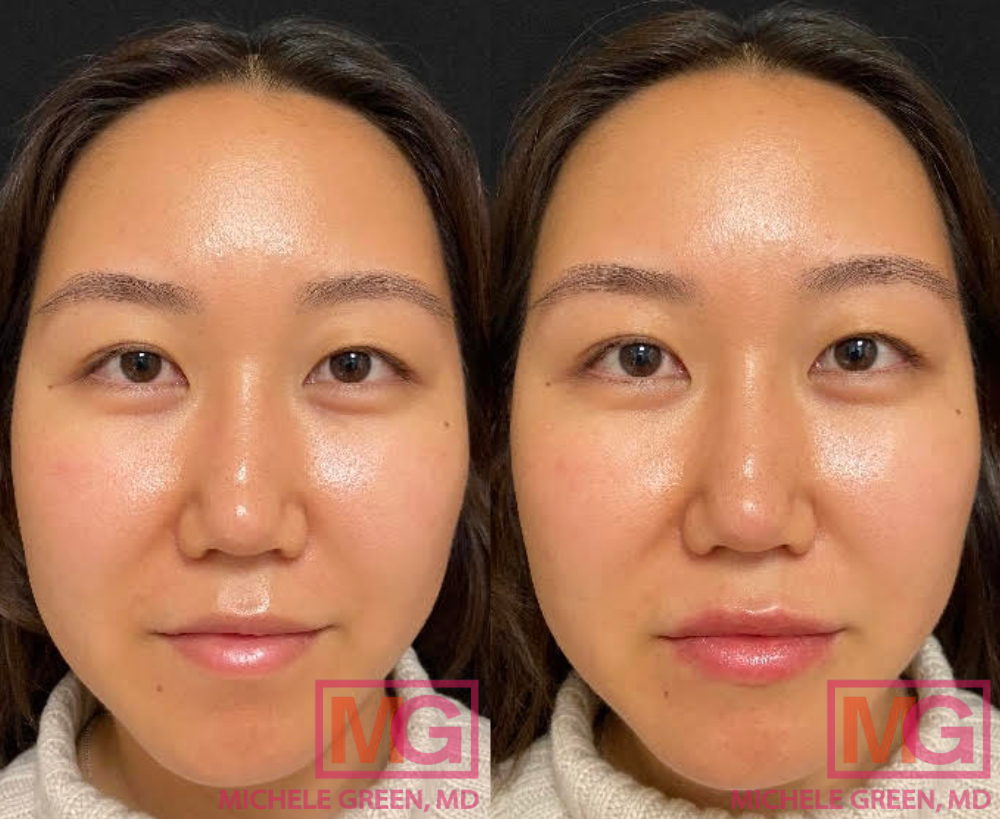
Before and after Restylane filler
Is dermal filler the same as lip filler?
Yes and no. Every lip filler is a dermal filler, but not all dermal fillers are suitable for lips. Lip fillers are non-invasive, injectable dermal products specifically designed to enhance, plump, and shape the lips. They are usually hyaluronic acid-based, with flexible, lightweight formulas that allow for natural movement. Not all dermal fillers are appropriate for lip injections, so it’s important to consult with an expert injector like Dr. Green to ensure you achieve a beautiful, natural-looking pout.
What is the best hyaluronic acid dermal filler for the lips?
Lip fillers are effective at adding volume and defining contours, resulting in a perfect pout. Hyaluronic acid fillers like Restylane Kysse, Restylane-L, Juvederm Ultra XC, and Juvederm Ultra Plus XC are excellent choices for lip enhancement. Hyaluronic acid, the main ingredient in Restylane and Juvederm fillers, naturally draws water. When injected into the lips, the filler provides immediate enhancement and helps retain moisture, resulting in a full, hydrated appearance. Lip augmentation is a customizable procedure using dermal filler injections, allowing patients to opt for a subtle enhancement or a more noticeable, fuller look. During your consultation with Dr. Green, she will work with you to choose the dermal filler that best aligns with your specific lip enhancement goals.
Which dermal filler is best for under the eyes?
Dermal fillers can be injected into the tear trough to reduce dark circles and puffiness under the eyes. The preferred dermal fillers for this area are hyaluronic acid gels with small particle sizes. Dr. Green frequently uses hyaluronic acid fillers, such as Belotero and Restylane, to improve the appearance of under-eye hollows and bags. Belotero is flexible, thin, and easily integrates into the skin, making it an excellent choice for the under-eye area. Its formulation eliminates the risk of the Tyndall effect, which causes a blue tint due to light reflecting off particles in the gel. With Belotero injections, the Tyndall effect is avoided, making it a great option for undereye rejuvenation. Restylane Eyelight was the first dermal filler FDA-approved in 2023 to treat under-eye hollows. Using cross-linked NASHA gel technology, Restylane Eyelight adds volume when injected into the tear trough, helping to erase under-eye bags and dark shadows caused by volume loss or natural hollows. The best dermal filler for your under-eye concerns depends on your facial anatomy and cosmetic goals. The most effective way to determine the right product is to consult with Dr. Green.
How much are dermal fillers for the under eyes?
The cost of under-eye filler varies based on how much correction is needed to smooth the hollow and achieve the desired look. Some patients only need a small amount of filler to soften a slight dip, while others have a more noticeable hollow that requires more product to look natural and give a rested appearance. The price can also vary depending on the type of filler used, as the under-eye area requires a product that sits smoothly in thin, delicate skin. During a consultation, Dr. Green will examine the under-eye area and consider your goals and facial structure to provide an exact price for your treatment.
How much dermal filler do I need?
The amount of dermal filler needed for a treatment depends on the type and severity of the skin concerns, the patient’s age, and the kind of filler used. For example, patients seeking lip augmentation or treatment for undereye hollows usually require a single syringe of hyaluronic acid filler to achieve long-lasting, natural-looking facial rejuvenation results. Conversely, patients undergoing non-surgical body contouring procedures, such as the Sculptra BBL, may need more than 30 vials of Sculptra to reach their desired results.
How much dermal filler for cheeks?
Estimating the amount of dermal filler needed for cheek augmentation can be challenging. Several factors, including the severity of skin concerns, the patient’s age, and the type of dermal filler used, influence the amount required for optimal results. For instance, younger patients with mild volume loss or those seeking slight cheek definition might only need one syringe or vial divided between both cheeks. Conversely, older patients with greater volume loss may require multiple syringes to achieve complete rejuvenation. The most effective way to determine the appropriate amount of dermal filler for your specific needs and achieve optimal results is by consulting Dr. Green at her private dermatology practice in NYC. Dr. Green is a skilled injector who follows a “less is more” philosophy when administering cosmetic injections. After reviewing your medical history, skin concerns, and aesthetic goals, she can provide an estimate of the number of syringes or vials needed.
What are the best dermal fillers?
Thanks to a wide range of dermal filler products, rejuvenating injectable treatments are highly effective at targeting various skin concerns, including fine lines, deep wrinkles, facial volume loss, lack of definition or contour, and even acne scars. The best way to find out which dermal filler matches your anatomy, specific concerns, and aesthetic goals is to consult an experienced, expert, such as internationally renowned board-certified dermatologist Dr. Michele Green in NYC. Dr. Green specializes in non-surgical cosmetic rejuvenation and has over twenty-five years of experience providing top-quality cosmetic injections. She follows a less-is-more philosophy with dermal fillers, resulting in beautiful, natural-looking, long-lasting outcomes. When you visit Dr. Green at her private dermatology office, she will work with you to develop a personalized treatment plan for your dermal filler procedure that best meets your needs.
How much are dermal fillers for eye bags?
The cost of treating eye bags with dermal fillers varies because the under-eye area is one of the most delicate parts of the face and requires a highly personalized approach. Some patients need only a small amount of hyaluronic acid filler to soften a hollow. In contrast, others require additional support in the midface to create a smooth transition under the eye. The type of filler used, the amount needed, and the injector’s experience all influence the overall treatment cost. Since the skin under the eye is thinner and more fragile than other facial skin, it is essential to choose an experienced injector to avoid unnecessary swelling and puffiness. During a consultation, Dr. Green assessed the tear trough structure and whether any nearby extra volume needed correction before recommending a treatment plan. After examining the area in person, she can determine the exact amount of product needed and provide a more precise price estimate.
How much are dermal fillers for smile lines?
The cost of treating smile lines depends on the depth of the folds and their cause. Some patients develop deeper creases from natural facial movements, while others have smile lines caused by volume loss higher in the cheek. In such cases, the treatment plan might include fillers for both the midface and smile lines, which can influence the amount and type of product needed. The choice of filler is also crucial, as different formulations are better suited for softness, flexibility, or structural support. The total cost is determined by how many syringes are required, the type of HA filler used, and the injector’s experience. During a consultation, Dr. Green observes how the area moves when you speak and smile, assesses the surrounding facial structure, and decides the most effective way to soften the lines. Once she develops the treatment plan, she can explain how much filler is needed and give you the exact cost based on your facial features.
Where to get dermal fillers?
The FDA classifies dermal fillers as medical device implants because of the knowledge, training, and expertise needed to perform injections. No one should buy dermal fillers or other cosmetic injectables online, and only board-certified medical professionals should administer dermal filler injections. Injections done by an inexperienced or untrained injector can lead to increased risks, such as a dermal filler being injected directly into a blood vessel, which can cause serious side effects, including vision impairment, stroke, and skin necrosis.
Additionally, all dermal filler treatments should be performed under sterile conditions in a medical office, not at a “party,” private home, or unlicensed spa. Dr. Michele Green is a member of the American Society of Dermatology, which closely regulates the best practices and safety of dermal fillers. It is essential to consult a reputable, board-certified dermatologist, such as Dr. Michele Green, in a medical setting for cosmetic injections. Receiving dermal filler treatments from a highly experienced, board-certified dermatologist ensures the lowest risk and the best possible cosmetic results.
Can dermal fillers move?
Dermal fillers are designed to remain in place after healing. Mild shifting might occur during the first two weeks as the fillers settle, so patients should avoid pressing on the area, sleeping face down, or engaging in strenuous activity too early. Once the filler stabilizes within the surrounding tissue, it remains in place, providing natural support and contouring that align with the patient’s goals. Notable migration usually results from an incorrect product choice, improper placement, or overfilling, making it essential that injections be performed only by an experienced, board-certified dermatologist. Dr. Green’s technique emphasizes precise placement and controlled amounts of filler to reduce the risk of unwanted movement and ensure the filler blends seamlessly with your natural features.
How to sleep after dermal fillers
After dermal fillers, it is best to sleep on your back with your head slightly elevated during the first few nights. This position helps reduce swelling and relieve pressure on the treated areas while the filler settles. Try to avoid sleeping on your side or stomach, as sustained pressure on the treatment area can interfere with the products’ setting in the tissue and may cause filler migration. Many patients place a pillow on each side of their head to stay comfortably on their back. Keeping the head raised also helps reduce morning puffiness. Once the initial swelling diminishes, you can resume your usual sleeping position. However, sleeping on your back in the first few days helps ensure smooth, even results.
Can you exercise after dermal fillers?
You can resume light daily activities after your dermal filler treatment, such as walking, but strenuous exercise should be avoided. Dr. Green recommends giving the injected area time to settle by avoiding vigorous workouts, heavy lifting, hot yoga, saunas, and steam rooms for the first 24 to 48 hours. Increased heat and blood flow can worsen swelling and bruising and may interfere with the filler’s integration into the tissue. Gentle walking that does not raise your heart rate can be done after treatment, but you should refrain from high-impact activities until the following day or longer if you tend to bruise easily. Once the initial swelling has subsided, you can gradually return to your normal routine while following the specific aftercare instructions provided at your visit to ensure the best, safest cosmetic results.
How to get started with dermal filler treatment
Dermal fillers are a great non-invasive option for restoring volume, enhancing facial features and contours, and achieving a youthful look. Besides reducing the appearance of fine lines and hollows, dermal fillers can also be used for non-surgical body contouring, diminishing acne scars and stretch marks, and boosting new collagen production. They are a popular choice over cosmetic surgery because there is no downtime, the procedures are simple, and the results are consistently impressive. There are various types of dermal fillers, each with unique properties suited for different uses. To ensure your treatment is safe and effective, to achieve the best results, and to avoid potential side effects, it’s essential to have injections performed by an experienced, board-certified dermatologist. When you receive cosmetic injections from an expert like Dr. Green, you can anticipate smooth, youthful, and natural-looking results that last.
Dr. Michele Green is a globally recognized expert in cosmetic dermatology with over 25 years of experience providing some of the world’s most discerning clients with top non-invasive cosmetic treatments, including dermal fillers and Botox injections. Dr. Green adopts a holistic approach and follows a less-is-more philosophy for facial rejuvenation and body enhancement, tailoring each patient’s treatment plan to their specific skin concerns and aesthetic goals. She is consistently listed among New York’s top dermatologists by New York Magazine, Super Doctors, Castle Connolly, and the New York Times for her dedication and expertise. Dr. Green’s artistry makes her one of New York’s most sought-after cosmetic injectors. To schedule a consultation with Dr. Green at her private dermatology practice in Manhattan’s Upper East Side and learn more about dermal fillers, please contact us online or call 212-535-3088.