


Botox Brow Lift & Forehead Wrinkles
A Botox brow lift is a popular option for those seeking to enhance the appearance of the brows and eyes without surgery or downtime. Many choose this treatment to address early brow drooping, heaviness around the eyes, or a tired or tense expression that develops as skin elasticity gradually declines and facial muscles become more active over time. By subtly elevating the brows and relaxing specific muscles, a Botox brow lift can help restore balance to the forehead and eye area while preserving natural movement and expression. Patients often appreciate that the treatment is quick, requires no recovery period, and delivers results that look refreshed and harmonious. A Botox brow lift may also be combined with other non-invasive facial treatments to enhance overall rejuvenation. It remains one of the most sought-after cosmetic enhancements offered by Dr. Michele Green, an Allergan Platinum injector of Botox in New York City.
Botox achieves a brow lift by targeting the muscles that pull the eyebrows downward, relaxing them so the brow position can improve naturally over time. When these downward-pulling muscles are relaxed, the brows appear lifted and the eye area more open, without altering the skin’s structure or requiring incisions. This mechanism makes Botox especially effective for patients with mild to moderate brow heaviness caused by expression patterns and dynamic muscle activity. Results develop gradually over the first week or two and typically last several months, after which maintenance treatment is needed to preserve the effect. Dr. Michele Green uses a conservative, detail-oriented approach to Botox brow lifts, prioritizing natural brow shape and facial balance.
Dr. Michele Green, based in New York City, is an internationally recognized, board-certified cosmetic dermatologist with over 2.5 decades of experience in non-surgical aesthetic treatments, including Botox brow lifts. She is an Allergan Platinum injector of Botox, a distinction that reflects extensive experience and consistent use of FDA-approved neuromodulators in clinical practice. Known for her holistic, less-is-more philosophy, Dr. Green tailors each treatment to the patient’s facial anatomy and aesthetic goals, prioritizing balance and natural-looking results. She is consistently recognized by Castle Connolly, New York Magazine, and Super Doctors as one of New York’s top dermatologists for her expertise and patient-focused approach to facial rejuvenation.
What is a Botox Brow Lift?
A Botox brow lift is a popular, non-invasive injectable treatment that elevates the eyebrows, creating a more alert look. It offers an alternative to invasive brow lift surgery by using Botox to relax specific muscles. Botox is injected into the muscles between the eyebrows that create furrows and at the tail of the brow to allow the brows to rise. This procedure opens the eye area and enhances the definition of the brow bone without the extensive downtime or side effects commonly associated with plastic surgery. The cosmetic effects of the procedure can last for several months, and patients often schedule maintenance sessions to sustain and enhance the results. A Botox brow lift can be the perfect solution to help restore a more youthful appearance with no recovery time. Although Botox is a neurotoxin, this minimally invasive treatment is safe and effective when performed by a board-certified dermatologist like Dr. Michele Green. During your consultation with Dr. Green regarding your hooded eyebrows, she will develop a personalized treatment plan to raise your eyebrows subtly for a more alert appearance.
How does Botox work?
To understand how it works, Botox is a neuromodulator made from botulinum toxin type A that temporarily interrupts communication between nerves and muscles. Normally, nerves release a chemical messenger called acetylcholine, which signals muscles to contract. When Botox is injected into targeted facial muscles, it blocks the release of acetylcholine at the nerve endings, preventing the muscle from receiving the signal to contract. As a result, the treated muscles relax, smoothing the overlying skin and reducing the appearance of fine lines and wrinkles caused by repeated facial expressions. This mechanism is especially effective for dynamic wrinkles, which develop from facial movements such as raising the eyebrows, frowning, or squinting. Botox reduces the muscle activity that causes lines to form and deepen, but it does not fill wrinkles or change the skin’s structure. The effects develop gradually as the muscle relaxes and typically become noticeable within several days, with full results appearing within about two weeks. Over time, nerve signaling slowly resumes as the body naturally breaks down the product, which is why the results are temporary, and maintenance treatments are needed to sustain the effects.
Surgical vs. non-surgical brow lift
A surgical brow lift, often called a traditional brow lift, is an invasive cosmetic surgery performed by plastic surgeons to elevate the brow. Many surgeons use a “coronal incision,” making a cut from ear to ear across the top of the head within the hair-bearing skin and behind the hairline. The forehead lift aims to create a smoother forehead and a higher brow. This surgery is most commonly performed as an endoscopic brow lift under anesthesia. Many patients also opt for additional cosmetic procedures at this time, particularly eyelid surgery. As we age, the skin around the eyes becomes lax, contributing to the appearance of hooding, tiredness, or aging. While a Botox brow lift can elevate the brow area, it does not affect the skin around the eyes, and a blepharoplasty may be recommended for patients with excess skin on their upper eyelids.
While a surgical brow lift is permanent, it is expensive, involves a longer recovery, and carries potential serious side effects, visible surgical scars, and localized pain. Additionally, surgical brow lifts often produce an unnatural, “surprised” look. Dr. Green prefers the subtle yet elegant enhancement of a non-surgical brow lift with Botox to lift sagging eyebrows, offering a minimally invasive option with no downtime or side effects. A small amount of Botox is injected above the lateral brows to elevate droopy brows and provide a lift. For some patients, Botox can also be injected between the eyebrows to relax furrows, further opening the eyes. By skillfully injecting small amounts of Botox into critical areas of the glabella and forehead, the forehead is lifted, resulting in a relaxed, more youthful appearance.
Will Botox raise my eyebrows?
Botox can raise the eyebrows by relaxing the muscles that naturally pull them downward. Certain muscles between the eyebrows and around the eyes contribute to a furrowed or heavy appearance when they are overactive. When Botox is injected into these downward-pulling muscles, their activity is reduced, creating a subtle lift in the eyebrows. This effect can help soften a tired or tense expression and create a refreshed look around the eyes. The degree to which the eyebrows rise depends on individual muscle strength, facial anatomy, and how the muscles function during expression.
Who is a good candidate for a non-surgical brow lift?
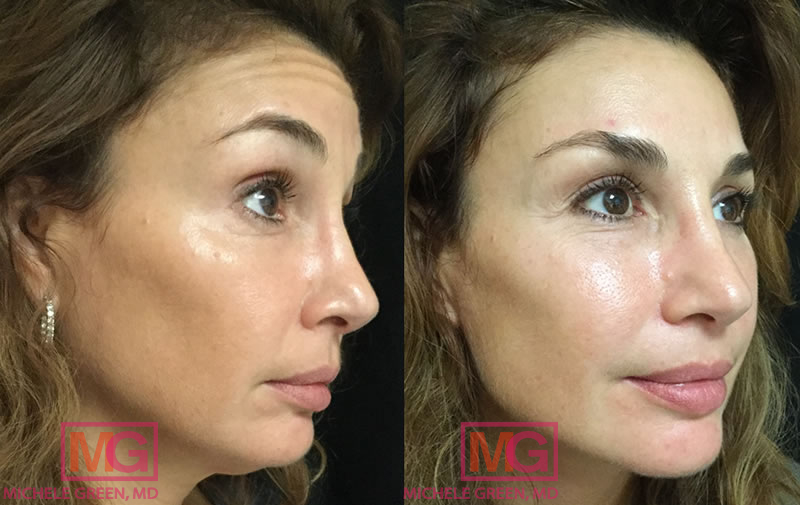
A good candidate for a non-surgical brow lift is someone bothered by mild to moderate brow drooping or a heavy appearance around the eyes, and seeking improvement without surgery or downtime. This treatment is well-suited for individuals who notice their brows sitting lower than before, asymmetry between the eyebrows, or a tired, tense, or worried expression caused by overactive upper-face muscles. Patients with early signs of aging in the brow area and supportive facial structure often see the best results. Ideal candidates are generally in good overall health and have realistic expectations for outcomes, understanding that results are subtle and temporary. A non-surgical brow lift may also be appropriate for patients who want to enhance brow shape or open the eye area without committing to a permanent procedure.
Who should not get a Botox brow lift?
A Botox brow lift is not appropriate for everyone, and some individuals should avoid this treatment for safety reasons. Botox is not recommended for patients who are pregnant or breastfeeding, as its safety has not been established in these populations. Individuals with a known allergy to botulinum toxin products or any of the ingredients in Botox should not receive injections. Patients with certain neuromuscular conditions, such as myasthenia gravis, Lambert-Eaton syndrome, or other disorders that affect muscle or nerve function, are also not good candidates, as Botox may worsen muscle weakness. Those with active skin infections, inflammation, or irritation in the treatment area should wait until the skin has fully healed before undergoing treatment. A Botox brow lift may also be less suitable for individuals with significant excess eyelid skin or advanced brow drooping, as Botox cannot address loose skin and may not provide meaningful improvement in these cases. Reviewing medical history, current medications, and aesthetic concerns helps determine whether a Botox brow lift is appropriate or whether another treatment option would be more suitable.
What is the process for a Botox brow lift procedure?
The first step in obtaining a Botox brow lift is to consult with Dr. Green at her Upper East Side dermatology office in New York City. During your consultation, Dr. Green will review your medical history, assess the treatment area, discuss your aesthetic goals, and recommend the most suitable cosmetic treatment or series of treatments tailored to your needs. Medical photographs may be taken at this time to monitor progress in future treatments. Your Botox injections may be performed on the day of your initial consultation or scheduled for a later date, based on availability and your personal preference.
To reduce the risk of bruising, patients should avoid blood-thinning medications and supplements for 1 week before Botox injections. For those prone to bruising, Dr. Green recommends taking Arnika Forte, an oral herbal supplement, for several days before the procedure to help prevent bruising. On the day of treatment, the area will be cleaned and prepped. Dr. Green will mark the injection sites, then inject Botox into specific muscles to produce a brow lift. An ice pack will be applied to the treatment area immediately after the procedure to minimize swelling. It is essential to remain upright for at least four hours after Botox injections and to avoid vigorous exercise for 24 hours. The full effects of the Botox treatment should become noticeable within two weeks, resulting in a rejuvenated, relaxed appearance. Dr. Green typically advises her patients to return after two weeks for a follow-up appointment to assess results and perform any necessary touch-ups.
What does a Botox brow lift feel like?
A Botox brow lift is generally well-tolerated and causes minimal discomfort for most patients. During the injections, you may feel a brief pinching or pressure sensation as the Botox is placed into the targeted muscles, but the injections are quick and use very fine needles. The treatment itself typically takes only a few minutes, and many patients describe the sensation as mild. After the procedure, the brow and forehead area may feel slightly tight, heavy, or sore for a short period as the Botox settles. Some patients notice a mild headache or tenderness in the treated area on the day of treatment, which usually resolves on its own. These sensations are temporary and improve as the muscles relax, and the treatment takes effect, allowing patients to return to normal activities shortly after their appointment.
What are the side effects of Botox?
Botox is a widely used cosmetic treatment with a strong safety profile when administered by an experienced, board-certified dermatologist. Most side effects are mild, temporary, and localized to the injection sites. Common reactions include slight redness, swelling, tenderness, or bruising, which typically resolve within a few days. Some patients may experience a mild headache or a sensation of tightness in the treated area shortly after injections, which generally improves as the Botox settles. In rare cases, patients may notice temporary heaviness of the brow or eyelids if the Botox diffuses beyond the intended treatment area. More serious side effects are uncommon but can occur if Botox is improperly administered. These may include eyelid drooping, asymmetry, or changes in facial expression. Because Botox is a neurotoxin, improper injection techniques can very rarely lead to systemic symptoms such as difficulty swallowing, speaking, or breathing, which require immediate medical attention. For this reason, patients should always seek treatment from a qualified medical professional who understands facial anatomy and the precision of dosing. A thorough consultation and medical history review help ensure Botox is both safe and effective for each patient.
Which Botox lasts the longest for the brow?
When treating the brow area, how long Botox lasts is influenced primarily by muscle anatomy and activity rather than the specific product used. The muscles that affect brow position are highly expressive and used frequently throughout the day, which can cause Botox in this area to wear off slightly faster for some patients. The longevity of a Botox brow lift depends on factors such as muscle strength, natural brow position, and facial movement patterns. Individual metabolism also plays a role, as some patients naturally break down Botox more quickly than others. With expert placement and appropriate dosing, many patients enjoy visible brow-lifting effects for several months.
How much does a Botox brow lift cost?
The price of Botox treatment depends on several factors, including the provider’s experience. The overall cost of a Botox brow lift depends on how much product is needed, which varies by individual facial anatomy, muscle strength, and the degree of lift a patient seeks. Some patients require only small amounts of Botox to achieve subtle brow elevation, while others may need additional injections to balance the forehead and glabella muscles. Pricing can also vary by geographic location and whether Botox is used alone or combined with other treatments during the same visit. Because a Botox brow lift is customized for each patient, an exact cost cannot be determined without an in-person evaluation. During a consultation, the treatment area is assessed, and a personalized plan is created. Afterward, a clear estimate of the total cost can be provided based on the recommended approach.
How many units for a Botox brow lift?
The precise number of Botox units required depends on the areas of the face being treated and the strength of the muscles. For example, patients with strong glabellar muscles require more units than those with less active glabella to achieve a Botox brow lift. Furthermore, patients who wish to treat both the tail of the eyebrow and the area between the eyebrows will require additional Botox units. Dr. Green will determine the exact number of units necessary for your Botox brow lift during your initial consultation, where you will discuss your unique aesthetic goals.
Combining a Botox brow lift with dermal filler injections.
In addition to a non-surgical Botox brow lift, Dr. Green offers a wide range of cosmetic procedures to reduce signs of aging. She often combines a Botox brow lift with dermal fillers to address multiple signs of aging, helping you look and feel your best. For her patients, Dr. Green frequently combines Botox injections with dermal fillers, such as Juvederm, Restylane, Belotero, and Sculptra, in a “liquid facelift.” Rather than solely targeting dynamic wrinkles in areas such as the forehead, crow’s feet, or the brow region, these fillers also smooth other facial creases and restore lost volume. Fillers are commonly used to soften creases such as the nasolabial, smile, and marionette lines. Dermal fillers can also enhance specific facial features and restore volume in the mid-face, lips, and jawline. Combining them with a Botox brow lift yields a comprehensive facial rejuvenation treatment.
Juvederm dermal fillers are a collection of hyaluronic acid-based injectables designed to restore volume with a soft, natural feel. A defining feature of Juvederm fillers is their formulation, which allows the product to integrate evenly into the skin and provide immediate structural support. Juvederm is commonly used to restore volume in areas such as the cheeks, jawline, lips, and smile lines, making it well-suited for patients experiencing age-related volume loss.
Restylane dermal fillers are hyaluronic acid-based injectables formulated with a firmer gel structure that enables precise placement and contouring. Each Restylane product is designed with a specific particle size, making this filler family especially effective for targeted treatment in delicate or highly mobile areas of the face. Restylane is often used to refine facial contours, improve under-eye hollows, and define features while maintaining natural movement.
Sculptra is a collagen-stimulating injectable made from poly-L-lactic acid that works differently from traditional dermal fillers. Instead of providing immediate volume, Sculptra encourages the body to rebuild its own collagen gradually. This makes it especially beneficial for patients with diffuse volume loss, changes in skin firmness, or structural thinning of the face. Results develop progressively over several months and can last up to two years.
Frequently Asked Questions (FAQs) about the Botox Brow Lift
When did Botox start being used on brows?
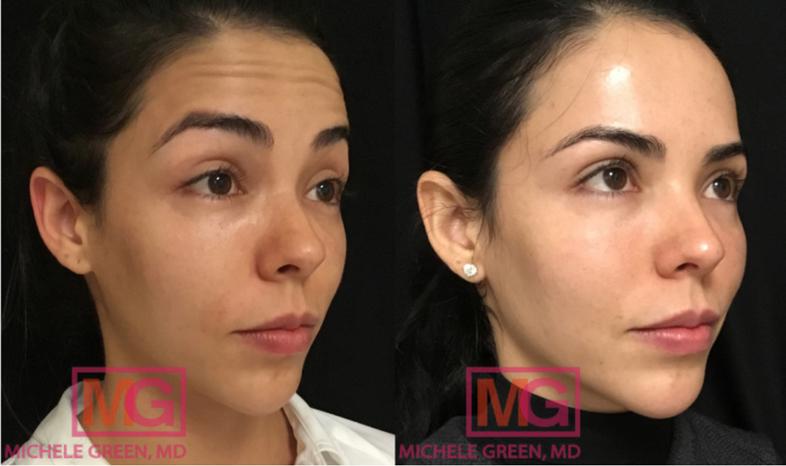
Botox began being used on the brows in the early 2000s, shortly after it received FDA approval in 2002 for cosmetic use to treat glabellar frown lines between the eyebrows. As dermatologists gained experience with facial anatomy and neuromodulators, they recognized that carefully placed Botox injections could influence brow position while smoothing wrinkles. By selectively relaxing the muscles that pull the brows downward, providers found that Botox could create a subtle lifting effect in the brow area without surgery. This non-surgical brow lift technique quickly became a popular off-label use among experienced cosmetic dermatologists. Over time, Botox brow lifts gained widespread acceptance as a safe and effective option for patients seeking a refreshed appearance with minimal downtime. Today, the Botox brow lift is a well-established aesthetic technique that requires precise injection placement and a thorough understanding of facial muscle balance to achieve natural-looking results.
Will Botox lift eyebrows?
Botox can create the appearance of lifted eyebrows, but it does not physically lift tissue like surgery. A Botox brow lift works by adjusting muscle activity to improve brow position and shape rather than repositioning the brow itself. Patients may notice that the eyes look more open and the brow appears better defined. This approach is best suited for individuals with mild brow heaviness or early signs of sagging who want improvement without downtime. Results are temporary and develop gradually as the Botox settles, usually becoming noticeable within the first two weeks. For patients seeking a more dramatic or permanent change in brow position, surgical options may be considered. For many people, Botox provides excellent results without the risk of surgery and with minimal downtime.
How much is Botox between brows?
The price of Botox treatment for frown lines depends on several factors, including geographic location and the injector’s experience. Treatment from a board-certified dermatologist, such as Dr. Michele Green in New York City, may be more expensive than treatment from a nurse injector at a Medspa; however, it is always advisable to consult an experienced board-certified dermatologist like Dr. Green, who has the expertise to help avoid unwanted side effects and ensure optimal cosmetic results. Dr. Green is an internationally recognized board-certified dermatologist with over twenty-five years of experience in cosmetic dermatology. Once you establish your treatment plan with Dr. Green, her office can provide a more accurate estimate of the total treatment cost.
How much Botox between brows?
The amount of Botox used between the eyebrows varies from person to person. It depends on several individual factors, which is why there is no single standard amount that works for everyone. The strength and size of the glabellar muscles play a major role, as patients with more active or stronger frown muscles typically require more Botox to achieve optimal results. Facial anatomy, muscle movement patterns, and the depth of the frown lines also influence how much product is needed to soften the area effectively while maintaining a natural expression. In addition, treatment goals matter: some patients prefer a very subtle softening of the lines, while others want a more pronounced smoothing effect. An experienced board-certified dermatologist will evaluate the muscles’ movement before determining the appropriate dose of Botox.
Can you get Botox just between the eyebrows?
Many patients focus primarily on the frown lines, also known as “11’s,” that develop between the eyebrows. Botox can be injected into the glabellar muscles to treat these frown lines. It works by temporarily relaxing the muscles that cause these expressions, softening the lines and creating a smoother appearance. Targeting this area alone can yield a more relaxed, refreshed look. When you consult with Dr. Green about your Botox treatment, she will assess your facial anatomy and expressions before skillfully performing the Botox injections.
What causes Spock brow botox?
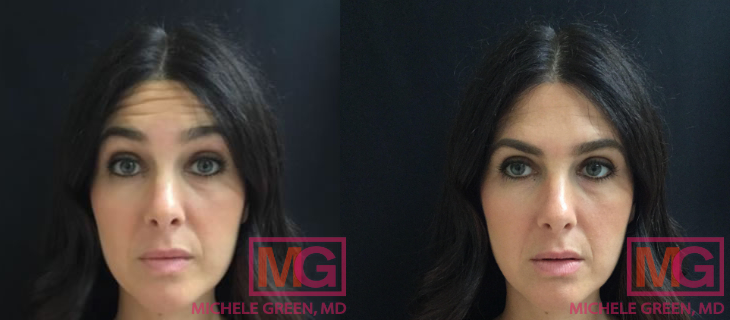
A Spock brow occurs when Botox injections relax the central portion of the forehead muscle, leaving the outer portions more active. The frontalis muscle lifts the eyebrows, and when Botox is unevenly applied across this muscle, the untreated outer areas can contract more forcefully. This imbalance causes the outer ends of the eyebrows to rise higher than the center, creating an unnaturally arched appearance. Spock brow most commonly develops when Botox is injected primarily in the central forehead, leaving the outer forehead muscles untreated. It can also occur when Botox is used to smooth forehead lines without fully accounting for brow shape and muscle dynamics. This side effect is cosmetic and temporary, and it can usually be corrected quickly with a small adjustment using additional Botox in the outer forehead. Proper assessment of facial anatomy and muscle movement before treatment is essential to prevent this outcome, which is why injector experience is critical for achieving balanced, natural-looking results.
How to avoid brow ptosis?
Brow ptosis occurs when the brow appears droopy or heavy, often due to improper Botox administration. If too much Botox is injected into the frontalis muscle, the brow can become over-relaxed, leading to a drooping appearance. Ptosis can also occur if injections are placed too low along the brow line or if the injector fails to balance forehead injections with those in the glabellar area, allowing the glabellar muscles to pull the eyebrows down without resistance. If you have already received Botox treatment from another provider and your brow appears heavy, rest assured that the cosmetic effects of Botox are temporary and will generally resolve as the product wears off. To avoid side effects of a Botox brow lift, such as ptosis, it is essential to seek treatment from an expert, board-certified dermatologist like Dr. Green, who understands facial balance and follows a conservative, precision-based approach.
Can you fix a drooped brow from Botox?
A drooping brow, also known as brow ptosis, occurs when Botox relaxes the forehead muscles that elevate the eyebrows. This can happen if too much Botox is injected or if it is placed too close to the eyebrows, reducing the muscles’ ability to lift the brows. In many cases, the best approach is to wait for the Botox to wear off over time. Botox is a temporary treatment that usually lasts three to four months. In some cases, small amounts of Botox can be strategically injected into the muscles that pull the brow down, allowing it to lift slightly. If you are experiencing brow ptosis after receiving Botox, the best option is to schedule a consultation with a board-certified dermatologist who can identify the most appropriate treatment for you.
Can Botox raise your eyebrows?
Yes! A Botox eyebrow lift is an effective non-surgical procedure for achieving a natural-looking brow lift. Specific muscles can pull the eyebrows down, creating a more fatigued appearance. Botox can relax these muscles, subtly lifting the eyebrows and making the eyes look more open and alert. Two opposing muscle groups largely control the position of the eyebrows. One group, comprising the orbicularis oculi, procerus, and corrugator supercilii, pulls the eyebrows down, while the frontalis muscle elevates them. Botox can temporarily relax the muscles that lower the brows, allowing the frontalis muscle to elevate the eyebrows without resistance. The outcome of these Botox injections is a subtle yet natural-looking brow lift.
Where should Botox be injected for a brow lift?
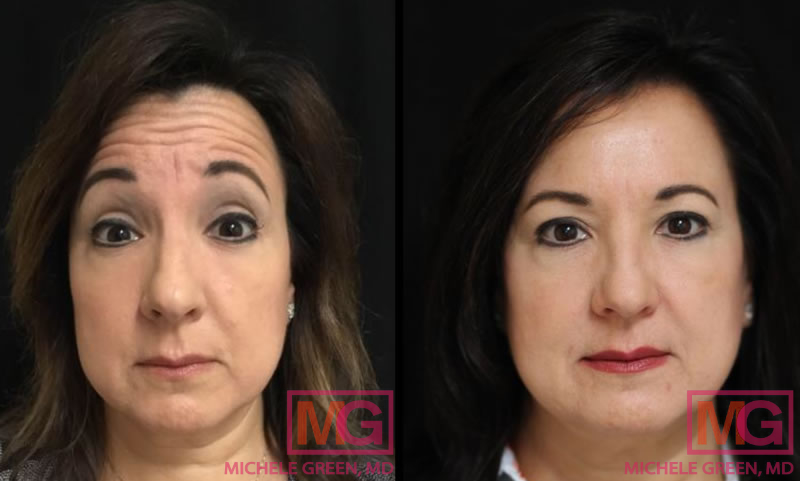
The placement of Botox for a brow lift is tailored to each patient’s facial anatomy and natural muscle movement. In patients with low-set or drooping brows, Botox is often injected into the muscles between the eyebrows and into specific areas around the outer eye where muscle activity pulls the brow downward. Relaxing these muscles allows the outer brow to sit higher on the face. In some cases, carefully placed injections in the upper forehead may also be used to improve balance and enhance the lifting effect without creating heaviness. The goal is to adjust muscle activity to open the eye area while maintaining a natural expression. A personalized assessment of brow position, muscle strength, and facial movement helps determine the most effective injection pattern for achieving a subtle, refreshed brow lift.
Which Botox lasts longer?
In general, all FDA-approved botulinum toxin type A products used for cosmetic treatments have comparable longevity, and no single option consistently lasts longer for every patient. The duration of Botox results is more closely tied to individual factors such as metabolism, muscle strength, lifestyle, and treatment consistency. Patients who are very expressive or physically active may notice that Botox wears off sooner, while others may retain results longer. Over time, regular Botox treatments can sometimes lead to longer-lasting effects as targeted muscles gradually weaken with repeated use. The injector’s experience and dosing strategy also play an important role in maintaining results while preserving natural facial expression. Selecting the appropriate neuromodulator and treatment approach should always be tailored to the patient’s anatomy and aesthetic goals.
Can I get brow lamination after Botox?
Yes, you can get brow lamination after Botox, and the two treatments can work well together when timed appropriately. Botox affects the underlying muscles that control brow movement, while brow lamination is a cosmetic treatment that reshapes and sets the brow hairs to create a fuller, more lifted appearance. Because Botox takes time to settle, it is generally recommended to wait at least two weeks after Botox injections before undergoing brow lamination. Performing brow lamination too soon after Botox may interfere with the intended outcome, as the brow position can still shift slightly during the first several days after injections. When properly spaced, combining Botox with brow lamination can enhance the overall look of the brows by improving both their position and shape, creating a more refreshed appearance. Consulting with an experienced provider before scheduling both treatments helps ensure the timing and approach are appropriate for your individual facial anatomy and aesthetic goals.
Does a Botox brow lift help hooded eyes?
A Botox brow lift can provide a subtle improvement for hooded eyes, but does not fully correct them. Hooded eyes are typically caused by excess skin or laxity in the upper eyelid, which Botox cannot remove or tighten. By relaxing the muscles that pull the brows downward, a Botox brow lift may slightly elevate the brow position, helping open the eye area and making hooding appear less noticeable in some individuals. This effect works best for patients whose hooded appearance is due to brow position rather than excess eyelid skin. Botox is often most effective for early or mild hooding and can help create a more refreshed, alert look. For patients with significant hooded eyelids caused by loose skin, surgical options such as blepharoplasty may be more appropriate to achieve optimal results. A careful evaluation of brow position and eyelid anatomy helps determine whether a Botox brow lift is likely to provide the desired result.
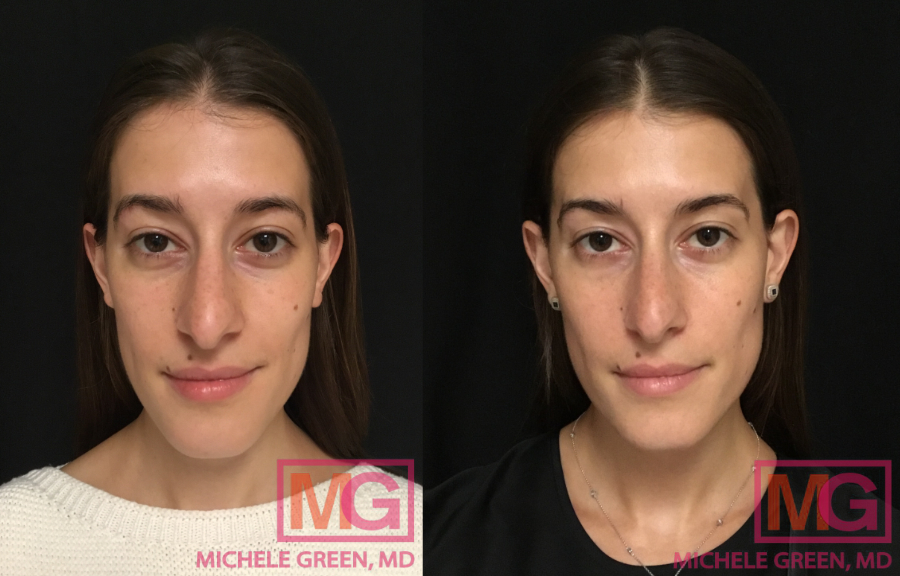
Restylane under eye, 4 weeks later
How do I get started with a Botox brow lift?
A Botox brow lift is a non-surgical cosmetic treatment that gently elevates the brows and refreshes the upper face by relaxing targeted muscles that contribute to sagging or heaviness. By reducing the muscle activity that pulls the brows downward, Botox can help open the eye area, soften a tired or tense expression, and restore balance to the forehead and brow region. This treatment is well-suited for individuals seeking subtle improvement without anesthesia, downtime, or surgical intervention. A Botox brow lift can also be combined with other non-invasive treatments, such as forehead Botox or dermal fillers, to enhance overall facial harmony and address multiple signs of aging at once. Results develop gradually, offering a natural-looking enhancement that aligns with a refined, conservative approach to facial rejuvenation.
Dr. Michele Green was among the first board-certified dermatologists in New York City to incorporate cosmetic Botox injections into her patients’ facial rejuvenation plans. With over two and a half decades of experience, Dr. Green provides her patients with the best non-invasive cosmetic treatments, including Botox, dermal fillers, chemical peels, skincare, and more. Castle Connolly, New York Magazine, The New York Times, and Super Doctors consistently name Dr. Green among New York’s best physicians for her holistic approach, ‘less is more’ philosophy, and dedication to her patients and expertise. Dr. Green will work with you to customize your brow lift treatment plan to best suit your unique needs and overall aesthetic goals. Contact us online today or call the NYC-based office at 212-535-3088 to schedule a consultation with Dr. Michele Green and get started with your Botox brow lift.