


Botox Injections for TMJ (Temporomandibular Joint)
Botox injections for TMJ are increasingly sought by individuals struggling with chronic jaw pain, muscle tightness, clenching, and grinding that interfere with daily comfort and quality of life. TMJ symptoms can make simple activities like chewing, speaking, and sleeping uncomfortable, and persistent jaw tension may also contribute to facial pain and recurring headaches. Many patients pursue Botox for TMJ after conservative approaches, such as night guards or lifestyle changes, fail to provide lasting relief. Botox offers a non-invasive option that targets the muscle causing the tension without surgery or downtime, making it appealing to patients with busy schedules who want effective symptom management. For patients seeking relief from TMJ-related discomfort, Botox treatment with Dr. Michele Green can provide a personalized and well-tolerated solution.
Botox helps with TMJ by calming overactive jaw muscles, most commonly the masseter, which can place excess strain on the temporomandibular joint. When injected into these muscles, Botox reduces excessive contractions by blocking nerve signals that cause clenching and grinding. As the muscles relax, pressure on the jaw joint decreases, leading to improved comfort, reduced soreness, and smoother jaw movement over time. This targeted muscle relaxation helps address TMJ-related pain while preserving normal jaw function for everyday activities such as eating and speaking. A board-certified dermatologist like Dr. Michele Green carefully evaluates muscle strength and jaw anatomy to ensure Botox is placed precisely for safe and effective TMJ relief.
Dr. Michele Green is an internationally renowned, board-certified dermatologist with over 25 years of experience delivering advanced non-surgical treatments for medical and cosmetic concerns, including Botox injections for TMJ. She is known for her holistic, less-is-more approach, customizing each treatment plan to address the patient’s symptoms, anatomy, and overall goals. Frequently recognized by Castle Connolly, New York Magazine, and Super Doctors as one of New York City’s leading dermatologists, Dr. Green is respected for her expertise and commitment to patient care. When you consult with Dr. Green at her private dermatology practice on Manhattan’s Upper East Side, she will work closely with you to develop a personalized treatment plan to relieve jaw tension and improve long-term comfort.
What is TMJ Disorder (TMD)?
The temporomandibular joint (TMJ) is the area where the jawbone (the mandible) connects to the skull (the temporal bone), functioning essentially as a sliding hinge on either side of the face. The bones are covered with cartilage and separated by a small disk that absorbs shock and maintains smooth jaw movements. Many patients experience jaw pain or discomfort in this joint. Chronic jaw clenching and teeth grinding can lead to an overactive masseter muscle that grows larger and more painful over time. This jaw tension particularly affects patients during sleep, leading to teeth grinding that can ultimately damage the teeth.
TMD/TMJ can be triggered by bruxism (teeth grinding or clenching) or by injury to the jaw, head, or neck muscles, such as from a heavy blow or impact. Additionally, TMJ pain may arise from genetic factors or arthritis, or from disk erosion or shifting out of alignment. Research by the National Institute of Dental and Craniofacial Research estimates that more than 10 million Americans suffer from TMJ issues, experiencing associated tension headaches, pain, clicking, and grinding.
What are the symptoms associated with TMJ?
Symptoms of TMJ/TMD include:
- Jaw pain/soreness
- Jaw clicking or popping
- Facial pain behind the eyes, neck, or shoulders
- Ringing in the ears
- Headaches ranging from mild, dull aches to chronic migraines
- Earaches or pressure near the ears
Typically, individuals with TMJ symptoms, such as bruxism, experience them cyclically. The pain may subside on its own or with minimal treatment, such as anti-inflammatories or alternating heat and cold packs applied to the jaw. However, recurring or prolonged TMJ symptoms often lead to significant pain that requires medical care or dental evaluation. TMJ-related muscle tension may also extend beyond the jaw, contributing to neck pain in some patients.
Note: Dr. Green only performs Botox for cosmetic indications and does not treat migraines.
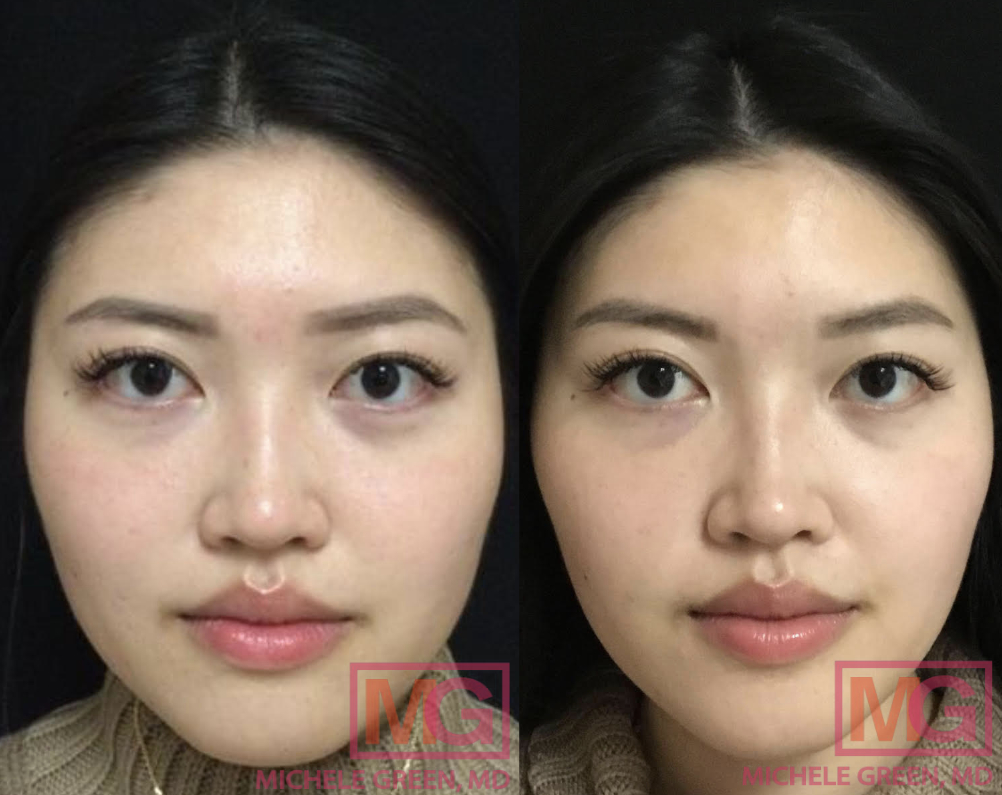
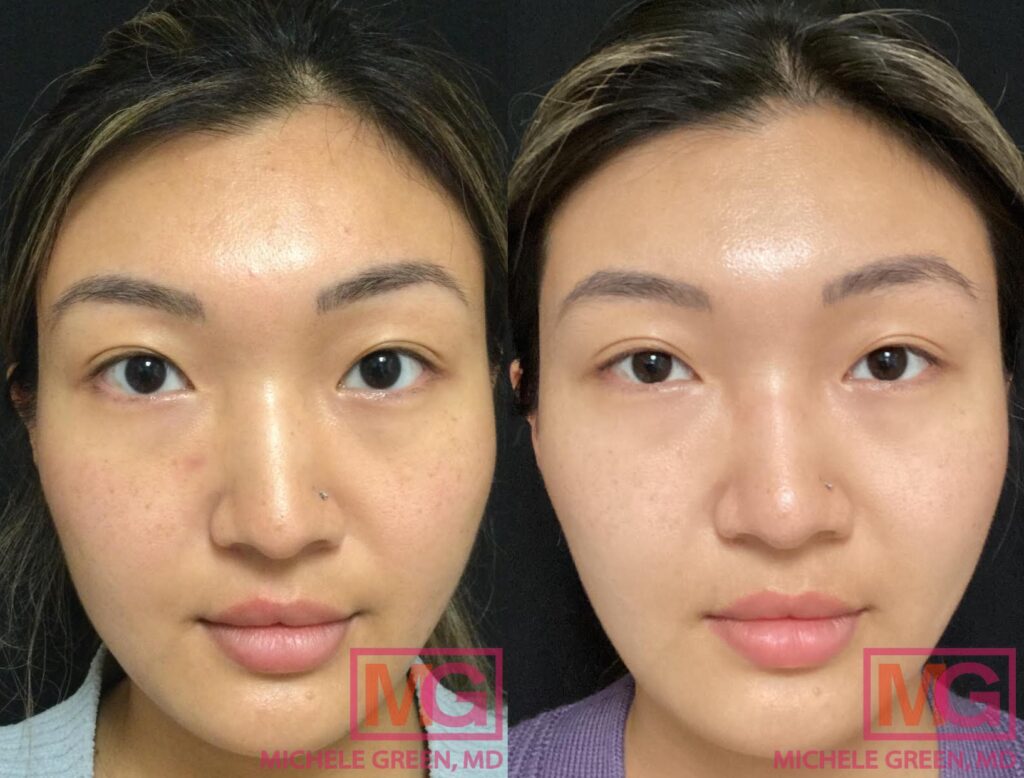
Before and after 1 treatment of Botox to the Masseter muscle area
What is Botox?
Botox, or botulinum toxin type A, is a neurotoxin derived from the bacterium Clostridium botulinum. Botox Cosmetic is widely known for cosmetic uses, such as softening frown lines, but it is also commonly used therapeutically to address muscle tension and pain. It inhibits specific nerve signals that control muscle contractions, limiting muscle movement and temporarily “freezing” them. Botox injections are quick, painless, and require no downtime. The most common side effects are mild swelling and redness at the injection sites, which resolve on their own shortly after treatment. Botox takes 2 weeks to take full effect, after which results can last 3 to 4 months. Many patients engage in regular maintenance sessions to achieve the best results.
What is TMJ Botox?
TMJ Botox refers specifically to Botox injections used to reduce pain, tension, and dysfunction caused by overactive jaw muscles associated with temporomandibular joint disorders. In this treatment, Botox is carefully injected into the masseter muscles and, in some cases, into nearby jaw muscles to reduce excessive muscle activity that contributes to clenching, grinding, and jaw strain. By relaxing these muscles, TMJ Botox helps decrease pressure on the jaw joint, allowing it to move more comfortably and reducing symptoms such as jaw soreness, facial pain, tension headaches, lockjaw, and restricted jaw movement. TMJ Botox is commonly chosen by patients who have not achieved sufficient relief with night guards or other treatments and are seeking a non-invasive option that targets the direct cause of muscle tension. It is best to consult with a board-certified dermatologist, such as Dr. Michele Green, to determine whether Botox is the best treatment option.
Is Botox approved for TMJ?
The FDA has not approved Botox for the treatment of TMJ disorders, and its use for this purpose is considered off-label. Although Botox is widely recognized and FDA-approved for a variety of medical and cosmetic applications, including the treatment of chronic migraines and facial wrinkles, it has not been specifically approved for relieving jaw pain or muscle tension associated with TMJ. Despite this, many experienced dermatologists and medical professionals, including Dr. Michele Green, use Botox to target overactive jaw muscles, such as the masseter, to help reduce clenching, grinding, and associated discomfort. Off-label use of Botox for TMJ is supported by clinical experience and published studies showing that it can effectively relax the muscles contributing to pain, improve jaw function, and provide relief for patients who have not responded to other treatments.
Where is Botox injected for TMJ?
To treat TMJ, Botox is injected directly into the masseter muscles of the jaw. In some cases, Botox may also be injected into the temporalis muscle. TMJ disorders are often caused by strain or overuse of the jaw muscles. Jaw clenching, teeth grinding, and excessive use of the masseter muscles can lead to tension and pain throughout the jawline and around the face. Injecting Botox into the masseter muscles limits muscle contractions, reducing jaw clenching and relieving TMJ pain and symptoms.
Who is a good candidate for Botox treatment for TMJ?
A good candidate for Botox treatment for temporomandibular joint (TMJ)–related symptoms is typically an adult with chronic jaw pain, muscle tightness, clenching, teeth grinding (bruxism), or tension-type headaches caused by overactive jaw muscles that have not responded adequately to other treatments, such as night guards and jaw exercises. Botox is best suited for TMJ symptoms stemming from excessive muscle tension rather than structural joint problems, particularly when jaw pain, clenching, or grinding begins to interfere with everyday activities like eating, speaking, or sleeping. Candidates should be in generally good health and understand that Botox is used to manage symptoms rather than cure the condition, with effects that are temporary and may require ongoing treatments to maintain relief.
Who should not get TMJ Botox?
TMJ Botox is not appropriate for everyone, and some individuals should avoid this treatment or proceed only under close medical supervision. Patients who are pregnant or breastfeeding should not receive Botox injections, as the safety of botulinum toxin during pregnancy and lactation has not been established. Individuals with known neuromuscular disorders, such as myasthenia gravis, Lambert-Eaton syndrome, or amyotrophic lateral sclerosis, should not undergo TMJ Botox, as the medication may worsen muscle weakness and lead to unwanted complications. Patients with an active infection, inflammation, or skin condition at or near the injection site should delay treatment until the area has fully healed. Those with a known allergy or hypersensitivity to botulinum toxin or any of its components are not candidates for TMJ Botox.
Additionally, patients whose jaw pain is primarily caused by structural joint abnormalities, severe arthritis, or significant disc displacement may not experience meaningful relief from Botox alone, as the treatment targets muscle overactivity rather than joint damage. Individuals taking medications that interfere with neuromuscular transmission or blood clotting should disclose this information during consultation, as it may affect treatment safety or increase the risk of bruising. A thorough evaluation by an experienced, board-certified dermatologist, such as Dr. Michele Green, is essential to determine whether TMJ Botox is an appropriate and safe option, ensuring that the underlying cause of jaw pain is correctly identified and treated.
What is the process like for TMJ Botox?
During your initial consultation, Dr. Green will examine your jaw, masseter muscles, and dental configuration to determine whether Botox is appropriate for relieving your TMJ symptoms. Your TMJ Botox treatment may be performed the same day as your consultation, depending on availability and your preference. Dr. Green will assess the strength of your masseter muscles and mark the injection sites. She will then inject Botox into these sites. Most patients feel little to no discomfort thanks to Dr. Green’s practiced hand during the Botox injection process. The final effects of Botox can take up to two weeks to develop. Dr. Green recommends returning to the office for a follow-up examination to ensure complete treatment of the area. Patients with particularly strong masseter muscles may require additional Botox injections at this time. TMJ Botox lasts three to four months, after which patients can schedule another treatment session to maintain and enhance results.
Are there any side effects associated with TMJ Botox?
When a board-certified dermatologist, such as Dr. Green in NYC, performs your Botox treatment, side effects are rare. The most common side effects of Botox injections are mild swelling, redness, or muscle weakness at or near the injection sites. These effects are generally mild and resolve on their own within a short period of time without the need for medical intervention. Some patients may also experience minor tenderness or soreness in the jaw area following treatment, which typically subsides within a few days. The procedure is painless, as Botox injections do not cause discomfort in this area. Patients do not need to apply a topical numbing cream to the treatment area before this procedure. More serious side effects are uncommon when TMJ Botox is administered properly. A thorough consultation helps ensure that dosing and placement are appropriate, further minimizing the risk of unwanted effects and supporting safe, effective results.
What not to do after TMJ Botox?
Botox treatment is a safe and effective option for TMJ that requires no downtime. Patients may experience minor side effects in the days following the treatment, such as swelling, bruising, redness, and soreness at the injection site. However, these side effects typically resolve on their own within a couple of days. Dr. Green recommends avoiding rubbing or massaging the treatment area to prevent the botulinum toxin from spreading to surrounding areas. Patients can expect to see the full results of the treatment approximately two weeks after the procedure, and the effects of Botox usually last for three to four months.
How long does it take for Botox to work on TMJ?
Botox typically begins to take effect within a few days after injection, but the full benefits for TMJ symptoms usually develop over one to two weeks. During this time, Botox gradually relaxes overactive jaw muscles, reducing tension, clenching, and grinding that contribute to pain and discomfort. Patients may notice progressive improvement in jaw soreness, tightness, and related facial tension as the muscles become less active. The speed and degree of relief can vary depending on individual factors such as the severity of muscle overactivity, the strength of the masseter muscles, and whether the patient has had previous Botox treatments. Follow-up appointments are often recommended to assess results and make adjustments as needed to achieve optimal symptom relief.
How long does TMJ Botox last?
Botox is an injectable neurotoxin that typically lasts 3 to 4 months, depending on the individual and the severity of their jaw pain. Over time, the body naturally breaks down and metabolizes Botox, allowing normal muscle signaling to return gradually. As this happens, jaw muscle activity slowly increases, which is why repeat treatments are needed to maintain consistent relief from TMJ symptoms. Adhering to a regular treatment schedule for Botox injections is the most effective way to achieve ongoing symptom relief. With each subsequent Botox injection into the masseter muscle, the muscle reduces in size, TMJ relief lasts longer, and the cosmetic effects of facial slimming continue to improve. During your consultation with Dr. Green at her NYC dermatology office, she will collaborate with you to develop a Botox treatment plan that best meets your needs.
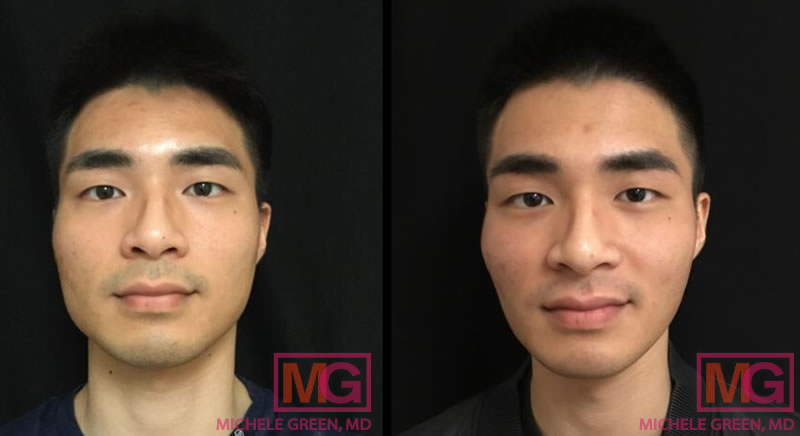
Botox to masseter area – 3 months
How many units of Botox for TMJ?
The number of Botox units needed for TMJ varies from person to person because the treatment is highly individualized. Factors that influence the amount include the size and strength of the masseter muscles, the severity and duration of jaw clenching or grinding, and the overall intensity of muscle tension contributing to TMJ symptoms. Facial anatomy also plays a role, as some patients may have more prominent jaw muscles or asymmetric muscle activity, which may require careful dosing adjustments. Additionally, prior treatments and the patient’s personal goals for symptom relief and cosmetic outcomes can affect the number of units used. A skilled provider will evaluate these factors during a consultation to determine the appropriate dosage for each individual, ensuring effective relief while maintaining natural facial function and appearance.
How much does TMJ Botox cost?
The cost of your TMJ Botox can vary based on several factors, including the location of the treatment office, your injector’s experience level, and the amount of Botox required. Botox treatment may be priced per treatment area or per unit of Botox. The number of units required for effective TMJ treatment varies among individuals, depending on the size and strength of their jaw muscles. After your initial consultation with Dr. Green, her office can provide an estimate of the cost of your TMJ Botox. Treatment with a qualified, board-certified dermatologist like Dr. Green may be more expensive than at a medical spa or clinic staffed by a nurse injector. However, consulting an experienced, board-certified physician for your Botox injections is recommended to reduce the risk of side effects.
Does insurance cover Botox for TMJ?
While most insurance companies do not cover Botox injections for TMJ, it is advisable to contact your insurance provider directly to confirm coverage. They can explain what your plan includes and excludes, including Botox treatment options.
Frequently Asked Questions (FAQs) about TMJ Botox?
Can masseter Botox help with TMJ?
Yes, masseter Botox can be an effective option for managing TMJ-related symptoms when jaw pain stems from excessive muscle activity. In many patients, chronic clenching or grinding overworks the masseter muscle, straining the temporomandibular joint and contributing to pain, tightness, and limited jaw movement. By gently relaxing the masseter muscle, Botox reduces excessive force on the jaw joint, allowing it to function more comfortably and with less tension. Patients often notice improvement in jaw soreness, muscle pain, facial tightness, and tension-related discomfort as muscle activity decreases. Over time, repeated treatments may also reduce the masseter muscle’s bulk and strength, further decreasing strain on the joint and helping prevent symptoms from returning. When performed by an experienced, board-certified dermatologist such as Dr. Michele Green, masseter Botox offers a targeted, non-invasive approach that addresses muscle-driven TMJ symptoms without altering the joint’s structure.
Can Botox cause TMJ?
No, Botox injections can help relieve pain, soreness, and tension associated with TMJ. Botox treatment can also reduce TMJ symptoms such as clenching and grinding, ultimately preventing future damage to the jaw joint. While Botox injections can cause mild, common side effects, including slight redness and swelling at or around the injection site, these typically resolve shortly after treatment. However, jaw pain is generally not reported after Botox injections. Botox is considered a very safe and effective treatment for TMJ disorders, and the risk of serious side effects is significantly minimized when treatment is sought from an expert, board-certified dermatologist like Dr. Green.
Is Botox FDA-approved for TMJ?
While botulinum toxin injections are FDA-approved for many muscular disorders, Botox for TMJ is considered an off-label treatment and is not FDA-approved. Nevertheless, healthcare providers have used Botox off-label for many years to relieve pain and symptoms associated with TMJ and TMD. TMJ Botox has proven to be extremely safe and effective, especially when administered by an expert board-certified dermatologist like Dr. Green. With over two and a half decades of experience treating patients with Botox for cosmetic purposes and TMJ pain, she was among the first dermatologists in NYC to incorporate Botox into her patients’ treatment plans. With Dr. Green, you can be assured that your TMJ Botox will be safe and effective.
Does TMJ Botox hurt?
TMJ Botox is typically well tolerated, and most patients find the treatment easy to endure. The injections use a very fine needle and are placed into the masseter muscles, which generally causes only minimal sensation, often described as a brief pinch or pressure. The procedure is quick, and any discomfort is usually mild and short-lived. Because the jaw area does not require deep or extensive injections, topical numbing is usually unnecessary. Some patients may experience slight tenderness or soreness in the treated area afterward, but this is temporary and resolves on its own, allowing patients to return to their normal activities immediately after treatment.
How much Botox do you need for TMJ?
Several factors influence the number of units required, including the size of the masseter muscle, the severity of muscle tension, and the individual shape of the patient’s face. During your initial consultation with Dr. Green, she will assess the treatment area and provide a more accurate estimate of the number of Botox units needed to meet your specific requirements.
Where to get Botox for TMJ near me?
When seeking Botox treatment for TMJ, it is important to choose a provider with extensive experience in facial anatomy and neuromodulator injections. TMJ Botox should be performed by a qualified medical professional who understands both the functional and aesthetic aspects of the jaw, as precise placement and dosing are essential for symptom relief while preserving natural facial movement. Board-certified dermatologists, facial plastic surgeons, and select dental professionals with advanced training may offer Botox for TMJ, but expertise and experience are critical. In New York City, patients seeking TMJ Botox often turn to Dr. Michele Green, a board-certified cosmetic dermatologist with over twenty-five years of experience performing Botox injections for both medical and aesthetic indications. At her private dermatology office on the Upper East Side of Manhattan, Dr. Green provides individualized evaluations to determine whether TMJ Botox is appropriate and develops customized treatment plans to relieve jaw tension, pain, and muscle overactivity safely.
Does TMJ Botox affect your smile?
TMJ Botox helps relax the masseter muscle’s contractions, alleviating TMJ pain and its symptoms. With regular treatment sessions, the masseter muscle continues to weaken, reducing teeth clenching and grinding. Decreased hypertrophy of the masseter muscle may also enhance the appearance of a slimmer jawline. Additionally, TMJ Botox can positively impact your smile — by relaxing the masseter muscle, it can help patients achieve a more natural, pain-free smile. However, it’s crucial to consult a board-certified dermatologist like Dr. Green for TMJ Botox, as improper treatment from an inexperienced injector can lead to an uneven or lopsided smile. Dr. Green is a medical and cosmetic dermatologist with over 25 years of experience administering Botox injections for TMJ and anti-aging issues. When performing TMJ Botox, she expertly injects Botox into the masseter muscle to relieve TMJ pain and create a relaxed, beautiful smile.
Does TMJ Botox change your face?
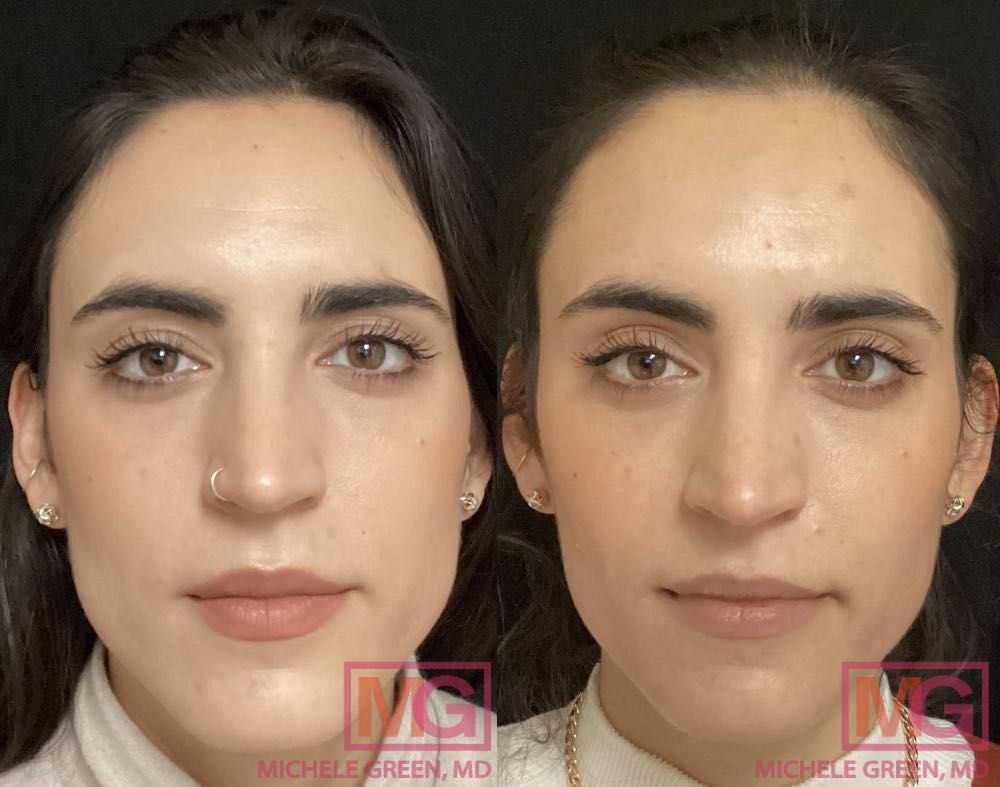
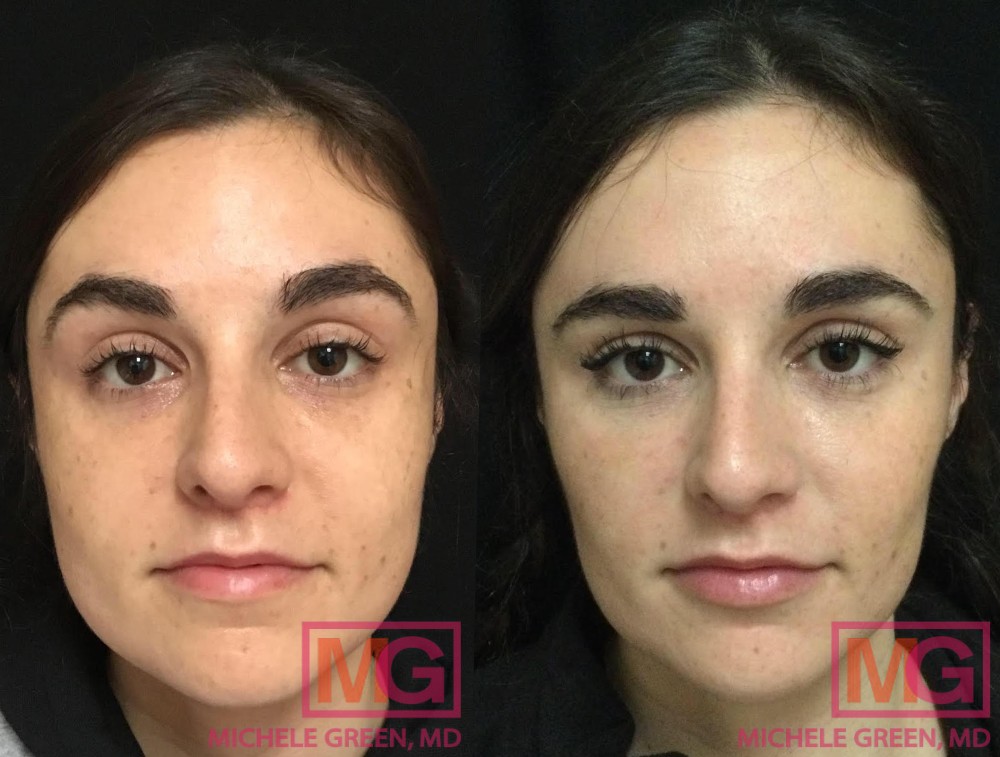
Yes, TMJ Botox can slim the face and create a narrower jawline. The masseter muscles in your jaw, like other muscles in your body, grow larger and stronger with overuse, such as during teeth clenching and grinding. Overworked masseter muscles can cause the lower face to appear boxy, resulting in a square jawline. When Botox is injected into the masseter muscle, it prevents the muscle from becoming overactive, reducing its size and decreasing the squareness of the jaw, resulting in a slimmer face and a more V-shaped jawline. Depending on the initial size of the jaw muscles, multiple Botox treatment sessions may be needed to achieve the desired facial slimming.
Are there alternative treatment options to TMJ Botox?
Yes, several alternative treatments are available for managing TMJ symptoms, and the most appropriate approach depends on the underlying cause of jaw discomfort. Conservative therapies are often tried first, especially for mild or intermittent symptoms. These may include oral appliances such as night guards or splints, which help reduce teeth grinding and jaw clenching during sleep and protect the teeth from excessive wear. Physical therapy focused on jaw exercises, posture correction, and muscle relaxation can also improve jaw function and reduce tension in some patients. Stress management techniques, including relaxation training and behavioral therapy, may be helpful when emotional stress contributes to chronic clenching or jaw tightness.
For individuals whose TMJ symptoms persist despite conservative care, additional non-surgical options may be considered. Oral medications, such as anti-inflammatory agents or muscle relaxants, can provide temporary symptom relief. Some patients have also used acupuncture to reduce jaw pain and muscle tension. In cases where symptoms are primarily driven by excessive masseter muscle activity, TMJ Botox offers a targeted approach by directly relaxing the muscles responsible for clenching and grinding. During a consultation, a qualified medical professional can evaluate jaw mechanics, muscle activity, and symptom patterns to determine whether alternative therapies, TMJ Botox, or a combination of treatments is most appropriate for achieving lasting relief.
Can you eat after TMJ Botox?
Yes, you can eat after TMJ Botox treatment, and most patients resume normal eating right away. Botox injections for TMJ do not affect chewing or swallowing. Some individuals may notice mild jaw tenderness or tightness shortly after treatment, which can make very hard or chewy foods difficult to eat for a short period, but this typically resolves quickly. Eating softer foods for the remainder of the day may be easier on the jaw for some patients, though it is not required. Following treatment, patients are generally advised to avoid excessive jaw movement, such as gum chewing, for the first day to allow the Botox to settle properly and support optimal results.
What is the downside of Botox for TMJ?
The main downside of Botox for TMJ is the need for ongoing maintenance, as its effects are not permanent. Botox does not cure temporomandibular joint disorders or correct structural issues within the joint. The effect of Botox wears off over time as the body metabolizes it. Results typically last several months, so repeat treatments are needed to maintain symptom relief. Some patients may experience mild, temporary side effects, such as localized soreness, swelling, bruising, or a sensation of muscle fatigue in the jaw, which usually resolve on their own shortly after treatment. Because Botox for TMJ is considered an off-label use, insurance coverage is uncommon, and treatment is often an out-of-pocket expense. The effectiveness of Botox also depends on the cause of TMJ symptoms, as patients whose pain is due to structural joint damage or severe arthritis may not experience the same level of relief as those with muscle-related tension.
Can you get Botox for TMJ?
Botox can be used as a therapeutic option for individuals with TMJ symptoms, particularly when discomfort stems from persistent muscle tension or jaw overuse. By reducing masseter muscle activity, Botox helps ease the repetitive strain that contributes to jaw pain, tightness, and difficulty chewing or fully opening the mouth. Many patients find that it improves overall comfort during daily activities, such as speaking or eating, and reduces the frequency of nighttime teeth grinding. Although the FDA does not officially approve Botox for TMJ treatment, clinical experience and studies have shown that it can provide relief from muscle-driven jaw pain. Patients benefit most when injections are performed by a medical professional with in-depth knowledge of facial anatomy, such as Dr. Michele Green, who customizes each treatment to target the muscles causing tension while maintaining natural jaw movement and facial balance.
Is Botox covered for TMJ?
Botox injections for TMJ are typically not covered by insurance because this use is considered off‑label, meaning the Food and Drug Administration (FDA) has not specifically approved Botox for treating TMJ disorders. Most insurance plans cover only treatments approved by the FDA for a given condition, so coverage for TMJ-related Botox is rare. Patients considering TMJ Botox should plan for out-of-pocket costs and discuss pricing, treatment options, and potential insurance reimbursement with their provider during the consultation.
How effective is Botox for TMJ?
Botox has been shown to be highly effective in relieving TMJ symptoms caused by overactive jaw muscles. By targeting the masseter and occasionally other surrounding muscles, Botox reduces involuntary contractions and excessive tension, thereby alleviating jaw pain, tightness, and discomfort associated with clenching or grinding. Many patients report noticeable improvement within 1 to 2 weeks after treatment, with relief lasting approximately 3 to 4 months before repeat injections are typically needed. Clinical studies and years of medical experience indicate that Botox can significantly improve comfort and jaw function in patients who have not responded adequately to traditional therapies such as night guards, physical therapy, or oral medications. Effectiveness is greatest when treatment is performed by a skilled, board-certified dermatologist like Dr. Michele Green, who can precisely target the muscles causing tension while preserving natural facial movement and ensuring a balanced, symmetrical appearance. Over time, regular treatments may also reduce the size and strength of the masseter muscle, providing longer-term symptom relief and contributing to a slimmer jawline. Many patients choose TMJ Botox specifically for lasting pain relief when conservative treatments have not provided sufficient improvement.
Why does Botox help TMJ?
Botox helps relieve TMJ symptoms by targeting the overactive muscles responsible for jaw tension and pain, particularly the masseter muscles. In many cases, chronic clenching, grinding, or overuse of the jaw leads to excessive contraction of these muscles, placing continuous strain on the temporomandibular joint and surrounding tissues. When Botox is injected into the affected muscles, it temporarily blocks the nerve signals that cause involuntary or excessive contraction, allowing the muscles to relax. This reduction in muscle activity decreases pressure on the joint, alleviates soreness, and can improve jaw mobility, making everyday activities such as chewing, speaking, and opening the mouth more comfortable. As jaw muscle tension decreases, some patients also experience secondary relief from neck pain due to reduced strain on surrounding muscles. Additionally, repeated Botox treatments can weaken and gradually reduce the size of the masseter muscles, lessening the intensity and frequency of TMJ-related symptoms and contributing to longer-term relief.
Is Botox for TMJ dangerous?
Botox for TMJ is not dangerous, but its safety depends largely on who administers the injections and the patient’s health. When performed by a qualified, board-certified dermatologist, dentist, or plastic surgeon, the treatment is very low risk because these providers understand the anatomy of the jaw muscles and can precisely control dosage and placement. Serious complications are extremely rare, and most side effects are minor and temporary, such as mild swelling, redness, or soreness at the injection site. The treatment should be avoided by individuals who are pregnant or breastfeeding, have certain neuromuscular disorders, or have a known allergy to botulinum toxin, as these conditions increase the risk of adverse effects. Unlike surgical interventions or more invasive procedures, Botox does not affect the joint or bone structure, making it a non-surgical option with a strong safety profile when used appropriately. The key to minimizing risk is choosing an experienced medical professional who can tailor the injections to the patient’s unique anatomy and needs.
What is the difference between TMJ and masseter Botox?
TMJ Botox and masseter Botox are essentially the same procedure, but they differ in purpose and focus. TMJ Botox is primarily therapeutic, targeting overactive jaw muscles to relieve pain, tension, and discomfort associated with temporomandibular joint disorders. The goal is to reduce clenching, grinding, and muscle strain that contribute to jaw pain and associated symptoms such as headaches or facial tightness. Masseter Botox, on the other hand, is often sought for cosmetic purposes to slim the lower face by reducing the bulk of the masseter muscles, creating a more contoured or V-shaped jawline. Although the injections target the same muscles, the dosage, placement, and treatment plan may differ depending on whether the primary goal is symptom relief or facial aesthetics. Many patients benefit from both effects simultaneously, experiencing reduced TMJ discomfort while also achieving a subtle facial slimming result.
What doctor does Botox for TMJ?
Botox injections for TMJ are typically performed by healthcare providers with extensive training in facial anatomy, neuromodulator use, and dentistry-related jaw conditions. Dentists, including DDS providers with experience treating TMJ disorders, may also incorporate Botox into comprehensive jaw pain management plans. Board-certified dermatologists, such as Dr. Michele Green in New York City, are particularly well-suited to administer Botox for TMJ because they have a deep understanding of the facial muscles involved, enabling them to precisely target the masseter and surrounding muscles responsible for jaw tension and pain while keeping results natural-looking. Dentists who specialize in orofacial pain and temporomandibular disorders also frequently perform these injections, as they are knowledgeable about bite mechanics and jaw function and can integrate Botox into comprehensive TMJ management plans. Facial plastic surgeons and other licensed physicians trained in neuromodulator injections can also provide treatment. Still, any provider must have medical expertise, experience with the masseter muscle, and a careful approach to dosing and placement to ensure both effective symptom relief and safety. Choosing a qualified, board-certified professional ensures that the injections address the underlying muscle overactivity causing TMJ pain, reduce the risk of side effects, and provide the best overall results for jaw function and facial appearance.
How to get Botox for TMJ today
Botox injections for TMJ offer an effective, non-invasive solution for individuals struggling with jaw pain, muscle tension, clenching, and grinding that interfere with daily quality of life. By targeting overactive masseter muscles, TMJ Botox helps relieve pressure on the jaw joint, reduce facial pain and tension headaches, and restore more comfortable jaw movement, allowing patients to continue normal activities without downtime. Many patients also appreciate the added benefit of gradual facial slimming as excessive muscle activity decreases over time. TMJ Botox can be used alone or as part of a broader treatment plan for ongoing symptom management, particularly for patients who have not achieved adequate relief with night guards or other treatments. An experienced board-certified dermatologist, such as Dr. Green in NYC, can evaluate your symptoms and determine whether TMJ Botox is an appropriate option for long-term relief.
Dr. Michele Green is an internationally renowned board-certified dermatologist with over two and a half decades of experience providing some of the world’s most discerning individuals with the finest non-invasive treatment options, including Botox injections for TMJ. Dr. Green was among the first dermatologists in NYC to offer Botox injections to her patients. For decades, she has performed what has been described as the “best Botox treatments” in New York at her private dermatology office on the Upper East Side of Manhattan. She is consistently recognized by Castle Connolly, The New York Times, Super Doctors, and New York Magazine as one of the best physicians in New York City for her dedication to her patients and expertise. Embracing a less-is-more philosophy and taking a holistic approach to rejuvenation, Dr. Green customizes each patient’s treatment plan to address their specific concerns and achieve their personal aesthetic goals. Contact us online or call our phone number at 212-535-3088 to begin your TMJ Botox treatment with Dr. Green and schedule an appointment today.