


Sunspots vs. Freckles: What’s the Difference?
If you’ve ever glanced in the mirror and noticed a cluster of small brown spots on your nose or a flat, tan mark on the back of your hand, you’ve probably wondered whether you’re looking at a freckle or a sunspot. While both are forms of hyperpigmentation, in which excess melanin makes the skin appear darker than the surrounding skin tone, they differ in how they develop, who gets them, and whether they resolve on their own. Understanding these differences isn’t just a matter of curiosity; it can also help you make more informed decisions about your skincare routine and when it’s time to consult a professional. Board-certified dermatologist Dr. Michele Green of New York City has helped countless patients decode their skin pigmentation concerns and determine the best path forward.
Both sunspots and freckles are among the most common pigmented spots dermatologists see, but they respond differently to sun exposure, aging, and treatment. Sun damage accumulates over a lifetime, and how it appears on your skin depends on a combination of genetics, skin tone, and UV exposure history. From laser treatments and chemical peels to broad-spectrum sunscreen and protective clothing, there are numerous ways to address and prevent pigmentation concerns, but choosing the right approach starts with knowing exactly what you’re dealing with. Dr. Michele Green is a leading expert in skin pigmentation disorders and offers a full range of individualized treatments to help patients achieve clearer, more even skin.
Dr. Michele Green is an internationally renowned, board-certified dermatologist based on Manhattan’s Upper East Side. With over 25 years of experience treating patients from around the world, Dr. Green is consistently recognized by Castle Connolly, The New York Times, New York Magazine, and Super Doctors as one of New York City’s best dermatologists. She takes a personalized, patient-centered approach to every consultation, combining the latest advances in cosmetic dermatology with a thorough understanding of skin health to deliver exceptional, long-lasting results.
What’s the difference between sunspots and freckles?
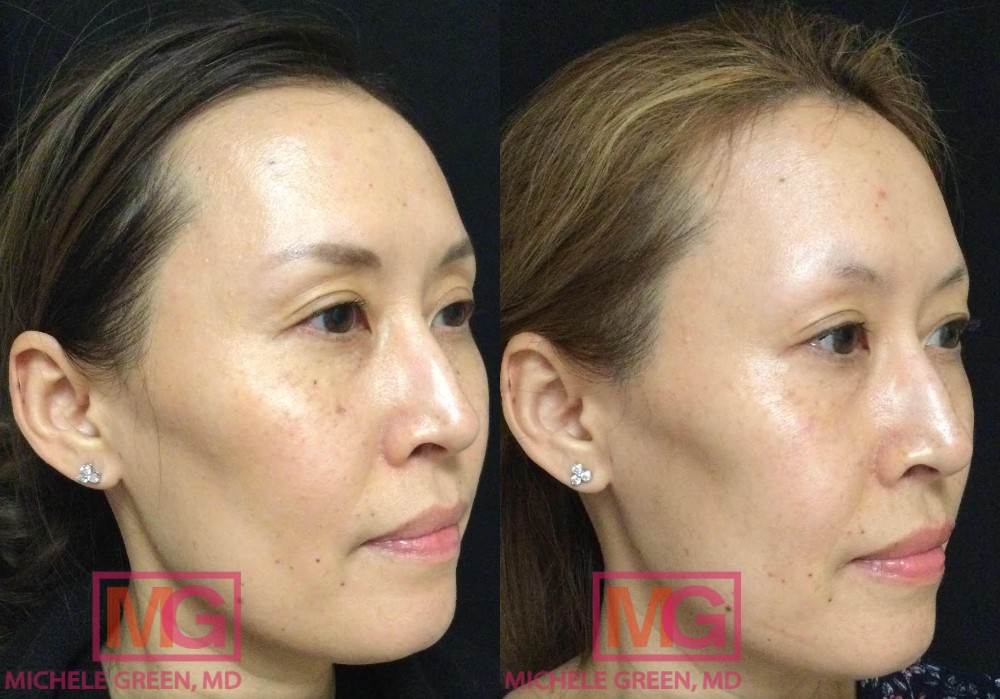
Freckles and sunspots are both forms of skin discoloration caused by uneven melanin distribution, but they differ in origin, appearance, and behavior. Freckles, medically known as ephelides, are small, flat, lightly pigmented spots that typically appear in childhood and are largely genetic in origin. They’re most common in people with fair skin and red hair and are caused by a variation in the MC1R gene, which influences how melanocytes (the pigment-producing cells in the skin) respond to UV radiation. Sunspots, also called age spots, liver spots, or solar lentigines, are a direct result of cumulative sun exposure. Unlike freckles, sunspots develop as the skin ages and accumulates UV damage, and they are not genetically predetermined in the same way. While a freckle reflects a genetic tendency to cluster melanin in certain spots, a sunspot reflects years of sun-exposed areas repeatedly stimulating melanocytes to overproduce pigment. It can be difficult to tell the difference at times, so it’s not uncommon to be asked, “What do sunspots look like compared to freckles?”
When comparing these two types of pigmented spots side by side, the visual differences are clear. Freckles are typically small, usually less than 5 mm, and appear as light tan, reddish, or brown flat spots, often clustered on the nose and cheeks. They tend to be relatively uniform in color and have soft, somewhat irregular borders. Sunspots are generally larger, more defined, and darker than freckles. They can range from light tan to dark brown and often have sharper edges. Sunspots tend to feel smooth and flat to the touch, like freckles, but they may cover a larger area of skin. Because both types of spots can vary in size and color, and because some forms of skin cancer can mimic pigmented spots, it’s always a good idea to have any new, changing, or unusual spots evaluated by a board-certified dermatologist like Dr. Michele Green.
Causes of sunspots vs. freckles
Freckles and sunspots share root causes involving melanin and UV rays, but their mechanisms differ. Freckles are driven primarily by genetics, specifically variations in the MC1R gene, and are triggered by UV exposure, which is why they tend to darken in summer and fade in winter. They reflect an uneven distribution of melanin within skin cells rather than a true overproduction. Sunspots, by contrast, result from prolonged, cumulative UV exposure that stimulates an overproduction of melanin in specific areas of the skin. Over time, repeated UV radiation can cause certain melanocytes to become hyperactive, leading to areas of darker pigmentation. This is why sunspots are so strongly associated with aging and a lifetime of sun exposure; they’re essentially the skin’s way of showing the cumulative effects of UV damage over decades.
At what age do freckles and sunspots typically appear?
Freckles often appear early in life, typically in childhood or early adolescence, especially after the first few summers of significant sun exposure. Because of their genetic basis, children who carry the MC1R gene variant may develop freckles as young as 2 to 3 years old. They often become more noticeable during the teenage years and may fade somewhat with age as melanocyte activity changes. Sunspots, by contrast, typically appear in adulthood, most commonly in people over 40, though those with a history of significant sun exposure, sunburn, or tanning bed use may notice them earlier. The longer you’ve been exposed to UV radiation without adequate sun protection, the earlier and more prominently solar lentigines develop. This is why early and consistent use of sunscreen and protective clothing is one of the most effective ways to delay the onset of age spots.
Where sunspots and freckles usually appear on the body
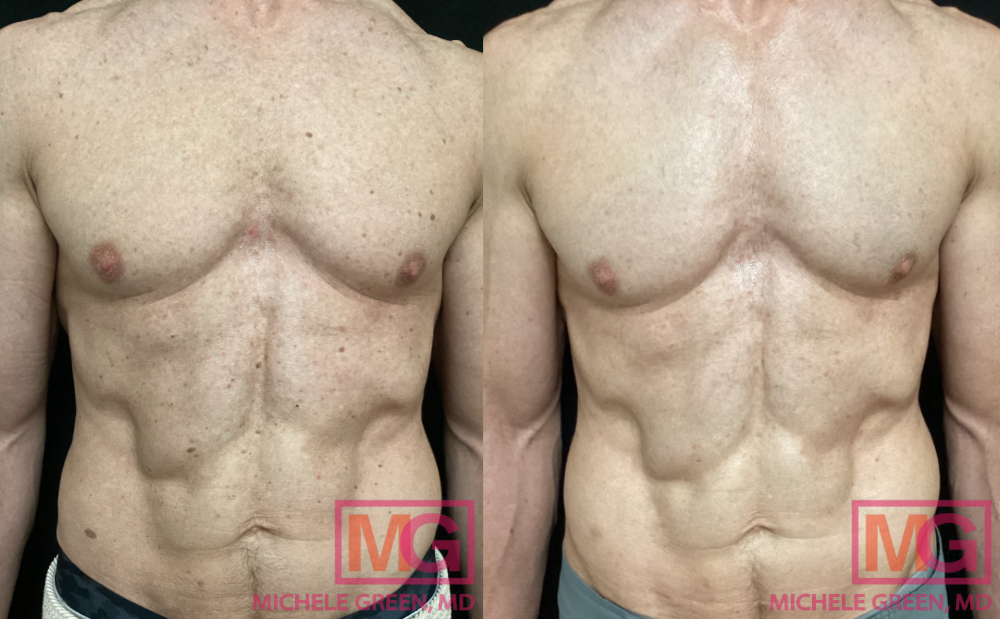
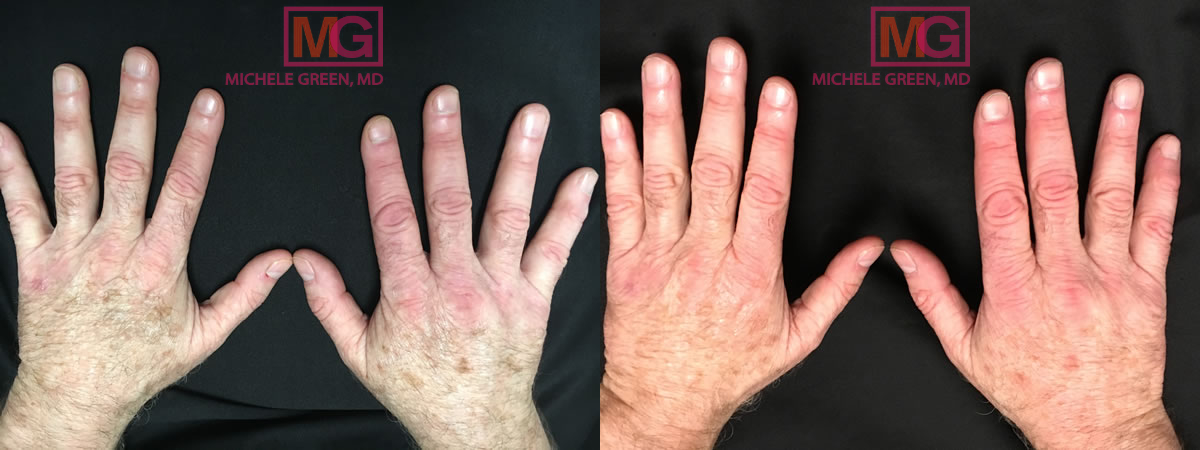
Freckles most commonly appear on sun-exposed areas of the face, particularly the nose, cheeks, and forehead, as well as the shoulders and upper arms. Because they’re tied to UV exposure and genetic predisposition, they’re most concentrated where the skin receives the most sun. Sunspots (solar lentigines) often appear in the same locations but also in a broader range of sun-exposed areas, including the backs of the hands, forearms, chest, shoulders, and face. The backs of the hands are among the classic locations for sunspots, which is part of why they’re associated with aging. Over the decades, cumulative UV exposure in these unprotected areas leads to more visible pigmentation. If you notice new or changing spots in any of these areas, regular skin checks with a board-certified dermatologist, such as Dr. Michele Green, can help ensure they’re benign and guide you toward appropriate treatment.
Do freckles fade over time, compared to sunspots?
Yes, freckles tend to be more responsive to natural changes in UV exposure, while sunspots are more persistent. Because freckles are activated by UV light, they often darken in summer and fade in winter, when UV exposure decreases. Over time, as individuals age and spend less time in direct sunlight, freckles may fade naturally or become less prominent. Sunspots, however, tend to be more permanent. Because they represent a long-term change in the behavior of melanocytes, a true overproduction of pigment, they don’t respond to seasonal changes the way freckles do. Without treatment, sunspots typically remain stable or may darken further with continued sun exposure. This is one of the key reasons patients seek professional treatment for sunspots rather than simply waiting for them to fade on their own.
Sunspots vs. Melanoma
The key reason it’s so important to visit a board-certified dermatologist is that they know how to distinguish a sunspot from a melanoma. Benign sunspots (solar lentigines) are typically flat, uniformly colored, well-defined, and stable, meaning they don’t change significantly over time. Melanomas, by contrast, often exhibit features dermatologists describe using the ABCDE rule: Asymmetry, Border irregularity, Color variation (multiple shades of brown, black, red, or white), Diameter greater than 6 mm, and Evolution (changing in size, shape, or color over time). Melanomas are among the most serious skin cancers and can be life-threatening if not caught early. If you notice any asymmetry, an uneven border, multiple colors, growth, or any change, it’s important to schedule a skin check with a dermatologist as soon as possible.
Are freckles and sunspots signs of other skin cancers? In most cases, freckles and sunspots are benign, but they can be mistaken for more serious conditions. The key is knowing what to look for and seeking professional evaluation when something seems off. Freckles are not linked to an increased risk of skin cancer, though people with fair skin and many freckles may have greater overall UV sensitivity, warranting careful sun protection. Sunspots are generally harmless but should be monitored for changes, as conditions such as lentigo maligna (a type of slow-growing melanoma) can resemble benign solar lentigines. Regular skin checks with a board-certified dermatologist are the best way to catch any concerning changes early and confirm that your pigmented spots are what they appear to be.
Prevention of sunspots or freckles
Sunscreen is one of the most effective ways to prevent sunspots and freckles from forming or worsening. UV rays are the primary environmental trigger for both conditions, so consistent, adequate sun protection is essential. Dermatologists recommend using a broad-spectrum sunscreen with at least SPF 30, ideally SPF 50, for extended time in the sun, and reapplying every 2 hours. MG Skin Labs offers a broad-spectrum sunscreen formulated to provide daily protection while supporting overall skin tone and texture. Sunscreen alone is not always enough: protective clothing, hats, and seeking shade during peak UV hours (typically 10 a.m. to 4 p.m.) are important additions to any sun protection routine. Starting sun protection early in life can significantly reduce the likelihood of developing solar lentigines later on, and continued sun protection after treatment is essential to prevent pigmented spots from returning.
Treating and managing sunspots and freckles
The most pressing question, then, becomes: “How do you get rid of sunspots?” Several effective treatment options can reduce or eliminate sunspots, and the right approach depends on the number of spots, their location, your skin tone, and your overall skin health. Laser treatments, including intense pulsed light (IPL) and fractional laser resurfacing, are among the most popular and effective options for targeting solar lentigines. IPL delivers broad-spectrum light energy that is absorbed by pigmented cells, breaking up excess melanin and allowing it to be cleared by the body. Chemical peels are another proven option that uses exfoliating acids to remove the outermost layers of skin, along with discolored skin cells containing excess pigment. Microneedling can also be beneficial, particularly when combined with topical brightening agents. Topical treatments containing retinoids, hydroquinone, vitamin C, and other brightening ingredients can help maintain results and prevent new spots from forming. Dr. Green’s proprietary MG Skin Labs line includes targeted formulations designed to support depigmentation and long-term skin clarity. Daily use of broad-spectrum sunscreen, SPF 30 at a minimum and SPF 50 for longer sun exposure, is essential both before and after any treatment to protect the skin and prevent pigmentation from returning. Dr. Michele Green customizes every sunspot treatment plan for each patient, ensuring the best possible outcomes with minimal risk.
Frequently Asked Questions (FAQs) about Sunspots vs. Freckles
What is the medical term for freckles?
The medical term for freckles is ephelides. These are flat, lightly pigmented spots that result from both genetic predisposition (particularly the MC1R gene) and UV exposure. Ephelides typically appear in childhood, cluster on sun-exposed areas like the nose and cheeks, and become more pronounced in summer before fading somewhat in winter. They’re distinct from solar lentigines (sunspots), the medical term for age spots or liver spots. Unlike ephelides, solar lentigines develop later in life as a result of cumulative UV exposure rather than genetics, and they tend to persist year-round rather than fluctuating with the seasons. Understanding the distinction between these two terms can help patients communicate more effectively with their dermatologist about the type of pigmentation they’re noticing and the most appropriate treatment approach.
Are freckles and sunspots genetic or caused by sun exposure?
Both freckles and sunspots can be genetic or caused by sun exposure, depending on the type of spot. Freckles have a strong genetic component; the MC1R gene plays a major role in determining who is prone to developing them. People with fair skin, light eyes, and red hair are most likely to carry this genetic variation and, therefore, to develop freckles. However, UV exposure is still needed to “activate” freckles, which is why they appear or darken after sun exposure. Sunspots are driven primarily by environmental factors, specifically a lifetime of UV exposure and sun damage. While genetics can influence how quickly the skin ages and how it responds to UV radiation, sunspots are primarily the result of accumulated UV-induced damage in skin cells over time. This distinction matters for prevention: genetics can’t be changed, but sun protection — daily broad-spectrum sunscreen with SPF 30 or higher, protective clothing, and avoiding peak sun hours — can go a long way in preventing both types of spots from worsening.
Can you get sunspots without having the “freckle gene”?
Yes. Sunspots and the MC1R gene are largely independent of each other. While people who carry the MC1R gene variant are more prone to freckles, anyone who accumulates significant UV exposure over time can develop sunspots, regardless of genetics or skin tone. People with darker skin tones may be less prone to sunburn, but they are still susceptible to solar lentigines and other forms of hyperpigmentation over time. The primary driver of sunspot formation is cumulative UV radiation and the skin damage it causes, not the presence or absence of any specific genetic variant. This is important because it means sun protection is essential for everyone, not just those with fair skin or a family history of pigmentation concerns.
Does having freckles mean you’ll get more sunspots later in life?
Having freckles doesn’t directly cause sunspots, but it suggests that your skin may be more reactive to UV radiation, which, over time, can increase the likelihood of developing sunspots. People who freckle easily typically have fair skin and the MC1R gene variant, both of which are associated with reduced tolerance to UV radiation. Without diligent sun protection, these individuals may accumulate UV damage more quickly and be more prone to developing solar lentigines at a younger age. That said, freckles themselves don’t “turn into” sunspots. They’re distinct types of pigmented spots with different underlying mechanisms. The connection is indirect: freckle-prone skin is sun-sensitive, and sun-sensitive skin is more vulnerable to cumulative UV damage that causes sunspots over time.
Why are sunspots called “liver spots” or “age spots”?
The term “liver spots” is an old-fashioned nickname for sunspots that has nothing to do with the liver; it likely originated because these spots share a brownish color with certain historically used liver-colored dyes. The more accurate nickname, “age spots,” better reflects their origin: these pigmented spots are closely associated with aging skin that has experienced years of cumulative sun damage. As we age, our skin’s ability to repair UV-induced damage declines, and melanocytes become more unevenly distributed. The result is the flat, darkened areas we recognize as age spots or solar lentigines. Though the term “liver spots” has stuck in colloquial use, dermatologists prefer “age spots” or “solar lentigines” because they more accurately describe what these spots are: concentrated areas of discoloration caused by UV exposure and the natural aging process.
Do freckles turn into sunspots as you age?
Freckles do not directly transform into sunspots, but the two can coexist on the same person, and in some cases, it can be hard to tell them apart as you age. As people get older, freckles may fade, especially with reduced sun exposure, while sunspots may begin to appear in many of the same locations. This can create the impression that freckles have “become” sunspots, when in reality, the freckles have faded, and new solar lentigines have developed in their place. This is one reason it’s important to monitor changes in your pigmented spots over time and have them evaluated by a dermatologist. If you’ve had freckles your whole life and begin noticing spots that look different, larger, darker, or more defined, those may be solar lentigines or, in rare cases, moles or other pigmented lesions that warrant closer attention.
Do moles and freckles look the same?
Moles and freckles are both pigmented spots on the skin, but they’re quite different. Freckles are flat, small, and tend to be lighter in color, appearing as a scattering of light tan or brown dots that often fade in winter and intensify with summer sun exposure. Moles, by contrast, are typically raised, more defined, darker, and formed by clusters of melanocytes rather than a diffuse distribution of pigment. This clustering gives moles a more solid, three-dimensional appearance compared to the flat, subtle look of freckles. Moles can be present from birth (congenital moles) or develop over time (acquired moles), with most people continuing to develop new moles into their thirties. While most are benign, they should be monitored for changes, since a mole that begins to shift in appearance can sometimes signal an early skin concern. Dr. Michele Green recommends regular skin checks to evaluate any moles that change in size, shape, or color, as well as any new moles that appear later in life or look distinctly different from the patient’s other moles, sometimes referred to as an “ugly duckling” sign.
Can dark-skinned people get sunspots?
Yes, people of all skin tones can develop sunspots, though they may present differently. Individuals with deeper skin tones have more active melanocytes and produce more melanin overall, which provides some natural protection against UV radiation. However, this does not make them immune to sun damage or pigmentation changes. Solar lentigines and other forms of skin pigmentation discoloration can develop in darker skin tones, often appearing as darker brown or grayish spots. In fact, post-inflammatory hyperpigmentation and melasma are also quite common among people with medium to darker skin tones and can sometimes be mistaken for sunspots. A skilled, board-certified dermatologist like Dr. Michele Green has extensive experience treating pigmentation concerns across all skin tones and can recommend appropriate laser treatments, chemical peels, or topical therapies tailored to your skin type.
Can freckles be removed?
Yes, freckles can be reduced or removed with several effective treatments. Dr. Michele Green offers IPL (intense pulsed light) photofacial treatments that target melanin to fade freckles and even out skin tone. These typically require a series of sessions spaced several weeks apart for optimal results. She also uses Fraxel Dual and Clear + Brilliant, fractional lasers that break up excess pigment with minimal downtime, making them a popular choice for patients seeking visible improvement without an extended recovery period. Chemical peels are another option Dr. Green offers, gently exfoliating the skin to lighten freckles, improve overall texture, and address fine lines and uneven skin tone. For at-home maintenance, MG Skin Labs Skinbright RX helps brighten skin tone between in-office treatments, supporting longer-lasting results and a more even complexion over time. Because freckles are closely tied to UV exposure, results are best maintained with consistent use of broad-spectrum sunscreen and sun-protective habits. Without them, freckles are likely to return or darken with continued sun exposure. Dr. Green works closely with each patient to determine which combination of treatments best suits their skin type and cosmetic goals.
Is it possible to permanently remove sunspots?
Laser treatments, chemical peels, and other professional procedures can significantly reduce or eliminate sunspots, but results depend on consistent sun protection. Dr. Michele Green offers a range of laser options tailored to each patient’s skin type and degree of sun damage, including the Alex-Trivantage laser, which targets pigment with precision, as well as Fraxel and Clear + Brilliant, fractional lasers known for delivering effective results with minimal downtime. For patients seeking a non-laser approach, chemical peels such as Cosmelan and Mesopeel offer a powerful alternative, using targeted exfoliating and depigmenting agents to break down excess melanin and reveal brighter, more even-toned skin. Without daily sunscreen and protective measures, new solar lentigines can form, and existing spots can return, even after successful treatment. Dr. Michele Green works with each patient to develop both a treatment plan and a long-term maintenance strategy, ensuring that results are not only achieved but sustained well into the future.
Can topical creams treat sunspots?
Topical treatments can improve the appearance of sunspots and help prevent new ones from forming, though they typically work more gradually than in-office procedures. Ingredients such as hydroquinone, kojic acid, niacinamide, azelaic acid, and vitamin C can help reduce pigmentation and even out skin tone over time by interrupting melanin production at different points in the pigmentation process. Because these ingredients act through different mechanisms, many patients see the best results with a combination approach rather than relying on a single product. MGSKINLABs Vita-C-Serum delivers a concentrated dose of vitamin C to brighten skin and target uneven pigmentation, while also providing antioxidant protection against further environmental damage. At the same time, MGSKINLABs Skinbright RX combines several of these ingredients to fade existing sunspots and even out overall skin tone with consistent daily use. Retinoids accelerate cell turnover, helping shed discolored skin cells more quickly and allowing fresher, more evenly pigmented skin to surface. MGSKINLABs Pro-Medr Retinol Eye Cream offers a gentler option for more sensitive areas, such as the under-eye area, where skin is thinner and more prone to irritation. As with any topical regimen targeting pigmentation, consistent use over several weeks to months is typically needed to see noticeable improvement, and results are best maintained with daily sun protection.
What is the difference between melasma and sunspots?
Melasma and sunspots are both forms of hyperpigmentation, but they differ in appearance, underlying causes, and response to treatment. Melasma typically appears as larger, more diffuse patches with a blotchy, symmetrical distribution, often on the cheeks, forehead, upper lip, or chin. Hormonal factors and UV exposure strongly influence it. It’s more common in women, particularly during pregnancy (a pattern sometimes called the “mask of pregnancy”) or while using hormonal contraceptives, since fluctuations in estrogen and progesterone can trigger melanocyte activity. Sunspots, in contrast, are discrete, well-defined spots caused by cumulative UV radiation rather than hormonal influence, and they tend to appear as individual marks rather than broad patches. This distinction matters because melasma is often more stubborn and prone to recurrence, particularly with sun exposure or hormonal changes, while sunspots tend to respond more predictably to treatment. Dr. Michele Green can treat both conditions with a tailored approach that may include topical therapies, chemical peels, laser treatments, or a combination of these, with melasma often requiring a more cautious, gradual approach to avoid triggering further pigmentation.
What SPF should I use to prevent sunspots and freckles?
Dermatologists generally recommend a broad-spectrum sunscreen with at least SPF 30 for everyday use and SPF 50 for extended outdoor exposure, such as a day at the beach or an afternoon of outdoor sports. Broad-spectrum protection guards against both UVA and UVB rays, which contribute to sun-damaged skin, changes in skin pigmentation, fine lines, wrinkles, and an increased risk of skin cancer. UVA rays penetrate deeper into the skin and are primarily responsible for premature aging and pigmentation changes, while UVB rays are the main cause of sunburn. Protection against both is essential for comprehensive skin health. Reapplying every two hours while outdoors is equally important, since sunscreen’s protective effects diminish over time, especially with sweating, swimming, or toweling off. Dr. Green has developed her own broad-spectrum sunscreen, formulated to meet these protective standards and support overall skin health, with lightweight, non-greasy ingredients suitable for daily wear under makeup. Incorporating it into a daily routine, rain or shine, is one of the simplest and most effective steps patients can take to preserve treatment results and prevent new sun damage from undoing the progress made through in-office procedures.
Schedule Your Appointment with Dr. Green for Sunspot Treatment in NYC today
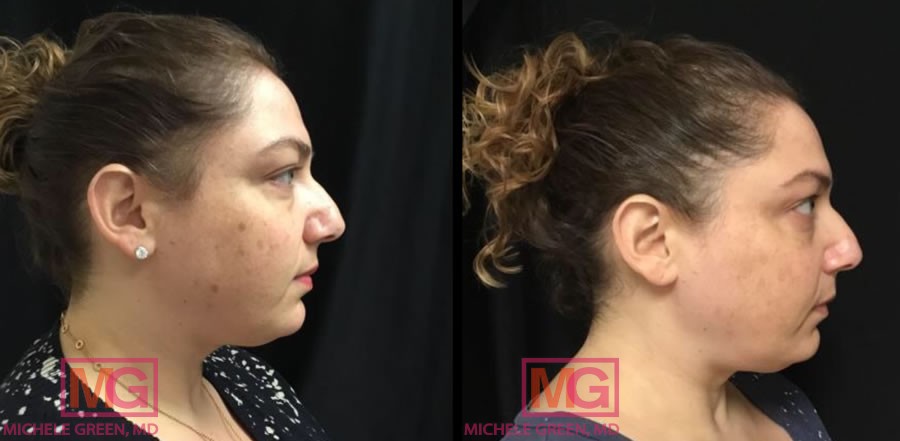
Whether you’re bothered by longstanding freckles, newly appearing sunspots, or a mix of both, understanding what you’re dealing with is the first step toward addressing it. Sunspots (solar lentigines) and freckles (ephelides) are both forms of melanin-driven skin pigmentation influenced by UV exposure, yet they differ significantly in their causes, appearance, age of onset, and response to time and treatment. Freckles are largely genetic and tend to fluctuate with the seasons, while sunspots reflect years of accumulated sun damage and remain fairly constant once they form. Recognizing which type of pigmentation you’re dealing with can help set realistic expectations for treatment and guide the most effective approach. With options ranging from laser treatments and IPL to chemical peels, microneedling, and daily broad-spectrum sunscreen, there are more ways than ever to reduce discoloration and protect your skin, no matter which type of pigmentation you’re managing. Dr. Michele Green is one of New York City’s most trusted and experienced board-certified dermatologists for pigmentation concerns of all kinds. She brings a personalized, science-driven approach to every patient she treats, taking into account skin type, medical history, and cosmetic goals to design a plan suited to each individual.
Dr. Michele Green is a world-renowned, board-certified dermatologist based on the Upper East Side of Manhattan, New York City, with over 25 years of experience providing the most advanced and comprehensive range of cosmetic and medical dermatology services, including pigmentation treatments, skin checks, injectables, laser resurfacing, and more. She is consistently recognized by Castle Connolly, Super Doctors, and New York Magazine as one of the best dermatologists in New York City and has helped countless patients achieve natural, beautiful, long-lasting results. Combining meticulous attention to detail with a deep understanding of facial anatomy and skin health, Dr. Green takes a highly individualized approach to every consultation, ensuring each patient receives a customized treatment plan tailored to their unique features and aesthetic goals. To learn more or schedule a consultation with Dr. Michele Green, please contact us online or call the office at 212-535-3088.


