


Does Tretinoin or Retinol Help with Melasma?
Melasma is one of the most stubborn forms of hyperpigmentation, and patients dealing with it are often eager to know which topical treatments make a difference. Tretinoin and retinol, both vitamin A derivatives, are often recommended in a melasma skincare routine because they speed up skin cell turnover and help fade dark spots over time. Understanding the difference between these two retinoids and how each fits into a broader treatment plan is essential before starting a new regimen. Hyperpigmentation and melasma can be treated with a step-by-step approach guided by a board-certified dermatologist like Dr. Michele Green in NYC.
While tretinoin and retinol can both support melasma treatment, neither serves as a standalone cure, and improper use can heighten sun sensitivity and worsen uneven skin tone. The most effective melasma treatment plans typically combine a prescription-strength retinoid with other topical treatments, such as hydroquinone, azelaic acid, or vitamin C, and include strict sun protection. Because melasma can be difficult to manage safely without professional guidance, many patients turn to Dr. Michele Green for a personalized approach that addresses both pigmentation and the skin barrier.
Tretinoin vs retinol for melasma
The question everyone is asking is whether tretinoin and/or retinol help with melasma. Tretinoin, also known as Retin-A, is a prescription-strength retinoid derived from retinoic acid, the active form of vitamin A. It works by increasing skin cell turnover, shedding pigmented, dead skin cells and revealing fresher skin underneath, gradually fading dark spots associated with melasma. Tretinoin can also improve skin texture and boost collagen production, making it a popular addition to many dermatologist-prescribed regimens.
Retinol is a gentler, over-the-counter form of vitamin A that converts to retinoic acid in the skin, though far less efficiently than tretinoin. As a result, retinol provides a milder version of the same skin-cell turnover benefits, helping gradually improve uneven skin tone and soften the appearance of dark spots with consistent use. Retinol is often a good starting point for patients new to retinoids or with more sensitive skin, since it tends to cause less irritation than prescription-strength options. However, patients with more stubborn or widespread melasma may find that retinol alone does not deliver the same degree of improvement as tretinoin, which is why Dr. Green frequently recommends combination therapy for optimal results.
When compared with retinol for melasma, tretinoin is generally more effective because it is significantly more potent and does not require conversion in the skin to become active. Therefore, it acts more quickly and directly on skin cell turnover and epidermal pigmentation, making it especially useful for patients with moderate to severe melasma. Retinol, while less potent, still offers real benefits and tends to be better tolerated, particularly for patients with sensitive or reactive skin. Ultimately, the right choice depends on the severity of melasma, individual skin sensitivity, and a patient’s ability to tolerate topical treatments. This is why Dr. Green evaluates each patient individually before recommending one treatment over another.
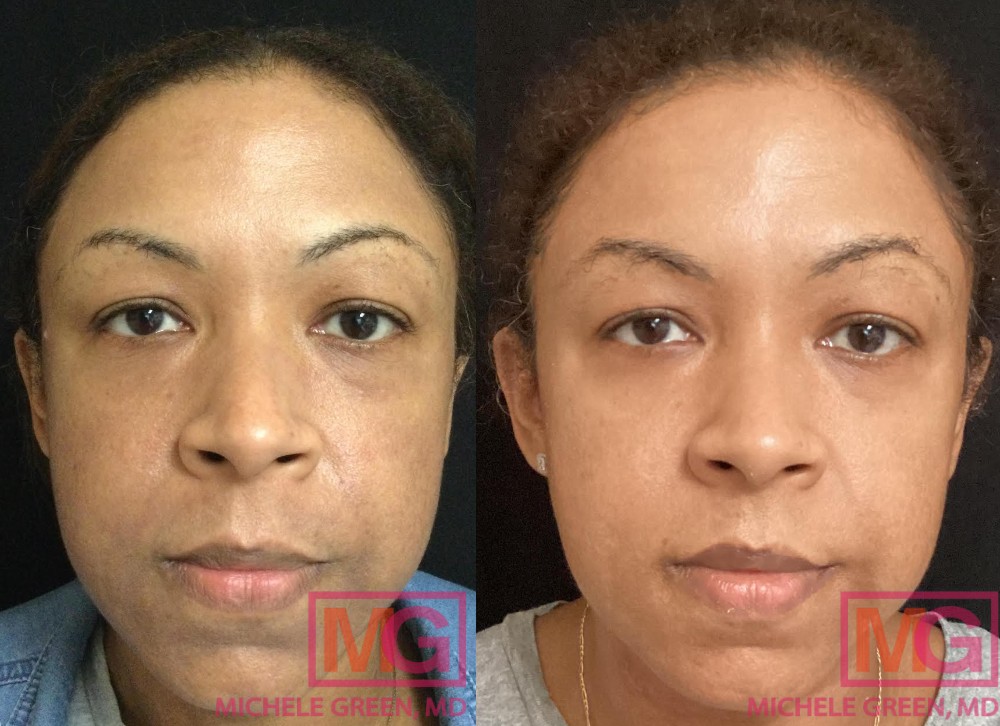
Combining treatments to optimize your skin
Tretinoin and hydroquinone
Tretinoin and hydroquinone are commonly used together to treat melasma, a combination among the most well-studied in dermatology. Hydroquinone directly inhibits melanin production in melanocytes, while tretinoin accelerates skin cell turnover and improves hydroquinone penetration, making the combination more effective than either ingredient alone. This pairing is often part of a broader regimen that may also include niacinamide, kojic acid, tranexamic acid, AHAs, or vitamin C to further support an even skin tone.
Adding vitamin C to a tretinoin and hydroquinone regimen can further brighten the complexion because vitamin C acts through a different antioxidant pathway that both protects against new pigmentation from UV exposure and helps fade existing discoloration, without competing with hydroquinone’s melanin-inhibiting action. For patients who prefer to avoid hydroquinone altogether, whether due to sensitivity, prolonged prior use, or personal preference, you may consider a hydroquinone-free regimen centered on tretinoin and paired with ingredients such as tranexamic acid, azelaic acid, kojic acid, arbutin, or cysteamine, which can provide meaningful brightening with a lower risk of irritation or rebound discoloration over long-term use.
Retinol and Vitamin C
Yes, you can use retinol and vitamin C (ascorbic acid) together. However, many dermatologists recommend applying vitamin C in the morning and retinol at night to minimize irritation and maximize each ingredient’s benefits. Vitamin C is a potent antioxidant that helps protect against photoaging, supports collagen production, and helps fade dark spots, making it a helpful complement to retinol’s skin-cell-turnover benefits. Some formulations also pair vitamin C with vitamin E, another antioxidant that helps stabilize ascorbic acid and enhance its effectiveness. Together, these ingredients can support a more comprehensive approach to fading melasma and improving overall skin texture.
This vitamin C and retinol combination is also a popular hydroquinone-free option for patients seeking to brighten their skin, whether for long-term maintenance or personal preference. Layering vitamin C and retinol with other hydroquinone-free brighteners, such as tranexamic acid, azelaic acid, kojic acid, or arbutin, can further support an even skin tone while minimizing the irritation risk associated with prolonged hydroquinone use.
Triple combination cream (tretinoin + hydroquinone + steroid)
Triple combination cream, often called the Kligman formula, combines tretinoin, hydroquinone, and a mild corticosteroid into a single prescription product and remains one of the most effective topical treatments for melasma. The corticosteroid helps offset the irritation that tretinoin and hydroquinone can cause when used together, allowing patients to tolerate the combination more comfortably while still benefiting from active pigment-fading ingredients. While highly effective, triple combination cream is intended for short-term use under a dermatologist’s supervision because long-term steroid use can lead to side effects such as thinning of the skin. Dermatologists may recommend this formula for patients with more resistant melasma, often pairing it with chemical peels or other treatments, such as pico lasers, to enhance results. For patients who need a maintenance plan after finishing the triple combination cream, or who cannot use hydroquinone long-term, a hydroquinone-free routine featuring tretinoin, vitamin C, and other brighteners is common to help sustain results.
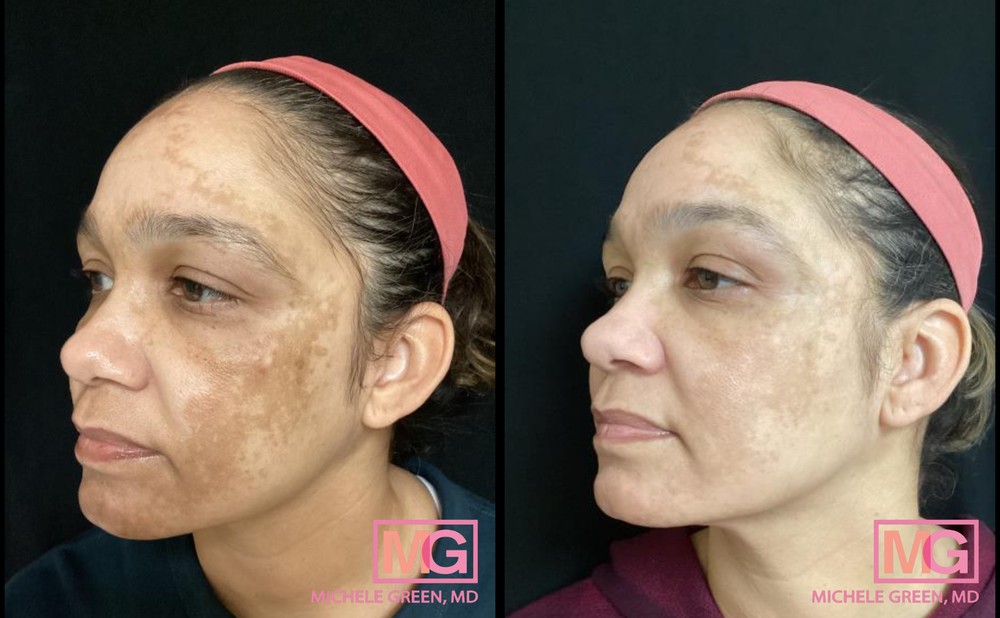
Frequently Asked Questions (FAQs) About Tretinoin, Retinol, and Melasma
How long does tretinoin or retinol take to work on melasma?
Most patients using tretinoin notice gradual improvement in dark spots and uneven skin tone within 8 to 12 weeks of consistent use. However, full results for melasma can take several months, given how deep-seated the pigmentation can be. Retinol tends to work more slowly because it is a milder ingredient that must first convert to retinoic acid in the skin, so visible changes may take a bit longer to appear. Patience and consistency are key with both ingredients, and results are typically best when paired with sunscreen and other topical treatments recommended by a dermatologist.
Can retinol or tretinoin make melasma worse before it gets better?
Both retinol and tretinoin can cause temporary redness, flaking, or irritation when first introduced into a skincare routine. This irritation can sometimes trigger a temporary flare of post-inflammatory hyperpigmentation, especially in patients with darker skin tones. It may be beneficial to start slowly, using these ingredients every other night before building up to daily use. With proper introduction and strict sun protection, most patients see melasma improve rather than worsen over time.
Is adapalene better than tretinoin for melasma?
Adapalene is another retinoid, most commonly used to treat acne, but it is not typically considered a first-line option for melasma. While adapalene supports skin cell turnover, tretinoin has stronger clinical evidence for pigmentation concerns and penetrates the skin more effectively. Dr. Green generally reserves adapalene for patients with both acne and mild pigmentation concerns, while tretinoin remains the preferred prescription-strength retinoid for melasma.
Does tretinoin cause hyperpigmentation or help fade it?
Tretinoin is designed to fade hyperpigmentation, not cause it, by accelerating the shedding of pigmented skin cells and encouraging fresh, more evenly toned skin to surface. That said, tretinoin increases sun sensitivity, and unprotected sun exposure while using it can trigger new hyperpigmentation or worsen existing melasma. That is why Dr. Green stresses that broad-spectrum sunscreen is non-negotiable for anyone using tretinoin, especially patients being treated for melasma.
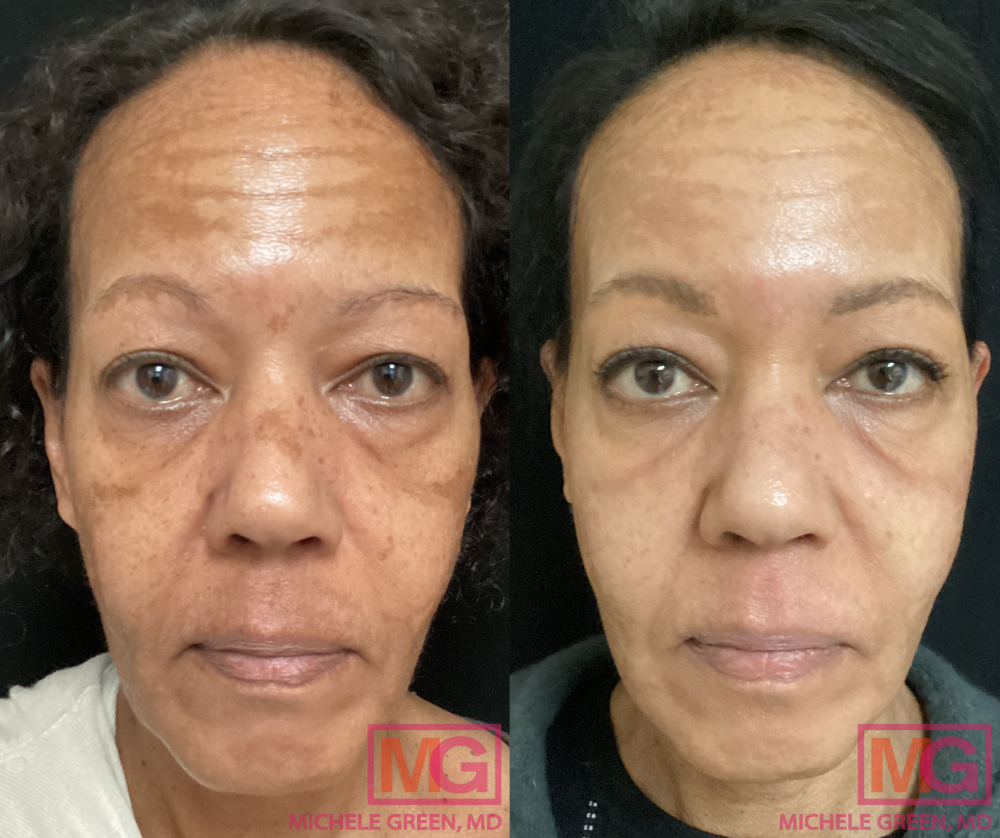
Can retinol be used daily for melasma, or is it too irritating?
Many patients can tolerate daily retinol use once their skin has built tolerance, though it is best to start with two to three nights per week and gradually increase the frequency. Patients with more sensitive or reactive skin may need to stick with a few nights per week indefinitely to avoid excessive dryness or irritation. Dr. Green can help determine the right frequency based on individual skin type and how the skin responds during the first several weeks of use.
What concentration of tretinoin is best for melasma?
Tretinoin is typically available in concentrations ranging from 0.025% to 0.1%. Most dermatologists start patients on a lower concentration to minimize irritation and increase the strength if needed. For melasma, a low-to-moderate concentration is often sufficient because higher strengths can increase the risk of irritation-triggered post-inflammatory hyperpigmentation. Dr. Green tailors the concentration to each patient’s skin tone and sensitivity, adjusting the regimen as the skin adapts.
Is tretinoin safe for melasma during pregnancy?
Tretinoin and other retinoids are not recommended during pregnancy because they have been linked to potential risks to fetal development. This includes both prescription tretinoin and, as a precaution, over-the-counter retinol. Melasma often worsens during pregnancy due to hormonal changes, but treatment is typically limited to pregnancy-safe options, such as azelaic acid or gentle chemical peels, until after delivery. Patients who are pregnant or trying to conceive should always consult their dermatologist and OB-GYN before starting or continuing any retinoid-based skincare routine.
Does tretinoin need to be combined with sunscreen to work for melasma?
Yes, sunscreen is essential when using tretinoin for melasma because it increases photosensitivity to UV light. Unprotected sun exposure can quickly undo any progress in fading pigmentation. Dr. Green recommends a broad-spectrum sunscreen with an SPF of 50 or higher, applied daily and reapplied throughout the day, especially for patients using tretinoin or undergoing other melasma treatments. Without consistent sun protection, even the most effective topical treatments are unlikely to produce lasting results.
Can OTC retinol creams treat melasma as well as prescription tretinoin?
Over-the-counter retinol creams can meaningfully improve mild melasma and overall skin tone. However, they are generally less effective than prescription-strength tretinoin for more stubborn or widespread pigmentation. This is largely because retinol must convert to retinoic acid in the skin, a less efficient process than tretinoin’s direct action. Patients who do not see adequate improvement with OTC retinol products after several months may benefit from consulting Dr. Green about prescription options.
For patients specifically seeking a hydroquinone-free approach, pairing OTC retinol with vitamin C and other hydroquinone-free brighteners, such as tranexamic acid or azelaic acid, can enhance results while avoiding hydroquinone altogether. Still, patients with more stubborn melasma often achieve faster, more noticeable improvement with a prescription plan from Dr. Green, whether or not hydroquinone is part of the regimen.
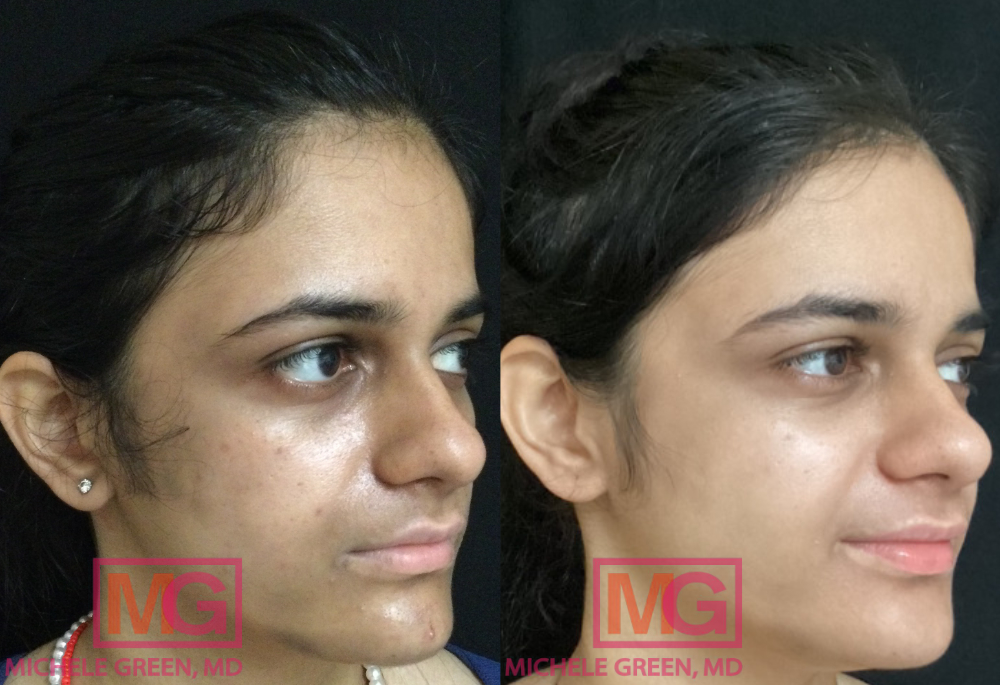
Get Started Treating Your Melasma Today
Deciding on the most effective treatment for your melasma ultimately depends on the severity of pigmentation, individual skin sensitivity, and how well your skin tolerates active ingredients. That’s why professional guidance makes such a meaningful difference. Both retinoids can play a valuable role in a broader melasma treatment plan that may include vitamin C, hydroquinone or hydroquinone-free brighteners, azelaic acid, chemical peels, or in-office procedures. Still, they work best when an experienced dermatologist, such as Dr. Michele Green, tailors them to the individual.
Dr. Michele Green is a well-known, board-certified dermatologist in NYC with over 25 years of experience helping patients throughout New York City achieve clearer, more even-toned skin. Known for her personalized, less-is-more approach to skincare, Dr. Green will assess your skin, discuss your melasma history, and design a treatment plan — with or without hydroquinone — that may include prescription retinoids, vitamin C, topical treatments, and in-office procedures suited to your specific needs. To start your melasma treatment journey, schedule a consultation with Dr. Green by calling her Upper East Side NYC office at 212-535-3088 or contacting us online.


