


Atrophic vs. Hypertrophic Scars: Causes and Treatments
Not all scars look or behave the same way, and understanding the type of scar you’re dealing with is the first step toward effective treatment. Atrophic scars are sunken or pitted and form when the skin doesn’t produce enough collagen during healing, whereas hypertrophic scars are raised and thickened, caused by an overproduction of collagen at the wound site. Both types can develop after acne, chickenpox, surgical incisions, or other skin injuries, but they require very different treatment approaches, which is why an accurate diagnosis from a board-certified dermatologist such as Dr. Michele Green is so important.
Many patients assume all scarring can be treated the same way, but atrophic and hypertrophic scars sit at opposite ends of the healing spectrum, and confusing their treatments can make scarring worse rather than better. Fortunately, with options ranging from microneedling and chemical peels to laser therapy and steroid injections, most patients can see meaningful improvement in the appearance of their scars with the right guidance from an experienced dermatologist like Dr. Green.

What’s the difference between atrophic and hypertrophic scars?
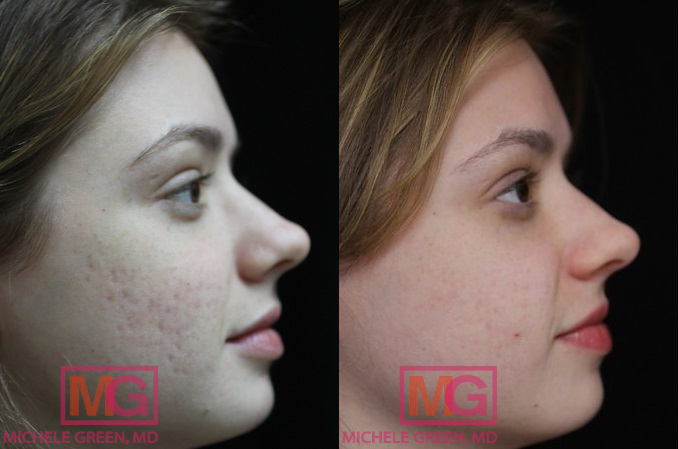
Atrophic and hypertrophic scars are essentially opposites in texture and appearance, even though both result from the skin’s natural healing process. Atrophic scars, also called pitted scars, sit below the surrounding skin because the dermis loses tissue and collagen during healing, leaving a depression — ice pick scars, boxcar scars, and rolling scars are all subtypes of atrophic acne scars. Hypertrophic scars, by contrast, are raised and sit above the skin’s surface because the body produces too much collagen during wound repair. While atrophic scars are most commonly associated with acne and chickenpox, hypertrophic scars tend to form after surgical incisions, burns, or other injuries that create significant skin tension during healing. Dr. Green can determine which type of scarring you have during an in-office evaluation and recommend the treatment approach best suited to your skin.
Why hypertrophic scars are raised, whereas atrophic scars are sunken
The difference in appearance comes down to how much collagen the fibroblasts in the dermis produce as the wound heals. With hypertrophic scars, fibroblasts go into overdrive and produce excess collagen that accumulates at the injury site faster than the body can break it down, creating a firm, raised scar. With atrophic scars, the opposite happens — the healing process fails to produce enough new collagen to fully replace what was lost, so the skin heals with a shallow indentation rather than being flush with the surrounding tissue. Because these two scar types stem from opposite imbalances in collagen production, they require different treatment strategies: hypertrophic scars typically benefit from approaches that soften and flatten excess tissue, while atrophic scars respond best to treatments that stimulate new collagen to fill in the depression.
Causes of atrophic scars vs. hypertrophic scars
Atrophic scars form when inflammation from acne, chickenpox, or other skin injuries damages collagen and fibrous tissue in the dermis, and the body can’t fully rebuild the lost structure during healing, leaving pitted scars. Hypertrophic scars, on the other hand, develop when the body’s wound-healing response overshoots, and fibroblasts produce an excess of collagen that doesn’t break down properly, resulting in a thickened, raised scar. Hypertrophic scars are especially common after surgical incisions, deep cuts, burns, or piercings, particularly in areas of the body that experience high tension or movement, such as the chest, shoulders, and joints. Genetics, skin tone, and the depth of the original wound all play a role in determining which type of scar a person is more likely to develop. This same collagen imbalance drives stretch marks, which are technically a form of atrophic scarring that occurs when the skin stretches faster than collagen can keep up, though they’re typically treated separately from acne- or injury-related atrophic scarring.
Why do some people get hypertrophic scars and others get atrophic ones from the same injury?
Two people can sustain similar injuries and end up with completely different scars, largely due to individual differences in fibroblast activity and collagen regulation during healing. Some individuals are genetically predisposed to overproducing collagen, increasing their risk of hypertrophic or keloid scars, while others tend to underproduce collagen during repair, increasing their risk of atrophic, pitted scars. Skin tone can also play a role, as hypertrophic and keloid scarring are more common in patients with darker skin. The location of the wound matters too, since areas with greater skin tension, such as the chest, shoulders, and jawline, are more prone to hypertrophic scarring, regardless of a person’s general healing tendencies.
Why acne scars tend to be atrophic rather than hypertrophic
Acne scars are typically atrophic because inflammatory acne lesions, particularly cystic acne, damage collagen and supportive tissue in the dermis without triggering the aggressive healing response that produces raised, hypertrophic scars. As a cystic acne breakout heals, the skin often can’t fully regenerate the collagen it lost, resulting in ice pick, boxcar, or rolling scars, depending on the shape and depth of the original lesion. Acne also commonly leaves behind post-inflammatory hyperpigmentation, a temporary flat discoloration that is often mistaken for scarring but tends to fade with time or targeted skin care. Hypertrophic acne scars can occur, but they are far less common and tend to appear on the chest, back, or jawline, where the skin is more prone to excess collagen production.
What’s the difference between a hypertrophic scar and a keloid?
A common question when discussing scars is, “Are hypertrophic scars the same as keloids?” Hypertrophic and keloid scars are often confused because both result from an overproduction of collagen, but they behave quite differently. A hypertrophic scar stays confined to the boundaries of the original wound and may gradually flatten and fade over time, especially with treatment. A keloid, on the other hand, continues to grow beyond the edges of the original injury, sometimes becoming significantly larger than the wound that caused it, and rarely resolves without treatment. Keloid scars are also more likely to be itchy or tender and tend to occur more frequently on the chest, shoulders, earlobes, and jawline. Dr. Green can distinguish between the two during a physical evaluation and recommend treatments such as steroid injections or laser therapy.

The best treatments for atrophic scars vs. hypertrophic scars
Atrophic scars generally respond best to treatments that stimulate new collagen production to fill in depressed areas, such as microneedling, chemical peels, and laser resurfacing. Additionally, hyaluronic acid fillers can be injected into each atrophic scar to provide immediate visual improvement, and biostimulators such as Sculptra can be injected into affected areas to stimulate collagen production over the long term. Hypertrophic scars, on the other hand, are best treated with methods that flatten and soften excess tissue, including intralesional corticosteroid injections, cryotherapy, silicone gel, silicone sheets, and pulsed dye laser (PDL) to reduce redness and thickness. Some providers also use intense pulsed light (IPL) to target residual redness in a hypertrophic scar, though PDL remains the more targeted option for vascular scar tissue. In more resistant or severe cases of either scar type, surgical excision may be considered, though it’s typically reserved for scars that haven’t responded well to less invasive options. Dr. Green will assess your specific scarring during a consultation and design a treatment plan tailored to your skin type and goals.
Recovery time between treating atrophic and hypertrophic scars
The difference in recovery time varies by treatment, but in general, procedures for atrophic scars, such as microneedling or chemical peels, typically involve a few days of redness, mild swelling, or peeling before patients can return to their normal routine. Subcision and more aggressive laser resurfacing may require a slightly longer recovery, sometimes up to a week, due to more noticeable swelling or bruising. Treatments for hypertrophic scars tend to have minimal downtime overall — steroid injections and pulsed dye laser sessions typically involve little more than temporary redness at the treatment site, allowing patients to resume daily activities almost immediately. Surgical excision, when necessary for either scar type, involves the longest recovery, often several weeks, because the incision must heal properly to avoid recurrence of the original scarring.
Frequently Asked Questions (FAQs) about Atrophic vs. Hypertrophic Scars
Can atrophic scars turn into hypertrophic scars, or vice versa?
Atrophic and hypertrophic scars result from opposite imbalances in collagen production, so one type typically does not convert into the other. An atrophic, pitted scar will not spontaneously become raised, and a hypertrophic scar will not sink into a depression, because each reflects a distinct pattern of how the skin responded to injury during scar maturation. That said, it is possible for someone to have both types of scarring in different areas, particularly if they’ve experienced multiple kinds of skin trauma, such as cystic acne on the face alongside a surgical scar elsewhere on the body. Dr. Green evaluates each area individually, since a treatment plan effective for atrophic scarring won’t necessarily be effective for a nearby hypertrophic scar, and vice versa.
Why are atrophic scars common with chickenpox and acne?
Both chickenpox and cystic acne cause serious, inflammatory damage to the dermis, which is why they so often leave behind atrophic scars. Chickenpox causes small, blister-like lesions that penetrate the deeper layers of the skin. When those lesions heal, the body frequently fails to fully rebuild the lost collagen, leaving small pitted scars. Cystic acne behaves similarly, as the inflammation from deep, painful breakouts breaks down collagen and fibrous tissue faster than the skin can repair them. In both cases, the resulting scars are typically shallow, sunken indentations rather than the raised, firm texture seen in hypertrophic scarring.
Do atrophic scars ever fill in or improve on their own?
Atrophic scars can soften slightly over time as the skin continues to remodel during scar maturation, but they rarely disappear completely without professional treatment. Post-inflammatory hyperpigmentation, which often accompanies acne scarring, may fade on its own within several months to a year, making the remaining pitted scars appear less noticeable, though the textural indentation itself typically persists. For patients seeking meaningful improvement, in-office treatments such as microneedling, chemical peels, or laser resurfacing are generally necessary to stimulate new collagen and smooth the skin’s surface.
Do hypertrophic scars shrink over time without treatment?
Hypertrophic scars often improve somewhat on their own, since scar maturation is a gradual process in which the body slowly breaks down and reorganizes the excess collagen that made the scar raised in the first place. It can take anywhere from several months to a couple of years for a hypertrophic scar to flatten and fade to some degree without intervention. It typically won’t disappear entirely, and some scars remain noticeably raised or discolored indefinitely. Treatments such as steroid injections, silicone sheets, and pulsed dye laser can speed up this process considerably and produce a flatter, smoother result than waiting would.
Can microneedling fix atrophic scars?
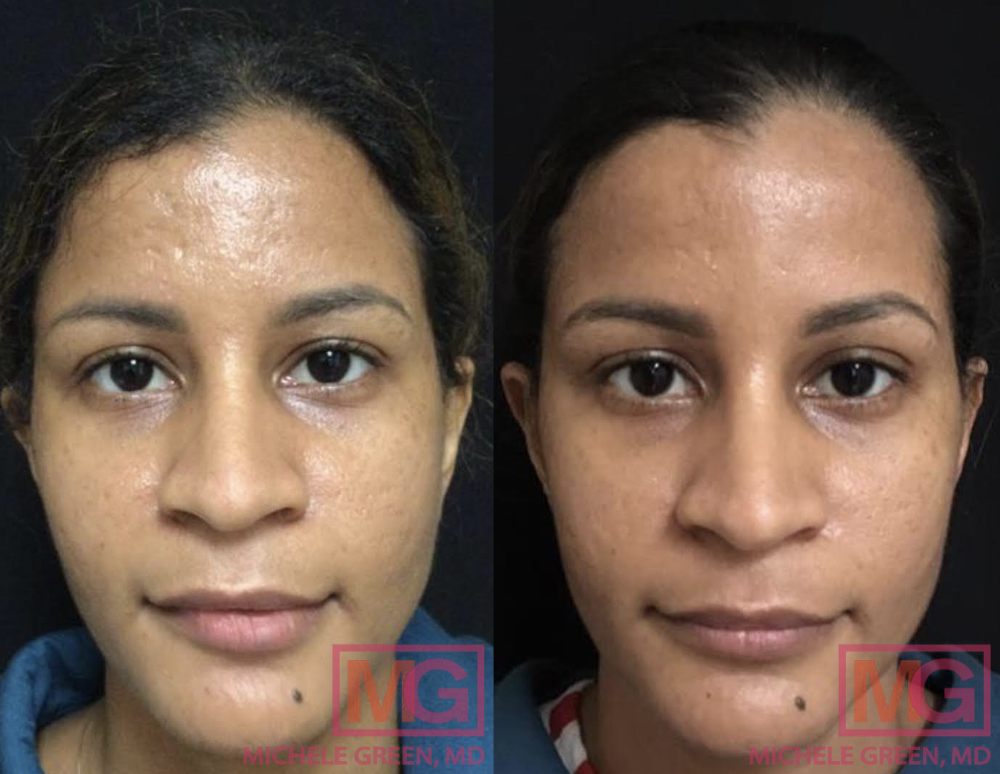
Microneedling, sometimes called skin needling, is one of the most effective treatments for atrophic scars. The procedure uses a handheld device with fine needles to create controlled micro-injuries in the skin, stimulating fibroblasts to produce new collagen and gradually filling in pitted scars. It works particularly well for shallow-to-moderate rolling and boxcar scars, and results continue to improve for months after treatment as new collagen forms. Multiple sessions are typically needed to achieve the best results, and Dr. Green often combines microneedling with other treatments targeted at each individual’s skin type and concerns.
Can dermal fillers be used to treat atrophic scars?
Yes, dermal fillers can be an effective option for certain atrophic scars, particularly boxcar and shallow rolling scars, because they physically lift the depressed area to sit flush with the surrounding skin. Filler is injected directly beneath the scar to add volume, and results are typically visible immediately, making it a popular choice for patients seeking quick improvement before a special event. However, the results are temporary, generally lasting from six months to over a year depending on the type of filler used, so repeat treatments are necessary to maintain them. Dr. Green often recommends combining filler with more permanent collagen-stimulating treatments, such as microneedling or Sculptra, for longer-lasting improvement.
Can laser treatment work for both atrophic and hypertrophic scars?
Laser therapy can be effective for both types of scarring, though the specific laser and technique used differ depending on the scar. For atrophic scars, laser resurfacing works by creating controlled micro-wounds in the skin that stimulate new collagen production, gradually smoothing out the pitted texture. For hypertrophic scars, a pulsed dye laser is often preferred because it targets the blood vessels within the scar tissue to reduce redness, flatten the scar, and improve overall texture, without the collagen-stimulating heat used for atrophic scarring. Dr. Green will select the laser technology best suited to your specific scar type during your consultation.
Can silicone sheets reduce hypertrophic scars?
Silicone sheets are a widely recommended, non-invasive option for reducing the size and appearance of hypertrophic scars. Worn directly over the scar for several hours a day, they help hydrate the outer layer of skin and regulate collagen production at the site, which can flatten and soften the scar over a few months. They’re often recommended as an early intervention for new scars, particularly after surgical incisions, to help minimize the risk of hypertrophic scarring before it fully develops. Silicone gel, a topical alternative to sheets, works similarly and may be more practical for scars in visible areas like the face.
Is surgery an option for severe hypertrophic or atrophic scars?
Surgical excision can be an option for hypertrophic and atrophic scars that haven’t responded to less invasive treatments, though it’s generally considered a later-stage option rather than a first-line approach. For hypertrophic scars, surgical excision involves removing the raised tissue and carefully closing the wound to minimize skin tension. It may be combined with steroid injections or silicone sheets afterward to prevent the scar from returning. For atrophic scars, surgical techniques such as punch excision may be used for isolated, deep ice-pick scars that don’t respond well to resurfacing treatments. Because surgery carries its own risk of scarring, Dr. Green reserves it for cases where other treatments haven’t achieved the desired results.
How to Treat Your Atrophic or Hypertrophic Scars Today with Dr. Green
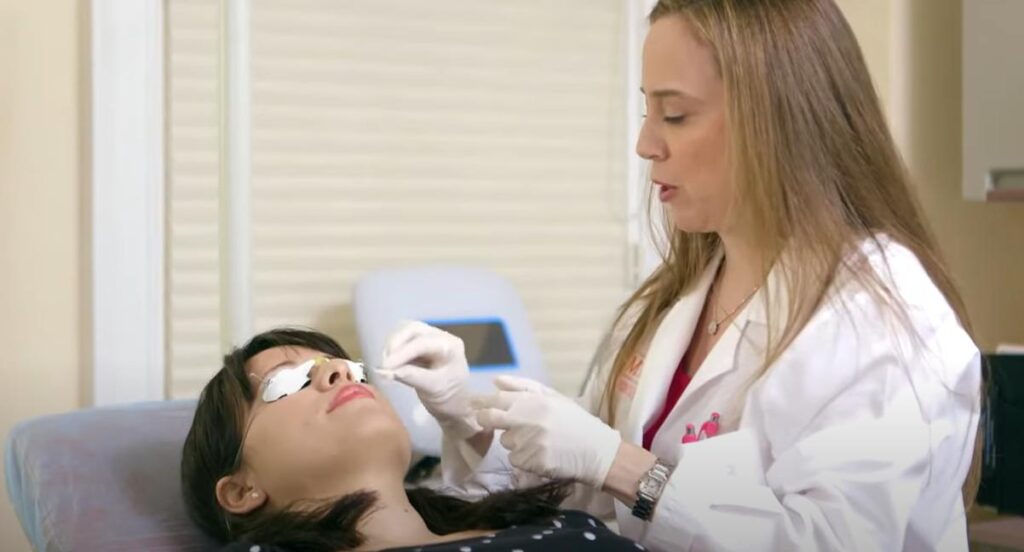
Whether you’re dealing with the sunken texture of atrophic scars from acne or chickenpox, or the raised, thickened appearance of hypertrophic scars from surgical incisions or injuries, effective treatment starts with an accurate diagnosis. From microneedling and subcision to steroid injections and laser therapy, there are proven options to smooth, flatten, and improve the appearance of nearly any type of scarring. Dr. Michele Green will help determine which approach is right for your unique skin.
Dr. Michele Green is a board-certified dermatologist with over 25 years of experience helping patients in New York City achieve smoother, more even-toned skin. Recognized by Castle Connolly, The New York Times, Super Doctors, and New York Magazine as one of NYC’s leading dermatologists, she creates individualized treatment plans that combine the latest in-office technology with high-quality skin care to deliver natural-looking, long-lasting results. To schedule a consultation and begin treating your atrophic or hypertrophic scars, contact us online or call Dr. Green’s Upper East Side, Manhattan, office at 212-535-3088 today.


