


Holiday Skin Prep: The Treatment Timeline to Start Now
Whether you have a Caribbean escape on the calendar this winter, a ski trip booked for the new year, or a summer holiday you are already dreaming about, your skin is probably nowhere near the top of your to-do list. Flights, hotels, and packing lists tend to take priority, and skincare gets squeezed into the final few days before departure. The catch is that many of the treatments that make the biggest difference, from injectables like Botox and Dysport to collagen-building procedures like microneedling, need weeks (and sometimes months) to show their full results. Good holiday skin prep is all about timing: knowing which skincare treatments to book now, which to save for the week before you leave, and which to skip entirely.
A smart holiday skin-prep plan goes beyond looking great in vacation photos, too. Travel stresses skin with dry airplane cabins, unfamiliar climates, intense sun exposure, and late nights that can disrupt even the most consistent skincare routine. Preparing your skin ahead of time with proper hydration, gentle exfoliation, and a dependable sun protection strategy helps prevent the dullness, breakouts, and sun damage that so often follow people home. Starting early also gives you room to address bigger concerns like fine lines and wrinkles, acne scars, or melasma well before your departure date. Whether you have three months or three days until takeoff, the best place to start is a consultation with Dr. Green in New York City.
How do you prep your skin before a holiday?
Prepping your skin before a holiday comes down to three things: building a healthy skin barrier, scheduling treatments on the right timeline, and protecting your skin from the sun and climate you are heading into. The foundation is a consistent skincare routine with a gentle cleanser, an antioxidant serum, a moisturizer suited to your skin type, and a broad-spectrum sunscreen every single morning. From there, in-office treatments can be layered in strategically, with injectables and collagen-stimulating procedures done several weeks ahead and gentle, no-downtime facials saved for the final days before you leave. It also helps to think about your destination. A tropical beach trip calls for serious sun protection and lightweight hydration, while a ski trip calls for richer moisturizers that can stand up to wind and cold. During a consultation, board-certified dermatologist Dr. Michele Green in NYC will evaluate your skin, ask about your travel plans, and build a prep plan around your departure date.
How far in advance should you start holiday skin prep?
Ideally, start holiday skin prep two to three months before your trip. That window leaves time for treatments that work gradually, such as Sculptra, which stimulates the body’s own collagen production over a series of sessions, or a course of microneedling, which typically involves three to four sessions spaced about a month apart. It also gives patients with melasma or stubborn hyperpigmentation time to complete treatments like the Cosmelan peel and let the skin fully settle before any serious sun exposure. If you have less time than that, you can still do plenty. Four to six weeks out is a great window for Botox, Dysport, and dermal fillers, while the final week is best reserved for hydrating treatments with no downtime. As a general rule, the more involved the treatment, the earlier it should happen. If you have a winter getaway on the calendar, now is the ideal time to book a consultation with board-certified dermatologist Dr. Green in NYC.
What treatments should you get before a holiday?
The best pre-holiday treatments depend on your skin concerns and how much time you have. Neuromodulators like Botox and Dysport are among the most popular because they temporarily relax the facial muscles responsible for expression lines on the forehead, between the brows, and around the eyes. Results start to appear within three to five days and reach their full effect at about two weeks, so injections are best scheduled at least two to three weeks before you leave. Dermal fillers such as Juvederm and Restylane, which are made from hyaluronic acid, restore lost volume and soften deeper folds, though they can cause mild swelling or bruising that lasts up to a week or two. For patients who want a longer-term anti-aging treatment, Sculptra gradually rebuilds collagen to restore volume over several months, making it a great option to start well in advance.
Resurfacing treatments also deserve a spot on your timeline. Microneedling creates tiny, controlled micro-injuries that trigger new collagen production, improving fine lines, enlarged pores, acne scars, and uneven texture; complete the final session at least two weeks before departure. Chemical peels remove damaged surface layers to brighten dullness and restore an even skin tone, but deeper peels can cause a week or more of peeling and leave skin extra sensitive to the sun, so do them four or more weeks before a sunny trip. Closer to your departure date, a HydraFacial is a fantastic choice, since it cleanses, exfoliates, and hydrates the skin with zero downtime. Board-certified dermatologist Dr. Green in NYC will help you choose the right combination of anti-aging treatments for your goals and travel dates.

What is the best skincare routine before a holiday?
The best pre-holiday skincare routine is simple, consistent, and focused on protecting and supporting the skin barrier. In the morning, start with a gentle cleanser, followed by an antioxidant serum such as the MGSKINLABs Vita-C Serum, which brightens the complexion, protects against environmental damage, and promotes an even skin tone. Next, apply a hyaluronic acid serum like MGSKINLABs Hydra Repair to draw moisture into the skin, then finish with a moisturizer and a broad-spectrum sunscreen. In the evening, cleanse, apply a retinol if your skin tolerates it and you are not yet in your pre-sun window, and seal everything in with a richer moisturizer to support overnight repair.
How do you get your skin ready for a holiday in 4 weeks?
Four weeks is plenty of time to make real progress. In the first week, schedule any injectables, such as Botox, Dysport, or dermal fillers, so results have time to develop fully, and any swelling or bruising has time to resolve. This is also a good window for a final microneedling session, or for a light chemical peel if you are not headed somewhere especially sunny. Over the following weeks, the focus shifts to consistency at home: apply a vitamin C serum each morning to brighten the skin and defend against free radicals, use a hyaluronic acid serum to boost hydration, and exfoliate once or twice a week to clear away dead skin cells. Try not to introduce new or potentially irritating products during this stretch, since the last thing you want is an unexpected reaction right before your trip.
What should you do the week before a holiday for your skin?
The week before a holiday is all about keeping your skin calm, hydrated, and glowing. This isn’t the time for aggressive treatments, new active ingredients, or anything that requires real downtime. Instead, book a HydraFacial or gentle medical-grade facial three to five days before departure to clear congested pores and give your skin an instant boost of radiance. Dermaplaning also fits nicely into this window, since it gently removes the top layer of dead skin cells along with fine vellus hair, leaving the skin smooth and makeup sitting beautifully. At home, stick with your tried-and-true routine, prioritize hydration and sleep, and begin pausing retinol if you are heading somewhere sunny. If you plan to shave or wax, aim for a day or two before you leave so any irritation has time to settle. Board-certified dermatologist Dr. Green in NYC often recommends this gentle approach so patients arrive at their destination with healthy, rested skin.
What’s the best last-minute skin prep before a holiday?
If your trip is only a day or two away, the goal is to maximize hydration and glow without risking any irritation. A HydraFacial is one of the best last-minute options, since there is no redness or downtime and the results are visible right away. At home, lean on hydrating serums, a nourishing moisturizer, and a hydrating sheet mask the night before you fly. Skip any brand-new products, at-home peels, or strong exfoliating acids, because even a mild reaction can take several days to calm down. Pack your sunscreen and drink plenty of water before and during your flight to offset the drying effects of cabin air. Even on a tight timeline, board-certified dermatologist Dr. Michele Green in NYC can recommend a quick, effective treatment to get your skin vacation-ready.
Should you exfoliate before a holiday?
Yes, but gently and with the right timing. Exfoliation removes the buildup of dead skin cells that makes skin look dull, helps serums and moisturizers absorb more effectively, and creates a smooth canvas for makeup and self-tanner. That said, there is a fine line between glowing skin and irritated skin, and over-exfoliating right before a trip can weaken your skin barrier, leaving it red, sensitive, and more prone to sunburn. A good rule of thumb is to exfoliate once or twice a week in the lead-up to your holiday with a gentle chemical exfoliant such as glycolic or lactic acid, and to finish your last exfoliating step two to three days before departure. Leave at home any product that exfoliates too aggressively, like a gritty physical scrub. If you prefer a professional approach, dermaplaning and HydraFacials both exfoliate effectively without downtime.
Is retinol safe to use before a holiday?
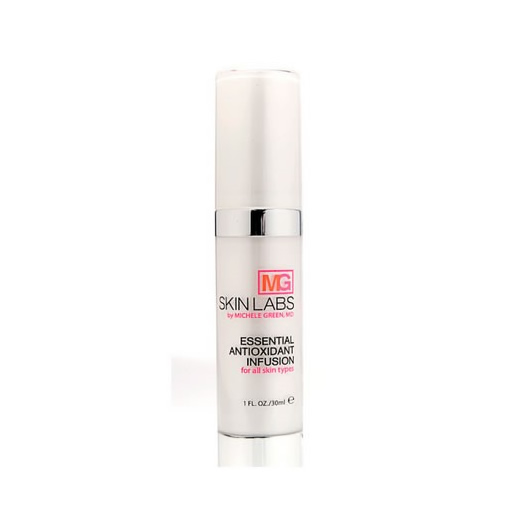
Retinol is one of the best ingredients for softening fine lines and wrinkles, clearing acne, and improving uneven skin tone, but it does make the skin more sensitive to the sun. For a sunny or beach holiday, it is a good idea to pause retinol and prescription retinoids about five to seven days before departure and keep them on hold while you are spending long days outdoors. If you are heading somewhere cold or cloudy, you can usually continue using retinol at night as long as you are diligent with sunscreen during the day. The one firm rule is never to start a new retinol right before a trip, since the adjustment period often brings flaking, redness, and dryness. Once you are home and any sunburn or peeling has resolved, you can ease back into a gentle formula like the MGSKINLABs Essential Antioxidant Infusion, which pairs retinol with nourishing vitamins to help prevent fine lines and wrinkle formation over time.
How do you prepare your skin for the sun?
Preparing your skin for the sun starts well before you hit the beach. In the weeks before your trip, wear broad-spectrum SPF 50 every day, even on cloudy days, and pair it with an antioxidant serum for an extra layer of defense against sun damage. Keeping your skin well hydrated also helps maintain a strong barrier that holds up better to UV exposure, wind, and saltwater. It’s also important to watch for anything that increases sun sensitivity, including retinoids, recent peels or laser treatments, and certain medications like doxycycline, which is often prescribed for acne. Pack sun-protective accessories, such as a wide-brimmed hat, UV-blocking sunglasses, and clothing with a UPF rating, and plan to seek shade between 10 AM and 4 PM when the sun is strongest. Patients with melasma need to be especially careful, since even brief sun exposure can trigger a flare.
How do you prep your skin after a holiday?
Once you are home, your skin will likely need some extra care to recover from sun, travel, and a disrupted routine. Start by rehydrating with a hyaluronic acid serum and a rich, soothing moisturizer, and hold off on strong actives until any redness, peeling, or sunburn has fully healed. From there, ease back into your routine by gradually reintroducing retinol over a week or two. Post-holiday is also the perfect time to take stock of any new sun damage, such as dark spots, freckles, or a melasma flare, and to plan treatments like the Fraxel laser, IPL, or chemical peels once any tan has faded. It’s also a smart time for a full-body skin check, especially if you spent long days in the sun. Board-certified dermatologist Dr. Green in NYC can assess your skin after your trip and create a plan to restore a clear, radiant complexion.
Frequently Asked Questions (FAQs) About Holiday Skin Prep
How do you get glowing skin before a holiday?
Glowing skin comes from three things working together: hydration, regular exfoliation, and healthy habits. In-office treatments like a HydraFacial a few days before departure, or microneedling and a light chemical peel a few weeks ahead, can dramatically improve texture and brightness. At home, a vitamin C serum in the morning, a hyaluronic acid serum twice daily, and gentle exfoliation once or twice a week will help reveal radiant skin. Lifestyle matters just as much, so get enough sleep, drink plenty of water, and cut back on alcohol and salty foods, which can leave skin looking puffy and tired. Board-certified dermatologist Dr. Green in NYC can recommend the right mix of treatments for a natural, healthy glow.
Should you get a facial before a holiday?
A facial can be a great pre-holiday treat, as long as you choose the right type and time it well. A HydraFacial three to five days before you leave is ideal, since it deep cleans, exfoliates, and hydrates the skin with no redness or peeling. Many aestheticians offer wonderful facials, but a heavy extraction facial from an aesthetician you have never visited can leave behind redness, marks, or even a breakout right when you want your skin looking its best. If you are prone to sensitivity or acne, a medical-grade facial performed under a dermatologist’s supervision is the safer bet. At Dr. Green’s office, HydraFacials can be customized with boosters that target dullness, congestion, or pigmentation, and board-certified dermatologist Dr. Green in NYC will help you choose the best option for your skin.
What skincare should you avoid before a holiday?
In the two weeks before a trip, avoid brand-new products, strong exfoliating acids, at-home peels, and harsh physical scrubs, all of which can trigger irritation when you least want it. Retinoids should be paused about a week before a sunny holiday, and prescription lightening creams like hydroquinone may also need a break, since they can increase sun sensitivity. Fragranced products and certain essential oils, such as bergamot, can react with sunlight and cause dark patches on the skin, so skip perfumes on sun-exposed areas. On the treatment side, avoid laser resurfacing and deeper chemical peels within about four weeks of a beach trip, and do not wax any area where you have been using a retinoid. Board-certified dermatologist Dr. Green in NYC can review your current routine and flag anything that should be paused.
How do you prep your face before a beach holiday?
A beach holiday, whether it is a winter escape or a classic summer trip, exposes your face to intense sun, salt water, sand, and heat all at once. Finish any peels, lasers, or microneedling sessions well ahead of time, pause retinol about a week before you leave, and treat yourself to a hydrating HydraFacial a few days before departure. Pack a water-resistant, broad-spectrum SPF 50, and reapply it every 90 minutes and after swimming or toweling off, along with an SPF lip balm. A lightweight, oil-free moisturizer will keep skin comfortable without feeling heavy in the heat, and a wide-brimmed hat adds another layer of protection.
How do you prep your skin for a hot climate?
Hot, humid climates bring their own challenges, including excess oil, sweat, clogged pores, and heat rash. Before you go, swap heavier creams for a lightweight gel moisturizer, choose a non-comedogenic sunscreen, and pack blotting papers and a gentle cleanser for washing your face after sweaty days. Heat alone can also worsen melasma and rosacea, even without direct sun, so patients with either condition should be extra careful to stay cool and shaded. If excessive sweating is a concern, Botox for underarm sweating can dramatically reduce perspiration for months, but you should get it at least two weeks before your trip. Board-certified dermatologist Dr. Green in NYC can recommend the right adjustments for your destination.
What SPF prep should you do before a holiday?
SPF prep starts with choosing the right product and testing it before you leave. Look for a broad-spectrum sunscreen with SPF 50 or higher, and try any new formula a couple of weeks ahead of time to make sure it doesn’t cause breakouts or irritation. Check expiration dates on the sunscreens you already own, and plan to use enough: about a teaspoon for the face and neck and roughly a shot glass full for the body. Layering a chemical and a physical sunscreen provides even more protection, and the MGSKINLABs Hydrating SPF 50 is a physical sunscreen with zinc oxide, plus hyaluronic acid and lactic acid to keep skin soft and hydrated. Do not forget easy-to-miss spots like the ears, neck, hands, and tops of the feet.
How do you keep skin hydrated before and during a holiday?
Start hydrating several days before you travel, since well-hydrated skin is more resilient to sun, wind, and climate changes. Airplane cabins are notoriously dry, so skip heavy makeup on the flight and instead apply a hyaluronic acid serum followed by a rich moisturizer, then reapply as needed during long flights. Drinking plenty of water and limiting alcohol and caffeine also makes a noticeable difference. During your trip, keep a hydrating mist in your bag, apply an after-sun gel with aloe in the evenings, and moisturize right after showering while your skin is still damp.
How do you stop breakouts on holiday?
Breakouts on holiday are usually caused by a combination of heat, sweat, heavy sunscreens, travel stress, and changes in diet and sleep. To keep them at bay, choose non-comedogenic products, cleanse your face after swimming or sweating, and keep a salicylic acid product on hand for spot treatment. If you use prescription acne treatments, know that some, like doxycycline and topical retinoids, increase sun sensitivity, while benzoyl peroxide can bleach towels and swimwear. Patients prone to breakouts should see a dermatologist four to six weeks before travel so the acne treatment plan can be adjusted for the trip, and a cortisone injection can calm a painful cyst within a day or two if one appears before you leave. Board-certified dermatologist Dr. Green in NYC offers a full range of acne treatments to keep skin clear before, during, and after your holiday.
How do you prep your body skin (not just face) for a holiday?
Your body deserves just as much attention as your face, especially if you will be in a swimsuit. In the weeks before you go, use a body lotion with glycolic or lactic acid a few times a week to smooth rough patches and bumps, and moisturize right after showering to lock in hydration. If you deal with chest or back acne, start treatment early, since body breakouts can take longer to clear. Smooth skin is another common goal, and laser hair removal offers long-lasting results, but it requires multiple sessions and sun avoidance between them, so it is best started months ahead; otherwise, shave or wax a day or two before departure. Remember that the chest, shoulders, and backs of the hands are prime spots for sun damage, so they need sunscreen just as much as your face. Board-certified dermatologist Dr. Green in NYC can recommend body treatments to get your skin vacation-ready from head to toe.
How do you prep your skin to tan safely?
The honest answer is that no tan from UV exposure is truly safe. A tan is the skin’s response to UV damage, and over time it contributes to sun damage, fine lines, sunspots, melasma, and an increased risk of skin cancer. A “base tan” doesn’t protect you either, since it offers only a very low level of protection, roughly equal to an SPF of 3 or 4. If you love the look of a bronzed glow, a sunless self-tanner or professional spray tan is the safest route. Exfoliate the day before applying, moisturize dry areas like the elbows, knees, and ankles, and apply it a day or two before your trip, keeping in mind that self-tanner offers no sun protection on its own.
How do you prep sensitive skin for a holiday?
For sensitive skin, less is more. Pare your routine down to a gentle cleanser, a fragrance-free moisturizer, and a mineral sunscreen with zinc oxide or titanium dioxide, which is often better tolerated than chemical filters. Patch-test any new product two to three weeks before your trip, and avoid harsh exfoliants or new active ingredients in the weeks leading up to travel. If you have rosacea, keep in mind that heat, sun, alcohol, and spicy foods are common triggers, and that a series of VBeam laser treatments ahead of time can help reduce redness and flushing. Pack calming products you already trust so you are never stuck experimenting on vacation. Board-certified dermatologist Dr. Green in NYC can create a gentle prep plan designed for sensitive skin.
What skincare should you pack for a holiday?
Packing the right skincare keeps your routine on track no matter where you are. Essentials include a gentle cleanser, a hydrating serum, your everyday moisturizer, broad-spectrum SPF 50 for the face and body, an SPF lip balm, an after-sun gel, and blotting papers if you are heading somewhere hot. Decant products into travel-size containers that meet airline liquid limits, and keep any prescription creams or medications in your carry-on bag. It is also wise to pack the moisturizer you already know and love rather than experimenting with unfamiliar moisturizers at your destination, since a new product can easily cause a reaction. Board-certified dermatologist Dr. Green in NYC can help you put together a travel kit with MGSKINLABs products tailored to your skin.
How long before a holiday should you get Botox or dermal fillers?
For the best results, schedule Botox or Dysport at least two to three weeks before your trip and dermal fillers at least two to four weeks before. This gives neuromodulators time to reach their full effect and allows any swelling or bruising from fillers to fully resolve, with time left over for a touch-up if needed. Flying shortly after injections is generally fine, but avoid strenuous exercise for 24 hours and skip saunas and hot tubs in the days right after treatment. Results from Botox and Dysport typically last three to four months, while hyaluronic acid fillers can last six to 18 months, depending on the product and area treated. Board-certified dermatologist Dr. Green in NYC will help you time your injectables so you look refreshed and natural on your trip.
Can you get a chemical peel before a holiday if you have melasma?
Patients with melasma can absolutely benefit from a chemical peel, but timing is everything. Because melasma is easily triggered by sun and heat, the best time to treat it is in the fall and winter months, well before any sunny travel. Treatments like the Cosmelan peel require strict sun avoidance afterward, so if you have a beach holiday coming up in the next few weeks, it is usually better to wait until you are back home. In the meantime, focus on daily SPF 50, a wide-brimmed hat, and gentle brightening products that do not increase photosensitivity. Board-certified dermatologist Dr. Green in NYC specializes in treating melasma and can help you plan peels around your travel schedule.
Does dermaplaning make hair grow back thicker?
No, dermaplaning does not cause hair to grow back thicker or darker. The fine vellus hair removed during the treatment grows back with the same soft texture it had before. Many patients dermaplane a few days before a trip because it removes dead skin cells and peach fuzz in one step, leaving skin smooth and helping makeup and skincare products apply more evenly. Since the treatment leaves the skin slightly more sensitive for a day or two, diligent sunscreen use afterward is a must. Board-certified dermatologist Dr. Green in NYC can let you know whether dermaplaning is a good fit for your skin type.
Start Your Holiday Skin Prep Timeline with Dr. Michele Green in NYC Today
Great holiday skin starts with planning. Collagen-building treatments like Sculptra and microneedling work best when started two to three months out; injectables like Botox, Dysport, and dermal fillers are ideal four to six weeks before departure, and gentle, hydrating treatments like HydraFacials and dermaplaning are perfect for the final week. Pair those treatments with a consistent skincare routine, smart exfoliation, plenty of hydration, and serious sun protection, and you will step off the plane with healthy, radiant skin that holds up throughout your trip and recovers quickly once you are home. If you are ready to map out your own treatment timeline, the best first step is a consultation with board-certified dermatologist Dr. Michele Green in NYC.
Dr. Michele Green is an internationally recognized, board-certified cosmetic dermatologist with over 25 years of experience providing some of the world’s most discerning individuals with top non-invasive treatments, including Botox, Dysport, dermal fillers, Sculptra, microneedling, chemical peels, and HydraFacials. Castle Connolly, Super Doctors, New York Magazine, and The New York Times consistently recognize her as one of New York City’s top dermatologists for her dedication to her patients and her expertise. Dr. Green takes a holistic, less-is-more approach to skin rejuvenation, tailoring each treatment plan to the patient’s skin type, concerns, and travel schedule. To start your personalized holiday skin prep plan today, schedule a consultation with Dr. Green online or call the NYC-based office at 212-535-3088.


