


Kybella vs. Liposuction, Which is Better for Double Chin
A double chin is one of those cosmetic concerns that can feel surprisingly stubborn. Even people who eat well, exercise regularly, and maintain a healthy weight can still have a pocket of submental fat that lingers beneath the chin, softening the jawline and blurring the line between the face and neck. Genetics, aging, and weight fluctuations all affect how much excess fat collects in the submental area, which is why diet and exercise alone rarely solve the problem. The good news is that several effective options for double chin removal now exist, ranging from quick in-office injections to traditional surgery. If you’re wondering which approach makes the most sense for your profile, the best first step is a consultation with an experienced, board-certified dermatologist such as Dr. Michele Green in NYC.
When it comes to Kybella vs. liposuction, both treatments permanently remove fat cells from beneath the chin, but they get there in very different ways. Kybella is an FDA-approved injectable made with deoxycholic acid that breaks down fat gradually over a series of treatment sessions, with no incisions and minimal downtime. Liposuction, on the other hand, is a surgical procedure in which a cosmetic surgeon uses a thin cannula to suction fat out of the chin and neck in a single visit, followed by a longer recovery time. Each option has its own strengths depending on how much fat you have, your skin quality, and how much time you can set aside to heal. For most patients with mild to moderate submental fullness, Kybella offers an appealing, non-surgical path to a slimmer neck contour, and it is one of the most popular double chin treatment options Dr. Green offers at her Upper East Side dermatology practice.
What Is the Difference Between Kybella and Liposuction?
The biggest difference between Kybella and liposuction is how the fat is removed. Kybella is a non-surgical injectable that dissolves fat cells inside the body, and the body then clears the debris naturally over the following weeks. Liposuction is a surgical procedure that physically removes fat through small incisions using suction. Kybella injections take about 15 to 20 minutes in a dermatologist’s office, with numbing cream or ice for comfort. On the other hand, chin liposuction requires local anesthesia and sometimes sedation or general anesthesia, plus a compression garment and more downtime afterward. Kybella typically requires two to four treatment sessions to reach the final result, whereas chin lipo is generally a one-time procedure. Both deliver permanent fat reduction in the treated area, so the right choice usually depends on the amount of fat, your comfort level with surgery, and your schedule. During a consultation, board-certified dermatologist Dr. Green in NYC will examine your chin and neck to help determine the best approach for your goals.
How Does Kybella Work on Submental Fat?
Kybella is the first and only FDA-approved injectable treatment for moderate to severe submental fullness, more commonly known as a double chin. Its active ingredient is a synthetic form of deoxycholic acid, a molecule the body naturally produces to break down and absorb dietary fat in the digestive tract. When Kybella is injected into the fat beneath the chin, the deoxycholic acid disrupts the membranes of the fat cells, causing them to break apart. Once a fat cell is destroyed, it can no longer store or accumulate fat, and the body’s natural processes gradually clear the cellular debris over several weeks. Because Kybella destroys fat cells rather than simply shrinking them, the results are long-lasting. Each treatment involves a series of small injections placed in a grid pattern across the submental area, allowing Dr. Green to precisely sculpt the area beneath the chin and enhance jawline definition.
How Does Liposuction Remove Fat From the Chin and Neck?
Chin liposuction, sometimes called neck liposuction or submental liposuction, is a surgical procedure performed by a plastic or cosmetic surgeon. After the area is numbed with local anesthesia, often combined with oral or IV sedation, the surgeon makes one or more tiny incisions beneath the chin and sometimes behind the earlobes. A thin, hollow tube called a cannula is inserted through these incisions and moved back and forth to loosen the excess fat, which is then suctioned out of the body. Some patients undergo the procedure under general anesthesia, particularly when chin liposuction is combined with other surgeries such as a neck lift. Because the fat is removed immediately, a large volume can be addressed in a single session. After the procedure, patients wear a compression garment around the chin and neck to minimize swelling and help the skin settle into its new contour.
Which Is More Effective for a Double Chin: Kybella or Liposuction?
Both Kybella and liposuction are highly effective at reducing submental fat, but effectiveness really depends on matching the treatment to the patient. In clinical trials, most patients treated with Kybella saw meaningful improvement in submental fullness and reported greater satisfaction with the appearance of their chin and neck. Kybella is ideal for patients with mild to moderate fat who want a gradual, natural-looking refinement of their profile without surgery. Liposuction can remove a larger volume of fat in one session, which makes it more effective for patients with significant fullness under the chin. In other words, neither option is universally better, and the most effective double chin treatment is simply the one best suited to your anatomy. Dr. Green will evaluate the amount of fat, your skin elasticity, and the shape of your jawline to recommend the treatment most likely to give you the results you want.
Who Is a Good Candidate for Kybella?
The ideal candidate for Kybella is an adult in good health with mild to moderate submental fullness and good skin elasticity under the chin. Kybella works best for patients who are close to their goal weight but have a stubborn pocket of fat that does not respond to diet and exercise. Because it requires no incisions, Kybella is also a great option for patients who want to avoid surgery, anesthesia, and an extended recovery time. Kybella may not be right for patients with significant skin laxity, an infection in the treatment area, difficulty swallowing, or bleeding disorders, and it is not recommended during pregnancy or while breastfeeding. Patients who have had prior surgery or trauma in the neck area should also discuss their history in detail before treatment. During your consultation, Dr. Green will review your medical history and examine your chin and neck to determine whether you are a good candidate for Kybella at her NYC office.
Who Is a Better Candidate for Chin Liposuction?
Chin liposuction is generally better suited for patients with a larger amount of submental fat who want it removed in a single procedure and are comfortable with surgery and the recovery that follows. Good candidates are healthy nonsmokers with realistic expectations and reasonably good skin elasticity, since the skin needs to contract smoothly once the fat is gone. Patients bothered by significant loose skin or neck banding may need more than liposuction alone, and a cosmetic surgeon may recommend pairing chin lipo with a neck lift to address both fat and skin. Liposuction is not ideal for patients who prefer to avoid anesthesia, cannot take time off for recovery, or have only a small amount of fat, since the surgical risks may outweigh the benefits. If you are unsure which group you fall into, Dr. Green can assess your submental area and let you know whether a non-surgical approach is likely to meet your goals.
Can Kybella or Liposuction Fix Loose Skin Under the Chin?
Neither Kybella nor liposuction is designed to treat loose skin. Both treatments remove fat, and while some patients notice mild skin retraction afterward, neither will significantly lift sagging skin. In fact, removing a large amount of fat from beneath the chin in patients with poor skin elasticity can sometimes make skin laxity more noticeable. For patients with a lot of excess skin, a surgical neck lift is the traditional option, but excellent non-surgical skin-tightening treatments are also available.
For patients who have both fat and mild to moderate laxity, Dr. Green may recommend combining Kybella with Thermage FLX. This radiofrequency treatment heats the deeper layers of the skin to stimulate collagen and tighten the jawline and neck. This approach targets both the fat and the skin, giving patients a smoother, firmer neck contour without surgery. At home, a retinol such as MGSKINLABs’ Essential Antioxidant Infusion can help support collagen production and improve overall neck texture and firmness. To explore more options, visit Dr. Green’s page on non-surgical neck lift treatments.
How Many Treatments Does Kybella Need Compared to Liposuction?
Kybella is administered over multiple treatment sessions, and most patients need two to four sessions spaced at least one month apart to achieve their desired result. Up to six sessions may be used for patients with more fat beneath the chin. Each session gradually reduces fat volume, so patients see their profile improve progressively over the course of treatment. Liposuction, by contrast, is a one-time procedure in most cases, since the fat is physically removed during surgery. While Kybella requires more visits, each appointment is quick and allows patients to return to their daily routine almost immediately. Dr. Green will create a personalized treatment schedule based on the amount of submental fat and the contour you want to achieve.
Which Has a Longer Recovery: Kybella or Liposuction?
Liposuction has a longer recovery time than Kybella. After Kybella injections, most patients experience swelling, tenderness, and mild bruising under the chin that is most noticeable for the first few days and usually resolves within one to two weeks. Many patients return to work the same day or the next day, especially if they schedule treatment before a weekend. After chin liposuction, patients typically need about a week away from work and social activities. They must wear a compression garment around the clock for the first several days, then at night for a few weeks afterward. Postoperative swelling and bruising can take several weeks to subside, and the final contour may not be fully visible for three to six months. For patients who want minimal downtime, Kybella is usually the more practical choice, and Dr. Green will walk you through exactly what to expect after your treatment.

What Are the Side Effects of Kybella vs Liposuction?
The most common Kybella side effects occur in the treatment area and include swelling, bruising, pain, numbness, redness, and small areas of firmness under the chin. Swelling is expected and is actually a sign that the deoxycholic acid is working to break down fat. A rare but notable side effect is temporary injury to the marginal mandibular nerve, which can cause an uneven smile or weakness on one side of the mouth, and this typically resolves on its own over several weeks. Difficulty swallowing is another uncommon side effect, usually related to swelling. Choosing an experienced injector who understands neck anatomy greatly reduces the risk of complications, which is why patients should receive Kybella only from a board-certified dermatologist like Dr. Green in New York City.
Liposuction carries the typical risks of any surgical procedure, including infection, bleeding, scarring at the incision sites, fluid collection, contour irregularities, prolonged numbness, and nerve injury that can also cause an asymmetrical smile. Patients who undergo sedation or general anesthesia also face the added risks associated with anesthesia. Overall, Kybella is considered the lower-risk option because it avoids incisions and anesthesia altogether, though both treatments are generally safe when performed by qualified, experienced providers.
Are Kybella Results Permanent Compared to Liposuction?
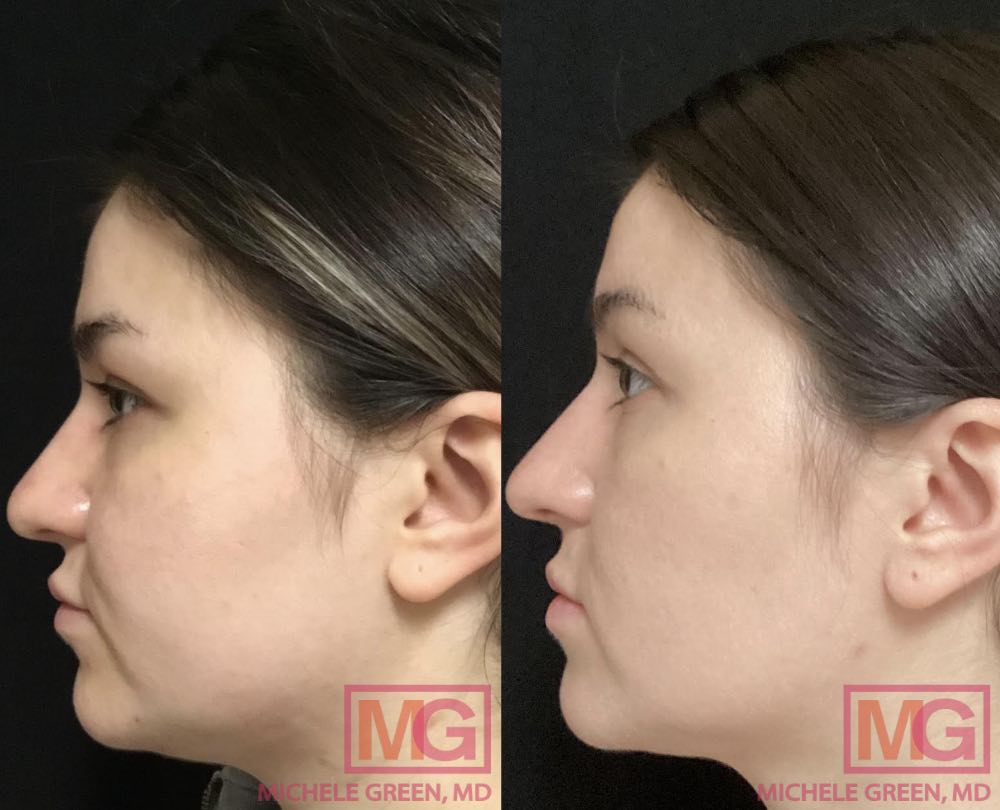
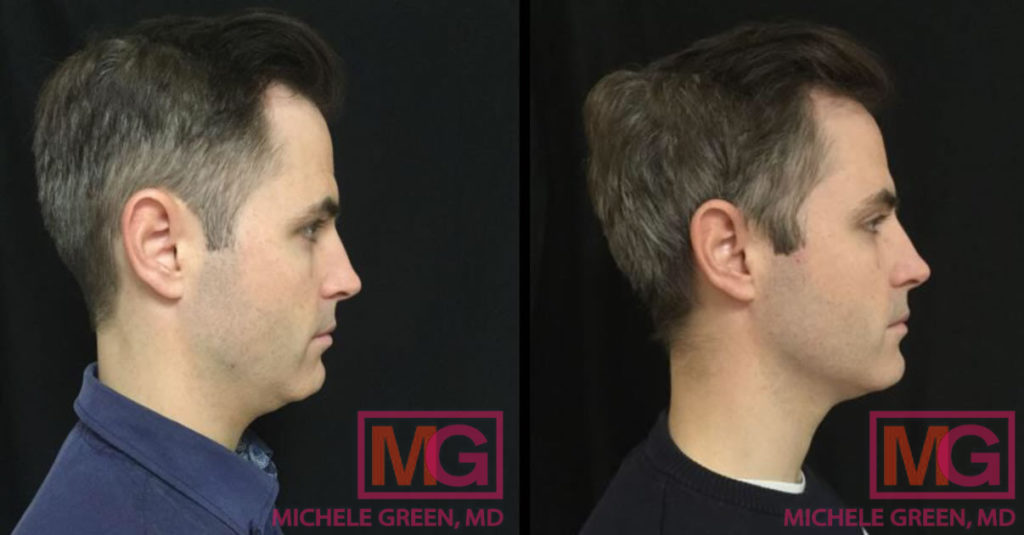
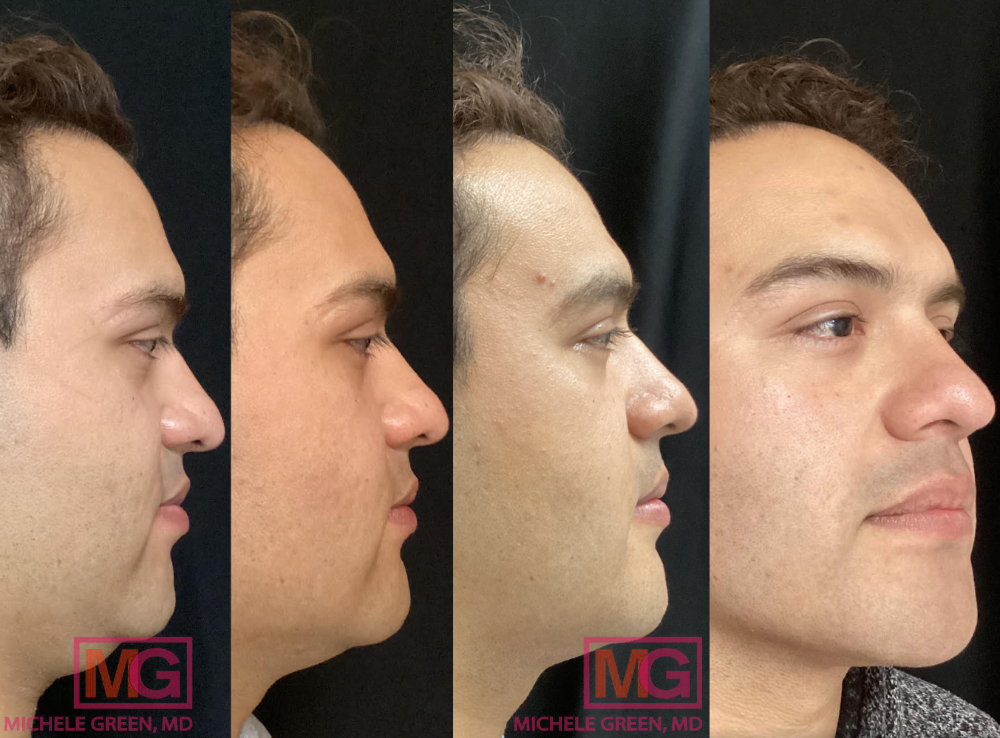
Yes, both Kybella and liposuction offer permanent results because both permanently remove fat cells from the treated area. Once these fat cells are destroyed or suctioned out, they do not grow back. That said, the remaining fat cells in the chin and neck can still expand with significant weight gain, so maintaining a stable weight is the best way to preserve your results. Natural aging can also affect the neck over time as skin elasticity declines, which is why some patients choose skin tightening treatments years later to keep the jawline crisp. With a healthy lifestyle, most patients who complete their Kybella treatment with Dr. Green in NYC enjoy a slimmer, more defined profile for years. You can see real patient results in Dr. Green’s Kybella before-and-after photos.
Kybella or Liposuction: Which Should You Choose?
For most people with a mild to moderate double chin, Kybella is the better place to start. It offers permanent fat reduction without incisions, anesthesia, or a long recovery, and results develop gradually so the change looks natural rather than sudden. Liposuction may make more sense for patients with a large amount of submental fat who want it removed in a single procedure and are willing to accept the risks and downtime of surgery. Patients who prefer another non-invasive alternative may also consider CoolSculpting, which uses controlled cooling to freeze and eliminate fat cells beneath the chin. The best way to decide is to have your chin and neck evaluated in person by an expert, and board-certified dermatologist Dr. Green in NYC will review your anatomy, skin quality, and goals to design a double chin treatment plan tailored to you.
Frequently Asked Questions (FAQs)About Kybella vs. Liposuction
Is Kybella or Liposuction Better for a Small Amount of Fat?
Kybella is typically the better choice for a small to moderate amount of submental fat. Because it targets fat precisely with a series of small injections, Kybella allows for careful sculpting of the area under the chin and refinement of the jawline without the risks and downtime of surgery. Liposuction for a small pocket of fat is often more than a patient needs, and the surgical risks may not be worth the modest improvement. For patients with a little fullness under the chin, Dr. Green often finds that Kybella delivers the subtle, polished result they want.
Is Kybella or Liposuction Better for a Large Amount of Fat?
For a large amount of fat beneath the chin, liposuction is often more efficient because a cosmetic surgeon can remove a significant volume of fat in a single procedure. Kybella can still treat larger areas, but it may require more treatment sessions to reach the same result. Patients who are significantly above their goal weight are usually advised to lose weight first, as neither treatment is a substitute for weight loss. Dr. Green will help you understand whether Kybella can realistically achieve your goals or whether a surgical consultation is the better next step.
Which Gives Faster Results: Kybella or Liposuction?
Liposuction removes fat immediately, but postoperative swelling can hide the results for several weeks, and the outcome may take three to six months to appear. With Kybella, patients typically begin to notice a difference about four to six weeks after each session, once the initial swelling resolves and the body clears the destroyed fat cells. Full results usually appear after completing the recommended series of sessions. While liposuction technically works in one visit, many patients find that Kybella’s gradual progress fits more easily into their lives and produces a natural-looking change that others notice without being able to pinpoint why.
Which Is More Painful: Kybella or Liposuction?
Most patients describe Kybella injections as causing a burning or stinging sensation that lasts several minutes to about half an hour after treatment, followed by tenderness and soreness under the chin for a few days. Liposuction itself is performed under anesthesia, so patients do not feel pain during the procedure. Still, the soreness, tightness, and discomfort during recovery tend to be more significant and longer-lasting than with Kybella. Overall, most patients find Kybella the more comfortable experience from start to finish, especially since Dr. Green uses numbing cream and ice to keep each session as comfortable as possible.
How Much Does Kybella Cost Compared to Liposuction?
The cost of Kybella and liposuction varies depending on the amount of fat being treated, the number of treatment sessions needed, the provider’s expertise, and geographic location. Kybella is priced per session, so the total depends on how many vials and sessions you need. Liposuction is priced as a single surgical procedure. It often includes surgeon’s fees, anesthesia fees, and facility fees, plus the cost of a compression garment and potential time away from work. When thinking about long-term value, keep in mind that both treatments provide permanent results, and Kybella avoids the added expenses and lost workdays that often come with surgery. Because every patient’s needs are different, the best way to understand your investment is to schedule a consultation with Dr. Green, who will create a personalized treatment plan for your goals.
Can You Combine Kybella and Liposuction?
Yes, Kybella and liposuction can work together in certain situations. For example, a patient who has had chin liposuction may later notice a small pocket of residual fat or slight asymmetry, and Kybella can fine-tune the area without another surgery. Kybella can also be paired with other non-surgical treatments, such as Thermage for skin tightening or Botox to soften prominent neck bands, for a more comprehensive approach to neck rejuvenation. Dr. Green will recommend the right combination of treatments based on your anatomy and goals.
How Do I Get Started With Kybella for Double Chin Removal Today with Dr. Michele Green in NYC?
Deciding between Kybella vs. liposuction comes down to the amount of fat under your chin, the quality of your skin, and how much downtime you can accommodate. Both options permanently eliminate fat cells, but Kybella does so without incisions, anesthesia, or a lengthy recovery, making it an excellent choice for patients with mild to moderate submental fullness who want a sharper jawline and a more defined profile. Liposuction remains a valid option for larger volumes of fat, while skin tightening treatments can help address loose or sagging skin along the neck. If you are ready to say goodbye to your double chin, the best first step is a consultation with an experienced, board-certified dermatologist like Dr. Michele Green in NYC.
Dr. Michele Green is an internationally recognized, board-certified cosmetic dermatologist with over 25 years of experience providing some of New York City’s most discerning men and women with the finest non-invasive treatments, including Kybella, CoolSculpting, Thermage, Botox, and dermal fillers. Castle Connolly, New York Magazine, Super Doctors, and The New York Times consistently name Dr. Green among NYC’s top dermatologists for her commitment to patients and expertise. She takes a holistic, less-is-more approach and customizes every treatment plan to address each patient’s specific concerns and aesthetic goals, helping them look and feel like the best version of themselves. To start sculpting a slimmer, more defined chin and jawline today, schedule a consultation with Dr. Green online or call the NYC-based office at 212-535-3088.


