


Are Dermal Fillers Safe?
Dermal fillers have become one of the most popular cosmetic treatments in the world, and for good reason. These injectable treatments offer a non-surgical way to smooth lines, restore volume, and refresh the face’s overall appearance, without the recovery time of surgery. Whether you’re looking to plump lips, soften nasolabial folds, or address under-eye hollowing, fillers can deliver noticeable, natural-looking results in a relatively short office visit. Still, it’s natural to wonder: are dermal fillers actually safe? The short answer is yes – when administered by a qualified, board-certified dermatologist who understands facial anatomy and has extensive experience with injectable treatments, dermal fillers are considered a safe and well-tolerated medical procedure. Dr. Michele Green is a trusted authority in cosmetic dermatology, and she takes a meticulous, patient-centered approach to every filler treatment she performs.
Like any cosmetic procedure, dermal fillers carry some risks – understanding them is key to making an informed decision. The U.S. Food and Drug Administration (FDA) has approved several types of dermal fillers for cosmetic use, and FDA approval is no small feat – it requires manufacturers to conduct multiple rigorous clinical studies and trials to demonstrate that a product is both safe and effective before it can be marketed to patients. Products from brands like Restylane, Juvéderm, Belotero, Sculptra, and Radiesse are among the most widely used and extensively studied options available, each backed by a robust body of clinical evidence. Complications are rare when fillers are performed correctly, but they can occur, which is why the injector’s expertise matters enormously. Choosing a board-certified dermatologist with deep knowledge of facial anatomy and injection technique is one of the most important steps you can take to ensure your safety. Dr. Michele Green has been performing filler injections for over two decades. She will ensure your filler injections are safe, effective, and natural-looking, giving you the perfect look.
What are dermal fillers made of?
Dermal fillers are gel-like substances injected beneath the skin to add volume, smooth facial wrinkles, and enhance facial contours. There are several types of fillers, each with distinct properties and ideal use cases. The most popular category is hyaluronic acid (HA) fillers, which include well-known brands such as Restylane, Juvéderm, and Belotero. Hyaluronic acid is a naturally occurring sugar molecule found in the skin and connective tissues, making HA fillers particularly compatible with the body. Other filler types include poly-l-lactic acid (PLLA), a biodegradable synthetic polymer used in Sculptra to stimulate the body’s own collagen production, and calcium hydroxylapatite (CaHA), a mineral compound found in bones used in products like Radiesse to add volume and stimulate collagen production. Each of these materials has been evaluated and cleared by the U.S. Food and Drug Administration (FDA) for specific cosmetic indications, and choosing the right filler type is an important part of the treatment planning process.
How do dermal fillers work?
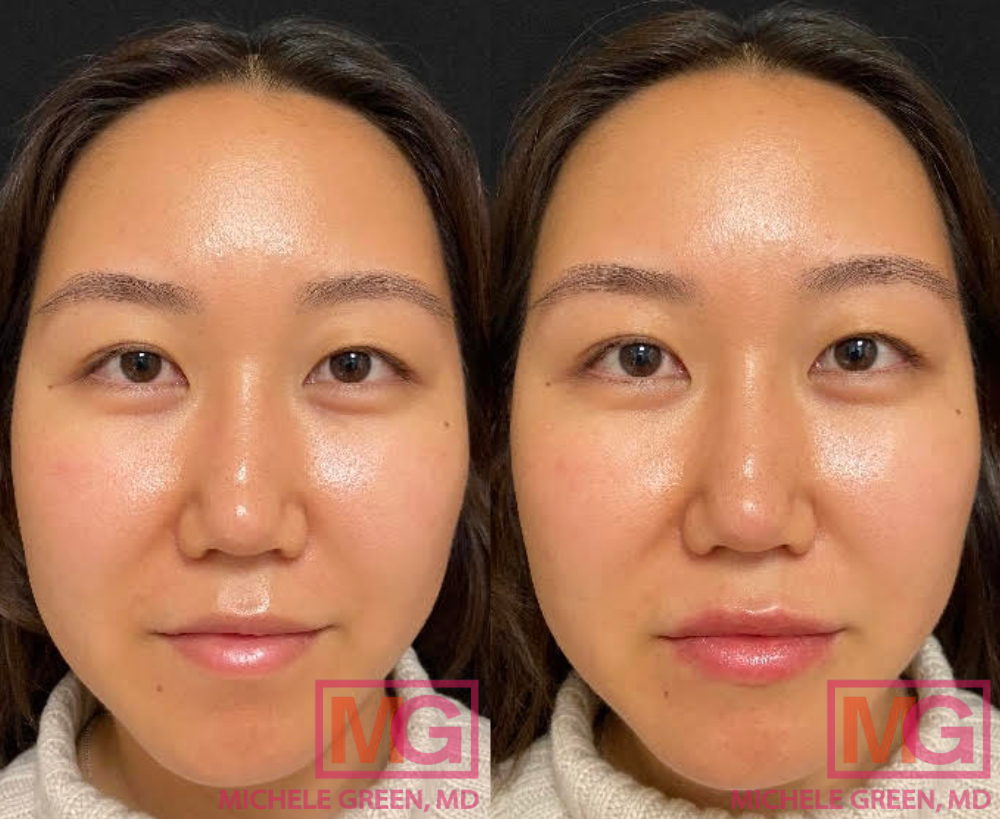
Dermal fillers work by restoring volume beneath the skin’s surface, smoothing lines and wrinkles, and enhancing facial contours. Hyaluronic acid fillers like Restylane, Juvéderm, and Belotero attract and bind water molecules when injected, helping to plump and hydrate the area from within, and because they work immediately, patients can see results right away. Other fillers work differently by stimulating the body’s natural collagen production over time rather than adding immediate volume. Sculptra, made from poly-l-lactic acid, acts as a collagen stimulator rather than a traditional volumizing filler – tiny PLLA microparticles are injected into the skin, where they gradually biodegrade and trigger the body’s natural wound-healing response, prompting new collagen production over several weeks and months. Radiesse is made from calcium hydroxylapatite microspheres suspended in a gel carrier – once injected, the gel provides immediate volumizing, while the microspheres act as a scaffold that encourages the body to produce new collagen around them.
What are the different types of dermal fillers?
Juvéderm collection
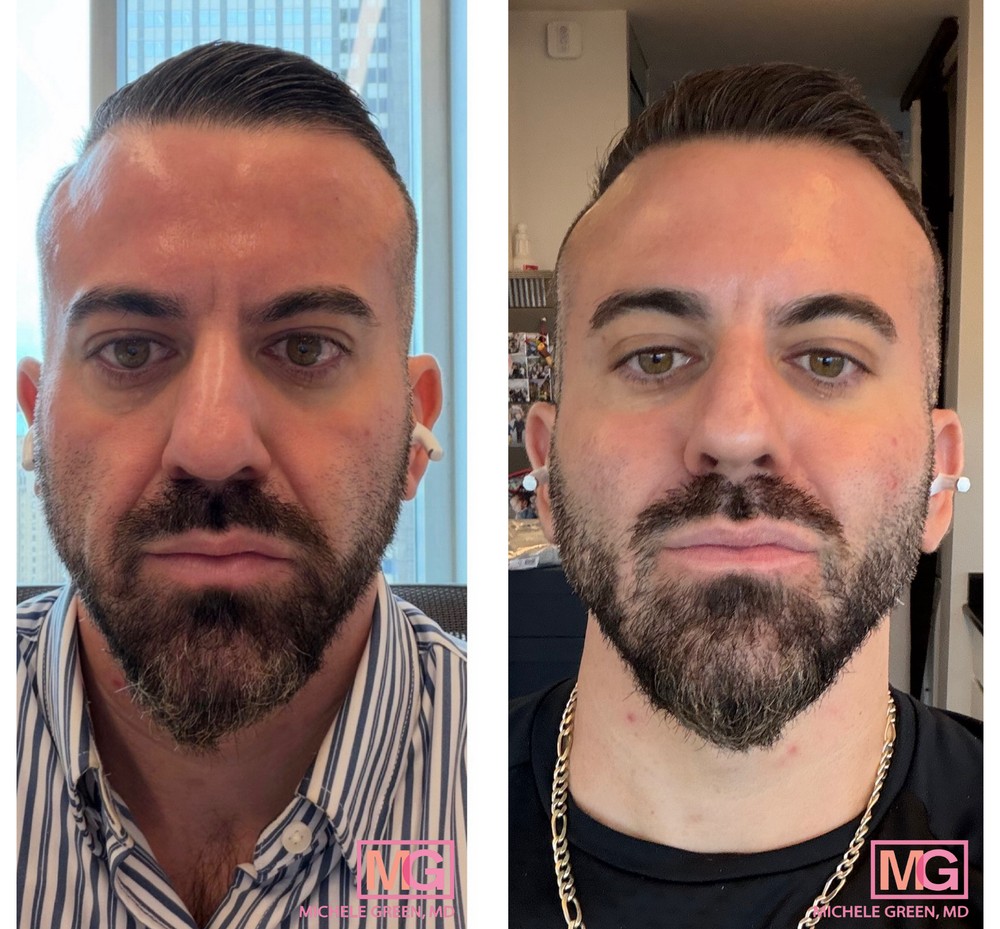
Juvéderm is one of the most well-known and widely used families of hyaluronic acid fillers available today, encompassing a range of specialized products designed to address different areas and concerns.
- Juvéderm Voluma XC adds deep volume and lift to the cheeks and midface, with results lasting up to 12 months.
- Juvéderm Ultra XC is a versatile option for adding lip volume and smoothing moderate facial wrinkles, with results lasting 9-12 months.
- Juvéderm Ultra Plus XC has a slightly thicker consistency than Ultra XC, making it better suited for more substantial correction of deeper wrinkles and folds, with results lasting 9-12 months.
- Juvéderm Vollure XC is a softer, more flexible formulation designed to smooth nasolabial folds and moderate-to-severe facial wrinkles, with results lasting up to 18 months.
- Juvéderm Volbella XC is the most delicate product in the family, designed for subtle lip enhancement and to soften fine lines around the mouth, with results lasting up to 12 months.
- Juvéderm Volux XC is a firm, structural filler designed to define and contour the jawline and chin, with results lasting up to 2 years.
- Juvéderm Skinvive works differently from the rest — rather than adding volume or structure, it is injected throughout the cheeks to deeply hydrate the skin from within, improving overall smoothness, glow, and texture. Results last up to six months.
Restylane family
Restylane is another leading family of hyaluronic acid fillers, offering a comprehensive range of products that can address everything from fine lines and lip volume to deep facial folds and under-eye hollowing.
- Restylane is the original product in the family and a versatile option for smoothing moderate-to-severe facial wrinkles and folds and for adding subtle volume to the lips, with results lasting 9-12 months.
- Restylane Lyft is a thicker, firmer formulation designed to add volume and lift to the cheeks and midface. It can also be used to restore volume in the hands, with results lasting 9-12 months.
- Restylane Defyne is a flexible filler designed to smooth deep laugh lines and nasolabial folds while preserving natural facial movement, with results lasting up to 12 months.
- Restylane Refyne is a softer formulation designed to treat moderate facial wrinkles and folds, providing a more subtle correction that moves naturally with the face and lasts up to 12 months.
- Restylane Kysse is specifically formulated for lip augmentation and for smoothing fine lines around the mouth, delivering natural-looking volume and definition with results that last up to 12 months.
- Restylane Contour is designed to enhance and define the cheeks and midface, delivering a natural look and feel, with results lasting up to 12 months.
- Restylane Silk is the most delicate product in the family, formulated for subtle lip enhancement and the smoothing of fine lines around the mouth, with results lasting up to 6 months.
- Restylane Eyelight is specifically designed for the under-eye area, helping reduce the appearance of dark circles and tear-trough hollowing, with results lasting up to 18 months.
- Restylane Volyme is a volumizing filler designed to restore and enhance midface and cheek volume, with results lasting up to 12 months.
- Restylane Skin Boosters work differently from the other products in the family — rather than adding volume or structure, they are injected as microdroplets throughout the skin to hydrate from within, improving overall skin quality, elasticity, and radiance, with results lasting up to six months.
Belotero Balance
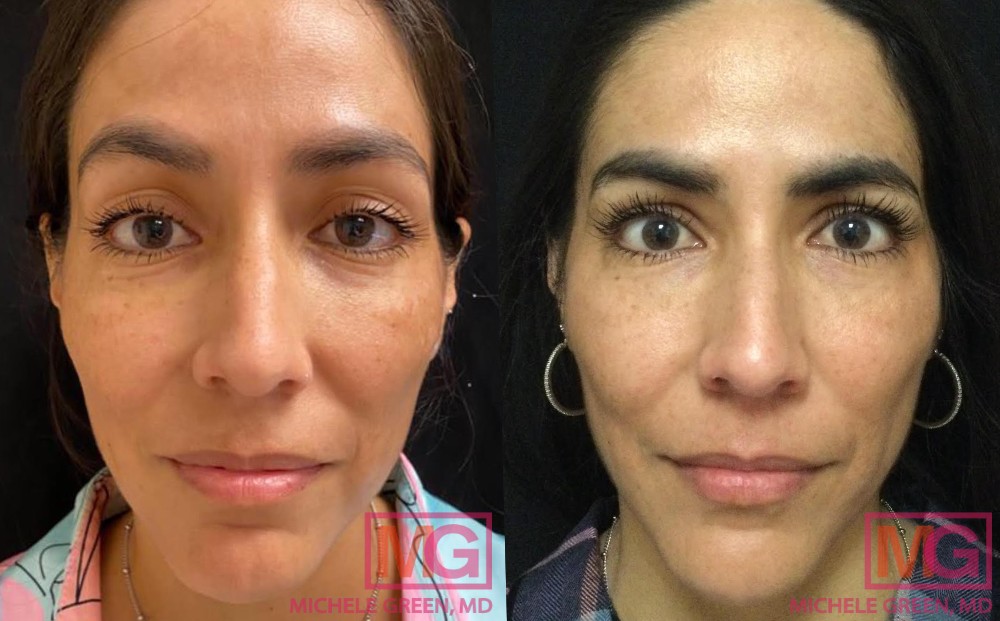
Belotero Balance is a hyaluronic acid filler known for its uniquely soft, fluid consistency, which allows it to integrate seamlessly into the skin’s tissue upon injection. Unlike thicker fillers designed to add structural volume, Belotero is specifically formulated to treat fine, superficial lines, making it particularly well-suited for delicate areas like the fine lines around the mouth, underneath the eyes, and other areas where a heavier filler might look or feel unnatural. One of Belotero’s key advantages is its exceptionally low risk of the Tyndall effect. This bluish discoloration can occur when certain hyaluronic acid fillers are placed too close to the skin’s surface. Thanks to its cohesive polydensified matrix technology, Belotero integrates into the superficial layers of the skin without scattering light as other HA fillers can, making it a particularly safe and effective choice for very fine lines and thin-skinned areas. Results with Belotero typically last six months, depending on the area treated and the individual patient’s metabolism.
Sculptra
Sculptra is a unique injectable treatment made from poly-l-lactic acid (PLLA), a biodegradable synthetic material that stimulates collagen rather than acting as a traditional volumizing filler. Tiny PLLA microparticles are injected into the deep dermis, where they gradually biodegrade and trigger the body’s natural wound-healing response, prompting new collagen production over several weeks and months. Because results develop gradually, most patients undergo a series of three to four treatment sessions spaced several weeks apart before seeing their full outcome. Sculptra is particularly well-suited for patients with significant facial volume loss in areas such as the temples, cheeks, and jawline, as it rebuilds the skin’s underlying collagen framework from within rather than simply filling specific lines or areas. One of its most notable advantages is its longevity — results can last up to 2.5 years after an initial series, making it one of the longest-lasting non-permanent filler options available.
Radiesse
Radiesse is a unique dermal filler made from calcium hydroxylapatite (CaHA) microspheres suspended in a smooth gel carrier. It works in two distinct ways to rejuvenate the skin. Upon injection, the gel carrier provides an immediate volumizing effect, smoothing lines and restoring lost facial volume. Over time, the calcium hydroxylapatite microspheres act as a biostimulatory scaffold, encouraging the surrounding tissue to produce new collagen and elastin, meaning that even as the body gradually absorbs the gel carrier, the skin continues to improve as new collagen fills in its place. Radiesse is particularly well-suited for adding volume and structure to the cheeks, jawline, chin, and nasolabial folds, and it can also rejuvenate the hands by restoring lost volume and improving skin quality. Most patients achieve their desired results in 1 to 3 treatment sessions, and the results typically last between 12 and 18 months.
Bellafill
Bellafill is a unique, long-lasting dermal filler made from polymethylmethacrylate (PMMA) microspheres suspended in a smooth bovine collagen gel, and it is the only FDA-approved filler indicated for both the long-term correction of acne scars and smile lines. It works through a dual mechanism, the collagen gel provides immediate volume and correction upon injection, while the PMMA microspheres remain permanently in place. This process creates a lasting structural scaffold that supports the skin from within, with the body producing new collagen around it over time. Because the microspheres are not biodegradable, Bellafill is considered a semi-permanent filler with results that can last five years or more, making it one of the longest-lasting options available.
Where can dermal fillers be used?
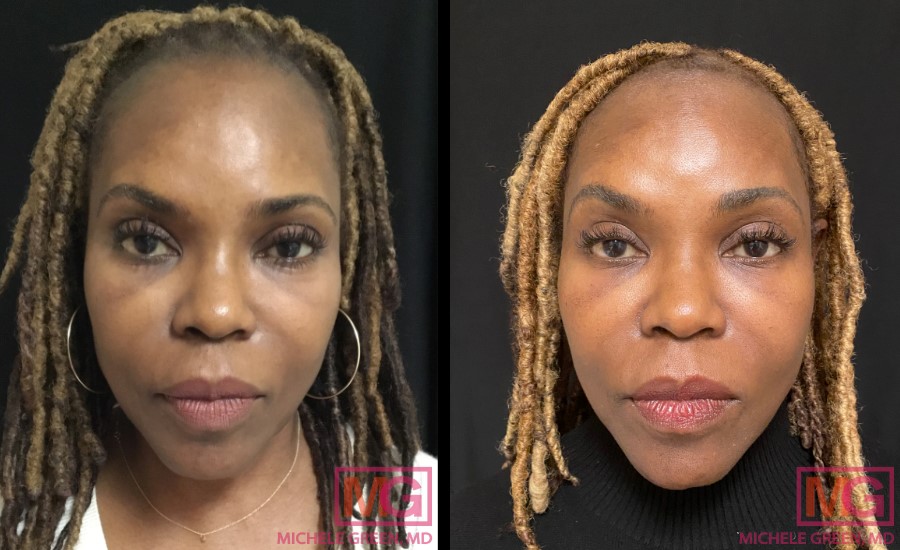
One of the things that makes dermal fillers so versatile is their ability to treat a wide range of areas. On the face, fillers are commonly used to smooth lines and add volume to the lips, cheeks, chin, jawline, and temples. They are also frequently used to soften nasolabial folds (the lines that run from the nose to the corners of the mouth), marionette lines, and other deep facial wrinkles. Beyond the face, fillers can be used to restore volume and improve the appearance of the hands, which are among the first areas to show signs of aging. Some patients also receive filler treatments in the neck or décolletage to address crepey skin and fine lines. The non-facial applications of fillers have grown significantly in recent years, offering patients a way to address volume loss and skin laxity in areas that liposuction or surgical procedures might not easily reach. During a consultation, Dr. Green carefully evaluates each patient’s anatomy and aesthetic goals to determine the most appropriate treatment areas.
Who is a good candidate for dermal filler injections?
Most healthy adults bothered by signs of facial aging — such as volume loss, deepening wrinkles, sagging skin, or loss of definition in areas like the cheeks, lips, or jawline — are good candidates for dermal filler injections. Ideal candidates are in good overall health, have realistic expectations about what fillers can achieve, and understand that while results can be dramatic, fillers are not a substitute for surgical procedures in cases of significant skin laxity. Patients with certain bleeding disorders, active skin infections, or a history of severe allergic reactions may not be appropriate candidates. Patients should not undergo filler injections if they are allergic to any components of the filler, such as lidocaine, gram-positive bacterial proteins used to make hyaluronic acid, poly-L-lactic acid, or calcium hydroxylapatite. Patients who are pregnant or breastfeeding are generally advised to postpone treatment. Patients with an infection or an active outbreak of cysts or pimples at the proposed injection site should wait until their skin condition has resolved before undergoing treatment. The best way to determine whether dermal fillers are right for you is through a thorough consultation with a board-certified dermatologist like Dr. Green, who will evaluate your anatomy, skin quality, medical history, and aesthetic goals before recommending any course of treatment.
What are the side effects of dermal fillers?
Like any injectable treatment, dermal fillers can cause a range of side effects, most of which are mild and resolve within a few days to a week. The most common side effects include:
- Redness
- Swelling
- Bruising
- Tenderness
- Itching at the injection site
Less common but more serious side effects include infection, allergic reactions, and nodule formation beneath the skin. In very rare cases, more severe complications can occur, including vascular occlusion — when filler material inadvertently enters or compresses a blood vessel, potentially leading to tissue death (necrosis) or, in extremely rare cases, blindness. These severe complications underscore the importance of having the procedure performed by a provider with thorough knowledge of facial anatomy and training in recognizing and managing complications. Patients with known allergies should disclose their full medical history before treatment, and board-certified dermatologists like Dr. Green will conduct a thorough evaluation before recommending any filler treatment.
Are dermal fillers safe?
Absolutely! Dermal fillers are considered a safe and well-established cosmetic treatment when administered correctly, and a big part of their trustworthiness is the rigorous FDA approval process they must undergo before reaching patients. The FDA requires filler manufacturers to conduct extensive clinical studies and trials demonstrating both the safety and efficacy of their products. As a result, FDA-approved fillers like Restylane, Juvéderm, Belotero, Radiesse, and Sculptra have been thoroughly vetted before entering a patient’s skin.
That said, the safety of any injectable treatment is not determined by the product alone — the skill, training, and judgment of the person administering the injections are equally important, if not more so. Dermal filler injections require an intimate understanding of facial anatomy, including the precise location of blood vessels, nerves, and tissue layers, as well as the technical expertise to deliver the product at the correct depth and in the correct amount for each patient. Choosing a board-certified dermatologist like Dr. Green with extensive experience in injectable treatments is one of the most critical decisions a patient can make, because proper technique separates a safe, beautiful result from a preventable complication. In the hands of the expert injector Dr. Green in NYC, dermal fillers have an excellent safety record, and patients can feel confident going into their treatment.
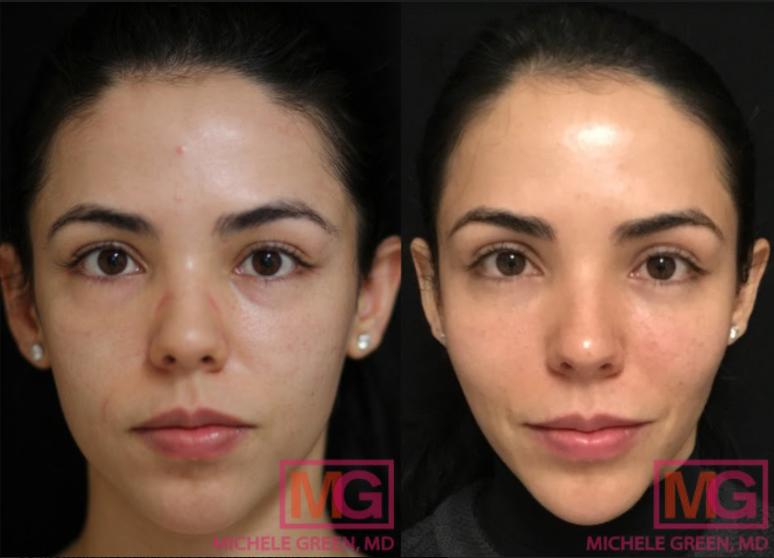
Frequently Asked Questions (FAQs) about Dermal Fillers
What is the difference between Botox and dermal fillers?
Botox and dermal fillers are injectable treatments for signs of aging, but they work in different ways and address distinct concerns. Botox is a neurotoxin that temporarily relaxes the muscles responsible for dynamic wrinkles – the lines formed by repeated facial movements such as squinting, smiling, or frowning. It is most commonly used to address frown lines between the brows, forehead lines, and crow’s feet around the eyes. Dermal fillers, on the other hand, do not affect muscle movement. Instead, they add volume to the skin and underlying tissues to smooth lines, restore lost facial volume, and enhance contours. Fillers are better suited for static wrinkles (those visible at rest), volume loss, and structural contouring of areas like the lips, cheeks, and jawline. Many patients benefit from a combination of Botox and fillers, as they complement each other: Botox prevents movement-related wrinkles, while fillers address the structural and volumetric changes that come with aging.
Are dermal fillers safer than Botox?
Both Botox and dermal fillers are incredibly safe, well-tolerated cosmetic treatments with long, well-established track records – and both have been rigorously evaluated and approved by the FDA for cosmetic use. Botox has been used in medicine for decades and has one of the longest safety records in dermatology. FDA-approved dermal fillers such as Restylane, Juvéderm, Belotero, Radiesse, and Sculptra have undergone extensive clinical testing to demonstrate their safety and efficacy before reaching patients. That said, adverse effects can and do occur with both treatments when performed by inexperienced or inadequately trained providers. Improper Botox injection can lead to unwanted muscle weakness, asymmetry, or drooping. Dermal fillers carry risks, including vascular occlusion, tissue necrosis, and other serious complications, when placed incorrectly or without a thorough understanding of facial anatomy. The risk of these side effects is precisely why it is so important to seek treatment from a board-certified dermatologist like Dr. Green, who combines deep clinical knowledge, expert injection technique, and years of hands-on experience to deliver safe, consistent, and beautiful results for every patient.
Are dermal fillers safe for the under-eyes?
The under-eye area (also known as the tear trough) is one of the most delicate and technically challenging areas to treat with dermal fillers. When performed correctly by an experienced injector, it can significantly reduce the appearance of hollowing and shadowing caused by volume loss. Because the skin in this area is exceptionally thin and sensitive, filler selection is particularly important, Belotero and Restylane are the most commonly used options for the tear trough, as both have soft, flexible formulations that integrate naturally into the delicate tissue beneath the eyes. Belotero is often the preferred choice specifically because of its very low risk of the Tyndall effect, a bluish discoloration that can occur when certain hyaluronic acid fillers are placed too superficially beneath thin skin, as its unique formulation allows it to blend seamlessly into the surrounding tissue without scattering light. Dr. Green has extensive experience treating the under-eye area and takes every precaution to ensure safe, natural-looking outcomes for her patients.
Do dermal fillers hurt?
No, most patients describe receiving dermal fillers as mildly uncomfortable rather than painful. The level of discomfort varies by the area treated and individual pain tolerance. However, many modern filler formulations, including most Restylane and Juvéderm products, contain lidocaine, a local anesthetic that significantly reduces pain during injection. A topical numbing cream can be applied 1 hour before treatment to maximize comfort. The injections are typically quick, and most patients find any discomfort brief and manageable. After treatment, some tenderness at the injection site is normal and usually subsides within a day or two. The majority of patients tolerate filler treatments very well and return to normal activities immediately afterward.
How long do dermal fillers last?
The longevity of dermal fillers varies by filler type, treatment area, and individual factors such as metabolism and lifestyle. Hyaluronic acid fillers such as Restylane, Juvéderm, and Belotero typically last 6 to 18 months, depending on the specific product. Calcium hydroxylapatite fillers such as Radiesse generally last 12 to 18 months, while poly-l-lactic acid treatments like Sculptra can produce results that last up to 2.5 years after an initial series of treatments, as the filler stimulates long-term collagen production. PMMA-based fillers like Bellafill are considered semi-permanent and can last five years or longer. Touch-up treatments are typically recommended once results begin to fade, and many patients find that with regular maintenance, their results can be sustained and even enhanced over time.
Can dermal fillers be dissolved?
Many patients wonder, “Are dermal fillers reversible?” The answer largely depends on the type of filler used. Hyaluronic acid fillers (including popular products like Restylane, Juvéderm, and Belotero) are dissolvable because an enzyme called hyaluronidase can be injected to break them down quickly and effectively if a patient is unhappy with their results or if a complication such as asymmetry, overfilling, or vascular occlusion occurs. This reversibility makes HA fillers a particularly appealing option for first-time patients who value the reassurance that their results can be adjusted or reversed if needed. Non-HA fillers made from calcium hydroxylapatite, poly-l-lactic acid, or polymethylmethacrylate (PMMA) are not reversible in the same way. Because their results can last several years or more, patients considering these options should have an in-depth consultation with a board-certified dermatologist, such as Dr. Green, to fully understand the long-term implications before proceeding. Of course, the best way to avoid the need for dissolving or correcting fillers altogether is to choose an experienced injector like Dr. Green from the start, one with the expertise, precision, and aesthetic judgment to deliver beautiful, natural-looking results the first time around.
How much do dermal fillers cost?
The cost of dermal fillers varies widely depending on the type of filler, the number of syringes or vials required, the area being treated, and the injector’s expertise. Hyaluronic acid fillers are typically priced per syringe, and many treatment areas require one to three syringes to achieve the desired result. Collagen-stimulating treatments like Sculptra are priced per vial and involve a series of treatment sessions. While it may seem more cost-effective to seek filler treatments at a medical spa or non-physician office, it is important to remember that the expertise and clinical judgment of a board-certified dermatologist can make a significant difference in both the safety and quality of your results – correcting a poorly performed filler treatment can ultimately cost far more than getting it right the first time. During an initial consultation with Dr. Green, she will carefully evaluate your anatomy and aesthetic goals, confirm which fillers and how many syringes or vials you may need to achieve your desired outcome, and discuss the full cost of your personalized treatment plan, so there are no surprises on the day of your appointment.
Why are dermal fillers so expensive?
The cost of dermal fillers reflects a combination of factors, including the price of the filler itself, a medical practice’s overhead, and, most importantly, the injector’s expertise. FDA-approved fillers undergo rigorous testing and clinical trials before reaching the market, and the cost of that research and development is reflected in the product price. Additionally, the safest and most effective filler treatments are performed by highly trained, board-certified dermatologists who have invested years in their medical education and clinical training. When you choose an experienced provider, you’re not just paying for the product – you’re paying for the knowledge to use it correctly, the artistic sensibility to create natural-looking results, and the clinical skill to manage any complications that might arise. In cosmetic dermatology, as in many areas of medicine, the provider’s expertise is inseparable from the value of the service, and that expertise is typically factored into the cost of care.
Which dermal filler do I need?
The right filler for you depends on several factors, including the area you want to treat and the type of correction you’re seeking. Hyaluronic acid fillers like Restylane and Juvéderm are versatile and a great starting point for most patients – they can be used in the lips, cheeks, under-eyes, jawline, and more, and they are reversible with hyaluronidase if needed. Belotero is particularly well-suited for fine, superficial lines and delicate areas like the under-eyes, where its uniquely soft formulation integrates seamlessly into the skin. For patients looking to add volume and smooth lines, particularly in the midface or hands, calcium hydroxylapatite fillers like Radiesse may be a strong option. For patients seeking a longer-term approach to volume restoration that works with the body’s natural collagen production, poly-l-lactic acid treatments like Sculptra may be ideal. Determining the best filler, or combination of fillers for your specific anatomy and goals requires a personalized consultation, and Dr. Green prides herself on taking the time to fully understand each patient’s goals before recommending a treatment plan.
How do I get started with dermal filler treatments today?
Dermal fillers are a proven, FDA-approved category of injectable treatments that safely and effectively smooth lines, restore volume, and enhance facial and body contours. Whether you’re interested in hyaluronic acid fillers like Restylane, Juvéderm, and Belotero to plump the lips, soften nasolabial folds, or correct under-eye hollowing; Radiesse to add structural volume and stimulate collagen in the midface or hands; or Sculptra to gradually rebuild the skin’s collagen framework for longer-lasting rejuvenation, there is a filler option suited to virtually every aesthetic concern. Understanding which filler is best suited to your particular needs is an important first step in the decision-making process – but working with the right provider is the most critical step of all. With her precise technique, deep knowledge of facial anatomy, and personalized approach to care, Dr. Green can help you achieve a radiant, youthful, and natural-looking result you’ll love.
Dr. Michele Green is an internationally recognized, board-certified dermatologist with over 25 years of experience in cosmetic and medical dermatology. Her private practice on Manhattan’s Upper East Side is renowned for its commitment to excellence, safety, and personalized care. Dr. Green stays at the forefront of advances in cosmetic dermatology and is widely trusted by patients throughout New York City and beyond for her precise injection technique and natural aesthetic sensibility. Castle Connolly, New York Magazine, Super Doctors, and The New York Times all list Dr. Green among NYC’s top dermatologists for her expertise and dedication to her patients. If you’re considering dermal fillers and want to learn more about your options, a consultation with Dr. Green is the best place to start. To schedule your appointment, please call the office at 212-535-3088 or contact us online.


