


XERF vs. Thermage: Which Skin-Tightening Treatment Is Right for You
When it comes to non-invasive skin tightening, XERF and Thermage are often compared. Both treatments use monopolar radiofrequency (RF) energy to stimulate collagen production and tighten sagging skin. As non-surgical skin-tightening options grow in popularity, patients are eager to understand which technology delivers superior results, a more comfortable experience, and longer-lasting improvements. Whether you are bothered by skin laxity along your jawline, jowls, neck, forehead, or lower face, or you are simply looking to turn back the clock without a facelift, these cutting-edge treatments are strong options. Thermage has the clinical history and flexibility to address it all, including the delicate skin around the eyes. For patients seeking a trusted, results-driven, non-invasive skin-tightening treatment with decades of safety data, Thermage remains Dr. Michele Green’s first recommendation. Dr. Green is a board-certified dermatologist in NYC.
XERF, the newest RF device from Cynosure Lutronic, received FDA clearance in August 2025 and has generated significant buzz in the aesthetic world for its multifrequency monopolar RF approach, combining 6.78 MHz and 2 MHz to target multiple skin depths. While XERF represents an interesting technological development in the RF treatments space, it is still a newcomer — with limited long-term clinical data, a single available treatment tip in the U.S., and no FDA-cleared option for treating the eye area. Thermage, by contrast, has been refined across multiple generations of technology and is available with specialized tips for the face, eyes, and body, giving it a significant advantage in versatility over XERF in its current form. For patients who want to make an informed decision between these two skin-tightening treatment options, understanding what each device can and cannot do is essential. Dr. Michele Green, a board-certified dermatologist in NYC, offers Thermage at her private practice and helps patients determine whether this trusted treatment. Or a combination of approaches is the right strategy for their skin goals.
Dr. Green takes a holistic, individualized approach to each patient’s skin care, carefully assessing unique concerns and goals before recommending a personalized treatment plan. Whether combining Thermage with Botox, fillers, Sofwave, or Ultherapy for comprehensive facial rejuvenation, or tailoring a standalone Thermage protocol, Dr. Green’s expertise ensures that every patient receives the most effective, evidence-based care available in cosmetic dermatology today.
What Is the Difference Between Thermage and XERF?
Thermage is a monopolar radiofrequency skin tightening treatment that has been trusted by dermatologists and patients alike since its introduction in 2002. It operates at a single frequency of 6.78 MHz, delivering controlled volumetric heat energy deep into the dermis to produce two key effects: immediate collagen contraction, which provides a visible tightening result right after the session, and long-term collagen stimulation, which continues to build new collagen in the months that follow. Thermage FLX, the newest generation of the platform, features a SmartTip 4.0 with AccuREP technology that measures skin resistance at each pulse and automatically adjusts energy delivery for uniform, safe heating. Perhaps most importantly, Thermage offers a range of specialized treatment tips — including a face tip, an eye tip for the delicate periorbital area, and a larger body tip — giving practitioners the flexibility to treat virtually any area of concern on the face or body. This versatility, combined with its long clinical track record, makes Thermage the most thoroughly validated non-surgical skin-tightening treatment available today.
XERF, developed by Cynosure Lutronic, is the world’s first multifrequency monopolar RF system, combining 6.78 MHz and 2 MHz in a single treatment session. The dual-frequency approach targets the superficial dermis with the higher 6.78 MHz frequency and penetrates more deeply into the subdermis and SMAS layer with the lower 2 MHz frequency. XERF uses Wave Fit pulse technology and real-time impedance feedback to adjust energy delivery, and its Integrated Cryogen Delivery cooling system enables treatment without numbing cream — a distinction Cynosure Lutronic calls the Never-Numb experience. While these are notable technological features, it is important for patients to understand that XERF is still very new to the U.S. market, having received FDA clearance in August 2025. Currently, only a single rectangular treatment tip is available in the United States, and there is no FDA-cleared XERF tip for treating the eye area. Long-term clinical data comparing XERF outcomes to Thermage over multiple years remain limited, and the full scope of XERF’s safety and efficacy profile continues to be established.
How Does XERF Reach the SMAS Layer — and Can Thermage Do the Same?
The SMAS, or Superficial Musculoaponeurotic System, is a fibromuscular layer beneath the skin and subcutaneous fat that plays a central role in facial structural support — the same layer targeted during surgical facelifts. XERF proponents highlight the device’s ability to deliver its lower 2 MHz frequency energy into the SMAS layer and fascia, with histological studies showing collagen remodeling and fascial pull at depth. This is a meaningful technological claim that sets XERF apart from many conventional RF devices. However, Thermage can also reach tissue just above the SMAS fascia layer — particularly at higher energy settings — and its volumetric heating approach stimulates collagen production throughout the full dermis and upper subcutis. Ultrasound-guided studies have confirmed that Thermage’s energy penetrates to depths of up to 4.3mm, reaching the deep dermis and superficial SMAS region in many treatment areas.
Where Thermage has a clear and well-documented advantage is in its decades of real-world clinical outcomes at these tissue depths. The collagen contraction and collagen remodeling that Thermage produces have been studied extensively in peer-reviewed literature, with results consistently demonstrating improvements in skin firmness, jawline definition, neck laxity, and overall facial contour. Both Thermage and ultrasound-based devices like Ultherapy and Sofwave are frequently used in tandem — Ultherapy for deep SMAS lifting and Thermage for dermal tightening and skin quality — and this combination remains a reliable, well-studied approach for comprehensive non-invasive facial rejuvenation. While XERF’s dual-frequency design is innovative, Thermage’s established depth of penetration and its long history of clinical evidence make it the more proven choice for most patients today. Dr. Michele Green, a board-certified dermatologist in NYC, recommends Dr. Michele Green, a board-certified dermatologist in NYC, recommends Thermage to help her patients achieve the deepest, most comprehensive results without surgery.
Which Is Better for Skin Tightening: Thermage or XERF?
For most patients seeking non-invasive skin tightening, Thermage remains the better-supported choice. Thermage’s collagen-contraction mechanism produces visible tightening immediately after each session, with continued improvement as collagen production builds over the following six months. Its volumetric heating of the dermis delivers reliable, consistent results across a wide range of patients and skin types. Its efficacy in improving skin laxity on the face, neck, jawline, jowls, forehead, and lower face has been confirmed in numerous clinical studies over more than two decades. Thermage FLX, the current generation, further enhances outcomes with its AccuREP technology, vibration comfort system, and expanded tip options. For patients with mild to moderate skin laxity seeking a trusted, single-session annual treatment that delivers proven, natural-looking results, Thermage is the gold standard, non-surgical skin-tightening treatment.
XERF’s dual-frequency approach offers an intriguing theoretical advantage — targeting both superficial and deep tissue layers simultaneously — but it is a newer technology with a more limited evidence base and significantly fewer tip options in the U.S. market. Thermage’s ability to treat the eyes, the body, and virtually any area of the face with specialized tips makes it far more versatile as a comprehensive skin-tightening treatment platform. Additionally, Thermage’s single-session protocol is convenient and cost-effective for patients seeking an annual skin rejuvenation treatment without committing to a multi-session series. For patients who need deeper structural lifting beyond what Thermage alone can provide, they may consider combining Thermage with Ultherapy or another complementary modality rather than switching to a newer, less proven device. This combination approach enables both deep structural lifting and high-quality dermal collagen remodeling using technologies with well-established safety and efficacy profiles.
Is XERF More Effective Than Thermage Long Term?
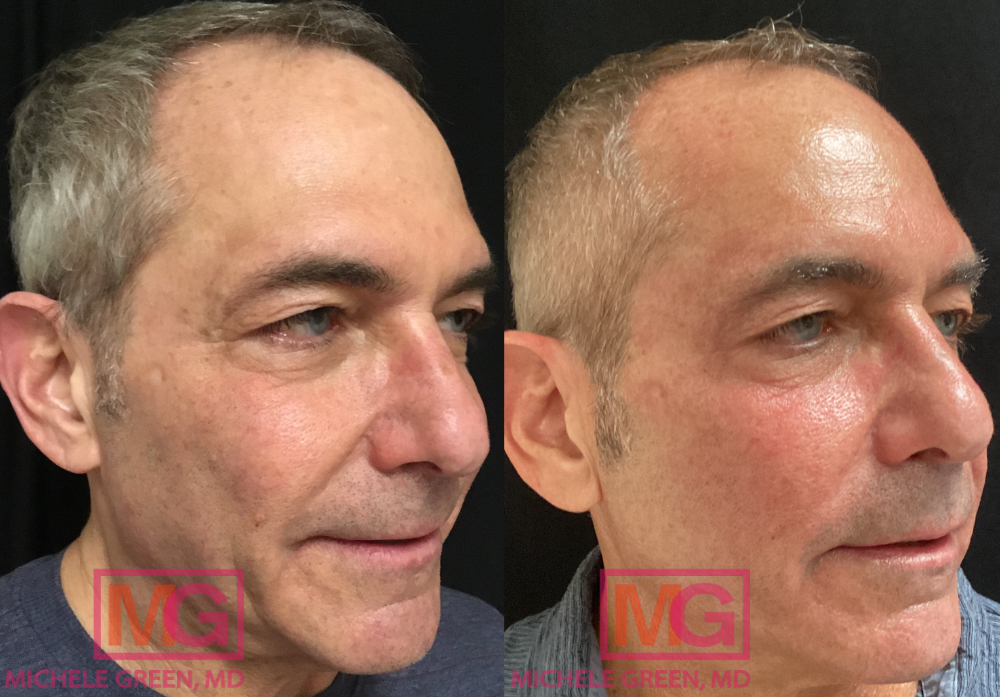
This is one of the most common questions patients ask when comparing these two RF treatments; however, we do not yet have sufficient long-term clinical data on XERF to make a definitive comparison. Thermage has been extensively studied for more than 20 years, with results showing that peak tightening typically occurs around six months post-treatment and that improvements can be maintained for approximately one year before a maintenance session is recommended. The collagen remodeling produced by Thermage has been well characterized in the peer-reviewed literature, and its long-term safety profile is firmly established. For patients who have maintained a regular annual Thermage protocol over many years, the cumulative benefit to their skin’s collagen structure is significant and well documented.
XERF, having entered the U.S. market only recently, lacks sufficient long-term outcome data. Early clinical reports and provider observations suggest that XERF results can last one to two years and that a two-phase pattern — immediate tightening followed by a collagen-building peak at eight to twelve weeks — is characteristic of the treatment. However, how these results compare to Thermage over a three-, five-, or ten-year treatment history remains to be seen. Until more robust long-term comparative data are available, it is premature to claim that XERF is definitively more effective than Thermage over time. For patients seeking a non-invasive skin-tightening treatment with a proven long-term track record, Thermage remains the most reliable choice. Dr. Michele Green, a board-certified dermatologist in NYC, offers this evidence-supported treatment at her practice.
Is Thermage or XERF More Painful?
Comfort is one area where XERF offers a notable advantage over traditional Thermage protocols. Thermage FLX has significantly improved its comfort profile compared with earlier generations of the device, incorporating vibration technology and an integrated cooling system that together reduce the sensation of heat during treatment. Many patients tolerate Thermage FLX well, particularly at moderate energy settings, and some providers apply a topical numbing cream before treatment to further minimize discomfort. At higher energy levels — sometimes used to maximize collagen stimulation — some patients report a more intense warm or slight stinging sensation during Thermage pulses. The degree of discomfort varies considerably depending on the patient’s pain threshold, the treatment area, and the energy settings used.
XERF’s Integrated Cryogen Delivery cooling system continuously cools the skin throughout the session, and most patients describe the sensation as warm and comfortable with no need for topical numbing cream. This makes the treatment experience more pleasant for comfort-sensitive patients. That said, Thermage FLX’s improvements in comfort technology have substantially narrowed this gap, and many patients find Thermage entirely tolerable with appropriate preparation. The decision between these two treatments should not rest on comfort alone, given that Thermage’s broader tip options, longer clinical track record, and ability to treat the eye area make it the more comprehensive and better-supported non-surgical skin-tightening option. During a consultation with Dr. Michele Green, a board-certified dermatologist in NYC, patients can discuss comfort concerns and any questions they may have about the Thermage treatment experience so their session can be tailored to be as comfortable as possible.
How Long Do Results From Thermage vs. XERF Last?
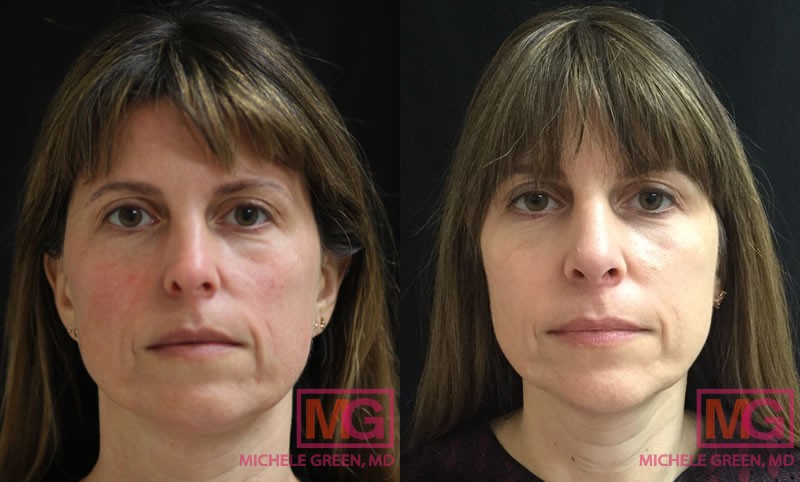
Thermage results are well characterized by decades of clinical experience: most patients see ongoing improvement for up to six months after their session, with peak tightening and collagen remodeling occurring around the six-month mark. Results from a single Thermage session typically last about one year, at which point a maintenance treatment is recommended to sustain the improvements. This predictable, one-session-per-year protocol is one of the things that make Thermage so appealing to busy patients — it is easy to incorporate into an annual skin rejuvenation routine alongside Botox, fillers, and other maintenance treatments. Patients who maintain a consistent annual Thermage schedule often find that the cumulative effect on their skin’s collagen structure is significant over time.
XERF’s duration of effect is harder to characterize precisely because it has a shorter history in clinical practice. Early reports suggest results may last one to two years after two to three sessions, with a two-phase improvement pattern — immediate tightening followed by a collagen peak at eight to twelve weeks. However, because XERF requires multiple sessions to achieve its full effect, the total treatment investment is higher, and the timeline to optimal results is longer than with a single Thermage session. The claim that XERF results last longer than Thermage is also not yet backed by the same volume of long-term clinical data that supports Thermage’s established result duration. For patients seeking predictable, proven results from a well-studied, non-invasive skin-tightening treatment, Thermage’s track record gives it a meaningful advantage in this comparison. Dr. Michele Green, a board-certified dermatologist in NYC, can help patients set realistic expectations for results and maintenance schedules based on their individual skin conditions.
How Many Sessions of XERF Do You Need Compared to Thermage?
One of Thermage’s most significant practical advantages over XERF is its single-session protocol. Thermage is designed as a once-a-year treatment — a single session lasting 20 minutes to two hours, depending on the areas being treated, is sufficient to trigger collagen production and deliver meaningful, lasting improvement. Patients do not need to schedule multiple appointments, take multiple days away from their routine, or commit to a treatment series. This simplicity makes Thermage an extremely convenient option for patients who lead busy lives and want effective, low-maintenance skin rejuvenation. For most patients, a single annual Thermage session is all that is needed to maintain their results year over year.
XERF, by contrast, is typically recommended as a series of two to three sessions spaced four to eight weeks apart for optimal results. While this approach can produce cumulative collagen stimulation over the treatment series, it also requires a greater time commitment, more appointments, and a higher total cost than a single Thermage session.
Is XERF FDA-Cleared, and How Does That Compare to Thermage’s FDA Approval?
Thermage has one of the longest FDA approval histories among non-invasive skin-tightening devices, having been cleared since 2002. Over more than two decades, Thermage has built an extensive body of safety and efficacy data from thousands of patients and multiple clinical studies, and this body has been refined through several generations of technology — from the original Thermage system to Thermage CPT and now Thermage FLX. Thermage’s FDA clearance encompasses its full range of treatment tips, including the face tip, the eye tip for delicate periorbital treatment, and the body tip for treating areas such as the abdomen, arms, and thighs. This breadth of cleared treatment options reflects the device’s maturity and the depth of clinical experience behind it.
XERF received FDA clearance in August 2025, making it a recent addition to the U.S. market. While FDA clearance is an important milestone, patients should understand that it does not equate to the decades of real-world safety data Thermage has accumulated. Furthermore, as of early 2026, XERF’s U.S. FDA clearance covers only a single rectangular treatment tip — there is currently no FDA-cleared XERF tip for the eye area, and the broader range of body treatment tips available internationally has not yet been cleared for use in the United States. Thermage’s established FDA history and its full suite of cleared treatment tip options give it a meaningful advantage in regulatory maturity and clinical versatility. Patients can feel confident that Thermage’s safety and efficacy have been rigorously validated over more than 20 years of clinical use. Dr. Michele Green, a board-certified dermatologist in NYC, offers Thermage as her primary RF skin-tightening treatment precisely because of this extensive evidence base and her confidence in its results.
What Does XERF Treat That Thermage Cannot?
In its currently available U.S. form, XERF treats very little that Thermage cannot — and, in several respects, the reverse is true. Thermage can treat the eye area with its specialized FDA-cleared eye tip, which addresses fine lines, skin laxity, and hooding around the eyes — a capability XERF does not currently offer in the United States. Thermage’s body tip enables effective treatment of areas such as the abdomen, inner thighs, and arms, where skin tightening and collagen stimulation can produce meaningful contouring results. XERF’s current U.S. tip is a single rectangular face-and-neck tip, limiting its treatment versatility compared to Thermage’s full suite of options.
XERF’s theoretical advantage is its ability to deliver lower-frequency energy (2 MHz) to the SMAS layer and fascia more consistently than traditional single-frequency RF. This structural skin-tightening mechanism is genuinely interesting from a scientific standpoint, and XERF offers three depth settings — shallow for thinner areas like the forehead, medium for areas like the cheeks and neck, and deep for the lower face and jowls — to allow practitioners to customize treatment depth.
Is XERF Better Than Thermage?
Given the lack of evidence for XERF, it is difficult to determine whether it is superior to the supported Thermage treatment. Thermage has a 20-plus-year clinical track record, a full suite of FDA-cleared treatment tips for the face, eyes, and body, and thousands of peer-reviewed clinical studies supporting its safety and efficacy. XERF is a genuinely innovative technology with a novel dual-frequency approach and an excellent comfort profile, but it remains in its early stages in the U.S. market. Its single available treatment tip, lack of an FDA-cleared eye tip, limited long-term outcome data, and multi-session protocol represent real limitations compared to Thermage’s maturity and versatility. For patients comparing these two non-surgical skin-tightening options, Thermage’s established results and breadth of treatment options make it the more comprehensive and better-supported choice at this time.
It is also worth noting that the comparison between XERF and Thermage is not necessarily an either/or decision. As XERF’s clinical data matures and additional treatment tips receive FDA clearance, the two devices may serve complementary roles in a comprehensive non-invasive skin-tightening protocol. For now, however, Thermage remains the gold standard — a trusted, proven, and highly versatile monopolar radiofrequency skin-tightening treatment that has stood the test of time. Dr. Michele Green, a board-certified dermatologist in NYC, has built her RF skin-tightening practice around Thermage because of her confidence in its results and her commitment to offering her patients only the most evidence-based treatments. During a consultation, she will carefully evaluate your skin and help you determine whether Thermage is the best path to your skin goals.
Frequently Asked Questions (FAQs) About Thermage and XERF
Who is a good candidate for Thermage?
Thermage is an excellent non-surgical skin-tightening option for men and women experiencing early-to-moderate signs of facial and body aging, including skin laxity, fine lines, jowls, reduced skin quality and volume, and loss of definition along the jawline, neck, and lower face. It is particularly well-suited to patients seeking a proven, single-session annual treatment with no downtime and a long clinical track record. Thermage is safe for all skin types and tones, and its range of treatment tips makes it one of the most versatile RF treatments available — useful for the face, the delicate eye area, and the body. Patients with more significant skin laxity who are not ready for a facelift but want the best possible non-invasive results may benefit from Thermage for a comprehensive approach to structural skin tightening and rejuvenation. Dr. Michele Green, a board-certified dermatologist in NYC, will evaluate your skin during a consultation and determine whether Thermage is the best fit for your anatomy and goals.
Can Thermage be combined with other treatments?
Absolutely. Thermage is one of the most versatile treatments in a comprehensive skin rejuvenation plan because it works synergistically with virtually every other cosmetic modality. Combining Thermage with Botox addresses both the skin laxity that RF treatments improve and the dynamic wrinkles caused by facial muscle movement, resulting in a more complete outcome than either treatment alone. Adding dermal filler to a Thermage protocol helps restore volume loss in areas such as the cheeks, temples, and lips, complementing the tightening effects of the RF treatment. For patients who need deeper structural lifting at the SMAS level, Thermage combined with Ultherapy or Sofwave is one of the most effective non-invasive protocols available, as Ultherapy provides focused ultrasound lifting at depth, while Thermage enhances the dermis through monopolar radiofrequency collagen remodeling.
Is there any downtime after Thermage?
One of the most appealing aspects of Thermage is its minimal downtime. After a Thermage FLX session, most patients experience only mild redness or flushing in the treated area, which typically resolves within a few hours. Some patients notice a brief warmth or tingling in the skin, but significant swelling, bruising, or peeling is not expected. The vast majority of patients can return to normal activities immediately after their Thermage session. Patients are advised to apply broad-spectrum sunscreen and avoid excessive sun exposure in the days following treatment to protect the skin as it begins collagen remodeling. The convenience of Thermage’s no-downtime, single-session protocol makes it one of the most accessible and lifestyle-friendly non-surgical skin-tightening treatments available today.
How does Thermage compare to Ultherapy and Sofwave?
Thermage, Ultherapy, and Sofwave are leading non-invasive skin-tightening treatments, but they work through different mechanisms and target different tissue depths. Thermage uses monopolar radiofrequency energy at 6.78 MHz to volumetrically heat the dermis, producing collagen contraction and long-term collagen stimulation throughout the dermal layer — making it ideal for overall skin tightening, texture improvement, and fine line reduction across the face, neck, and body. Ultherapy uses micro-focused ultrasound to create discrete thermal coagulation points at precise depths, including the SMAS layer, and is particularly effective for deep structural lifting in areas such as the brow, midface, neck, and jawline. Sofwave uses parallel-beam ultrasound at a shallower depth to target the mid-dermis, making it well-suited for patients with mild laxity and skin-quality concerns.

What skin types can be treated with Thermage?
Thermage is safe and effective for all skin types and tones. Because monopolar radiofrequency energy heats tissue based on electrical resistance rather than light absorption, it does not carry the risk of post-inflammatory hyperpigmentation that some laser treatments pose for patients with darker skin tones. This makes Thermage an excellent non-surgical skin-tightening option across the Fitzpatrick skin type spectrum, from very fair to very dark. Thermage FLX’s AccuREP technology further enhances safety by measuring skin resistance with each pulse and adjusting energy delivery to ensure uniform, controlled heating — reducing the risk of hot spots or uneven treatment across all skin types. Patients of all backgrounds can feel confident that Thermage is a safe, well-validated option for their skin-tightening and skin-rejuvenation goals.
Schedule a Thermage Consultation With Dr. Michele Green in NYC
Thermage remains the most trusted, versatile, and clinically proven non-invasive skin-tightening treatment available today. Backed by over two decades of clinical evidence, a full range of FDA-cleared treatment tips for the face, eye area, and body, and a single-session annual protocol that fits seamlessly into even the busiest lifestyle, Thermage has earned its place as the gold standard of monopolar radiofrequency skin rejuvenation. Whether you are bothered by skin laxity along your jawline, jowls, neck, or forehead, fine lines around the eyes, or overall loss of skin firmness, Thermage’s collagen remodeling and contraction can deliver natural, lasting improvement without surgery, needles, or downtime. While newer devices like XERF offer interesting innovations, none yet match the breadth of Thermage’s clinical history, treatment-tip versatility, or the confidence that comes from more than 20 years of real-world patient outcomes. Dr. Michele Green, a board-certified dermatologist in NYC, proudly offers Thermage as a cornerstone of her non-surgical skin-tightening practice.
Dr. Michele Green is a world-renowned, board-certified dermatologist in NYC with over 25 years of expertise in the most advanced cosmetic dermatology treatments. She is consistently recognized as one of New York City’s best dermatologists by Castle Connolly, New York Magazine, and Super Doctors, and is known for her personalized, results-driven approach to skin care. Whether you are considering Thermage for the first time, looking to combine it with other non-invasive treatments, or simply want expert guidance on the best skin tightening strategy for your unique skin, Dr. Green is here to help. To schedule your consultation and take the first step toward firmer, more youthful skin, please call our office at 212-535-3088 or contact us online.


