


Nasolabial Fold Filler: Restoring Volume and Smoothing Smile Lines
Nasolabial folds, commonly called smile lines or laugh lines, are the natural creases that run from the sides of the nose to the corners of the mouth. While these lines are a normal part of facial anatomy, the natural aging process, combined with midface volume loss and a gradual decline in collagen and elastin production, can deepen them significantly over time. As the fat pads in the cheeks and midface shift downward and skin elasticity diminishes, nasolabial folds become more prominent, lending the face a tired or aged appearance that many patients find distressing. Fortunately, modern medical aesthetics has made it possible to address these concerns without surgery, using injectable dermal fillers to restore volume and smooth the transition between the cheeks and the lower face. For patients seeking safe, natural-looking facial rejuvenation in New York City, board-certified dermatologist Dr. Michele Green offers expert nasolabial fold filler treatments tailored to each individual’s facial structure and aesthetic goals.
Nasolabial fold filler is among the most popular and effective non-surgical cosmetic treatments available today. By strategically injecting a dermal filler, such as Juvederm, Restylane, Restylane Lyft, Radiesse, or Sculptra, into and around the nasolabial fold, a skilled injector can soften deep creases, restore lost midface volume, and improve overall facial harmony without the downtime or risks associated with surgery. The choice of filler, injection technique, and placement all matter greatly in achieving a balanced, natural result that does not look overdone. Whether used alone or in combination with cheek, lip, under-eye, or temple filler, nasolabial fold filler can be a powerful component of a comprehensive facial rejuvenation plan. Dr. Michele Green takes a conservative, artful approach to injectables, ensuring her patients look refreshed rather than overfilled. She works closely with each patient to develop the right strategy for their unique concerns.
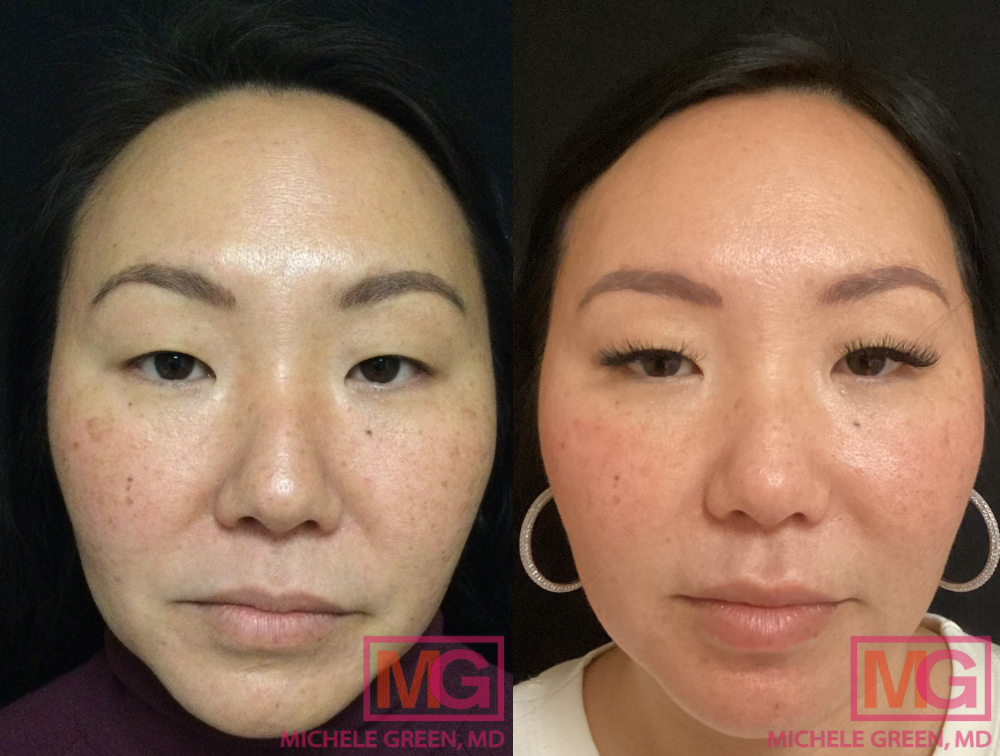
What causes nasolabial folds?
Nasolabial folds are a natural part of facial anatomy, present even in youth, as expressions like smiling and laughing create these creases between the nose and mouth. However, as we age, a combination of factors deepens them and makes them more permanently etched into the skin. Skin aging involves a progressive decline in collagen and elastin, the proteins that keep skin firm, smooth, and resilient. At the same time, the fat pads in the midface, which provide youthful volume and support to the overlying skin, begin to shrink and shift downward due to gravity and volume loss. This descent of midface fat causes the skin to sag, pushing tissue down into the nasolabial fold area and making the creases more pronounced. Sun exposure accelerates this process by prematurely breaking down collagen and elastin. The result is a fold that, over time, transitions from a subtle smile line to a deep groove that can cast shadows and make the face look older than it feels.
What is the best filler for nasolabial folds?
The best filler for nasolabial folds depends on the fold’s depth, the patient’s skin type, and the overall aesthetic goals of the treatment. Hyaluronic acid (HA) fillers, including Juvederm Ultra, Juvederm Vollure, Restylane, and Restylane Lyft, are among the most commonly used options for nasolabial fold treatment because they deliver natural-looking results, are reversible with hyaluronidase, and can be precisely calibrated to the desired level of correction. For deeper, more established nasolabial folds, a thicker, more robust filler like Juvederm Vollure or Restylane Lyft may be preferred, as these products are specifically formulated for deeper tissue placement. For patients interested in a more gradual, natural approach to facial rejuvenation, Sculptra (poly-L-lactic acid) can be injected into the midface to gradually restore volume and improve the appearance of nasolabial folds by stimulating collagen production over a series of sessions. Dr. Michele Green’s practice focuses on hyaluronic acid fillers and Sculptra for nasolabial fold treatment and does not currently offer Radiesse. During a consultation, Dr. Green carefully evaluates each patient’s facial anatomy and skin quality to recommend the most appropriate filler product and injection technique for optimal, natural-looking results.
What is the best filler for deep nasolabial folds?
Deep nasolabial folds typically require a more robust dermal filler capable of significant volume restoration in the midface and along the fold itself. For very deep smile lines, fillers formulated for placement in deeper tissue and structural support are often the most effective choice. Juvederm Vollure XC and Restylane Lyft are well-suited for deep folds, as both are formulated with cross-linked hyaluronic acid designed for placement in deeper tissue and longer-lasting correction. In some cases, effectively treating deep nasolabial folds also requires addressing the underlying cause, volume loss in the midface and cheeks, rather than injecting filler directly into the fold alone. Restoring lost volume in the cheek fat pads with filler can provide a structural lift that softens the nasolabial fold from above, reducing the risk of overfilling the fold and leading to an unnatural, overfilled appearance. Dr. Michele Green, a board-certified dermatologist in NYC, tailors her approach to each patient’s anatomy to achieve the most natural and harmonious results.

Juvederm vs. Restylane for nasolabial folds
Both Juvederm and Restylane are FDA-approved hyaluronic acid dermal fillers widely used to treat nasolabial folds and deliver excellent results. However, subtle differences make one or the other a better fit for certain patients. Juvederm products, including Juvederm Ultra and Juvederm Vollure, are made with a smoother, more cohesive gel that flows easily and blends seamlessly into the surrounding tissue. Many patients and injectors find Juvederm ideal for moderate-to-deep nasolabial folds seeking a smooth, natural correction. Restylane, by contrast, uses a slightly firmer, granular gel that may provide more precise lifting and structural support in the fold, making it a strong choice for patients who need more targeted correction. Restylane Lyft, in particular, is formulated for deeper placement and can also address volume loss in the cheeks and midface. The decision between Juvederm and Restylane for nasolabial folds ultimately comes down to the patient’s specific anatomy, the fold’s depth, personal preferences, and the injector’s expertise. Dr. Michele Green has extensive experience with both product families and will recommend the right filler based on a thorough assessment during your consultation.
Nasolabial fold filler vs. Botox
A common question among patients exploring their options for smile line treatment is whether Botox or dermal fillers is the better choice for nasolabial folds. The answer lies in understanding how each treatment works. Botox is a neuromodulator that temporarily relaxes the muscles responsible for dynamic wrinkles, which appear with facial movement. Nasolabial folds, however, are not caused by muscle movement alone; they are primarily structural, resulting from volume loss, fat pad descent, and skin laxity. Because of this, Botox alone is generally ineffective for nasolabial folds and is not typically recommended for this concern. Dermal fillers, on the other hand, physically restore lost volume beneath and around the fold, providing immediate, visible smoothing of the crease. For most patients, nasolabial fold filler is the gold-standard treatment, and Dr. Michele Green will help determine the right approach during your consultation.
Radiesse vs. Botox for nasolabial folds
When comparing Radiesse and Botox for nasolabial folds, the two treatments serve fundamentally different purposes and are not true alternatives for this concern. Radiesse is a dermal filler made from calcium hydroxylapatite microspheres that provide immediate volume restoration and structural support in the nasolabial fold while stimulating the body’s natural collagen production over time, making it one of the most effective and long-lasting options for deep smile lines. Botox, a muscle relaxant, works best for dynamic wrinkles caused by repeated facial muscle movements, such as forehead lines and crow’s feet, rather than for the structural, volume-related creasing characteristic of nasolabial folds. Using Botox around the nasolabial fold can sometimes cause unintended muscle relaxation, affecting the natural movement of the mouth and lips and potentially creating asymmetry or an unnatural appearance. For patients specifically considering treatment of nasolabial folds, Radiesse or another appropriate dermal filler is the more suitable choice. During a consultation with Dr. Michele Green, a board-certified dermatologist in NYC, she will assess your facial anatomy and recommend the most appropriate injectable treatment to meet your goals safely and effectively.
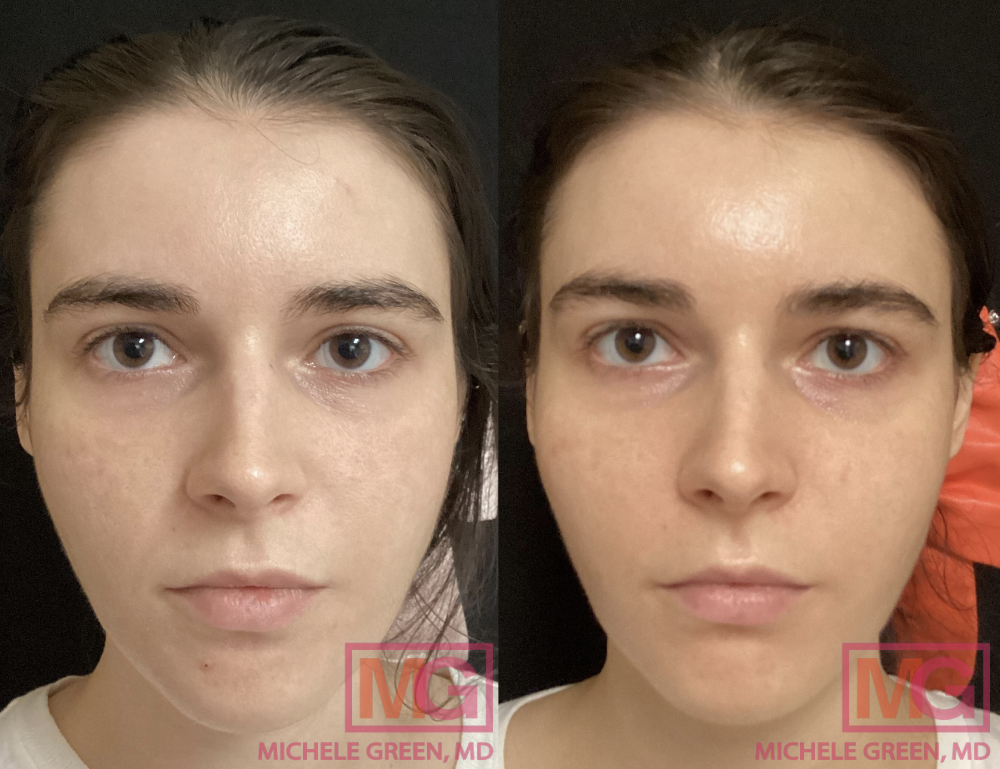
How many syringes do you need for nasolabial folds?
The number of syringes needed for nasolabial fold filler varies from patient to patient, depending on the depth of the folds, the degree of midface volume loss, and whether the treatment will be combined with other areas, such as cheek filler or marionette lines. For patients with mild to moderate nasolabial folds who need correction of the fold itself, one syringe is often sufficient to achieve noticeable improvement. Patients with deeper folds or more significant volume loss may need one to two syringes in the nasolabial fold area, with additional product if the midface, marionette lines, or other areas are also being treated to achieve overall facial harmony. It is important to avoid overfilling the nasolabial fold, as too much filler placed directly in the fold can create a puffy, unnatural look. A skilled injector like Dr. Michele Green will assess the entire midface and lower face to determine the right volume distribution for natural-looking results. During your consultation, Dr. Green will provide a personalized recommendation based on your anatomy and goals.
What is the nasolabial fold filler procedure like?
The nasolabial fold filler procedure at Dr. Michele Green’s NYC office is a quick, minimally invasive treatment that typically takes 30 to 45 minutes from start to finish. Before injecting, Dr. Green will cleanse the treatment area and apply a topical numbing cream to maximize comfort during the procedure. For patients who prefer to arrive already numbed, Dr. Green can also prescribe a topical numbing cream to be applied at home before the appointment, helping reduce wait time in the office and streamline the overall experience. Most modern dermal fillers used for nasolabial folds, including Juvederm and Restylane, also contain lidocaine to further ease discomfort during injection. Dr. Green uses a combination of advanced injection techniques, including both needle and cannula methods, depending on the area and product, to precisely place the filler and minimize bruising and swelling. A cannula is a blunt-tipped, flexible tube that is often preferred for nasolabial fold injections in certain areas because it reduces the risk of bruising and allows the filler to be placed more smoothly across a wider area. The injections themselves take only a few minutes per side, and results are visible immediately. Dr. Green will also gently massage the treated area to ensure even distribution of the filler and optimal contouring. After the procedure, patients receive thorough aftercare instructions and can typically return to normal activities the same day.
Nasolabial fold filler side effects and risks
Nasolabial fold filler is a safe and well-tolerated procedure when performed by an experienced, board-certified dermatologist like Dr. Green. Still, like any injectable treatment, it carries potential side effects and risks that patients should be aware of. The most common side effects are temporary and mild, including swelling, bruising, redness, and tenderness at the injection sites. These typically resolve within a few days to a week. Some patients may initially notice small lumps or bumps in the treated area, which can usually be smoothed with gentle massage and will resolve as the filler settles. More serious but rare complications include infection, allergic reaction, and, in extremely rare cases, vascular occlusion, which occurs when filler is inadvertently injected into or near a blood vessel. Choosing a highly skilled, experienced injector significantly reduces the risk of these complications. The risk of overfilling is also worth noting, as too much dermal filler in the nasolabial fold can create an unnatural, pillow-like appearance. Dr. Michele Green prioritizes safety and natural-looking outcomes, using advanced injection techniques and a conservative approach to minimize risks and ensure the most beautiful, harmonious results for every patient.
What causes Nasolabial fold filler lumps & bumps?
Lumps and bumps after nasolabial fold filler are fairly common and usually temporary, often resulting from several factors. Immediately after injection, minor swelling and irregularities in filler distribution are normal and typically resolve within a few days as the filler integrates into the surrounding tissue. If lumps persist beyond the initial healing period, they may be caused by filler placed too superficially in the skin rather than in the deeper tissue plane, uneven product distribution, or the formation of a small nodule. In some cases, particularly with hyaluronic acid fillers, a gentle massage of the area can help smooth minor lumps. Persistent or firm lumps may indicate a foreign body granuloma, a rare inflammatory reaction to the filler, which may require treatment with corticosteroid injections or, for hyaluronic acid fillers, hyaluronidase to dissolve the product. The best way to prevent lumps and bumps is to choose an experienced, board-certified dermatologist like Dr. Michele Green, who uses precise, expert injection techniques and the most appropriate filler for each patient’s anatomy. If you notice any concerning lumps after a filler treatment, Dr. Green can promptly evaluate and address them.
Nasolabial fold filler swelling timeline
Swelling after nasolabial fold filler is normal, and understanding the swelling timeline can help patients feel more at ease about their results. In the first 24 to 48 hours after treatment, swelling peaks typically; the treated area may look puffy or slightly exaggerated compared to the final result. This initial swelling is a normal response to the injections and is usually manageable. By days three to five, most of the acute swelling subsides, and patients begin to see a clearer picture of their results. Residual swelling and minor bruising typically resolve fully within one to two weeks. Hyaluronic acid fillers like Juvederm and Restylane can initially attract water, contributing to early swelling. By the two-week mark, the filler has generally settled into its final position, and the full result is visible. To minimize swelling, patients are advised to avoid strenuous exercise, alcohol, and excessive sun exposure for 24 to 48 hours after treatment. Keeping the head elevated and applying a cold compress can also help manage swelling in the immediate post-treatment period. Dr. Michele Green provides comprehensive aftercare instructions to ensure a smooth, comfortable recovery.
Nasolabial fold filler recovery time
One of the greatest advantages of nasolabial fold filler over surgical alternatives is its minimal recovery time. Most patients can return to normal daily activities immediately or within a day or two of treatment. The most common post-treatment effects, including swelling, bruising, and mild tenderness at the injection sites, typically resolve within one to two weeks, with many patients seeing significant improvement within three to five days. To promote the fastest, smoothest recovery, patients should follow their aftercare instructions carefully. In the 24 to 48 hours after treatment, it is advisable to avoid strenuous exercise, excessive alcohol consumption, and prolonged sun exposure, as these can worsen swelling and bruising. Applying a cold compress intermittently in the first few hours after treatment can also help reduce swelling. Patients should avoid sleeping face down and refrain from applying heavy pressure to the treated area while the filler settles. It is also important to avoid saunas, steam rooms, and other high-heat environments for the first 48 hours. Most patients are comfortable attending social events within a week of treatment, once any initial bruising and swelling have subsided. Dr. Michele Green will review all aftercare recommendations at your appointment to ensure a smooth recovery.
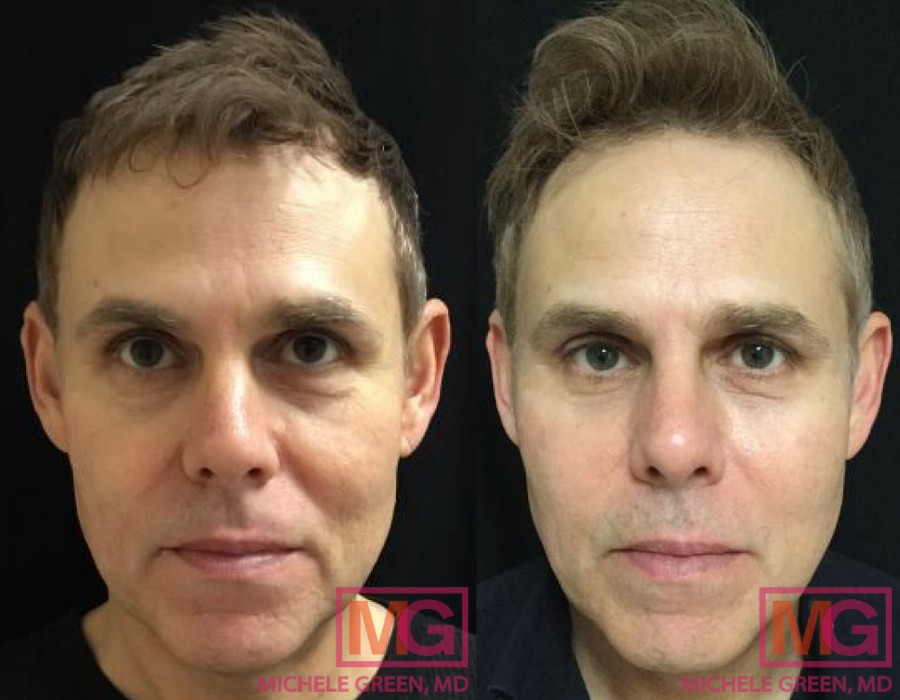
How do you massage nasolabial fold filler?
Gentle massage of the nasolabial fold filler can help smooth minor lumps or irregularities that sometimes occur after injection. Still, it is important to do so correctly and only when appropriate. In general, Dr. Michele Green will advise on whether massage is recommended based on the type and placement of filler used. If massage is recommended, it should be performed very gently with clean fingertips, applying soft, circular pressure to the treated area. Massage should not be performed aggressively or immediately after injection, as this can displace the filler from its intended location. Typically, if massage is advised, it should begin within the first few days after treatment if minor lumps are present. Patients should never aggressively knead or manipulate a firm filler, as this can damage tissue and worsen the issue. If a lump or irregularity persists beyond two weeks and does not respond to gentle massage, it is best to return to Dr. Green for an evaluation. In some cases, hyaluronidase can be used to dissolve a small amount of hyaluronic acid filler to correct any irregularities. The best aftercare approach is always individualized, and Dr. Green will provide specific guidance tailored to your treatment.
Can you dissolve nasolabial fold filler?
Yes — if your nasolabial fold filler is made from hyaluronic acid (such as Juvederm, Restylane, or Restylane Lyft), it can be dissolved with hyaluronidase. This enzyme quickly and safely breaks down hyaluronic acid. This reversibility is a major advantage of HA fillers over other dermal fillers. Hyaluronidase is injected into the treated area and works within 24 to 48 hours to dissolve the filler, allowing patients to correct results they are unhappy with or address complications such as lumps, asymmetry, or overfilling. Non-HA fillers such as Radiesse (calcium hydroxylapatite) and Sculptra (poly-L-lactic acid) cannot be dissolved with hyaluronidase, so their effects must wear off naturally over time. For patients who are nervous about committing to a filler treatment, starting with an HA filler for nasolabial folds provides the reassurance of reversibility. Dr. Michele Green offers hyaluronidase injections at her NYC office for patients who need or want to dissolve prior filler treatments, and she takes great care to ensure every patient is happy and confident with their results.
How long do dermal fillers last in nasolabial folds?
The longevity of dermal fillers in the nasolabial folds varies by filler type, patient metabolism, lifestyle factors, and injected volume. Hyaluronic acid fillers such as Juvederm Ultra and standard Restylane typically last 6 to 12 months in the nasolabial folds, while more robust HA fillers formulated for deeper placement, such as Juvederm Vollure and Restylane Lyft, can last 12 to 18 months or longer. Sculptra, which stimulates collagen production over a series of treatments, can produce results that last up to 2 years or more with an appropriate treatment plan. Individual factors such as a faster metabolism, high levels of physical activity, frequent sun exposure, and smoking can accelerate filler breakdown. Maintaining results typically involves periodic touch-up treatments, and many patients find that with consistent maintenance, less product is needed over time as collagen production is supported and the underlying structure is preserved. Dr. Michele Green will advise you on the expected duration of your specific filler and help you plan a maintenance schedule to keep your results looking their best.
At what age should you start nasolabial fold filler?
There is no single “right” age to begin nasolabial fold filler. The appropriate time to consider treatment depends on the individual’s anatomy, the depth and visibility of their nasolabial folds, and their personal aesthetic goals. Some patients in their late twenties or early thirties notice that smile lines are becoming more pronounced and may seek treatment to prevent premature aging and maintain volume. Others may not feel the need for intervention until their forties, fifties, or beyond, when deeper folds result from more significant volume loss and skin aging. Starting filler treatments earlier, before folds become deeply etched, can be advantageous because smaller volumes of product are needed to achieve a natural correction, and maintaining the result over time may require less filler than correcting a very deep fold. However, preventive treatment is not necessary for everyone, and the decision should always be driven by how a patient feels about their appearance rather than by age alone. At any age, the most important factor is working with an experienced, board-certified dermatologist like Dr. Michele Green in NYC, who will provide an honest assessment and a conservative, personalized recommendation that respects your natural features and long-term skin health.
How to get rid of nasolabial folds without filler
For patients who prefer not to use dermal fillers or want to complement their filler treatments with other modalities, several non-filler options can help improve the appearance of nasolabial folds. Laser treatments such as Fraxel skin resurfacing stimulate collagen production and improve skin texture, helping to firm and tighten the skin around the nasolabial fold over a series of sessions. Microneedling is another excellent option for collagen production and skin resurfacing, creating micro-injuries that trigger a healing response and promote the formation of new collagen and elastin. Radiofrequency treatments such as Thermage can tighten sagging skin and lift the mid-face, thereby reducing the depth of nasolabial folds by improving skin laxity. Topical skincare products containing retinoids, peptides, hyaluronic acid, and antioxidants can support skin elasticity and hydration, slowing the progression of nasolabial folds. Dr. Green’s proprietary MG Skin Labs line offers a range of medical-grade skincare products formulated to support skin health, elasticity, and hydration. These products can be incorporated into a daily routine to help maintain and extend the results of in-office treatments. While these alternatives can provide meaningful improvement, particularly for mild to moderate folds, dermal fillers generally deliver more immediate and dramatic correction of deep nasolabial folds. Dr. Michele Green can help explore the full range of options and determine which approach best suits each patient’s needs, preferences, and anatomy.
Nasolabial fold filler vs. thread lift
Both nasolabial fold filler and thread lifts are non-surgical approaches to improving the appearance of smile lines and midface sagging. Still, they work in fundamentally different ways and are suited to different patient profiles. Dermal filler directly restores lost volume in and around the nasolabial fold, softening the crease and improving the transition between the cheek and the lower face. Results are immediate and can last from six months to over a year, depending on the product used. Thread lifts, on the other hand, use dissolvable sutures inserted beneath the skin to physically lift sagging tissue in the midface and cheek areas. They also stimulate collagen production as the threads dissolve over time. Thread lifts can be a good option for patients with moderate skin laxity who want a mechanical lift rather than volume addition. Still, they are generally better suited to mild-to-moderate sagging than to deep nasolabial folds driven primarily by volume loss.
In many cases, the two treatments can be used together for a more comprehensive rejuvenation effect. The best approach depends on the underlying cause of the nasolabial fold, whether it is primarily due to volume loss, skin laxity, or a combination of both. While thread lifts are not offered at Dr. Green’s NYC practice, she can thoroughly assess each patient’s facial anatomy to determine whether filler alone or a combination of complementary in-office treatments will best achieve their rejuvenation goals.
Is Nasolabial fold filler safe while pregnant?
Nasolabial fold filler and other cosmetic injectables are not recommended during pregnancy. Although clinical research on the safety of dermal fillers during pregnancy is limited, the consensus among medical professionals and the standard of care in medical aesthetics is to avoid elective cosmetic procedures during pregnancy as a precaution. The safety of hyaluronic acid fillers, Radiesse, and Sculptra has not been established in pregnant or breastfeeding patients, and potential effects on fetal development are unknown. Additionally, hormonal shifts and fluid retention during pregnancy can alter skin and facial anatomy, potentially affecting how filler settles and the overall treatment outcome. Most board-certified dermatologists, including Dr. Michele Green, advise patients to postpone nasolabial fold filler and other cosmetic injectables until after pregnancy and breastfeeding are complete. If you are pregnant or planning to become pregnant and have questions about which cosmetic treatments are appropriate during this time, Dr. Green is happy to discuss safe skincare alternatives and help you plan for treatments after pregnancy.
Frequently Asked Questions (FAQs) About Nasolabial Fold Fillers
How much do nasolabial fold fillers cost?
The cost of nasolabial fold filler varies by filler type and brand, the number of syringes required, and the practice and geographic location. In New York City, the cost per syringe of dermal filler varies by product. Most nasolabial fold treatments require one to two syringes. Premium fillers such as Juvederm, Restylane, Radiesse, and Sculptra are priced differently based on their formulation and longevity. The total cost of treatment should be weighed against the longevity and quality of results; longer-lasting fillers may offer better value over time, even if the upfront cost is slightly higher. During a consultation at Dr. Michele Green’s NYC office, patients receive a clear, personalized treatment plan and cost estimate before proceeding with any treatment.
Do filler injections in the nasolabial folds hurt?
Most patients describe nasolabial fold filler injections as mildly uncomfortable rather than painful. To maximize comfort, Dr. Michele Green applies a topical numbing cream to the treatment area before injecting. Most modern dermal fillers used for nasolabial folds, including Juvederm and Restylane, contain lidocaine, which further reduces discomfort during injection. The cannula technique, which uses a blunt-tipped, flexible instrument instead of a sharp needle, can also reduce discomfort and minimize tissue trauma. Discomfort varies by individual pain tolerance, but most find the procedure quite tolerable and are surprised by how quick and easy it is. Any post-procedure tenderness at the injection sites is mild and usually resolves within a day or two. If you have concerns about comfort during treatment, Dr. Green and her team will take every precaution to ensure the most comfortable experience possible.
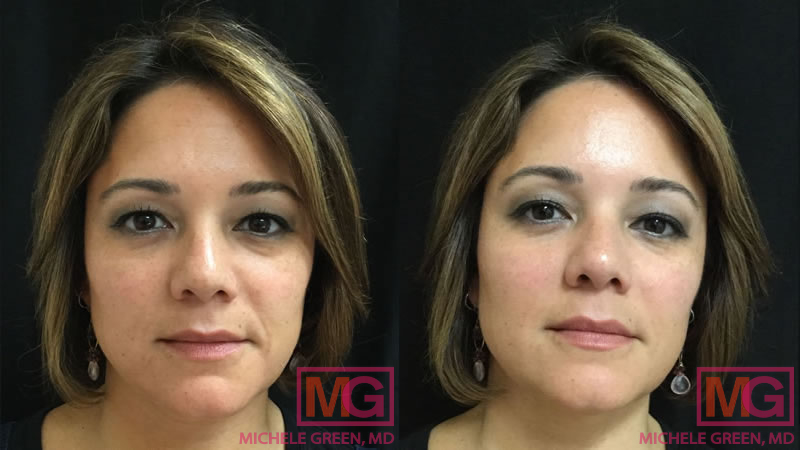
Do fillers in the nasolabial folds look natural?
When performed by a skilled, experienced injector, nasolabial fold filler should look entirely natural, refreshed, and rested, not overfilled or artificially smooth. The key to natural-looking results lies in the injector’s understanding of facial anatomy, the choice of the right filler product and appropriate volume, and injection technique. Treating the nasolabial fold in isolation, without considering overall facial balance, can lead to unnatural-looking results, as the fold is often a downstream effect of volume loss in the cheeks and midface. A thoughtful, holistic approach that addresses the midface and cheeks as well as the fold itself typically produces the most natural and harmonious outcome. Overfilling the nasolabial fold is a common mistake that can create a puffy, distorted look, which is why Dr. Michele Green’s conservative, artful approach is so valued by her patients. By using the right amount of product, placed with precision, Dr. Green consistently achieves results that enhance her patients’ natural features and restore a youthful appearance without looking artificial or overdone. Patients at her NYC practice frequently report that friends and family notice they look great but cannot pinpoint exactly what changed.
How do I get started with dermal fillers for the nasolabial folds today?
Nasolabial fold filler is among the most effective and popular non-surgical treatments for restoring lost volume, softening deep smile and laugh lines, and achieving a refreshed, more youthful appearance. From choosing the right product, such as Juvederm, Restylane, Restylane Lyft, Radiesse, or Sculptra, to selecting the optimal injection technique, the success of dermal filler treatment depends heavily on the injector’s skill and expertise. Understanding the full landscape of nasolabial fold filler, including how long results last, what side effects to expect, how the swelling timeline unfolds, and how filler compares to alternatives like Botox or thread lifts, empowers patients to make the most informed decisions about their care. Whether you are considering your first nasolabial fold filler treatment or seeking a more skilled, conservative approach to facial rejuvenation, Dr. Michele Green offers unmatched expertise and a personalized, artful touch that consistently delivers beautiful, natural-looking results.
Dr. Michele Green is an internationally recognized, board-certified cosmetic dermatologist with over 25 years of experience providing New York City’s most discerning patients with exceptional, non-invasive cosmetic treatments. Consistently named one of NYC’s top dermatologists by Castle Connolly, New York Magazine, Super Doctors, and The New York Times, Dr. Green combines deep expertise in facial anatomy, advanced injection techniques, and a genuine dedication to her patients’ well-being to deliver outstanding, long-lasting results. She customizes each dermal filler treatment plan to each patient’s unique facial structure, aesthetic goals, and concerns, ensuring results that look refreshed and natural rather than overdone. To schedule your nasolabial fold filler consultation with Dr. Green, please contact us online or call our NYC office at 212-535-3088.


