


Sculptra vs. Facelift: Which Is Right for You?
As the face ages, natural processes such as volume loss, diminished collagen production, and declining skin elasticity begin to change how we look. Fine lines deepen, the jawline softens, and the overall sense of lift and firmness we once had starts to fade. For patients looking to address these changes, the world of facial rejuvenation now offers more options than ever before — from minimally invasive cosmetic injectables to comprehensive surgical procedures. Two of the most talked-about approaches are Sculptra, a poly-l-lactic acid (PLLA)-based collagen stimulator, and the traditional facelift, a surgical procedure designed to address sagging skin and excess skin for a dramatically refreshed appearance. Understanding the differences between these two options is the first step toward making the right decision for your face, and board-certified NYC dermatologist Dr. Michele Green is here to help.
Sculptra works differently from traditional dermal fillers like hyaluronic acid fillers: rather than adding immediate volume, Sculptra injections trigger the body’s collagen-stimulating response over time, gradually improving skin quality, facial volume, and skin laxity from the inside out. A surgical facelift, on the other hand, including advanced techniques such as the deep-plane facelift, physically repositions tissues, removes excess skin, and redefines facial structures for results that are both immediate and long-lasting. Whether you’re exploring non-surgical treatments as a way to delay surgery, or considering whether Sculptra can replace a facelift altogether, the answer depends on your unique facial anatomy, your goals, and the degree of change you’re seeking. Dr. Michele Green, a board-certified dermatologist with decades of experience in facial volumization and non-surgical rejuvenation, offers individualized consultations to help patients navigate exactly these kinds of decisions.
Dr. Michele Green is an internationally renowned board-certified dermatologist based on the Upper East Side of Manhattan, New York City, with over 2.5 decades of experience treating patients from around the world. She is consistently recognized by Castle Connolly, Super Doctors, and New York Magazine as one of the best dermatologists in New York City. Dr. Green takes a holistic, personalized approach to every patient’s skin and aesthetic concerns, combining the latest advances in cosmetic dermatology with a deep commitment to natural-looking, long-lasting results. Whether a patient is interested in Sculptra, a liquid facelift, or a combination of treatments, Dr. Green develops a customized treatment plan designed to meet their specific goals.
What is Sculptra?
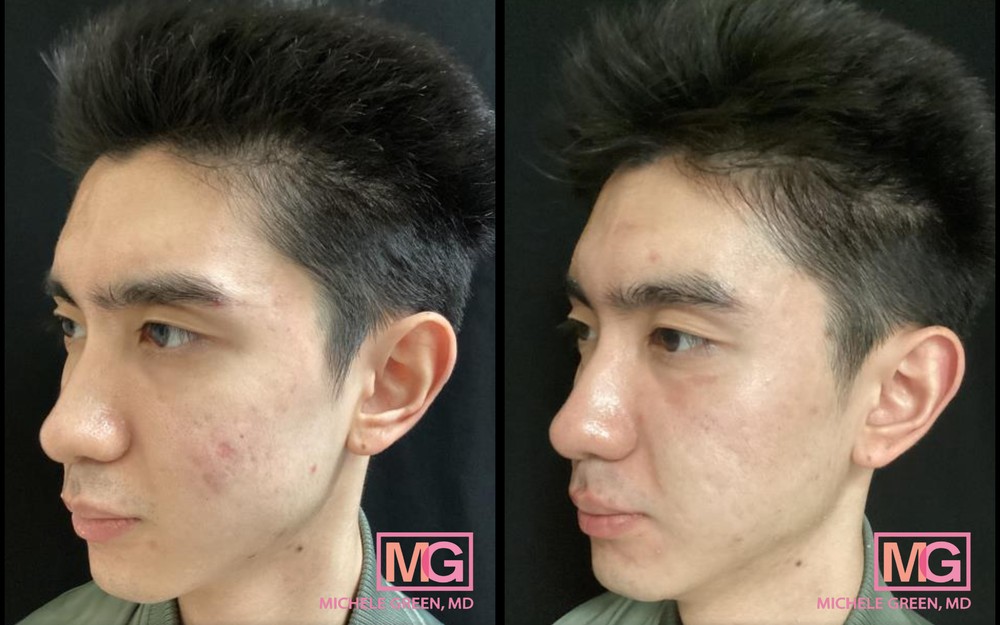
Sculptra is a unique cosmetic injectable made from poly-l-lactic acid (PLLA), a biocompatible, biodegradable synthetic substance that has been used in medicine for decades. Unlike hyaluronic acid fillers, which add volume immediately by physically filling areas beneath the skin, Sculptra works as a biostimulator, encouraging the body to produce its own collagen over time. When Sculptra is injected into areas of facial volume loss, the PLLA microparticles stimulate fibroblasts, the cells responsible for collagen production, leading to gradual, progressive improvement in skin quality, firmness, and facial volume. The result is a subtle, natural-looking restoration of facial fullness that builds over a series of treatments. Because Sculptra works with your own biology rather than adding a foreign substance, many patients find the results look especially natural, a quality that makes it a popular alternative or complement to other dermal fillers and surgical procedures alike.
What is a Facelift?
A facelift, also called a rhytidectomy, is a surgical procedure designed to address moderate to severe signs of aging in the face and neck. Traditional facelifts involve making incisions along the hairline and around the ears to access the underlying facial structure, tighten loose muscles and connective tissue, and remove excess skin before re-draping the skin for a smoother, more youthful appearance. A deep plane facelift goes even further, repositioning the deeper layers of the face, including the SMAS (superficial musculoaponeurotic system), for more dramatic, longer-lasting rejuvenation. Facelifts are particularly effective at addressing jowls and jowling along the lower face, sagging skin in the mid-face and neck, and a loss of jawline definition. While surgical facelifts carry more risk and require more downtime than non-surgical alternatives, they remain the gold standard for patients with significant skin laxity or excess skin that cannot be adequately addressed with injectables alone.
What non-surgical facelift options does Dr. Green offer?
For patients who are not yet ready for surgery, or who simply prefer to avoid it, Dr. Michele Green offers a full suite of non-surgical facelift options at her Upper East Side Manhattan practice. As a board-certified dermatologist in NYC with extensive expertise in facial rejuvenation, Dr. Green customizes each treatment plan to the individual patient’s anatomy, concerns, and goals. Non-surgical facelift treatments available at Dr. Green’s practice include Thermage FLX, a radiofrequency skin tightening treatment that stimulates collagen production and firms lax skin without any downtime; Botox, which relaxes targeted facial muscles to soften fine lines, lift the brow, and create a more refreshed overall appearance; dermal fillers, which restore lost facial volume and contour the cheeks, jawline, and lips; Kybella, an injectable that permanently destroys fat cells beneath the chin for a slimmer, more defined profile; and CoolSculpting, a non-invasive fat reduction treatment that can address stubborn pockets of fat in areas such as the chin and jowls. Used individually or in combination, these treatments allow Dr. Green to deliver meaningful facial rejuvenation results without incisions, anesthesia, or the recovery time associated with a surgical facelift. To learn more about Dr. Green’s non-surgical facelift options, visit her non-surgical facelift page or schedule a consultation at the practice.
Is Sculptra a non-surgical alternative to a facelift?
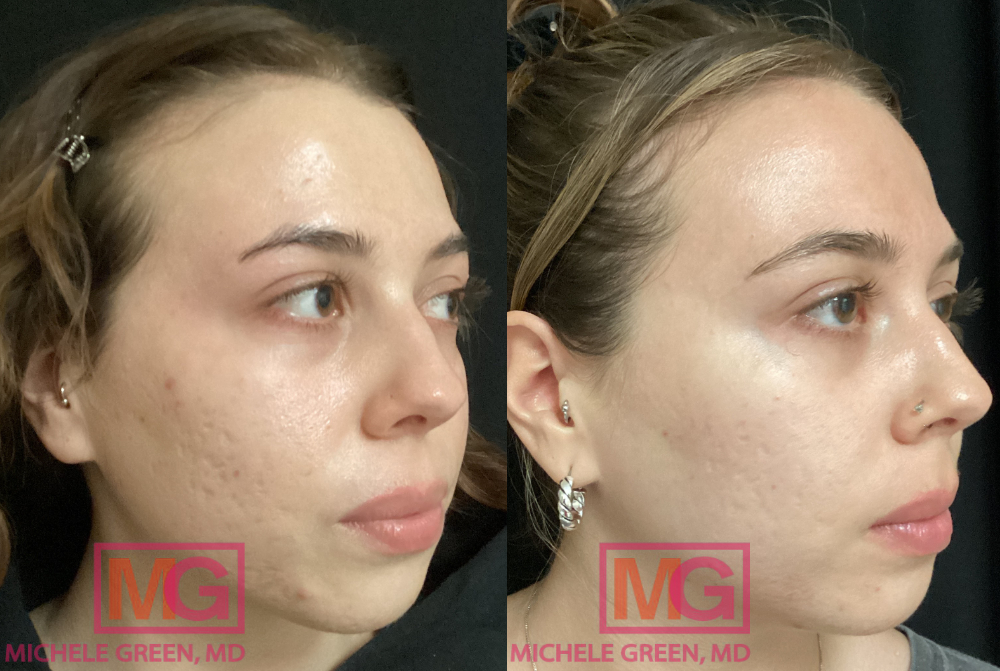
For many patients, Sculptra is an excellent non-surgical alternative to a facelift, particularly for those in their 30s, 40s, or early 50s who are beginning to notice facial volume loss, early skin laxity, or softening of their facial structure but aren’t ready for surgery. Sculptra injections gradually restore lost volume by stimulating the body’s own collagen production, improving skin quality, and supporting the facial structures from within. This approach, sometimes called a liquid facelift when combined with other dermal fillers or neuromodulators, can deliver impressive results without the risks, costs, or recovery associated with surgery. That said, Sculptra is not a direct substitute for a surgical facelift in cases of significant excess skin, pronounced jowling, or deep tissue laxity that requires physical repositioning. In those situations, a traditional facelift or deep-plane facelift may be the more appropriate option. Dr. Green evaluates each patient’s facial anatomy and degree of aging to recommend the most effective approach, whether that’s Sculptra alone, a combination of non-surgical treatments, or a referral for surgical consultation.
Who is a good candidate for Sculptra vs. a facelift?
The ideal candidate for Sculptra is someone who is experiencing mild to moderate signs of facial aging, such as hollowing in the temples or cheeks, a loss of definition along the jawline, or a general decrease in facial volume, but does not yet have the degree of skin laxity or sagging skin that would require surgery. Sculptra works best for patients who are willing to undergo a series of sessions (typically two to three treatments spaced four to six weeks apart) and who understand that results appear gradually over several months. A surgical facelift, by contrast, is generally best suited for patients with more advanced signs of aging: significant jowling, excess skin in the neck and lower face, and structural changes to the facial anatomy that can’t be corrected solely through volume restoration. The best candidates for either procedure are in good overall health, have realistic expectations, and are committed to maintaining their results with proper skincare and healthy lifestyle habits. Board-certified dermatologist Dr. Michele Green works closely with each patient to determine which option, or which combination of treatments, will deliver the most natural, flattering outcome.
At what age should you choose Sculptra over a facelift?
There is no single age at which Sculptra becomes the better choice over a surgical facelift. The right treatment depends far more on the individual’s skin condition, degree of volume loss, and aesthetic goals than on their age alone. That said, Sculptra is often an ideal choice for patients in their 30s and 40s who are starting to notice early signs of aging and want to proactively support collagen production and maintain their youthful appearance before more significant changes occur. Starting Sculptra earlier can help slow the visible progression of aging by building a collagen foundation beneath the skin over time. For patients in their 50s and beyond who have already experienced significant changes in their facial structure, pronounced skin laxity, deep jowling, or substantial volume depletion, a traditional facelift or deep-plane facelift may offer a more comprehensive correction. However, age is not a disqualifier from either option: many patients in their 60s and 70s benefit greatly from Sculptra either as a standalone treatment or in combination with surgery. In comparison, many patients in their 40s are excellent candidates for surgical intervention. A personalized consultation with Dr. Green is the best way to determine where you fall on this spectrum.
Sculptra vs facelift — Which is safer?
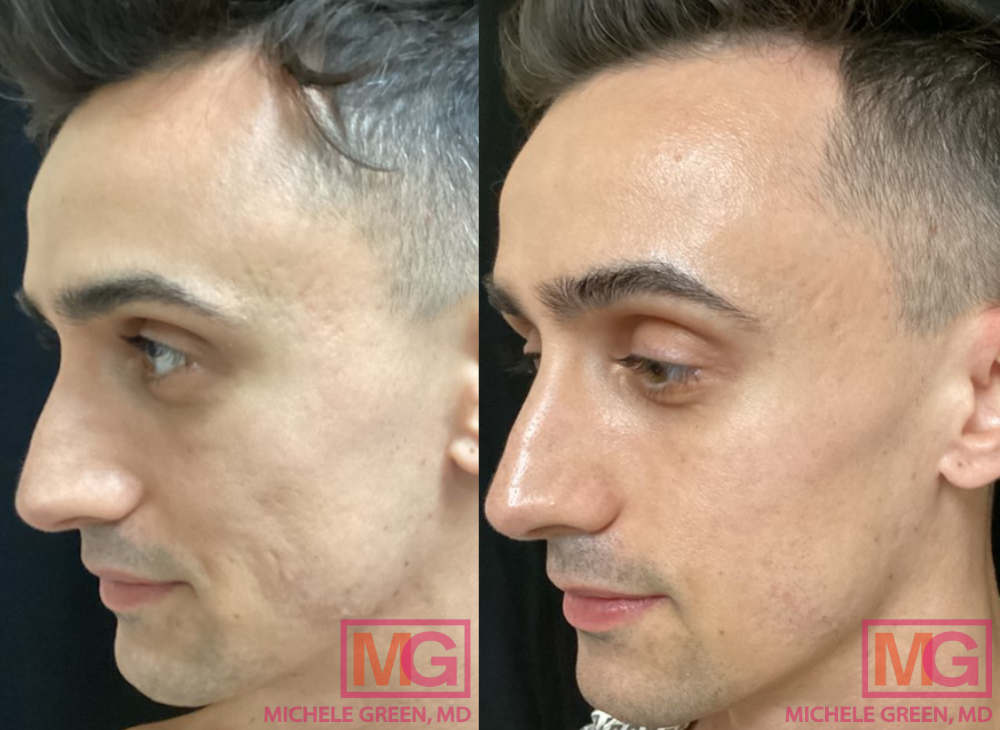
From a risk profile standpoint, Sculptra carries significantly fewer risks than a surgical facelift. As a minimally invasive cosmetic injectable, Sculptra is administered in the office with no anesthesia and no incisions. The most common side effects of Sculptra injections include temporary swelling, redness, bruising, and tenderness at the injection site, all of which typically resolve within a few days. One known potential side effect of Sculptra is the development of small nodules or papules beneath the skin, which can occur if the product is not properly diluted or massaged post-injection. In the hands of an experienced injector like Dr. Green, however, this risk is minimized through careful technique and proper aftercare guidance. A surgical facelift carries a broader spectrum of risks: infection, anesthesia reactions, nerve injury, scarring, asymmetry, and a longer, more variable recovery process. For patients who are not surgical candidates due to health conditions or who simply prefer to avoid surgery, Sculptra offers a compelling, safer alternative for facial rejuvenation. Dr. Green is a board-certified dermatologist in NYC with extensive expertise in Sculptra and other non-surgical treatments, ensuring the safest possible outcomes for her patients.
Sculptra vs facelift — Recovery time compared
One of the most significant differences between Sculptra and a facelift is the recovery involved. Sculptra injections require virtually no downtime. Most patients return to their normal activities the same day or the day after treatment. Minor swelling and bruising may be visible for a few days, but these side effects can typically be concealed with makeup and are well-tolerated by most patients. A traditional facelift, in contrast, involves a meaningful recovery period: patients typically experience swelling, bruising, and discomfort for two to four weeks following surgery, and it can take three to six months, or longer, for the final results to fully settle. During recovery, activity restrictions apply, and patients are generally advised to take at least 1 to 2 weeks off work. For patients with busy lives who cannot accommodate extended downtime or those who simply want a more gradual, low-key treatment journey, Sculptra’s near-zero recovery time is a major advantage.
Is Sculptra cheaper than a facelift?
The cost of Sculptra versus a facelift depends on many factors, but in general, the upfront cost of a full course of Sculptra treatments is lower than that of a surgical facelift. A facelift involves surgeon fees, anesthesia fees, operating room costs, and pre- and post-operative care, which together can amount to a significant financial investment. A complete Sculptra treatment course, typically two to three sessions using multiple vials, represents a more accessible price point for many patients, and the treatment can be gradually added to over time as needed. However, it’s important to consider that Sculptra’s results, while long-lasting (up to two years or more), are not permanent, and periodic maintenance sessions may be needed to sustain the outcome. A surgical facelift, while more costly upfront, can deliver results that last a decade or more in some cases. Neither treatment is typically covered by insurance, as both are elective cosmetic procedures. During a consultation with Dr. Green, patients receive a personalized treatment plan with transparent pricing, allowing them to make a fully informed decision.
Sculptra vs facelift — Which lasts longer?
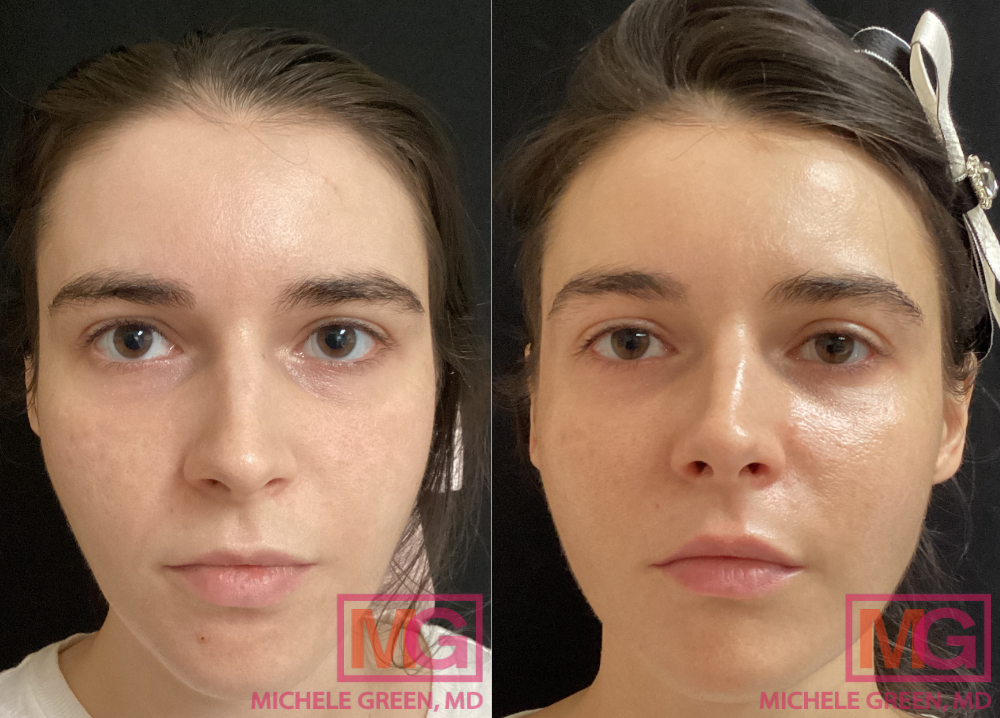
When comparing longevity, a surgical facelift generally wins, particularly when performed with advanced techniques such as the deep plane facelift, which can deliver results lasting 10 years or more. Sculptra results, while notably long-lasting compared to hyaluronic acid fillers, typically last about 2 to 3 years before touch-up treatments are recommended. The reason Sculptra’s results are more durable than traditional dermal fillers is that it stimulates collagen production rather than simply adding volume, so the improvement is built into the skin’s own structure. However, because the face continues to age naturally, even Sculptra-generated collagen will gradually diminish over time. Facelifts also don’t stop the aging process, but they reset the clock far more dramatically. For patients committed to long-term maintenance of their results, a combination approach using Sculptra to preserve and enhance outcomes in the years following surgery can be an especially effective strategy. Dr. Green helps patients consider these long-term factors during their consultation.
Sculptra vs. facelift — Which gives better results?
“Better” results depend entirely on what a patient is trying to achieve. A surgical facelift offers the most dramatic, comprehensive correction available for advanced facial aging, as it addresses excess skin, repositions facial structures, and restores a more youthful overall contour in a way that no injectable or non-surgical treatment can replicate. For patients with significant skin laxity, deep jowling, or substantial changes to their facial anatomy, a facelift will typically deliver superior structural correction. Sculptra, on the other hand, delivers subtler, more gradual results, which is actually a major selling point for many patients. The improvements look natural, build over time, and are less likely to signal that the patient has “had work done.” For patients with mild to moderate facial aging, or those who want to enhance their appearance without a dramatic change, Sculptra may deliver results that better align with their goals. The two treatments can also be complementary: many patients achieve the best of both worlds by combining a surgical facelift with Sculptra to address both structural laxity and overall skin quality.
Sculptra vs. facelift — Which looks more natural?
Both Sculptra and a well-performed facelift can look completely natural, but they achieve that naturalness through different mechanisms, and the results depend heavily on the provider’s skill. Sculptra’s gradual approach to volume restoration and collagen stimulation means the changes unfold slowly and are unlikely to raise eyebrows. Because the product stimulates your own collagen production rather than adding a visible filler, the improvement looks like you simply look refreshed, well-rested, or younger, and not treated. A surgical facelift, when performed expertly, can also look entirely natural; the “windswept” or overly tight look associated with older-style facelifts is largely a product of outdated techniques. Modern deep plane facelifts, in particular, are designed to move tissues in a natural direction, preserving the face’s three-dimensional quality while correcting sagging skin and jowling. The key in both cases is choosing an experienced, skilled provider. Dr. Green is a board-certified dermatologist in NYC whose precise injection technique and artistic eye deliver beautifully natural-looking results with Sculptra and other cosmetic injectables.
How does Sculptra compare to a thread lift?
A thread lift is a minimally invasive procedure in which dissolvable sutures are inserted under the skin to lift sagging facial and neck tissues. Like Sculptra, thread lifts are considered non-surgical treatments for facial rejuvenation, but the two work in very different ways. Sculptra improves the skin from within by stimulating collagen production over time, restoring lost facial volume, and improving overall skin quality and elasticity. Thread lifts provide more immediate mechanical lifting but have a shorter lifespan; results typically last 1 to 2 years and carry a slightly higher risk of visible complications, such as thread migration, dimpling, or infection. Sculptra, by contrast, has no structural components that can migrate or become visible, making it a lower-risk option for most patients. Many practitioners view thread lifts and Sculptra as complementary rather than competing: a thread lift can provide immediate structural support, while Sculptra works beneath the surface to build collagen and improve long-term skin quality. As with any cosmetic treatment, a thorough consultation is essential to determine which approach or combination best suits a given patient’s facial anatomy and aesthetic goals.
Can Sculptra replace a facelift?
For many patients, Sculptra can serve as a facelift alternative, particularly for those in the early stages of facial aging who are experiencing volume loss, declining skin elasticity, or mild to moderate skin laxity without significant excess skin or deep jowling. In these cases, a series of Sculptra injections, possibly combined with other dermal fillers, Botox, or energy-based skin-tightening treatments, can deliver comprehensive facial rejuvenation that meets or exceeds the patient’s goals without surgery. For patients with more advanced aging, pronounced jowling, loose neck skin, or significant structural changes to the facial anatomy, Sculptra alone is unlikely to replicate the results of a surgical facelift. In these situations, surgery remains the most effective option for meaningful structural correction. The question of whether Sculptra can replace a facelift is therefore highly individual, and the answer depends on where a patient is in the aging process and what results they hope to achieve. Dr. Michele Green, a board-certified dermatologist in NYC, can assess each patient’s unique concerns and help them determine the most effective path forward.
Should I get Sculptra before or after a facelift?
Sculptra can be used strategically both before and after a facelift, and the right timing depends on your individual goals. Getting Sculptra before a facelift can help build collagen and improve skin quality in advance of surgery, potentially leading to better healing and a more refined surgical outcome. Some patients also use pre-operative Sculptra treatments to address volume deficits in areas that surgery will not directly correct, such as the temples or mid-cheeks. After a facelift, Sculptra can be a powerful tool for maintaining and enhancing results over time. As the face continues to age post-surgery, periodic Sculptra treatments can help replenish lost facial volume and sustain the rejuvenated appearance achieved by the surgery. Most surgeons and dermatologists recommend waiting until the surgical site has fully healed before introducing injectable treatments, typically 3 to 6 months post-operation. Dr. Green collaborates with patients planning or recovering from facelifts to integrate Sculptra into a comprehensive, long-term treatment plan.
Can Sculptra and a facelift be combined?
Yes! Combining Sculptra with a surgical facelift is not only possible, but it’s also an increasingly popular approach among patients seeking comprehensive, long-lasting facial rejuvenation. A facelift addresses the structural and anatomical changes associated with aging by tightening the underlying facial structure, removing excess skin, and correcting jowls and jowling. However, it does not fully reverse volume loss, improve skin quality, or stimulate new collagen production on its own. Sculptra fills these gaps beautifully: by restoring facial volume and stimulating collagen production, Sculptra can complement the lifting and tightening effects of surgery for a result that looks more complete, more youthful, and more natural. When used together, typically with Sculptra introduced before surgery to optimize skin quality, or after surgery to maintain and enhance results, these two approaches address essentially every dimension of facial aging. Many of Dr. Green’s patients incorporate Sculptra into their overall aesthetic plan, whether they have had a facelift or are planning one, to ensure their results are as long-lasting and natural-looking as possible.
Frequently Asked Questions (FAQs) About Sculptra Versus a Facelift
How does poly-l-lactic acid (PLLA) work in Sculptra?
Poly-l-lactic acid (PLLA), the active ingredient in Sculptra, is a synthetic biocompatible polymer that has been safely used in medical applications for decades. When injected into the deep dermis or subcutaneous layer, the PLLA microparticles act as a scaffold that stimulates the body’s own fibroblasts to produce new collagen. This collagen builds gradually over the weeks and months following treatment, improving skin thickness, skin quality, and facial volume in a way that looks and feels natural. The PLLA itself is gradually metabolized and broken down by the body over time, but the collagen it stimulates remains, which is why Sculptra’s results can last for up to 2 years or more. A typical full treatment course involves two to three sessions of Sculptra injections spaced several weeks apart, and results continue to improve for several months after the final session, as collagen production peaks.
What areas of the face can Sculptra treat?
Sculptra is FDA-approved for the correction of shallow to deep nasolabial folds, facial fat loss (lipoatrophy), and other facial wrinkles and folds. In practice, experienced injectors like Dr. Green use Sculptra across a range of facial areas to restore volume and improve skin laxity, including the temples, cheeks, Sculptra for the jawline, chin, and lower face. It is particularly effective in areas where traditional dermal fillers would require a larger volume to achieve the same effect, such as the temples or lateral cheeks, because Sculptra stimulates collagen production over a broader area rather than simply filling a localized pocket. Sculptra can also be used in the body, including the buttocks (as part of a non-surgical Brazilian Butt Lift), the décolleté, and the hands, making it a versatile option for overall skin quality and volume restoration beyond just the face.
How many Sculptra sessions are needed to see results?
Most patients achieve their desired outcome with two to three Sculptra treatment sessions, spaced approximately four to six weeks apart. Because Sculptra stimulates collagen production over time rather than delivering immediate volume, the full results are not visible right away. Improvements continue to build for three to six months after the final session, as new collagen forms and matures beneath the skin. The number of vials used per session varies based on the patient’s degree of volume loss and the size of the area being treated; Dr. Green tailors the treatment plan to each individual’s needs. While some patients see meaningful improvement after just one session, the full, optimal result typically requires the complete course of treatment. Maintenance sessions every 1 to 2 years are recommended to sustain results as the face continues to age naturally.
Are there any side effects unique to Sculptra?
The most commonly discussed side effect specific to Sculptra, compared with other dermal fillers, is the potential development of small subcutaneous nodules or papules at the injection site. These nodules, which are not visible on the skin’s surface but can be felt upon palpation, are more likely to occur when Sculptra is injected too superficially, is not properly diluted, or is not massaged regularly in the days following treatment. Patients are typically instructed to massage the treated areas for 5 minutes, 5 times a day, for 5 days after each session to help distribute the product evenly and minimize this risk. In the hands of experienced practitioners like Dr. Green, nodule formation is uncommon, and the vast majority of patients tolerate Sculptra very well. Standard post-injection side effects such as swelling, bruising, redness, and tenderness at the injection sites are also possible but are generally mild and short-lived.
Is Sculptra a good option if I have never had injectables before?
Sculptra can be an excellent first injectable for patients who are beginning to notice early signs of facial aging and want to take a proactive, gradual approach to maintaining their appearance. Because the results build slowly and look entirely natural, Sculptra is a low-risk entry point into the world of cosmetic injectables for patients who are nervous about looking “overdone.” It is also a thoughtful option for patients who prefer a longer-term approach rather than the frequent, shorter-interval maintenance required by hyaluronic acid fillers like Juvederm or Restylane. That said, a thorough consultation with an experienced injector is important for any first-time patient. Dr. Green takes the time to walk new patients through the mechanism of action, expected results, and realistic timeline for Sculptra, helping them set appropriate expectations and feel confident in their treatment decision.
How do I get started with Sculptra injections today?
Sculptra and a surgical facelift each offer meaningful pathways to facial rejuvenation, but they do so in fundamentally different ways. Sculptra, powered by poly-l-lactic acid and the body’s own collagen stimulation response, is a minimally invasive, gradual solution for patients with early to moderate signs of aging who want to restore facial volume, improve skin quality, and address mild skin laxity without surgery or significant downtime. A traditional facelift, particularly a deep-plane facelift, offers the most dramatic and durable structural correction available for patients with advanced aging, significant excess skin, or pronounced jowling. For many patients, the best outcome lies not in choosing one over the other but in using them together, with Sculptra serving as a long-term maintenance tool before, alongside, or after surgery. Understanding your own facial anatomy, degree of aging, lifestyle, and goals is essential to making the right decision. That understanding begins with an expert consultation with board-certified NYC dermatologist Dr. Michele Green.
Dr. Michele Green is a world-renowned, board-certified dermatologist based on the Upper East Side of Manhattan, New York City, with over 25 years of experience providing the most advanced and effective non-surgical cosmetic treatments. From Sculptra injections and liquid facelifts to comprehensive combination treatment plans, Dr. Green brings unmatched expertise, artistic precision, and a deeply personalized approach to every patient who walks through her door. She is consistently recognized by Castle Connolly, Super Doctors, and New York Magazine as one of the best dermatologists in New York City, and she has helped countless patients achieve natural, beautiful, long-lasting results. If you’re considering Sculptra, a facelift, or both, there is no better place to begin than with a consultation with Dr. Green. To schedule your appointment, please call the office today at 212-535-3088 or contact us online.


