


Ozempic Loose Skin Tightening Treatment
Ozempic is a prescription drug with the active ingredient semaglutide, used to moderate the effects of type 2 diabetes by helping the body produce insulin and regulate blood sugar levels. One additional effect of the drug was that it helped patients feel full longer, leading to its rapid popularity as an off-label means of achieving rapid weight loss. In 2021, semaglutide and tirzepatide were FDA-approved for obesity and weight loss as injectable treatments, respectively: Wegovy and Mounjaro. While Wegovy and Ozempic were highly effective at helping patients achieve rapid, significant weight loss, they can also lead to unwanted side effects, such as loss of facial fat, sagging skin, and decreased skin elasticity, which can increase signs of aging on the face and body. If you are unhappy with the side effects of Ozempic, such as sagging skin and Ozempic Face, the best first step is to consult a board-certified dermatologist, such as Dr. Michele Green.
Patients experiencing mild to moderate sagging skin due to rapid weight loss can turn to a variety of non-surgical treatment options for facial and body contouring. While cosmetic surgery, such as a tummy tuck, facelift, or thigh lift, is best for severe skin sagging, non-surgical procedures like laser skin tightening, hyaluronic acid dermal fillers, microneedling, and a regular skincare routine can improve skin health and reduce skin laxity. With many options available, it is always best to consult an expert dermatologist, such as Dr. Michele Green, who can create a treatment plan tailored to you. Dr. Green will also recommend or prescribe the best skincare products, such as vitamin C serums and topical retinoids, to improve skin texture at home.
Experienced board-certified dermatologist Dr. Michele Green has been expertly treating patients in her Upper East Side, New York City office for more than 25 years. Dr. Green is a master at generating individualized treatment plans, promoting wellness, and helping each patient achieve their aesthetic goals. With her proprietary line of skincare products, MGSKINLABs, and a wide range of cosmetic and medical treatment options, including dermal fillers, microneedling, laser treatments, Botox, chemical peels, and more, Dr. Green can address a wide range of skin conditions and cosmetic concerns. Well-known for high patient satisfaction, Dr. Green has been voted one of New York City’s best dermatologists by such publications as Castle Connolly, Super Doctors, and New York Magazine.
What is Ozempic? What is WeGovy?
Ozempic is a GLP-1 medication traditionally used to help the body produce insulin and regulate blood sugar levels. When it was noted that the drug also helped manage body weight, it was studied and approved as a weight-loss treatment. The medication contains the active ingredient semaglutide, a glucagon-like peptide-1 (GLP-1) receptor agonist that promotes insulin production. Ozempic is a highly effective treatment option for patients with type 2 diabetes. It has been shown to decrease the risk of developing major cardiovascular events, such as a heart attack, in patients taking the semaglutide medication. However, it is typically prescribed only after other potential solutions to mitigate the effects of diabetes have been attempted, such as a regulated diet and exercise.
One of the noticeable common side effects of Ozempic was weight loss, and soon, patients were starting to use Ozempic off-label as a weight loss drug. Ozempic for weight loss was later FDA-approved in 2021 and sold under the brand name WeGovy as an injectable treatment option for weight maintenance. WeGovy works by inhibiting appetite, as food is digested more slowly and kept in the stomach for longer. As a result, patients are less inclined to eat, restricting their calorie intake to achieve rapid, noticeable weight loss.
Ozempic is associated with many potential side effects, and patients should exercise caution before taking this medication for type 2 diabetes or weight loss. Potential side effects include:
- Gastrointestinal trouble, such as nausea, vomiting, constipation, diarrhea, and abdominal pain
- Hyperglycemia (low blood sugar), which can lead to blurred vision, sweating, anxiety, dizziness, shakiness, headaches, slurring speech, hunger, or weakness
- Elevated heart rate
- Kidney failure
- Medullary thyroid cancer (also known as medullary thyroid carcinoma)
- Severe allergic reaction
If you experience any severe side effects, inform your healthcare provider immediately.
Will Ozempic make me have loose skin? Will WeGovy make me have loose skin?
When fat loss occurs over a short period, the production of structural proteins collagen and elastin decreases, reducing skin elasticity and making it difficult for the skin to retract. As a result, the skin appears loose and sagging, emphasizing signs of natural aging, such as fine lines, wrinkles, and volume loss. Sagging skin can be particularly noticeable on the face, at the temples, around the eyes, and along the jawline, where excess skin can lead to jowls. Loss of fat also creates a hollow midface and sunken appearance under the eyes, making patients look older and more tired. Luckily, many non-surgical treatments are available to help patients on weight loss medications reduce the appearance of sagging skin.
Does loose skin from Ozempic go away? Does loose skin from WeGovy go away?
Patients often wonder whether increased skin laxity after fat loss will go away on its own, and the answer depends on several factors. One way to reduce loose skin is to stop taking the medication altogether. However, many patients find that when they stop taking Ozempic, they regain the weight they previously lost. Patients who choose to continue the medication may find that skin elasticity returns over time, allowing the skin to shrink and reveal a newly slimmer face. However, this is most common in younger patients because, as we age, skin elasticity naturally decreases, meaning many older patients will continue to experience loose, sagging skin. Most patients will find that the best option for treating loose skin and Ozempic Face is to consult an expert dermatologist, such as Dr. Green, who can create a treatment plan to reduce the appearance of loose skin and improve skin elasticity.
How to tighten loose skin after Ozempic. How to tighten loose skin after WeGovy
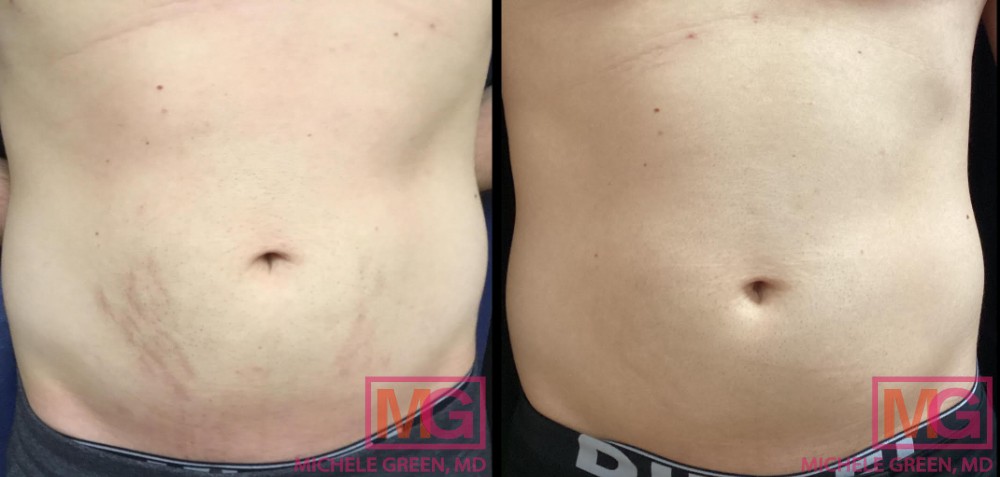
The best first step to tighten loose skin after GLP-1 medication is to schedule a consultation with a board-certified dermatologist, such as Dr. Michele Green. At Dr. Green’s Upper East Side New York City dermatology office, a wide range of non-surgical procedures are available to reduce the appearance of mild to moderate sagging skin, all without the need for a visit to the plastic surgeon to go under the knife. For patients experiencing excess skin on their face and body, Dr. Green provides a non-surgical body lift using Thermage radiofrequency skin tightening or microneedling. These treatment options help tighten the skin by inducing controlled microinjuries that trigger increased collagen production, resulting in smoother, tighter skin. If patients have experienced midface volume loss, Dr. Green may use dermal fillers such as hyaluronic acid fillers like Restylane and Juvederm, or collagen-induction fillers like Sculptra. To find out which treatment options are right for you, schedule your initial consultation with Dr. Green.
What is Thermage skin tightening treatment?
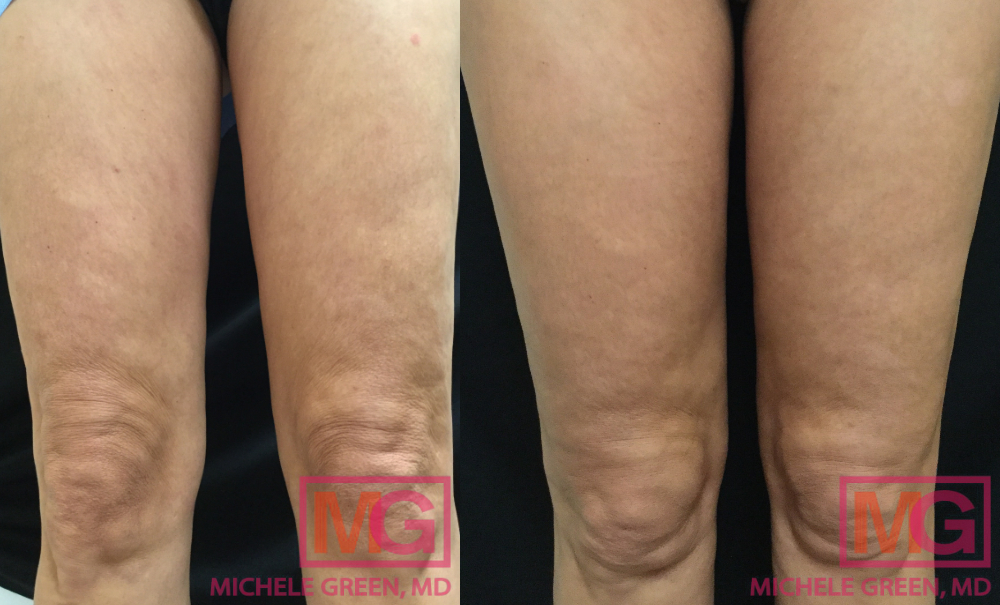
Thermage is a non-invasive, FDA-approved skin-tightening treatment that uses radiofrequency (RF) energy to achieve skin rejuvenation results with minimal downtime. An inevitable part of the aging process is a decrease in the production of elastin and collagen. Collagen and elastin are proteins naturally produced by the body that provide the skin with a firm foundation and elasticity. As collagen and elastin are depleted, the result is visible fine lines and wrinkles, crepey skin, and loss of firmness. For patients seeking to minimize sagging skin and combat the visible signs of aging, Thermage treatment is an excellent option for skin tightening. Thermage skin tightening treatment provides tighter, firmer, and smoother skin, softens fine lines and wrinkles, and helps you look younger without plastic surgery by boosting your body’s natural collagen fiber production. The Thermage procedure can be used nearly anywhere on the face or body, including the décolletage, jowls, neck, chest, upper arms, abdomen, thighs, and buttocks, to achieve a non-surgical “lift” effect that firms and tightens loose skin.
How does Thermage work for sagging skin after rapid weight loss?
The Thermage treatment for skin tightening uses radiofrequency laser technology to boost collagen production, resulting in firmer, tighter skin. When the Thermage device is applied to the skin’s surface, it emits a beam of radiofrequency (RF) energy that heats the deeper layers of the skin, known as the dermis, while keeping the skin’s surface cool for maximum patient comfort during treatment. When the dermis is heated, it triggers the body’s natural healing process, which promotes the production of new collagen over time. Increased collagen production in the treatment area replaces sagging, loose skin with firmer, smoother skin over 3 to 6 months. The results of Thermage skin tightening can also be partially visible right after the treatment session, as the heating of the dermis separates water molecules in fibrous collagen in the treatment area, leading to immediate skin tightening.
RF Microneedling for skin tightening
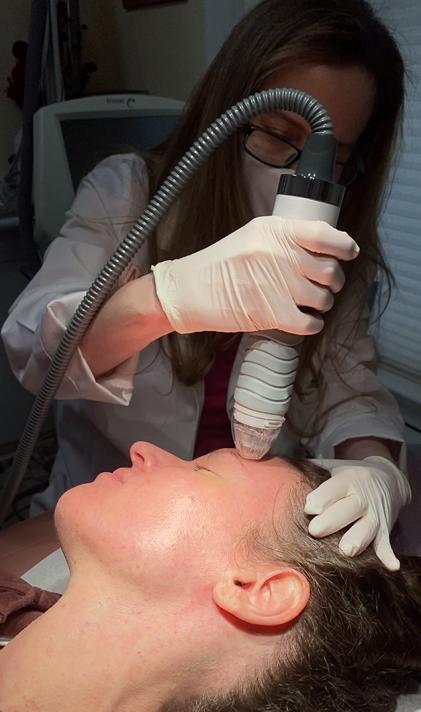
Radiofrequency microneedling is a cosmetic procedure that stimulates collagen production to reduce signs of aging by tightening the skin, improving skin tone and texture, addressing pigmentation and sun damage, and reducing the appearance of acne scars, injury scars, and stretch marks. The treatment combines two anti-aging approaches: microneedling and radiofrequency energy emission. The two treatments provide patients with more dramatic skin rejuvenation without requiring recovery time or downtime. Microneedling works by creating tiny punctures with surgical-grade needles, which form micro-injuries on the skin’s surface. Radiofrequency energy then penetrates the dermal layer of the skin, heating the tissue and causing controlled damage to the treatment area. While some laser treatments can be dangerous for patients with darker skin tones, radiofrequency microneedling is safe for all skin tones because it does not target pigmentation as other laser treatments do. At Dr. Green’s New York City dermatology office, she uses the Vivace RF microneedling device to achieve optimal results.
Dermal Fillers for Volume Loss
When fat loss occurs in the face, dermal fillers are an excellent treatment option for restoring midface volume and filling under-eye hollows, smoothing fine lines and wrinkles around the nose and mouth, and contouring the jawline to reduce the appearance of jowls. Many different types of dermal fillers are available at Dr. Green’s office, including Restylane, Juvederm, Sculptra, and Belotero, which can be used on all areas of the face for a full liquid facelift. The results of dermal filler treatment are long-lasting, with some dermal fillers lasting for more than two years, but they will fade over time. As such, Dr. Green recommends scheduling touch-up appointments approximately once a year to maintain the treatment results.
Can sagging skin be firm again?
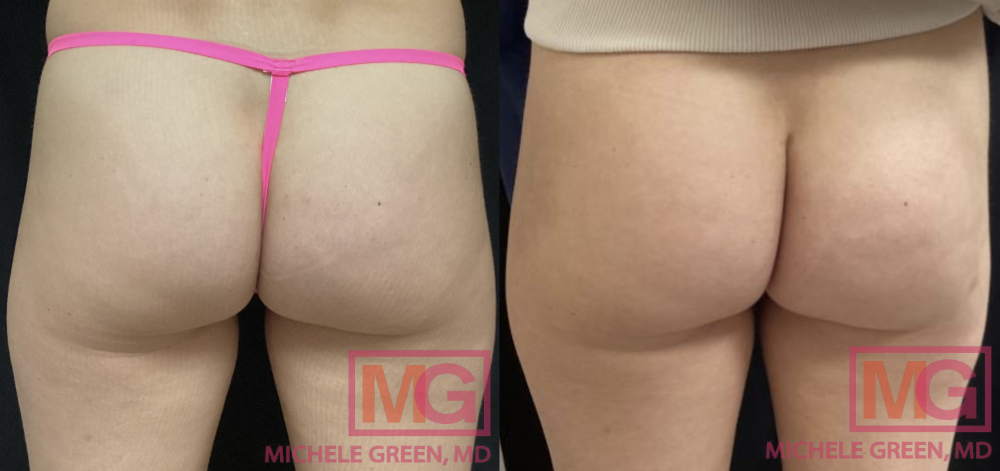
Sagging skin can be firm again, though typically not without treatment from a dermatologist, like Dr. Green. During your initial consultation with Dr. Green, she will examine the treatment area and determine which treatment option best meets your needs. If you are experiencing mild to moderate facial or body skin sagging, Dr. Green may recommend Thermage, a radiofrequency energy laser treatment, or microneedling. For facial volume loss, a dermal filler may be the best option to provide structure and support, resulting in a more contoured appearance. To maintain smooth, evenly textured skin at home, Dr. Green may recommend that patients include a retinoid in their skincare routine to boost collagen production and skin cell turnover.
How do you keep your skin tight when losing weight?
Rapid weight loss may seem exciting, but it can cause some significant side effects, including sagging skin. When pockets of fat disappear quickly, the skin does not have enough time to contract, leading to loose, sagging skin. To keep the skin tight during weight loss, the best first step is to lose weight gradually, at most 1-5 pounds per week. In addition to giving your skin time to contract, slower weight loss increases the likelihood of maintaining a lower weight. Building muscle while on weight-loss medication can also help provide support under the skin. Adding strength training to your exercise routine, two to four days a week, can make a significant difference in building muscle mass. Practicing consistent sun protection can also help reduce the risk of damaging skin collagen. Wearing SPF 30 sunscreen every morning before leaving the house can significantly reduce the appearance of sagging skin and other signs of natural aging. Lifestyle changes, such as drinking water, can also help, as hydration keeps the skin plump and healthy.
How to prevent loose skin on GLP-1
The best way to prevent loose skin from occurring with GLP-1 medications is to start at a low dose and lose weight gradually. Rapid weight loss is a significant contributor to loose skin, as collagen production, which keeps the skin tight and provides structure, cannot keep up with fat loss. Be sure to follow your healthcare provider’s instructions for dosage and GLP-1 injection administration. Additionally, practice good skincare by staying hydrated, avoiding smoking, and always applying sunscreen before going outside.
Will my skin sag if I take Ozempic or WeGovy?
Several factors influence the severity of loose or sagging skin on GLP-1 weight-loss medications, including age, skin elasticity, the rate of weight loss, and genetics. Younger patients may experience less skin laxity, as collagen production decreases with age. Patients on high doses of Ozempic or Wegovy may experience rapid weight loss, which is a significant factor in the development of loose or sagging skin. Patients who already experience high skin laxity are more likely to experience loose skin after losing weight with Ozempic or Wegovy. To address sagging skin after weight loss, it is best to schedule an appointment with Dr. Green.
How to stop saggy skin on Ozempic or WeGovy
The best way to avoid sagging skin on your weight-loss journey is to start with a low dose of Ozempic or Wegovy to lose weight slowly at the beginning of treatment. According to the Centers for Disease Control and Prevention (CDC), it is best to begin the treatment by losing only 1-2 lbs per week. Losing weight more slowly allows the skin to shrink and retract, improving skin quality and preventing the formation of loose, sagging skin. It is best to begin taking Ozempic or Wegovy under the guidance of a healthcare provider, who can recommend the best dose to help you lose weight slowly at first. Healthcare providers also recommend changing lifestyle habits, such as eating well and staying hydrated, to support weight management after you stop taking Ozempic.
Do you pinch the skin for GLP-1 injection?
The first step in preparing for GLP-1 injections is to wash your hands and thoroughly clean the injection area and medication vial with an alcohol wipe. Once your hands and the vial are clean, insert the needle into the vial and withdraw the prescribed dose of the medication. Next, pinch the skin at the injection site (usually on the abdomen) to create a small fold, then insert the needle into the site. After injection, needles must be disposed of properly in a puncture-proof container to avoid injury to yourself and others.
How to get started with skin tightening treatment today
Ozempic is a diabetes drug that is FDA-approved to regulate the release of insulin to help mitigate the symptoms of type 2 diabetes. However, in addition to affecting blood sugar levels, Ozempic’s active ingredient, GLP-1, slows gastric emptying, making patients feel full for longer and consequently consuming fewer calories. As a result, Ozempic causes rapid weight loss, which can lead to unwanted side effects, such as gastrointestinal pain and distress, and sagging skin due to fat loss over a short period. Loose skin can accentuate fine lines and wrinkles, jowls along the jawline, and hollows in the midface and under the eyes. If you are bothered by sagging skin after Ozempic or Wegovy injections, board-certified dermatologist Dr. Michele Green is here to help.
Dermatologist Dr. Michele Green has been expertly treating patients in her Upper East Side, New York City office for more than 25 years. With many treatment options available to address sagging skin, decreased skin elasticity, and wrinkles, including dermal fillers, PRP Microneedling, and Thermage RF laser, Dr. Green can create an individualized treatment plan to meet your aesthetic goals. Consistently voted one of the best healthcare providers by Super Doctors, Castle Connolly, and New York Magazine, Dr. Green is an expert in patient satisfaction. Contact us online today or call our NYC-based office at 212-535-3088 to learn more about how Dr. Green can help address sagging skin and more.


