


Melasma in Men: Why It’s Underdiagnosed and Undertreated
When people picture melasma, they usually picture a woman, often pregnant, often in her thirties. That mental image is so entrenched that when a man walks into a dermatology office with the same telltale brown patches across his cheeks and upper lip, he is often misdiagnosed as having sun spots, shaving-related dark spots, or simple sun damage. Melasma in men is real, and far more common than most patients or even some general practitioners assume. Because it doesn’t fit the stereotype, it often goes unrecognized for months or years, allowing the discoloration to deepen and become harder to treat. Men experiencing unexplained facial pigmentation deserve the same careful evaluation as anyone else, which is why so many turn to Dr. Michele Green for an accurate diagnosis.
Part of the problem is that melasma is often framed solely as a hormonal skin condition tied to pregnancy and birth control, both of which are irrelevant to male patients. This framing leads many men to dismiss their symptoms or assume their discoloration is something else entirely, such as freckles, age spots, or post-inflammatory hyperpigmentation from a shaving cut. In reality, melasma has multiple triggers beyond female hormones, including sun exposure, genetic predisposition, and certain medications, all of which apply equally to men. Because the condition looks similar across genders but is treated so differently in the cultural conversation, men are undertreated simply because no one is looking for it, a gap that Dr. Michele Green works to close every day in her practice.
Can men get melasma?
Yes, men absolutely can get melasma, even though it is far more commonly associated with women. Studies suggest that men make up between 10 and 20 percent of melasma cases, and that number may be even higher, since many cases in men go undiagnosed or are mistaken for other types of dark spots. Melasma in men tends to develop later in life than in women, often in the 30s to 50s, and is closely linked to cumulative sun exposure rather than hormonal shifts. Because it is less expected, men are less likely to seek treatment early, allowing the pigmentation to become more stubborn over time. Dr. Green regularly evaluates male patients who assume their discoloration is simply sun damage, only to discover through a proper skin exam that they have melasma.
What does melasma look like in men?
Melasma in men typically appears as symmetrical, light to dark brown or grayish-brown patches, most often on the cheeks, forehead, nose, and upper lip, sometimes extending into the malar region along the cheekbones. Dermatologists classify melasma into three types based on where the excess pigment is located:
- Epidermal melasma: confined to the outer skin layer and typically responds best to treatment.
- Dermal melasma: extending into the deeper dermis and more resistant.
- Mixed melasma: a combination of both patterns, the most commonly diagnosed type in men.
Unlike acne scars or a stray blemish, melasma patches are typically flat, without raised texture, itching, or irritation. Because the discoloration can resemble sun spots, freckles, or general dark spots from shaving irritation, many men don’t realize what they’re seeing until a dermatologist like Dr. Green examines the skin closely.
Causes of melasma in men
Melasma develops when melanocytes, the skin’s pigment-producing cells, become overactive and produce excess melanin, resulting in characteristic patches of discoloration. In men, chronic sun exposure is the primary driver, though genetic predisposition, certain medications, and underlying health conditions can also contribute. Because testosterone doesn’t influence pigmentation the way estrogen and progesterone do, melasma in men is rarely linked to hormonal imbalance in the same way it is in women. However, hormonal factors are not entirely ruled out in every case. Family history also matters significantly; men with close relatives who have had melasma are considerably more likely to develop it. Dr. Green takes a full medical and family history during a consultation to identify which combination of factors contributes to a given patient’s melasma.
Testosterone or hormones
Testosterone itself is not considered a direct trigger for melasma the way estrogen and progesterone are in women, and most male cases are not attributed to hormonal imbalance. That said, hormones still regulate melanocyte activity throughout the body, and men with underlying endocrine issues, including thyroid disorders, may be more susceptible to pigmentary changes, including melasma. Some research has also suggested a possible link between melasma and conditions that broadly alter hormone levels. However, evidence in men remains limited compared with the well-documented hormonal connection seen in women. Dr. Green may ask about a patient’s general health history, including any thyroid disorders or other endocrine conditions, as part of a complete evaluation.
Sun exposure
Sun exposure is the single most significant trigger for melasma in men, and for many male patients, it’s essentially the whole story. UV rays stimulate melanocytes to ramp up melanin production as a natural defense mechanism, and in people prone to melasma, this response becomes exaggerated and localized into visible patches. Men who spend significant time outdoors for work, sports, or recreation without consistent sun protection are especially prone to developing melasma, and existing patches will reliably darken with continued UV exposure. This is one of the clearest, most modifiable risk factors for melasma in men, which is why Dr. Green emphasizes rigorous daily sun protection as the foundation of any treatment plan.
Stress
Stress is not a direct cause of melasma, but it can aggravate many skin conditions, including melasma, in both men and women. Chronic stress triggers the release of cortisol and other hormones that can influence inflammation throughout the body. Inflammation can stimulate melanocyte activity in susceptible skin. While stress alone is unlikely to cause melasma to appear out of nowhere, it may worsen existing pigmentation or make flare-ups more noticeable during particularly demanding periods. Dr. Green often recommends managing stress as part of an overall approach to skin health, alongside targeted treatments that directly address pigmentation.
Shaving
Shaving itself does not cause melasma, but it can aggravate it, particularly for men who regularly experience nicks, razor burn, or ingrown hairs. Any skin inflammation, including irritation from shaving or mild contact dermatitis from a fragranced product, can trigger post-inflammatory hyperpigmentation, which may overlap with or worsen existing melasma patches, especially around the upper lip and jawline. Men with melasma are generally advised to use a sharp, clean razor, shave with the grain, and apply a gentle, fragrance-free moisturizer afterward to minimize irritation. Because the upper lip is one of the most common sites for melasma in men and is also one of the most frequently shaved areas, small adjustments to a shaving routine can meaningfully reduce additional pigmentation over time.
Melasma vs. other dark spots in men
Melasma is often confused with other forms of dark spots, including freckles, age spots, and post-inflammatory hyperpigmentation, but each has distinct characteristics. Freckles tend to be small, scattered, and more pronounced with sun exposure, while age spots, also called sun spots, are typically larger, more defined, and appear on chronically sun-damaged areas like the cheeks, forehead, and hands. Post-inflammatory hyperpigmentation develops after injury or irritation to the skin, such as a shaving cut or a healed breakout, and tends to fade gradually over time. By contrast, melasma is symmetrical, more diffuse, and persistent without treatment. Because the differences can be subtle, a physical exam by an experienced dermatologist, and occasionally a biopsy in unclear cases, is the most reliable way to confirm which skin disorder a man is dealing with.
Best treatment for melasma in men
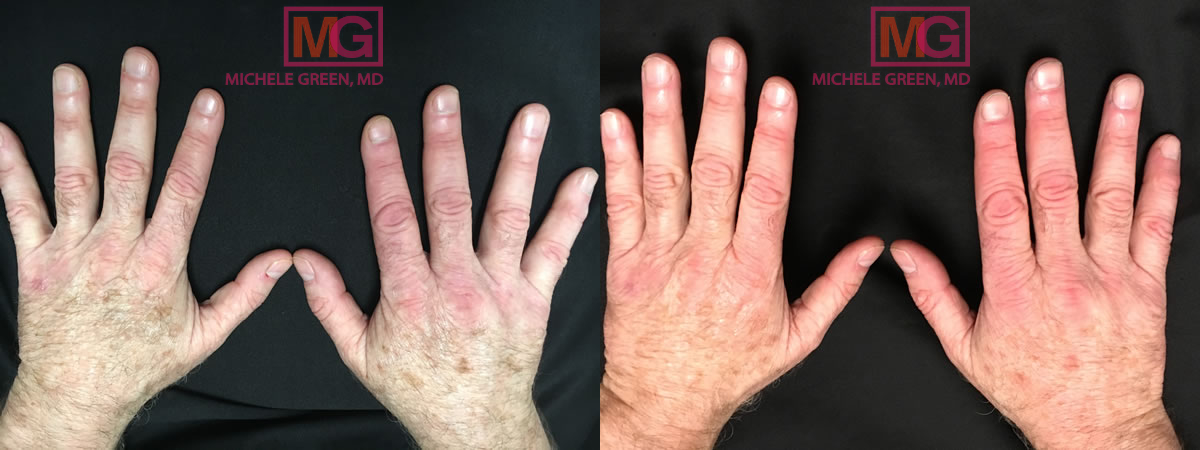
No single treatment is best for melasma in men: the most effective plans typically combine several approaches tailored to skin type, pigmentation depth, and how a patient’s skin has responded to previous treatments. Chemical peels, including the Cosmelan peel, are often a cornerstone of treatment, reducing melanin production and accelerating skin cell turnover. Microneedling with a depigmentation solution can improve the penetration of brightening topical treatments, such as the MGSkinLabs Skinbright RX, and stimulate healthier-looking skin over time. Because standard laser therapy and intense pulsed light can worsen melasma by driving pigment deeper into the skin, Dr. Green generally avoids these approaches for melasma and instead builds a plan around peels, microneedling, and a disciplined at-home skincare routine. Every plan Dr. Green develops for melasma in men is individualized, since the same combination of treatments rarely works the same way for two different patients.
Melasma on the upper lip/mustache area in men
The upper lip is one of the most common and most frustrating locations for melasma in men, partly because it sits directly in the path of a razor and is subject to frequent irritation. Treatment in this area typically starts conservatively, with topical treatments such as tretinoin, azelaic acid, Skinbright RX, or hydroquinone used carefully to avoid excess irritation on already-sensitive skin. Chemical peels formulated for pigmentation can also be effective around the upper lip and mustache area. However, Dr. Green often adjusts the strength and application time to account for the thinner, more reactive skin in this region. Consistent, gentle shaving practices combined with daily sunscreen help prevent the irritation-driven flare-ups that make upper lip melasma particularly stubborn to clear.
Tranexamic acid for melasma in men
Tranexamic acid has become one of the more promising options for treating melasma in men, available as a topical ingredient in skincare products and, in select cases, as an oral prescription. Topically, tranexamic acid inhibits the pathway that leads to excess melanin production, making it a useful addition to a broader topical therapy regimen alongside ingredients like azelaic acid and glycolic acid. Oral tranexamic acid, prescribed in low doses for a limited period, has shown encouraging results for more stubborn or widespread melasma. However, it isn’t appropriate for men with certain clotting risk factors, so a thorough medical history is essential before starting it. Dr. Green evaluates each patient individually to determine whether topical or oral tranexamic acid, or a combination approach, makes the most sense.
Hydroquinone for men with melasma
Hydroquinone is generally safe and effective for men with melasma when prescribed and monitored by a board-certified dermatologist such as Dr. Green. This topical treatment inhibits the enzyme responsible for melanin production, gradually lightening existing patches over several weeks of consistent use. Hydroquinone is not intended for indefinite, uninterrupted use, as prolonged application can cause skin irritation or, rarely, a paradoxical darkening called ochronosis. For this reason, Dr. Green typically recommends cycling on and off the medication under supervision. Because hydroquinone increases photosensitivity, strict daily sunscreen use is non-negotiable for any man using it as part of his melasma treatment. In select cases, Dr. Green may pair hydroquinone with a mild corticosteroid and a retinoid for a short, supervised period to calm inflammation and speed results. However, this combination requires closer monitoring than hydroquinone alone.
How to treat melasma in men with dark or brown skin
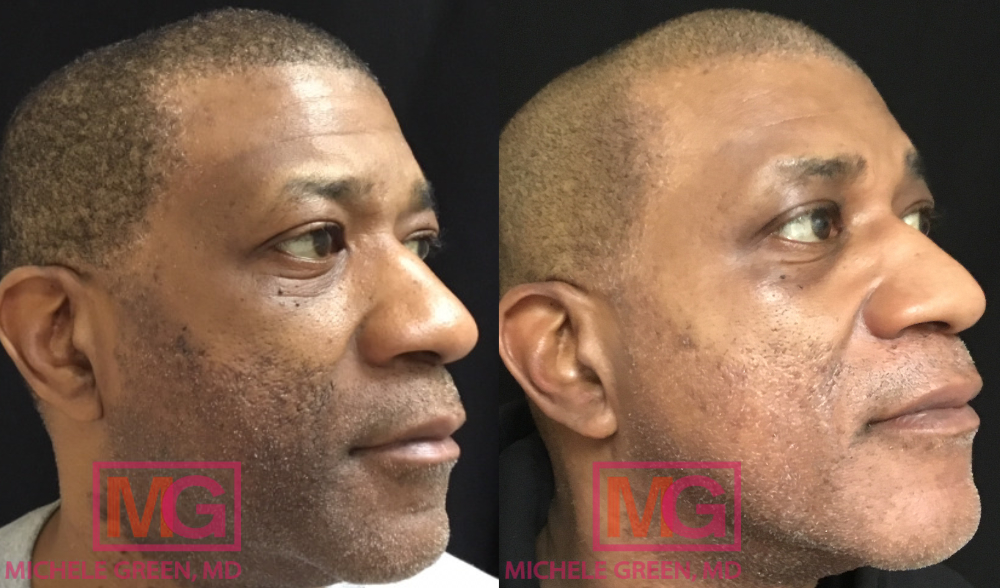
Men with darker skin tones require a more cautious approach to melasma treatment, since some lasers and aggressive peels can trigger additional pigmentation or, in rare cases, lightening of the treated skin. Chemical peels formulated for darker skin types, along with microneedling and topical treatments containing ingredients like azelaic acid, kojic acid, and glycolic acid, are often safer and more effective than aggressive resurfacing lasers. Dr. Green has extensive experience treating melasma and other forms of hyperpigmentation across a full range of skin tones and adjusts peel strength, contact time, and topical formulations accordingly to minimize the risk of complications. For men with medium to darker skin, patience and a gradual approach generally produce better, more consistent results than aggressive one-time treatments.
Do home remedies work for male melasma?
Home remedies are unlikely to meaningfully treat established melasma, though they are not entirely without merit as a supportive, low-risk addition to a real treatment plan. Ingredients like vitamin C, niacinamide, and gentle exfoliants such as salicylic acid can support overall skin brightness and texture. Still, they simply don’t have the concentration or delivery mechanism to meaningfully interrupt melanin production the way prescription-strength topical treatments or in-office chemical peels can. Many men turn to over-the-counter skincare products for convenience or to avoid a dermatologist visit, only to find their pigmentation unchanged or worse after months of inconsistent results. Dr. Green recommends that home remedies can supplement, but should never replace, a professionally guided plan for a persistent skin condition like melasma.
Is melasma in men permanent?
Melasma is not necessarily permanent, but it is a chronic, relapsing skin condition that tends to persist without active management. Some men see their pigmentation fade somewhat with strict sun protection alone, while others require topical therapy and in-office treatments to see meaningful improvement. Even after successful treatment, melasma tends to return, particularly with renewed sun exposure, which is why long-term maintenance rather than a one-time fix is generally the more realistic goal. Dr. Green is upfront with her male patients about this reality from the first consultation, so expectations align with what a treatment plan can realistically achieve.

FAQs About Melasma in Men
Is melasma more common in women than men?
Melasma is significantly more common in women than in men, largely because of the strong hormonal component seen with pregnancy, oral contraceptives, and hormone replacement therapy. However, this disparity has likely created a diagnostic blind spot: because clinicians and patients alike associate melasma so heavily with female hormones, male cases are frequently missed or attributed to other causes. Men who develop melasma tend to share the same risk factors as women, except for hormonal triggers, so their cases are driven primarily by sun exposure and genetic predisposition. Dr. Green makes a point of considering melasma as a possible diagnosis in male patients presenting with facial discoloration, rather than assuming that the more common condition in women automatically rules it out in men.
How long does it take to treat melasma in men?
Most men begin to see visible improvement in their melasma after 4 to 8 weeks of consistent topical therapy and in-office treatment, though full results typically take several months to develop. Deeper, longer-standing dermal or mixed melasma tends to respond more slowly than epidermal melasma, and the timeline also depends on how diligently a patient adheres to sun protection between sessions. Dr. Green sets realistic expectations at the outset of treatment and schedules follow-up visits to track progress and adjust the plan as needed.
Does melasma in men come back after treatment?
Yes, melasma tends to return in men just as it does in women, especially with renewed sun exposure or if treatment is stopped abruptly. Long-term maintenance, including daily broad-spectrum sunscreen and periodic touch-up or topical treatments, is the most effective way to prevent pigmentation from resurfacing. Dr. Green works with her male patients to build a sustainable, long-term skincare routine rather than treating melasma as a one-time fix, because consistency ultimately keeps the skin clear.
Best sunscreen for melasma in men?
The best sunscreen for men with melasma is a broad-spectrum formula with SPF 50 or higher, applied daily regardless of the weather or how much time is spent outdoors. Sunscreens that contain iron oxides offer additional protection by blocking visible light, which has been shown to trigger pigmentation in melasma-prone skin in ways that standard UV filters alone do not fully address. Dr. Green recommends the SPF 50 Hydrating Sunscreen and consistent use, since daily sun protection matters most. For men who are active outdoors or who sweat throughout the day, reapplication every 90 minutes, along with a hat or other physical barrier, adds an important extra layer of defense.

Is melasma in men a sign of something serious?
Melasma is a harmless, purely cosmetic skin condition and is not a sign of skin cancer or any dangerous underlying illness. That said, a dermatologist should evaluate any new or changing dark patch to rule out other possibilities, since some pigmented lesions can resemble melasma at a glance but require different management. In rare instances, melasma has been loosely associated with thyroid disorders or other hormonal imbalances, so Dr. Green may recommend basic bloodwork if a patient’s history suggests it. For most men, melasma is a cosmetic concern rather than a marker of serious disease, though a proper evaluation can offer peace of mind.
Treat Your Melasma today with Dr. Michele Green
Melasma in men remains one of the more overlooked skin disorders in dermatology, not because it’s rare, but because it doesn’t fit the expectations most people, including some clinicians, bring into the exam room. From the malar patches across the cheeks to stubborn discoloration along the upper lip, melasma in men can be reliably identified and effectively managed with the right combination of chemical peels, microneedling, targeted topical treatments, and rigorous sun protection. Because male pigmentation concerns are so frequently misread as ordinary sun spots or dark spots from shaving, an accurate diagnosis from an experienced provider is the essential first step toward real improvement, and it’s exactly the kind of nuanced case Dr. Michele Green sees regularly in her practice.
Dr. Michele Green is a board-certified dermatologist in New York City with over 25 years of experience treating men and women for a full range of pigmentary skin conditions, including melasma, sun spots, and post-inflammatory hyperpigmentation. Castle Connolly, The New York Times, Super Doctors, and New York Magazine have consistently recognized her for her expertise and individualized, less-is-more approach to skin health. To schedule a consultation and get an accurate diagnosis and personalized treatment plan for melasma, call Dr. Green’s Upper East Side office at 212-535-3088 or contact us online.


