


GLP-1 and Hair Loss: Does Ozempic, Wegovy, or Tirzepatide Cause Hair Loss?
Ozempic, a prescription drug containing semaglutide, is used for type 2 diabetes by helping the body produce insulin. It also helps patients feel fuller longer, making it a popular weight-loss option. Semaglutide and tirzepatide were FDA-approved in 2021 as injectable treatments for weight loss, under the names Wegovy and Mounjaro. Clinical trials of Wegovy, Mounjaro, and Ozempic showed effectiveness, but potential side effects, including hair loss in 3-6% of patients. If you experience hair loss, consult a board-certified dermatologist such as Dr. Michele Green to assess and address the cause with a personalized treatment plan.
Understanding the specific causes of hair loss is crucial when dealing with type 2 diabetes or seeking rapid weight loss. The two most common forms associated with these situations are alopecia areata and telogen effluvium. Alopecia areata occurs when the immune system attacks hair follicles, while telogen effluvium is triggered by metabolic stress, such as rapid weight loss or trauma. GLP-1 medications can indirectly contribute to telogen effluvium by causing sudden weight changes and stress responses. Regardless of the cause, Dr. Green offers interventions to combat hair loss and support hair regrowth.
What is GLP-1?
Ozempic, Wegovy, Mounjaro, and Zepbound all belong to a class of drugs called glucagon-like peptide-1 receptor agonists, or GLP-1 receptor agonists. These drugs were originally developed to treat type 2 diabetes, and worked by mimicking the natural hormones that lower blood sugar levels and slow down digestion. A side effect of GLP-1 receptor agonists was weight loss, leading to the development of GLP-1 medications sold specifically for weight loss and obesity treatment. The two most popular types of GLP-1 receptor agonists are semaglutides, such as Ozempic and Wegovy, and tirzepatides, such as Mounjaro and Zepbound.
GLP-1 Examples
Patients often seek clarity regarding available GLP-1 medications. Several types exist, but the most commonly prescribed options are as follows:
Ozempic
Ozempic is mainly prescribed for type 2 diabetes, aiding insulin production and regulating blood sugar. Although its impact on weight loss became widely recognized, Ozempic’s primary use remains diabetes management after lifestyle changes. In contrast, Wegovy, containing the same active ingredient semaglutide, was developed specifically for weight loss and is approved solely for that purpose.

Wegovy
Wegovy, with semaglutide as its active ingredient, was developed and approved for weight loss following Ozempic’s off-label use for this purpose. While both share the same ingredient, Wegovy is approved specifically for weight management. Wegovy reduces appetite by slowing digestion, leading to lower calorie intake and rapid, visible weight loss compared to non-weight-loss drugs.
Mounjaro
Mounjaro, with the active ingredient tirzepatide, regulates blood sugar, reduces appetite, and curbs cravings. Unlike Ozempic and Wegovy, which contain semaglutide, Mounjaro activates both GLP-1 and GIP pathways. Studies find Mounjaro can produce significant weight loss, at times exceeding results from semaglutide-based medications in clinical comparisons.
What is the best GLP-1?
GLP-1 medications are now being used to address a range of medical concerns, including type 2 diabetes and obesity. Patients looking to lose weight often turn to Ozempic, Wegovy, or Mounjaro, leading many to wonder which is best. For patients with type 2 diabetes, their healthcare provider will most commonly prescribe Ozempic, which was created specifically to help with processing insulin and lowering blood sugar levels. Patients seeking to lose weight are most often prescribed Wegovy or Mounjaro, both of which have been approved as weight-loss treatments.
Which GLP-1 is the most effective for weight loss?
Weight loss on GLP-1 drugs depends on the medication type and dosage. Higher doses may accelerate weight loss but can also increase certain side effects, such as hair loss. Semaglutide-based drugs (Ozempic, Wegovy) and tirzepatide-based drugs (Mounjaro) are generally more effective for weight loss than other GLP-1 agonists like dulaglutide or liraglutide, according to comparative trial data.
Does GLP-1 cause hair loss? Can GLP-1 cause hair loss?
One potential side effect related to GLP-1 medication is hair loss or thinning along the hairline. Changes in weight and nutrient intake can affect hormone levels and disrupt the hair growth cycle. Telogen effluvium, a common form of hair loss, may occur due to metabolic stress from rapid weight loss. Meanwhile, other factors such as thyroid issues or hormonal changes can also contribute to hair loss. The mechanisms behind GLP-1-related hair loss are therefore complex and often linked to physiological stress.
Do all GLP-1s cause hair loss?
On social media platforms like TikTok and Instagram, influencers have discussed hair loss as a side effect of Ozempic. These are often individuals taking Ozempic or Wegovy for weight loss who exhibit hair shedding. It is important to note that this hair loss is mainly correlated with medical stress from rapid weight loss, known as telogen effluvium, rather than caused directly by the medication. The mechanism involves the body undergoing stress, which disrupts the normal hair growth cycle and causes shedding.
GLP-1 Side Effects – Hair Loss
Hair loss is not listed as a potential side effect of GLP-1 medications, but some patients may experience it while taking Ozempic for type 2 diabetes. Researchers believe that hair loss during GLP-1 treatment is more related to underlying conditions than the drug itself. Type 2 diabetes increases the risk for androgenetic alopecia, which manifests as thinning and hair loss. Alopecia areata is another form where the immune system attacks hair follicles. These mechanisms—metabolic changes and autoimmune responses—can explain hair loss in patients with diabetes.
Why does GLP-1 cause hair loss? Hair loss due to GLP-1
Although Ozempic does not list hair loss as a side effect, a clinical trial reported 3% of patients experienced hair loss, compared with 1% in the placebo group. Most likely, the mechanism involves stress from rapid weight loss and reduced calorie intake, leading to telogen effluvium. Telogen effluvium occurs when metabolic or emotional stress pushes hair prematurely into the resting phase, resulting in shedding months later. Typically, telogen effluvium is temporary, with hair growth resuming once the stress resolves.
How to stop hair loss on GLP-1. How to stop GLP hair loss
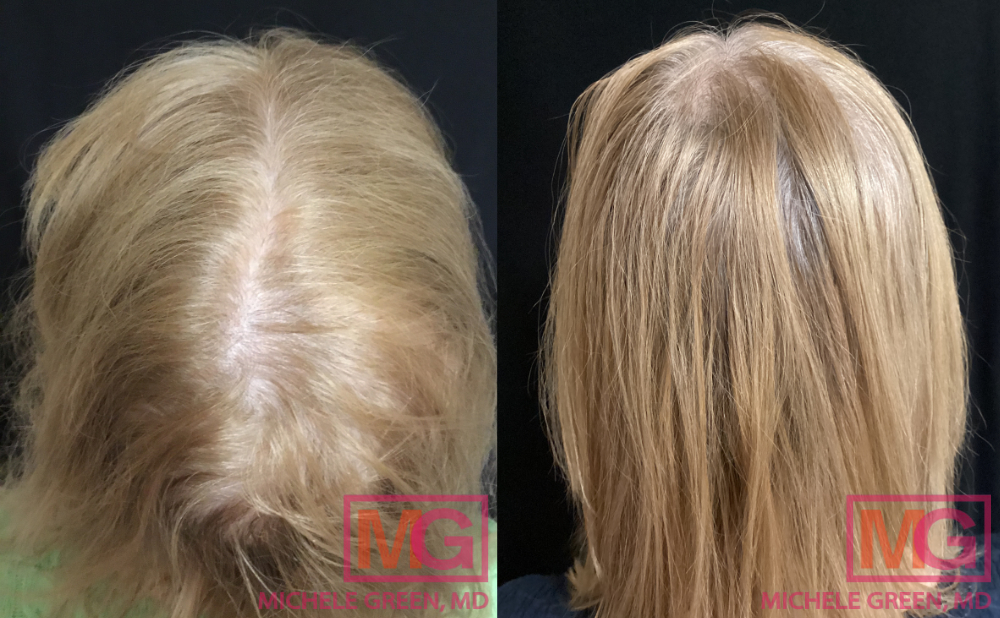
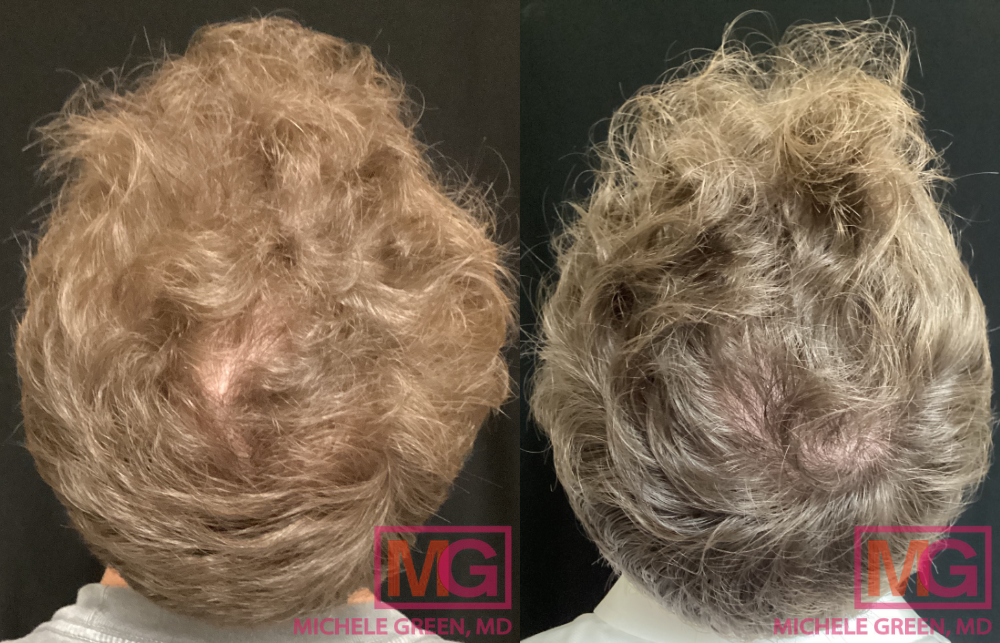
Patients who have taken Ozempic as a weight-loss drug may experience hair loss approximately 3 to 6 months after starting treatment due to the stress on the body and metabolic changes that occur when calorie intake is reduced. Patients who eat less may experience nutrient deficiencies, which increases the risk of hair loss. This type of hair loss is known as telogen effluvium, which occurs as a result of trauma or stress to the body. While losing hair due to this condition is often very distressing, telogen effluvium is typically only a temporary condition, and the hair grows back once the stress has been resolved. To help the healthy hair grow back quickly and with high density, Dr. Green recommends that patients try PRP injections for hair loss.

GLP-1 hair loss treatment
When it comes to treating hair loss, there are many treatment options available to promote hair regrowth at Dr. Michele Green’s New York City dermatology office. There are many over-the-counter treatment options, such as biotin supplements, but the most powerful and effective treatments are those prescribed or performed by an expert, board-certified dermatologist, such as Dr. Green. Dr. Green will often begin by turning to the following treatment options:
PRP for Hair Loss – Platelet-rich plasma (PRP) injections are a highly effective treatment option for strengthening the hair follicles and activating growth factors to increase hair growth. The solution is derived from the patient’s blood and centrifuged to isolate the platelet-rich plasma, which, when injected into the scalp, nourishes and regenerates the hair follicles. The effects of the treatment include a longer growth phase and thicker hair follicles, resulting in denser, healthier hair. PRP can be effectively used for patients struggling with telogen effluvium to boost hair regeneration.
Minoxidil for Hair Loss – Minoxidil is an oral medication originally used to treat hypertension and high blood pressure, and has been shown to treat hair disorders such as alopecia when taken at low doses. The medication works by increasing blood flow to the hair follicles, prolonging the growth phase, and improving hair density. Minoxidil can also be applied topically, but it may negatively affect hair texture. When determining the dosage of oral minoxidil, it is always best to consult an expert dermatologist, such as Dr. Green.
Finasteride is another topical medication that helps boost hair follicle growth for new hair growth. The medication works by inhibiting the production of the hormone that is partially responsible for hair loss, dihydrotestosterone (DHT). By reducing DHT activity, hair loss can be slowed by up to 70%.
Best supplement for GLP-1 hair loss
Biotin, also known as vitamin B7, is a nutrient that supports hair growth, along with other nutrients such as iron, zinc, and protein. Low levels of biotin may contribute to poor hair health, leading patients to notice increased hair breakage or shedding. During a stressful event, the body naturally diverts nutrients such as biotin, iron, vitamin D, and zinc away from hair follicles, which can exacerbate hair shedding. Patients can help improve hair health and decrease nutritional deficiencies by increasing their protein intake and consuming foods rich in biotin, such as egg yolks, avocados, salmon, nuts, seeds, and legumes.
Viviscal and Nutrafol are two common supplements that are available and, in studies, have been demonstrated to reduce hair loss. Viviscal is formulated with essential vitamins and micronutrients, such as Biotin, vitamin C, and vitamin B, while Nutrafol contains a vitamin blend for boosting hair growth. The full effectiveness of supplements is still being studied, and the FDA does not regulate supplements as closely as medications. As such, supplements will not provide patients with as dramatic results as a prescription medication or in-office healthcare procedure, such as PRP injections or light therapy.
Which GLP-1 is best for hair loss?
Research has been largely inconclusive about the correlation between GLP-1 receptor agonist treatment and hair thinning, hair loss, or hair shedding. Some studies have demonstrated that GLP-1 medication containing tirzepatide may help boost hair regrowth and strengthen hair follicles, while others have established that rapid weight loss associated with semaglutide and tirzepatide can increase hair loss. Another study suggests that improving blood sugar regulation can enhance blood flow to the scalp and strengthen hair follicles, while others have demonstrated that high doses of GLP-1 medications can lead to significant hair loss. What is certain is that more research is necessary to answer the question.
How to get started with treatment for hair loss on GLP-1 today
GLP-1 medications are soaring in popularity for their ability to regulate blood sugar levels, curb hunger, and keep patients fuller for longer. Originally distributed for the treatment of type 2 diabetes, GLP-1 medications have since been used on a widespread level for addressing obesity and helping patients achieve their weight loss goals. However, some patients may experience hair loss, thinning, or shedding while taking these medications, and if so, Dr. Green can help. Hair loss can be caused by many factors and must be treated accordingly. Dr. Green helps patients identify the underlying cause of their hair loss or thinning and develops individualized treatment plans to boost hair follicle growth and density, promoting full, healthy hair and holistic wellness.
Dr. Michele Green is an internationally renowned board-certified dermatologist with over 2.5 decades of experience providing her patients with the best non-invasive treatment options. Dr. Green takes a holistic approach and embraces a less-is-more philosophy, creating customized skincare routines and treatment plans tailored to her patients’ unique concerns and aesthetic goals. She is consistently recognized by Castle Connolly, New York Magazine, and Super Doctors as one of New York’s best dermatologists for her dedication to her patients and expertise. Please call us at 212-535-3088 to schedule a consultation with Dr. Michele Green and get started addressing your hair loss.


