


Sculptra for Weight Loss: Restoring Facial Volume After Rapid Weight Loss
Rapid weight loss, whether from diet and exercise, bariatric surgery, or GLP-1 medications like Wegovy and Ozempic, can do wonders for the body. Still, it often comes at a surprising cost to the face. As the pounds come off, so can the facial fat pads that give the cheeks, temples, and midface their youthful fullness, leaving behind hollow cheeks, sagging skin, and deepened nasolabial folds. This phenomenon, increasingly recognized as the “Ozempic face” or facial hollowing after weight loss, has driven many patients to seek non-surgical solutions to restore facial balance and a more youthful facial structure. One of the most powerful and lasting options is Sculptra, a biostimulator injectable treatment that gradually rebuilds lost volume from the inside out while stimulating new collagen production. For patients navigating the changes that come with significant weight loss, Sculptra offers a natural-looking path to facial rejuvenation without surgery or downtime.
Sculptra is manufactured by Galderma and made from poly-L-lactic acid (PLLA), a biocompatible, biodegradable synthetic substance used safely in medicine for decades. Unlike hyaluronic acid fillers such as Juvederm and Restylane, which provide immediate volume by filling areas with a gel-like substance, Sculptra acts as a collagen stimulator, prompting the skin’s fibroblasts to produce new collagen over time. This gradual process improves skin thickness, quality, laxity, and elasticity, addressing the root causes of facial sagging rather than simply masking them. When combined with other dermal fillers or skin-tightening treatments, as needed, Sculptra can deliver comprehensive facial rejuvenation, helping patients look refreshed and restored after weight loss. To learn more about Sculptra for weight loss and whether you are a good candidate, consult with Dr. Michele Green, a board-certified dermatologist in NYC.
What happens to your face after weight loss?
When you lose a significant amount of weight, the face often loses volume along with the rest of the body. The facial fat pads, clusters of fat beneath the skin that give the cheeks, temples, and midface their plump, youthful contours, deflate as overall body fat decreases. This can make the cheeks appear sunken or hollowed, the temples gaunt, the jawline less defined, and the nasolabial folds deeper. The skin, stretched over years of holding more volume, may also lack the elasticity to snap back, leading to facial sagging and skin laxity. The result can be a face that looks older, more tired, or drawn, a stark contrast to the energized, healthy appearance most people hope to achieve through weight loss. Rapid weight loss, in particular, accelerates and intensifies these effects, leaving the face little time to gradually adapt to the new contours.
What is “Ozempic face,” and can Sculptra fix it?
“Ozempic face” is an informal term for the facial changes that occur with rapid weight loss from GLP-1 medications such as Ozempic and Wegovy. These medications work by suppressing appetite and slowing gastric emptying, helping patients lose weight quickly. While the body benefits, the face can suffer, developing hollowed cheeks, sunken temples, increased skin laxity, and a loss of overall facial balance that can make patients look prematurely aged. The term “Ozempic face” has become widely recognized as more patients seek cosmetic dermatology solutions to address these changes. Sculptra is widely regarded as one of the best treatments for “Ozempic face” because it replenishes lost facial volume, stimulates long-term collagen production, and restores the natural facial structure that can disappear with rapid fat loss. Dr. Michele Green, a board-certified dermatologist in NYC, has helped many patients reverse the effects of “Ozempic face” using Sculptra and a personalized combination approach to facial rejuvenation.
How does Sculptra work to restore facial volume after weight loss?
Sculptra is a poly-L-lactic acid (PLLA)-based injectable biostimulator that works differently from traditional hyaluronic acid fillers like Restylane or Juvederm. Rather than filling in lost volume directly, Sculptra stimulates the skin’s own collagen production over time, gradually rebuilding the structural framework beneath the skin. When injected into the deep dermis or subcutaneous tissue, PLLA microparticles act as a scaffold, triggering the body’s natural fibroblast activity and collagen production. Over the weeks and months following treatment, new collagen forms around the PLLA particles, restoring lost volume, improving skin thickness and quality, and enhancing elasticity. The result is a natural, progressive improvement in facial structure and skin radiance, not an overnight transformation but a subtle, sustained rejuvenation that looks remarkably natural. Because it works with the body’s biology rather than simply adding a filler substance, Sculptra is particularly well-suited for diffuse facial volume loss that often accompanies significant or rapid weight loss.
What areas does Sculptra treat after weight loss?
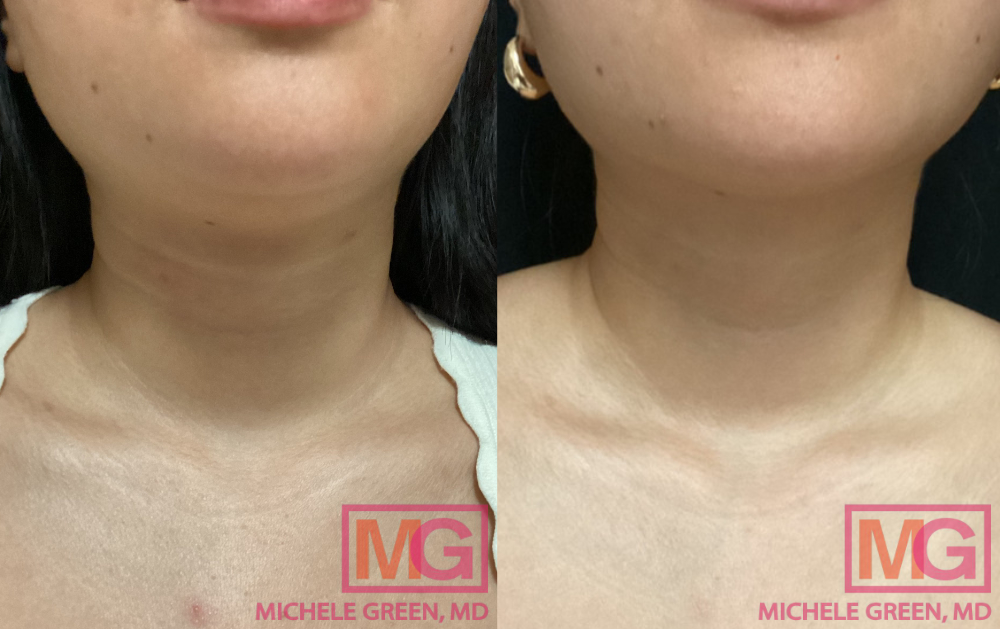
Sculptra is a highly versatile injectable treatment that addresses facial volume loss in multiple areas commonly affected by weight loss. The cheeks and midface are perhaps the most commonly treated zones. As facial fat pads in this area deflate, hollow cheeks and a gaunt midface appearance can develop. Sculptra gradually restores volume here, lifting and plumping the overlying skin for a youthful, refreshed result. The temples are another area where facial fat loss is particularly visible; temple hollowing can make the face look skeletal and older. Sculptra injected into the temples replenishes lost volume and softens this drawn appearance. Along the jawline, Sculptra can also help restore definition and counteract facial sagging.
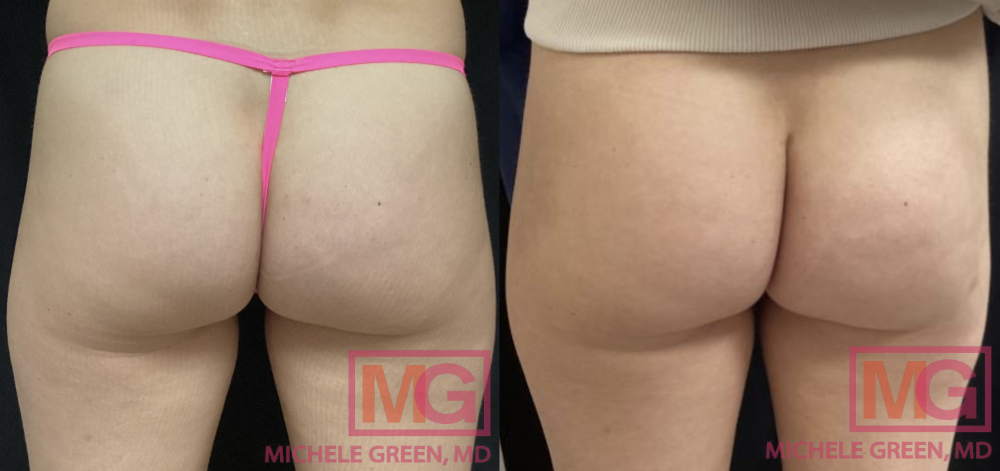
Additionally, Sculptra is increasingly used off-face, on the neck, décolletage, arms, buttocks, abdomen, and thighs, to treat skin laxity after significant body weight loss, addressing sagging skin across broader areas of the body. For body skin laxity after weight loss, Sculptra is an increasingly popular option for body skin tightening. Dr. Michele Green will assess each patient’s areas of concern and design a treatment plan to achieve natural facial balance and overall rejuvenation.
Sculptra vs. other fillers for weight loss
When addressing facial volume loss after weight loss, patients have several dermal filler options, and the right choice depends on the nature and extent of their concerns. Hyaluronic acid fillers, such as Restylane, Restylane Lyft, and Juvederm (also spelled Juvéderm), provide immediate volume restoration by filling specific areas with a hyaluronic acid gel. These are excellent for targeted concerns such as lip volume, under-eye hollows, or acute, localized volume loss, and the results are visible right away. However, they require repeat treatments every six to eighteen months and do not stimulate lasting collagen production. Sculptra, by contrast, works as a collagen stimulator; it produces results more gradually but builds a lasting structural foundation of new collagen beneath the skin, with effects that can last two or more years. For patients with widespread facial fat loss after significant weight loss, Sculptra is often the preferred option because it addresses the global volume deficit rather than just patching specific areas. In many cases, Dr. Michele Green recommends a combination approach, using Sculptra as the foundation for broad-volume restoration and collagen stimulation, while incorporating hyaluronic acid fillers such as Restylane Lyft or Juvederm for precise, targeted contouring in areas such as the nasolabial folds or the jawline. This sculpt & lift approach allows for comprehensive, natural-looking facial rejuvenation tailored to each patient’s unique needs.
Does Sculptra help with loose skin after weight loss?
One of the most common concerns for patients who have lost significant weight is loose, sagging skin, and Sculptra addresses this in a meaningful way. Because Sculptra stimulates collagen production deep within the skin, it helps improve skin thickness, laxity, and elasticity over time, resulting in firmer, more lifted-looking skin. As new collagen forms in response to the PLLA microparticles, the skin becomes thicker, tighter, and more resilient, qualities that are often diminished after rapid or significant weight loss. While Sculptra is not a substitute for surgical skin removal in cases of very severe or redundant loose skin, it can provide significant improvement for patients with mild to moderate skin laxity and is an excellent non-surgical option for those not ready or willing to undergo a facelift or body contouring surgery. Sculptra can also be used synergistically with energy-based skin-tightening treatments, such as Thermage or laser resurfacing, to maximize tightening and achieve the most comprehensive non-surgical result possible. Dr. Michele Green will evaluate the degree of skin laxity and sagging and recommend the most appropriate combination of treatments to meet the patient’s goals.
Sculptra for body skin laxity after weight loss
Beyond the face, Sculptra is increasingly used to address body laxity after weight loss, making it a versatile option for patients who have lost significant weight and are struggling with loose skin on the arms, abdomen, thighs, buttocks, or décolletage. When injected into these areas, Sculptra stimulates collagen and elastin production in the skin’s deeper layers, gradually improving skin thickness, firmness, and texture. The treatment is particularly popular for improving the appearance of sagging skin in areas that are difficult to address without surgery, offering a non-invasive alternative for patients who wish to tighten and improve skin quality across larger body areas. Multiple sessions are typically required for optimal body results, with improvements seen gradually over several months as new collagen forms. While severe body skin laxity after major weight loss may still ultimately require surgical intervention, Sculptra for body skin tightening can be an excellent option for patients with mild to moderate concerns or as a complement to other body-contouring treatments. Dr. Michele Green will work with each patient to determine whether Sculptra for body skin laxity is an appropriate part of their post-weight-loss rejuvenation plan.
Can you get Sculptra while still losing weight?
This is one of the most common questions from patients currently on GLP-1 medications or in the midst of a weight-loss journey. While Sculptra is technically safe to receive at any time, most dermatologists, including Dr. Michele Green, recommend waiting until your weight has stabilized before starting treatment. The reason is straightforward: Sculptra stimulates new collagen production in the areas where it is injected, a process that takes time and multiple sessions. If you continue to lose significant amounts of weight and facial fat after your Sculptra treatments, the results may shift or appear inconsistent, as ongoing facial fat loss can counteract or alter the improvements achieved. For the best, most predictable outcomes, patients are generally advised to be at or near their goal weight and to have been stable for at least three to six months before beginning their Sculptra series. That said, Dr. Green will evaluate each patient individually and may offer specific guidance based on the rate of ongoing weight loss and the patient’s individual circumstances. If you’re not yet at your goal weight but are experiencing distressing facial hollowing, she may recommend interim solutions as you continue your weight-loss journey.
Is Sculptra safe with GLP-1 medications?
Yes, Sculptra is generally considered safe for patients taking GLP-1 medications such as Ozempic or Wegovy. There are no known direct contraindications between poly-L-lactic acid injectables and GLP-1 medications. However, because GLP-1 medications can cause ongoing, sometimes rapid, weight loss, they may continue to deplete facial fat pads and worsen facial hollowing even during a course of Sculptra treatment. This is why timing and treatment planning are so important. Dr. Michele Green will consider whether a patient is still actively losing weight on GLP-1 medications when designing a Sculptra treatment plan, adjusting the timing and number of sessions as needed for the best outcome. Patients should always inform their dermatologist about all medications they are taking, including GLP-1 medications, at the time of their consultation. Dr. Green will work closely with each patient to ensure their injectable treatment plan is safe, effective, and timed appropriately to complement their ongoing weight management.
What is the Sculptra procedure like?
The Sculptra procedure begins with a thorough consultation with Dr. Michele Green, during which she assesses the patient’s facial structure, areas of facial fat loss, degree of skin laxity, and overall aesthetic goals. Before treatment, a topical numbing cream is applied to the treatment areas to maximize comfort. Sculptra is reconstituted with sterile water and lidocaine, a local anesthetic, before injection, making the treatment well-tolerated by most patients. Using a fine needle or cannula, Dr. Green injects Sculptra into the deep dermis or subcutaneous fat in areas such as the cheeks, temples, midface, and jawline, carefully contouring and distributing the product to achieve natural-looking, balanced results. The treatment session typically lasts 15-30 minutes, depending on the number of areas treated. Patients are instructed to massage the treated areas for 5 minutes, 5 times a day, for 5 days after treatment, known as the “5-5-5 rule,” to ensure even distribution of the product and minimize the risk of nodule formation. Most patients require a series of 2 to 4 sessions, spaced 4 to 6 weeks apart, for optimal facial volume restoration after weight loss.
What are the side effects and downtime with Sculptra?
Sculptra is a well-tolerated injectable treatment with minimal downtime. The most common side effects are temporary and include redness, swelling, bruising, tenderness, or mild discomfort at the injection sites, which typically resolve within a few days. Some patients develop small lumps or nodules under the skin, which is why proper injection technique and adherence to the post-treatment massage protocol are so important. When Sculptra is administered by an experienced, board-certified dermatologist like Dr. Michele Green, the risk of complications is low. Most patients return to normal activities immediately after treatment, though they are advised to avoid strenuous exercise, sun exposure, and extreme heat for 24 to 48 hours. Unlike surgical facelifts, Sculptra has no significant downtime, making it an attractive option for busy patients seeking meaningful results without weeks of recovery. Results appear gradually over two to three months as new collagen forms, rather than immediately after injection, so patients should plan their treatment schedule with this timeline in mind.
How long do Sculptra results last after weight loss?
One of the most compelling advantages of Sculptra over traditional hyaluronic acid fillers is its longer-lasting results. Because Sculptra stimulates the body’s own collagen production rather than simply injecting a temporary filler, the results can last 2 years or more, sometimes even longer with maintenance treatments. For patients who have experienced facial volume loss after weight loss, this durability is particularly valuable, as it means fewer repeat treatments and more sustained improvement in facial structure, skin quality, and elasticity. That said, the longevity of results can be influenced by factors such as the degree of initial volume loss, the number of treatment sessions completed, the patient’s age, skin condition, and ongoing lifestyle factors. Patients who maintain a stable weight after completing their Sculptra series tend to achieve the most consistent, long-lasting results. Periodic maintenance sessions every 1 to 2 years can help sustain improvements and continue supporting collagen production over time. Dr. Green will work with each patient to design a maintenance plan that keeps their results looking natural and refreshed.
How many Sculptra sessions are needed for facial volume loss after weight loss?
The number of Sculptra sessions needed to address facial volume loss after weight loss depends on the extent of volume loss, the areas being treated, the patient’s age and skin condition, and individual response to treatment. Most patients require 2 to 4 treatment sessions, spaced 4 to 6 weeks apart, for optimal results. Patients with more significant facial hollowing, such as those who have lost a large amount of weight rapidly or have been on GLP-1 medications for an extended period, may require additional sessions to achieve the desired outcome. Each session involves injecting one to two vials of Sculptra per area, and Dr. Green will assess progress after each treatment to determine whether additional sessions are needed. The collagen-stimulation effect can deliver transformative, natural-looking improvements that build gradually over several months, so patients should not expect dramatic, immediate changes after their first session. By completing a full treatment series, however, the cumulative collagen-stimulation effect can deliver transformative, natural-looking improvements in facial volume, skin thickness, and facial structure. Dr. Michele Green will provide a personalized session recommendation during the initial consultation.
Sculptra for weight loss before and after
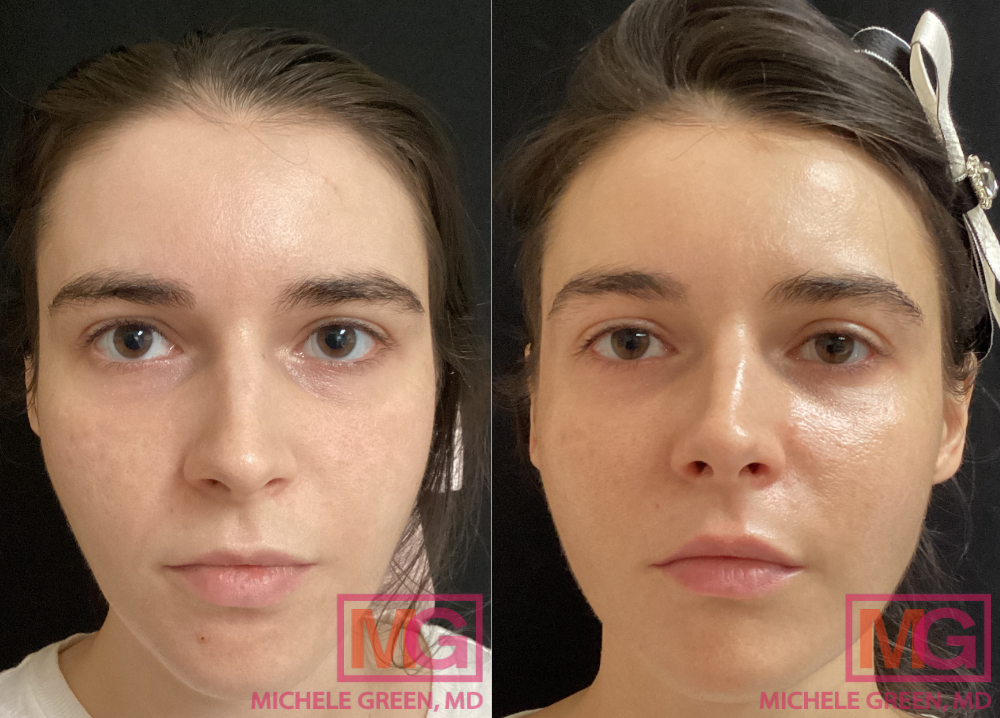
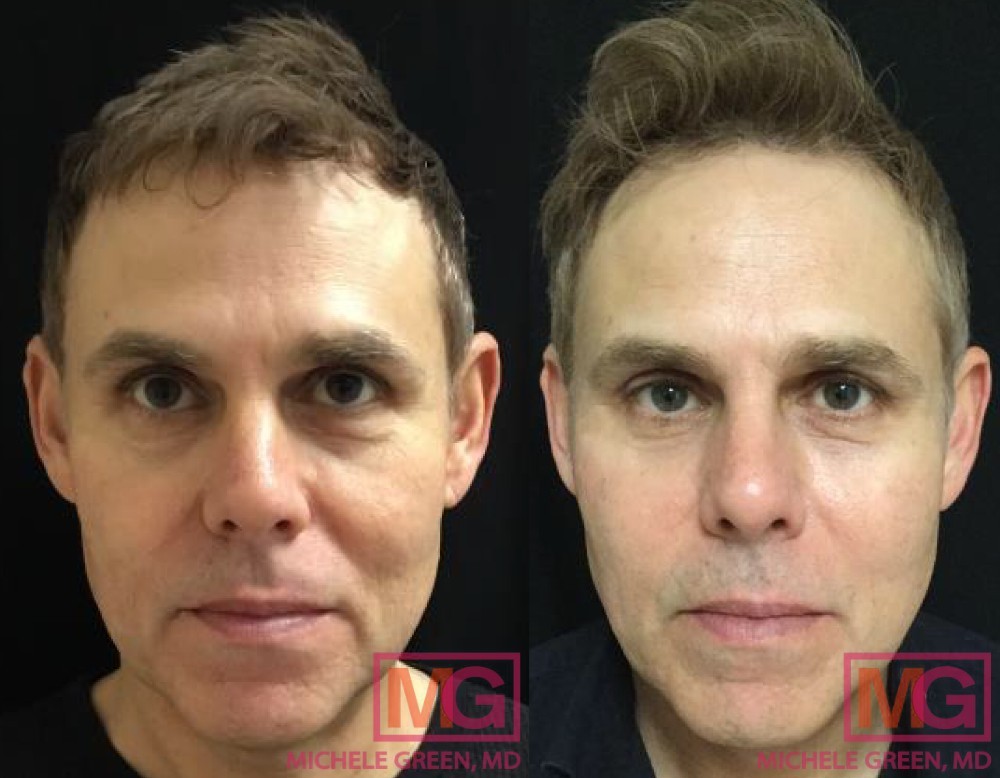
Before-and-after photos of Sculptra for weight-loss patients reveal the remarkable transformation it can achieve over time. Patients who begin treatment with hollowed cheeks, gaunt temples, deepened nasolabial folds, and overall facial fat loss gradually develop a fuller, more youthful facial structure as new collagen forms in the treated areas. Improvements are subtle month over month, but the cumulative result, typically seen around three to six months after the final treatment session, is a noticeably refreshed, lifted, and naturally volumized appearance. Skin radiance and skin hydration often improve as well, as increased skin thickness and new collagen formation enhance overall skin quality. At Dr. Michele Green’s private dermatology practice in New York City, before-and-after photos of Sculptra patients are available for review during the consultation, giving prospective patients a clear sense of what to expect from the treatment. Results are always individualized, but the consistent theme in patient before-and-afters is a return to a more youthful, balanced facial appearance that looks natural rather than “done.”
Sculptra for sagging face after weight loss cost
The cost of Sculptra for facial sagging and volume loss after weight loss varies by the number of vials per session, the number of sessions required, the areas treated, and the provider’s geographic location and expertise. Because patients with significant facial fat loss after weight loss often require more vials and sessions to achieve optimal results, the total investment can be higher than for those treating minor age-related volume loss. In general, each vial of Sculptra is priced individually, and multiple vials are typically used per session. Board-certified dermatologists like Dr. Michele Green in New York City invest in advanced injection training and techniques to ensure the safest, most effective results, a level of expertise reflected in the quality of outcomes. Patients should be cautious of unusually low-cost Sculptra offers, as proper injection technique and experience are critical to avoiding complications such as nodule formation. During your consultation with Dr. Green at her Upper East Side practice, she will assess your areas of concern, develop a personalized treatment plan, and provide a detailed cost estimate so you know exactly what to expect.

Frequently Asked Questions (FAQs) about Sculptra for Weight Loss
How long after weight loss should you wait for Sculptra?
Most dermatologists recommend waiting until your weight has been stable for at least 3 to 6 months before starting Sculptra treatments. This ensures that ongoing facial fat loss does not interfere with or counteract the results of your Sculptra sessions. If you are on GLP-1 medications and still losing weight, Dr. Green may recommend waiting until your weight has plateaued before starting treatment. During a consultation, she will evaluate your individual situation and advise on the optimal timing to start your Sculptra series.
Does Sculptra cause weight loss?
No, Sculptra does not cause weight loss. It is a cosmetic injectable treatment that stimulates collagen production in the skin to restore lost volume and improve skin quality. It does not affect metabolism, appetite, or body fat. Sculptra is designed to address the aesthetic consequences of weight loss, not to promote further weight reduction. If you are interested in weight management solutions, those conversations are best had with your primary care physician or an endocrinologist.
Can Sculptra be combined with other treatments for weight loss-related facial changes?
Absolutely. In fact, a combination approach is often the most effective strategy for patients experiencing multiple facial changes after weight loss. Dr. Michele Green frequently combines Sculptra with hyaluronic acid fillers, such as Restylane Lyft or Juvederm, to achieve precise, targeted volume in areas like the nasolabial folds or jawline, while also leveraging Sculptra’s broader collagen-stimulation effects. Energy-based skin-tightening treatments, such as Thermage, can also complement Sculptra by tightening loose skin through radiofrequency-induced collagen remodeling. Botox or other neuromodulators may be used to address dynamic wrinkles and achieve a more refreshed overall appearance. During your consultation, Dr. Green will assess all your concerns and create a personalized, multimodal plan to achieve the most comprehensive and natural-looking results.
Ready to restore lost facial volume after weight loss? Start with a Sculptra consultation with Dr. Green today
Sculptra is one of the most powerful and long-lasting non-surgical solutions for patients experiencing facial volume loss, hollow cheeks, sagging skin, and “Ozempic face” after rapid weight loss or GLP-1 medication use. As a poly-L-lactic acid biostimulator, Sculptra does more than temporarily fill facial hollows; it stimulates the skin’s own collagen production to rebuild facial structure from within, improving skin thickness, elasticity, quality, and radiance, with results that can last two years or more. Whether the goal is to restore the midface, temples, and jawline, address skin laxity, or improve overall facial balance after significant weight loss, Sculptra offers a gradual, natural-looking path to facial rejuvenation, making it one of the most sought-after injectable treatments in cosmetic dermatology. Dr. Michele Green is here to help you navigate your options and design a personalized treatment plan that meets your individual needs and goals.
Dr. Michele Green is an internationally recognized, board-certified cosmetic dermatologist with over 25 years of experience delivering non-invasive treatments to some of the world’s most discerning patients, including Sculptra, Restylane, Juvederm, Botox, and advanced skin-tightening procedures. She is consistently recognized by Castle Connolly, Super Doctors, The New York Times, and New York Magazine as one of the top dermatologists in New York City for her expertise, holistic approach to skin rejuvenation, and dedication to helping patients look and feel their best. Dr. Green’s private practice is on the Upper East Side of Manhattan, where she sees patients from across the country seeking the best in non-surgical facial rejuvenation. If you’re ready to address facial volume loss, skin laxity, or “Ozempic face” after weight loss, schedule your consultation by contacting us online or calling the NYC office at 212-535-3088.


