


Sun Spots vs. Age Spots: What’s the Difference and How to Treat Them
If you’ve noticed flat, brown spots on your skin over the years, you’ve likely wondered whether they’re sun spots or age spots. These terms are often used interchangeably, and both refer to the same type of skin discoloration that develops from cumulative sun exposure and the natural aging process. Also known as solar lentigines, these dark spots are a form of hyperpigmentation caused by an overproduction of melanin, the pigment that gives skin its color. They commonly appear on areas of the body that receive the most ultraviolet (UV) light, including the face, hands, shoulders, and forearms, and tend to become more noticeable with age. While sun spots and age spots are generally harmless, their appearance can cause cosmetic concern for many people.
In some cases, they can be difficult to distinguish from more serious skin changes that warrant medical attention. Understanding what these spots are, what causes them, and what can be done about them is an important first step. For expert guidance on this topic, patients trust board-certified dermatologist Dr. Michele Green in New York City.
The most effective approach for treating sun spots and age spots depends on your skin tone, the severity of the spots, and your goals. Popular in-office options include laser treatments such as Fraxel and AlexTrivantage, Clear + Brilliant, chemical peels, and microneedling with depigmentation serums. For patients with darker skin tones, microneedling and chemical peels are often preferred to minimize the risk of post-inflammatory hyperpigmentation. Topical products containing vitamin C, retinoids, hydroquinone, or azelaic acid can help maintain results between treatments. Daily broad-spectrum sunscreen with SPF 50 or higher is essential to prevent new spots from forming. Dr. Michele Green creates fully personalized treatment plans to help every patient achieve a clearer, more even complexion.
Dr. Michele Green is an internationally recognized, board-certified dermatologist in New York City with more than 25 years of experience treating skin discoloration, sun damage, and hyperpigmentation. Her private practice on Manhattan’s Upper East Side attracts patients from around the world seeking expert cosmetic and medical dermatology care. Castle Connolly, New York Magazine, Super Doctors, and The New York Times consistently recognize Dr. Green as one of New York’s top dermatologists. She takes a holistic, less-is-more approach to skincare, combining advanced in-office procedures with medical-grade skincare products to create individualized treatment plans tailored to each patient’s unique needs.
Are age spots and sun spots the same thing?
Yes — age spots and sun spots are the same thing. Both terms describe flat, brown, tan, or black spots that develop on sun-exposed skin due to excess melanin production. They are also called liver spots (a now-outdated term with no connection to the liver), solar lentigines, or simply dark spots. The many names for the same condition are largely cultural: “age spots” became popular because these spots tend to become more prominent with age. In contrast, “sun spots” or “sunspots” emphasize the primary cause as cumulative sun exposure. While “freckle” is sometimes used interchangeably with these spots, the two are distinct. True freckles, known medically as ephelides, are genetic in origin, commonly appear during childhood, and tend to lighten or disappear during winter months. Solar lentigines, by contrast, usually develop in adulthood and remain permanently without fading on their own. No matter what you call them, age spots, sun spots, and liver spots all share the same underlying mechanism: excess melanin production triggered by UV radiation from the sun or tanning beds.
What causes age spots vs sun spots?
Age spots and sun spots are the same condition, caused by cumulative exposure to ultraviolet (UV) light, whether from the sun or artificial sources like tanning beds. When UV radiation penetrates the skin, it stimulates melanocytes, the skin cells that produce melanin, to increase their output as a protective response. Over time, repeated UV exposure can cause melanin to cluster in certain areas of the skin, forming flat brown spots or dark patches on the skin’s surface. This process is accelerated by natural skin aging, which reduces the skin’s ability to repair UV-induced damage, and by genetics, which can determine a person’s susceptibility to developing solar lentigines. Sun damage is cumulative, meaning that even moderate sun exposure over many years adds up. People who have spent a lot of time outdoors without proper sun protection, those who have experienced sunburns, and those who have used tanning beds are at higher risk. The spots most often appear on areas that receive the most UV light, including the face, hands, forearms, shoulders, and décolletage. It’s worth noting that while UV radiation is the primary driver, skin discoloration can also be influenced by hormonal changes and certain medications — though these are more typically associated with other forms of hyperpigmentation like melasma.
Who is most likely to develop sun spots or age spots?
Anyone can develop sun spots or age spots, but they are most common in adults over 50 and in individuals with fair skin, which offers less natural protection against UV radiation. People who have had significant cumulative sun exposure, a history of sunburns, or who have spent time in tanning beds are also at higher risk. That said, sun spots can appear in younger individuals — sometimes in the 30s or even earlier — particularly in those who spend a great deal of time outdoors without sun protection. Genetics can also play a role in a person’s susceptibility to developing solar lentigines. If you’re in a higher-risk category, scheduling regular skin exams with a board-certified dermatologist like Dr. Green is a smart preventive measure.
How do you tell the difference between age spots and sun spots?
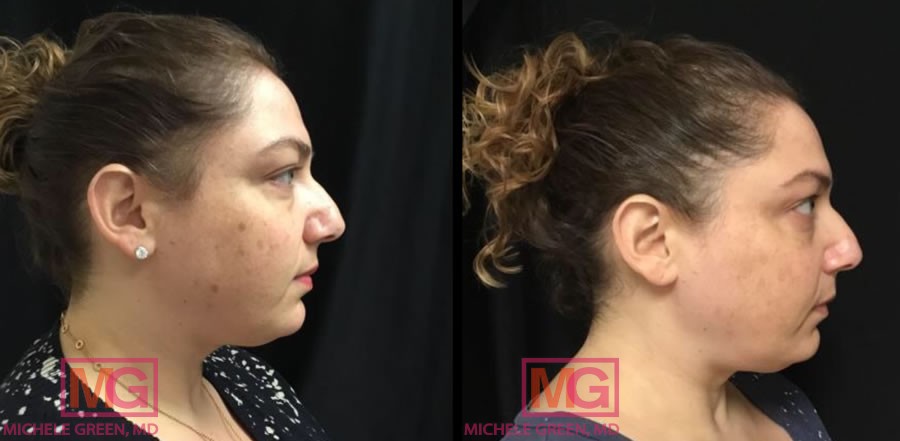
Since age spots and sun spots are clinically the same condition, there is no meaningful way to distinguish between them. The more important task is distinguishing solar lentigines from other types of skin discoloration or, more critically, from potentially cancerous lesions. Solar lentigines typically appear as flat, smooth, well-defined spots with uniform brown or tan coloring. They do not itch, bleed, or change rapidly in appearance. Things can get more complicated when dark spots look unusual or develop new characteristics. In those cases, it’s essential to have them evaluated by a board-certified dermatologist. Lesions with irregular borders, multiple colors, asymmetry, or those that are growing or changing in texture may require a skin exam and potentially a biopsy to rule out skin cancer, including melanoma. One condition that can masquerade as a sun spot is an actinic keratosis, a precancerous growth caused by long-term sun damage that, if left untreated, can develop into squamous cell carcinoma. Dr. Michele Green, a board-certified dermatologist in NYC, recommends that patients schedule a professional skin exam if they notice any new or changing spots on their skin to ensure an accurate diagnosis and appropriate care.
Can you get age spots without sun exposure?
Yes — although it is uncommon. Sun exposure is by far the leading cause of age spots (solar lentigines), and the vast majority of cases are directly linked to UV radiation. However, genetics can influence a person’s predisposition to hyperpigmentation so that some individuals may develop skin discoloration with relatively limited sun exposure compared to others. Additionally, other environmental factors and skin changes can contribute to uneven skin tone over time. That said, true solar lentigines, the classic age spots or sun spots, are caused by UV damage. If brown spots appear in areas that are not typically sun-exposed, it may be worth considering other causes of skin discoloration, such as post-inflammatory hyperpigmentation from acne or skin injury, or other forms of hyperpigmentation more strongly linked to hormonal changes or genetics. A professional evaluation with a board-certified dermatologist, such as Dr. Green, is valuable for accurately distinguishing among different types of dark spots and for recommending the most appropriate treatment for your specific skin concerns.
Can age spots and sun spots turn into skin cancer?
Age spots and sun spots are benign — they are not skin cancers and do not turn into skin cancers. However, the same prolonged sun exposure that causes solar lentigines also increases the overall risk of developing skin cancers, including melanoma, basal cell carcinoma, and squamous cell carcinoma. Therefore, people with significant sun damage and multiple age spots should be especially vigilant with regular skin exams. Additionally, some lesions that resemble sunspots can be more concerning, such as actinic keratoses (rough, scaly patches considered precancerous) or even early-stage melanomas. The warning signs to watch for include irregular borders, variations in color (including shades of red, white, or black within a single lesion), asymmetry, growth in size, or lesions that bleed or don’t heal. The ABCDE rule — Asymmetry, Border, Color, Diameter, Evolving — is a helpful guide. If you have any doubt about a spot on your skin, it is always better to seek the advice of a board-certified dermatologist. Dr. Michele Green in NYC offers thorough skin exams and, if needed, biopsies to promptly identify and address concerning skin changes.
Do age spots go away on their own, unlike sun spots?
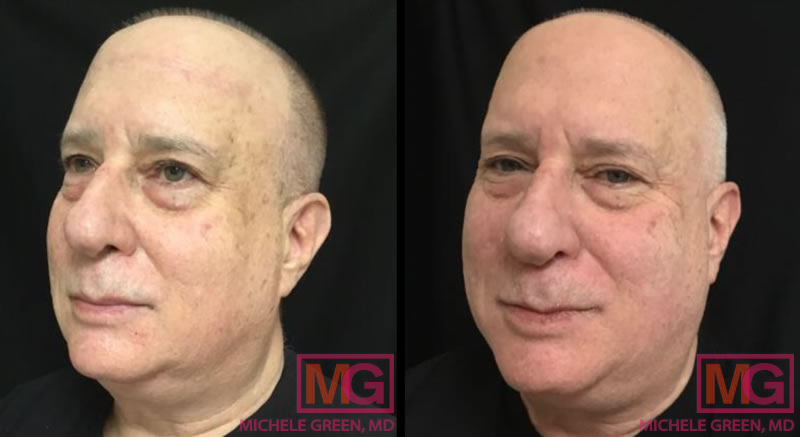
Both age spots and sun spots generally do not go away on their own. Unlike freckles, which can fade during winter months when UV exposure decreases, solar lentigines tend to persist. Once melanin accumulates in the skin and forms a dark spot, it tends to remain without treatment and can deepen further with continued sun exposure. Unlike other forms of hyperpigmentation, such as post-inflammatory hyperpigmentation, which may gradually fade on their own, solar lentigines do not resolve without intervention. Diligent sun protection can prevent age spots from darkening further, but it won’t eliminate those that are already present. Broad-spectrum sunscreen with at least SPF 30 (ideally SPF 50 or higher for those with significant sun damage), sun-protective clothing with a UPF rating, and avoiding tanning beds are essential habits. For patients who want to actively reduce the appearance of existing age spots or sun spots, professional treatments at Dr. Michele Green’s NYC office, a board-certified dermatologist, are the most effective option. Without intervention, most age spots will remain stable or gradually become more pronounced as the skin ages and sun damage accumulates.
Do age spots and sun spots respond to the same treatments?
Age spots and sun spots are the same condition and respond to the same treatments. The best approach depends on spot size and number, skin tone and type, and treatment goals. Topical options like vitamin C serums, retinoids, hydroquinone, and kojic acid gradually lighten spots by inhibiting melanin production and accelerating cell turnover. For faster, more dramatic results, in-office procedures are often preferred. IPL therapy targets melanin with broad-spectrum light, breaking down spots without damaging surrounding tissue. Laser treatments, including the Fraxel Dual and AlexTrivantage, are highly effective for solar lentigines and can produce significant improvement in just a few sessions. Clear + Brilliant, a gentle fractional laser, is ideal for mild pigmentation with minimal downtime. Chemical peels such as Mesopeels and the Cosmelan peel exfoliate the skin’s outer layers to reveal a brighter, more even complexion. Microneedling with depigmentation serums uses microchannels to enhance the penetration of brightening agents targeting excess melanin. Cryotherapy, though historically used, is no longer commonly recommended due to risks of scarring and hyperpigmentation. Dr. Michele Green, a board-certified NYC dermatologist, will recommend the most appropriate treatment or combination based on your unique skin profile and goals.
What is the best treatment for age spots vs sun spots?
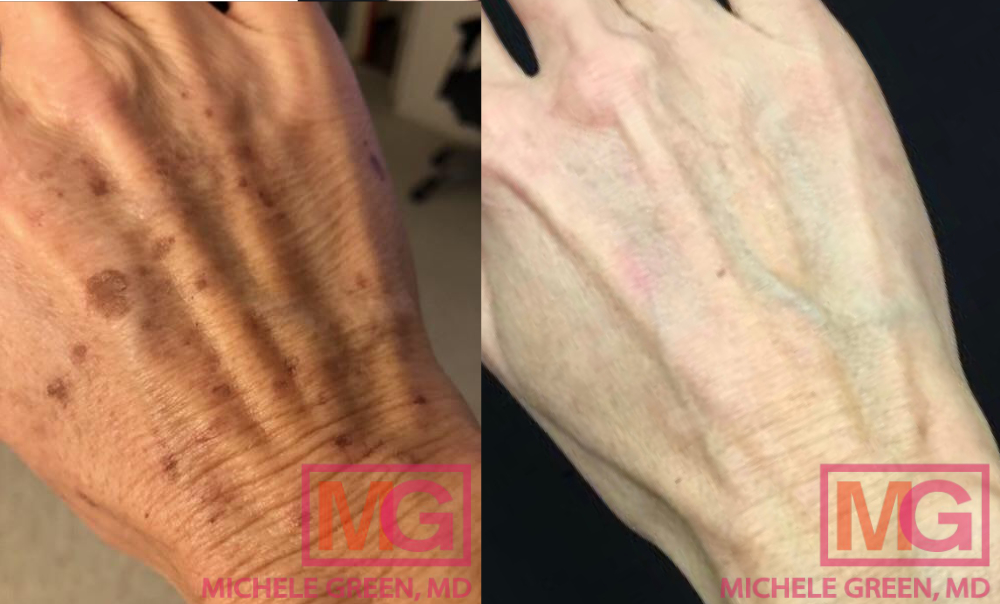
Age spots and sun spots are the same condition, so the best treatment depends on skin tone, spot location, and individual goals. No one treatment is best for eliminating age spots and sun spots, and patients often require a combination of treatments to achieve optimal results. For fair to medium skin tones, IPL and laser treatments like the Fraxel 1927nm and AlexTrivantage are highly effective, particularly for facial spots. For darker skin tones, these light-based therapies are not recommended, as they carry a higher risk of post-inflammatory hyperpigmentation. Microneedling combined with depigmentation serums is the preferred alternative, effectively targeting excess melanin without that risk. Dr. Michele Green, a board-certified NYC dermatologist, will recommend the safest and most effective treatment plan for your unique skin.
Fraxel laser
The Fraxel Dual is an FDA-approved, non-invasive fractional laser offered by Dr. Michele Green in NYC that uses two wavelengths to address a wide range of skin concerns with minimal downtime: the 1550 nm wavelength penetrates deeper to stimulate collagen production and treat texture issues like acne scars, fine lines, and enlarged pores, while the 1927 nm wavelength works more superficially to target chromophores (colored elements within skin cells) to eliminate sun spots, age spots, and other pigmentation. Both sun spots (caused by UV exposure) and age spots (the result of cumulative sun damage compounded by aging) are treated the same way via this 1927 nm setting, with patients typically needing about three sessions spaced one month apart and seeing results within four to six weeks, followed by 3 to 7 days of peeling as the dead pigmented cells shed from the surface.
Alex Trivantage laser
The Alex TriVantage laser is a non-invasive Q-switched laser that uses three wavelengths (532nm, 755nm, and 1064nm) to treat benign pigmented lesions and unwanted tattoos by converting light energy into heat as it is absorbed by melanin-rich cells, shattering the excess pigmentation and leaving behind new, healthy skin with minimal downtime. For sun spots and age spots specifically, the laser breaks apart melanin in deeper layers of the skin, effectively erasing the spots from the surface. It is best suited for discrete, isolated spots, while for pigmentation covering larger areas of the face or body, Dr. Green may combine it with the Fraxel Dual laser for the most effective treatment. Results are typically visible one to two weeks after the session and sometimes achievable in just one treatment.
Clear + Brilliant laser
The Clear + Brilliant is a non-invasive fractional laser (often called the “mini-Fraxel”) that uses fractionated energy to create thousands of tiny microscopic treatment zones in the skin, stimulating collagen production, boosting skin cell turnover, and improving the absorption of topical ingredients like vitamin C, with virtually no downtime, making it safe for all skin types and tones including darker complexions that cannot tolerate more aggressive lasers. The Perméa handpiece operating at a 1927 nm wavelength is particularly effective for sun spots and age spots, targeting the tissue where melanin is located to accelerate exfoliation of dead, pigmented skin cells and replace them with new, even-toned ones, with most patients needing five to six sessions spaced two to four weeks apart for optimal results, followed by maintenance treatments every three to six months.
Chemical peels
Chemical peels are one of the most popular cosmetic treatments in the U.S., offered by Dr. Green in a range of types and strengths (light, medium, and deep) using acids such as glycolic, lactic, salicylic, and trichloroacetic acid, as well as specialized formulations like Cosmelan, Mesopeels, and Dermamelan Peels, all of which work by applying a chemical solution to exfoliate dead, pigmented skin cells, accelerate skin cell renewal, and stimulate collagen production to improve fine lines, acne scars, hyperpigmentation, and uneven tone and texture across all skin types, with downtime ranging from none for light peels to several weeks for deep peels. Addressing sun spots and age spots directly, the chemical solution removes dead, pigmented cells caused by UV-induced overproduction of melanin, revealing healthy new skin underneath, with Dr. Green frequently using TCA peels and Mesopeels for general hyperpigmentation and the Cosmelan peel for more stubborn cases, making chemical peels a particularly valuable option for patients with darker skin tones who may not be candidates for laser treatments.
Microneedling
Microneedling (also known as collagen induction therapy) is a minimally invasive skin rejuvenation treatment offered by Dr. Green in NYC that uses a device with tiny sterile needles to create thousands of micro-punctures in the skin, triggering the body’s natural wound-healing process to stimulate collagen and elastin production, improving fine lines, acne scars, enlarged pores, uneven skin tone, and skin laxity, with options to enhance results further using platelet-rich plasma, radiofrequency energy (Vivace), or specialized topical serums, all with minimal downtime and suitability for all skin types and tones. Regarding sun spots and age spots, microneedling promotes more even skin renewal and healthier pigment distribution over time, and can be paired with a topical depigmenting serum that penetrates more effectively through the microchannels created during treatment, with most patients requiring 3 to 6 sessions to achieve a more even, radiant complexion, along with diligent sun protection to prevent hyperpigmentation from recurring.
Are over-the-counter products effective for treating age spots and sun spots?
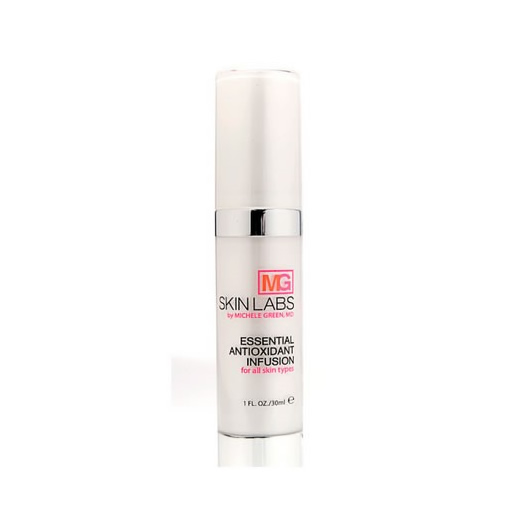
Over-the-counter (OTC) and professional-grade skincare products can be highly effective for reducing the appearance of sun spots and age spots, especially when formulated with the right active ingredients and used consistently alongside sun protection. Dr. Michele Green developed her own skincare line, MGSKINLABs, specifically designed to address skin discoloration and hyperpigmentation — and several of its products are particularly well-suited to targeting sun spots. The Essential Antioxidant Infusion is a retinol-based serum that accelerates skin cell turnover, helping shed discolored surface cells and reveal fresher, more even-toned skin. The Vita-C Serum is formulated with a high concentration of vitamin C, a powerful antioxidant that neutralizes free radical damage from UV radiation, inhibits melanin production, and visibly brightens dark spots over time. The Skin Brightening Cream combines kojic acid, glycolic acid, lactic acid, and fruit extracts to target pigmented areas from multiple angles — exfoliating dead skin cells, slowing melanin production, and promoting a more radiant, even complexion. And no skincare regimen for sun spots is complete without daily sun protection: the Hydrating SPF 50 from MGSKINLABs is a physical broad-spectrum sunscreen with zinc oxide that shields the skin from UV radiation while simultaneously hydrating with hyaluronic acid and softening with lactic acid, making it an essential daily step to prevent new dark spots from forming and existing ones from deepening.
Are age spots or sun spots more difficult to remove?
Since age spots and sun spots are the same condition, neither is more difficult to remove than the other. The complexity of removal depends on factors such as the depth and intensity of the pigmentation, the patient’s skin tone, and the consistency with which they protect their skin from the sun during and after treatment. Superficial solar lentigines respond well to treatments such as IPL, laser therapy, and chemical peels, often with just one to three sessions. Deeper or more stubborn spots may require a combination approach or additional sessions.
How Do I Get Started with Age Spot and Sun Spot Removal Today?
Sun spots and age spots are the same. Both are solar lentigines, a benign form of hyperpigmentation caused by overproduction of melanin resulting from cumulative UV radiation exposure from the sun or tanning beds. They appear as flat, brown spots or dark patches, most often on sun-exposed areas such as the face, hands, and forearms. They are more common in individuals with fair skin, a history of significant sun exposure or sunburn, and in adults over 50. While they do not fade on their own and are not typically mistaken for skin cancer when properly evaluated, they can occasionally resemble other, more serious skin changes, such as actinic keratoses or melanoma, making a professional skin exam important for any new or changing lesion. Treatments, including IPL (intense pulsed light), laser therapy, chemical peels, cryotherapy, and topical agents like vitamin C and hydroquinone, are effective for reducing and removing sun spots. The best plan is always one personalized to your skin type, tone, and goals. For the safest, most effective approach to treating sun spots and age spots, patients across New York City trust the expertise of board-certified dermatologist Dr. Michele Green.
Dr. Michele Green is an internationally recognized, board-certified cosmetic dermatologist in NYC with over 25 years of experience, providing the finest non-invasive treatments to some of the most discerning men and women. Castle Connolly, New York Magazine, Super Doctors, and The New York Times consistently name Dr. Green among NYC’s top dermatologists for her commitment to her patients and her expertise. She customizes every treatment plan to address each patient’s specific concerns and aesthetic goals, helping them look and feel like the best version of themselves. To begin treating your sun or age spots today, please contact us online or call Dr. Green’s NYC-based office at 212-535-3088.


