


Relfydess Wrinkle Treatment: RelabotulinumtoxinA
Relfydess is one of the most talked-about new names in aesthetic medicine, and it’s easy to see why. Developed by Galderma, the same company behind Dysport and Sculptra, Relfydess (relabotulinumtoxinA) is a ready-to-use liquid neuromodulator designed to soften frown lines between the brows and crow’s feet around the eyes. Like other forms of botulinum toxin type A, it temporarily relaxes the facial muscles that create dynamic wrinkles every time you frown, squint, or smile. What sets Relfydess apart is that it arrives in the vial as a liquid, so it never needs to be mixed with saline before treatment, and in clinical trials, some patients noticed smoother skin as early as the very first day. If you’re curious how this newer injectable compares to tried-and-true favorites, a consultation with board-certified dermatologist Dr. Michele Green in NYC is a great place to start.
Relfydess has already been approved in 33 markets and launched in more than 20 countries, including much of Europe, the United Kingdom, the Middle East, and Australia. In the United States, however, it is still waiting on FDA approval. In July 2026, Galderma received a Complete Response Letter from the FDA related to a manufacturing site inspection and analytical testing methods, not the safety or effectiveness of the product itself, which means American patients will need to wait a little longer to try it. In the meantime, proven anti-wrinkle injections like Botox and Dysport remain the gold standard for smoothing frown lines, forehead lines, and crow’s feet, and both are available today from board-certified dermatologist Dr. Michele Green at her private dermatology office on Manhattan’s Upper East Side.
What is Relfydess?
Relfydess is the brand name for relabotulinumtoxinA, a botulinum toxin type A neuromodulator developed and manufactured by Galderma. In countries where it’s approved, Relfydess is used to temporarily improve moderate to severe glabellar lines (the vertical “11s” between the eyebrows) and lateral canthal lines (crow’s feet), treated alone or at the same time. Like Botox, Dysport, and Xeomin, Relfydess blocks the release of acetylcholine, the chemical messenger that tells muscles to contract. Once the targeted facial muscles relax, the skin over them smooths out, and expression lines become much less noticeable. The biggest difference is the formulation: Galderma describes Relfydess as the first and only ready-to-use liquid neuromodulator created with its proprietary PEARL Technology, so there’s no powder to dissolve and no reconstitution step before injection. If you’re wondering whether a neuromodulator is the right anti-wrinkle treatment for your goals, board-certified dermatologist Dr. Green in NYC can evaluate your facial anatomy and walk you through every option.
What is PEARL Technology in Relfydess?
PEARL Technology is Galderma’s proprietary manufacturing process for relabotulinumtoxinA. According to Galderma, the process is designed to preserve molecule integrity from start to finish, producing a highly active, complex-free botulinum toxin from a proprietary strain that is formulated as a liquid from the very beginning rather than dried into a powder. That matters because most traditional neuromodulators, including Botox and Dysport, are supplied as a dried powder that the injector must reconstitute with sterile saline before treatment. Because the amount of saline can vary from one practice to another, reconstitution introduces some variability in concentration and dosing. A liquid with a fixed, consistent concentration removes that step entirely, and Galderma credits the PEARL process with helping Relfydess deliver both a quick onset and long-lasting results. Board-certified dermatologist Dr. Green in NYC is always happy to explain how these formulation differences may, or may not, make a meaningful difference for your individual results.
Relfydess for frown lines — how well does it work?
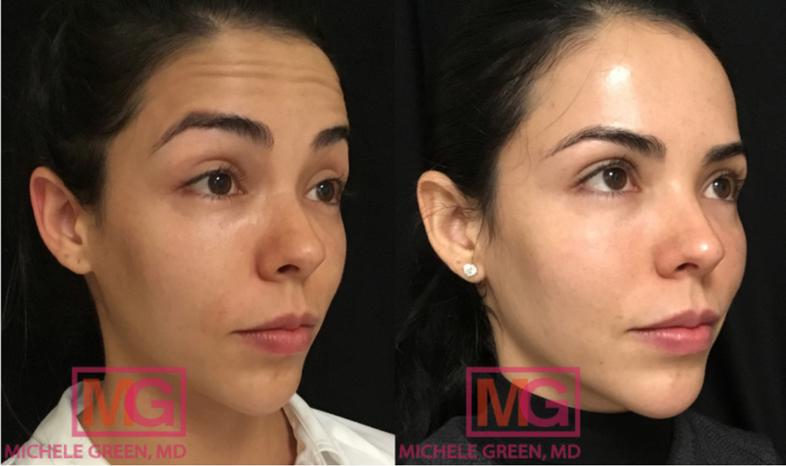
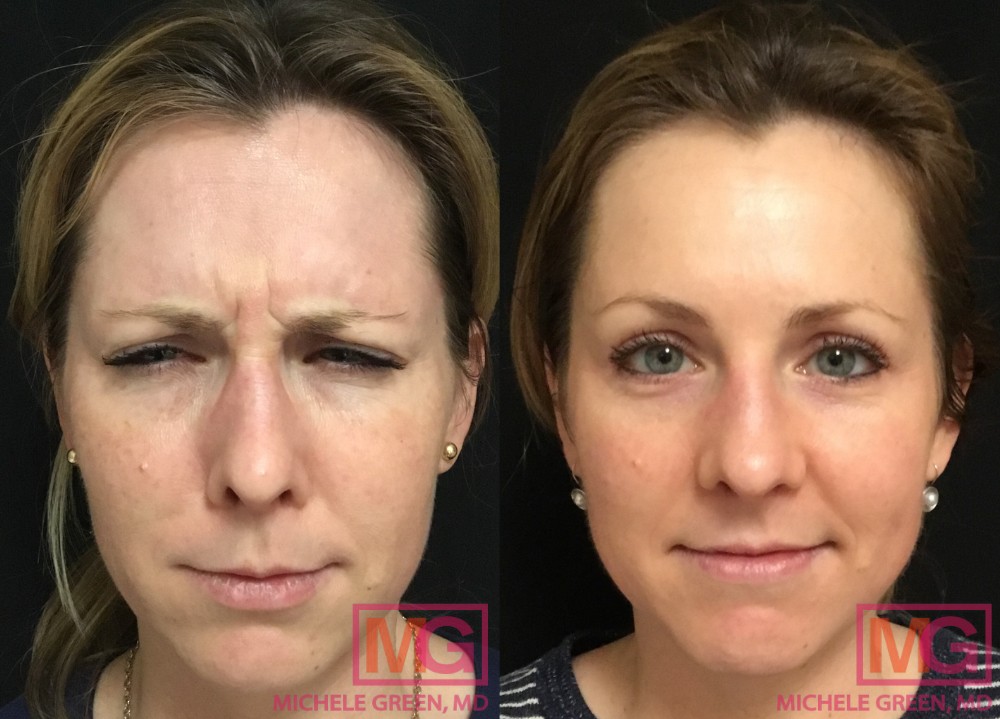
Frown lines, also called glabellar lines, form between the eyebrows when the corrugator and procerus muscles repeatedly pull the brows down and together. Relfydess was studied for this area in the READY-1 trial, a double-masked, randomized, placebo-controlled phase 3 study within the larger READY clinical trial program. The results were impressive. Across the READY-1 and READY-2 trials, 96.3% of patients treated with Relfydess had frown lines rated as none or mild one month after treatment, compared with just 4.5% of patients who received a placebo. Even better, 39% of patients reported improvement in their frown lines starting on day one. Frown lines are one of the most common concerns patients bring to board-certified dermatologist Dr. Green in NYC, and she currently treats them with great success using Botox and Dysport.
Relfydess for crow’s feet
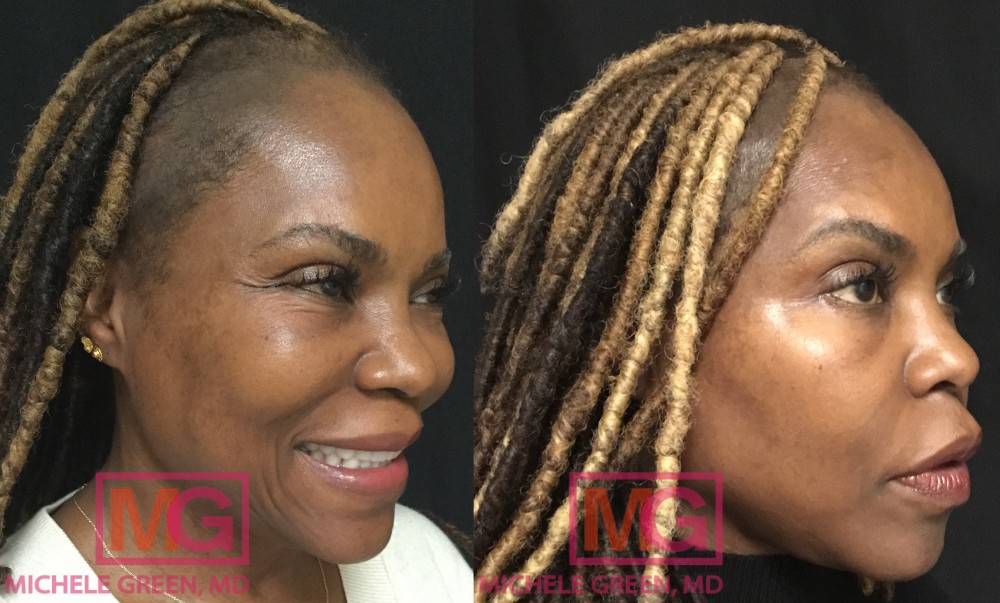
Crow’s feet, known medically as lateral canthal lines, are the fine lines that fan out from the outer corners of the eyes when you smile or squint. They’re caused by the orbicularis oculi, the circular muscle that surrounds the eye. In the READY-2 trial, which focused on crow’s feet, 87.2% of patients treated with Relfydess rated their lines as none or mild after one month, compared with 11.9% in the placebo group, and 34% noticed improvement as soon as day one. Relfydess was also the first neuromodulator in Europe to receive simultaneous approval for both frown lines and crow’s feet. If it’s approved in the United States, it would be the first to launch here with both indications at once. Because the skin around the eyes is thin and delicate, precise placement is key to avoiding a flat or unnatural smile, which is why patients trust board-certified dermatologist Dr. Green in NYC with this area.
Relfydess vs Botox — what’s the difference?
Relfydess and Botox belong to the same family of injectables. Both are forms of botulinum toxin type A, and both soften dynamic wrinkles by temporarily relaxing the muscles beneath the skin. Botox (onabotulinumtoxinA) has been used in aesthetic medicine for more than two decades. The FDA has approved it for frown lines, crow’s feet, forehead lines, and neck bands, giving it one of the most extensive safety records of any cosmetic treatment. Botox comes as a powder that must be reconstituted with saline and contains complexing proteins, while Relfydess is a complex-free liquid that is ready to inject straight from the vial. The two also differ in timing. Botox typically starts working within three to five days and lasts about three to four months, while Relfydess showed onset as early as day one in clinical trials, with many patients maintaining results for up to six months.
It’s also worth knowing where Relfydess fits within Galderma’s own lineup. Galderma makes Dysport (abobotulinumtoxinA), which is sold in Europe under the name Azzalure, and Alluzience, a ready-to-use liquid version of abobotulinumtoxinA available in Europe. Relfydess is a completely separate molecule, not simply a liquid form of Dysport. Head-to-head research comparing Relfydess directly with Botox is still limited, so for now, Botox and Dysport remain the proven, FDA-approved choices in the United States. At her Upper East Side office, board-certified dermatologist Dr. Green in NYC uses Botox and Dysport to deliver natural-looking, long-lasting results for patients who want to look refreshed today.
Is Relfydess FDA approved?
No, not yet. As of October 2026, Relfydess is not approved by the FDA and cannot be legally marketed in the United States. Galderma first submitted its Biologics License Application years ago, and in 2023 the FDA issued a Complete Response Letter citing chemistry, manufacturing, and controls issues. After adjusting its manufacturing process, Galderma resubmitted, and the FDA accepted the resubmission in February 2026. On July 1, 2026, however, Galderma announced a second Complete Response Letter, this time citing observations from a pre-license inspection of the manufacturing site and the need to optimize analytical methods. Importantly, neither letter raised concerns about Relfydess’s safety or effectiveness, and the product remains approved in dozens of other countries. Until the FDA grants approval, patients should be cautious of anyone offering Relfydess in the United States. Board-certified dermatologist Dr. Green in NYC uses only FDA-approved neuromodulators, so you can be confident that every treatment you receive at her office meets the highest safety standards.
Who is a good candidate for Relfydess?
A good candidate for Relfydess is a healthy adult with moderate to severe glabellar lines or crow’s feet who wants to soften those lines without surgery. In Europe, Relfydess is indicated for adults under 65. It may especially appeal to patients who want a fast-acting option before a big event or who want to space out their touch-up appointments. Relfydess is not appropriate for women who are pregnant or breastfeeding, people with neuromuscular conditions such as myasthenia gravis, anyone with an infection at the injection site, or patients who are allergic to any of its ingredients. Relfydess is also not currently approved for forehead lines, so patients hoping to smooth the forehead would still turn to options like Botox or Dysport. During your consultation, board-certified dermatologist Dr. Green in NYC will review your full medical history and examine your facial muscles to determine the best neuromodulator for you.
How long does it take for Relfydess to work?
One of the most exciting things about Relfydess is its fast onset of action. In the READY-1 and READY-2 trials, 39% of patients saw improvement in their frown lines, and 34% saw improvement in their crow’s feet starting on day one. For most patients, results continue to build over the following week or two, with the full effect typically settling in by about one month after treatment. For comparison, Botox usually takes three to five days to start working, and Dysport is often noticeable within two to three days, making it a popular fast-acting choice for patients who are short on time. If you have an upcoming event, board-certified dermatologist Dr. Green in NYC can help you plan your appointment so your results peak right when you need them.
How long does Relfydess last?
Relfydess was designed for long-lasting results. In the READY clinical trials, results lasted up to six months, and up to 75% of patients maintained their improvement in both frown lines and crow’s feet at the six-month mark. That’s longer than the three to four months most patients get from traditional neuromodulators like Botox. However, individual results always vary based on factors such as dose, muscle strength, metabolism, and activity level. The READY-4 trial also studied up to four repeat treatments over 52 weeks to evaluate long-term use. No matter which neuromodulator you choose, a good skincare routine helps keep skin looking smooth between appointments. The Essential Antioxidant Infusion from MGSKINLABs combines retinol with nourishing vitamins to improve fine lines and texture, while the Hydrating SPF 50 protects against the UV damage that breaks down collagen. Board-certified dermatologist Dr. Green in NYC will create a personalized maintenance plan to help you get the most out of every treatment.
Frequently Asked Questions (FAQs) about Relfydess
Is Relfydess the same as Botox?
No. While many people use “Botox” as a catch-all term for any wrinkle-relaxing injection, Botox is a specific brand of onabotulinumtoxinA made by Allergan Aesthetics, an AbbVie company. Relfydess is a different botulinum toxin type A, relabotulinumtoxinA, made by Galderma. Both work in the same basic way, but they differ in formulation, manufacturing, how quickly they start working, how long they last, and their regulatory status, since Botox is FDA-approved. Relfydess is not yet approved in the United States. Board-certified dermatologist Dr. Green in NYC can explain how each neuromodulator compares so you can decide with confidence.
Does Relfydess sting?
Most patients describe neuromodulator injections, including Relfydess, as a quick pinch rather than true pain. Treatment usually takes just 10 to 15 minutes. The skin is cleansed, and a topical numbing cream or ice can be applied for extra comfort before a series of tiny injections is placed with an ultra-fine needle into the targeted muscles. Some patients notice a brief stinging sensation with any neuromodulator, but it fades within seconds. Because Relfydess is still new, published data directly comparing its injection comfort with other products are limited. Mild redness, swelling, or small bruises at the injection sites can occur but usually resolve within a day or two. Patients should avoid rubbing the treated area, lying down for about four hours, and strenuous exercise for 24 hours. Board-certified dermatologist Dr. Green in NYC uses a gentle, precise technique to keep every injection as comfortable as possible.
How good is Relfydess?
Based on the clinical data, Relfydess looks very promising. The READY program included four phase 3 trials and more than 1,900 participants, and it showed high response rates, an onset as early as day one, and results lasting up to six months for both frown lines and crow’s feet. Relfydess also has a favorable safety profile in studies supporting its approvals abroad, with side effects similar to those of other neuromodulators. The most common include headache, temporary redness, swelling, or tenderness at the injection site, and less commonly, eyelid or brow drooping if the product spreads to nearby muscles. These effects are usually mild and temporary. Board-certified dermatologist Dr. Green in NYC will closely monitor how Relfydess performs as more real-world data becomes available.
Is Relfydess protein-free?
Not exactly. The active ingredient in every neuromodulator, including Relfydess, is the botulinum toxin itself, which is a protein. What Relfydess lacks are complexing proteins, the extra, non-toxin proteins that surround the core molecule in products like Botox and Dysport. That’s why Relfydess is described as “complex-free,” similar to Xeomin. Some experts believe that fewer foreign proteins may lower the already small risk of antibody formation, which in rare cases can make a neuromodulator less effective over time with repeated treatments. Board-certified dermatologist Dr. Green in NYC can discuss whether a complex-free neuromodulator makes sense for you, especially if you feel your results have been wearing off faster than expected.
Where is Relfydess made?
Relfydess is manufactured by Galderma at its center of excellence in Uppsala, Sweden, one of the company’s four manufacturing and research facilities worldwide. In 2024, the Swedish Medical Products Agency granted the Uppsala site license updates to manufacture and test relabotulinumtoxinA following a good manufacturing practices inspection. Galderma itself is headquartered in Zug, Switzerland, and is a global leader in dermatology. Patients interested in other Galderma injectables, such as Dysport and Sculptra, can explore them today with board-certified dermatologist Dr. Green in NYC.
How much is Relfydess?
Because Relfydess is not yet FDA-approved, it is not available in the United States, and there is no official U.S. price. You may also see it searched as “Relfydess Botox,” but remember that Relfydess is a separate product from Botox. Neuromodulator costs depend on factors like the number of areas treated, the amount of product needed to achieve your goals, and your injector’s experience. The best way to understand the cost of anti-wrinkle injections for your specific needs is to schedule a consultation with board-certified dermatologist Dr. Green in NYC.
Can Relfydess be combined with fillers?
Yes. Neuromodulators and fillers work beautifully together because they address different signs of aging. Neuromodulators like Relfydess, Botox, and Dysport relax the muscles that cause expression lines, while hyaluronic acid fillers such as Juvederm and Restylane restore lost volume and smooth static lines that are visible even at rest. Collagen-stimulating treatments like Sculptra, also made by Galderma, gradually rebuild the skin’s structure for longer-term rejuvenation. Combining these treatments, often in the same visit, creates a more balanced and natural-looking result than any one treatment alone. Board-certified dermatologist Dr. Green in NYC regularly pairs Botox or Dysport with fillers and Sculptra to design a complete, customized facial rejuvenation plan.
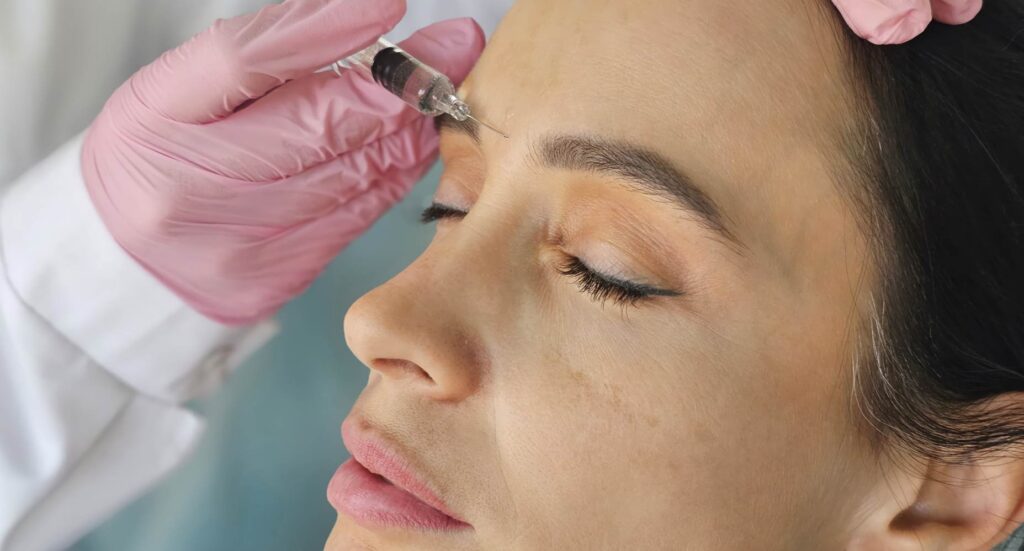
How to get started with anti-wrinkle injections and Relfydess in NYC today
Relfydess is an exciting new ready-to-use liquid neuromodulator from Galderma that has shown fast results, as early as day one for some patients, and long-lasting smoothing of frown lines and crow’s feet for up to six months. Made with PEARL Technology and free of complexing proteins, it skips the reconstitution step entirely and has already been approved in dozens of countries. While Relfydess is still awaiting FDA approval in the United States, patients don’t have to wait to enjoy smoother, refreshed skin, since proven neuromodulators like Botox and Dysport deliver beautiful, natural-looking results right now. If you’re ready to soften your frown lines, forehead lines, or crow’s feet, the best first step is a consultation with board-certified dermatologist Dr. Michele Green in NYC.
Dr. Michele Green is an internationally recognized, board-certified dermatologist with over 25 years of experience providing non-invasive cosmetic treatments to some of the world’s most selective clients, including Botox, Dysport, dermal fillers, and Sculptra. Castle Connolly, Super Doctors, The New York Times, and New York Magazine consistently recognize her as one of New York City’s top dermatologists for her dedication to patients and her expertise. Dr. Green uses a holistic, less-is-more approach to facial rejuvenation, tailoring each treatment plan to address individual concerns and aesthetic goals. During your consultation, she will work closely with you to create a personalized anti-wrinkle treatment plan that helps you look like the most refreshed version of yourself. If you’re ready to start your custom treatment plan today, schedule a consultation with Dr. Green by contacting us online or calling the NYC office at 212-535-3088.


