


Can Juvederm Migrate or Form Lumps?
Dermal fillers have transformed the landscape of cosmetic procedures, providing patients with facial rejuvenation and a youthful appearance without the need for plastic surgery. Among the most widely used filler treatments today is Juvederm, a family of FDA-approved hyaluronic acid-based fillers designed to restore volume, smooth fine lines, and enhance facial contours. Whether used for lip filler, under eyes, cheeks, or other areas of the face, Juvederm and other HA fillers have helped millions of patients achieve their desired results without going under the knife. Yet despite the popularity of these soft tissue fillers, questions about filler migration, lump formation, and the long-term behavior of injected material remain among the most frequently asked by patients considering treatment. Social media platforms have amplified concerns about migrated filler and lumps, driving many patients to seek clearer answers from qualified medical professionals before committing to a dermal filler treatment. Understanding the importance of working with an experienced, board-certified provider is essential for anyone exploring facial fillers or lip enhancement. Dr. Michele Green, a board-certified dermatologist in NYC, has been expertly administering filler injections for over 25 years and is uniquely positioned to guide patients toward the safest, most effective outcomes.
The world of dermal fillers can seem complex, especially when patients encounter alarming accounts of filler moving away from the injection site. While filler migration is a real phenomenon, it is far less common than social media might suggest — and it is almost always preventable with the right injector, proper injection techniques, and careful adherence to aftercare instructions. Juvederm, Restylane, Sculptra, and other popular facial fillers each have unique properties that influence how they behave in soft tissue over time. A skilled injector with deep knowledge of facial anatomy, the appropriate type of filler for each treatment area, and the proper volume to use can dramatically reduce the risk of migration, asymmetry, and lump formation. Patients who experience filler migration or lump formation have options: hyaluronidase can efficiently dissolve HA fillers like Juvederm and Restylane, allowing the area to be reassessed and retreated if desired. By choosing an experienced provider like Dr. Michele Green, who combines an artistic eye with extensive clinical knowledge, patients can achieve consistently beautiful, natural-looking results without the concern of filler migration.
Can Dermal Fillers Migrate?
While the question is most often asked about Juvederm, filler migration is a potential concern with all types of dermal fillers, not just the Juvederm family. Restylane, another popular hyaluronic acid filler, carries a similar risk profile. Sculptra, which is not an HA filler but rather a collagen stimulator, behaves differently in the tissue and has its own distinct considerations. Soft tissue fillers made from other materials also carry some degree of migration risk depending on injection depth, volume, and location. The risk of migration with any type of filler is influenced by multiple factors: the viscosity and cross-linking of the filler itself, the injection site and depth of placement, the injector’s skill and training, and whether the patient adheres to post-treatment care guidelines. In general, HA fillers placed superficially in high-movement areas, such as the lips, carry a higher risk of migration than thicker fillers placed deep in more stable facial structures. A board-certified dermatologist like Dr. Green will always match the appropriate type of filler to the treatment area and patient goals, minimizing the risk of filler moves occurring after treatment.
Why Do Dermal Fillers Migrate?
Understanding why dermal fillers migrate in the first place can help patients make more informed decisions before undergoing filler treatments. There are several primary reasons why filler migration occurs:
Overfilling: One of the most common causes of filler migration is the use of too much filler in a given area. When too much filler is injected into a region — particularly the lips — the tissue becomes overwhelmed, and the pressure causes the material to spread beyond the intended injection site. Overfilling is especially problematic along the upper lip and at the lip line, where excess product can migrate above the lip border, creating the characteristic unnatural appearance often seen on social media.
Incorrect Injection Techniques: The depth and injection method matter enormously. Filler placed too superficially may shift more easily because it lacks the tissue support of a deeper placement. Conversely, a product placed in the wrong tissue plane may not integrate properly with surrounding structures, increasing its susceptibility to movement. An inexperienced injector may not have the technical proficiency or knowledge of facial anatomy to avoid these errors.
High-Mobility Areas: The lips are the area most commonly associated with lip filler migration precisely because they are in near-constant motion — speaking, eating, and expressing emotion all create movement that can encourage filler to shift over time.
Inadequate Post-Treatment Care: Patients who fail to follow aftercare instructions — for example, by applying excessive pressure to the treated area, undergoing certain skincare procedures such as microneedling too soon after injection, or exposing the area to extreme heat — may inadvertently encourage filler migration.
Choosing an Unqualified Provider: Perhaps the most significant preventable factor is choosing an unqualified injector. Not every provider at every med spa has the training required to safely and accurately administer facial fillers. Seeking treatment from a board-certified dermatologist or plastic surgeon — rather than a less experienced provider — is the single most important step a patient can take to avoid complications, including migration, asymmetry, and lumps.
Does Juvederm Migrate?
Juvederm is a family of hyaluronic acid-based fillers — a category known as HA fillers — that are among the most widely used dermal fillers in the world. Like all hyaluronic acid fillers, Juvederm is a gel-like substance that is injected into soft tissue to add volume, smooth lines, or enhance contours. One of the most common questions patients ask is: Does Juvederm migrate? The short answer is yes, filler migration can occur with Juvederm — but it is relatively uncommon when the treatment is performed correctly by an experienced injector with a thorough understanding of facial anatomy.
Filler migration refers to the movement of injected filler material away from the original injection site to an unintended area. With Juvederm specifically, migration is most often seen in areas where the tissue is particularly mobile or thin, such as the lips and the region just beneath the lip line. When migration does occur, it can result in a puffy, distorted, or unnatural appearance that does not reflect the patient’s desired results. However, it is important to emphasize that filler migration with Juvederm is largely preventable. Choosing a board-certified dermatologist like Dr. Green, who practices precise injection techniques and customizes every treatment plan to each patient’s facial anatomy, dramatically reduces the risk of Juvederm migration after injection. Patients who follow their provider’s aftercare instructions carefully and avoid excessive pressure or massage at the injection site in the days following treatment also significantly lower their risk.
Does Juvederm Migrate More Than Restylane?
Both Juvederm and Restylane are hyaluronic acid-based fillers, but they differ in formulation, which affects how they behave in soft tissue. Juvederm is made using HYLACROSS technology, which produces a smooth, monophasic gel. Restylane uses NASHA technology, resulting in a more particulate, biphasic gel. These differences affect each product’s texture, viscosity, and integration with surrounding tissue. In general, Juvederm’s smoother, more fluid consistency makes it easier to spread, which can be an advantage when seeking soft, natural results — but may also make it slightly more prone to migration in high-mobility areas like the lips. Restylane’s firmer, more cohesive structure may give it a mild advantage in staying localized at the injection site. However, the differences between the two products in terms of migration risk are relatively minor compared to the impact of other factors — particularly the injector’s skill, the volume used, and the injection technique. Both Juvederm and Restylane are FDA-approved, safe, and highly effective when administered by a skilled injector. Dr. Green has extensive experience with both products and will recommend the most appropriate filler for each patient based on their treatment goals, anatomy, and individual preferences.
How Long Does Filler Migration Last?
How long filler migration lasts depends on several factors, including the type of filler involved, the severity of the migration, and whether any corrective treatment is pursued. For HA fillers like Juvederm and Restylane, migrated filler will eventually dissolve on its own as the body’s natural enzymes break down the hyaluronic acid. Depending on the product formulation and the amount of filler that has migrated, this natural dissolution can take anywhere from several months to over a year. Patients who find migrated filler cosmetically bothersome do not have to wait for it to dissolve on its own — hyaluronidase, the enzyme used to dissolve HA fillers, can be injected directly into the area of migrated filler to rapidly break it down and restore a more natural contour. For non-HA fillers, treatment of migration is more complex and may require consultation with a plastic surgeon or other specialist. The most effective approach to filler migration, however, is prevention: choosing a qualified, experienced injector; carefully following aftercare instructions; selecting the appropriate type of filler for the treatment area; and avoiding excessive volume are all critical to reducing the risk of migration in the first place. Dr. Green’s approach to every dermal filler treatment begins with a thorough consultation and a conservative treatment plan designed to minimize the risk of complications and maximize the longevity of beautiful, natural results.
Why Does Juvederm Migrate?
The reasons dermal fillers migrate are largely consistent across filler types, though the specific risk factors vary by product formulation and treatment area. HA fillers like Juvederm and Restylane migrate most commonly when they are placed in mobile soft tissue — particularly around the mouth — with excessive volume. The hygroscopic nature of hyaluronic acid means that HA fillers naturally attract water molecules after injection, which can slightly expand the filler volume at the injection site and contribute to an uneven distribution of the product. Non-HA fillers like Sculptra migrate for different reasons; because Sculptra stimulates collagen production rather than directly adding volume, improper injection can lead to nodule formation rather than classic migration patterns. Regardless of the type of filler used, the most reliable way to prevent migration is to work with a skilled injector who understands both the product’s biology and the anatomical nuances of the treatment area. Dr. Green takes a highly individualized approach to every filler treatment plan, tailoring injection techniques and product selection to each patient’s unique facial anatomy and aesthetic goals.
Does Juvederm Migrate Over Time?
Even when a Juvederm injection is performed perfectly, and the patient follows all aftercare instructions, there is a small but real possibility that the filler may migrate gradually over time. This is particularly relevant for patients who receive repeated filler treatments over months and years. With each subsequent treatment at the same injection site, small amounts of residual filler may accumulate and gradually spread beyond the original treatment zone — a phenomenon sometimes called filler buildup. This incremental migration is most commonly observed in the lips and the perioral area. Social media, particularly TikTok, has highlighted cases of long-term lip filler migration in which patients who received repeated lip filler treatments over many years developed significantly altered lip shape, with filler extending well above the lip line onto the upper lip. This underscores the importance of working with a board-certified dermatologist who will monitor the cumulative effects of repeated filler treatments and adjust the treatment plan accordingly. Dr. Green carefully evaluates every patient’s prior filler history before each treatment session and takes a conservative approach to volume to ensure that results remain natural and proportionate over time.
Can Juvederm Move Once Injected?
Related to the question above, many patients ask specifically: Can Juvederm move once injected? Yes, but the degree to which it can move — and the circumstances under which this happens — depend significantly on several variables. In the days immediately following filler injections, the product has not yet fully settled, making it somewhat susceptible to displacement from external forces such as pressing, vigorous exercise, or heat exposure. Once integrated, Juvederm is far more stable, though it is not entirely immune to gradual migration over a long period — particularly in high-movement areas. Factors that can encourage movement even after initial integration include repeated aggressive massage, proximity to muscle activity, the volume injected, and the viscosity of the specific Juvederm product used. Patients who receive Juvederm at the hands of an experienced injector, use the correct volume for their anatomy, and follow careful aftercare instructions are far less likely to experience meaningful post-treatment movement. Dr. Green educates every patient about what to expect in the hours, days, and weeks following their dermal filler treatment, including which activities and skincare procedures — such as microneedling or certain facial treatments — to avoid during the healing period.
Can Juvederm Form Lumps?
Yes, Juvederm can form lumps after injection, and this is one of the side effects that patients most frequently inquire about. Lump formation with Juvederm is generally caused by one of several factors: uneven distribution of the product during injection, superficial placement of the filler, delayed swelling or bruising in the days following treatment, or the formation of a granuloma — a small inflammatory nodule that occasionally develops as a tissue reaction to the filler material. Small, temporary lumps in the days immediately following filler injections are common and usually resolve on their own as the product settles and initial swelling subsides. Firmer lumps that persist beyond two to four weeks, however, may indicate that the filler was placed incorrectly or in too great a volume at a single injection site. Lumps from HA fillers like Juvederm can typically be addressed through careful massage by the injector, or by dissolving the product with hyaluronidase if the lumps are persistent or bothersome. Choosing an experienced injector — ideally a board-certified dermatologist or plastic surgeon — and selecting a provider who takes a conservative approach to filler volume significantly reduces the risk of lump formation. Dr. Green’s technique emphasizes precise, layered placement of dermal fillers and uses only the volume necessary to achieve the patient’s desired results, minimizing the risk of visible lumps, asymmetry, or other complications.
Does Juvederm Migrate or Dissolve?
The answer is both, but under different circumstances. Under normal conditions, Juvederm will slowly dissolve over a period of six months to two years, depending on the specific product formulation and the treatment area. This natural dissolution means that most side effects of Juvederm are inherently temporary. However, before dissolving completely, filler can also migrate — particularly in high-movement areas or when placed in excessive volume. The good news for patients who experience unwanted migration or other complications from HA fillers is that hyaluronidase, an enzyme that specifically breaks down hyaluronic acid, can be used to rapidly dissolve migrated filler. When administered by a skilled medical professional, hyaluronidase can safely and effectively reverse the effects of Juvederm and other hyaluronic acid-based fillers, restoring the patient’s natural contours and allowing for a fresh start. Dr. Green has extensive experience with hyaluronidase treatment for correcting migrated filler, overfilling, and other complications from prior dermal filler treatment.
Does Juvederm Move Around?
Patients often wonder whether Juvederm physically moves around within the face after injection. The answer is nuanced. Immediately after filler injections, the product is still somewhat malleable before fully integrating with the surrounding soft tissue, which is why most injectors advise patients to avoid touching, pressing, or massaging the treated area for 24 to 48 hours post-treatment. During this early period, the filler can, in theory, be displaced by external pressure. Once the hyaluronic acid fully integrates into the tissue — typically within one to two weeks — it becomes more stable and less likely to shift with normal facial movement. Juvederm Voluma, being a thicker formulation designed for deep placement, tends to remain particularly stable. Thinner Juvederm formulations used in the lips or under the eyes may have slightly more variability, especially in the early post-treatment period. Dr. Green’s careful injection techniques and comprehensive aftercare instructions help ensure that Juvederm stays where it belongs, delivering the precise enhancement her patients are seeking.
How Long Does Juvederm Ultra Take to Settle?
Juvederm Ultra is one of the most commonly used lip filler formulations and is designed specifically for the lips and perioral area. After lip filler injections with Juvederm Ultra, patients often notice some initial swelling, asymmetry, and firmness that can be concerning if they are not prepared for it. This is a normal part of the post-treatment process. Most patients find that Juvederm Ultra begins to settle and soften within the first one to two weeks following injection. Full settling — during which the filler has completely integrated with the surrounding tissue and swelling has fully resolved — typically takes two to four weeks. During this settling period, the lip line may appear slightly irregular or uneven as the tissue adjusts, but this usually resolves on its own. Patients should avoid drawing conclusions about their final results during the first week, as swelling is most pronounced then. If significant concerns remain after four weeks — such as pronounced asymmetry, lumps, or lip filler migration above the lip line — patients should return to their injector for an evaluation. Dr. Green makes herself available to her patients throughout the post-treatment period and welcomes any questions or concerns that arise as the filler settles.
Does Voluma Migrate?
Juvederm Voluma is a specific formulation within the Juvederm family designed for deep injection into the cheeks and midface to restore volume and lift. Voluma has a thicker, more robust consistency than other Juvederm products, providing the structural support needed to volumize deeper facial tissues. Because of its thicker gel formulation and injection into deeper tissue layers, Voluma is generally considered to have a lower risk of migration than thinner HA fillers used in more superficial areas. Its cross-linked hyaluronic acid structure helps it remain stable at the injection site for longer periods. That said, migration is still possible with Voluma — particularly when too much filler is used, when injection techniques are improper, or when the product is placed in an incorrect tissue plane. An experienced injector, such as Dr. Green, will assess each patient’s facial anatomy and determine the optimal volume, depth, and placement of Voluma injections to achieve natural-looking results with minimal risk of migration.
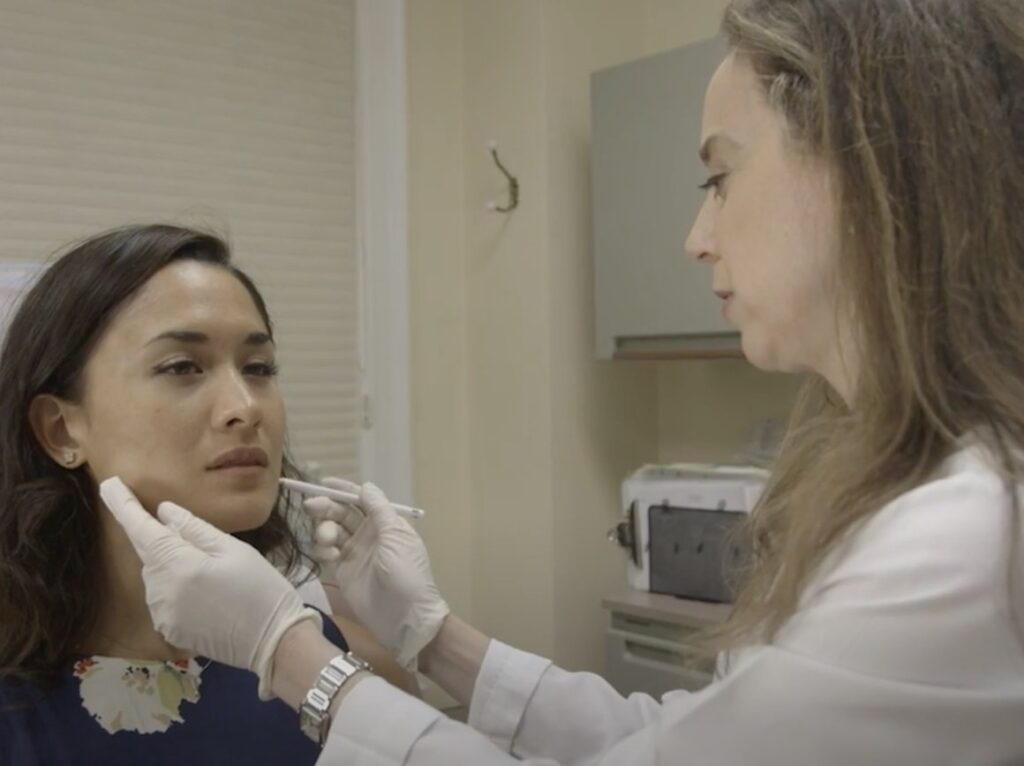
How to Avoid Filler Migration Today
Juvederm and other hyaluronic acid-based fillers are among the safest and most versatile cosmetic procedures available today, offering everything from subtle lip enhancement to dramatic volumizing of the cheeks, with natural-looking results that can last a year or more. However, the success of dermal filler treatments depends heavily on the injector’s skill and expertise. Filler migration, lump formation, and other complications associated with dermal fillers are real concerns — but they are also largely preventable when patients choose the right provider and follow expert guidance. As a board-certified dermatologist in NYC, Dr. Michele Green has extensive experience selecting the appropriate filler type and volume to address each patient’s unique facial anatomy and volume-loss concerns. By using precise injection techniques tailored to the patient’s individual needs, Dr. Green ensures the filler is well-suited and less likely to migrate or form lumps. Whether you are new to dermal fillers or have had prior filler treatments elsewhere, Dr. Green’s expertise ensures you’ll achieve safe, beautiful, and long-lasting results.
Dr. Michele Green is an internationally renowned board-certified dermatologist with over two and a half decades of experience providing patients with the finest non-invasive cosmetic procedures, including Juvederm, Restylane, Sculptra, Botox, and microneedling. Castle Connolly, New York Magazine, Super Doctors, and The New York Times consistently recognize Dr. Green as one of NYC’s top dermatologists for her commitment to her patients and expertise in facial anatomy and injectable treatments. Dr. Green adopts a holistic approach and embraces a less-is-more philosophy when it comes to filler injections, tailoring every treatment plan to the individual patient’s unique anatomy, aesthetic goals, and healthcare needs. Her dedication to patient education, safety, and exceptional outcomes has earned her the trust of patients from around the world who seek her out for both primary dermal filler treatments and correction of complications from prior procedures. To learn more about Juvederm, filler migration, or any other cosmetic procedures, or to begin your journey toward natural-looking facial enhancement, please contact us online or call Dr. Green’s NYC office at 212-535-3088.


