


Aquagold vs. Microneedling
When it comes to achieving smoother, more radiant skin without surgery, two popular options are Aquagold Fine Touch and microneedling. Both treatments use advanced techniques to stimulate the skin’s natural renewal process, improve texture, and restore a healthy glow. While they share some similarities, each offers unique benefits that make them especially suitable for different skin concerns and goals. Patients often wonder which option is best for them, and understanding how these treatments differ is the first step in making an informed choice. Under the care of board-certified dermatologist Dr. Michele Green on the Upper East Side of NYC, patients can explore various treatments and receive personalized guidance to determine which one best fits their individual needs.
Aquagold Fine Touch is an innovative system with 24-karat gold-plated microchannels that deliver a customized blend of Botox, dermal fillers, hyaluronic acid, and antioxidants directly into the skin. This infusion provides immediate hydration, minimizes pore size, and encourages a more youthful look. Microneedling, also called collagen induction therapy, uses fine needles to create controlled micro-injuries in the skin, stimulating the body’s natural healing process. As new collagen and elastin develop, the skin becomes firmer, smoother, and more evenly toned. Microneedling can also be combined with platelet-rich plasma (PRP), depigmentation serum, and radiofrequency to target specific skin concerns. Both treatments can help address various skin issues, and a professional such as board-certified dermatologist Dr. Green can recommend the best plan to meet your aesthetic goals.
With over 25 years of experience as a leading cosmetic dermatologist, Dr. Michele Green has helped thousands of patients achieve youthful, natural-looking results through non-invasive treatments. Dr. Green offers both Aquagold Fine Touch and microneedling at her private Upper East Side dermatology practice, adopting a less-is-more approach to facial rejuvenation that focuses on subtle enhancements and personalized care. Recognized by Castle Connolly, New York Magazine, and Super Doctors as one of New York’s top dermatologists, Dr. Green ensures each treatment plan is tailored to meet each patient’s unique concerns, leaving them with refreshed, radiant skin and lasting results.
What is Aquagold Fine Touch?
Aquagold Fine Touch is an innovative cosmetic treatment that combines microneedling with the infusion of customized skin-rejuvenating solutions. The device features a small vial topped with ultra-fine 24-karat gold-plated hollow needles, each thinner than a human hair. When applied to the skin in a stamping motion, these tiny needles penetrate the dermis to a depth of about 0.5 millimeters, creating microchannels that allow active ingredients to be evenly delivered across the treatment area. Unlike traditional microneedling, which stimulates collagen solely through controlled micro-injuries, Aquagold functions as a microinfusion system, delivering potent formulas directly into the skin. The customized blend may include ingredients such as Botox, dermal fillers, vitamins, and hyaluronic acid, each targeting different skin concerns. Botox is a neurotoxin that blocks nerve signals to muscles, preventing them from contracting, which smooths out dynamic wrinkles caused by facial expressions. Dermal fillers, based on hyaluronic acid, restore volume, boost hydration, and soften fine lines and wrinkles. When used in small doses through Aquagold, they can subtly plump the skin and improve elasticity without changing facial contours. Vitamins and antioxidants, such as vitamin C, can brighten the complexion, shield against environmental damage, and stimulate cellular repair. By combining these active ingredients in a single treatment, Aquagold Fine Touch provides patients with a refreshed, youthful appearance, reducing fine lines and enhancing skin tone and texture. Dr. Green takes a holistic, less-is-more approach to facial rejuvenation, aiming for natural results with minimal downtime compared to more aggressive procedures.
What is Traditional Microneedling?
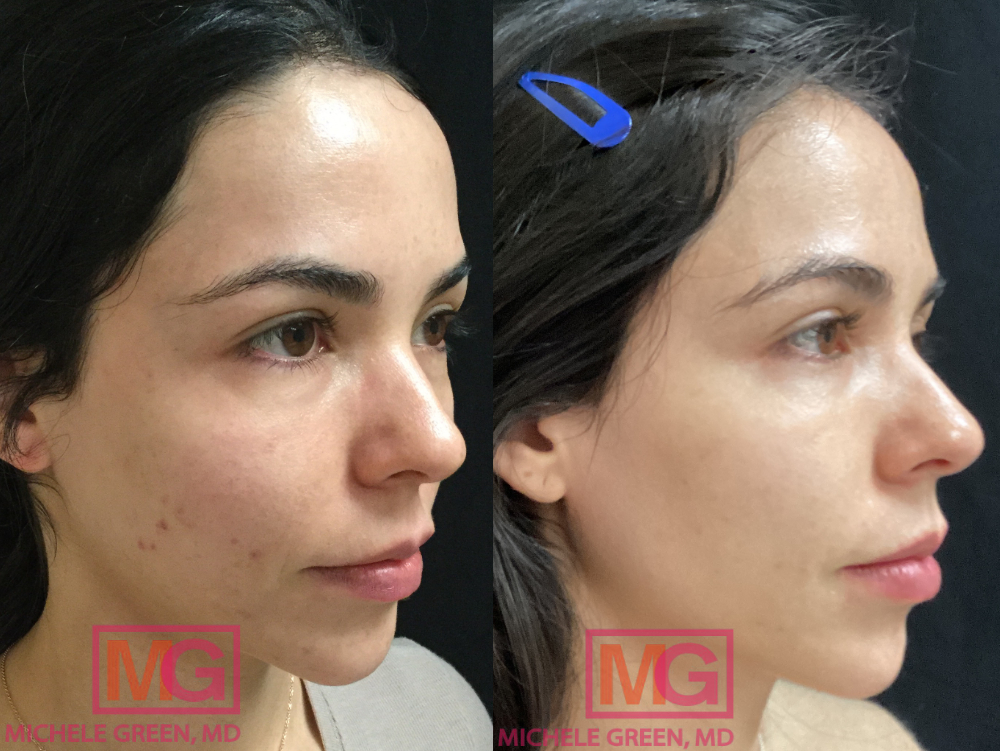
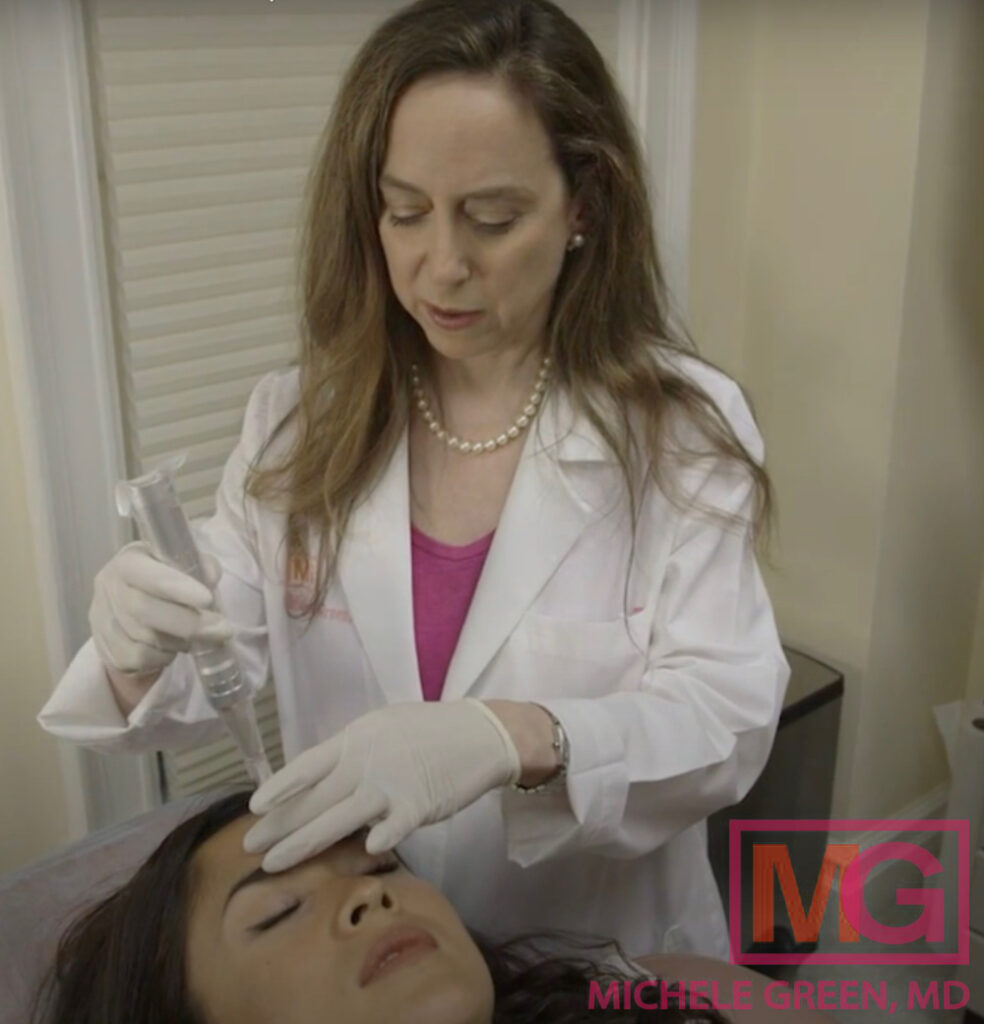
Traditional microneedling, also called collagen induction therapy, is a minimally invasive skin rejuvenation treatment designed to stimulate the body’s natural healing process. It uses a handheld microneedling device with a very fine, sterile needle that punctures the skin in a precise and controlled manner. These micro-injuries typically range from 0.5 mm to 2.5 mm in depth, depending on the treatment area and skin concern. Although tiny, the punctures are sufficient to activate the body’s wound healing response, which increases the production of collagen and elastin. These key proteins keep skin firm, smooth, and youthful.
Microneedling improves the skin from within, making it especially effective at reducing acne scars, fine lines, wrinkles, enlarged pores, uneven texture, and other skin issues. It can also be combined with platelet-rich plasma (PRP), often called the “vampire facial,” to speed up healing and boost collagen production. Microneedling can also be used with depigmentation serums to treat hyperpigmentation and discoloration. Unlike Aquagold, which delivers active ingredients into the outer skin layer, the main benefit of traditional microneedling is long-term structural improvements. Some results may be visible after just one session, but a series of treatments is usually recommended for the best results. Under the care of Dr. Michele Green, microneedling is carefully customized to each patient’s needs, offering a safe and effective way to achieve natural, lasting rejuvenation.
What is the process of getting Aquagold treatment and traditional microneedling treatment?
Before treatment, patients will have a consultation with Dr. Green, during which she carefully assesses their skin type, concerns, and goals to determine whether Aquagold Fine Touch or traditional microneedling will provide the best results. Once the plan is decided, patients receive a topical numbing cream to apply before their appointment, helping to minimize any discomfort. During the visit, the skin is gently cleansed and prepared to remove any residual products or oils.
For Aquagold Fine Touch, Dr. Green fills the device with a customized mixture of ingredients tailored to the patient’s goals. The device is then applied with a gentle stamping motion across the skin, allowing the 24-karat gold-plated microchannels to evenly infuse the solution. Most patients experience only mild redness, which subsides within a few hours. After the treatment, Dr. Green provides aftercare instructions. Patients can resume their usual activities the next day, and as the skin renews, it becomes smoother, softer, and more radiant over the following days.
For traditional microneedling, a handheld device with fine, sterile needles creates precise micro-injuries at controlled depths. This stimulates collagen production, leading to smoother, firmer skin over time. Microneedling can be enhanced with platelet-rich plasma (PRP), which helps reduce fine lines and wrinkles and improve skin texture and structure. It can also be combined with a depigmentation serum to help address hyperpigmentation and achieve a more even skin tone. Mild redness and sensitivity are common for one to two days after treatment. Post-treatment, patients are advised to avoid makeup and strenuous exercise for 24 hours while their skin heals.
Can Aquagold facials and microneedling be used on areas other than the face?
Both Aquagold and microneedling can be used on body areas that often show early signs of aging, like the neck and décolletage. These areas, similar to the face, are frequently exposed to the sun and may develop fine lines, uneven skin tone, or rough texture over time. Treating the face along with other areas helps create a more consistent and refreshed overall appearance. Dr. Green will customize the treatment depth and blend of ingredients for each area to ensure safe, even, and natural-looking results.
What is the difference between microneedling and Aquagold microneedling?
Microneedling and Aquagold Fine Touch both use very fine needles to rejuvenate the skin, but they work in different ways and produce different results. Traditional microneedling, also called collagen induction therapy, involves a device with sterile needles that create tiny punctures in the skin. The depth of these punctures can be adjusted depending on the treatment area and the concern being treated. These micro-injuries trigger the body’s natural healing process, boosting collagen and elastin production. Over time, this helps repair the skin’s structure and improves issues such as acne scars, fine lines, wrinkles, enlarged pores, sun damage, and uneven texture. Because microneedling rebuilds the skin from within, results develop gradually and often require multiple treatments for the best outcome. When combined with platelet-rich plasma or depigmentation serums, microneedling can further improve healing and help with discoloration.
Aquagold Fine Touch is different because it delivers skin-rejuvenating ingredients directly into the dermis, rather than relying solely on injury to trigger repair. The device has twenty ultra-fine gold-plated needles that are thinner than a strand of hair. As it stamps the skin, it infuses a customized mix of treatments, including microdoses of Botox to shrink pores and fine lines, hyaluronic acid to boost hydration, dermal fillers to restore subtle volume, and vitamins or antioxidants to brighten and protect the skin. The treatment reaches a shallow depth, allowing the skin to be refreshed with minimal downtime. Patients often see an immediate glow, smoother skin, and improved tone, which is why Aquagold is sometimes called a red carpet facial.
The key difference is that microneedling gradually strengthens the skin by encouraging the production of new collagen and elastin, while Aquagold provides instant radiance and hydration by delivering active ingredients. Microneedling is often chosen for long-term correction of scars and wrinkles, whereas Aquagold is ideal for patients seeking a quick, luminous result before a special event. Many people find that alternating the two treatments helps them enjoy both immediate and lasting improvements in their skin.
How is Botox used in Aquagold treatments?
In Aquagold microneedling, Botox is delivered in very small, diluted amounts through the device’s 24-karat gold microchannels directly into the upper layers of the skin. This technique, sometimes called “microbotox,” differs from traditional Botox injections, which are placed deeper into facial muscles to relax movement. Instead, Aquagold infuses Botox superficially into the dermis to improve skin texture, reduce pore size, and decrease oil production without affecting facial expressions. The treatment creates a smoother, more polished appearance overall, rather than targeting specific wrinkles. The solution used is customized for each session, so Botox may be combined with other ingredients like hyaluronic acid, peptides, or antioxidants for added hydration and radiance. This microinfusion method allows the product to be evenly distributed across the entire face, resulting in a subtle, natural glow that develops over several days and lasts for several months. When performed by an experienced dermatologist, the procedure is safe, gentle, and well-suited for patients seeking the skin-smoothing benefits of Botox without the “frozen” look often associated with muscle-relaxing treatments.
Is Aquagold more effective than traditional microneedling treatment?
Effectiveness varies depending on the skin concern being addressed. Microneedling is generally more effective for patients with moderate to severe acne scars, deeper wrinkles, or significant texture issues, as it stimulates collagen remodeling at deeper layers of the skin. Over multiple sessions, microneedling helps reconstruct the skin’s foundation, leading to smoother, firmer, and more even skin. Aquagold Fine Touch works better for patients seeking immediate surface-level improvements, such as refined pores, a brighter tone, and increased hydration. Since Aquagold can be infused with micro-doses of dermal fillers, Botox, and growth factors, it can also help soften the appearance of mid to moderate acne scars while enhancing radiance. However, for deeper or more persistent scarring, Dr. Green may suggest microneedling, sometimes combined with platelet-rich plasma or laser treatments, to achieve more noticeable results. To determine which treatment best fits your goals, it’s best to consult a board-certified dermatologist like Dr. Green, who has extensive experience with both Aquagold microneedling and traditional microneedling.
How can you combine dermal fillers with Aquagold treatment?
Dermal fillers can be added to an Aquagold Fine Touch treatment to enhance hydration, smooth fine lines, and improve overall skin texture. During the procedure, a small amount of hyaluronic acid-based filler, such as Juvederm, Restylane, or Belotero, is combined with other ingredients like Botox, antioxidants, or vitamins in the Aquagold vial. The 24-karat gold microchannels then evenly deliver this mixture into the skin’s surface, allowing the filler to gently plump and hydrate without adding noticeable volume or altering facial contours. This technique helps restore a healthy glow and refine texture while maintaining a natural look. Under Dr. Green’s expert guidance, each Aquagold formula is tailored to meet the patient’s skin needs, ensuring balanced, radiant, and long-lasting results.
Patients who want more visible facial contouring or correction of deeper lines can also receive traditional dermal filler injections after an Aquagold treatment. Unlike the microinfused fillers used in Aquagold, which work at the skin’s surface to improve hydration and smoothness, standard filler injections are placed deeper beneath the skin to restore lost volume, define facial contours, or fill areas such as the lips and nasolabial folds. When combined, Aquagold enhances the skin’s texture and glow, while traditional dermal fillers restore youthful volume and definition for a balanced, refreshed look.
What is recovery like after an Aquagold Fine Touch or traditional microneedling session?
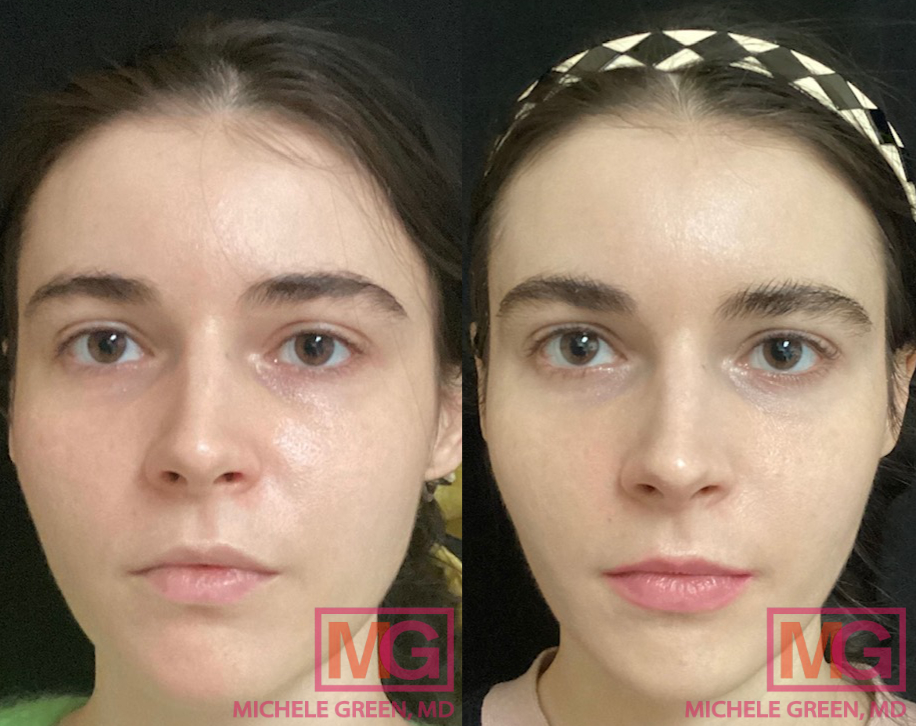
Both treatments involve minimal downtime but vary slightly in recovery. After an Aquagold Fine Touch procedure, mild redness and slight sensitivity might last a few hours but usually clear up by the next day. Microneedling may cause light redness and a tight sensation for one to two days, followed by mild flaking as new skin forms. Since both procedures have little to no downtime, most patients can return to their normal skincare routine after a day. Following treatment, Dr. Green offers detailed aftercare instructions, typically recommending avoiding makeup, direct sunlight, heavy exercise, and active skincare ingredients for 24 hours.
Aquagold’s Microinfusion Delivery System
The Aquagold Fine Touch device utilizes an advanced microinfusion system designed to distribute tailored skin-rejuvenating ingredients evenly into the upper skin layers. The sterile vial is topped with 24-karat gold-plated hollow needles, each thinner than a strand of human hair. As the device is gently stamped across the treatment area, the solution flows through these microchannels and is infused directly into the dermis at a controlled depth of about 0.5 millimeters. This technique enables active ingredients such as hyaluronic acid, Botox, vitamins, antioxidants, and peptides to be delivered precisely where they can hydrate, brighten, and smooth the skin most effectively.
Unlike traditional injections that target specific facial muscles or deeper tissues, Aquagold’s microinfusion system disperses small doses of products evenly across the entire skin surface. This even spread creates a natural, air-brushed glow with minimal swelling. The process also reduces discomfort and downtime because the ultra-fine gold needles are hypoallergenic and gentle on sensitive skin. By combining precision, uniform product delivery, and a customized formula, the Aquagold microinfusion system offers a refined approach to rejuvenation that improves skin texture, hydration, and radiance with both immediate and long-lasting results.
Who is a good candidate for Aquagold microneedling or traditional microneedling treatments?
Aquagold Fine Touch and traditional microneedling are both safe for all skin types and tones, making them suitable for nearly anyone looking to improve their skin’s texture and radiance. Ideal candidates are people who want to reduce fine lines, enlarged pores, uneven tone, or mild scarring without invasive procedures or significant downtime. Aquagold is perfect for patients seeking a quick, subtle refresh before an event, while traditional microneedling may be recommended for those targeting acne scars, deeper wrinkles, or skin laxity. During your consultation, Dr. Green reviews your medical history, current skincare routine, and aesthetic goals to create a treatment plan tailored to your skin’s unique needs.
Does Aquagold replace Botox and dermal fillers?
While Botox and dermal fillers can be microinfused using the Aquagold Fine Touch device, this treatment does not replace traditional injectable procedures. Botox is a neuromodulator made from botulinum toxin type A that temporarily blocks nerve signals to prevent muscle contractions, reducing the appearance of dynamic wrinkles caused by facial movement. Dermal fillers, made of hyaluronic acid, restore volume, increase hydration, and smooth fine lines by attracting and holding moisture in the skin. Aquagold delivers tiny doses of these ingredients into the upper layer of the skin rather than into the deeper muscle or tissue. This results in a gentle smoothing and brightening effect, minimizing pore size, refining texture, and boosting overall radiance without changing facial movement or structure. In contrast, standard Botox and filler injections are given deeper beneath the skin to relax facial muscles or add volume to areas such as the cheeks, lips, and under the eyes. While mild swelling or bruising can happen at the injection site, results usually appear in a few days and reach their peak after about two weeks. When used together, Aquagold microinfusion can enhance the benefits of Botox and fillers by improving overall skin tone, hydration, and texture. At the same time, injectables target specific lines and areas of volume loss for a smoother, more youthful skin.
Can you do microneedling under the eyes?
Both traditional microneedling and Aquagold microneedling can be safely performed under the eyes when done by an experienced, board-certified dermatologist. The skin around the eyes is thinner and more delicate than the rest of the face, so techniques, needle depth, and treatment formulations must be carefully adjusted to ensure optimal results. Microneedling under the eyes helps improve fine lines and mild hollowness by stimulating collagen and elastin production, which gradually strengthens and smooths the area over time. Additionally, Aquagold Fine Touch can be used around the eyes to deliver small doses of ingredients such as Botox, hyaluronic acid, and peptides that hydrate the skin, soften fine lines, and brighten dark circles. Aquagold penetrates only about 0.5 millimeters into the skin, making it gentle enough for the eye area and providing a subtle, refreshed appearance with minimal redness or irritation. At her Upper East Side practice, Dr. Green adopts a holistic, less-is-more approach to rejuvenate the under-eye area safely, enhancing firmness and radiance while maintaining natural-looking results.
Can Aquagold and traditional microneedling treatments be combined with other cosmetic treatments?
Yes, both treatments can complement other non-invasive procedures for enhanced rejuvenation. Aquagold can be combined with gentle chemical peels or laser treatments to brighten the complexion even more. At the same time, microneedling can be paired with non-ablative laser resurfacing to improve the correction of scars and pigmentation. During a consultation with Dr. Green, she will develop a treatment plan that carefully schedules procedures to optimize results and minimize downtime, giving patients both immediate and long-lasting skin improvements.
How long do Aquagold and microneedling results last?
Results from the Aquagold Fine Touch facial usually last about 3 to 4 months, depending on the patient’s skin type, lifestyle, and the specific ingredients used. Since the procedure delivers a personalized mix of active ingredients, like hyaluronic acid, Botox, dermal fillers, and vitamins, directly into the skin, the effects gradually fade as the body naturally breaks down these ingredients. Most patients notice an immediate boost in hydration and smoothness within a few days, with the skin continuing to look brighter and more refined for several weeks afterward. To keep results consistent, Dr. Green often recommends scheduling Aquagold microneedling treatments every 3 to 4 months to maintain hydrated, plump, and glowing skin year-round. With regular upkeep, patients find their skin’s texture, tone, and overall radiance keep improving over time.
In contrast, traditional microneedling causes changes that develop gradually but last longer. The treatment prompts the body to produce new collagen and elastin, leaving the skin firmer and more refined for several months after a session. With consistent treatments, improvements in tone, texture, and elasticity can last up to a year. Traditional microneedling can be combined with PRP and depigmentation serum to target specific skin concerns. During a consultation with Dr. Green, she will determine the timing of your treatment sessions to address these concerns effectively. Overall, while Aquagold provides a short-term boost in radiance, microneedling offers a deeper, long-lasting renewal that continues to improve as the skin heals and regenerates.

Are there any side effects or risks to Aquagold treatments and microneedling treatments?
Both Aquagold Fine Touch and traditional microneedling are considered very safe when performed by a board-certified dermatologist. After treatment, patients may notice mild redness, slight swelling, or temporary dryness as the skin renews itself, which usually resolves within a day or two. Sometimes, pinpoint bleeding or sensitivity can happen with microneedling due to the deeper needle depth, but these effects fade quickly. Infection or irritation is extremely rare when proper sterile technique and aftercare are followed. Dr. Green performs all procedures in a medical setting using single-use, sterile devices and medical-grade formulations to ensure the highest level of safety and comfort for every patient.
Other frequently asked questions (FAQs):
Is Aquagold or microneedling painful?
Pain is minimal with both Aquagold Fine Touch and traditional microneedling, as Dr. Green focuses on maximizing comfort for every patient. Before the appointment, patients apply a topical numbing cream one hour prior to treatment to help reduce any potential discomfort. During the Aquagold treatment, the ultra-fine 24-karat gold needles gently glide over the skin’s surface, creating only a mild tingling or pressure sensation. Traditional microneedling may feel slightly more intense since the needles penetrate deeper, but most patients describe it as a brief prickling or vibration rather than pain. After either procedure, the skin may feel warm, tight, or slightly sensitive for a few hours before quickly returning to normal. Dr. Green performs each treatment with precision to ensure patients stay comfortable while achieving smooth, radiant, and rejuvenated skin.
Does Aquagold or microneedling actually make a difference?
Both Aquagold Fine Touch and traditional microneedling provide noticeable improvements in the skin when performed correctly and maintained over time. Microneedling stimulates the skin’s natural repair process, encouraging the production of new collagen and gradually improving firmness, smoothness, and tone. Patients often notice that their skin looks healthier and feels firmer after a series of sessions. Aquagold Fine Touch achieves results differently by using ultra-fine gold-plated needles to deliver a customized mix of rejuvenating ingredients into the skin’s upper layers. Depending on the specific blend, patients may see a refreshed, radiant appearance within days, while results from fillers or Botox develop more gradually over one to two weeks. Both treatments can complement each other, with microneedling improving skin texture and tone, and Aquagold enhancing surface smoothness, glow, and hydration.
Is Aquagold better or microneedling?
Whether Aquagold Fine Touch is “better” than traditional microneedling depends entirely on what a patient hopes to achieve. The two treatments are designed with different goals in mind and may appeal to different lifestyles. Aquagold is often chosen by individuals who prefer a gentle, non-invasive treatment that refreshes the complexion, perfect for use before an event or as part of their ongoing skincare routine. It leaves the skin looking smoother and brighter without the need for recovery time, making it ideal for those seeking subtle, polished results that fit easily into a busy schedule. Traditional microneedling, on the other hand, requires more patience but provides more dramatic, long-term improvements in texture and firmness. It is often chosen by patients who want to address specific concerns, such as scarring or deeper lines, and are willing to accept a short healing period.
Should I get Aquagold or microneedling?
Many patients benefit from combining Aquagold Fine Touch and traditional microneedling in their skincare routines, as each treatment targets different skin layers and offers unique benefits. Patients may undergo these treatments at different times to address various skin concerns and achieve their goals. Microneedling encourages long-term improvement by stimulating collagen production, while Aquagold can be customized with other ingredients to target specific skin issues. Patients can do both treatments, but they work best when alternated rather than performed in the same session, allowing the skin to heal and respond fully to each. For most patients, spacing the treatments several weeks apart helps achieve balanced results.
Is the Aquagold facial worth it?
Yes, the Aquagold Fine Touch facial is worth it because it provides noticeable, natural-looking results with almost no recovery time. Unlike many resurfacing treatments, Aquagold focuses on renewing the skin from within by injecting a customized blend of ingredients directly into the dermis. Each session is tailored to address specific concerns, whether that’s brightening dull skin, softening fine lines, enhancing hydration, or smoothing overall texture. Most patients see their skin become more radiant and refined within a few days, and the effects can last for several months with proper skincare. This cosmetic procedure is comfortable, quick, and suitable for all skin types, making it an excellent option for anyone wanting to refresh their complexion without downtime. Under Dr. Michele Green’s guidance, every Aquagold treatment is carefully customized to meet the patient’s needs, producing subtle yet visible improvements that enhance the skin’s natural glow without changing facial features.
Is carbon facial better than Aquagold microneedling?
A carbon facial, also known as a laser carbon peel, is a non-ablative laser treatment that improves skin clarity and controls oil production. During the procedure, a thin layer of liquid carbon is applied to the skin, and a specialized laser passes over it. The carbon binds to excess oil and debris, and when the laser removes the carbon, it also lifts away dead skin cells and impurities. This process deeply cleanses the pores, smooths the skin, and leaves it looking clearer and more refreshed. Carbon facials are especially popular among patients with oily or acne-prone skin, as they help reduce breakouts with little to no downtime.
While carbon facials are effective for cleaning and refining the skin’s surface, they do not reach the deeper layers of the dermis, where collagen and elastin are produced. Microneedling and Aquagold Fine Touch both work beneath the skin’s surface to stimulate collagen production and improve overall skin quality. Traditional microneedling helps repair acne scars and fine lines by triggering the body’s natural healing process, while Aquagold combines microchanneling with the infusion of active ingredients, such as hyaluronic acid, Botox, and vitamins, for instant radiance and a smoother texture. Rather than being “better,” each treatment serves a different purpose. Carbon facials are best suited for maintaining clear and balanced skin, while traditional microneedling and Aquagold focus on long-term rejuvenation and anti-aging.
What is deeper than microneedling?
Treatments that penetrate deeper into the skin than traditional microneedling and Aquagold Fine Touch include radiofrequency microneedling, fractional laser resurfacing, and CO2 laser. These procedures target the lower layers of the dermis to induce more significant collagen remodeling and tightening. Radiofrequency microneedling combines the collagen-boosting benefits of microneedling with controlled heat energy to tighten skin, enhance elasticity, and reduce wrinkles and acne scars at a deeper level. Fractional lasers, such as the Fraxel laser, use precise light energy to resurface the skin and address sun damage, fine lines, and pigmentation issues, while CO2 lasers penetrate even further to treat more advanced wrinkles, scarring, and texture irregularities. Although these treatments can deliver more dramatic rejuvenation, they also require more downtime.
How do I get started with Aquagold or microneedling today?
If you want to refresh your skin, restore a youthful glow, and improve texture without surgery or downtime, Aquagold Fine Touch and traditional microneedling are excellent choices. Both treatments use advanced technology to rejuvenate the skin, reduce fine lines, and promote a smoother, more even complexion. Although they have similarities, each treatment varies in how it delivers its results. Aquagold Fine Touch can be customized with a mix of rejuvenating ingredients, including Botox, dermal fillers, and serums like vitamin C, instantly increasing radiance and hydration. Traditional microneedling can be combined with PRP and depigmentation serum to boost collagen production, improve texture, and address discoloration. Whether you want an immediate boost before a special event or long-term improvements in tone and texture, these procedures can be tailored to your individual needs and aesthetic goals. During your consultation, Dr. Green will evaluate your skin and create a personalized plan to identify which treatment or combination of treatments will give the best results.
With over 25 years of experience as a leading board-certified dermatologist in New York City, Dr. Michele Green is known for her expertise in non-invasive facial rejuvenation and natural-looking results. Taking a holistic and minimalist approach to facial rejuvenation, her practice creates personalized treatment plans tailored to each patient’s unique skin concerns and aesthetic goals. Dr. Green is consistently recognized as one of New York’s top dermatologists by Castle Connolly, New York Magazine, The New York Times, and Super Doctors, thanks to her dedication to patient care and professional skill. She offers treatments such as Aquagold Fine Touch and microneedling to help patients achieve healthy, radiant skin safely and effectively. To discover which treatment is right for you, contact Dr. Green’s office online today or call 212-535-3088 to schedule a consultation and begin your journey toward smoother, more luminous skin.


