


PRP Hair Restoration
Hair loss and thinning hair are common conditions that affect as many as 50 million men and 30 million women in their lifetime. Hair loss can occur for many reasons, ranging from genetic conditions like androgenetic alopecia (also known as androgenic alopecia, male pattern baldness, or female pattern baldness), autoimmune disorders like alopecia areata, acute stressful events like telogen effluvium, medications, or hormone fluctuations. Regardless of the cause of hair loss, noticing a decrease in hair thickness and hair density on various areas of the scalp can be extremely distressing for patients, leading to low self-esteem and symptoms of depression. With many treatment options on the market, each with varying levels of effectiveness, it can be difficult to determine how best to treat and prevent hair loss. That is why the best first step in developing a hair-loss treatment plan is to seek out a board-certified dermatologist, such as Dr. Michele Green, who can recommend the best hair rejuvenation treatment.
Platelet-rich plasma therapy — also known as PRP therapy — uses the growth factors found in the patient’s own blood to heal hair follicles, improve hair density, and trigger new hair growth. Often used medically for wound healing, skin rejuvenation, and addressing musculoskeletal injuries, platelet-rich plasma (PRP) treatment is now being used to address hair loss and hair thinning conditions, such as androgenetic alopecia and alopecia areata. Although it has not yet been FDA-approved for hair loss treatment, platelet-rich plasma has been tested in clinical trials, demonstrating promising results for hair regrowth. PRP can also be paired with other hair-loss treatments to improve overall results, including medications such as finasteride and minoxidil, as well as microneedling. With a low risk of side effects and demonstrably positive results, PRP injections have become an excellent treatment option for patients concerned with hair loss.
When it comes to hair loss treatment, it is best to consult an experienced, board-certified dermatologist, such as Dr. Green. Dr. Green has been treating patients effectively in her Upper East Side, New York City, dermatology office for more than 25 years. An expert in a wide range of medical and cosmetic procedures, Dr. Green has been praised by many patients for her proficiency in treatments such as Botox injections, dermal fillers, laser therapy, microneedling, and more. Known for her high patient satisfaction, Dr. Green has been voted one of the best dermatologists in New York City by such publications as Castle Connolly, New York Magazine, and Super Doctors.
What are the different types of hair loss?
Hair loss can occur for a wide variety of reasons, including genetic predisposition, hormone fluctuation, acute stress or injury, medications, or autoimmune disorders. One of the most common types of hair loss is androgenic alopecia, colloquially known as male-pattern or female-pattern hair loss. The exact underlying cause of androgenetic alopecia is unknown, but it is related to high concentrations of androgen hormones. With higher levels of the androgen hormone, the hair growth cycle becomes shorter, and the hair follicles become more damaged over time. In men, androgenic alopecia is characterized by a receding hairline along the temples that forms an “M” shape, followed by balding on the crown of the head. Often, this hair thinning occurs all over the crown of the head, resulting in hair only in a “U” shape around the sides and back of the head. Androgenetic alopecia can also affect women, but typically manifests differently. Hair thinning typically begins at the crown of the head, widening the center part.
Another common type of hair loss is stress-related hair loss, also known as telogen effluvium, which prematurely triggers hair to enter the resting phase of hair growth (telogen). As a result, a large number of hairs enter the shedding phase at the same time — sometimes, as many as 70% of the hairs on the scalp can be shed at once, leading to noticeable hair thinning and shedding. Stressful events that can trigger telogen effluvium include:
- Severe illness, such as chronic illness or high fever
- Childbirth
- Overactive thyroid
- Severe infections
- Severe psychological distress
- Major surgery or injury
- Losing weight quickly, such as with crash diets or anorexia.
- Some medications
Typically, hair will regrow in three to six months once the stressful event has been resolved, but seeking treatment from a dermatologist can help speed regrowth in the treated area and ensure the hair follicles remain healthy.
No matter the cause, thinning hair can be very distressing for patients, prompting them to seek treatment. When determining your treatment plan, your dermatologist needs to identify the underlying cause of your hair loss to prescribe appropriate care. When it comes to treating androgenetic alopecia, Dr. Green will often turn to platelet-rich plasma therapy.
What is PRP Hair Restoration?
PRP treatment uses autologous plasma—plasma drawn from the patient’s own blood—centrifuged to separate the high-platelet-count plasma from red blood cells. When injected into the treatment area, PRP therapy helps promote healing, support blood clotting, reduce inflammation, and stimulate the growth of new cells. Because PRP uses the patient’s own blood, the risk of an allergic reaction is very low, making it a safe and effective treatment option for a variety of conditions and medical concerns, including skin rejuvenation, post-surgical or musculoskeletal healing, and hair loss.
PRP treatment can help to regrow hair and prevent future hair loss and hair thinning in patients with androgenic alopecia. Hair growth occurs in three phases: the growth phase (anagen), the resting phase (telogen), and the shedding phase. Typically, hair growth lasts 2-6 years before entering the resting phase and eventually shedding, which is a very natural process. However, some hair-loss conditions, such as androgenic alopecia, significantly shorten the hair growth phase, resulting in shorter, thinner new hair growth. PRP injections help regrow hair by lengthening the hair-growing phase and strengthening hair follicles, resulting in thicker hair shafts, higher hair density, and healthier hair follicles.
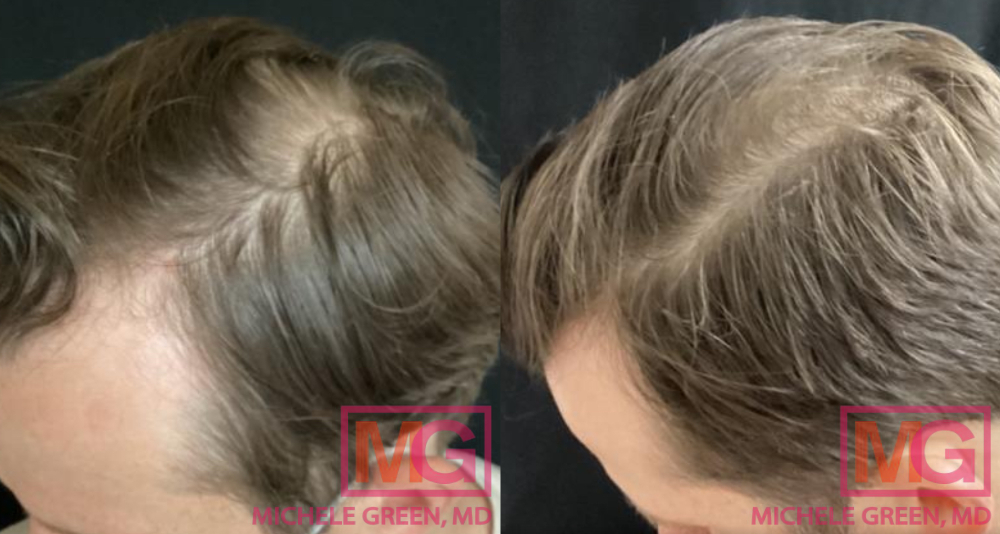
How does platelet-rich plasma (PRP) treatment use growth factors to promote new hair growth?
Platelet-rich plasma therapy is a highly effective treatment for patients experiencing hair thinning or hair loss due to conditions such as androgenetic alopecia and alopecia areata (an autoimmune disorder that can cause hair loss). When injected into the scalp, the high concentration of platelets helps to activate growth factors at and around the injection site, improving circulation in the treatment area and triggering the healing of damaged hair follicles. As a result, PRP therapy can strengthen hair follicles in the treatment area and thicken hair shafts, leading to increased hair density. Additionally, as damaged hair follicles heal, the number of hairs increases as well, as inactive hair follicles become reactivated. PRP therapy can be used on its own or in combination with other treatment options, such as finasteride, minoxidil, hair transplant, and microneedling.
Does PRP hair restoration work?
PRP injections are a safe and effective treatment for preventing hair loss, healing damaged hair follicles, and thickening the hair shaft to promote denser hair and new hair growth. Several researchers have already begun studying the effectiveness of PRP injections for hair regrowth, demonstrating that PRP injections significantly promote new hair growth in patients with androgenic alopecia. In a review of clinical trials evaluating the effectiveness of PRP in treating male pattern hair loss, researchers found that PRP injections significantly increased hair count, hair follicle thickness, and hair density compared with the control group. Furthermore, when comparing the effects of PRP treatment on hair loss, studies have found that compared to other treatment options (finasteride, minoxidil, and stem-cell solutions), 84% of patients who received PRP injections reported experiencing a positive change, and 50% of patients reported a significant decrease in hair thinning and hair loss. As such, many studies have already demonstrated the effectiveness of PRP for hair growth.
Can PRP restoration reverse hair loss?
PRP treatment is highly effective in preventing hair loss and hair thinning, and it also helps regrow hair and promote thicker, healthier hair growth. PRP works as a regenerative medicine, triggering the body’s natural healing processes to improve hair appearance. Various types of hair loss can occur, leading to weakened, inactive hair follicles. With platelet-rich plasma treatment, the growth factors present in the injection help to reactivate hair follicles and promote hair regrowth at the injection site. For patients experiencing hair loss in various forms, Dr. Green often recommends PRP therapy to help reverse its effects.
Can PRP restoration restore the hairline?
A good candidate for PRP hair restoration is a patient experiencing scalp or hairline hair loss due to androgenic alopecia. Patients who seek treatment in the early stages of the condition are likely to experience better results, as the treatment cannot repair hair follicles that are already dead. Rather, the treatment works best to strengthen existing hair follicles and increase blood circulation, resulting in a thicker, healthier hairline. Patients with severe hair loss along the hairline may benefit from cosmetic surgery or plastic surgery, such as implants.
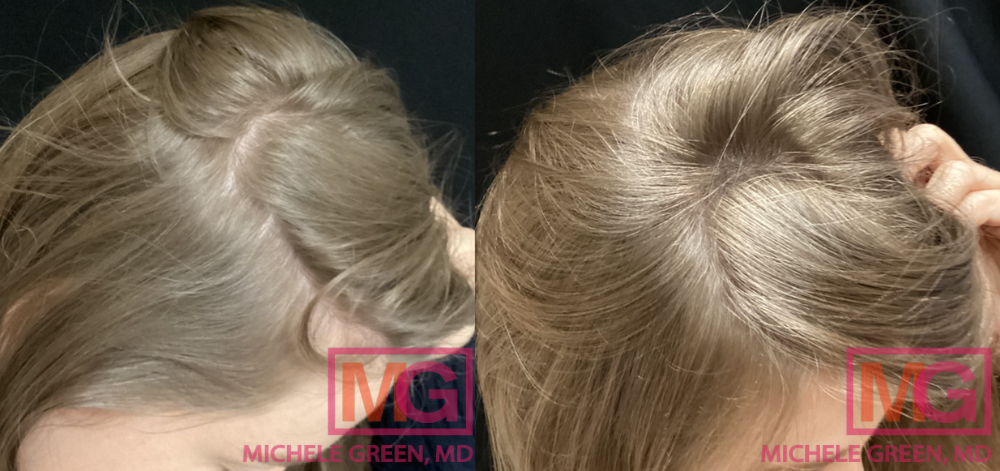
Who can perform PRP hair treatment?
PRP injections are safe and effective for addressing hair loss when performed by an expert, board-certified dermatologist such as Dr. Michele Green. While many patients first associate dermatologists with treating skin conditions, hair loss is among the most common conditions dermatologists treat. When you visit an experienced dermatologist, such as Dr. Green, she will determine the underlying cause of your hair loss and develop a treatment plan tailored to you.
Where to get PRP hair treatment
The best place to get PRP hair regrowth treatment is at the office of a board-certified dermatologist, such as Dr. Michele Green. Once Dr. Green has examined the treatment area, discussed your medical history, and determined the cause of your hair loss, she will develop a treatment plan tailored to you. If PRP is the best option, the PRP treatment process begins with a blood draw, in which a patient’s blood sample is placed in a centrifuge to separate it into three layers: red blood cells, platelet-poor plasma, and platelet-rich plasma. Before injecting high-concentration platelet-rich plasma into the treatment site, Dr. Green will apply topical anesthesia approximately 1 hour beforehand to limit any potential discomfort. The injections themselves are quick to perform, and the whole treatment process generally takes less than 30 minutes. There is no downtime following the treatment, so patients can immediately return to their regularly scheduled activities.
How long does hair restoration take?
PRP treatment boosts the body’s natural healing processes to promote hair regrowth and strengthen hair follicles at the injection site, resulting in thicker, denser new hair growth. As such, it usually takes several months for the results to become visible, and the full results of the treatment are often seen three to six months after the injections. To maintain treatment results, Dr. Green recommends scheduling a touch-up appointment once a year after the initial round of treatment.
How long does PRP hair restoration last?
The first round of PRP injections for hair loss prevention and scalp rejuvenation typically involves two to three injection sessions, each spaced four to six weeks apart. Multiple injections are necessary for optimal results, and to maintain the treatment’s effects, patients often require a maintenance treatment series once a year. It can take several weeks for the full effects of the treatment to be apparent after each round. Most patients will experience natural hair thickening and regrowth in the weeks following the procedure, though the peak of collagen production typically occurs approximately three months after the injections.
Is PRP hair restoration permanent?
PRP is a long-lasting treatment option for hair regrowth, but it is not a permanent solution. The duration of treatment varies from person to person, often depending on the severity of the hair-loss condition and the patient’s plasma platelet concentration. However, the treatment results can last for up to 18 months. Dr. Green typically recommends that patients schedule touch-up appointments to maintain the treatment results.
Is hair restoration painful?
PRP therapy is a low-risk procedure that is not typically associated with any severe side effects. Because the treatment uses the patient’s own blood and plasma, there is almost no risk of an allergic reaction. When seeking treatment from an experienced dermatologist, such as Dr. Green, the risk of side effects is quite low. But if you seek treatment from a less experienced injector, the potential side effects of the treatment are as follows:
- Damage to blood vessels in the scalp area.
- Injury to nerves
- Infection at the injection site
Is PRP hair treatment safe?
PRP treatment is very safe and highly effective for hair regrowth and hair loss prevention. Unlike other hair-loss prevention treatments, PRP therapy is associated with very few side effects, especially when performed by a board-certified dermatologist such as Dr. Green. Part of the reason for the lack of side effects is that PRP treatment uses plasma from the patient’s own blood, so there is no risk of an allergic reaction. PRP treatment is quick and easy to perform, with no downtime, so that patients can resume their regular activities immediately after their appointment.
The risk of experiencing side effects as a result of PRP therapy is low, especially when you receive treatment from an expert dermatologist, such as Dr. Green. A common, mild side effect is slight soreness or redness at the injection site, which should resolve on its own within several days. When seeking treatment from a less experienced injector, the risk of developing more severe side effects increases. Patients of inexperienced practitioners may be at higher risk of damage to scalp blood vessels or nerves, tissue scarring or calcification, and infection at the injection site. If you have a history of severe scarring, be sure to inform Dr. Green before receiving treatment.
How much is PRP hair restoration?
The cost of PRP Injections depends on a number of factors, including the scope of the treatment area, your geographic region, the type of institution at which you receive treatment, and whether PRP therapy is combined with other treatment options. While institutions such as a Medical Spa may offer deals or specials that lower the cost of treatment, the risk of developing serious side effects is much higher at these institutions. That is why it is always best to seek treatment from an expert board-certified dermatologist, such as Dr. Green. After your initial consultation, when Dr. Green examines the treatment area, determines the cause of hair loss, and generates a treatment plan, her office can provide you with a clearer estimate of the total cost of the treatment.
Is hair restoration covered by insurance?
In most cases, hair restoration is considered a cosmetic concern and is therefore not covered by most insurance companies. To determine whether your insurance covers a treatment, it is best to call your insurance company before your appointment.
Which hair restoration is the best?
Hair loss and hair thinning are very common conditions affecting as many as 50 million men and 30 million women. As such, many treatment options are available—some more effective than others. The most effective treatment, however, is the one that works to address your specific cause of hair loss. Depending on the type of hair loss occurring, Dr. Green may recommend prescription medication, such as topical minoxidil (Rogaine), finasteride (Propecia), or spironolactone (Aldactone), an in-office treatment such as PRP injections, low-level laser therapy (LLLT), or lifestyle changes, such as increasing intake of vitamins like biotin and improving your hair care routine for strong, healthy hair.
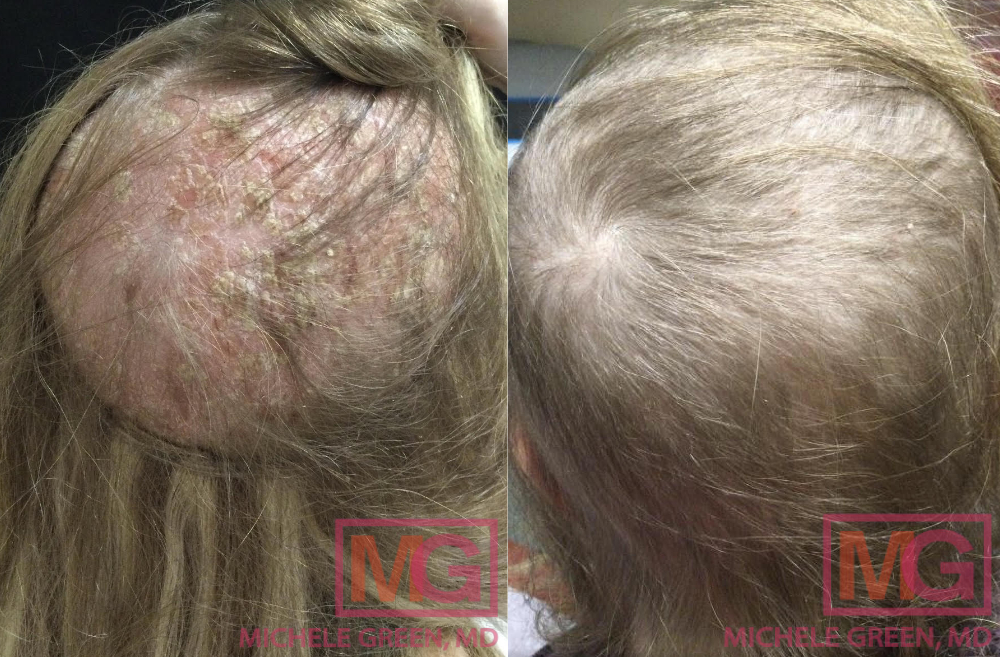
What is the best hair restoration treatment other than PRP?
No one treatment option is necessarily “the best.” Rather, it depends on the type of hair loss you are experiencing and your medical history. Some other common treatment options Dr. Green will consider include minoxidil and finasteride for hair loss.
Minoxidil for Hair Loss
Minoxidil was originally prescribed to treat high blood pressure, but has since been approved by the US Food and Drug Administration (FDA) for hair loss when applied topically or taken orally to help stimulate new hair growth and maintain hair follicle health. The only FDA-approved over-the-counter (OTC) medication for hair loss, minoxidil is a vasodilator, meaning that when applied to the scalp, it widens blood vessels, increasing blood flow to the area, raising oxygen levels, lengthening the hair growth phase, and triggering dormant hairs to grow again. Additionally, minoxidil has anti-inflammatory properties, meaning that it can block androgens, such as DHT, which bind to hair follicles and cause damage. One possible side effect of the topical treatment is scalp irritation. Patients experiencing scalp irritation may be prescribed oral minoxidil instead.
Finasteride
Finasteride is the generic term for the drug Propecia, which can be used to address male pattern baldness and hair loss. One contributing factor to androgenic alopecia is the binding of dihydrotestosterone (DHT) to hair follicles, which damages the follicle and leads to hair thinning and hair loss. Finasteride is a DHT blocker, meaning that it inhibits the conversion of testosterone into DHT, reducing hair loss. Dr. Green may prescribe finasteride paired with minoxidil for the best results. According to a study published in the Journal of Dermatologic Therapy, 94% of men experienced improvement in hair loss when minoxidil and finasteride were combined.
Dutasteride
Dutasteride is a prescription medication that may help manage androgenetic alopecia by targeting the hormonal factors that contribute to hair thinning and loss. The medication works by reducing dihydrotestosterone (DHT) levels, a hormone that can weaken hair follicles and shorten the hair growth cycle over time. By lowering scalp DHT levels, dutasteride can help slow progressive scalp DHT production and support healthier hair growth. Dermatologists, such as Dr. Michele Green, can evaluate a patient’s medical history, hair loss pattern, and treatment goals to determine whether it is a suitable option.
Spironolactone
Spironolactone is a prescription medication that may be used to address hair thinning related to hormonal factors, particularly in women. The medication works by reducing the effects of androgens on hair follicles, which can contribute to gradual hair thinning and increased shedding over time. By limiting scalp hormone activity, spironolactone can support healthier hair growth and slow further hair loss. It is most commonly prescribed for women and is not typically recommended for men. Treatment decisions are based on individual hair loss patterns, medical history, and overall treatment goals. Results typically develop gradually and require consistent use over time to maintain improvement.
Is PRP hair restoration worth it?
PRP treatment is a safe and effective treatment for hair growth and hair loss prevention. One of the major benefits of the treatment is that it is non-surgical, meaning no plastic surgery or hair transplants are required to see its positive results. The risk of significant side effects and allergic reactions from the treatment is very low, and there is no downtime, making it highly accessible for most patients. Unlike other methods of stopping hair loss, PRP does not have the same unpleasant side effects as topical treatments like Rogaine or oral medications. In that way, PRP is highly effective at promoting hair growth without side effects or downtime.
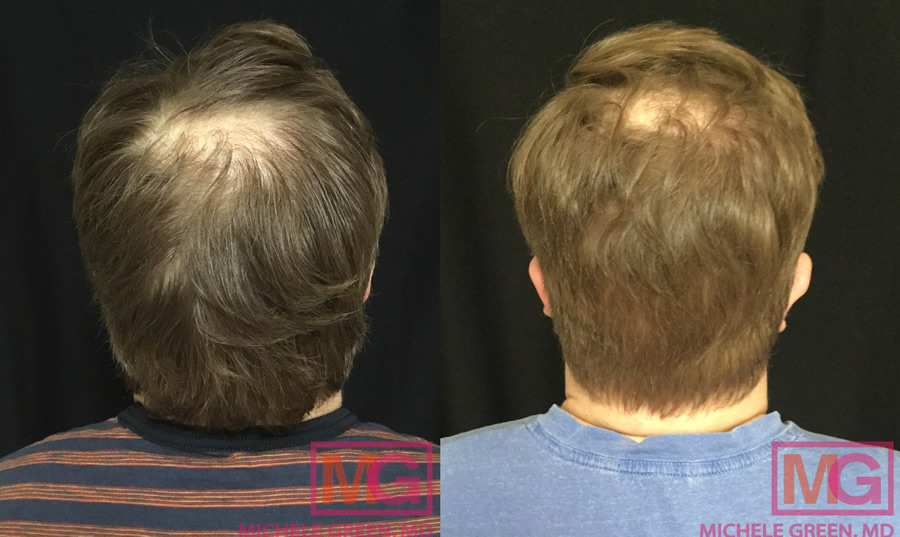
Does hair restoration really work? How to get started with PRP hair restoration today
Hair loss and hair thinning are common conditions that affect millions of men and women throughout their lifetimes. As hair is often a major part of one’s identity, the loss of hair can be very distressing. While there are many hair-loss treatment options available, it is difficult to tell which are effective and which to try. The best first step is to consult with an expert dermatologist, such as Dr. Michele Green, who will examine the treatment area to determine the root cause of the hair loss. Some patients, such as those with androgenic alopecia (male/female pattern baldness), may benefit from PRP injections for new hair growth. PRP injections are highly effective at thickening the hair shaft, healing damaged follicles, and lengthening the hair growth phase, resulting in denser, thicker hair. Schedule your appointment with Dr. Green to get started with long-lasting hair regrowth solutions.
Dr. Michele Green is an internationally renowned board-certified dermatologist with over 25 years of experience providing her patients with the best non-invasive treatment options. Dr. Green takes a holistic approach and embraces a less-is-more philosophy, creating customized skincare routines and treatment plans tailored to her patients’ unique concerns and aesthetic goals. She is consistently recognized by Castle Connolly, New York Magazine, and Super Doctors as one of New York’s best dermatologists for her dedication to her patients and expertise. Please call us at 212-535-3088 or email our New York City-based office today to schedule a consultation with Dr. Michele Green to learn whether PRP injections are right for you.


